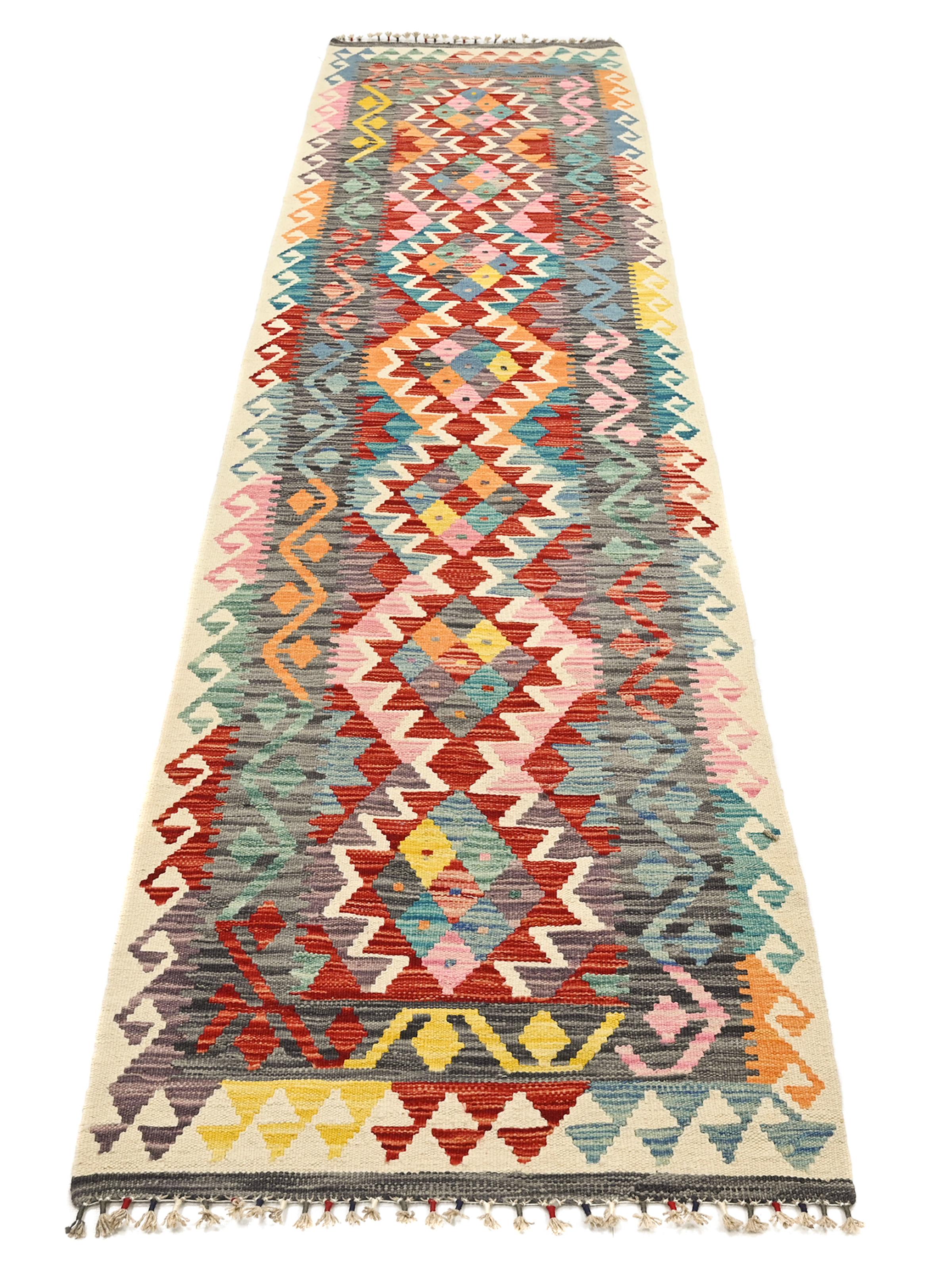
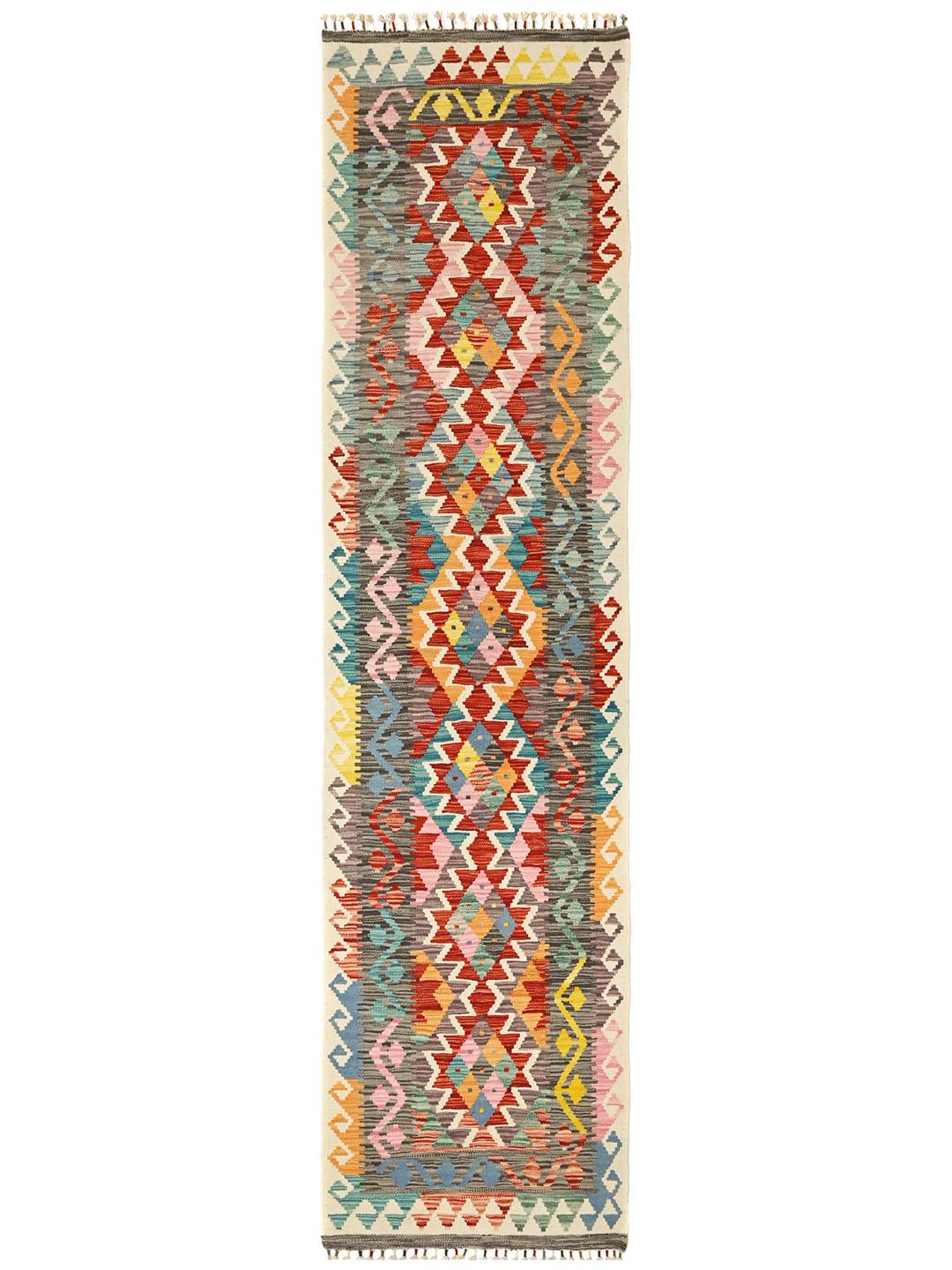
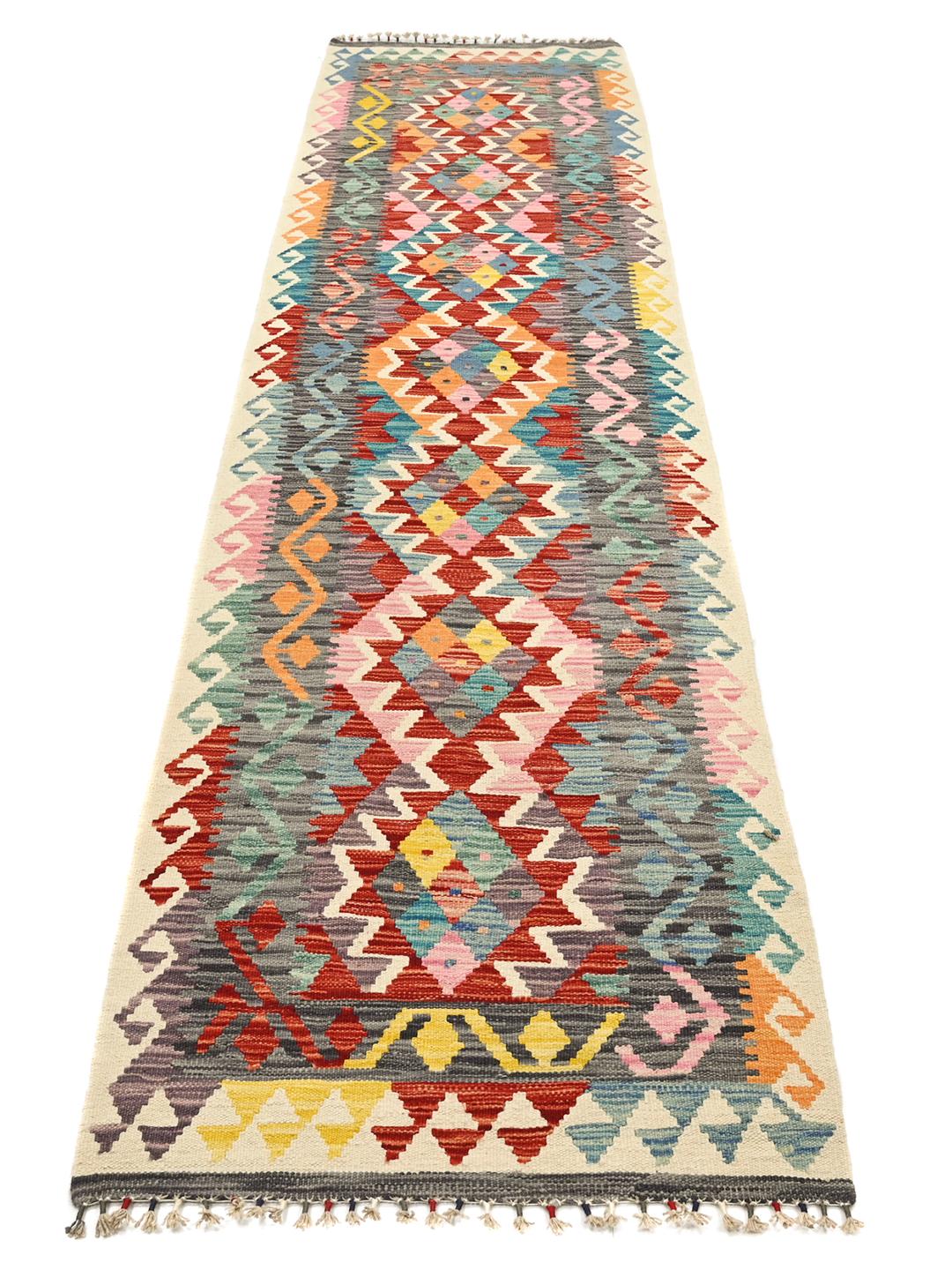
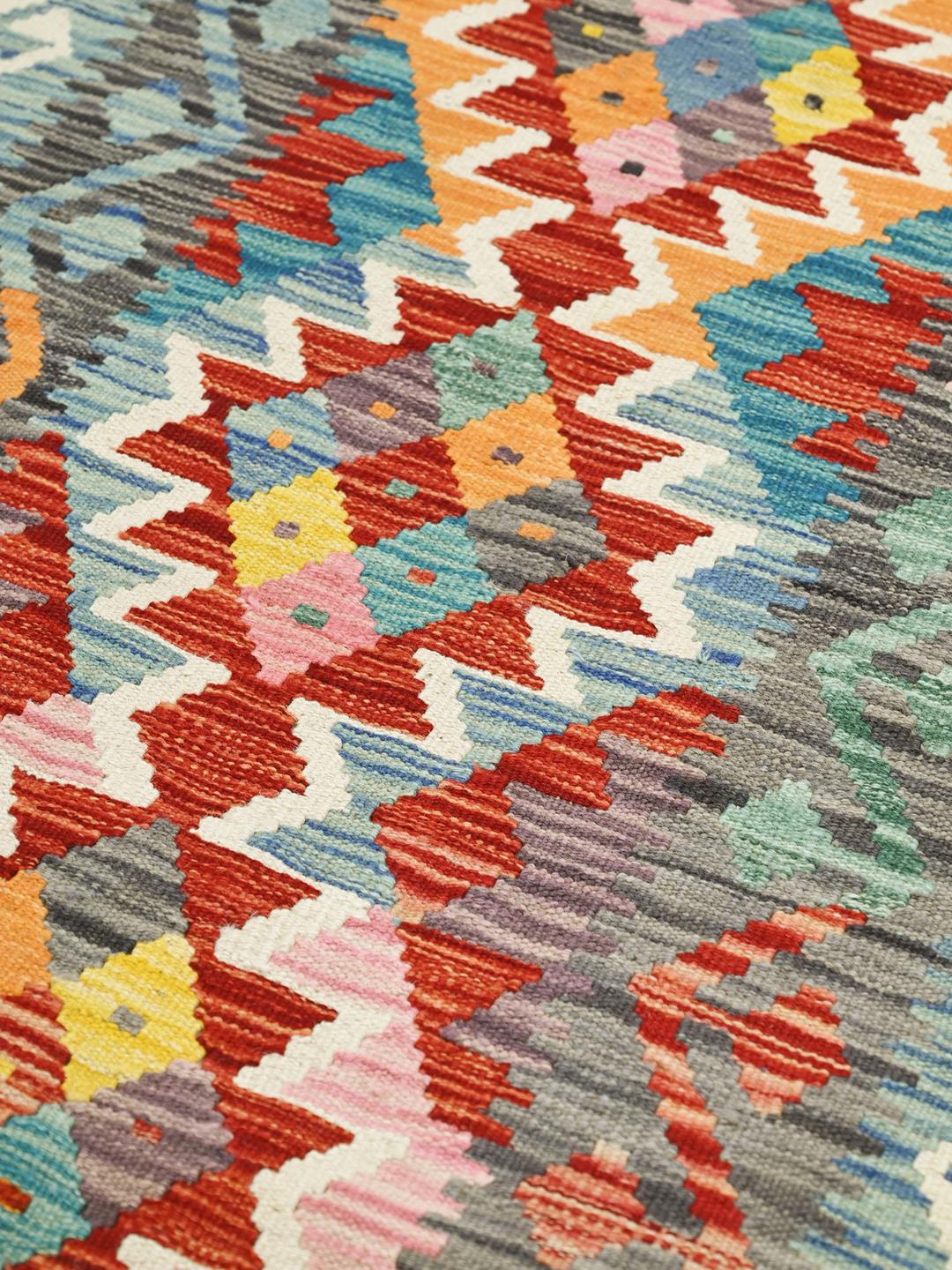
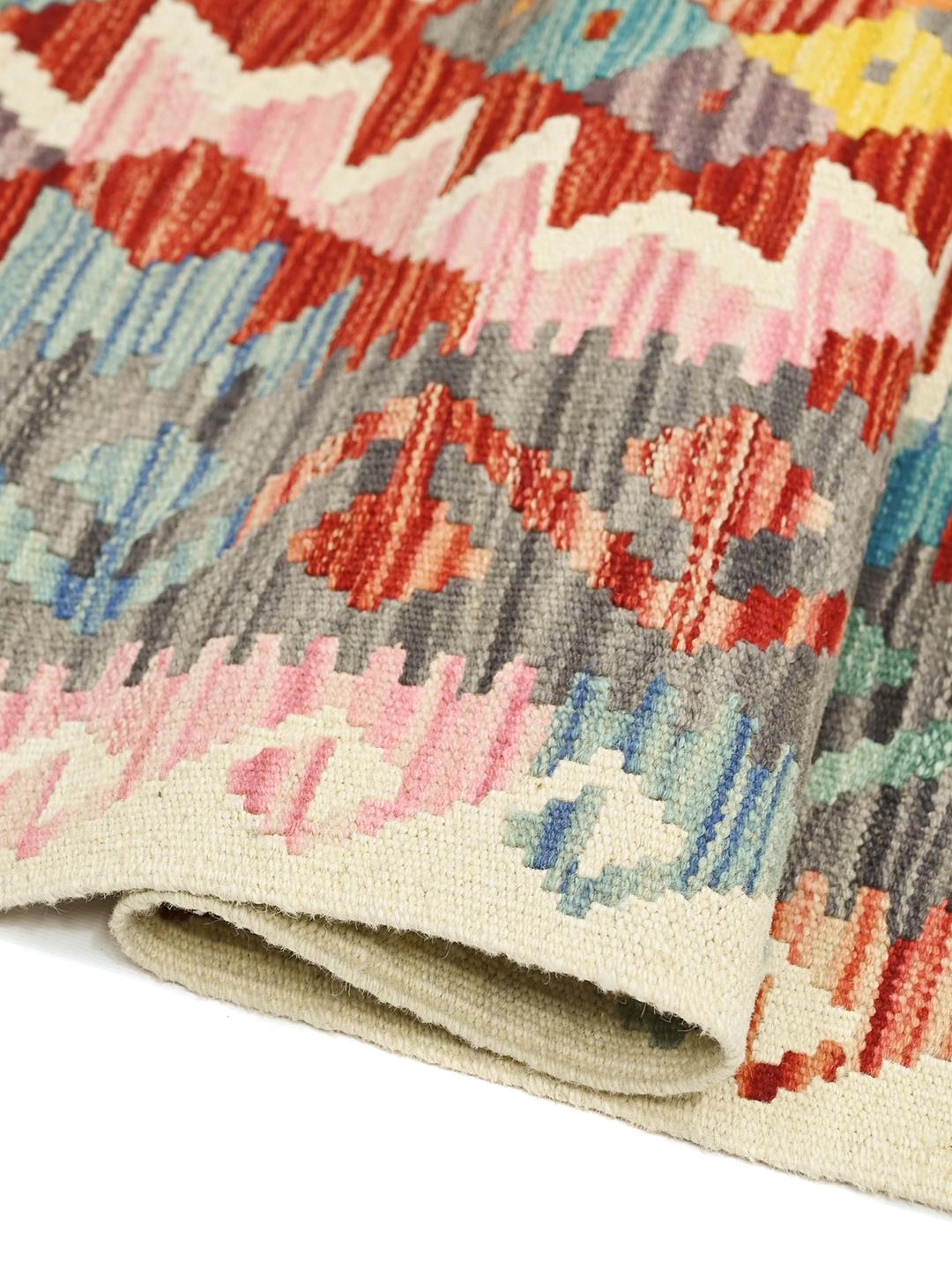
The Kelim rugs of Afghanistan are celebrated for their deep roots in nomadic culture, where they were traditionally crafted to serve both functional and decorative purposes. These rugs are a testament to the enduring legacy of Middle Eastern weaving, where techniques have been passed down through generations. The evolution of these designs reflects a blend of tribal identity and the artistic expression of the weavers who create them.
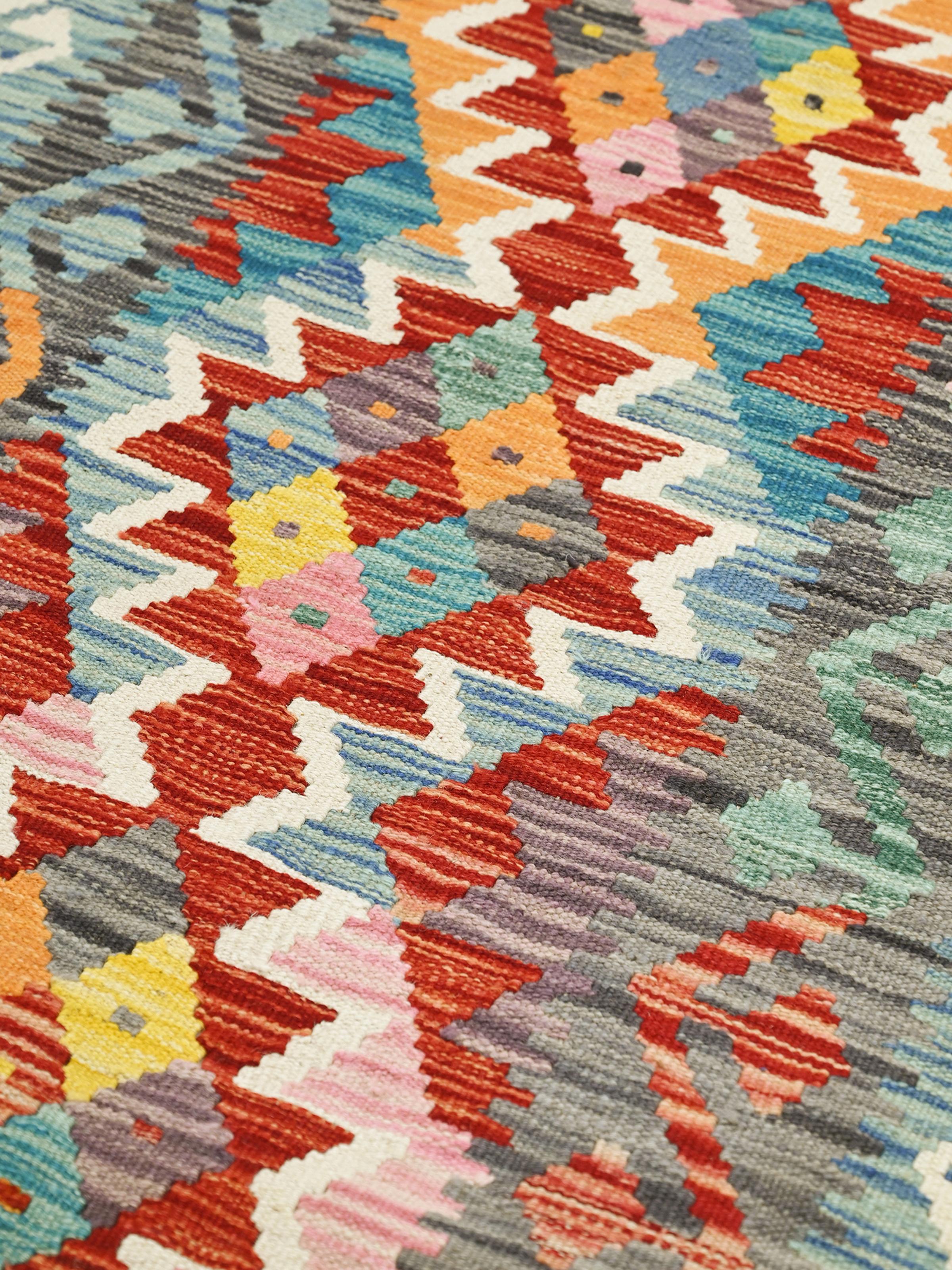
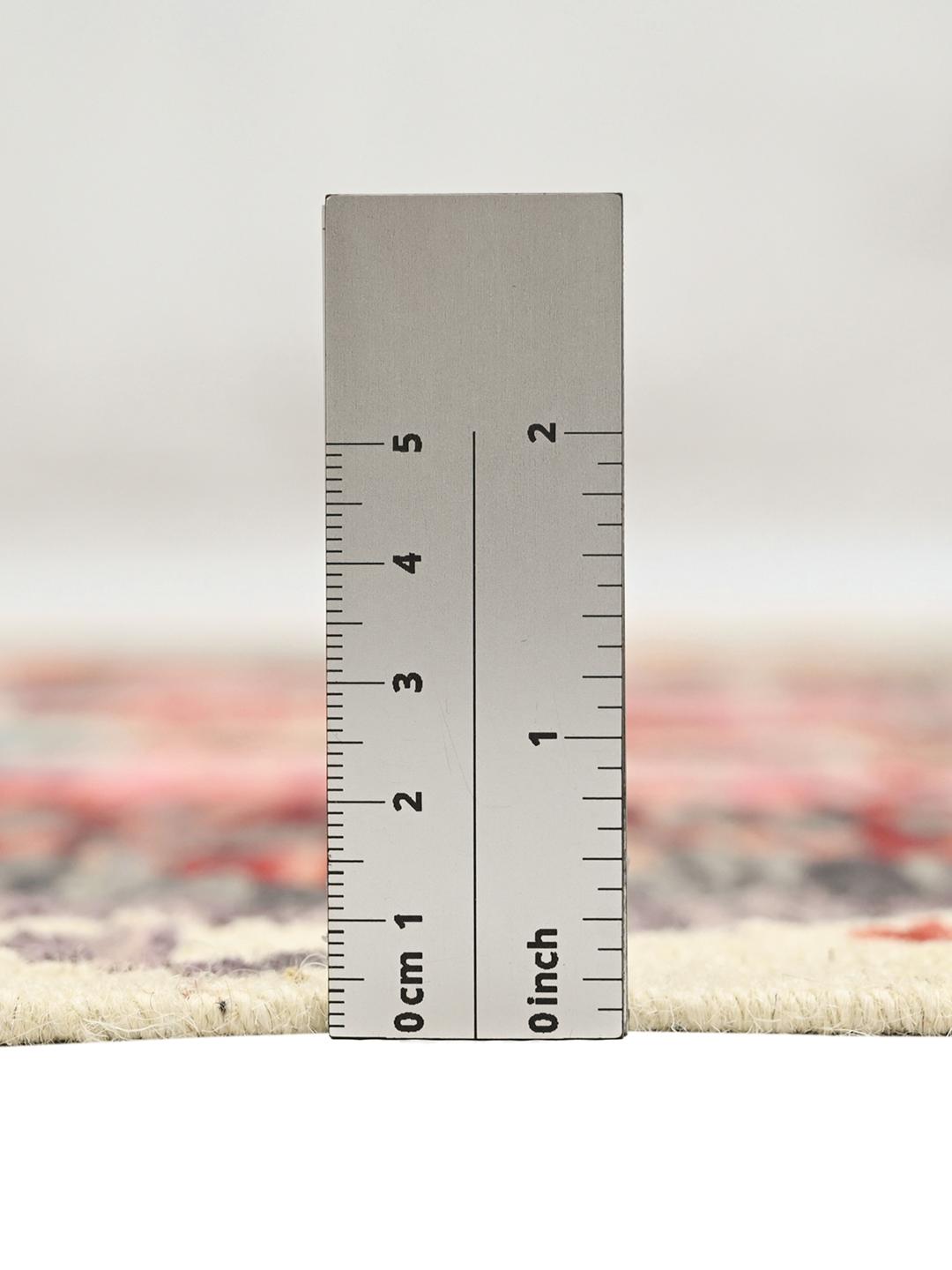
The term 'Kelim' refers to a flat-woven technique where the weft and warp are interlaced to create a smooth, pileless surface. This method is highly prized for its versatility and the crispness it allows in geometric designs. Unlike knotted rugs, the flat-weave construction relies on the skill of the weaver to manage the tension and colour changes perfectly, producing a rug that is lightweight, reversible, and exceptionally durable.
The visual language of this tradition is defined by bold geometric forms, often featuring diamonds, triangles, and intricate borders. These motifs are not merely decorative but are deeply symbolic, often representing aspects of tribal life, protection, or the natural environment. The vibrant palette is a hallmark of the Afghan style, utilising a range of hues to create a lively, rhythmic effect that draws the eye and energises a room.
Collecting these rugs is an investment in cultural history. Each piece serves as a physical record of the weaver's story, skill, and creative vision. Because they are handcrafted in small batches or as singular projects, they offer a level of authenticity that connects the modern home to ancient craft traditions. Owning a Kelim is a way to honour the artistry of the Middle East while adding a layer of heritage to your personal space.