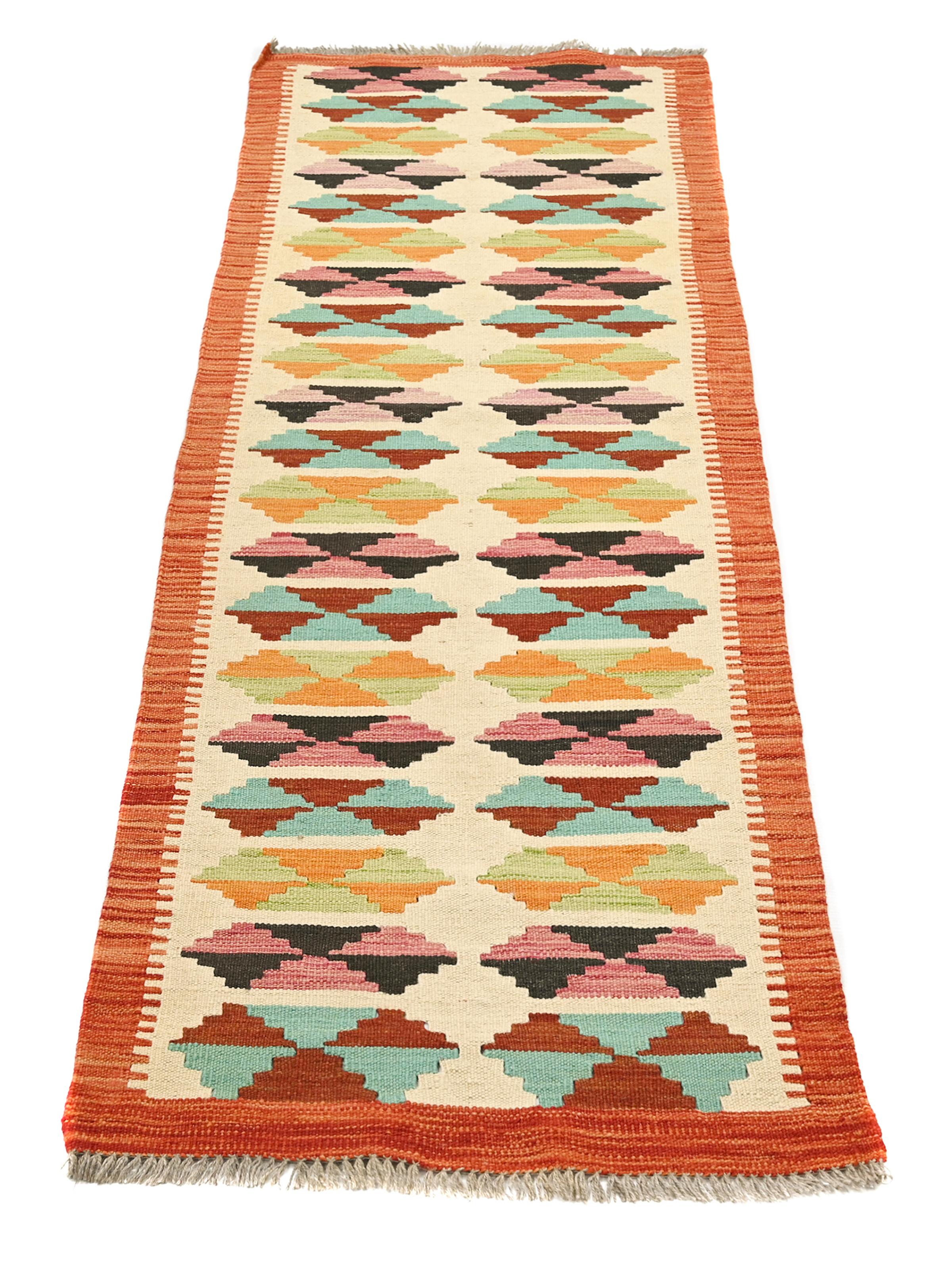
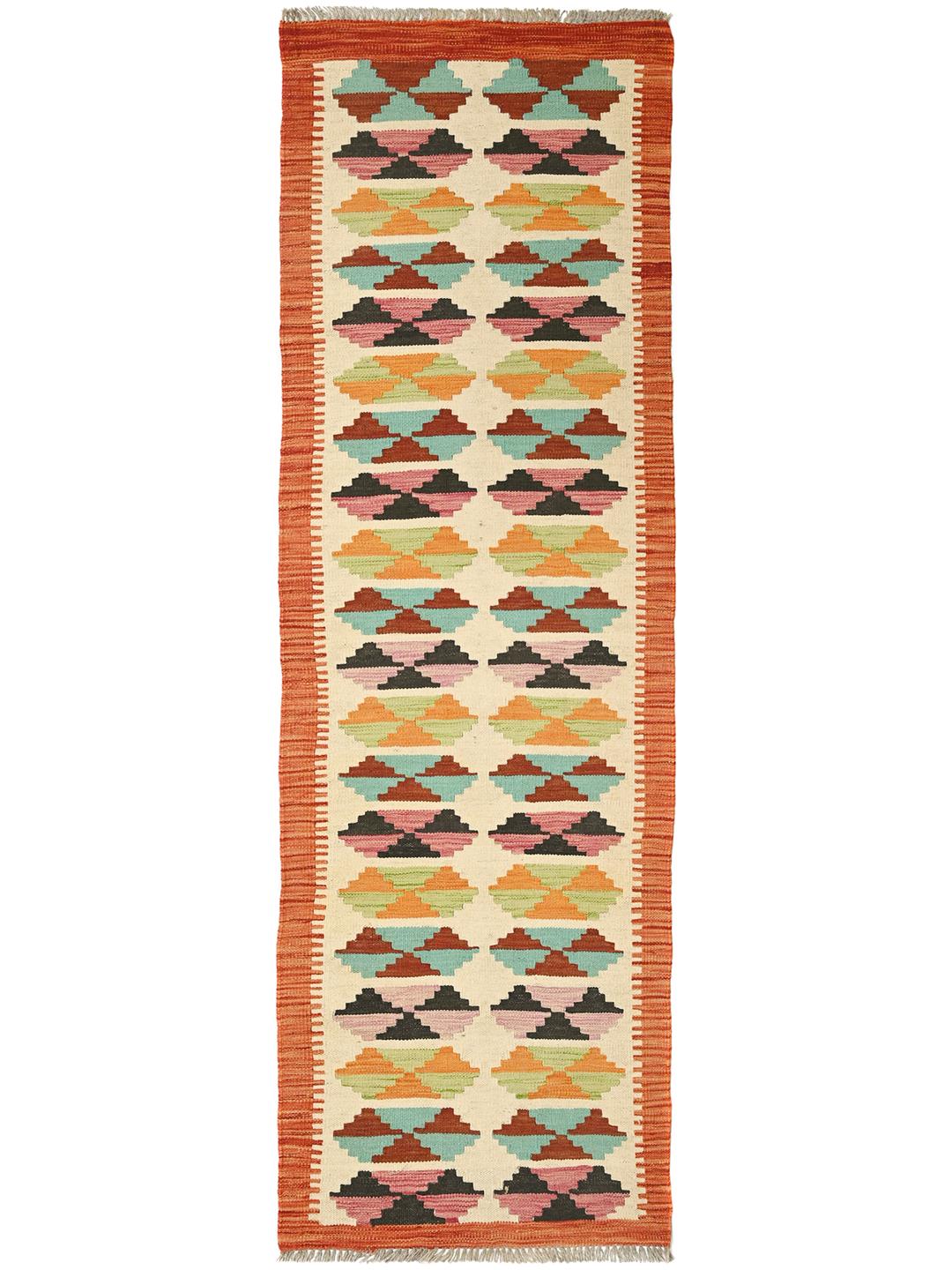
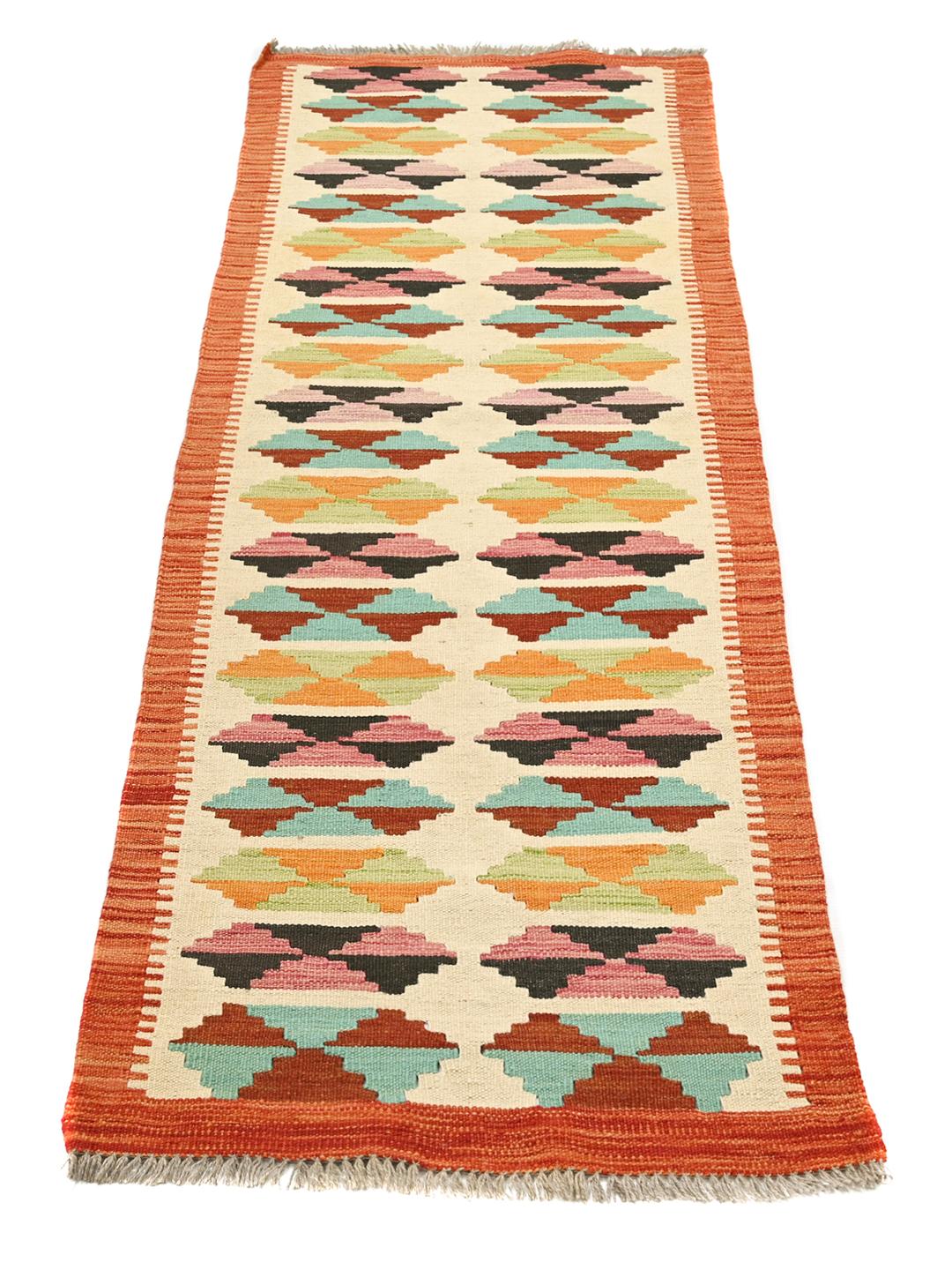
Afghan kelims are deeply rooted in the nomadic and village traditions of Central Asia. These flat-woven rugs have been produced for centuries, serving as functional household items that were essential for life in harsh, mountainous environments. The tradition of weaving in this region has evolved over generations, blending local techniques with influences from along the ancient trade routes.
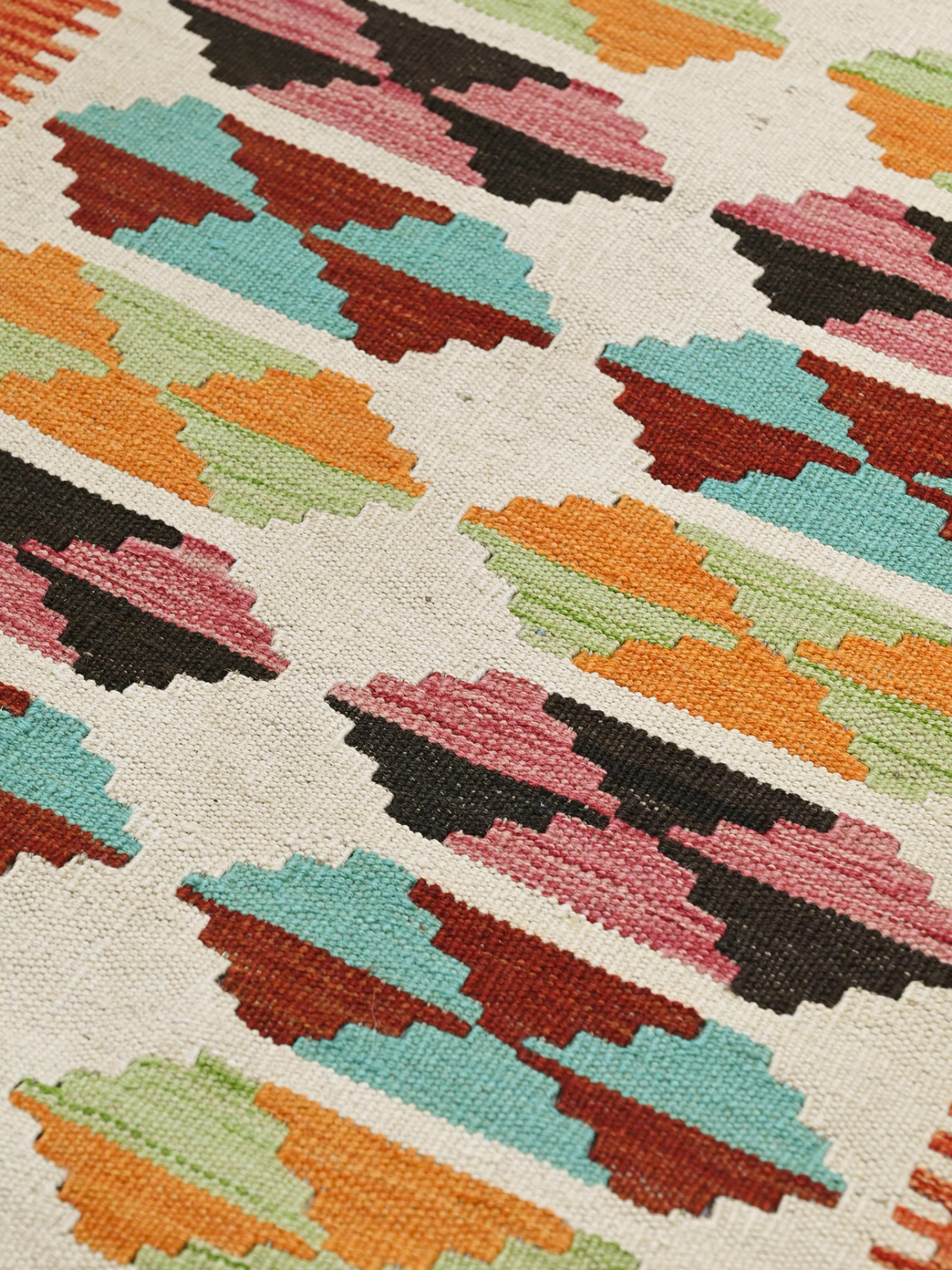
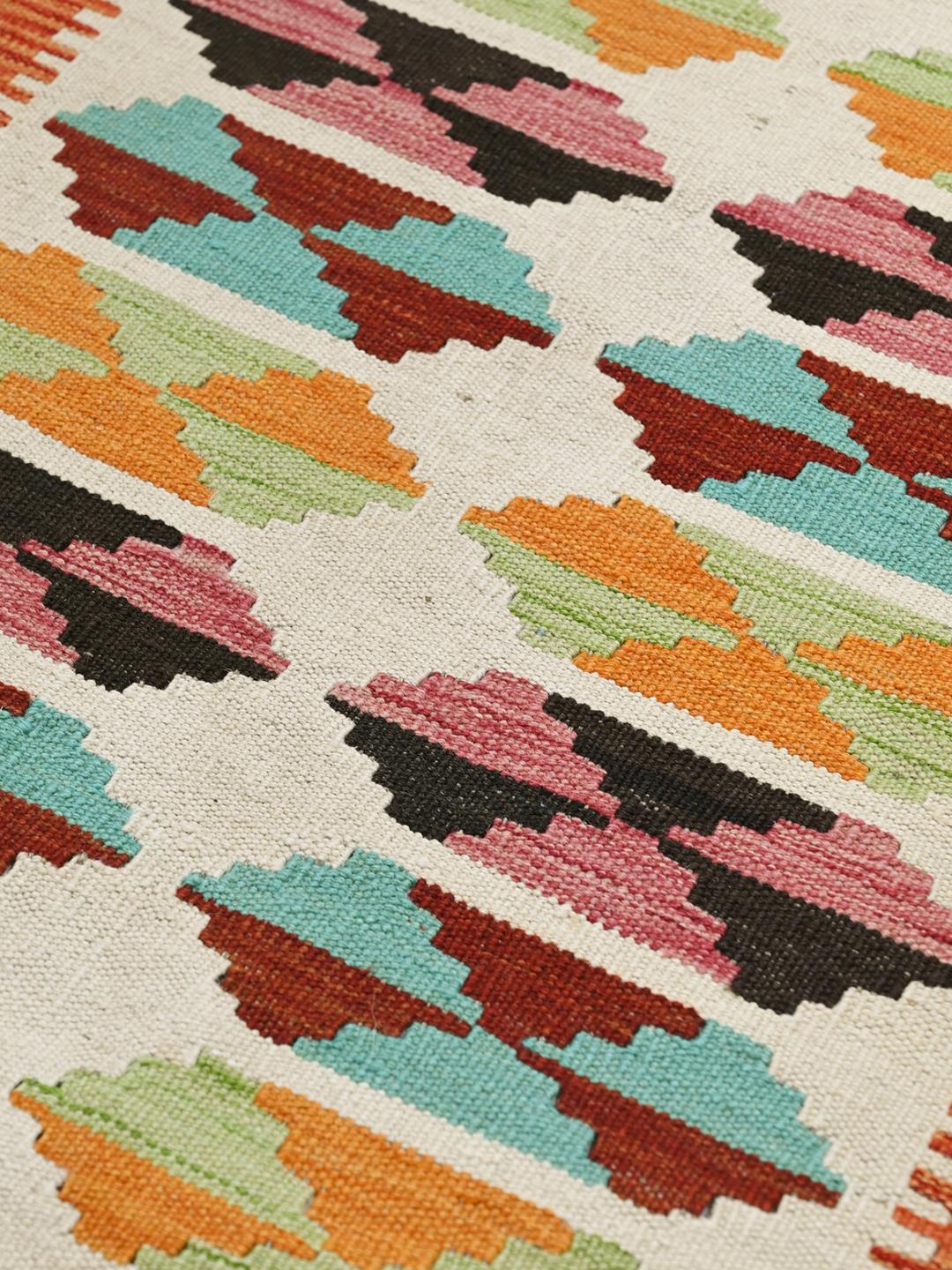
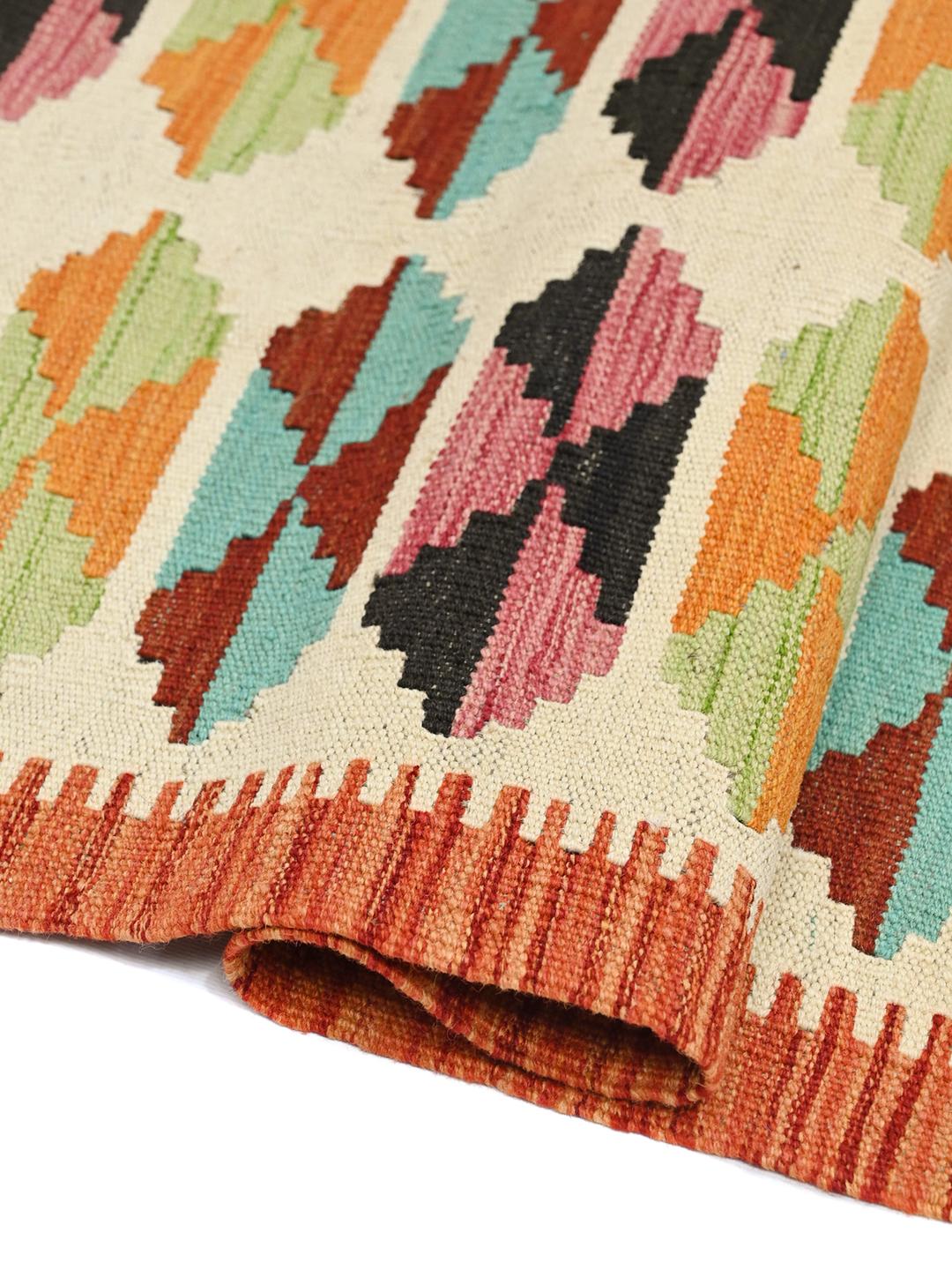
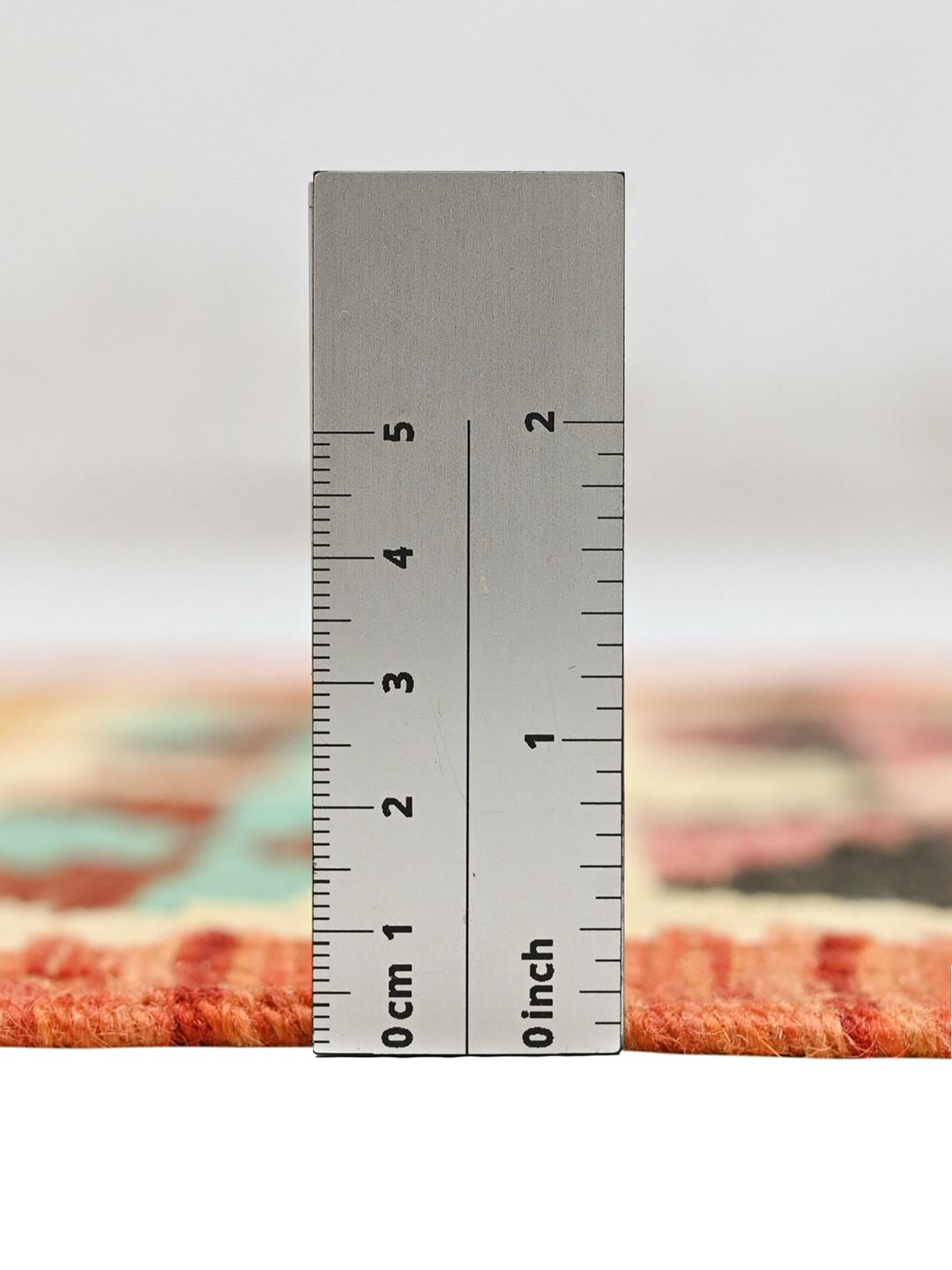
The term kelim, or kilim, refers to the specific flat-weave construction technique where the warp and weft are interlocked without a knotted pile. This method creates a lightweight, reversible rug that is prized for its strength and versatility. Because there is no pile to wear down, these runners are exceptionally durable and maintain their crisp, clean patterns for many years.
The visual language of these runners is defined by bold, geometric motifs often inspired by tribal symbols, landscapes, and local history. The use of repeating medallions and sharp, angular shapes creates a rhythm that feels both grounded and energetic. Each colour is traditionally derived from natural dyes, which give the wool its characteristic depth and allow the hues to age beautifully over time.
Collectors value Afghan kelims for their raw authenticity and the skill required to maintain consistent tension across the entire weave. Owning one is a way to connect with a rich cultural heritage that prioritises utility, beauty, and the preservation of ancient craft. These runners are more than just floor coverings; they are historical artefacts that bring a sense of history and human presence into modern living spaces.