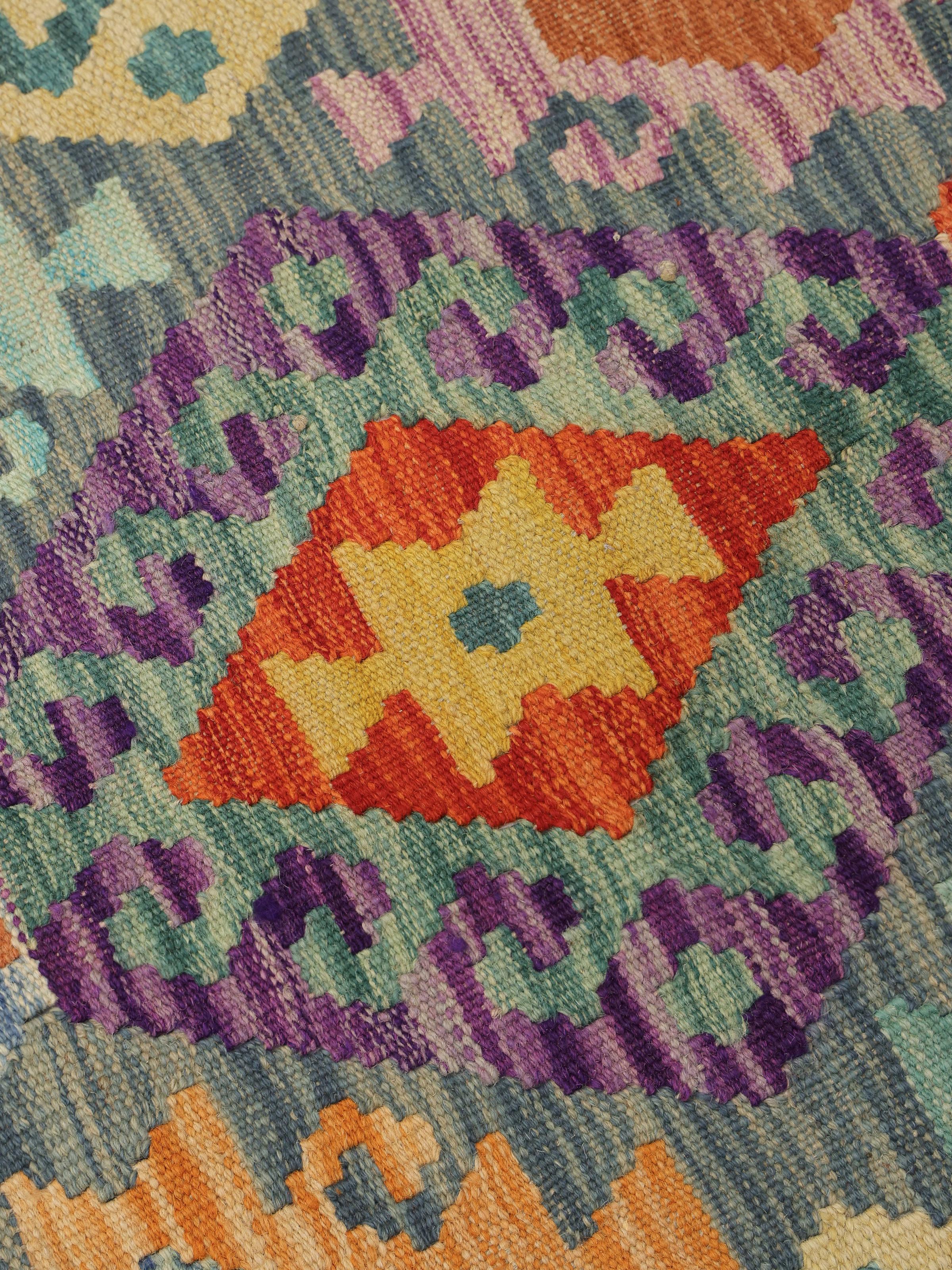
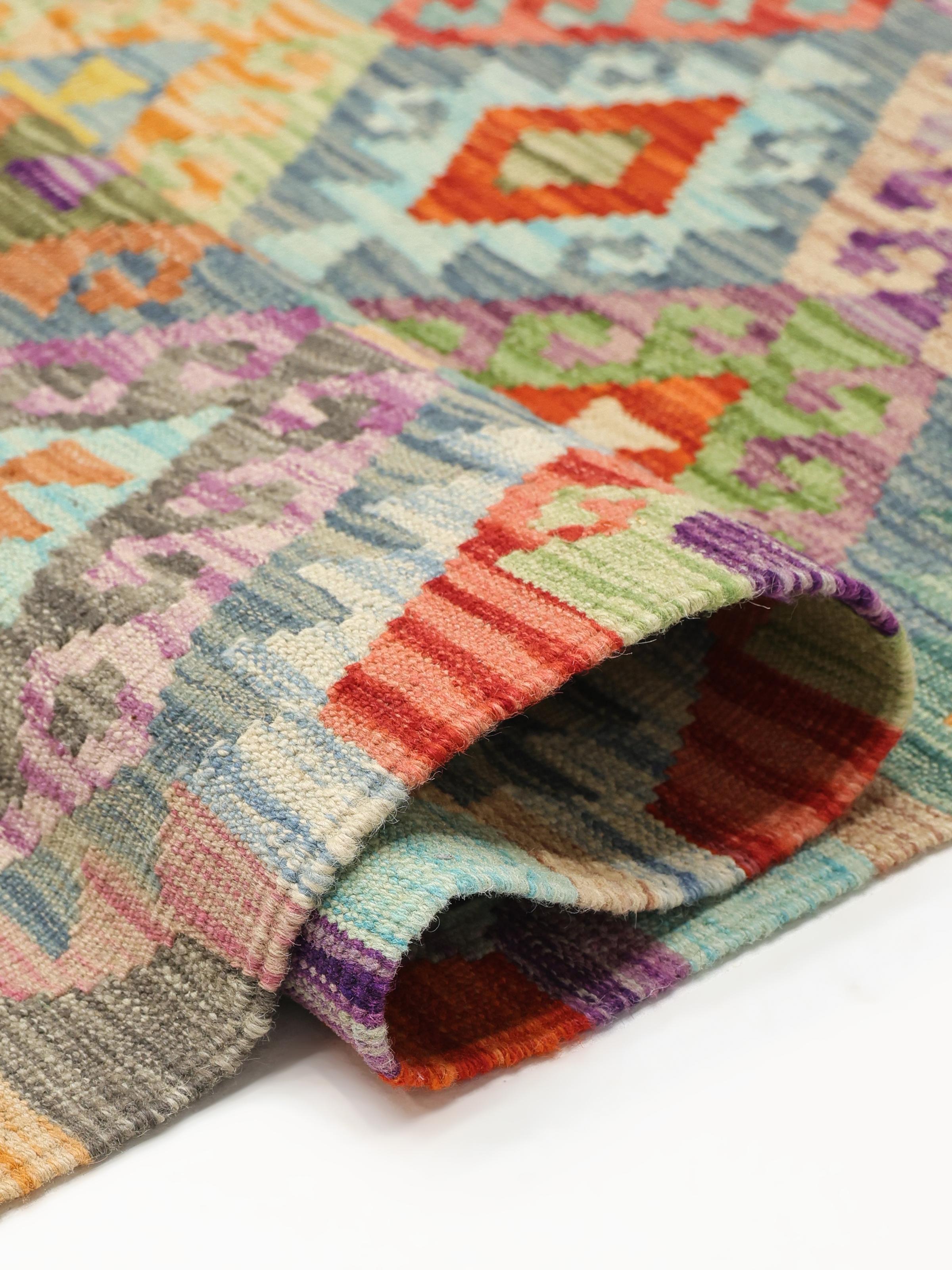
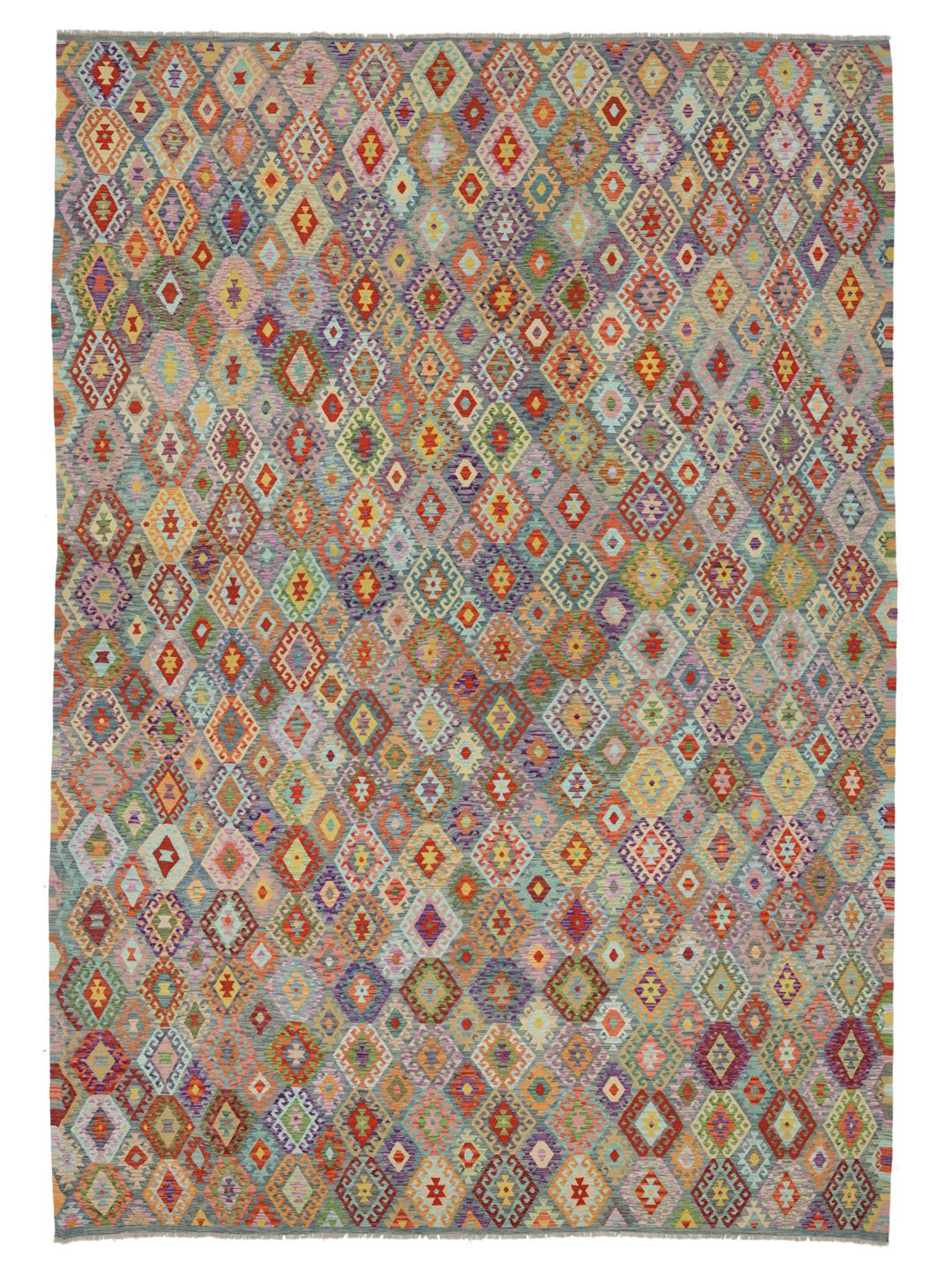
The tradition of weaving these flat-weave rugs in Afghanistan is deeply rooted in the nomadic history of the region. Historically, these pieces were crafted by tribes for practical use in tents, serving as floor coverings, blankets, or wall hangings. Over centuries, these functional objects evolved into the exquisite decorative rugs we admire today, carrying forward the nomadic spirit and cultural identity of the Afghan people.
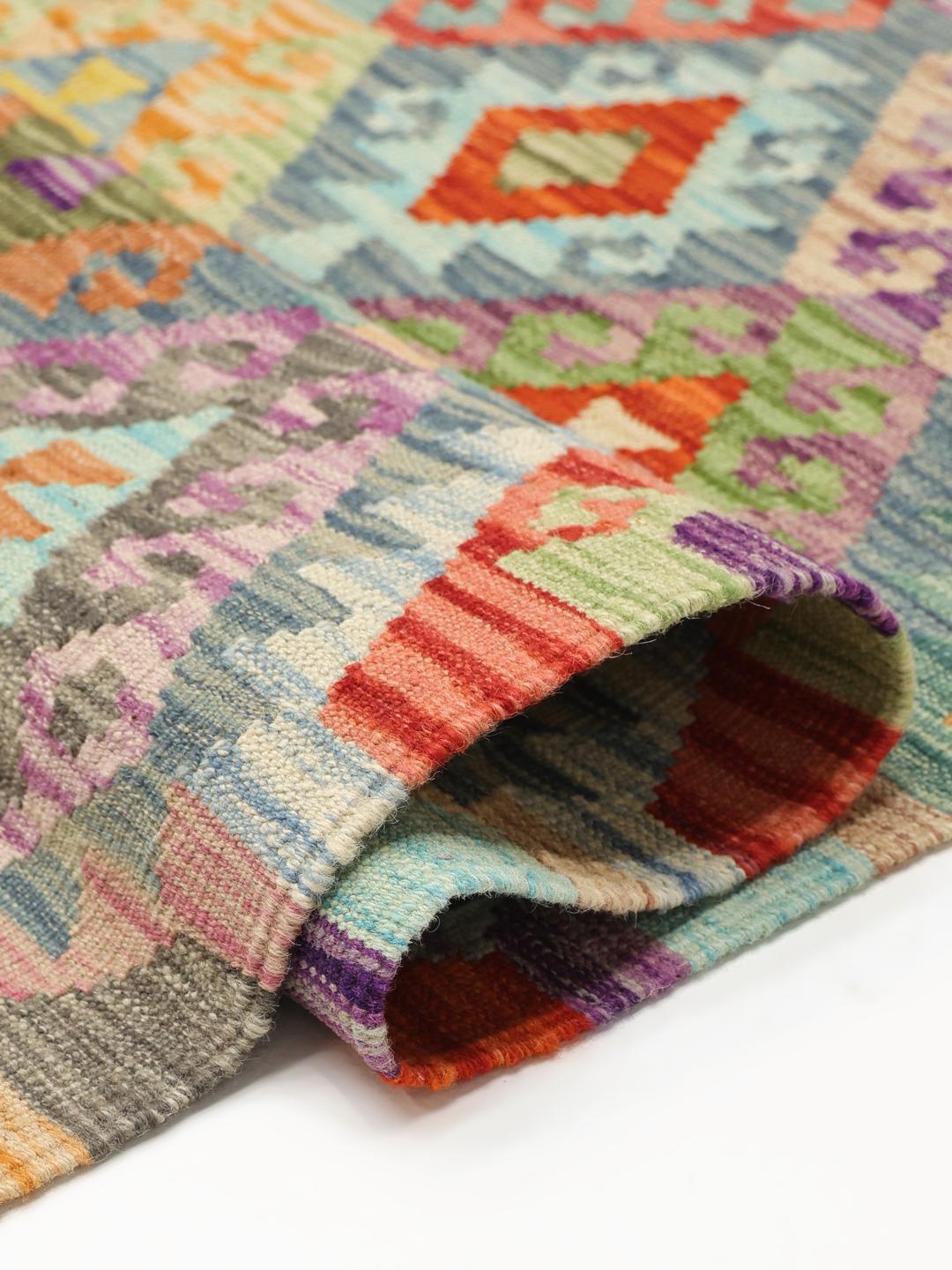
The term Kelim refers to the flat-weaving technique where the weft threads are tightly packed to create a durable, reversible fabric without a pile. This technique is highly prized for its clarity of design and ability to showcase intricate geometric patterns. The skill required to maintain consistent tension across such a large surface is immense, reflecting the high level of technical mastery passed down through generations of weavers.
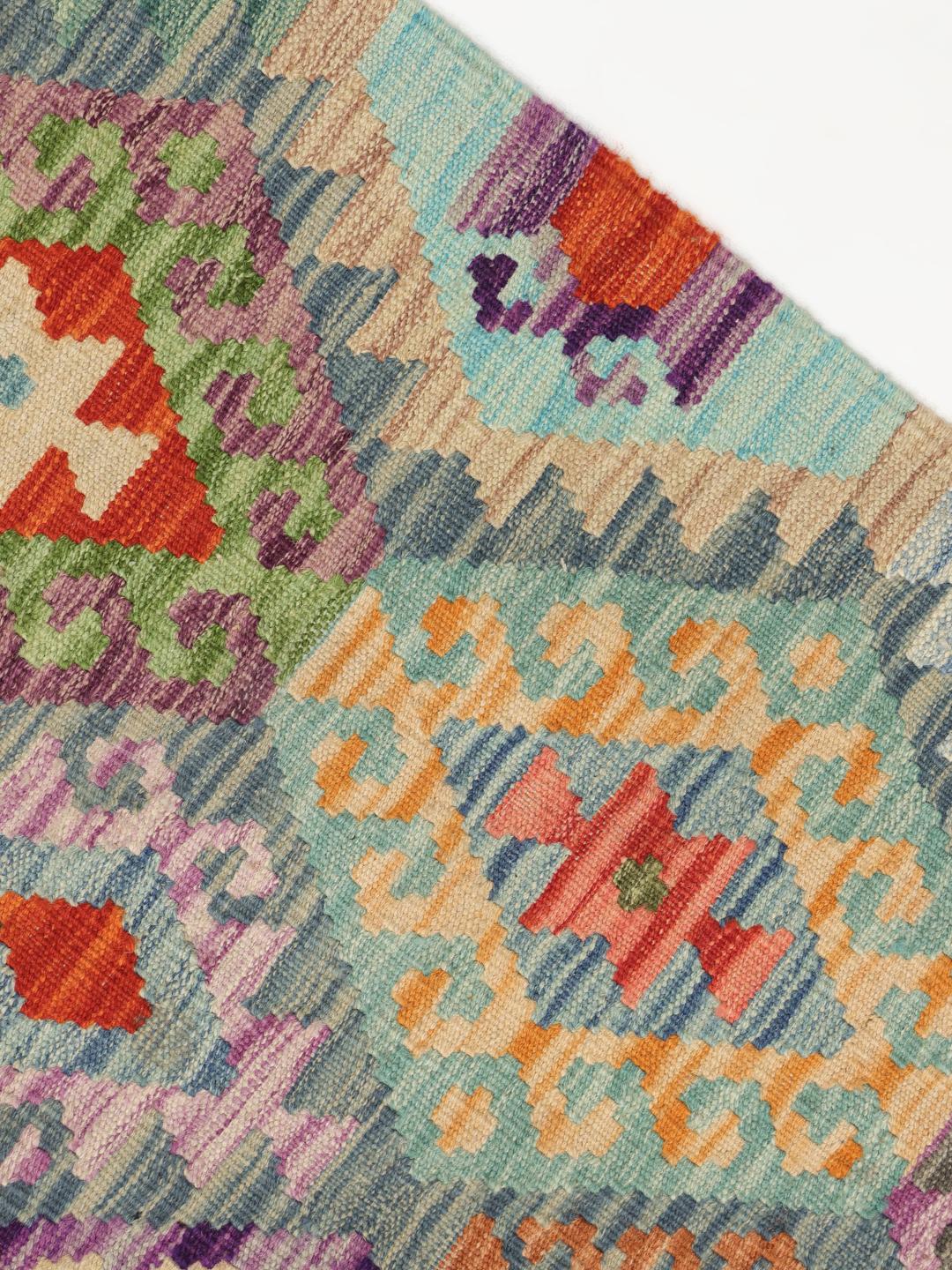
Signature design elements in these rugs include bold geometric motifs, often featuring diamonds, triangles, and stylized floral shapes. These patterns are not merely decorative but often hold symbolic meaning, representing elements of nature, protection, or tribal heritage. The vibrant colour palette is typically achieved through traditional dyeing methods, resulting in deep, rich hues that complement the complex layout of the field.
Collecting these rugs is an investment in cultural heritage and human skill. Each piece acts as a historical document, preserving the artistic vision and techniques of the region. By bringing one into your home, you are not just acquiring a floor covering, but a piece of living history that celebrates the enduring value of human-made art.