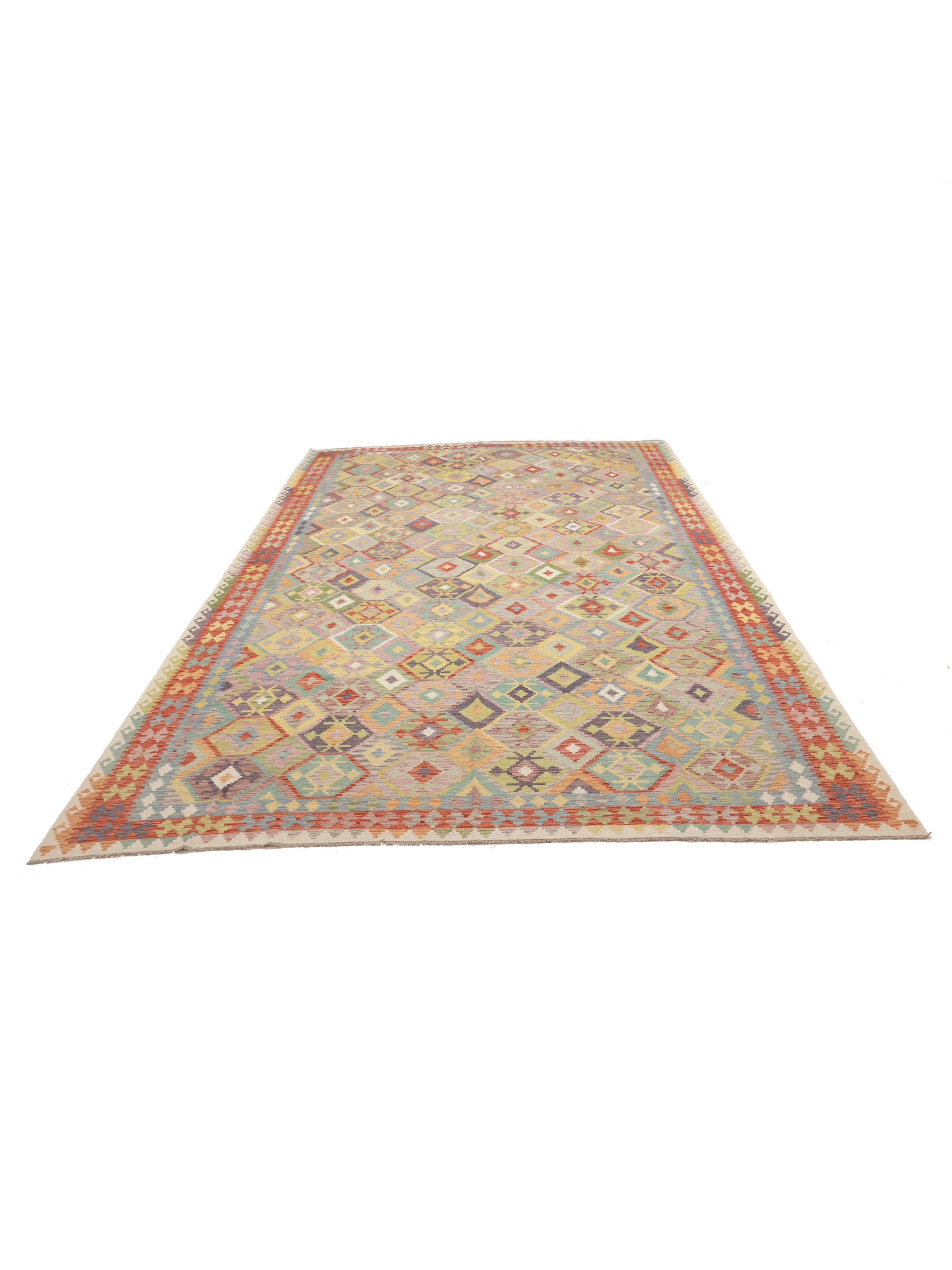
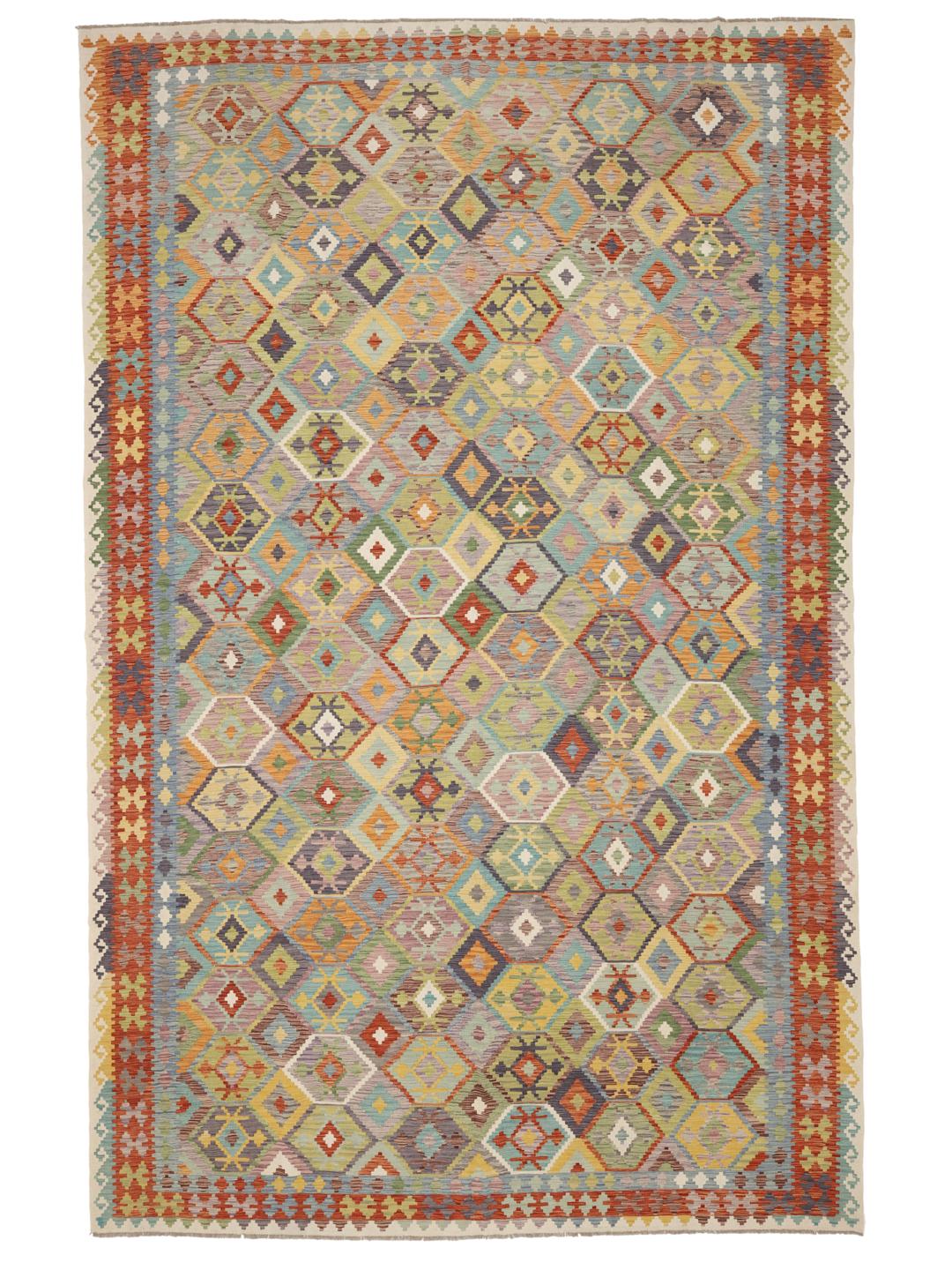
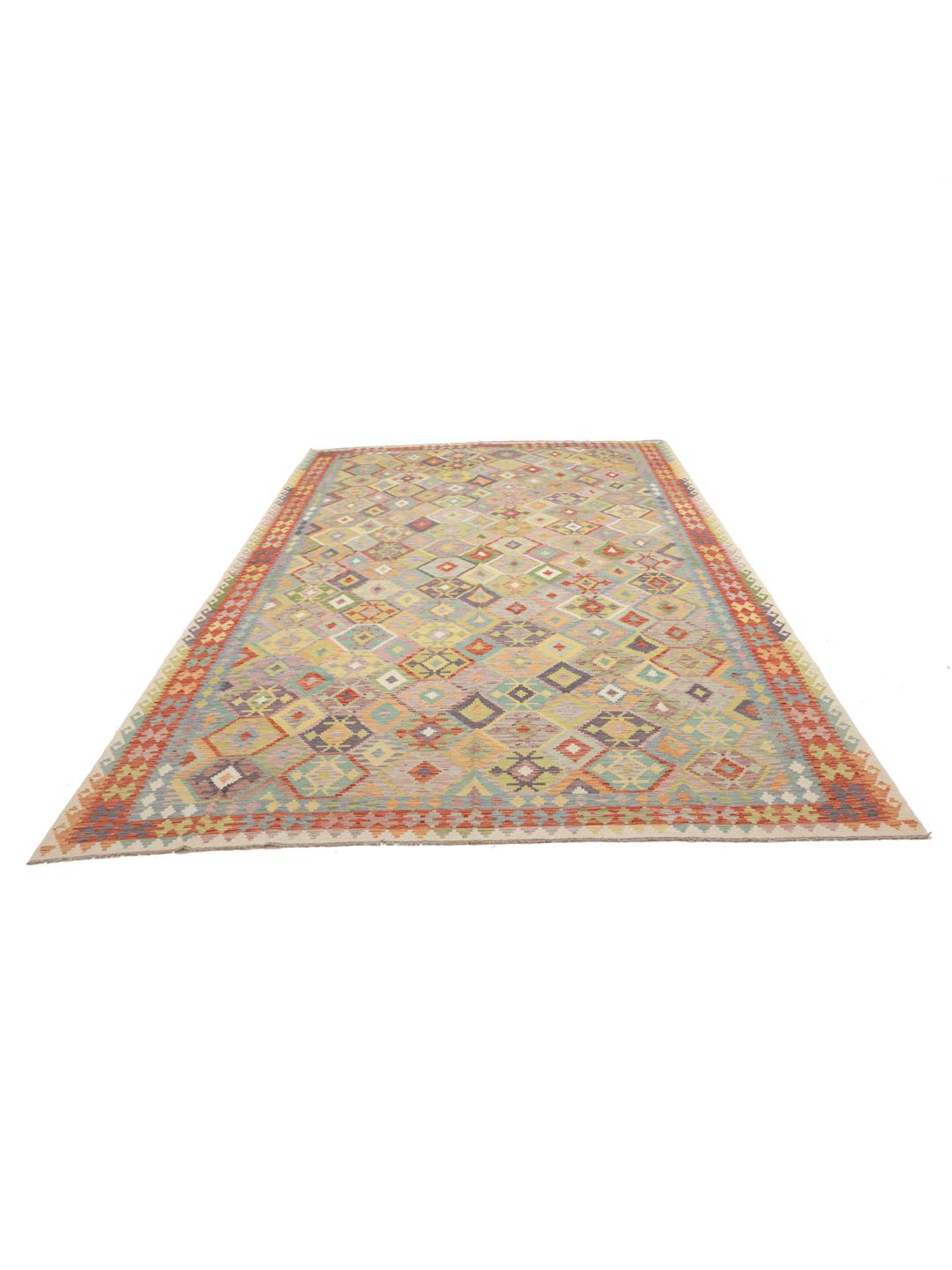
Kelim rugs have long been a cornerstone of nomadic and village life across the Middle East and Central Asia. Historically, these flat-woven textiles were crafted by tribal groups for practical purposes, serving as floor coverings, tent partitions, and storage bags. The tradition in Afghanistan is particularly celebrated for its use of bold colours and complex geometric motifs that reflect the cultural heritage of the region.
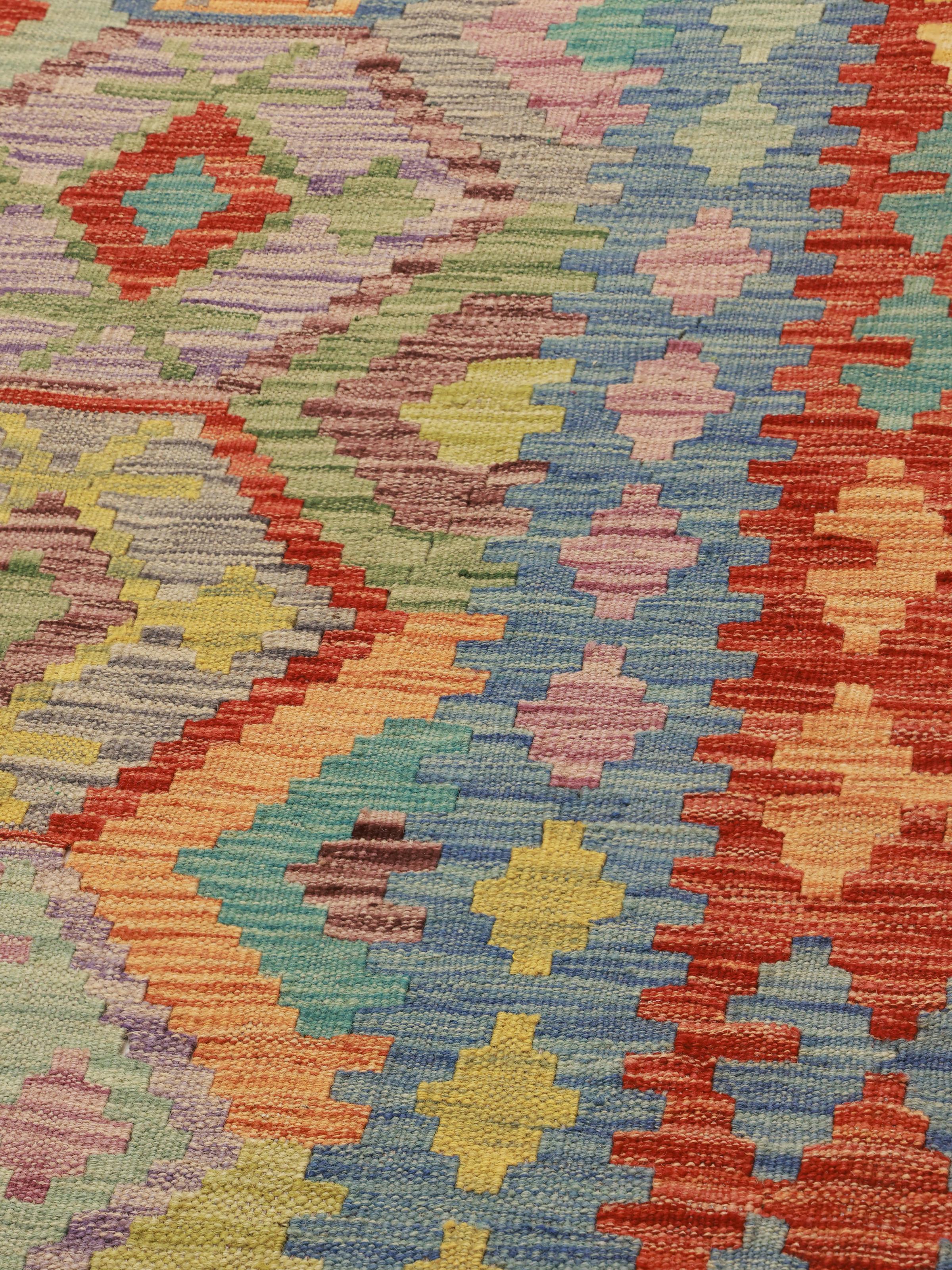
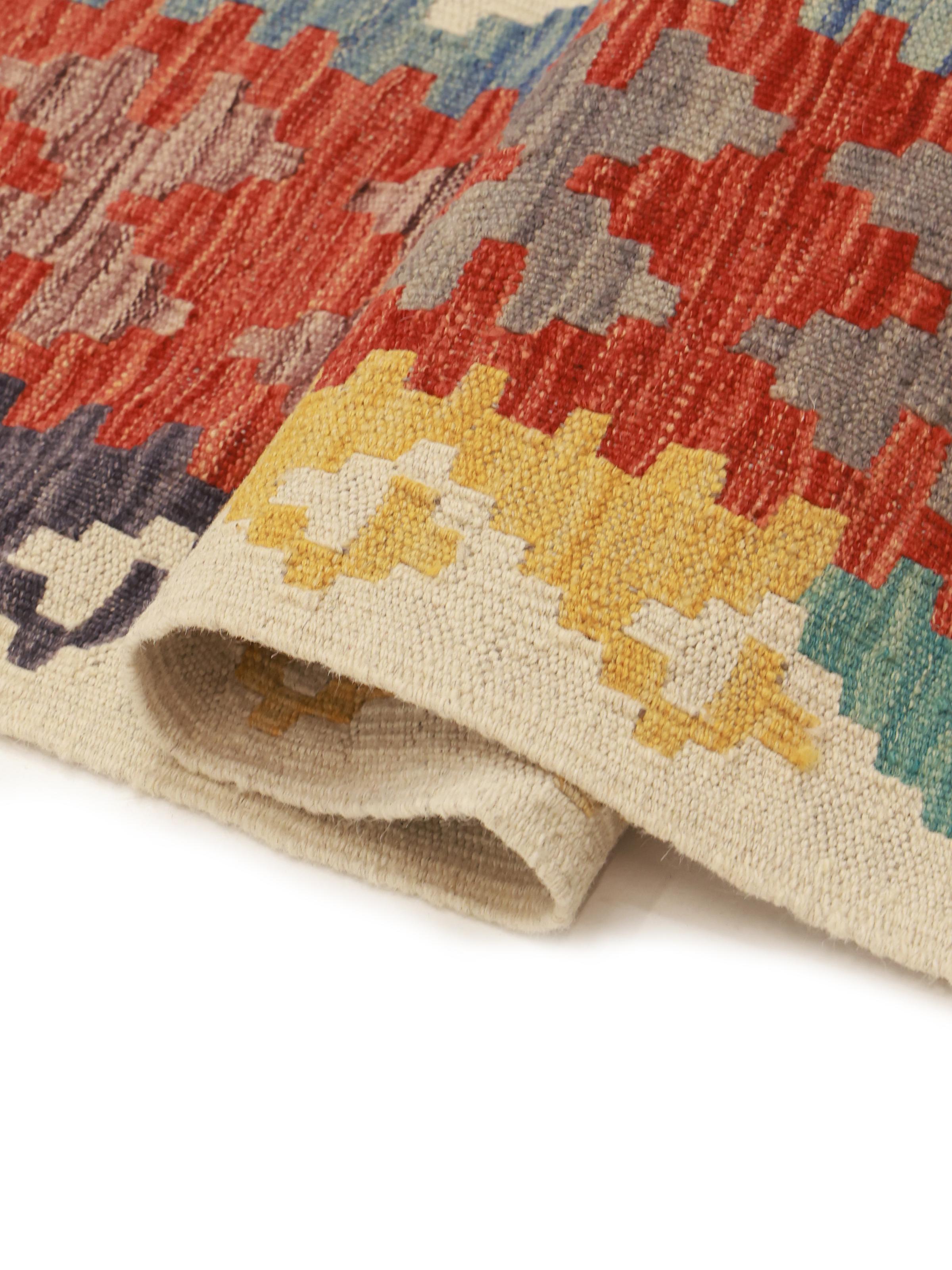
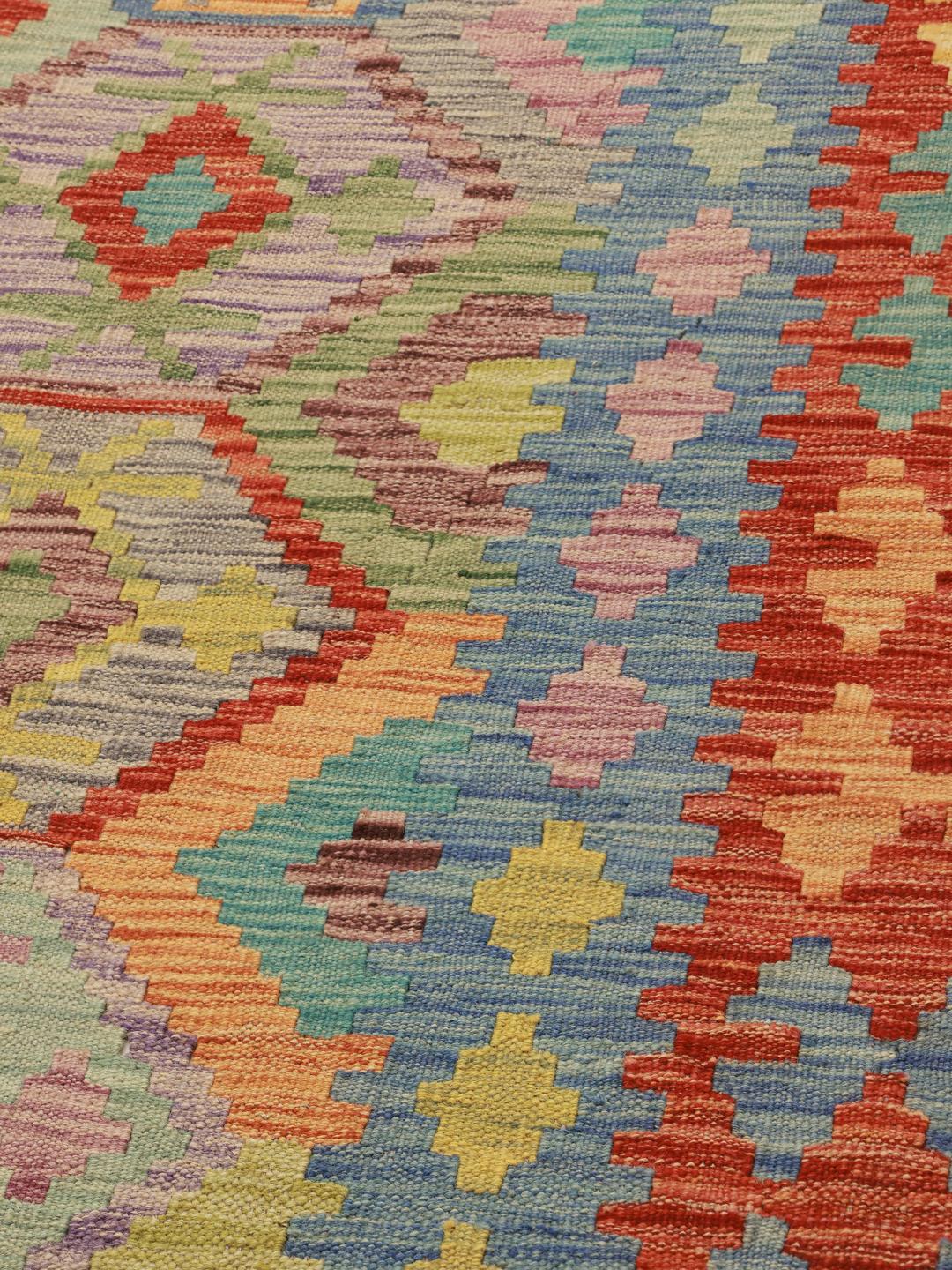
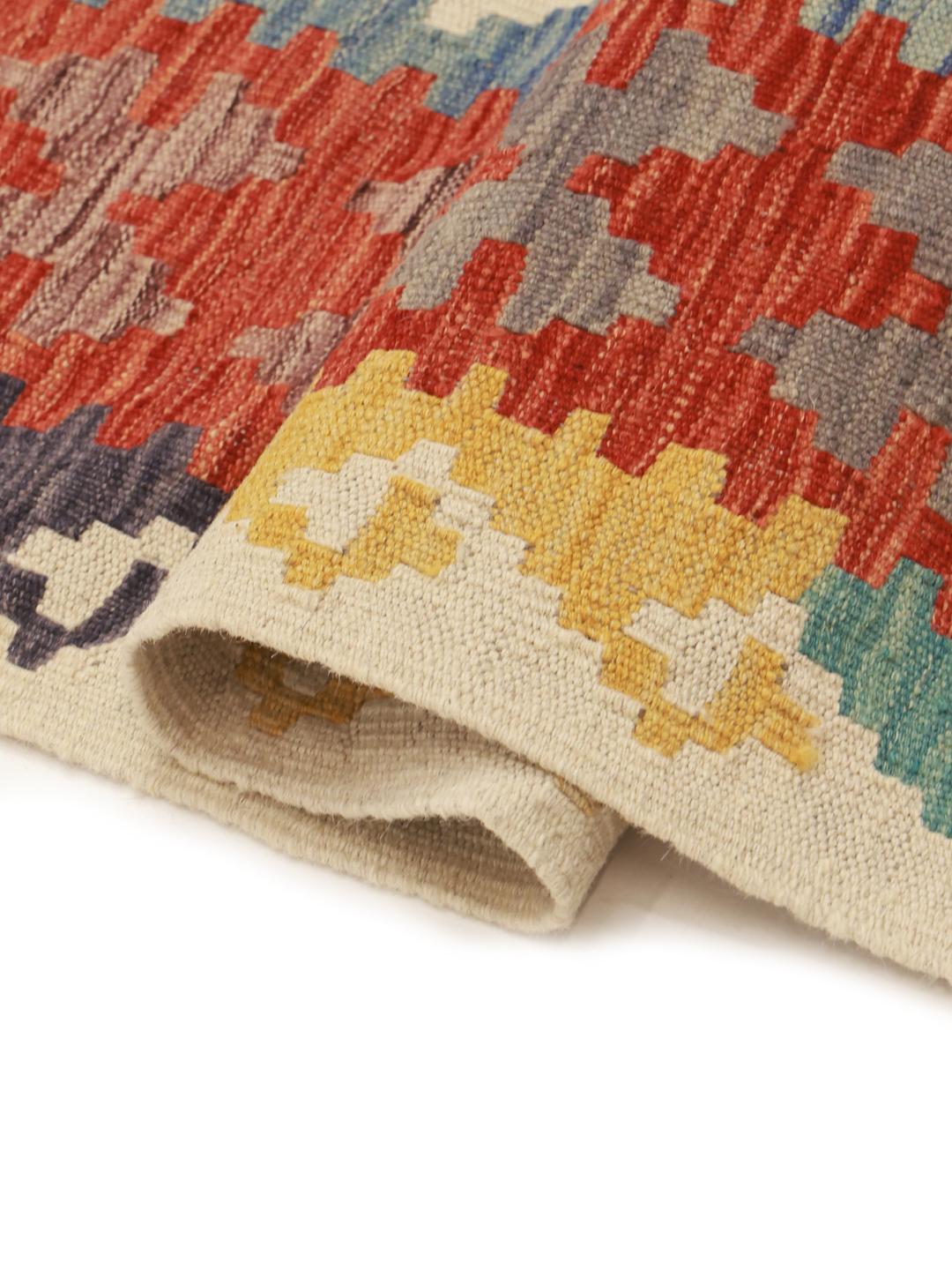
The term Kelim refers to the specific slit-weave technique where the weft threads are woven back and forth around the warp threads, creating the characteristic flat surface without a pile. This method allows for the creation of sharp, clean geometric patterns that are visible from both sides. Because the wool is typically hand-spun, the resulting fabric possesses a natural variation and depth that machine-made alternatives simply cannot match.
The design of this rug is characterised by repeating geometric shapes, often including diamonds, hexagons, and intricate borders. These motifs are not merely decorative; they often carry symbolic meaning, representing elements of nature, protection, or tribal identity. The use of vibrant, contrasting colours is a hallmark of the Afghan style, designed to bring life and character into the home environment.
Collecting these rugs is an investment in human skill and regional history. They are valued for their durability and the way they age, often developing a softer, more muted character over many years. Owning a piece like this connects your home to a centuries-old craft, preserving a legacy of artistry that continues to be relevant in contemporary interior design.