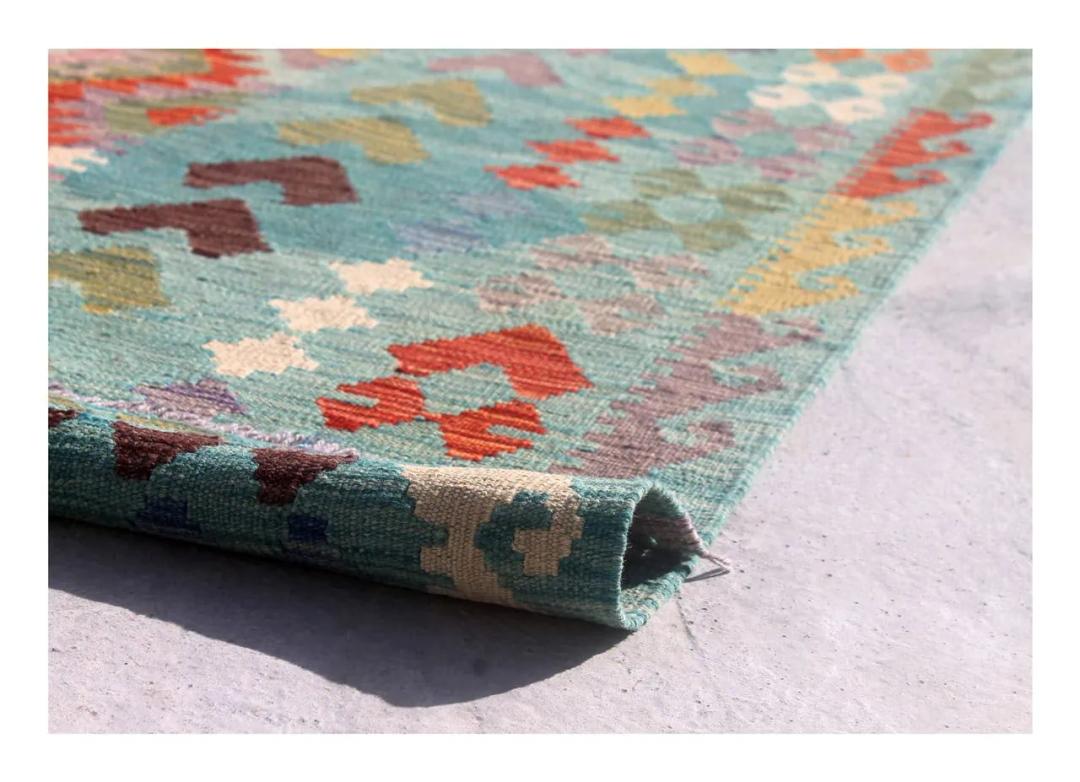
The tradition of weaving Kelim rugs in Afghanistan is deeply rooted in the nomadic and village cultures of the region. For generations, these flat-woven textiles have served functional roles in daily life, ranging from floor coverings and room dividers to saddlebags and storage sacks. This heritage of utility has evolved into a celebrated art form, with Afghan weavers becoming world-renowned for their ability to blend traditional patterns with earthy, vibrant colour palettes.
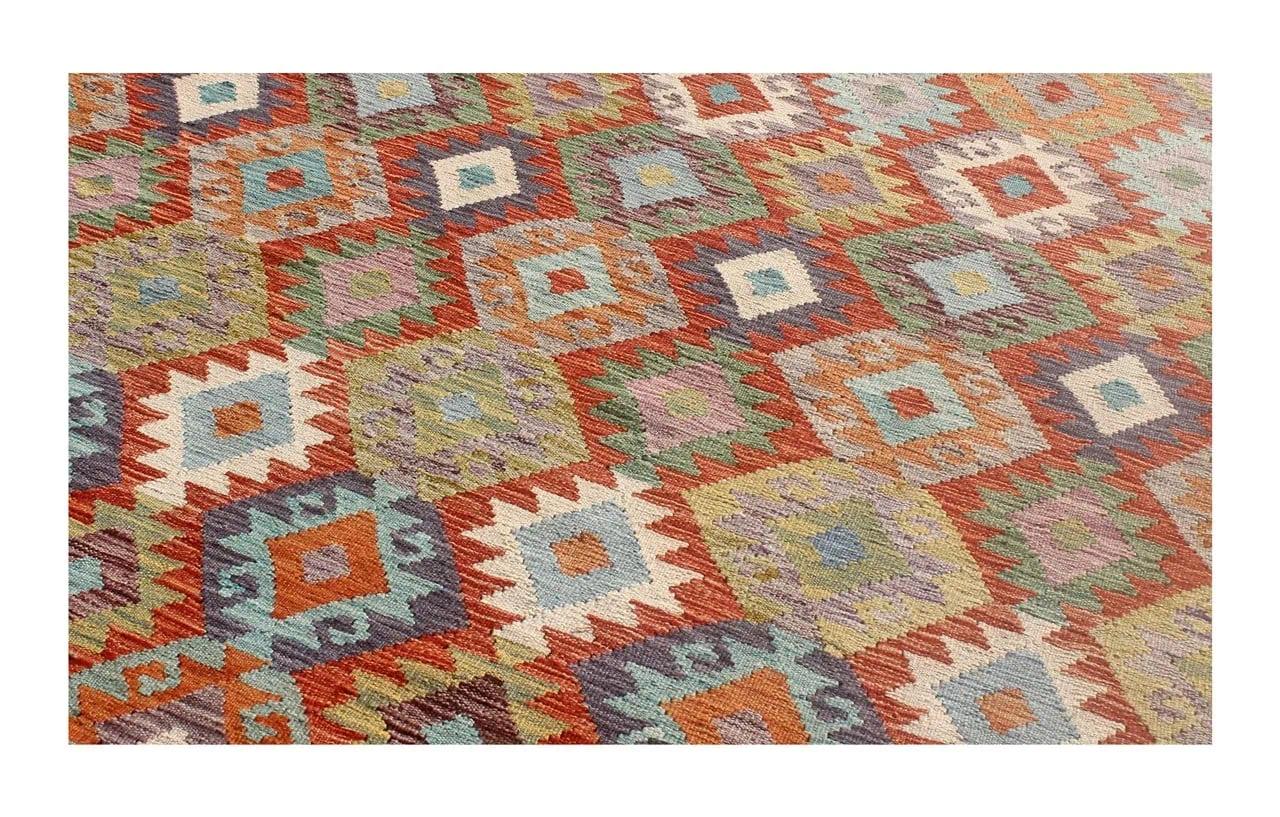
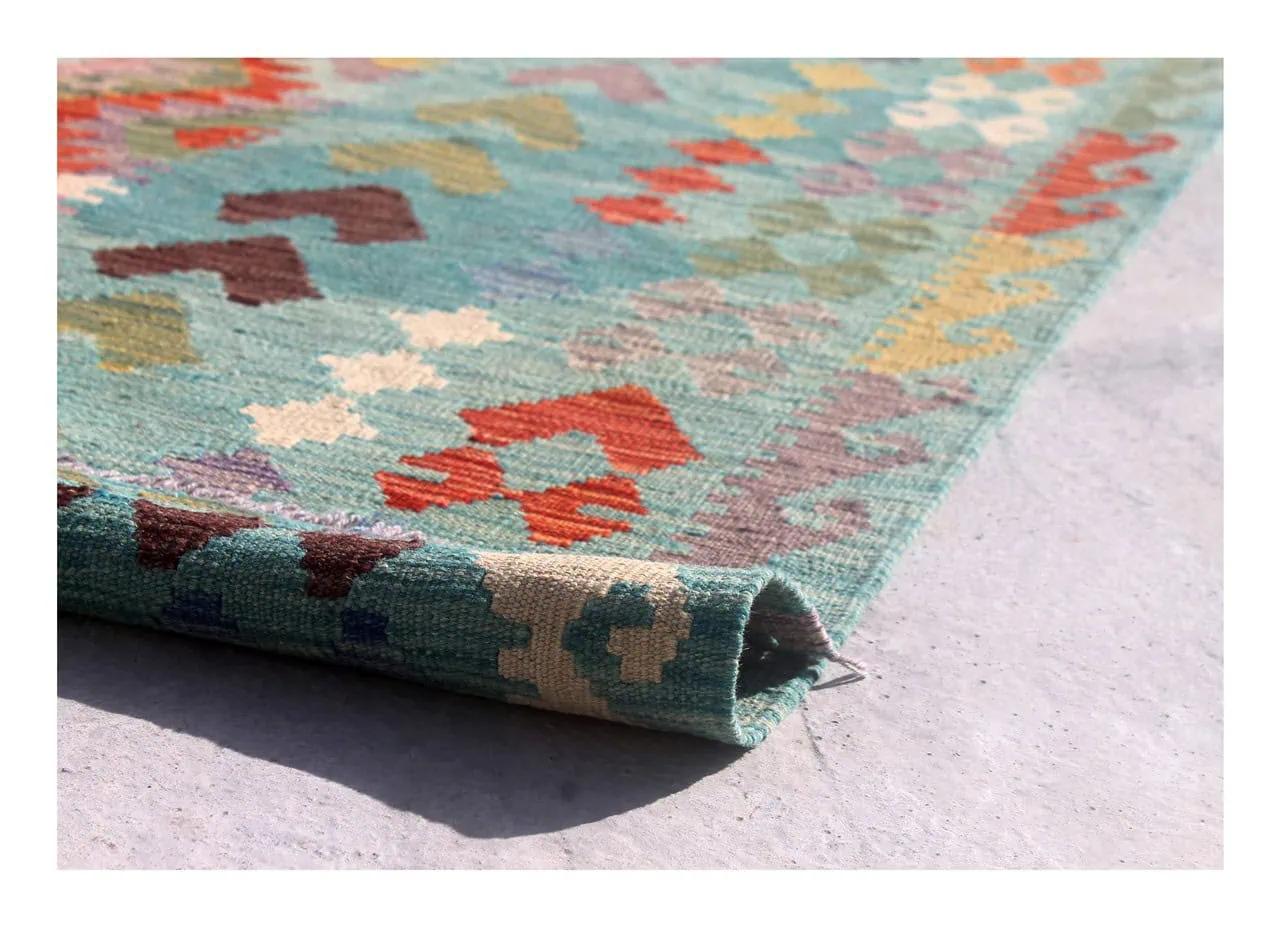
A Kelim is defined by its flat-weave construction, meaning it is created without a pile. The weaver interlaces the colourful wool weft threads with the warp threads to build the pattern directly into the structure of the fabric. This method produces a light, portable, and remarkably durable textile. The absence of pile allows the intricate geometric motifs to stand out with incredible clarity, showcasing the weaver's skill in design and colour placement.
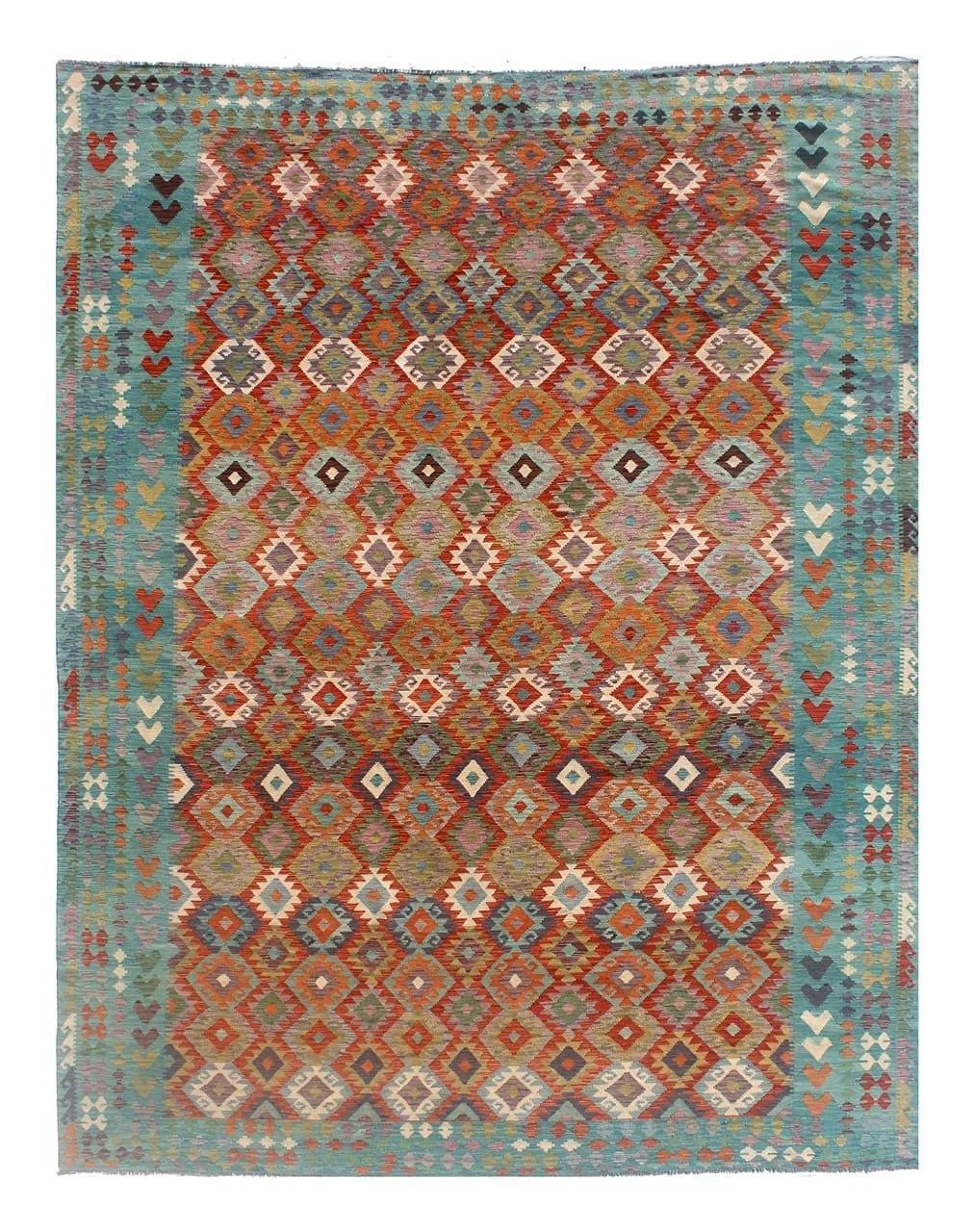
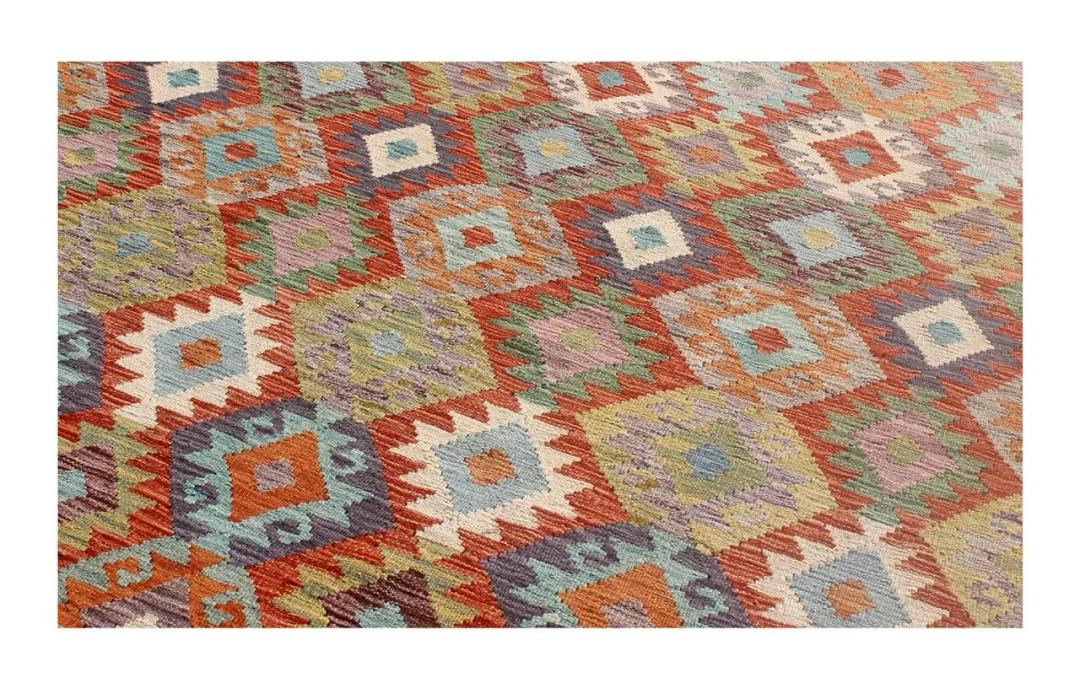
The signature design language of these rugs is dominated by geometric shapes such as diamonds, triangles, and stylized floral motifs. These patterns are often arranged in repeating sequences, creating a sense of rhythm across the surface of the rug. The borders are frequently adorned with smaller, complementary geometric elements that frame the main field. These motifs are not merely decorative but are deeply symbolic, often reflecting the environment, beliefs, and stories of the communities where they are created.
Owning an Afghan Kelim is a way to connect with a rich, enduring cultural legacy. Collectors value these pieces for their authenticity, the natural variation inherent in hand-woven goods, and the sheer skill required to execute such complex designs from memory. By acquiring this rug, you are not only enhancing your living space but also preserving a craft tradition that has been passed down through countless generations.