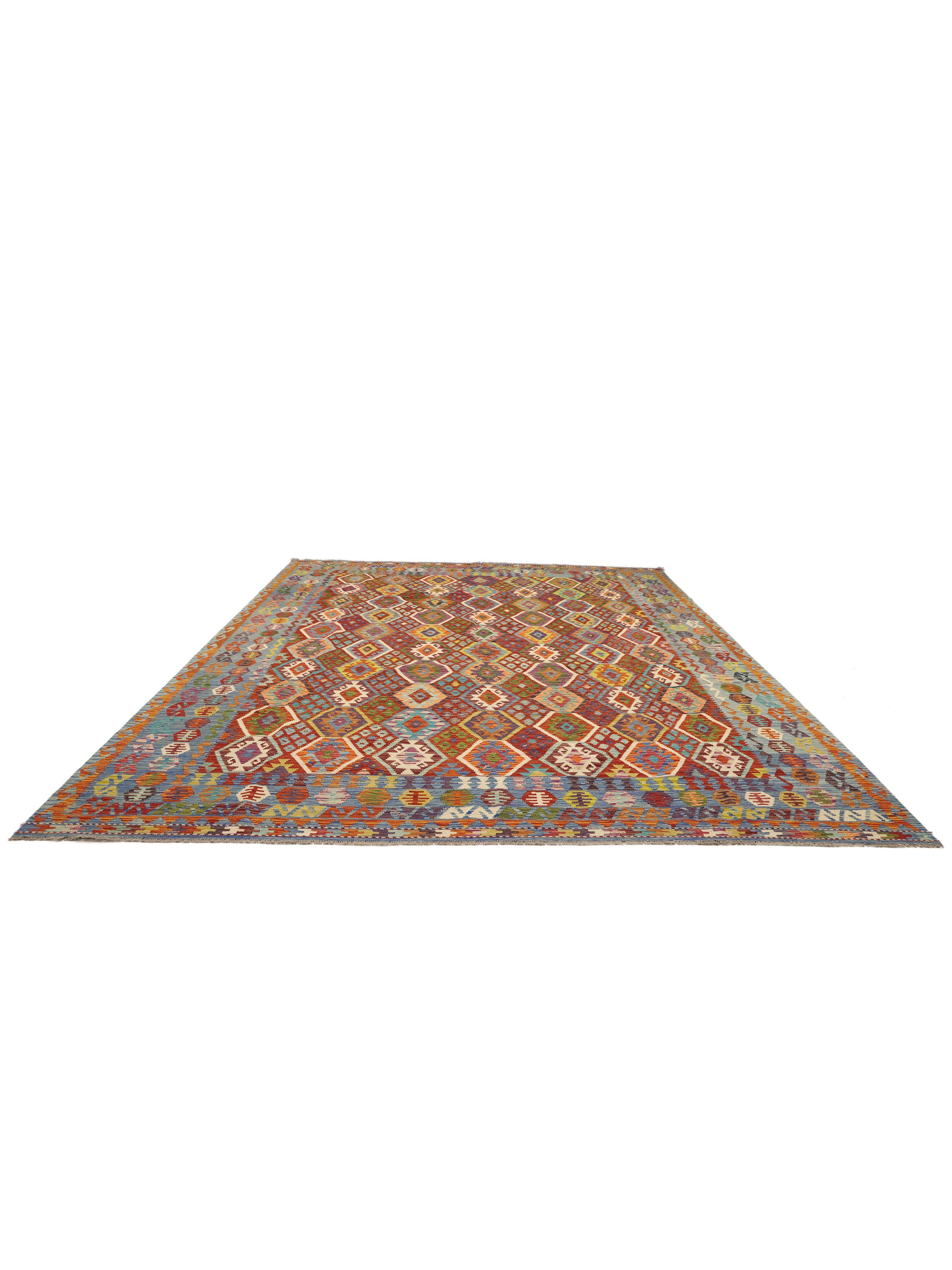
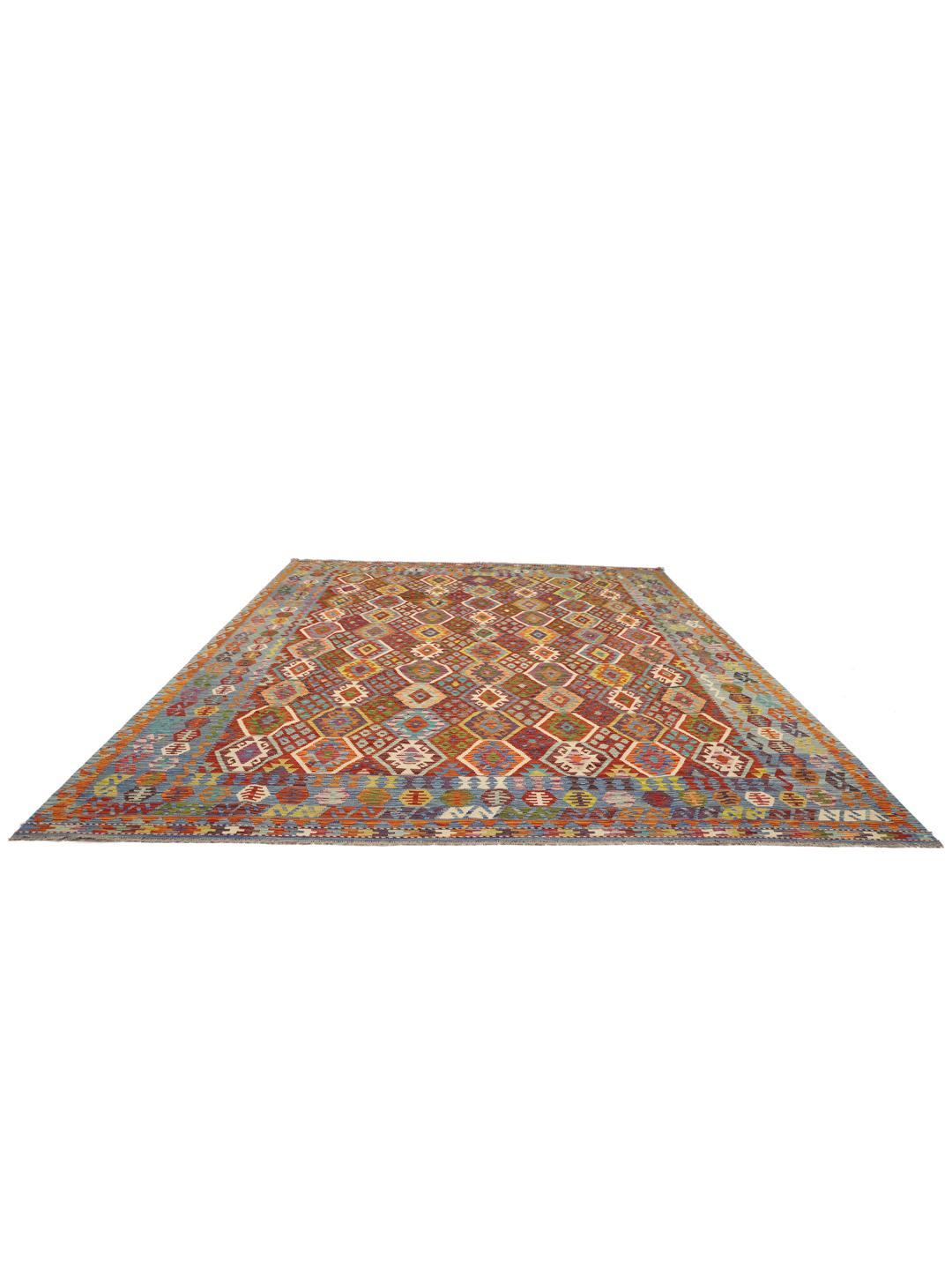
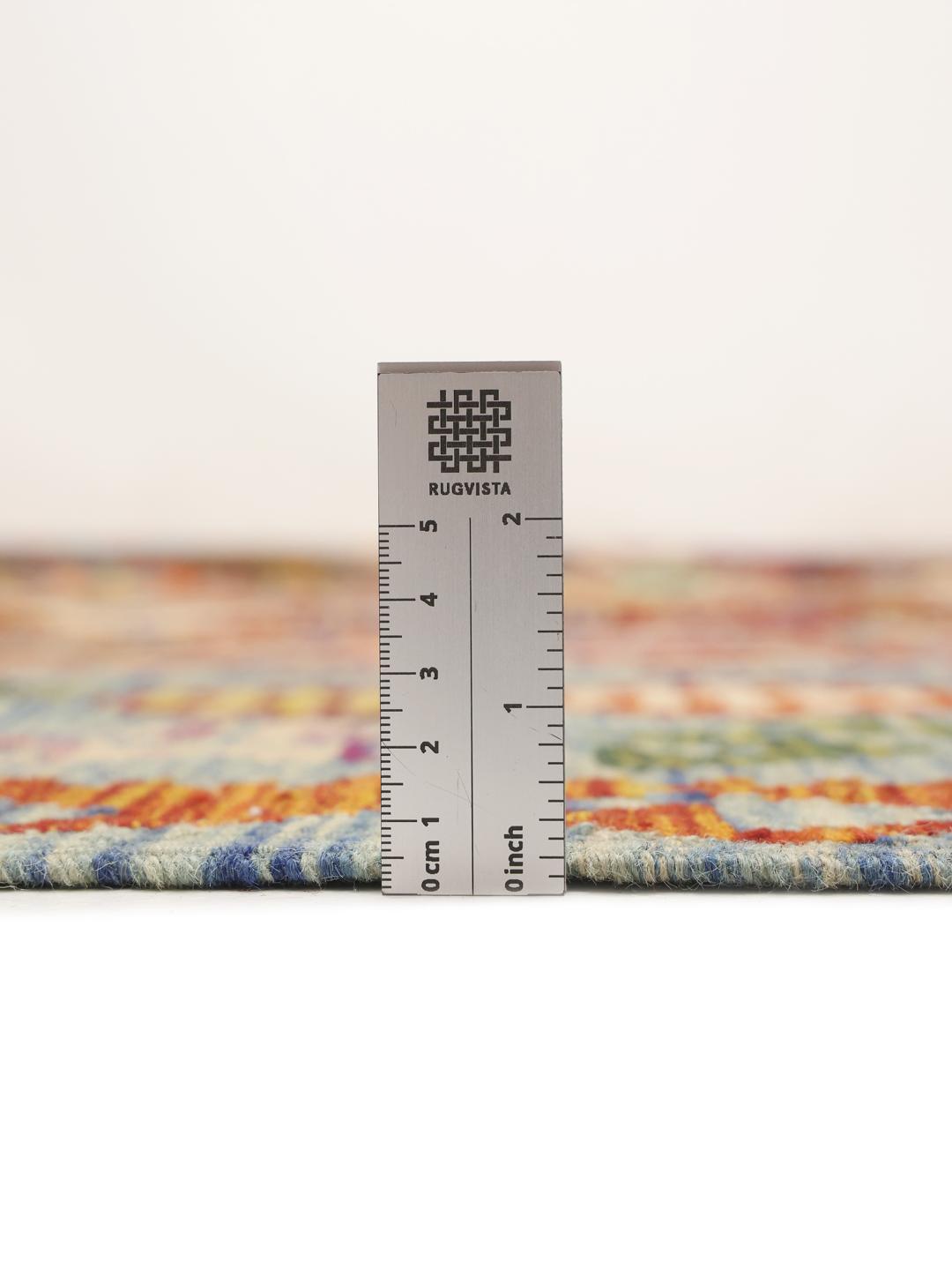
The Afghan Kelim is a jewel of Middle Eastern textile history, emerging from a region where nomadic and settled communities have practised the art of weaving for centuries. These rugs are traditionally created as flat-weaves, a method that predates the knotted pile rugs often associated with the area. Historically, these pieces were essential for nomadic life, serving as floor coverings, blankets, and storage bags, and were valued for their portability and exceptional strength.
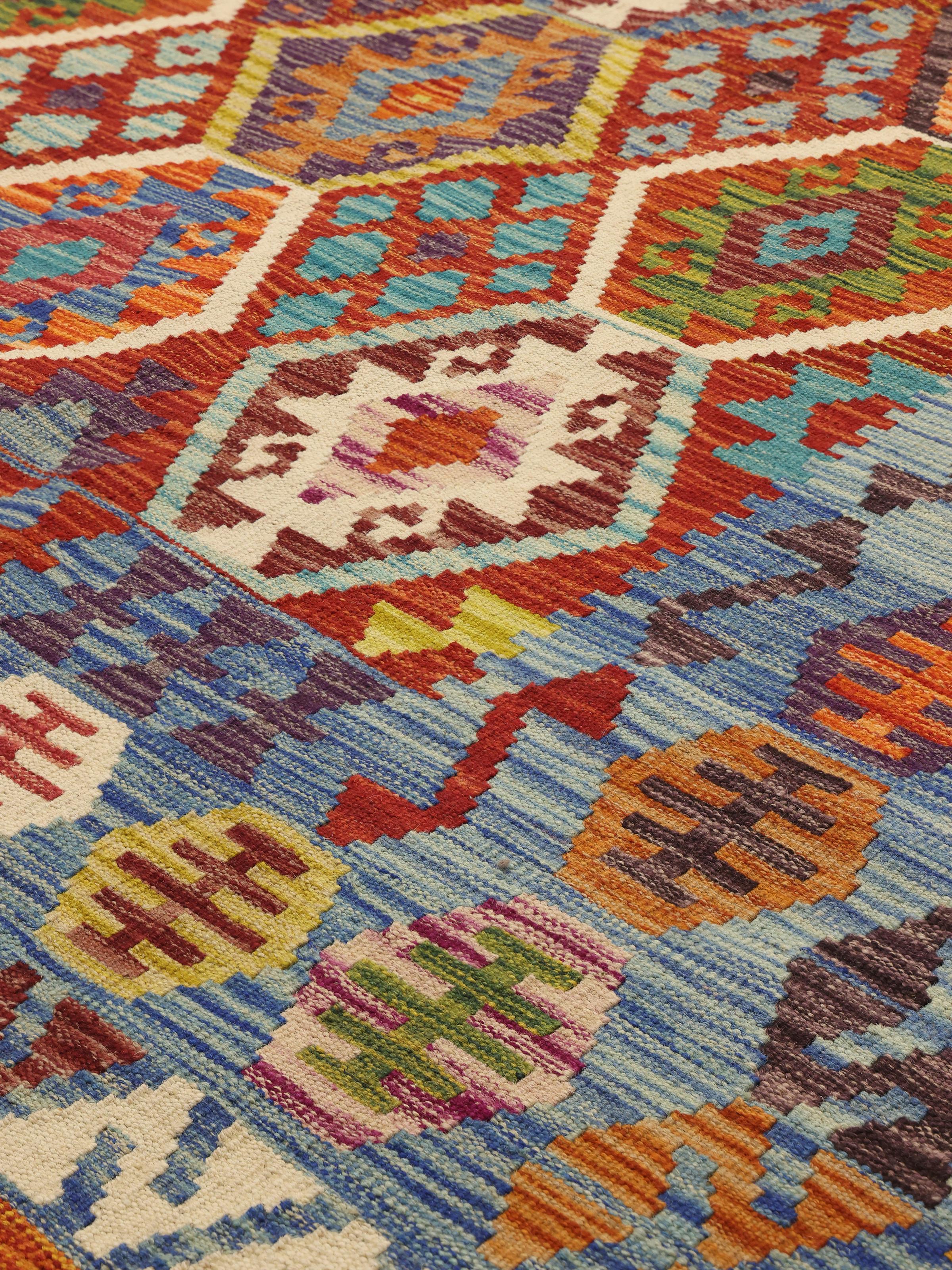
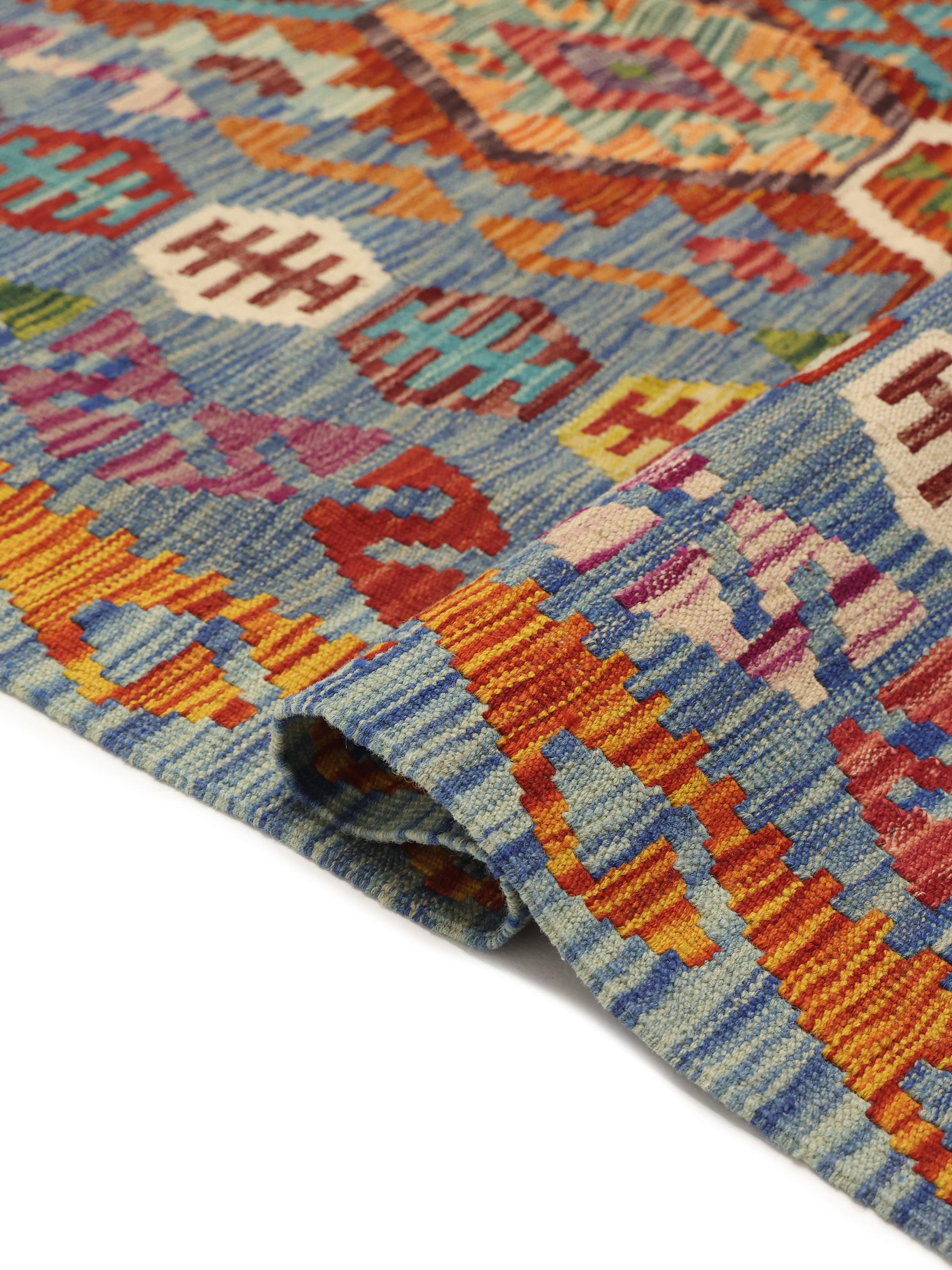
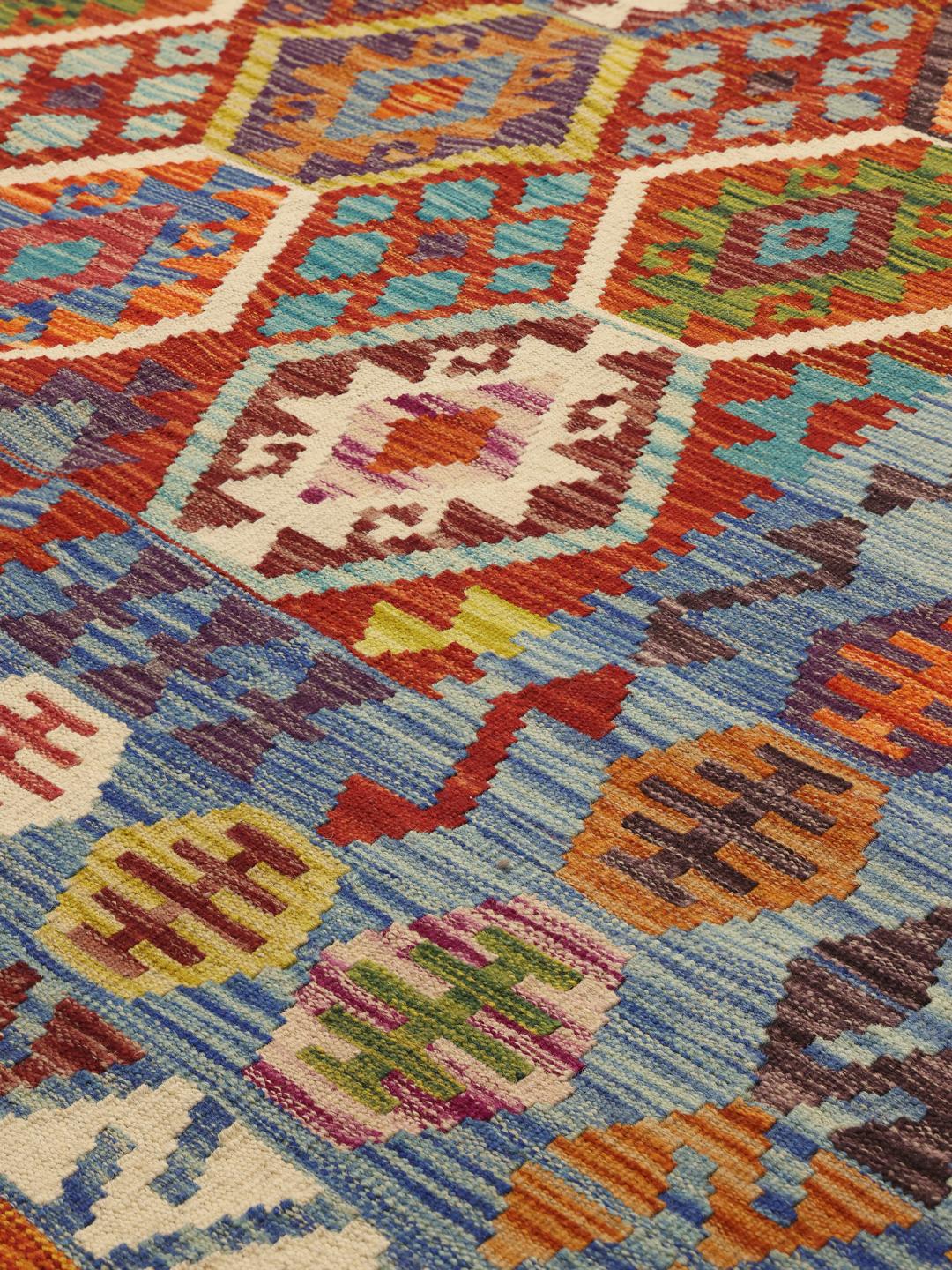
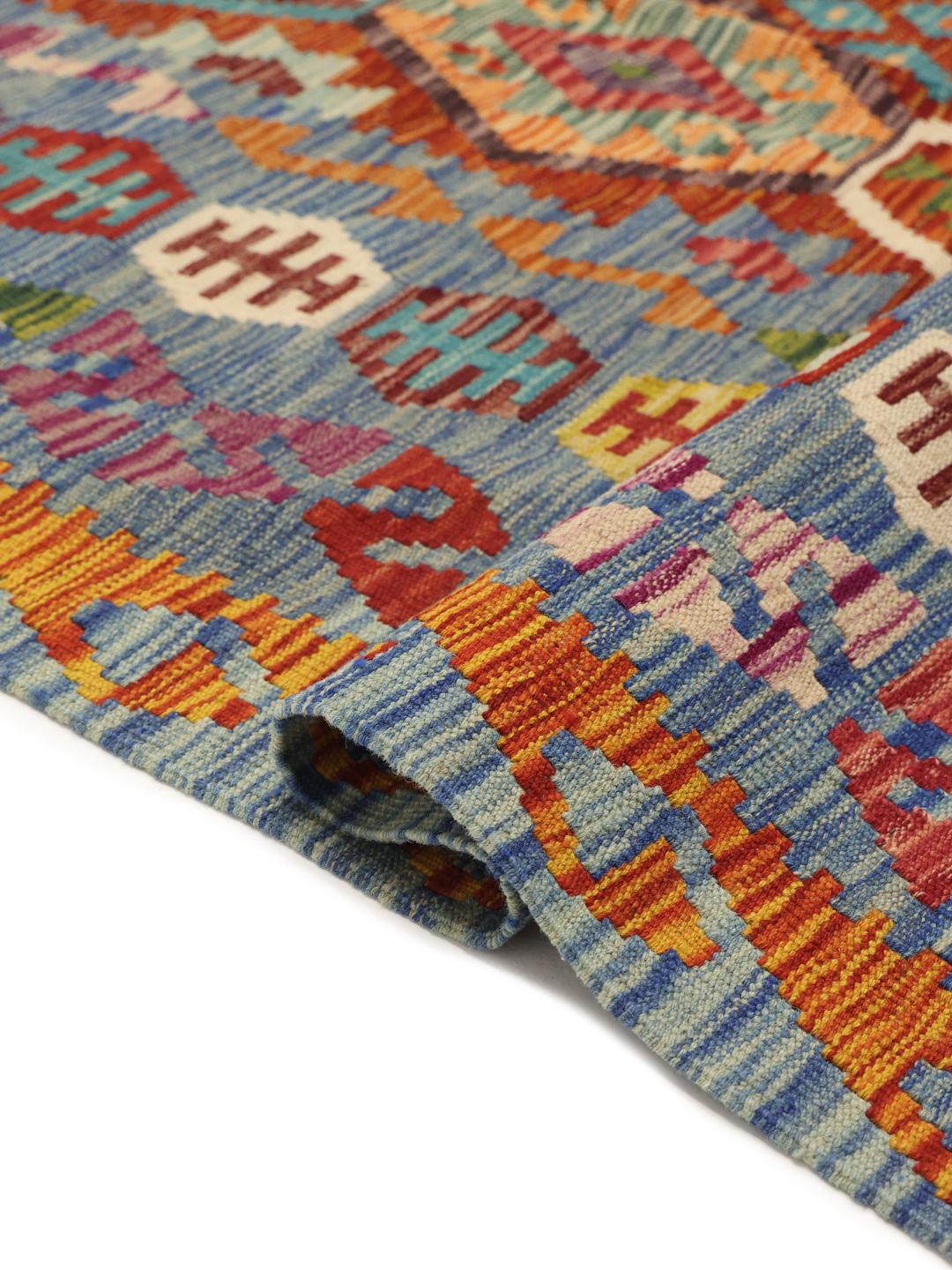
The term 'Kelim' refers specifically to this tapestry-weave technique, where the design is formed by interlocking the weft threads with the warp. This process requires a sophisticated understanding of geometry and colour, as the weaver must calculate every motif as they go. The result is a rug that is identical on both sides, a hallmark of true craft quality that speaks to the precision and foresight of the weaver.
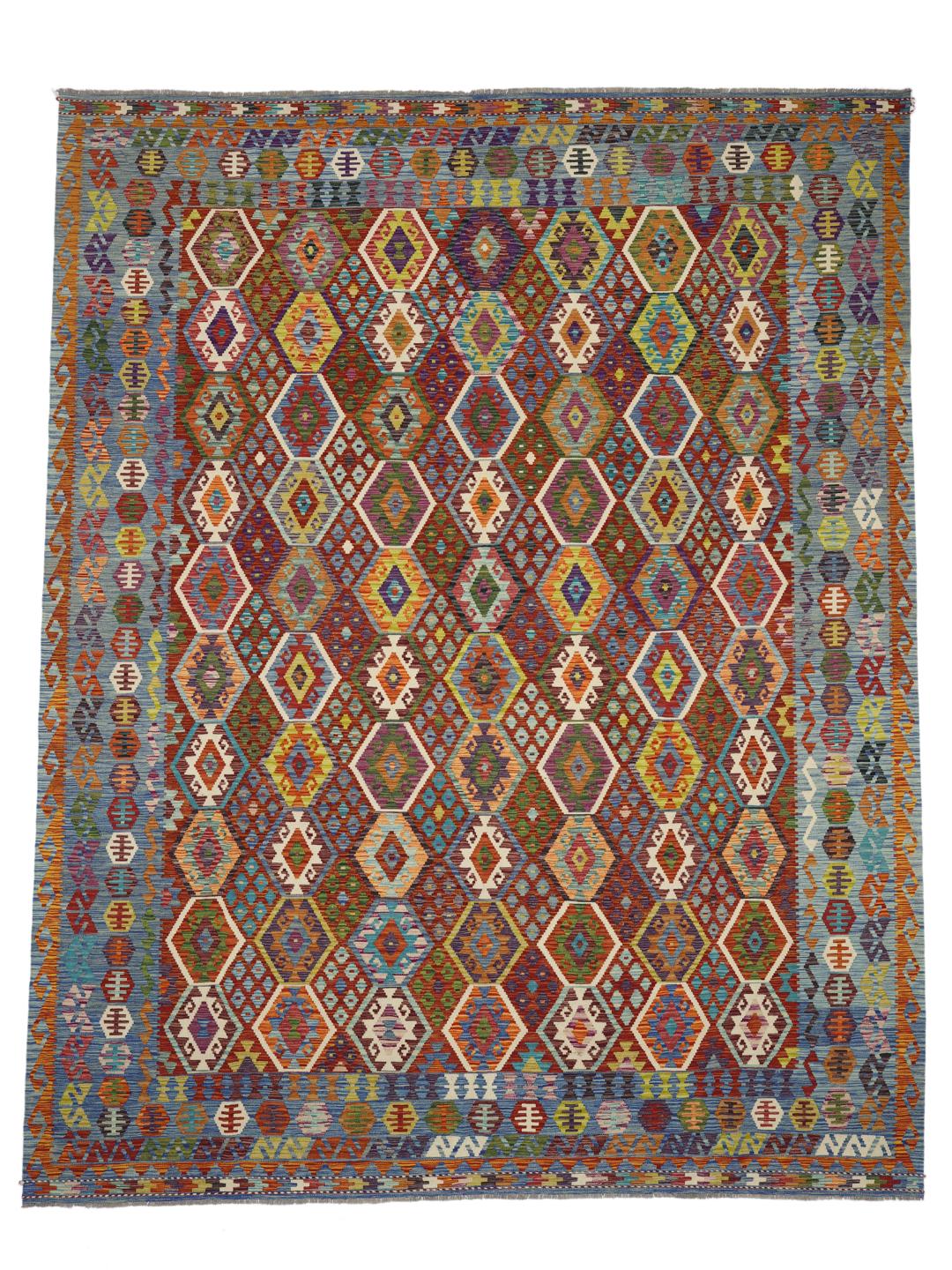
Visually, these rugs are celebrated for their bold geometric language. You will typically find repeating motifs such as diamonds, triangles, and stylised floral elements, all arranged in a disciplined, rhythmic fashion. The borders often feature smaller, complementary patterns that frame the central field, demonstrating a complex visual dialogue between the centre and the edges. The use of vibrant, natural-inspired colours is a signature trait, often reflecting the mineral and plant-based dyes traditional to the Afghan landscape.
Collectors value these pieces not only for their striking aesthetic but for the cultural narrative they carry. Owning a Kelim is an act of supporting a heritage of craftsmanship that has been passed down through generations. Because they are made without the aid of modern machinery, each rug embodies the individual choices and cultural identity of the artisan, making them a significant addition to any home that values authentic, historic, and enduring quality.