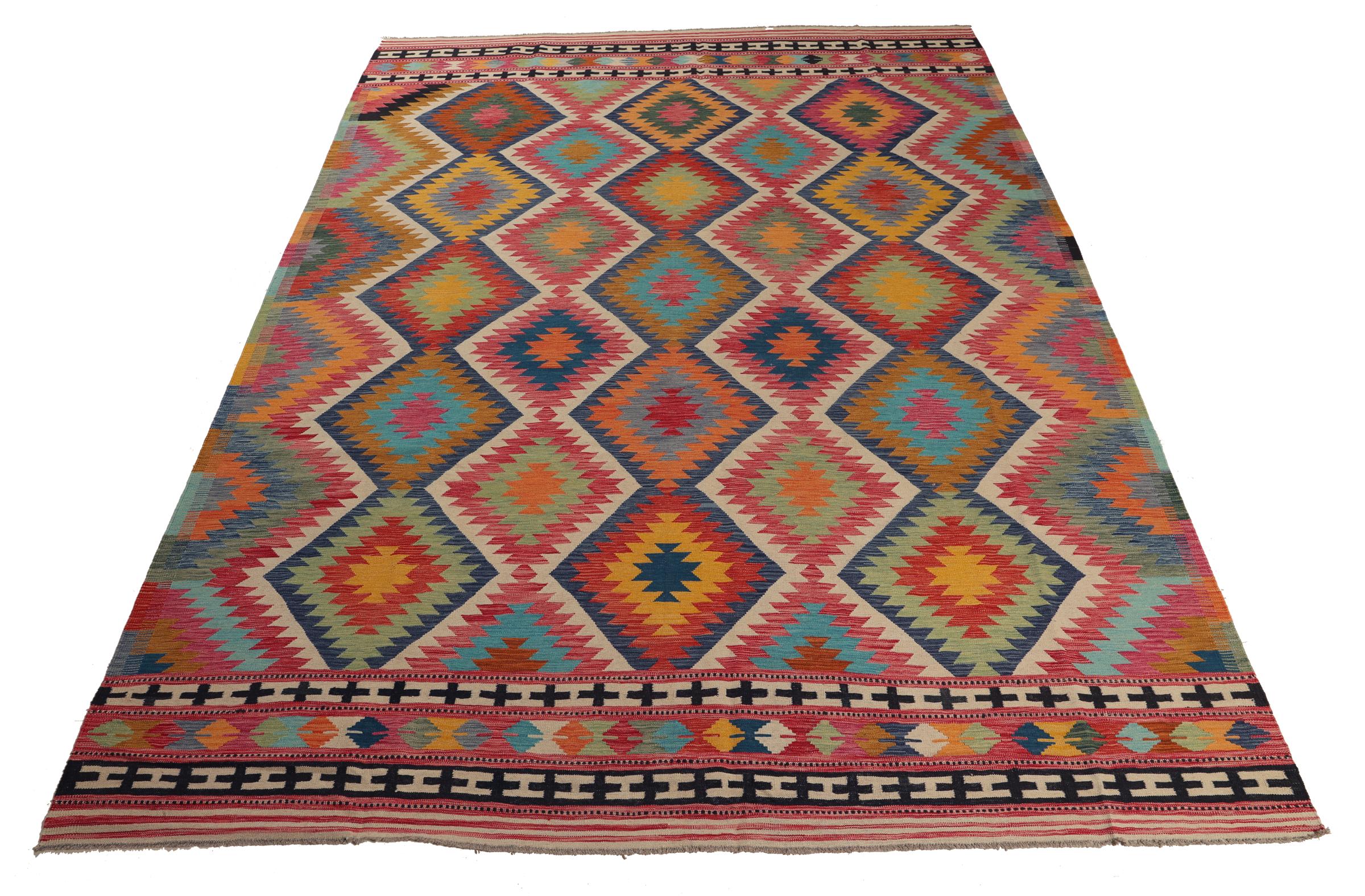
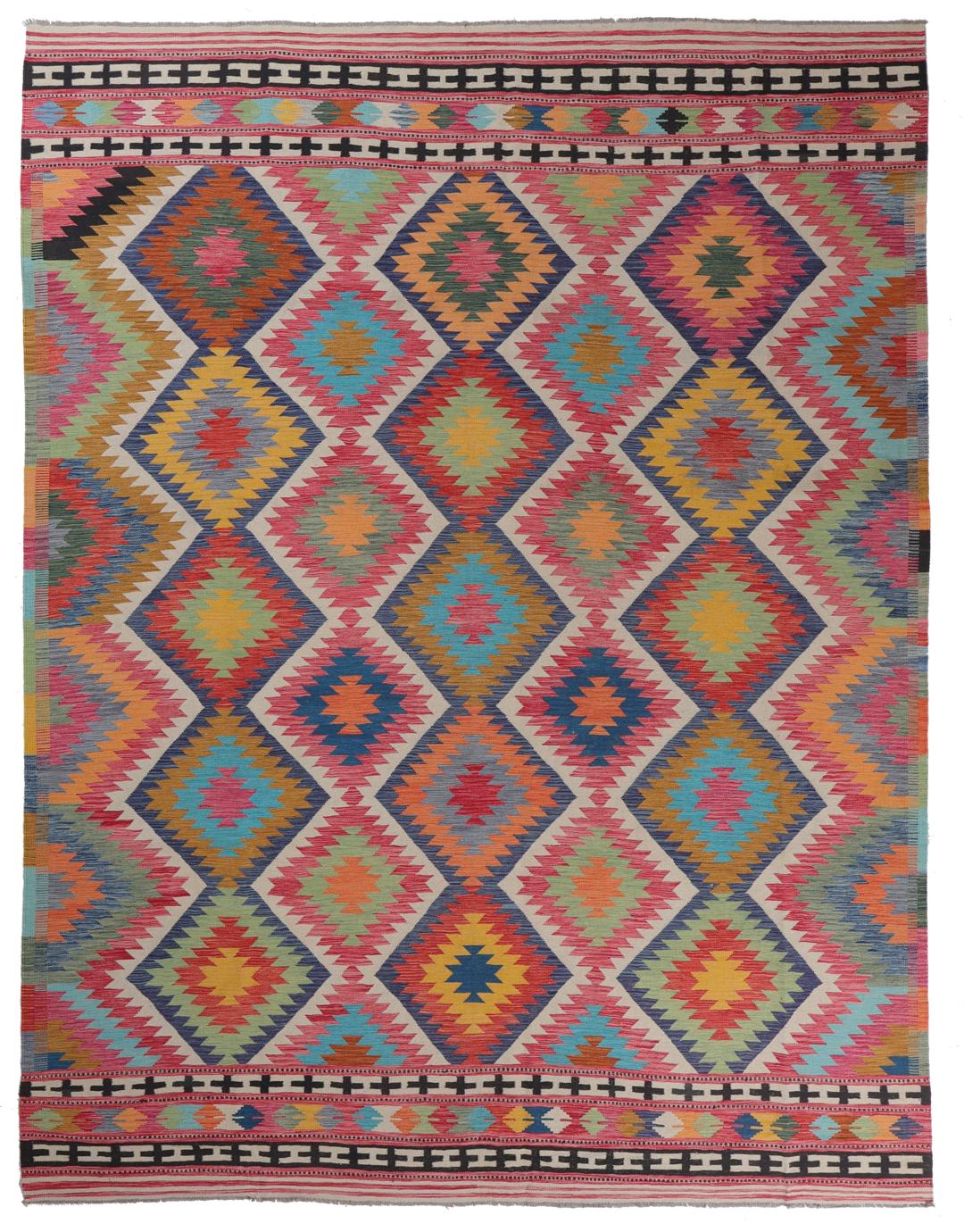
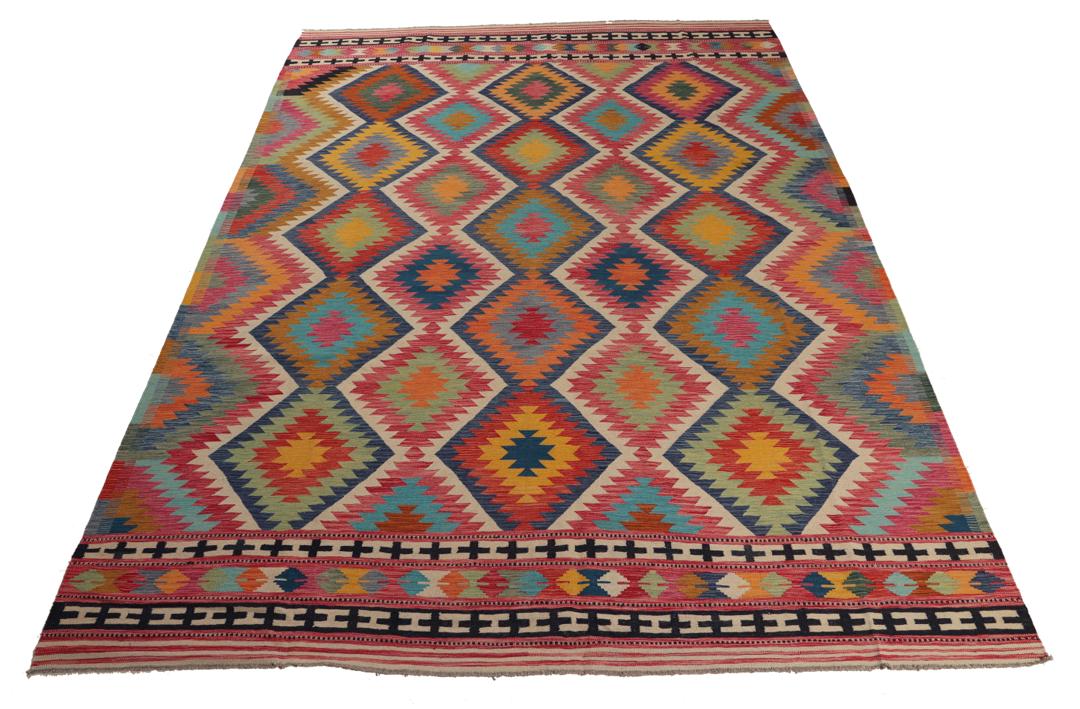
The Afghan Kelim tradition is rooted in the nomadic history of Central Asia, where flat-woven rugs served as essential, portable elements of daily life. These rugs were traditionally used as floor coverings, blankets, or even wall hangings, designed to be both lightweight and incredibly durable. As these traditions evolved, the distinctive patterns and weaving techniques were passed down through generations, eventually becoming synonymous with the rich cultural identity of the region.
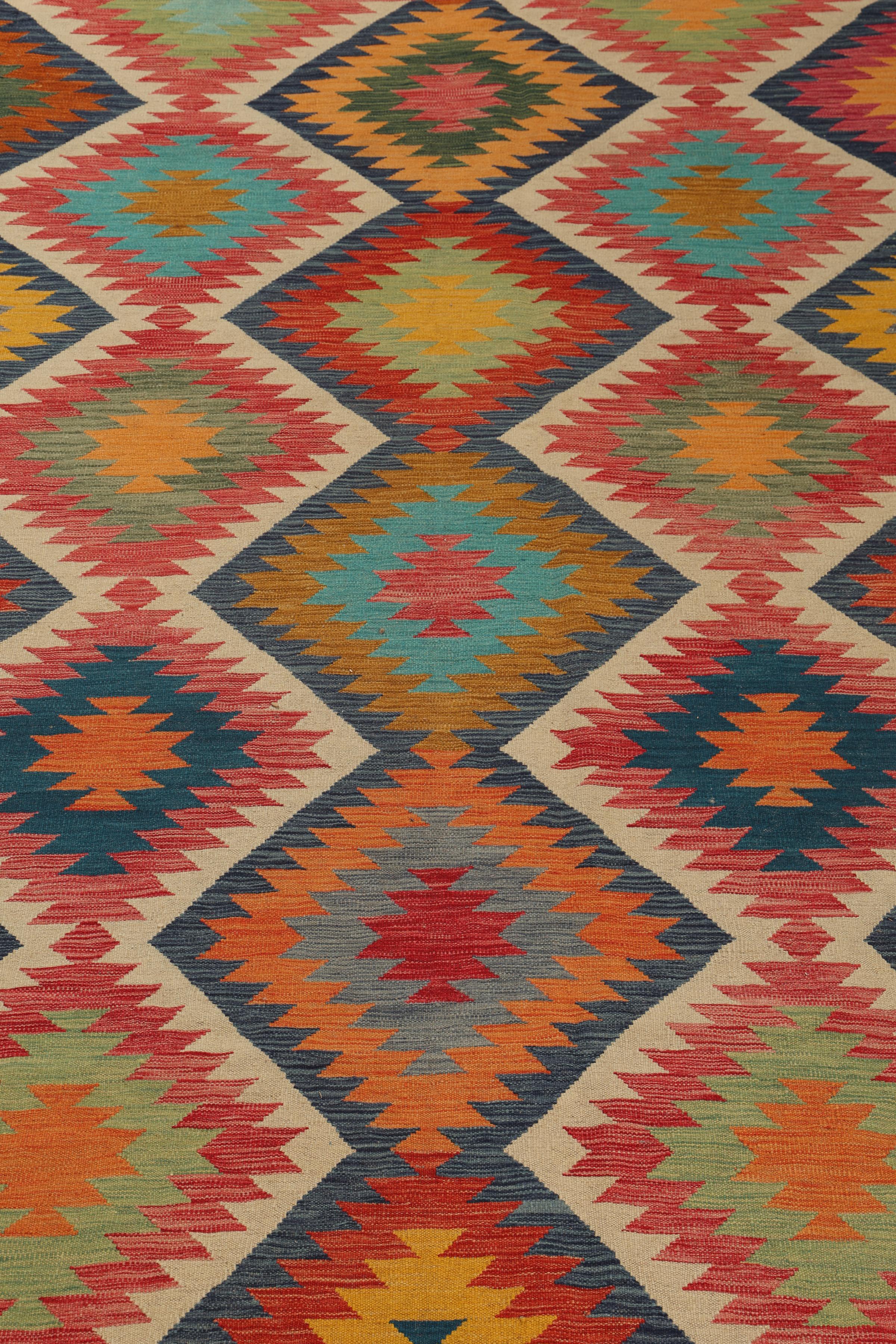
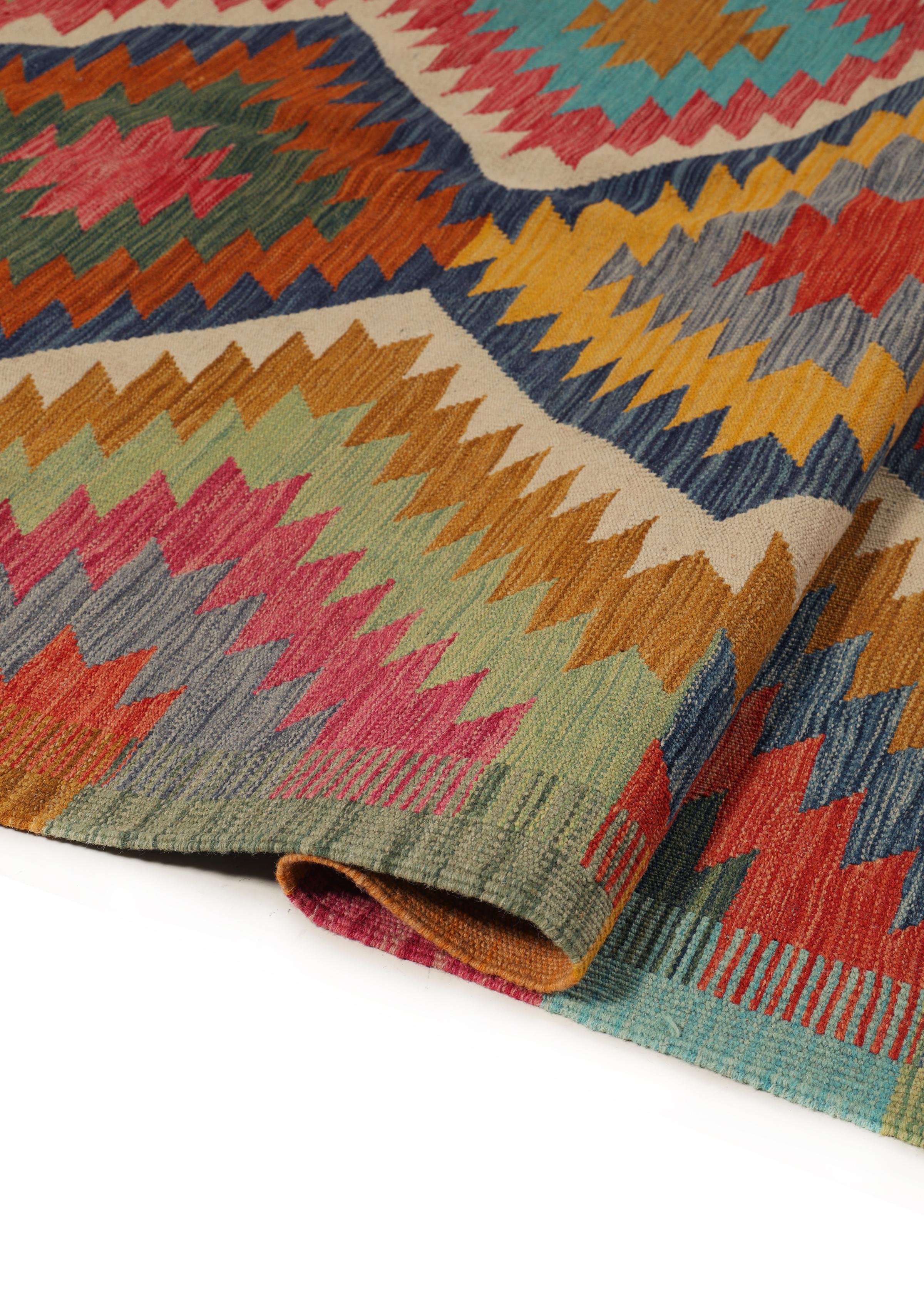
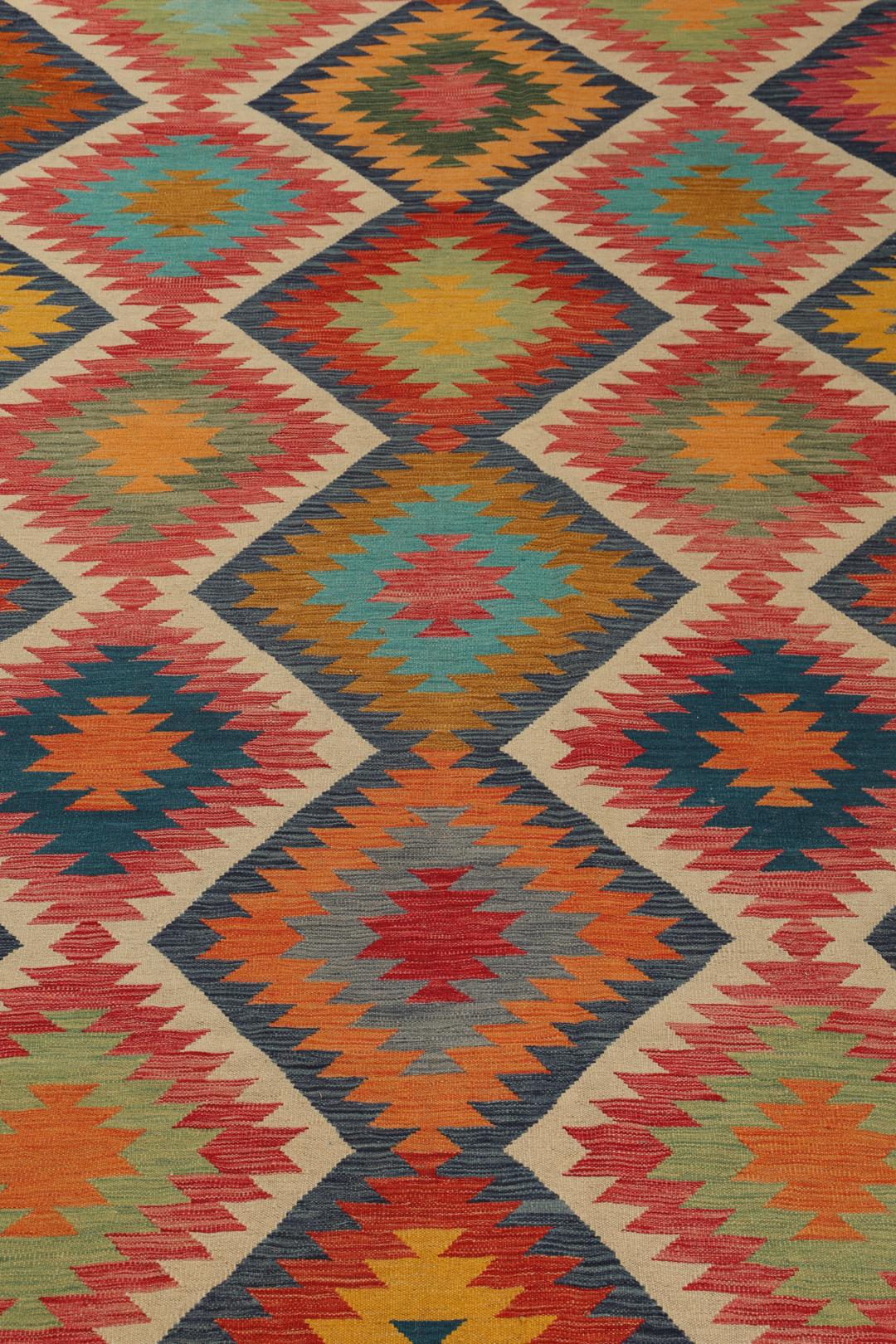
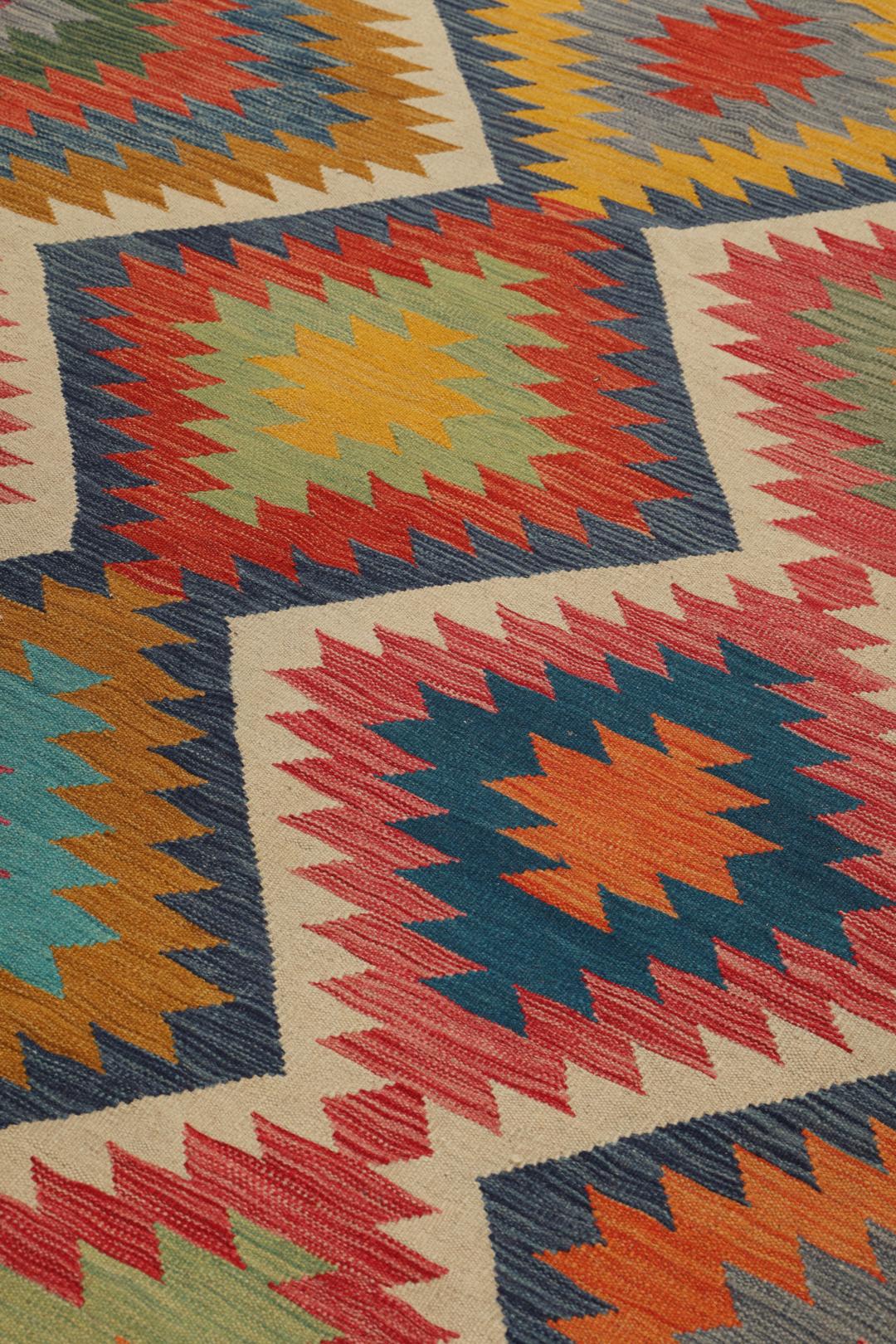
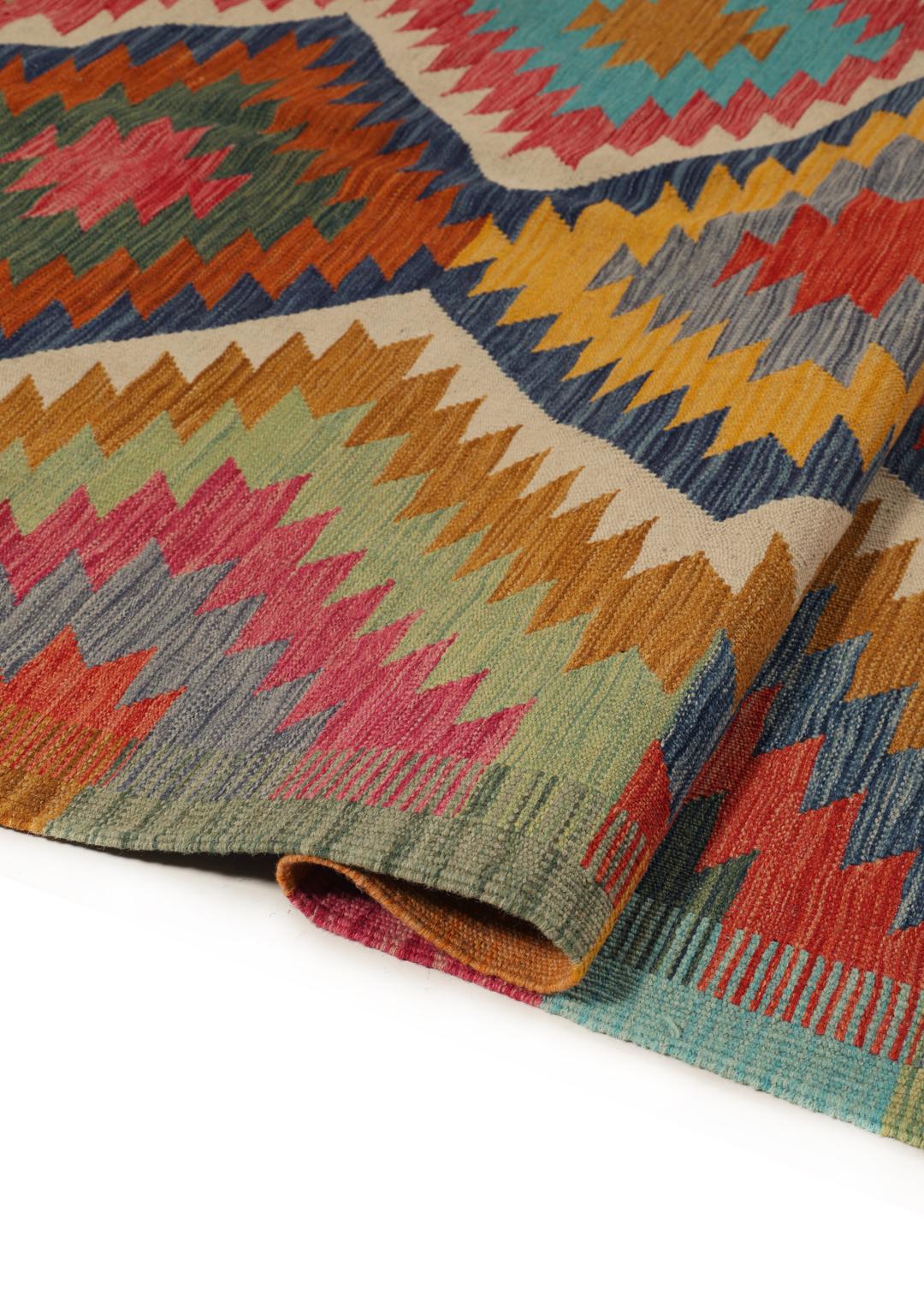
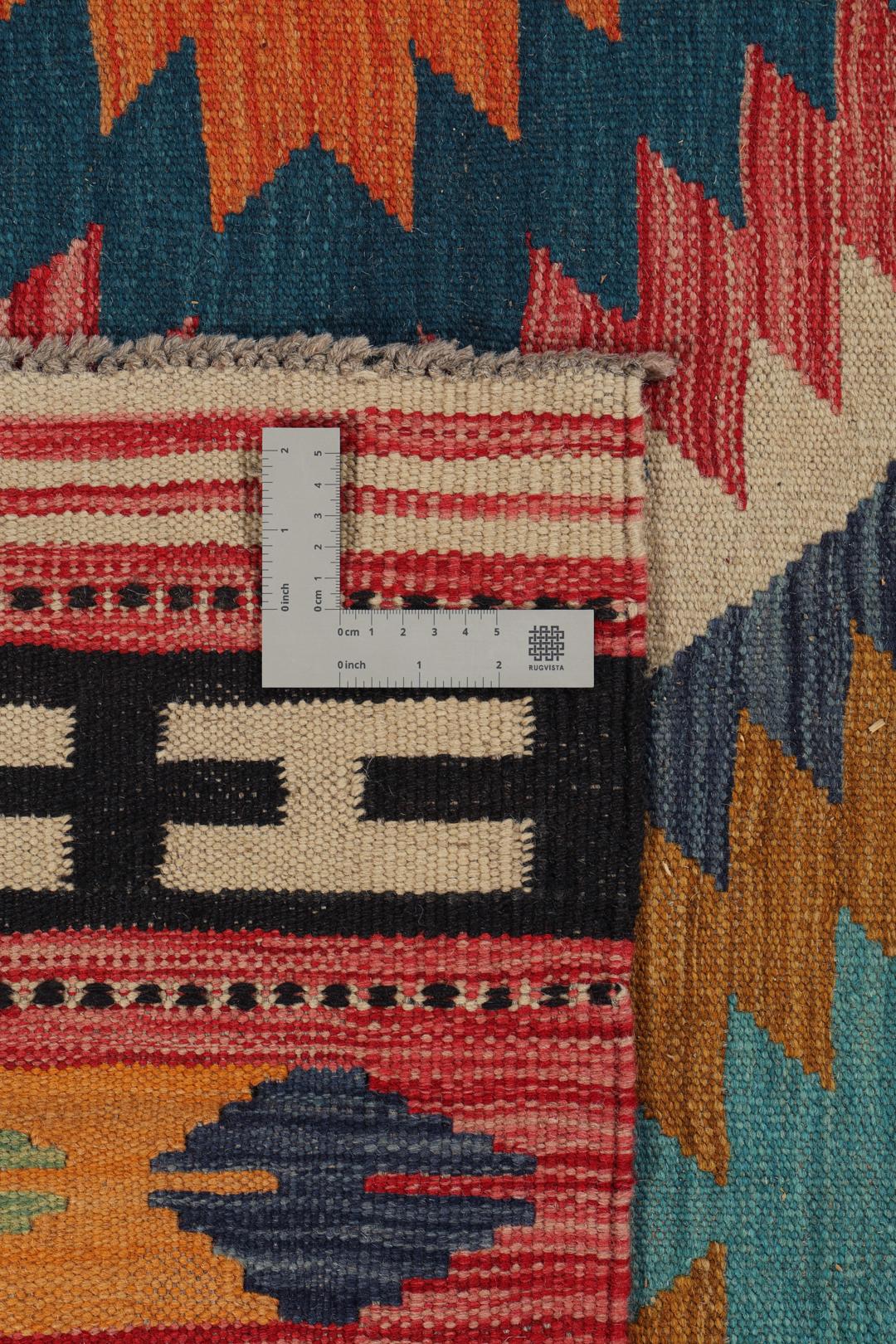
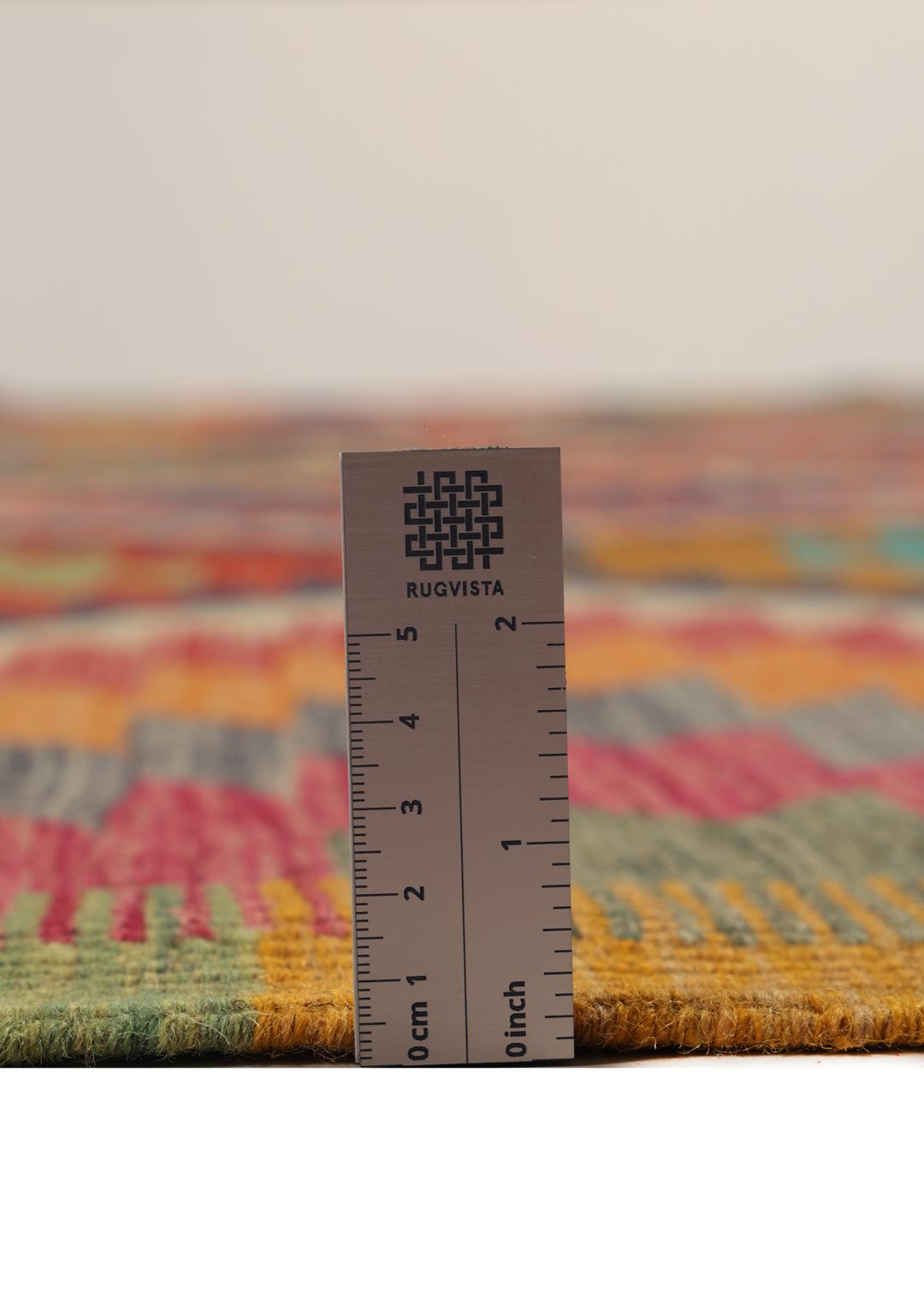
A Kelim is defined by its flat-weave construction, meaning it is created without a pile. The warp and weft threads are interlaced to form the pattern directly into the structure of the rug. This technique produces a reversible, slim, and highly portable textile that is prized for its versatility. The skill of the weaver is essential here, as the tension must be perfectly maintained throughout the entire process to ensure that the complex geometric motifs remain sharp and symmetrical.
The visual language of these rugs is dominated by bold, geometric forms and a deep, earthy or vibrant colour palette. You will often see repeating diamonds, triangles, and intricate borders that draw inspiration from regional tribal motifs and historical symbols of protection and prosperity. This specific rug showcases a masterful use of colour, demonstrating how traditional designs can feel fresh and contemporary while maintaining a strong connection to their historical roots.
These rugs are highly valued by collectors for their authenticity and the sheer human effort required to create them. Owning an Afghan Kelim is an invitation to engage with a living history. It is a piece that represents a commitment to preserving traditional crafts, offering a level of character and depth that mass-produced items simply cannot replicate. Each rug is a narrative of the weaver's environment, beliefs, and artistic expression, making it a significant cultural asset for any home.