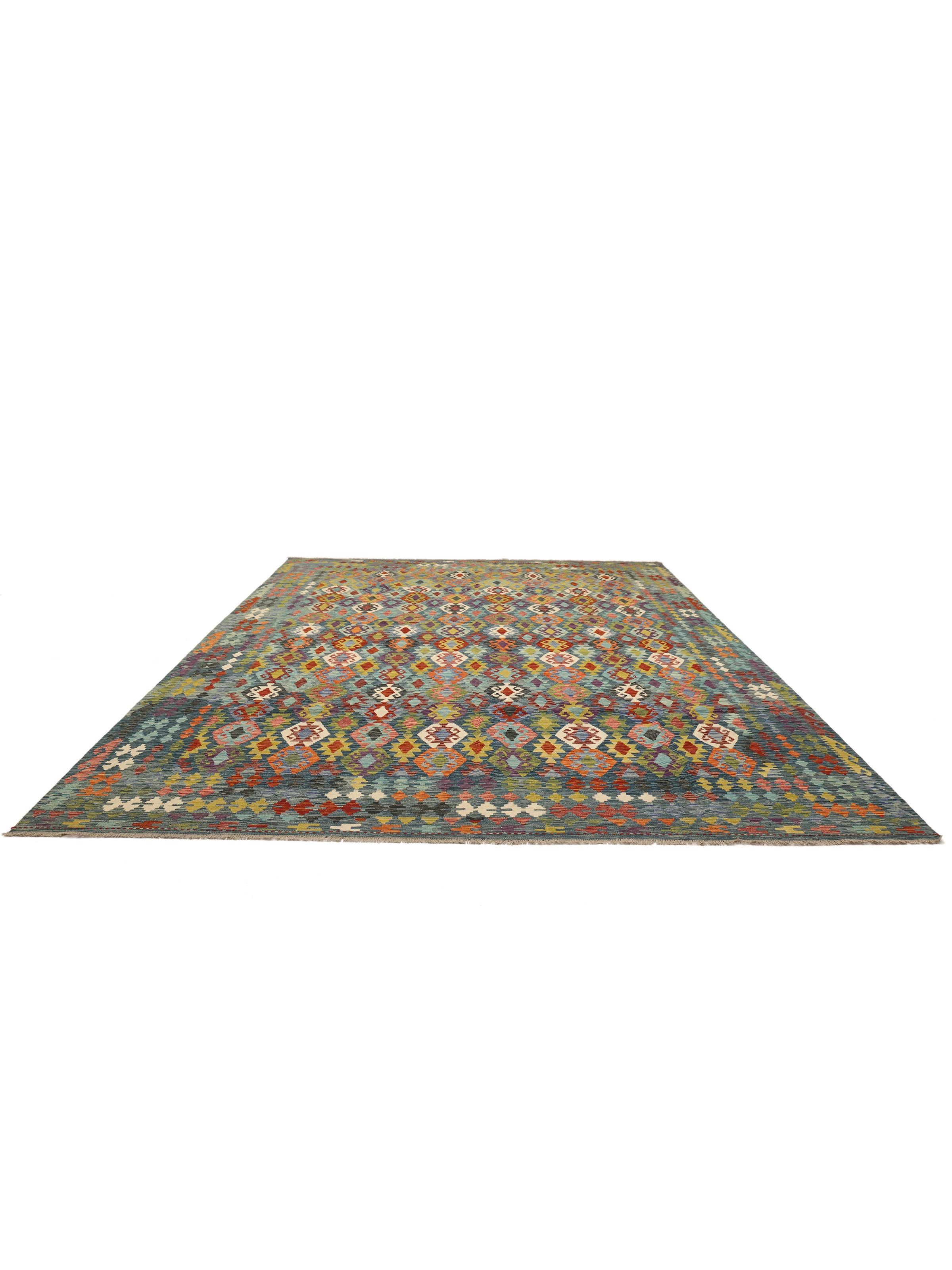
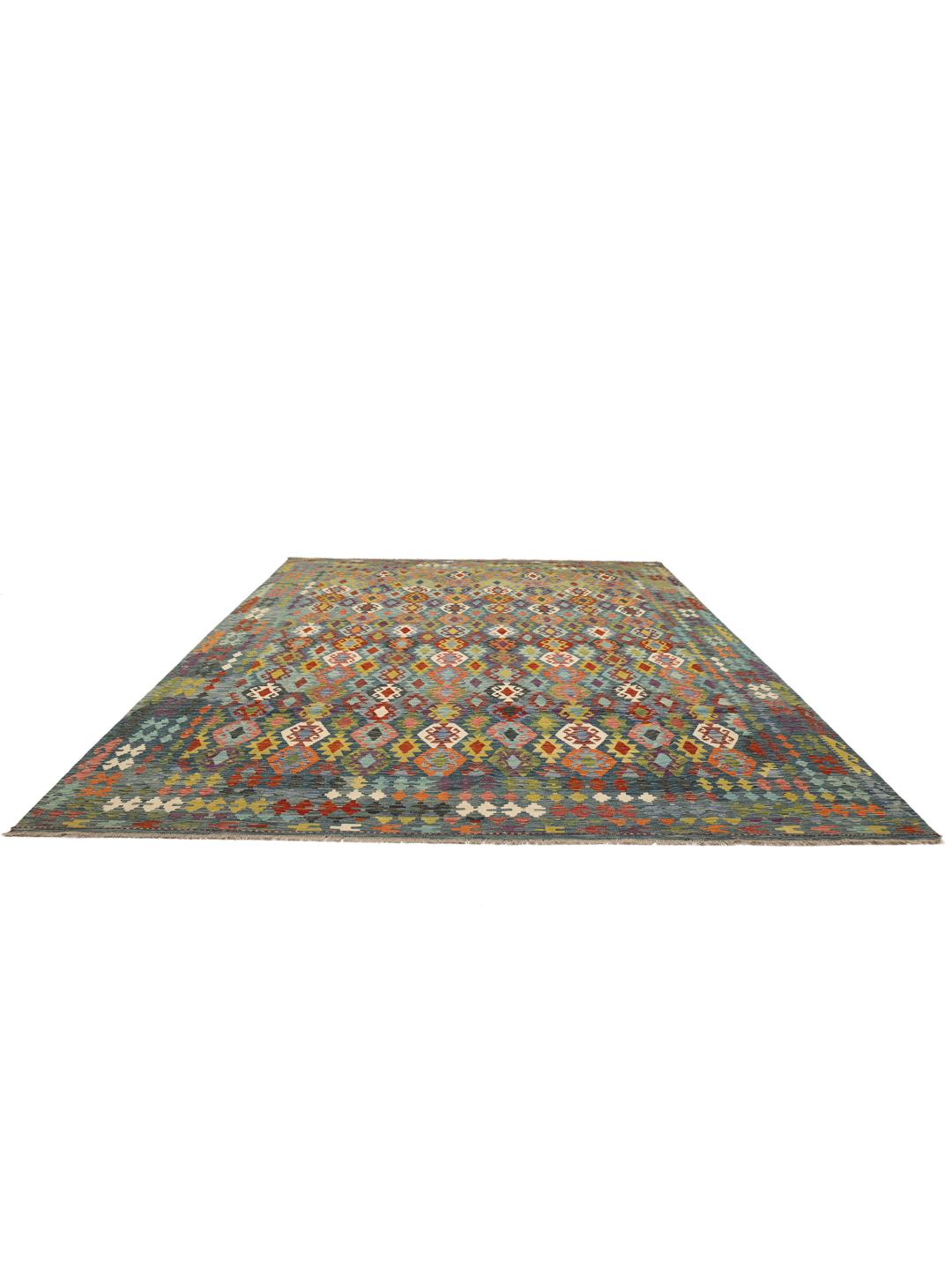
The Kelim tradition in Afghanistan is deeply rooted in the nomadic and semi-nomadic lifestyles of the region's diverse ethnic groups. These rugs were historically created as functional, portable items for tent life, serving as floor coverings, wall hangings, or storage sacks. Over time, these utilitarian objects evolved into the highly sought-after decorative textiles we appreciate today, bridging the gap between ancient survival tools and modern interior design.
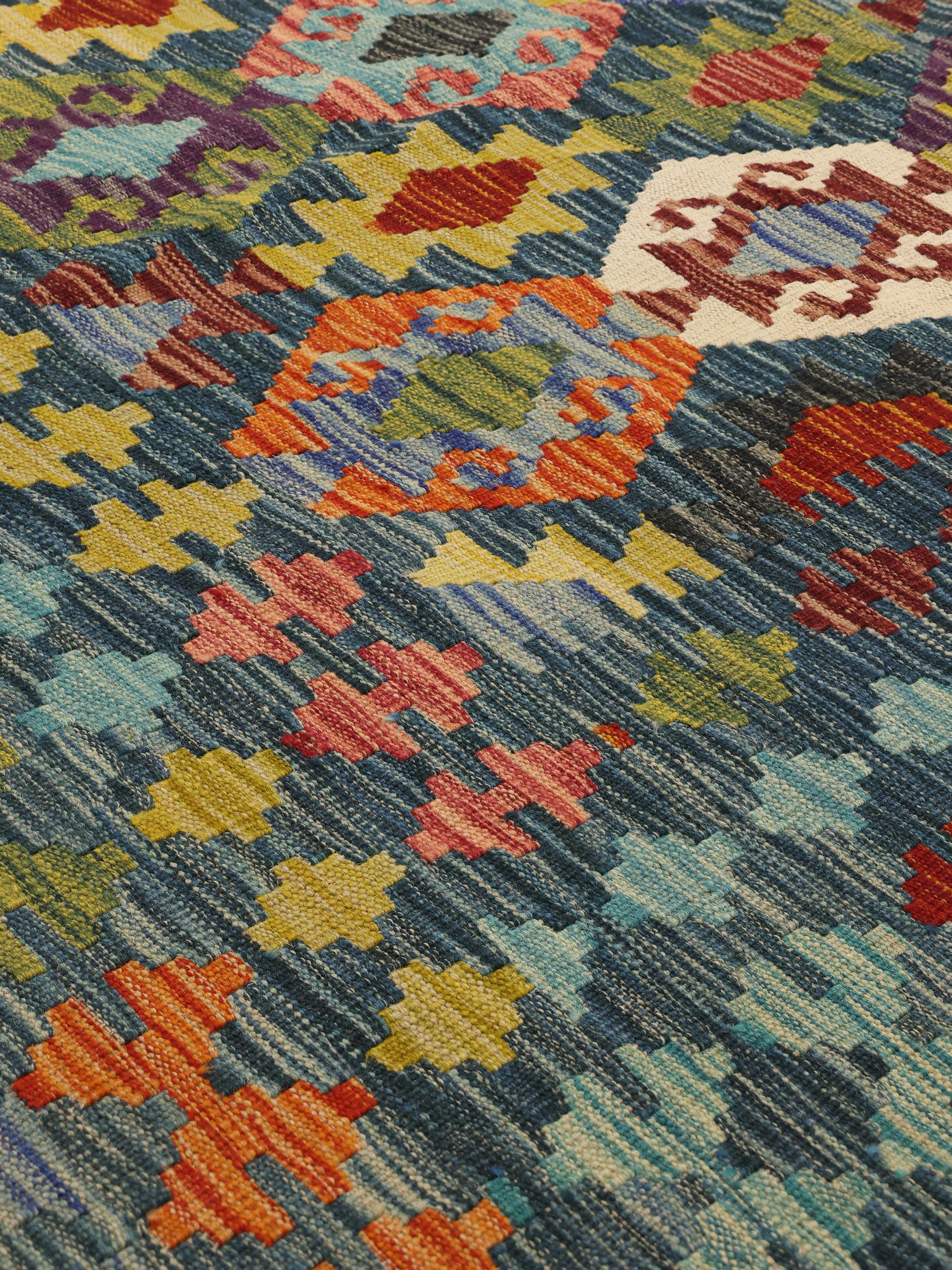
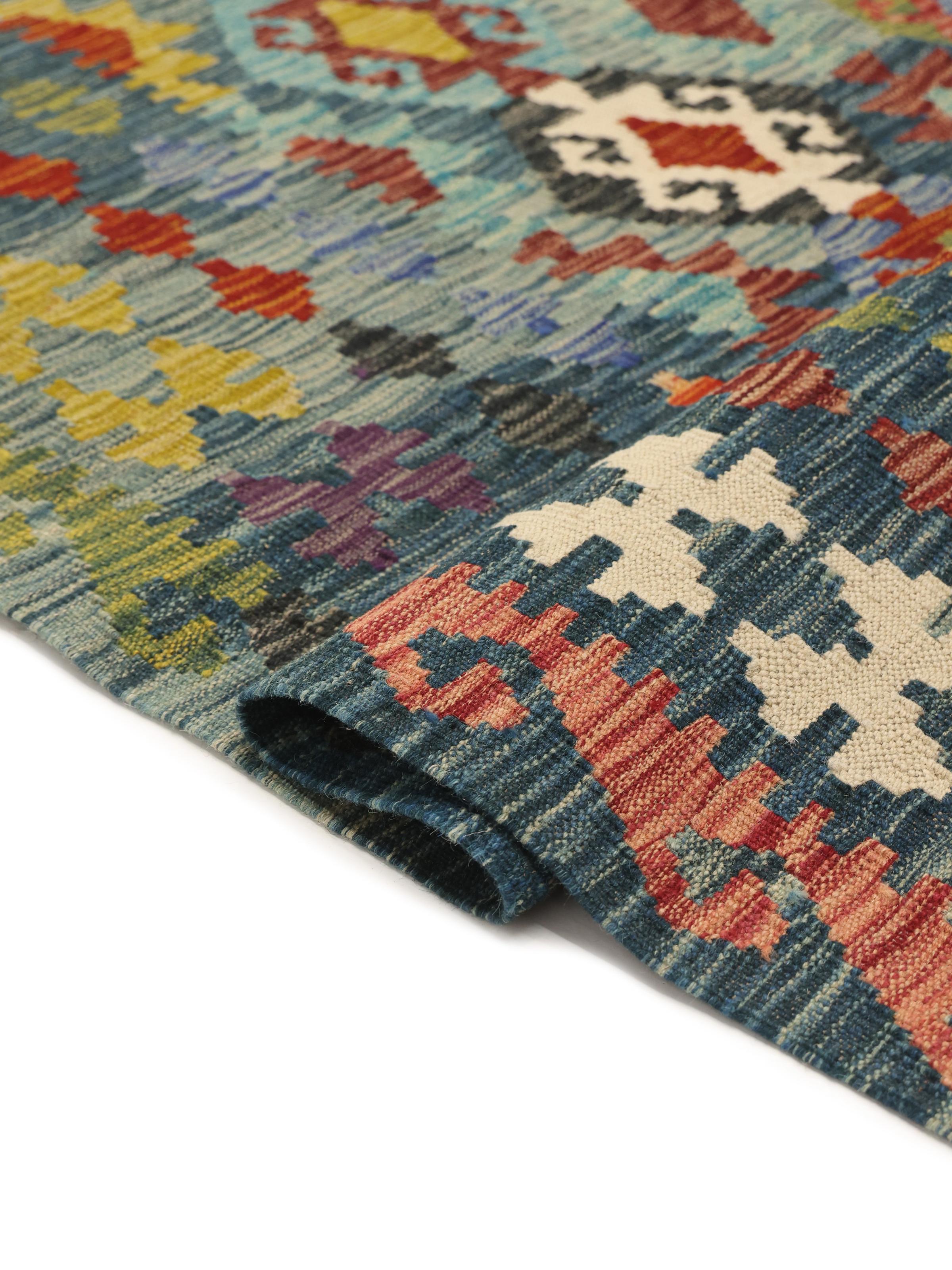
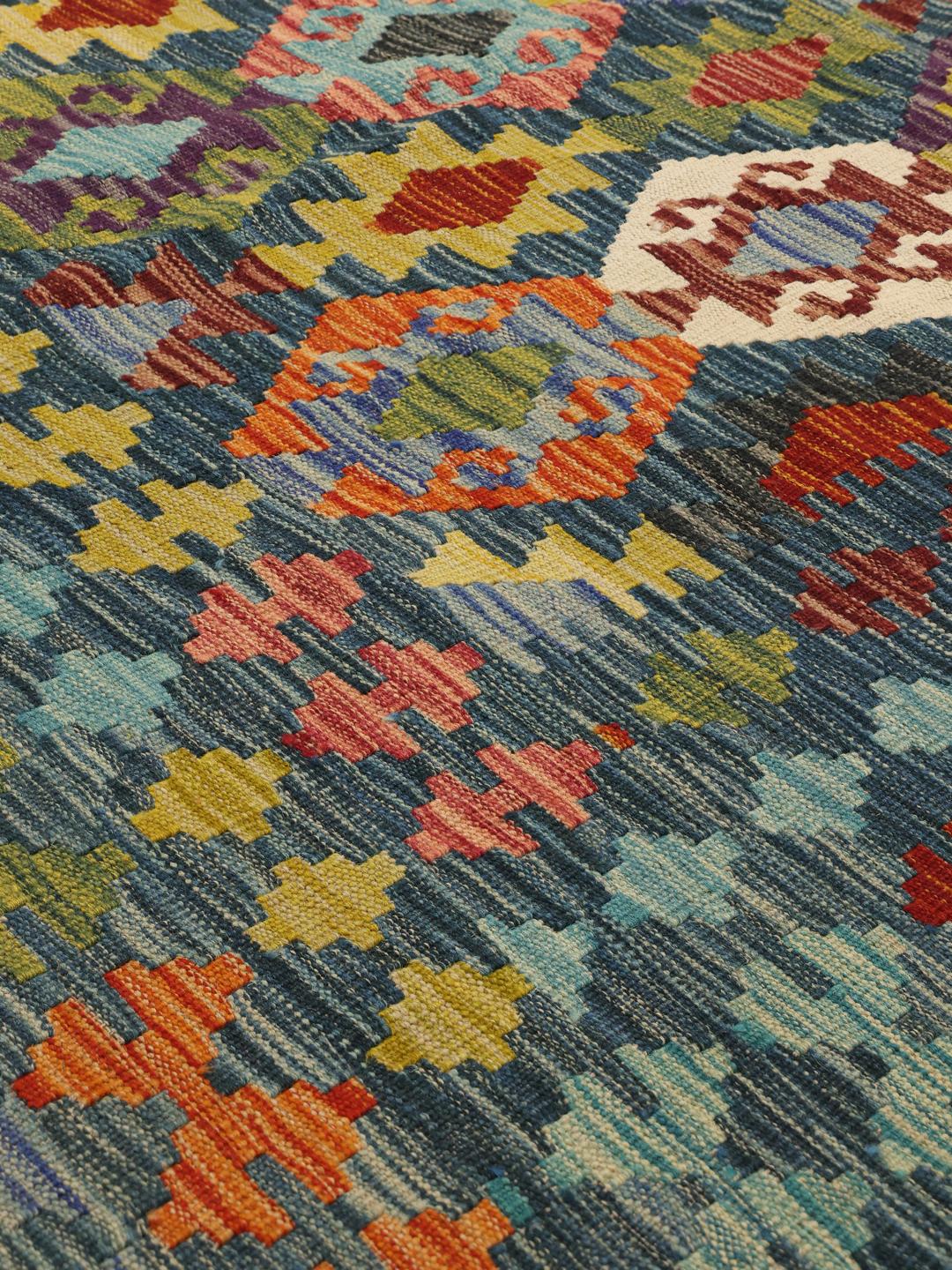
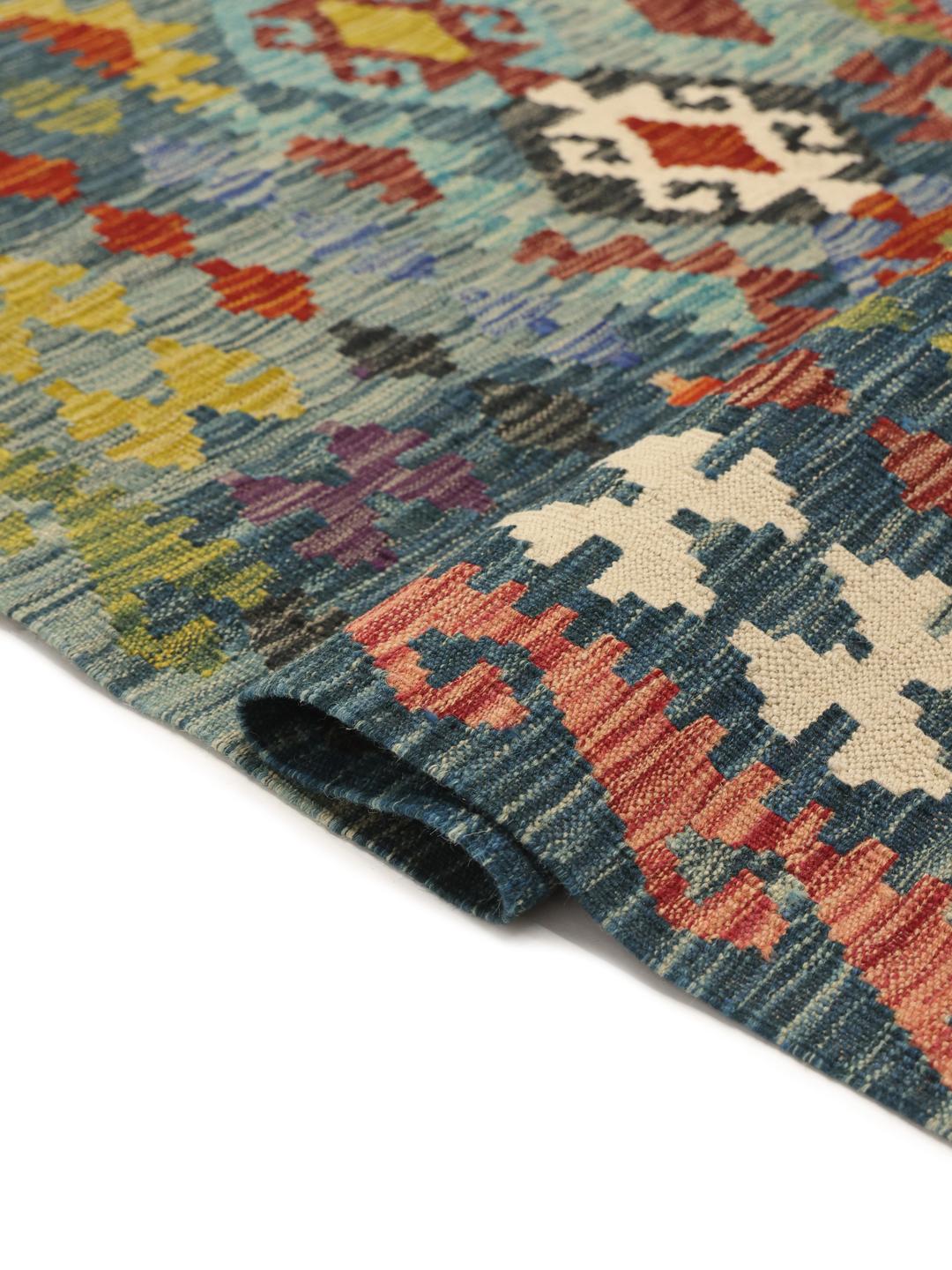
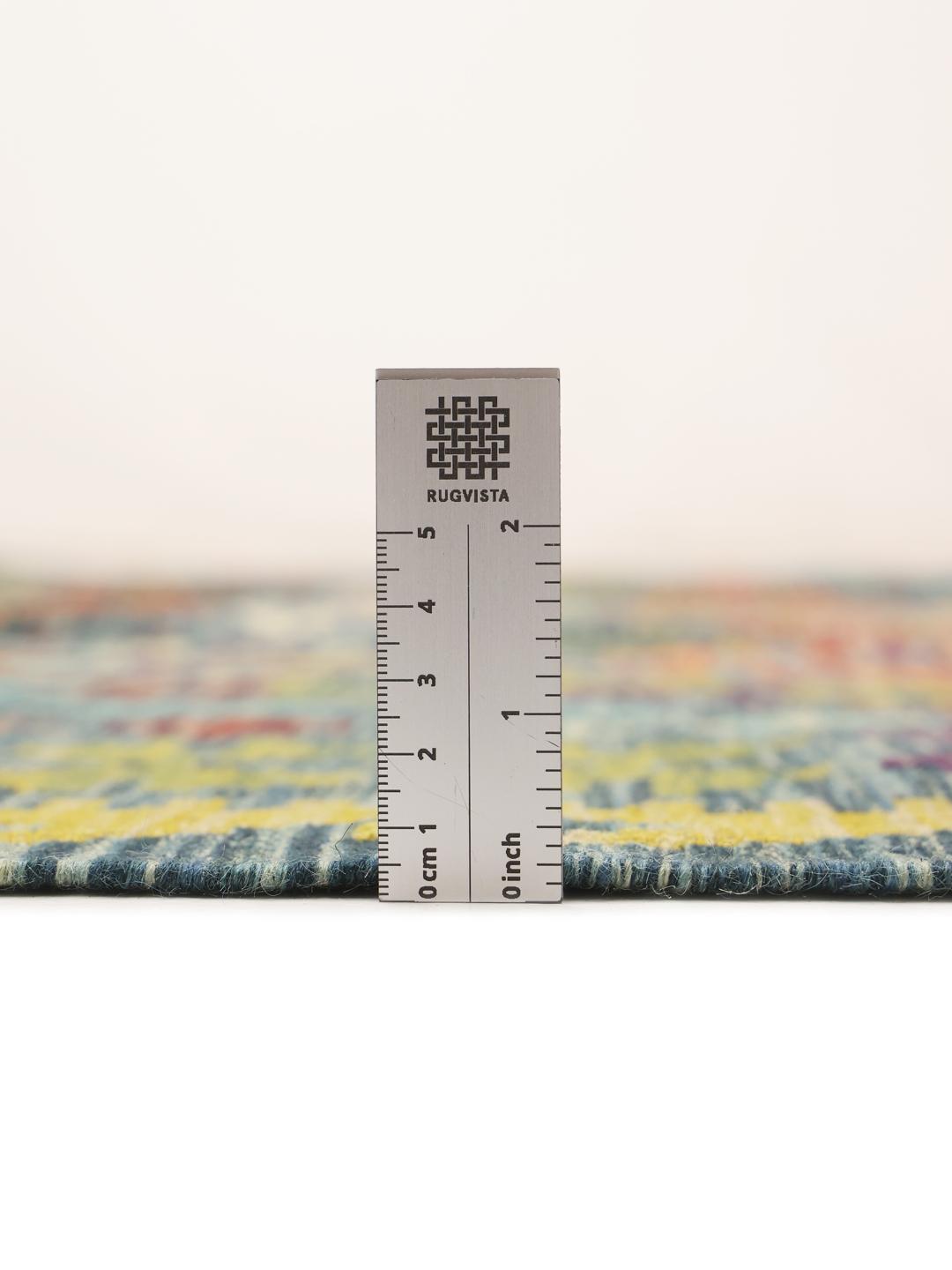
The term 'Kelim' refers specifically to the flat-weaving technique where there is no pile. Instead of knotting individual strands onto a foundation, the weaver interlaces the warp and weft threads to create the design. This results in a lighter, thinner rug that is incredibly sturdy and often reversible, a hallmark of high-quality flat-woven textiles that have been perfected over centuries.
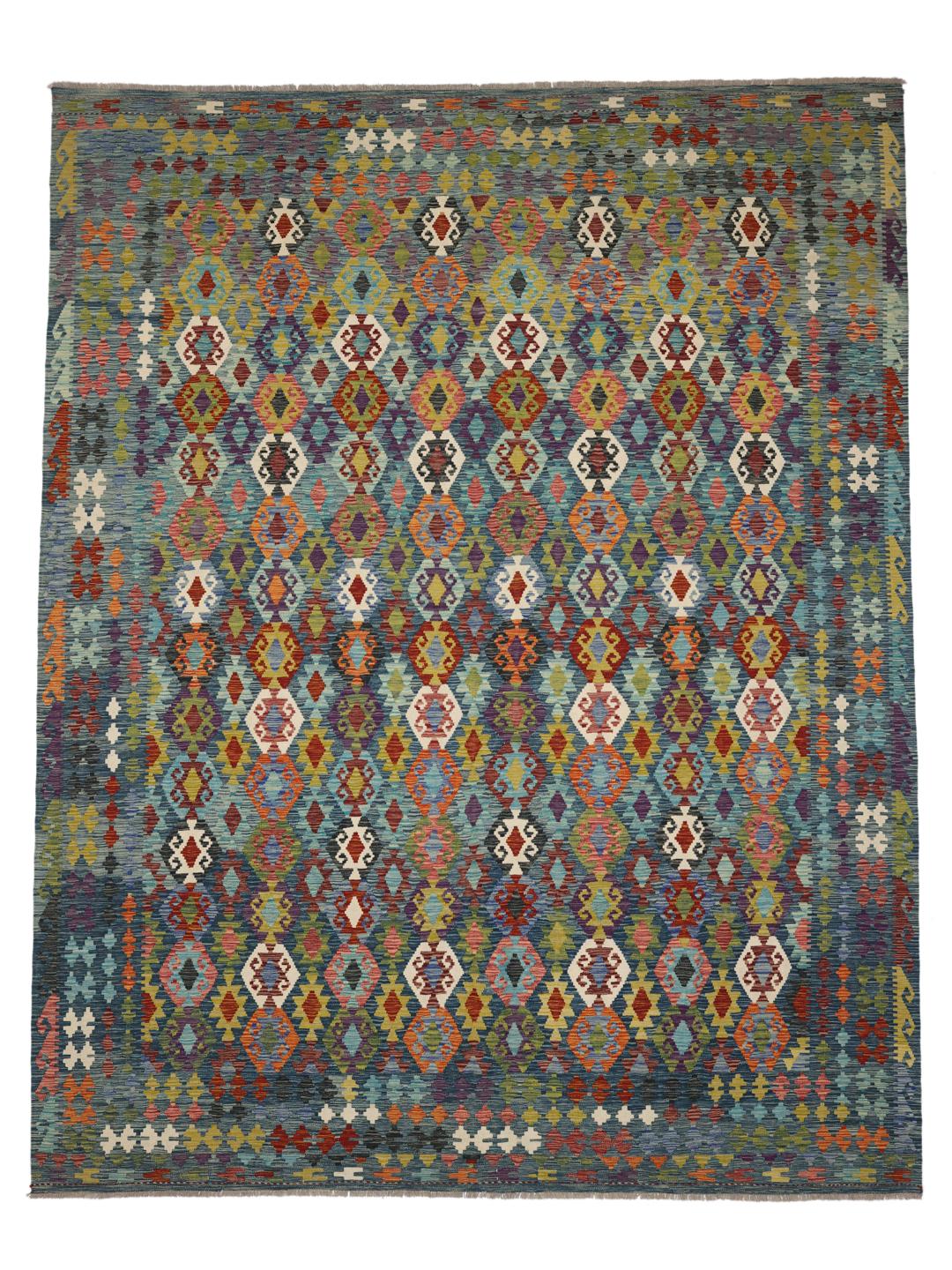
The design language of this Afghan Kelim is defined by its complex geometric motifs, particularly the repeating diamond and latch-hook patterns that are characteristic of the region. These symbols often carry cultural significance, representing protection, fertility, or tribal identity. The use of a vibrant colour palette, particularly the deep, earthy blues and reds, reflects the natural dyes traditionally available to artisans, creating a visual depth that feels both ancient and remarkably contemporary.
Collecting a piece of this caliber is an investment in cultural heritage. Because each rug is created by hand, the slight variations in pattern and colour distribution are indicators of the weaver's personal expression and the specific circumstances of the loom's creation. By bringing this rug into your home, you are participating in a long lineage of craftsmanship that values both the beauty of the object and the humanity of its maker.