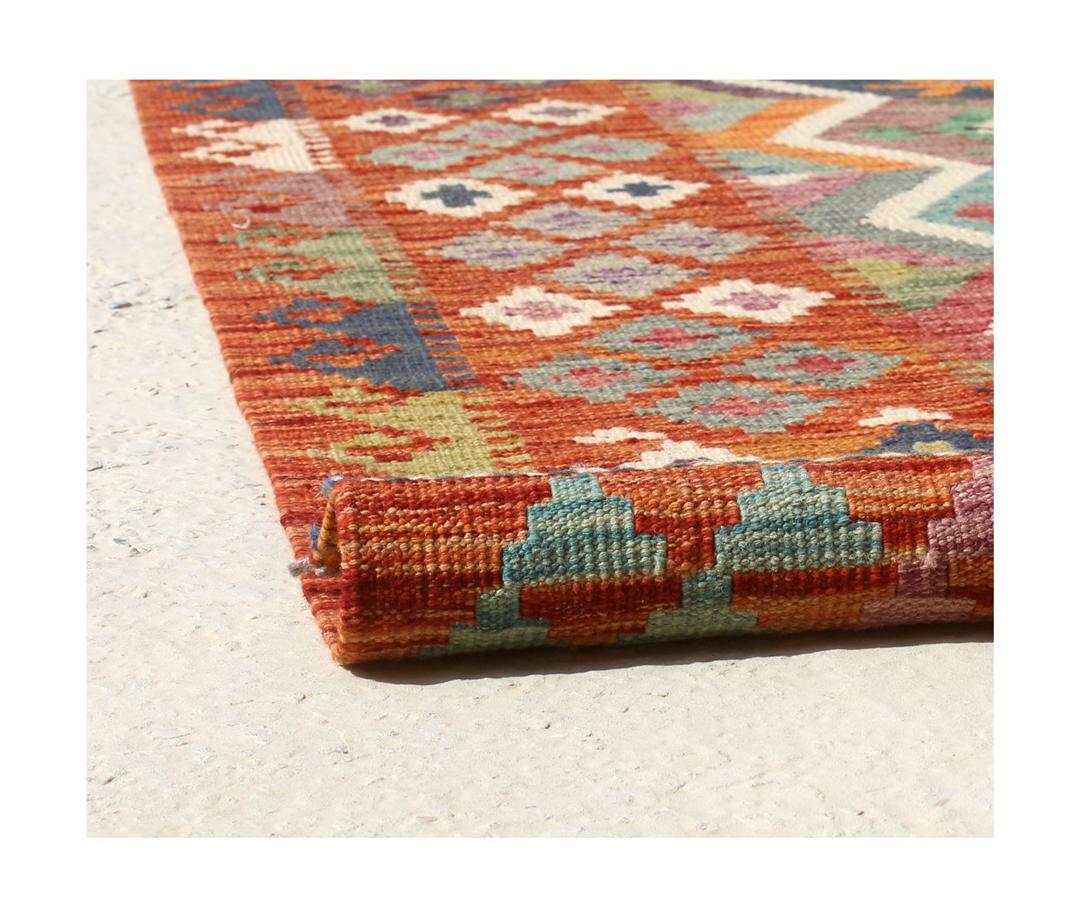
The Kelim, or Kilim, tradition is deeply rooted in the nomadic cultures of the Middle East and Central Asia. These flat-woven rugs have served as functional, portable art for centuries, used as floor coverings, wall hangings, and even as storage bags for mobile households. The Afghan Kelim, in particular, is celebrated for its earthy, natural dyes and robust wool, reflecting the rugged landscape and storied history of the region.
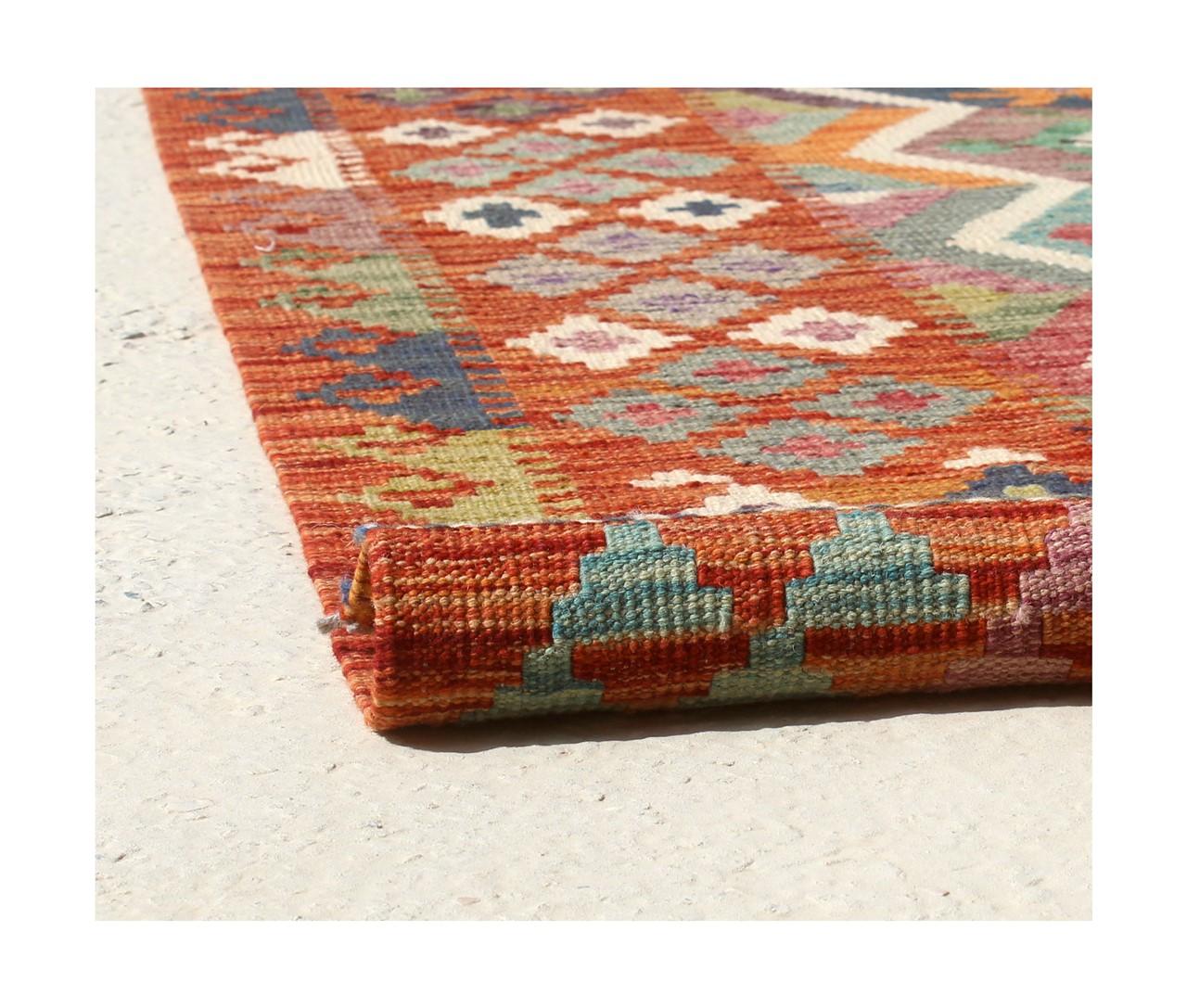
The term 'flat-weave' describes the defining technical characteristic of this category. Unlike pile rugs, which use individual knots tied to a foundation, a Kelim is created by interlocking the coloured weft threads directly with the warp threads. This results in a double-sided rug that is lightweight, easy to clean, and remarkably durable. The absence of pile allows the intricate geometric motifs to stand out with exceptional clarity.
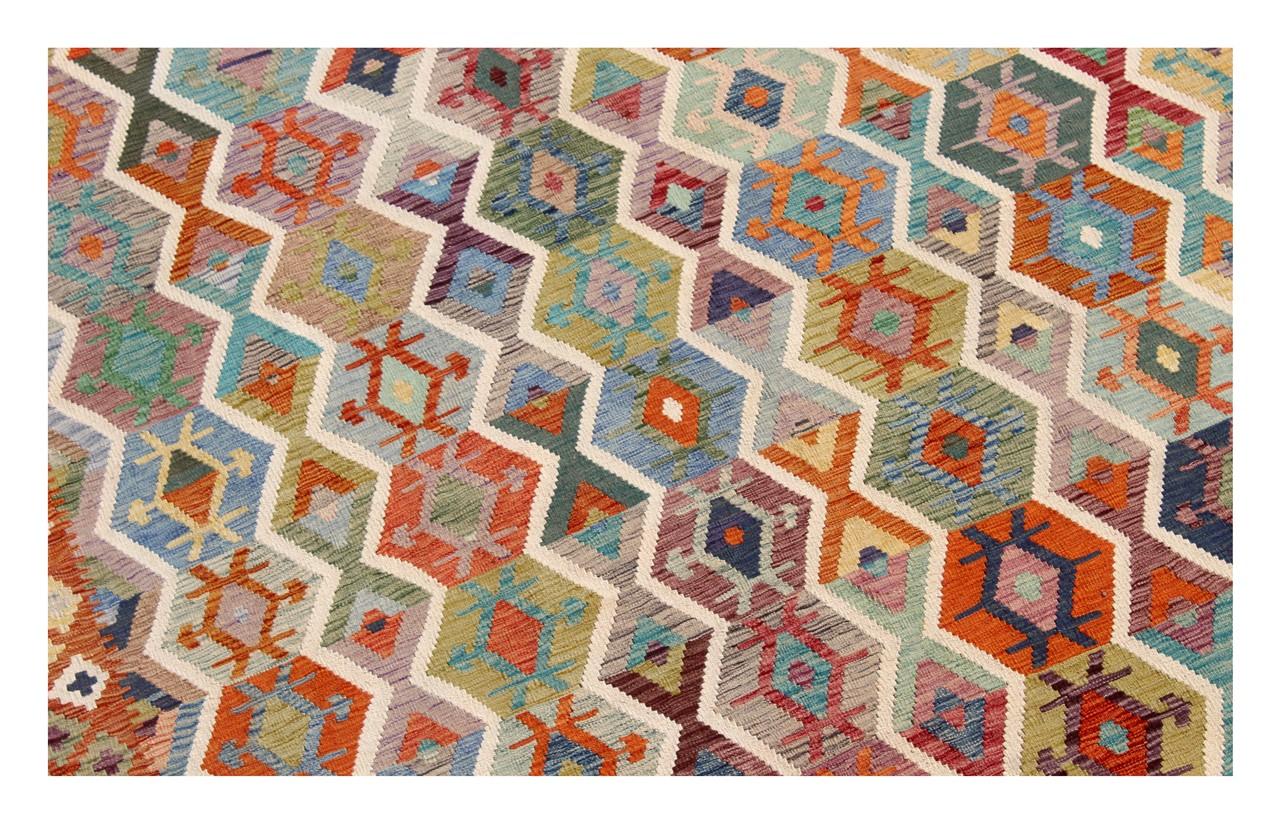
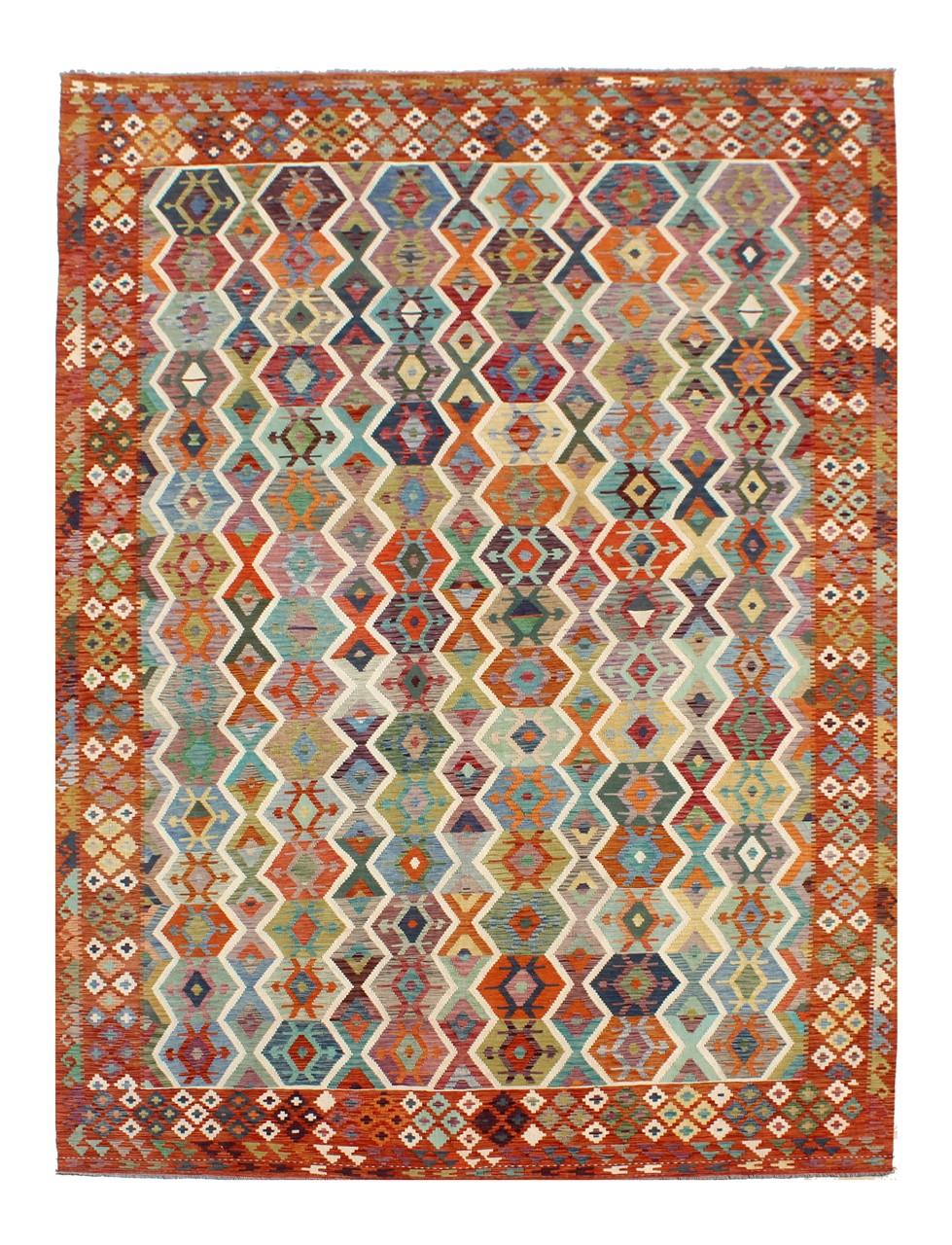
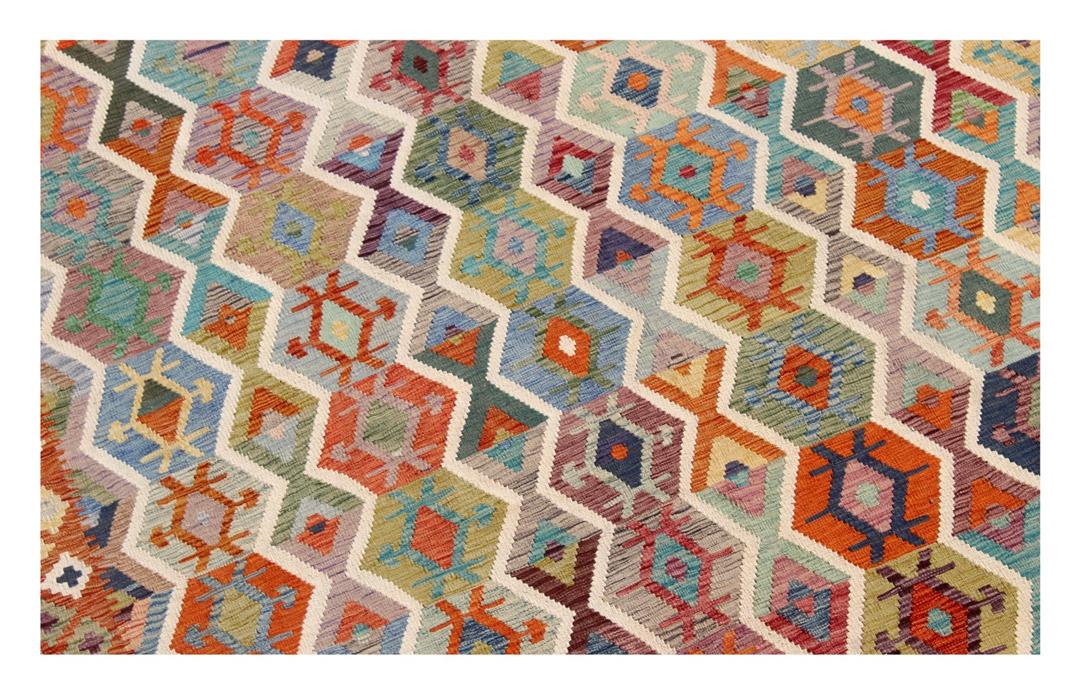
Signature design elements of the Afghan Kelim often include bold geometric shapes, such as diamonds, triangles, and stylized floral motifs, which carry symbolic meaning related to protection, fertility, and tribal identity. The use of a repeating diamond pattern, as seen here, is a classic motif that creates a rhythmic, hypnotic visual effect. These designs are typically framed by elaborate, multi-layered borders that demonstrate the weaver's mastery of symmetry and scale.
Collecting an Afghan Kelim is an investment in cultural heritage. These rugs are highly valued for their authentic, unpretentious beauty and the immense skill required to produce them without the aid of modern machinery. Owning one is a way to connect with a centuries-old tradition of textile art, bringing a sense of place and narrative to your interior that mass-produced items simply cannot replicate.