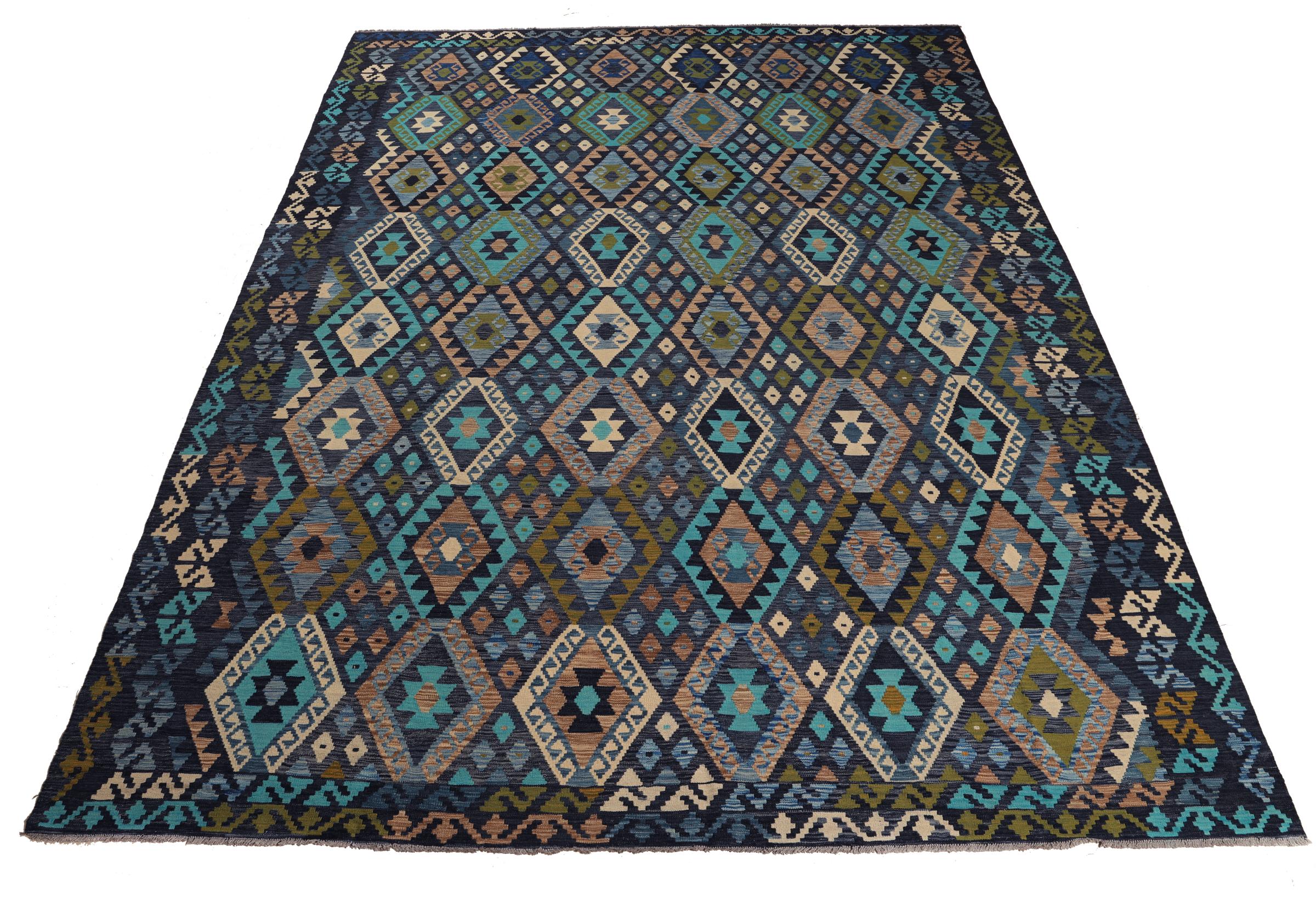
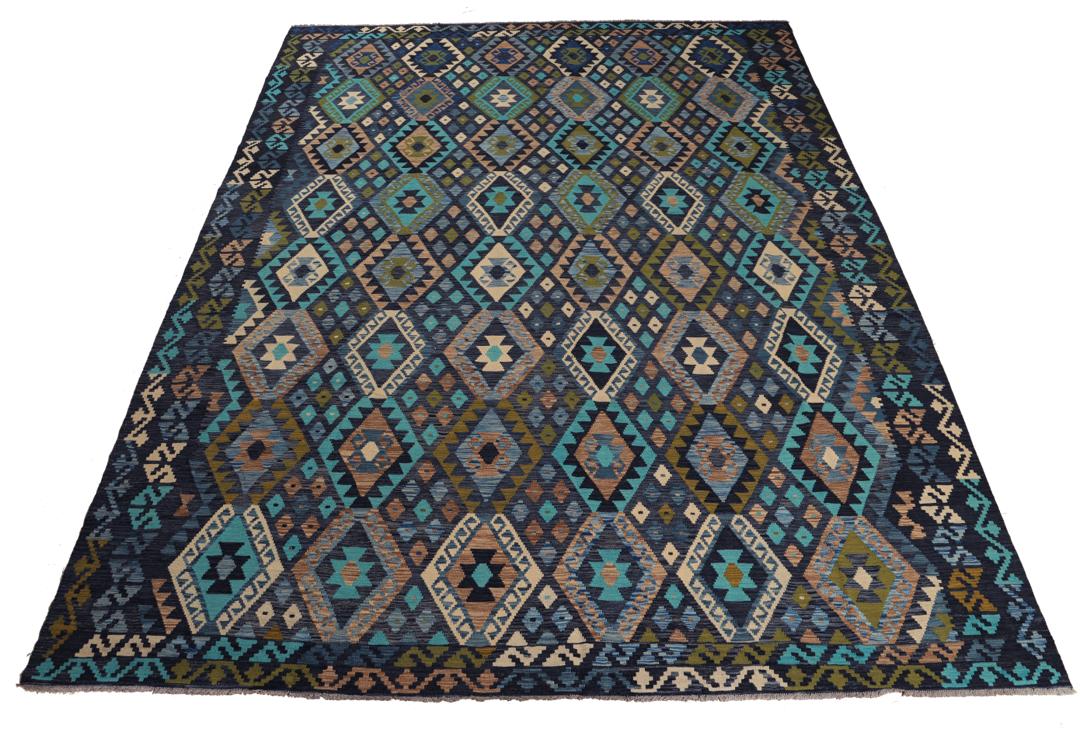
Kelim rugs from Afghanistan are renowned for their rich cultural history and deep connection to the nomadic traditions of the Middle East. These flat-woven textiles have historically served practical purposes in the lives of nomadic and semi-nomadic tribes, functioning as floor coverings, blankets, and storage bags. The migration of these weaving traditions across the rugged Afghan landscape has resulted in a style that is both functional and deeply expressive.
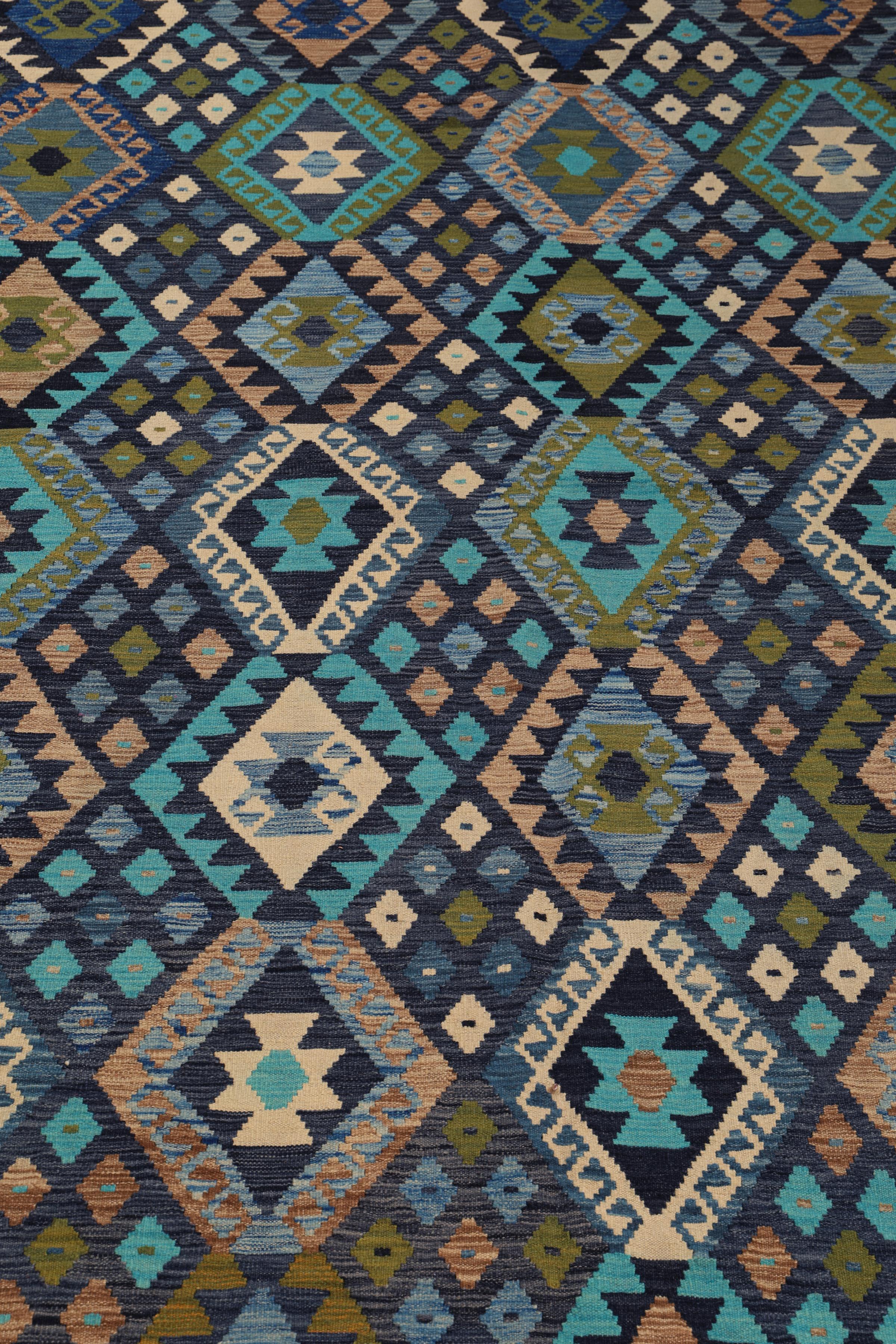
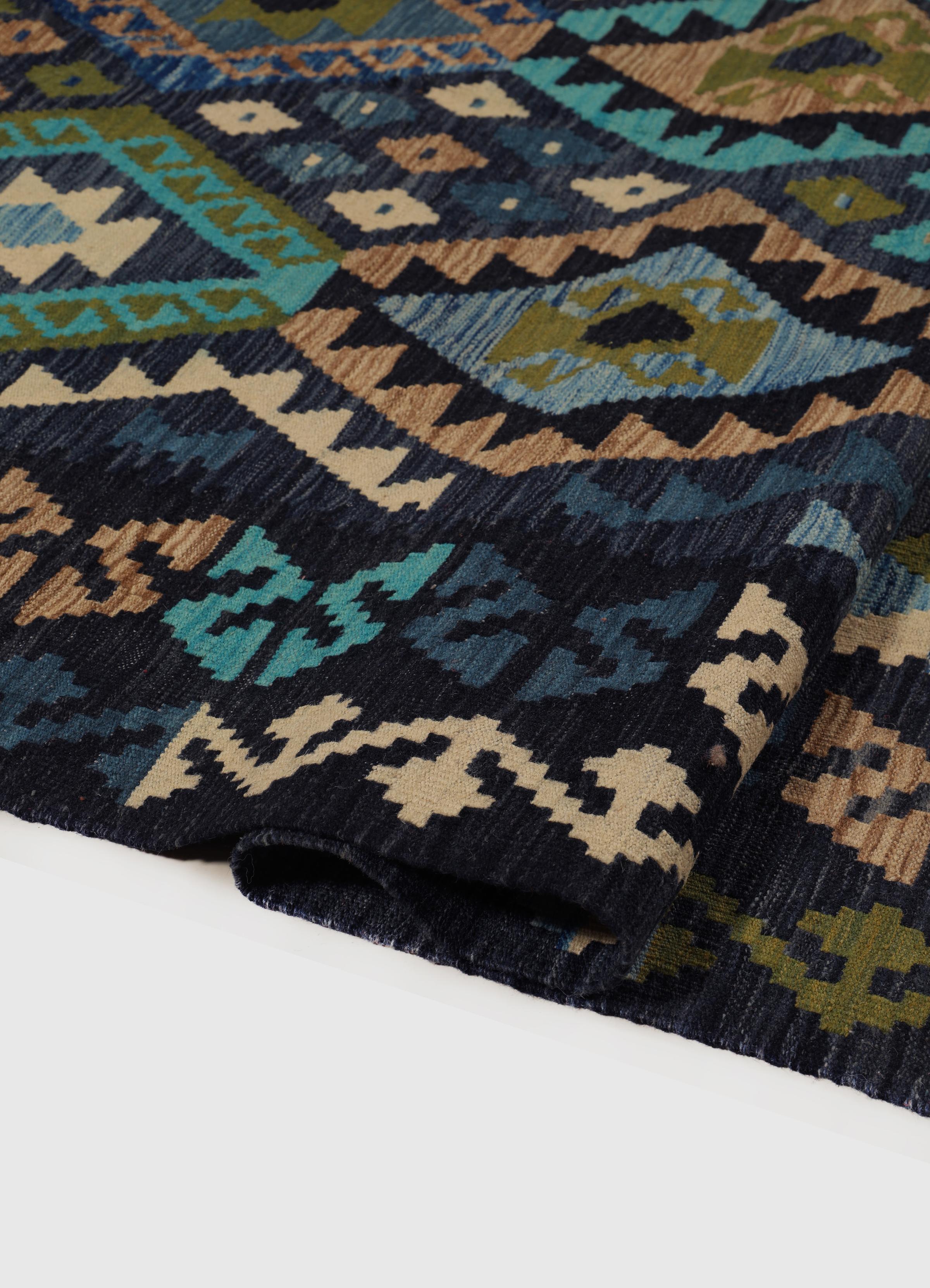
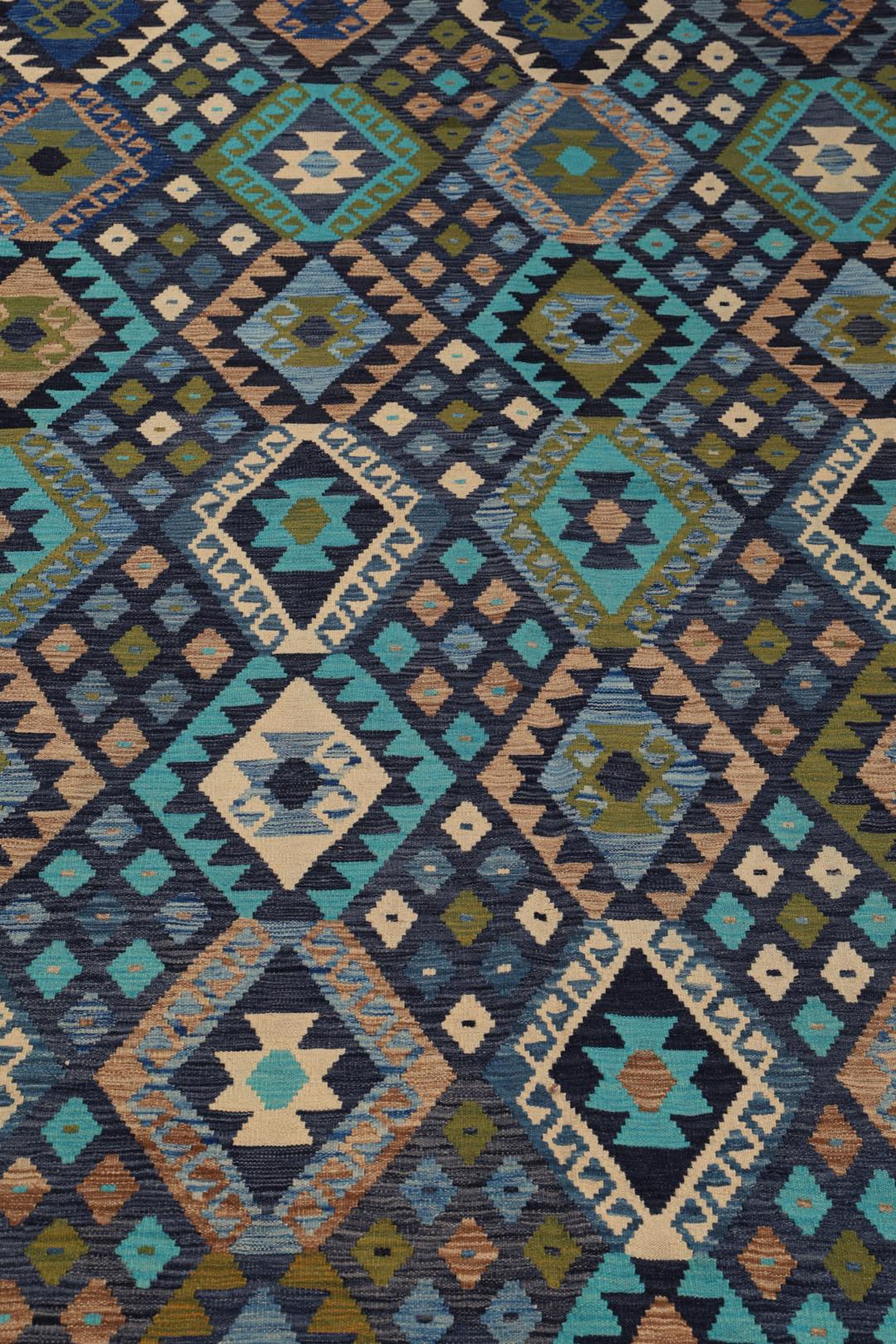
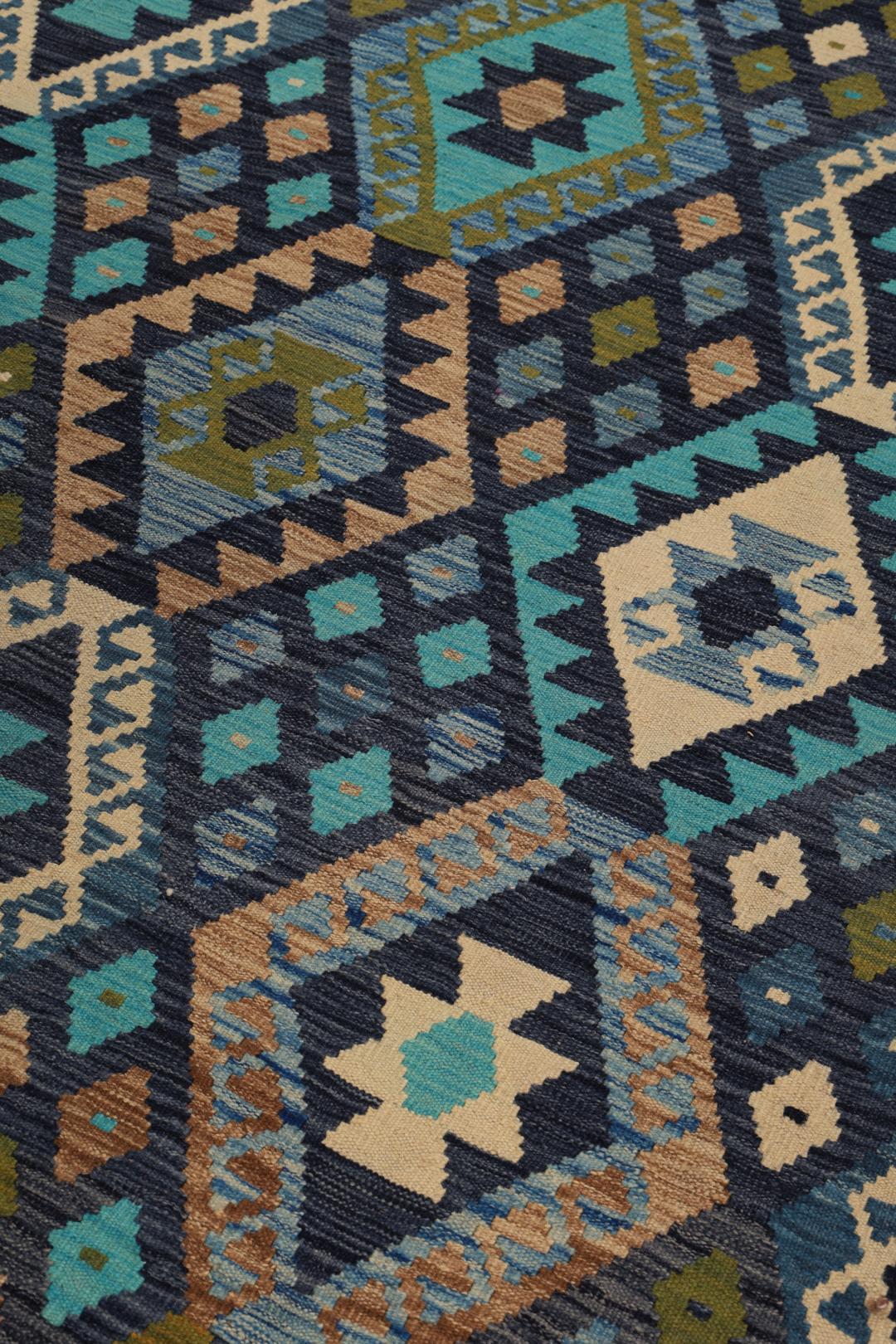
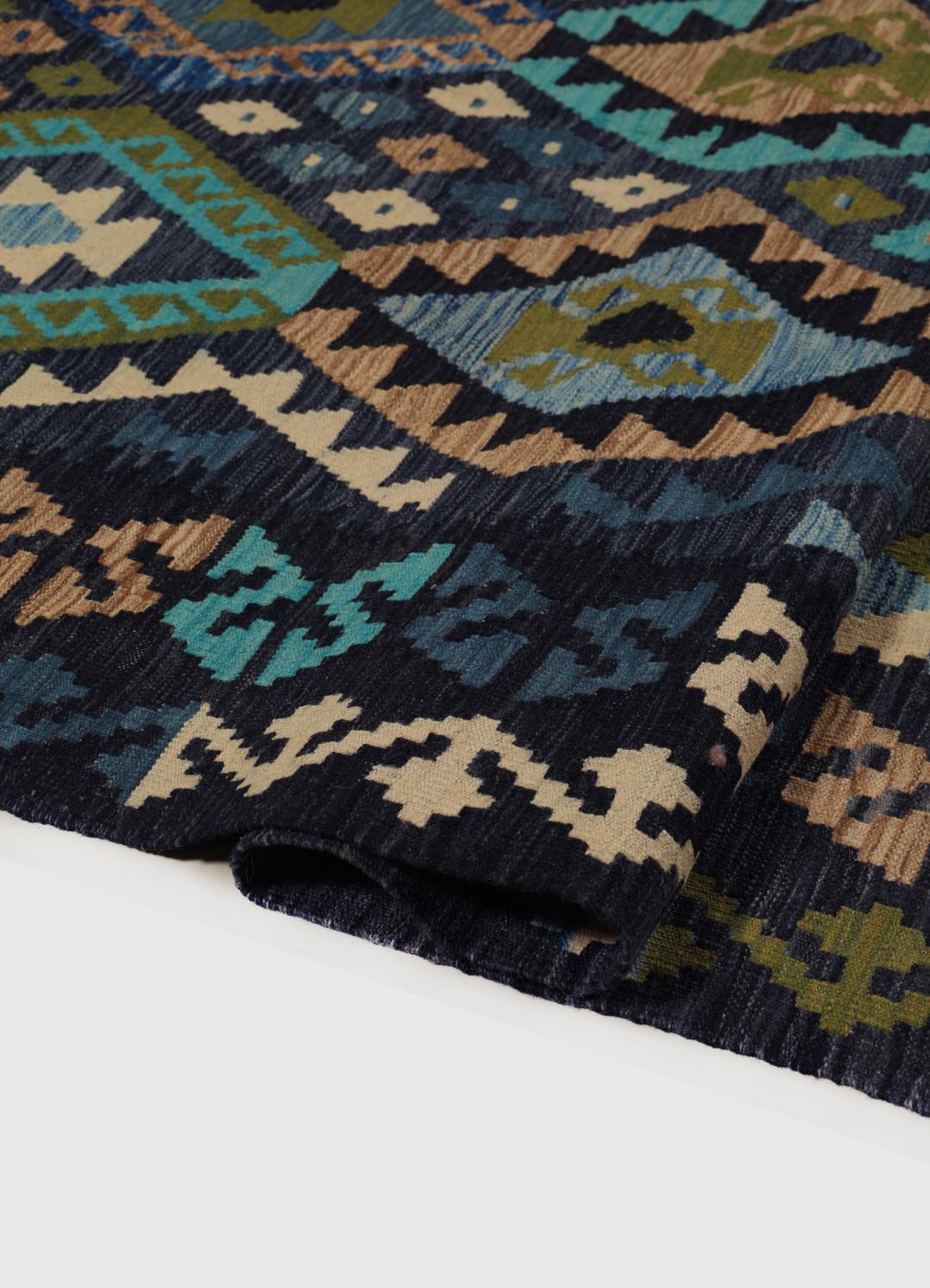
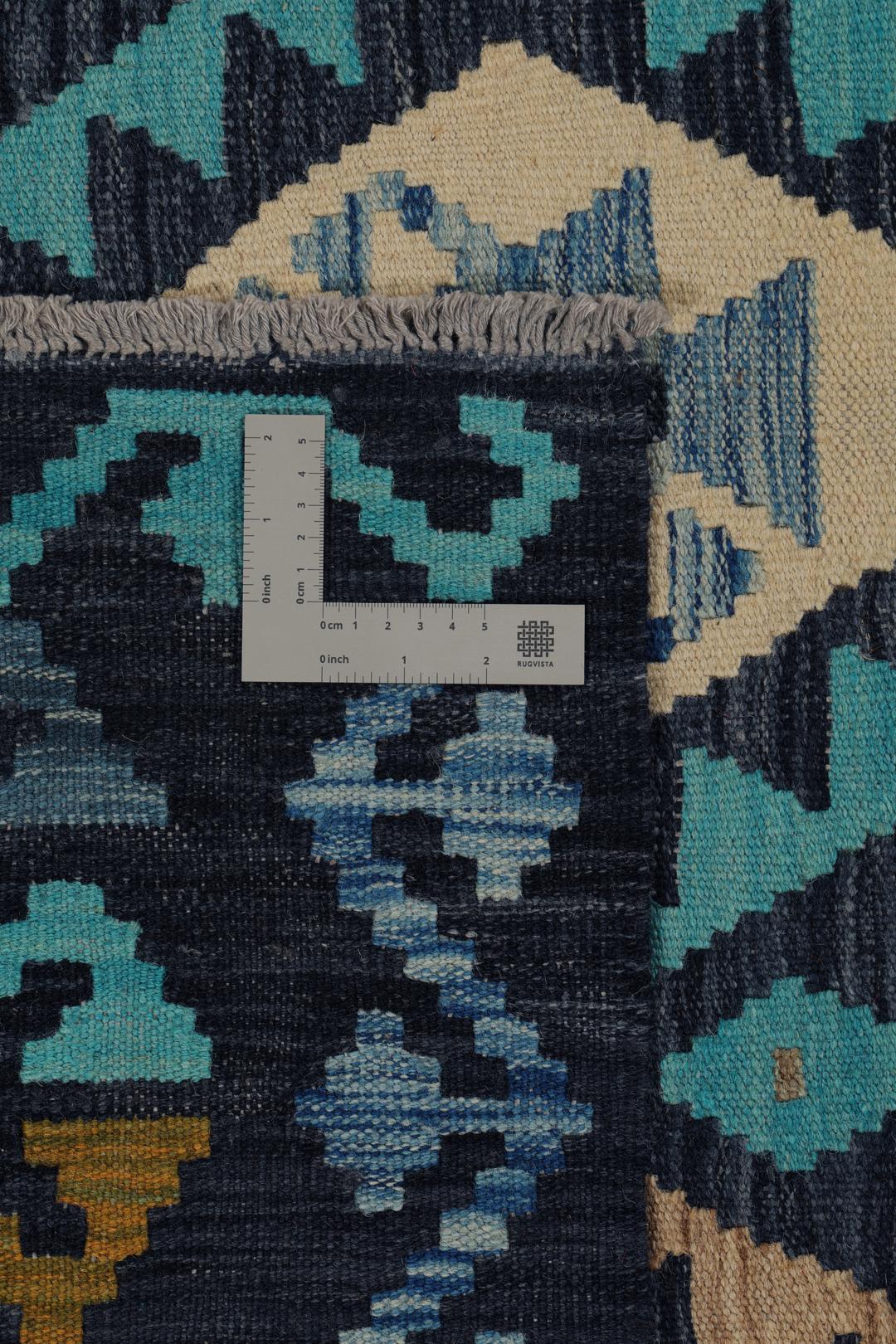
The term Kelim refers to the specific flat-weave technique where the weft threads are passed over and under the warp threads to create the pattern, resulting in a thin, reversible rug without a pile. This method allows for sharp, crisp geometric designs that are hallmarks of the craft. Because there is no pile to hide the structure, the quality of the Wool and the precision of the weaver are immediately apparent in the finished product.
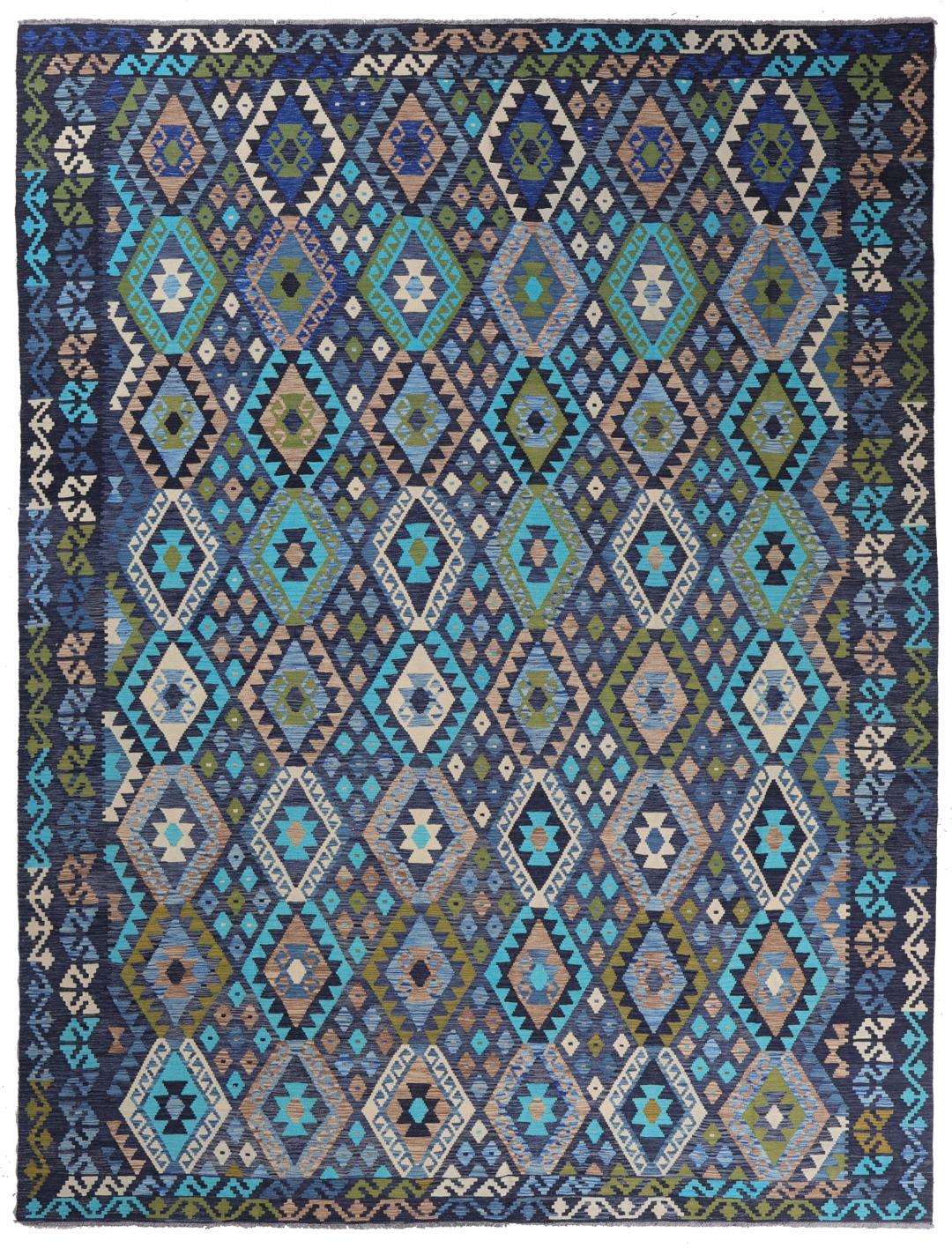
Signature design elements in this style often include repeating geometric motifs such as diamonds, triangles, and stylised tribal symbols. These patterns are not merely decorative but are deeply rooted in the history and identity of the weavers, often representing protection, prosperity, or the natural world. The use of vibrant, contrasting colours against a dark, saturated field is a classic approach that enhances the visual depth of the design.
Collecting a Kelim is an opportunity to preserve a living craft tradition. These rugs are highly valued for their authenticity and the immense skill required to produce them without the aid of modern machinery. Owning one is a testament to the enduring appeal of handmade artistry and the cultural significance of the Middle Eastern weaving heritage.