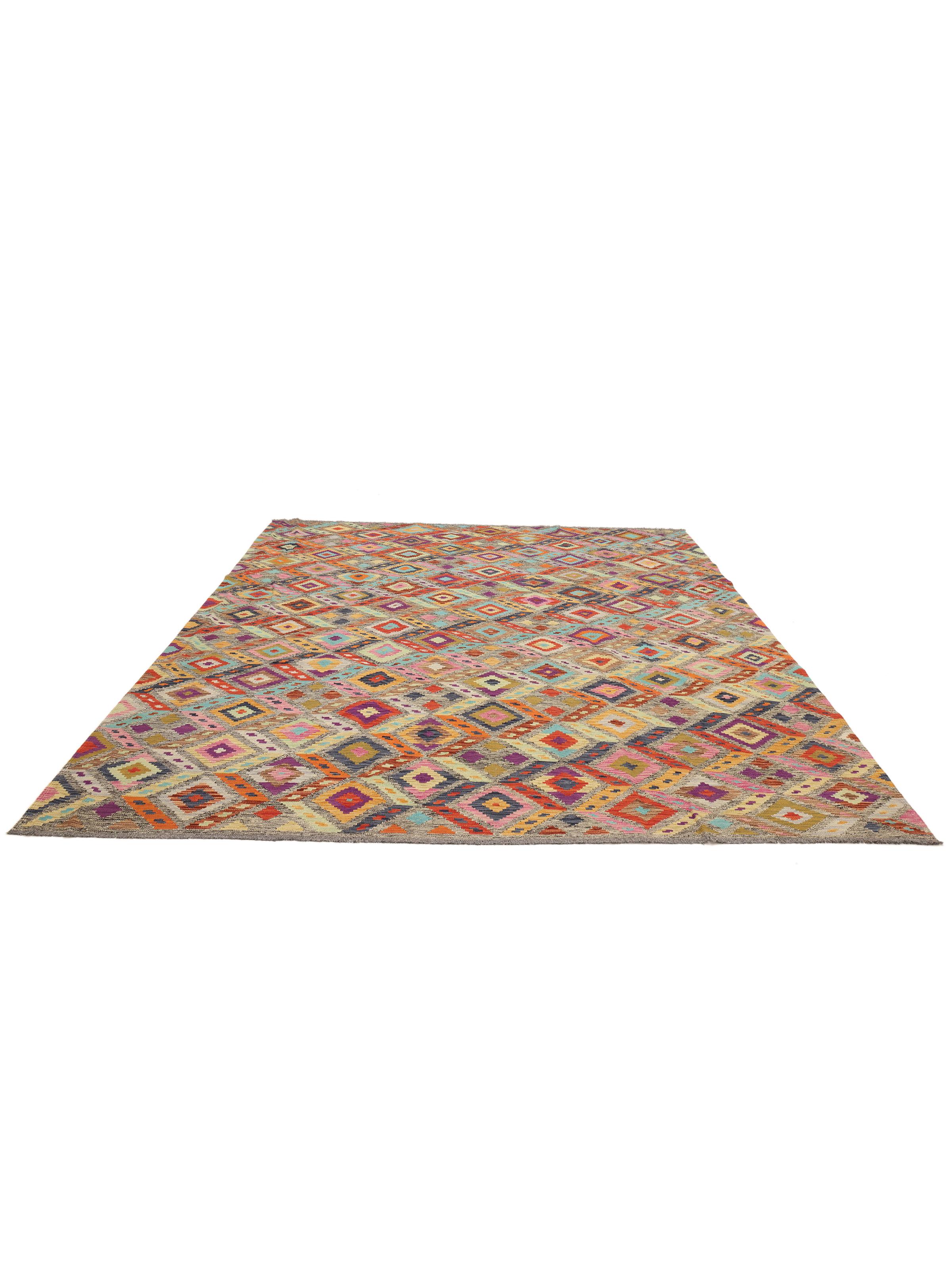
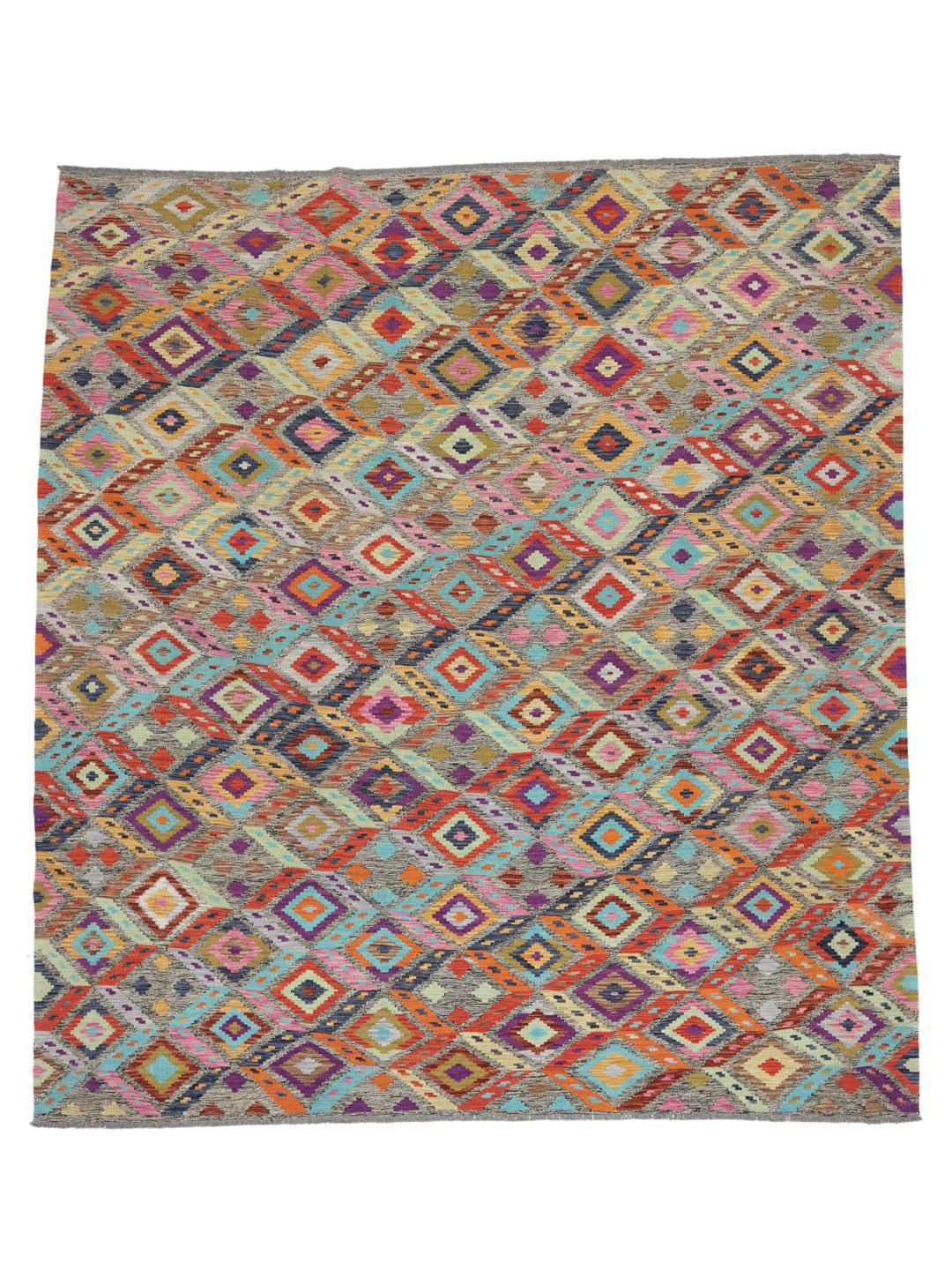
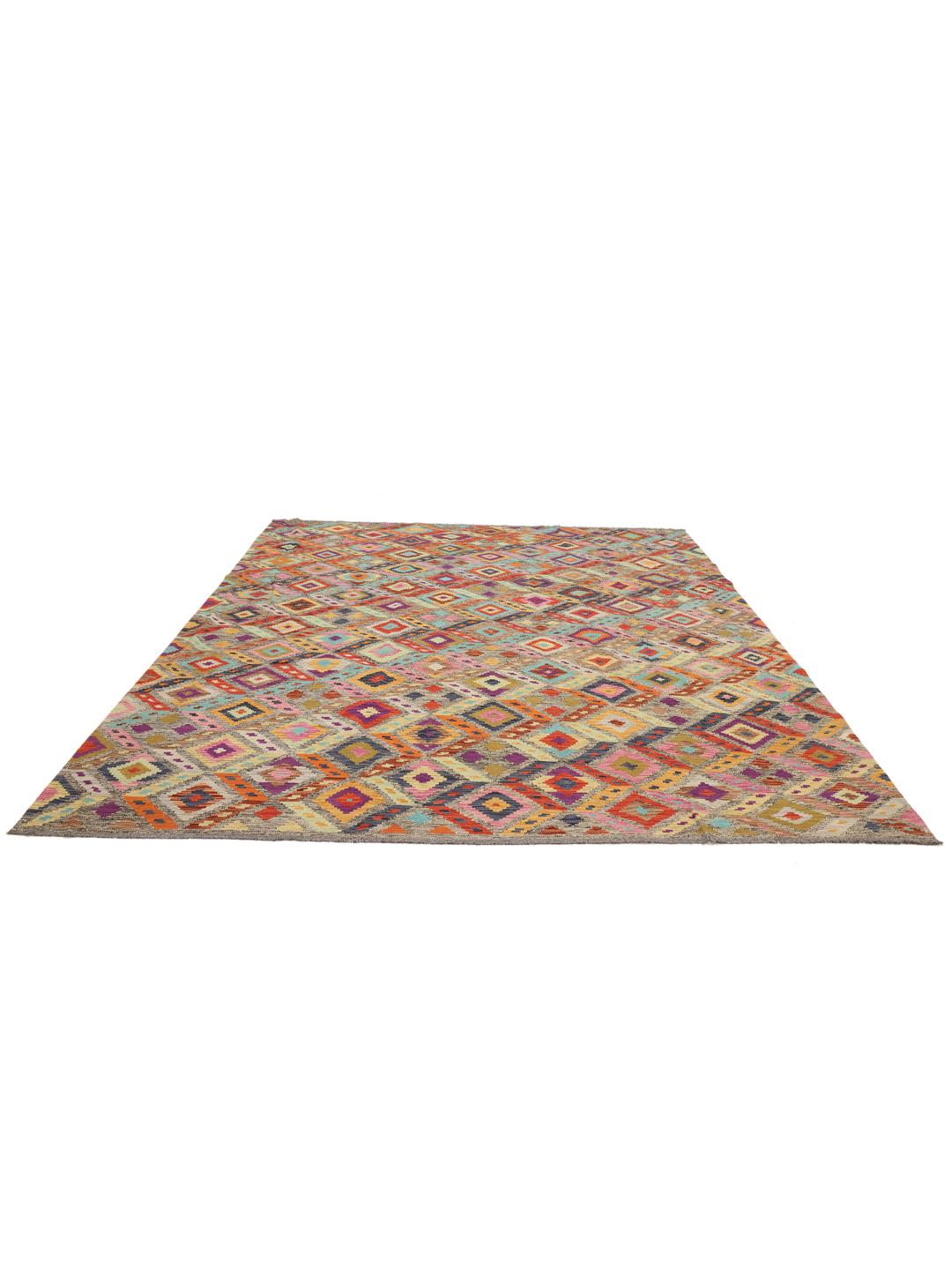
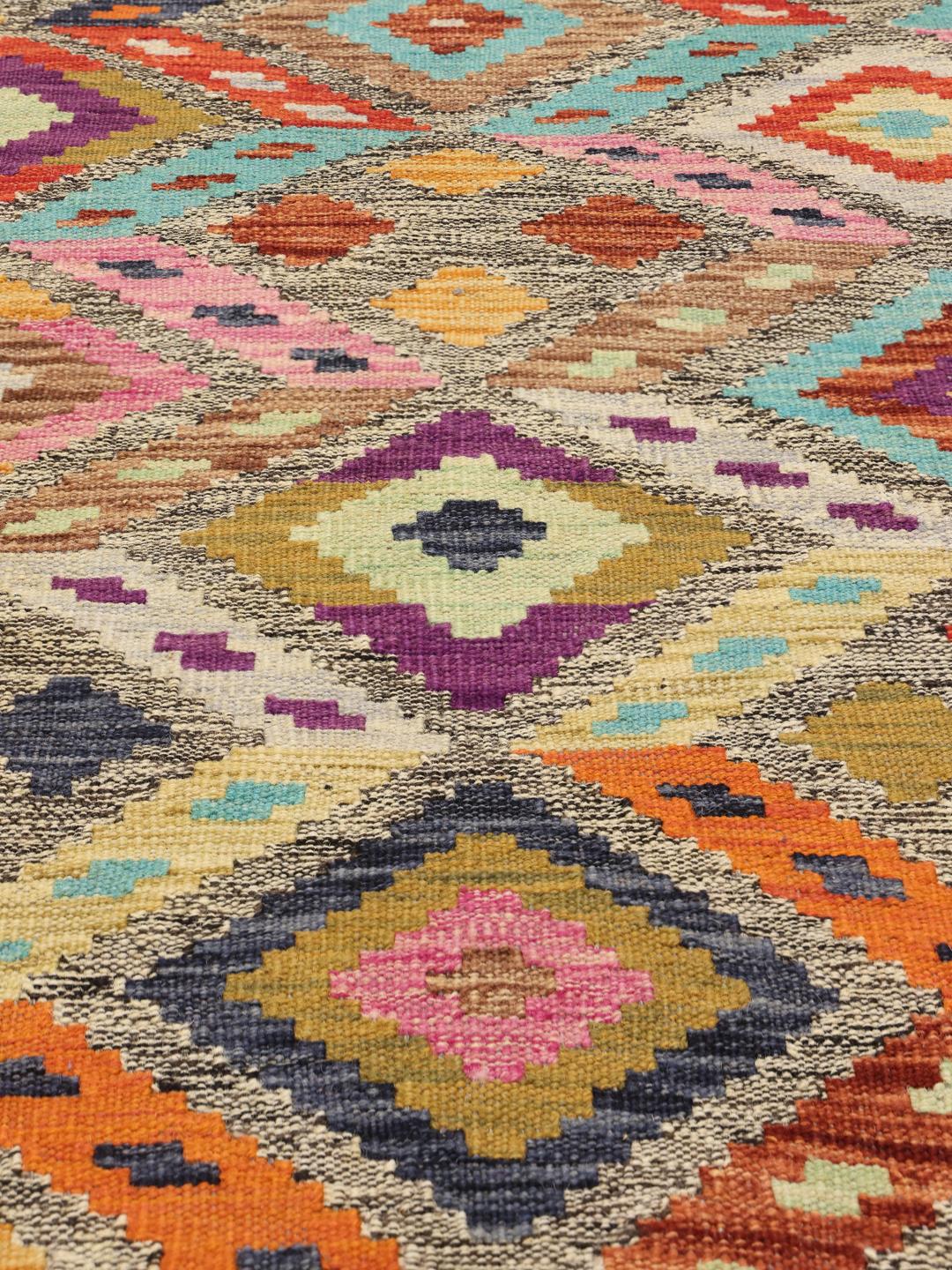
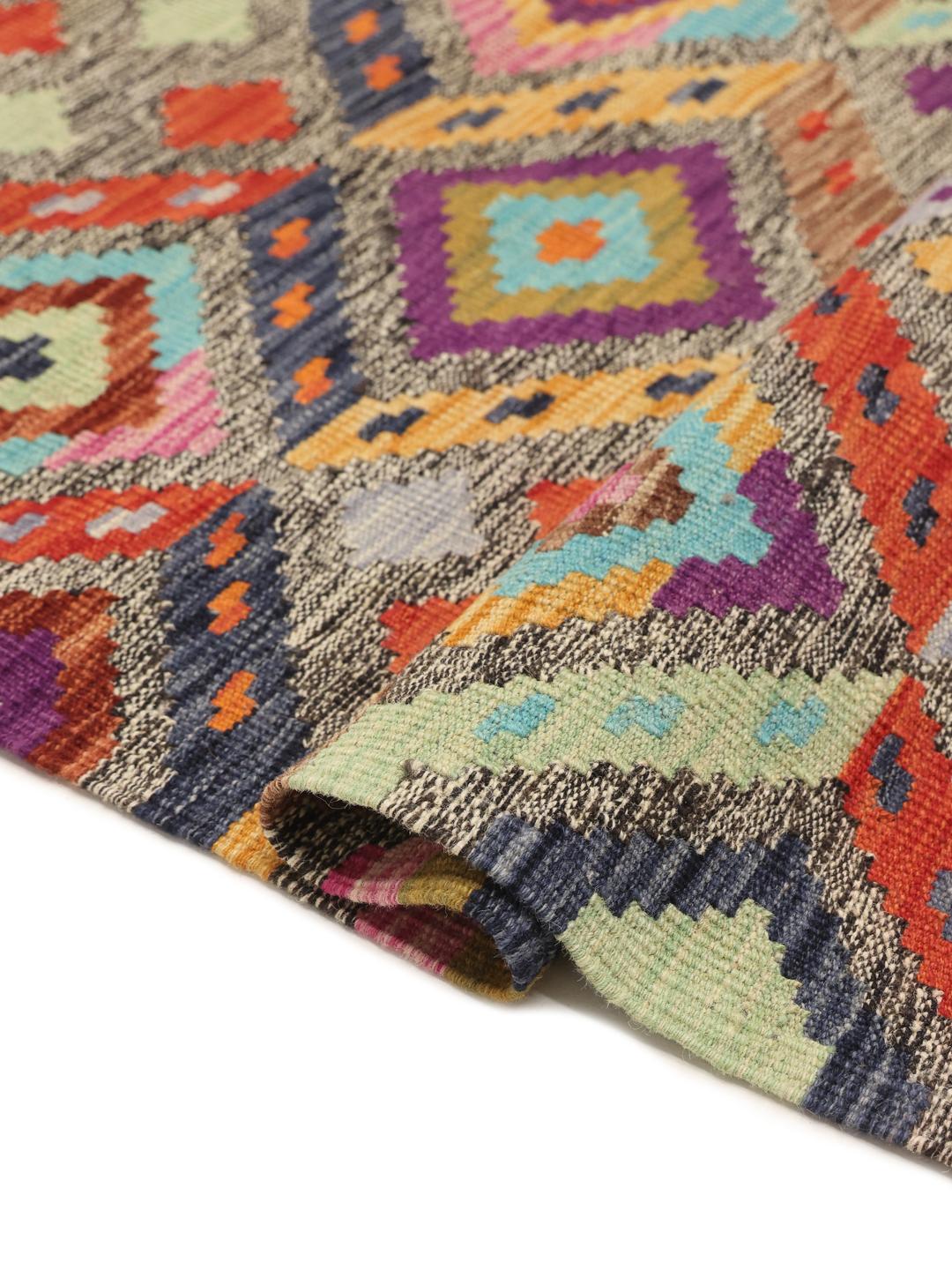
The Kelim tradition in Afghanistan is deeply rooted in the nomadic and semi-nomadic cultures of the region. These rugs have historically served as essential components of daily life, acting as floor coverings, blankets, and storage bags for families on the move. The term Kelim refers to the flat-weaving technique that eschews a pile, resulting in a lightweight yet incredibly durable textile that has been perfected over generations.
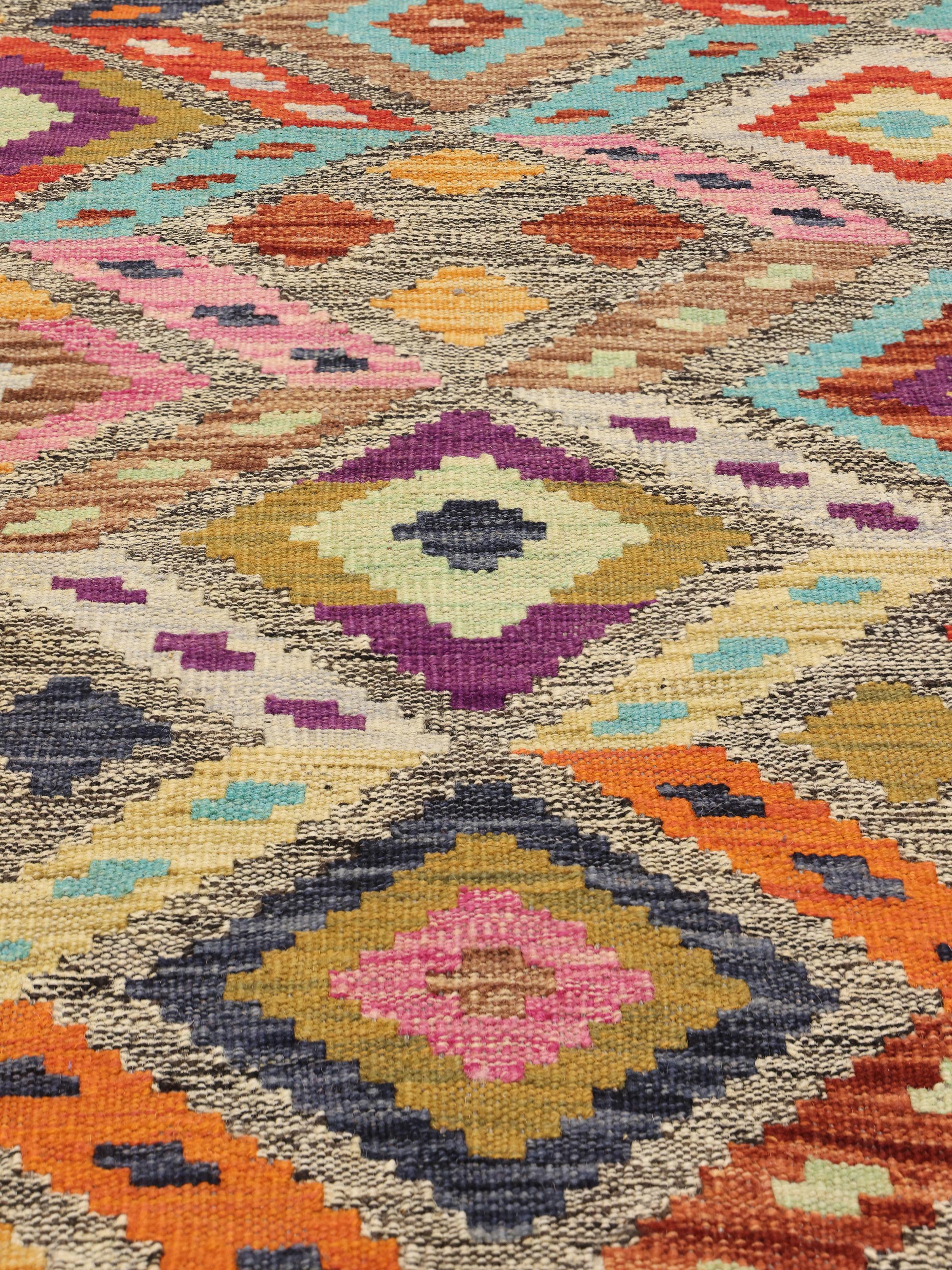
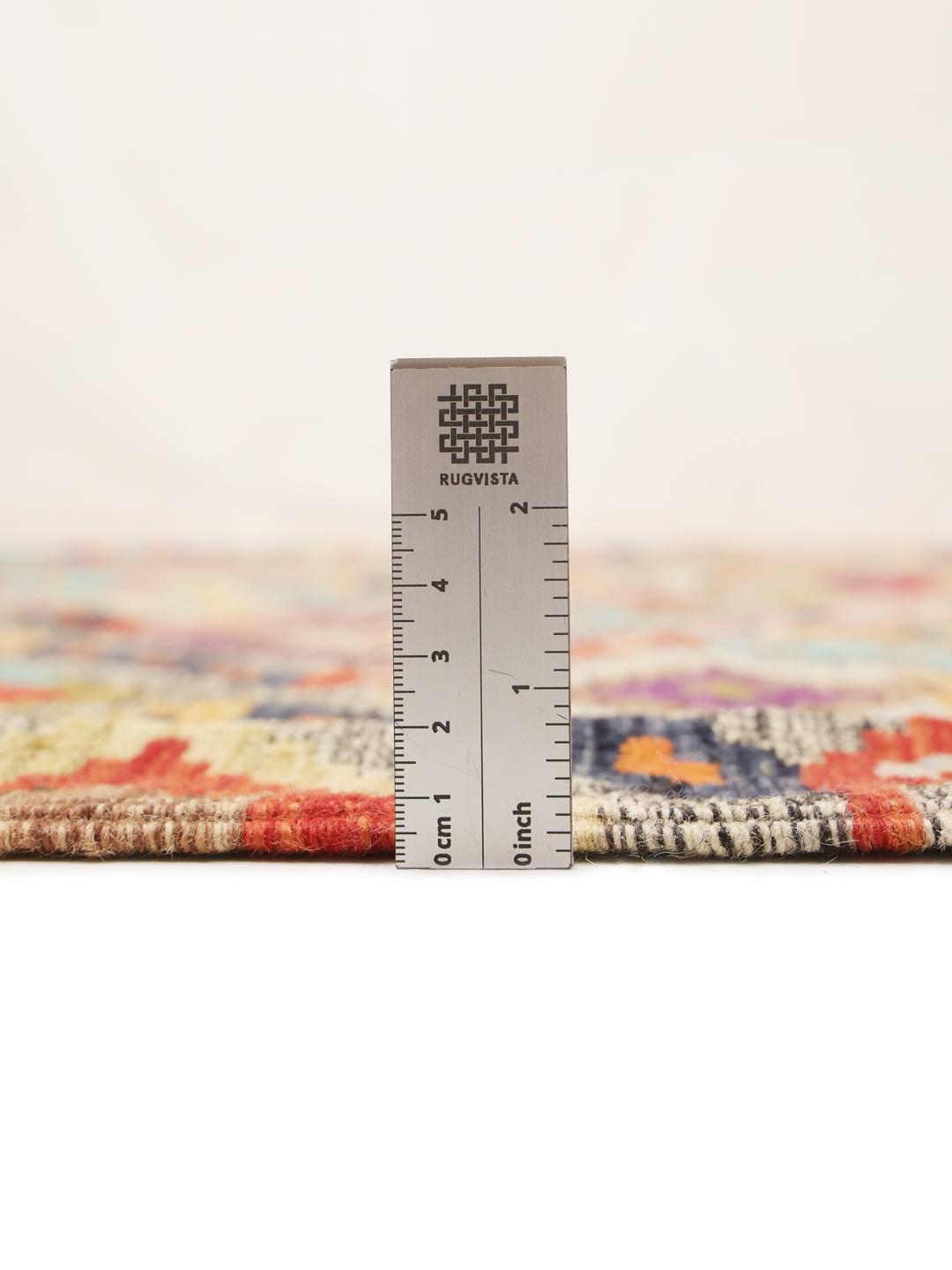
Technically, the flat-weave construction is what defines a Kelim. By interlacing the warp and weft strands, weavers create a fabric where the design is effectively part of the structure itself, rather than added on top. This technique requires the weaver to manage the tension of every individual thread perfectly, which directly influences the crispness of the geometric motifs and the overall longevity of the piece.
Visually, these rugs are characterised by their bold, geometric language. Traditional Afghan designs often feature repeating diamonds, triangles, and complex border systems that reflect the natural landscapes and cultural symbols of the region. While many older styles utilised earthy, mineral-based dyes, contemporary interpretations like this one often embrace a vibrant colour palette to highlight the precision of the geometric shapes.
Owning a Kelim Afghan Old Style rug is a way to preserve a piece of living history. These textiles are highly valued by collectors for their authenticity and the sheer human effort required to complete each design. By bringing one into your home, you are not just acquiring a floor covering, but a testament to the enduring skill and creative spirit of Middle Eastern weavers.