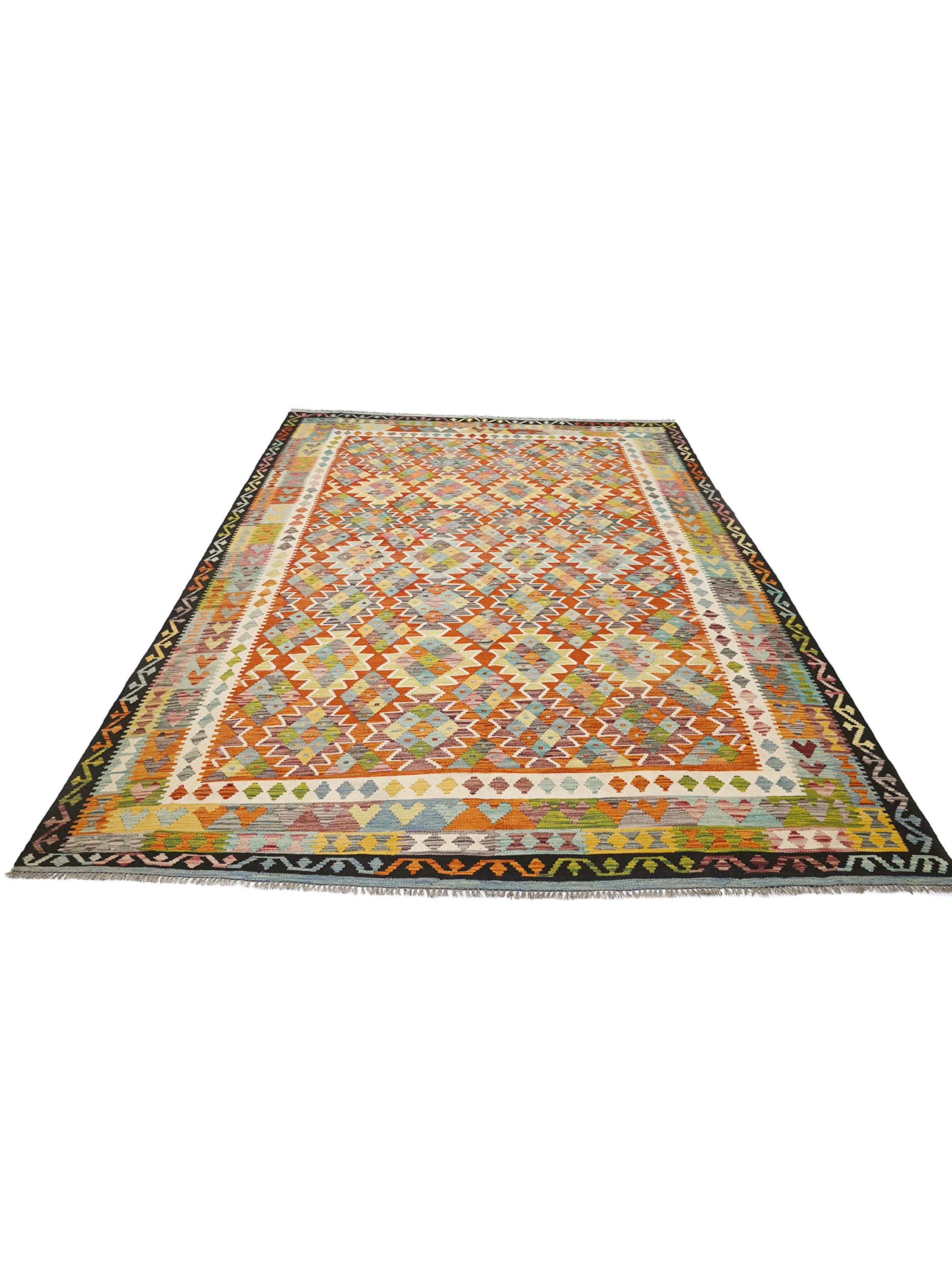
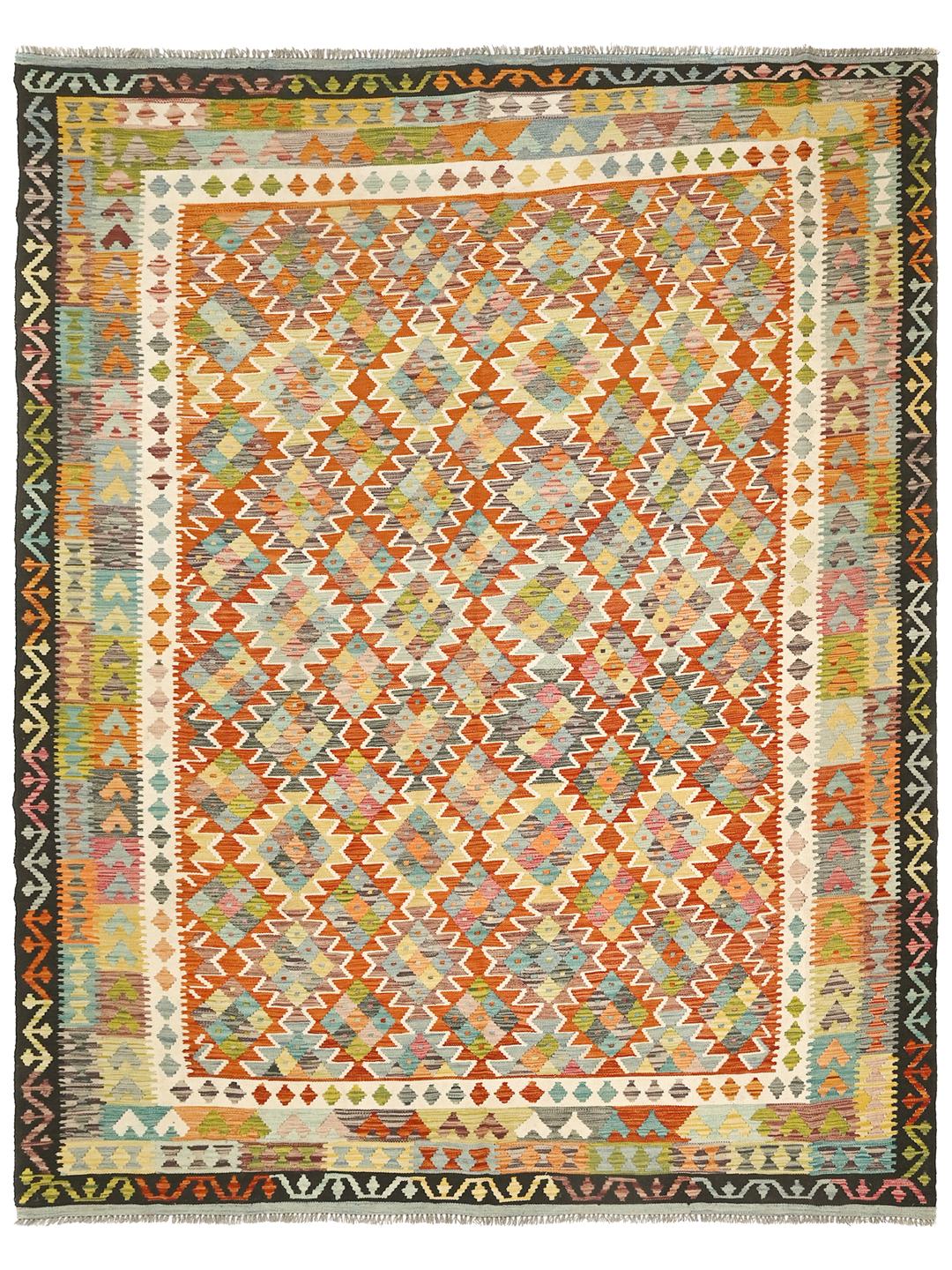
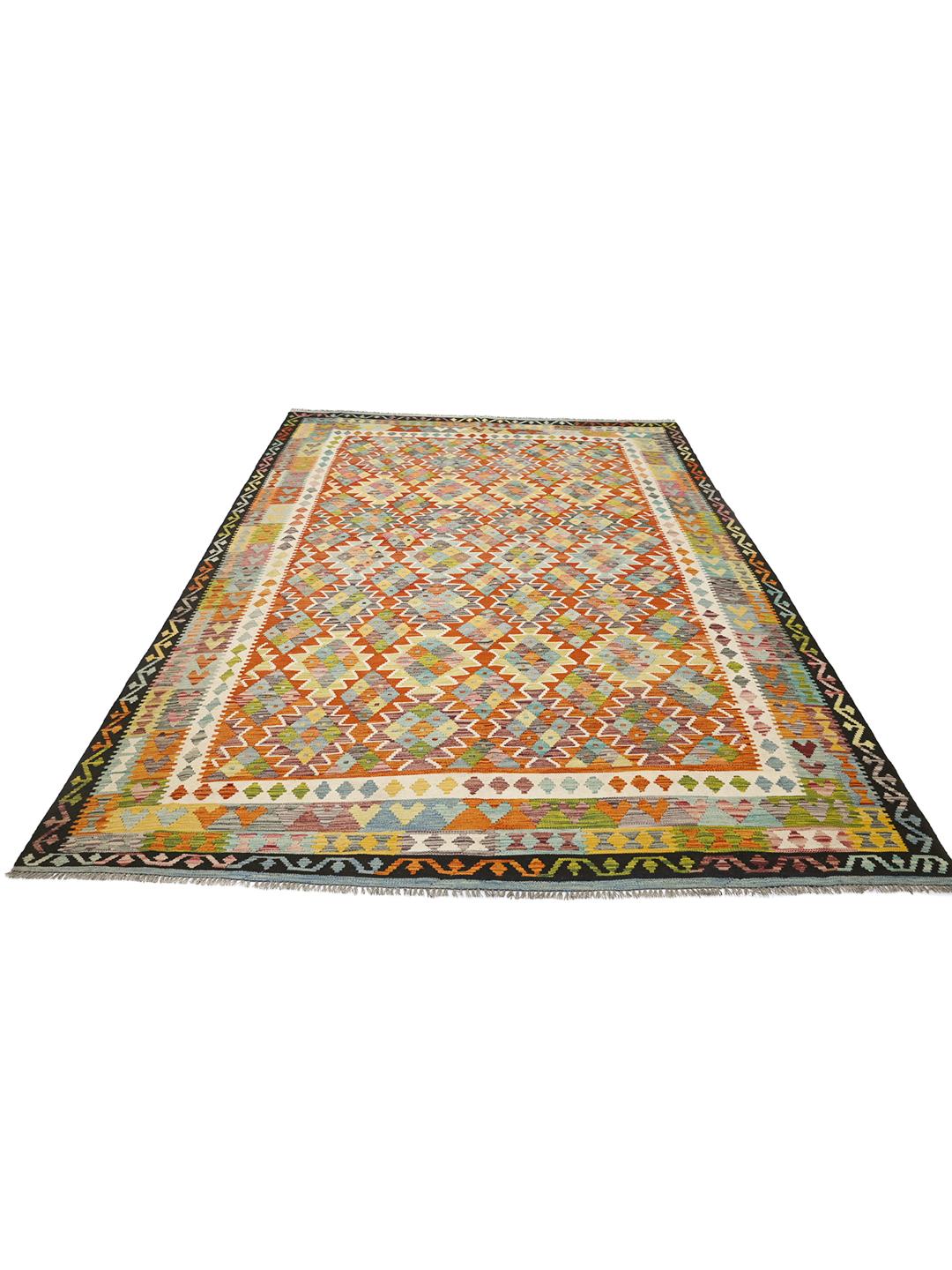
The Afghan Kelim is a celebrated textile tradition from Central Asia, rooted in the nomadic history of the region. These rugs were historically crafted by tribal weavers as functional, portable items that could serve as floor coverings, blankets, or wall hangings. Over time, the designs have evolved, but they remain deeply connected to the cultural identity of Afghanistan, where weaving is a vital expression of regional artistry.
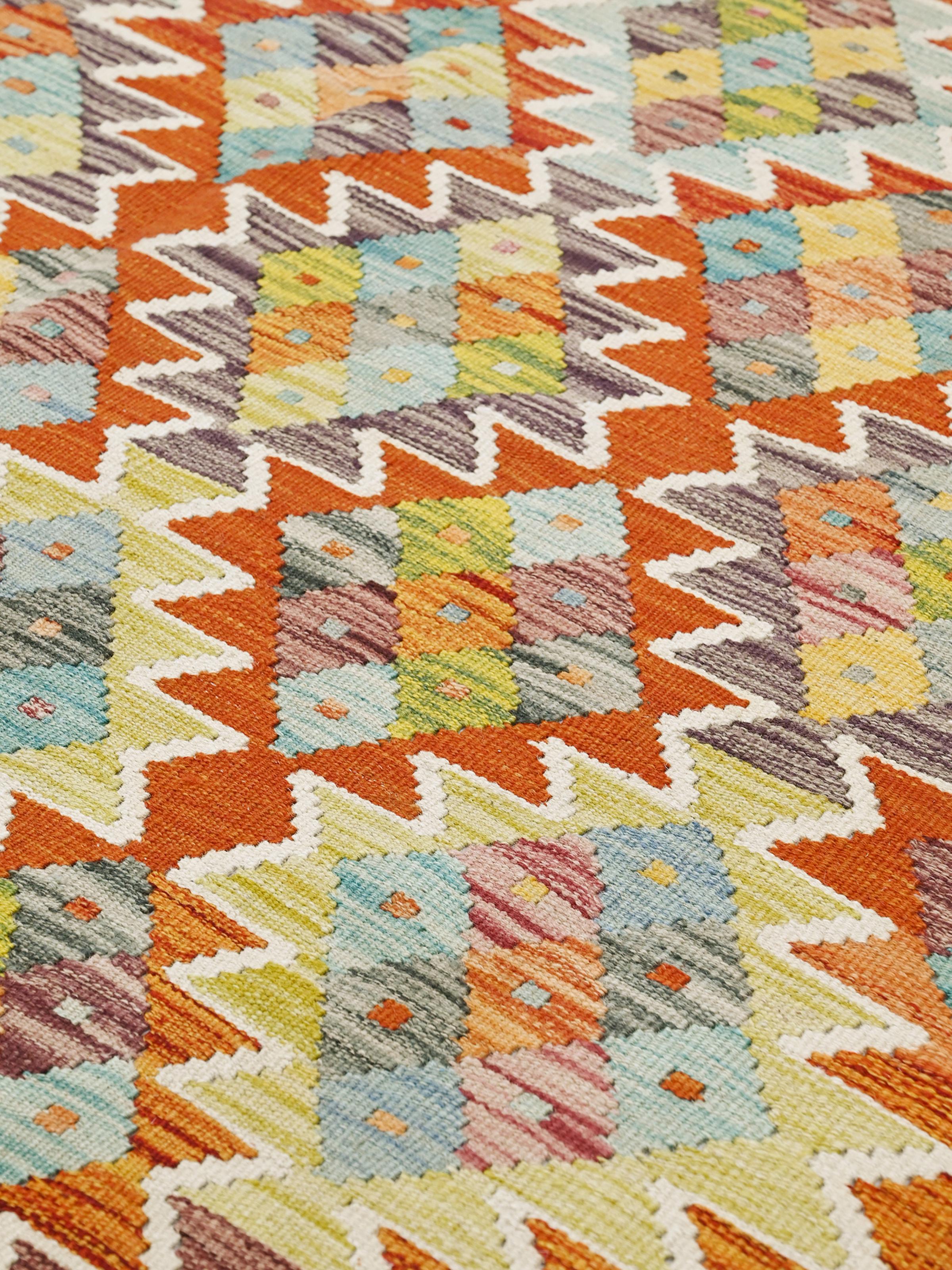
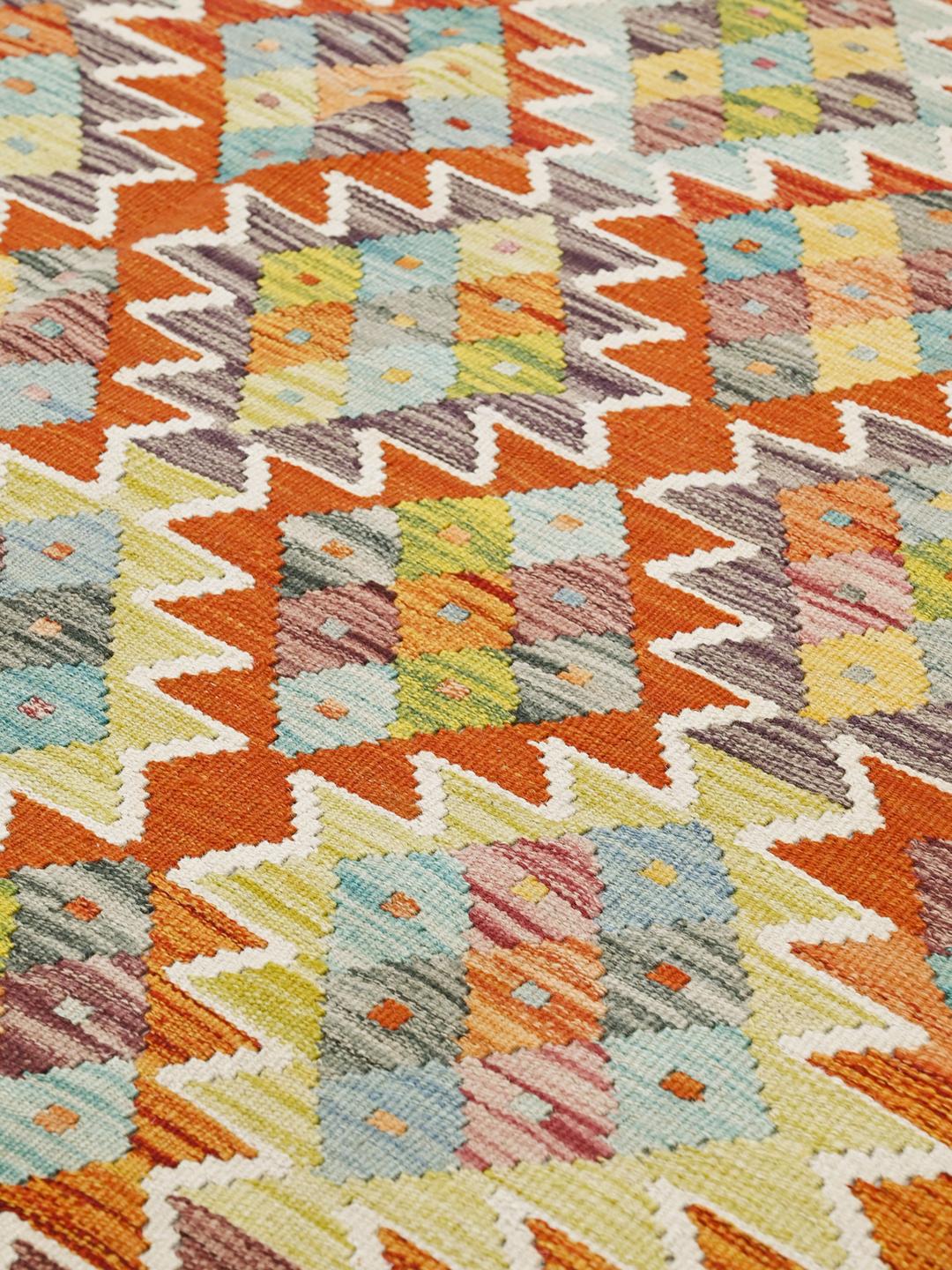
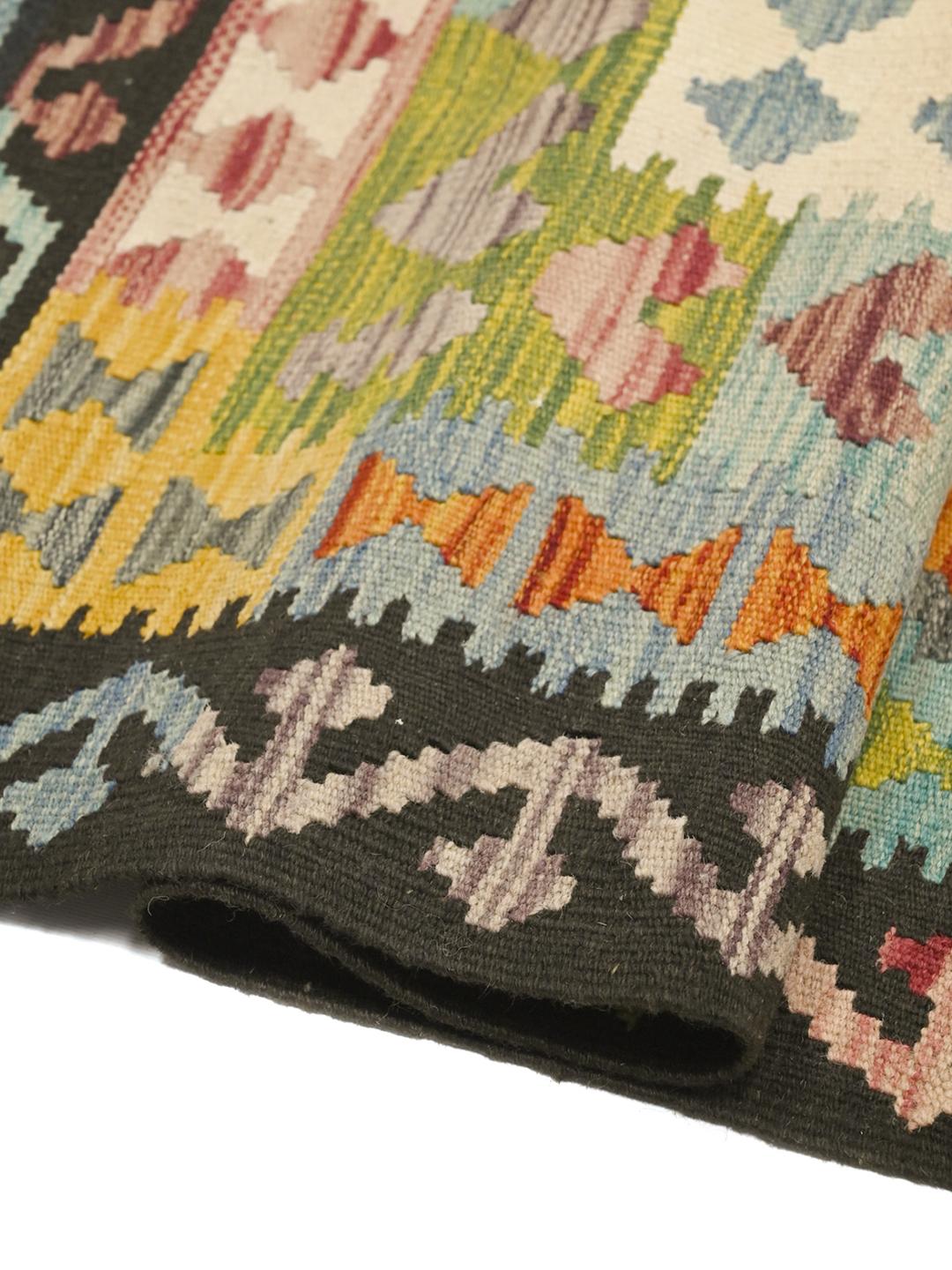
The term 'Kelim' refers to the specific flat-weave technique used to construct these rugs. Unlike knotted rugs that have a pile, Kelims are made by tightly interlacing the warp and weft threads, which creates a smooth, reversible fabric. This technique requires a high level of mastery, as the weaver must manage the colour changes and tension perfectly to prevent gaps and ensure a solid, long-lasting textile.
Signature design elements of these pieces often include bold geometric shapes, most notably the diamond or lozenge motif. These symbols are not merely decorative but are deeply symbolic, often representing protection, tribal identity, or the natural landscape of the region. The use of vibrant, earthy colours is a hallmark of the Afghan tradition, achieved through the application of traditional dyeing methods that have been refined over centuries.
Owning an Afghan Kelim is an opportunity to preserve a piece of living history. These rugs are highly valued by collectors for their authenticity, the skill involved in their creation, and the way they bridge the gap between traditional nomadic utility and modern interior design. By bringing one into your home, you are supporting a craft that has survived for generations and continues to define the artistic spirit of its origin.