The Afghan Kelim tradition is deeply rooted in the nomadic history of the Middle East, where portable, functional textiles were essential for everyday life. Historically, these flat-woven rugs were used as floor coverings, blankets, and storage bags by tribes traversing the rugged landscapes of the region. Over centuries, these utilitarian items evolved into the sophisticated artistic expressions we see today, capturing the cultural identity and storytelling traditions of the weavers.
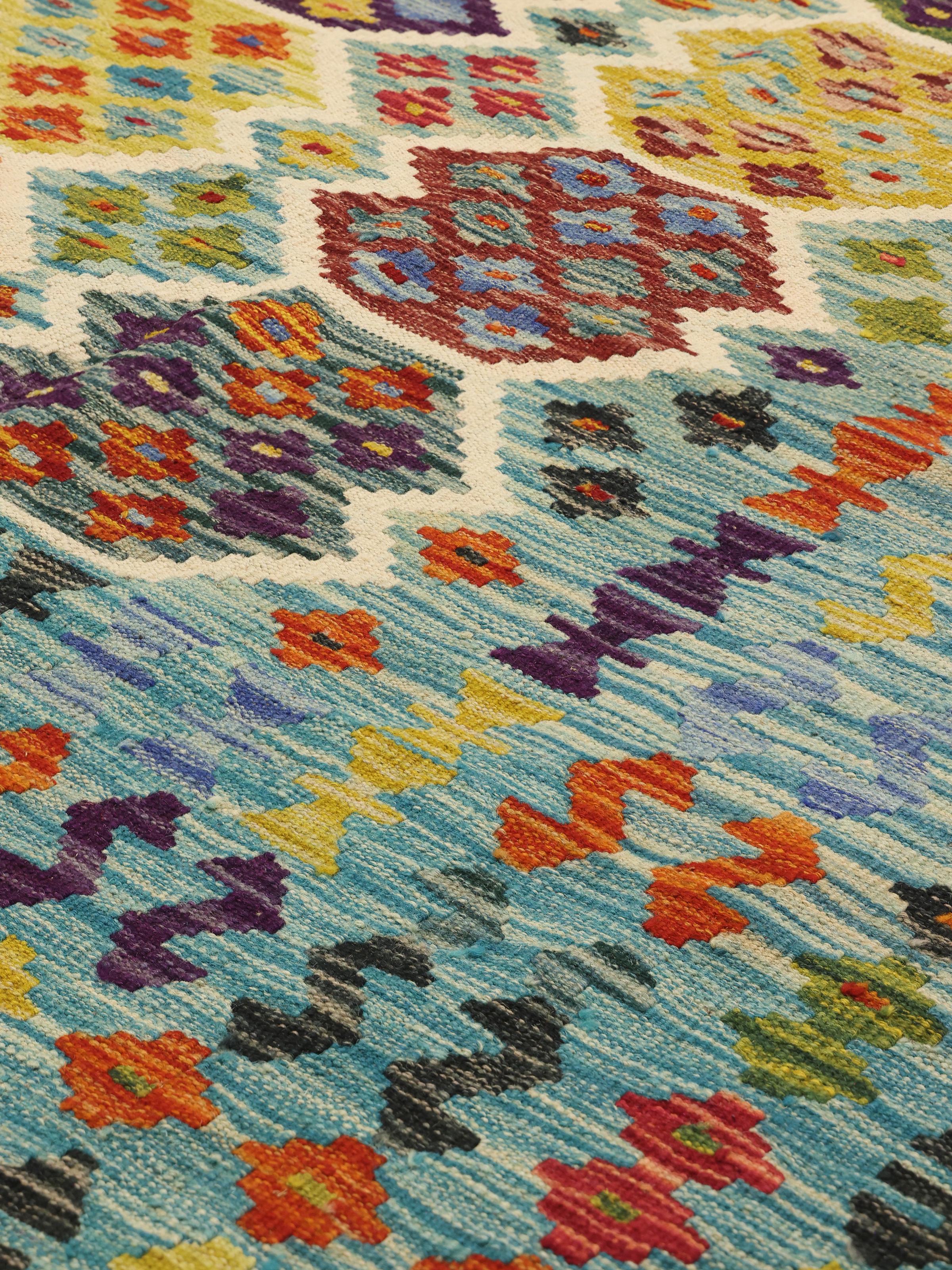
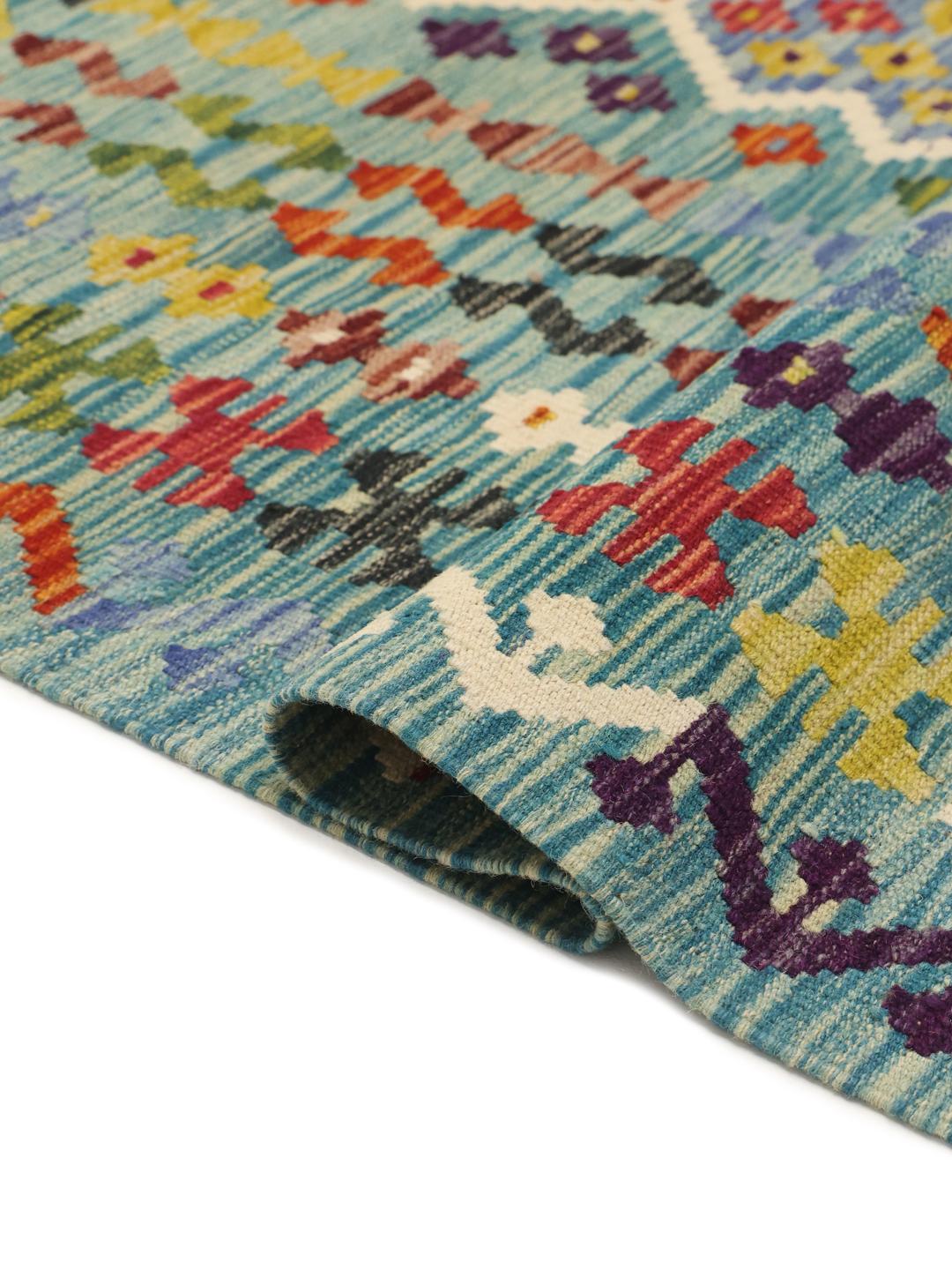
The term 'Kelim' refers specifically to the tapestry-weave technique, which is distinct from pile rugs because it lacks a knotted surface. In this tradition, the pattern is created by weaving the coloured weft strands through the warp, a process that produces identical designs on both sides of the rug. This technique allows for the sharp, clean lines and bold geometric shapes that define the Afghan style, making it a hallmark of quality and craftsmanship in the world of textiles.
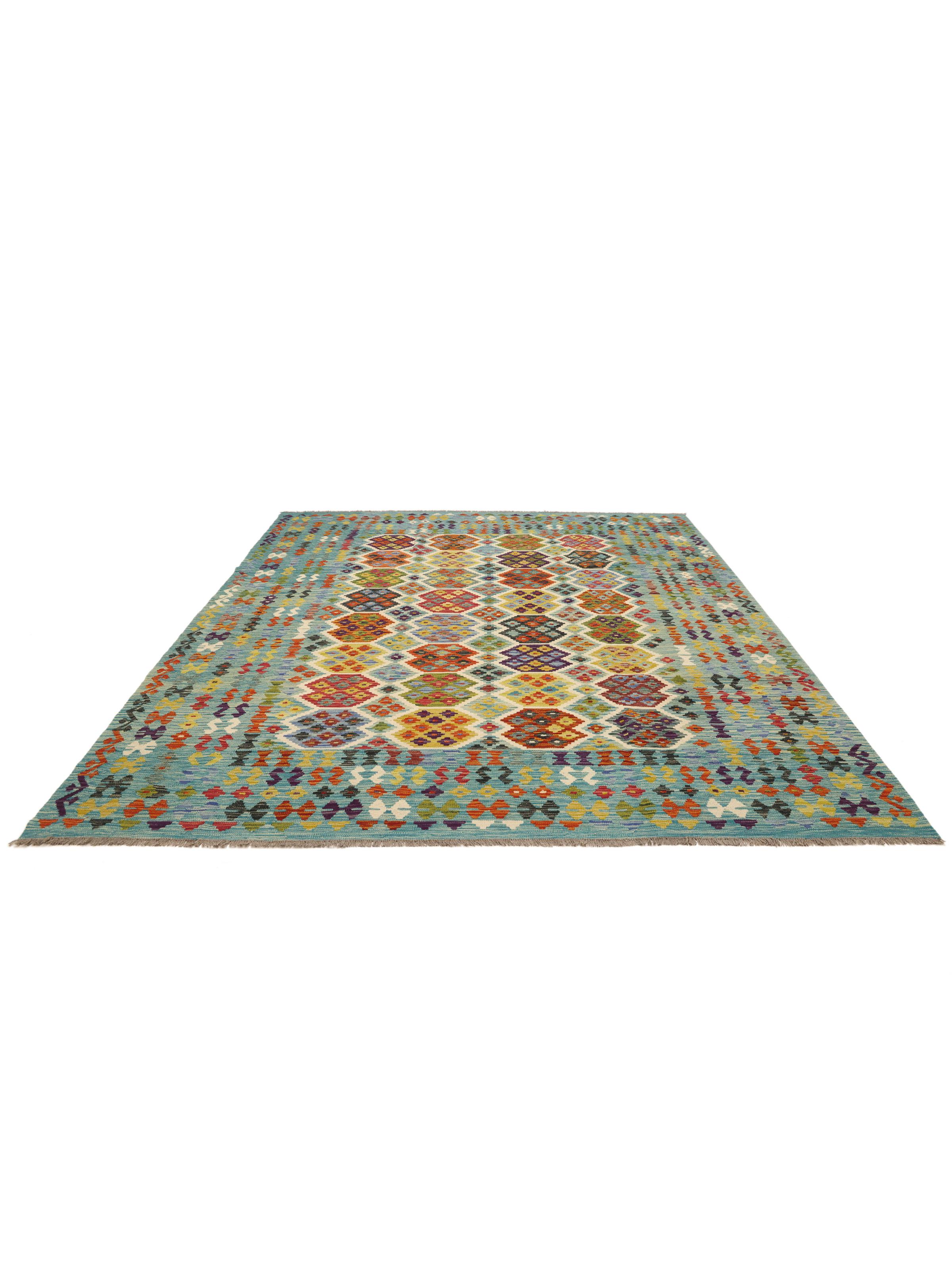
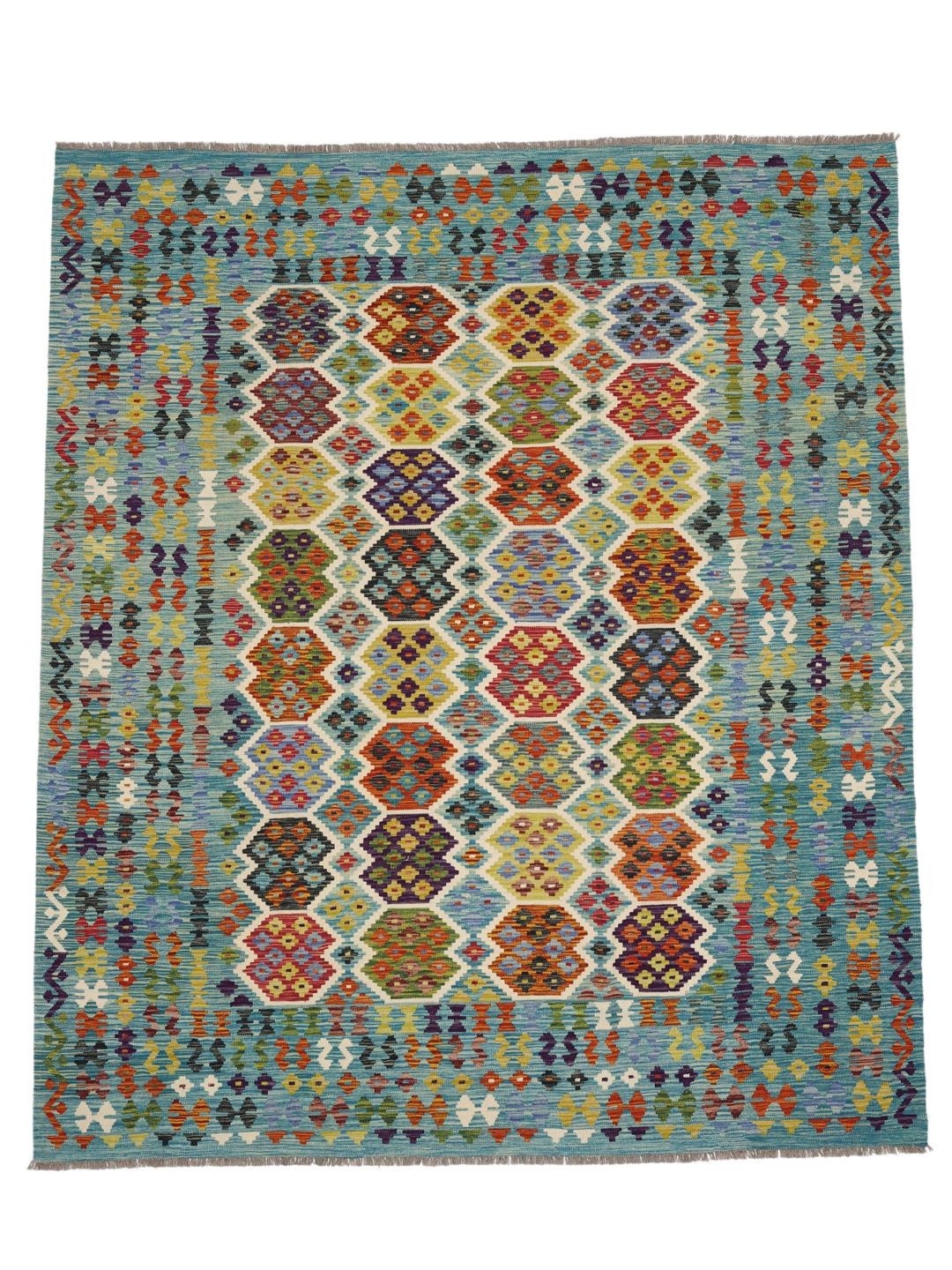
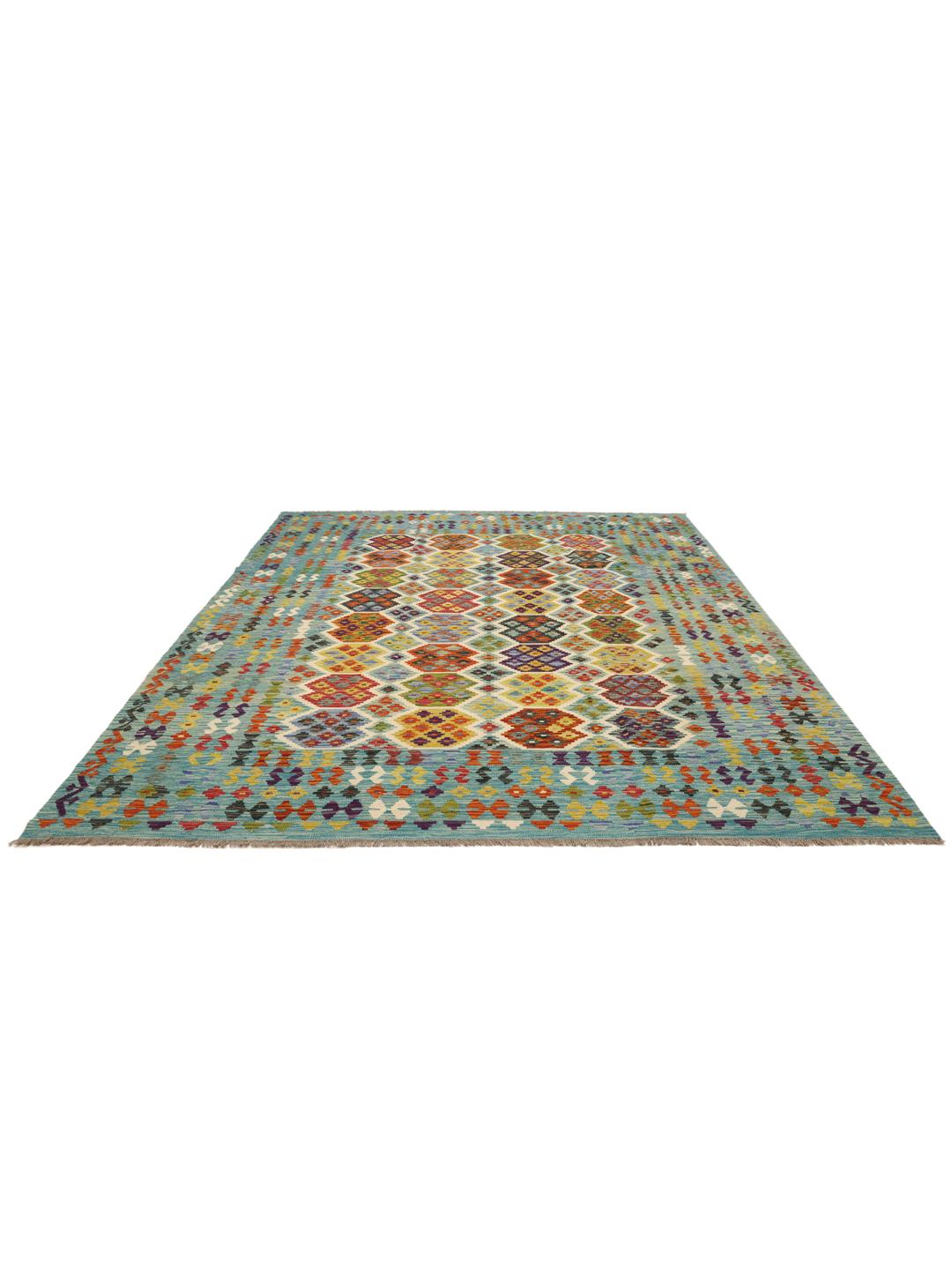
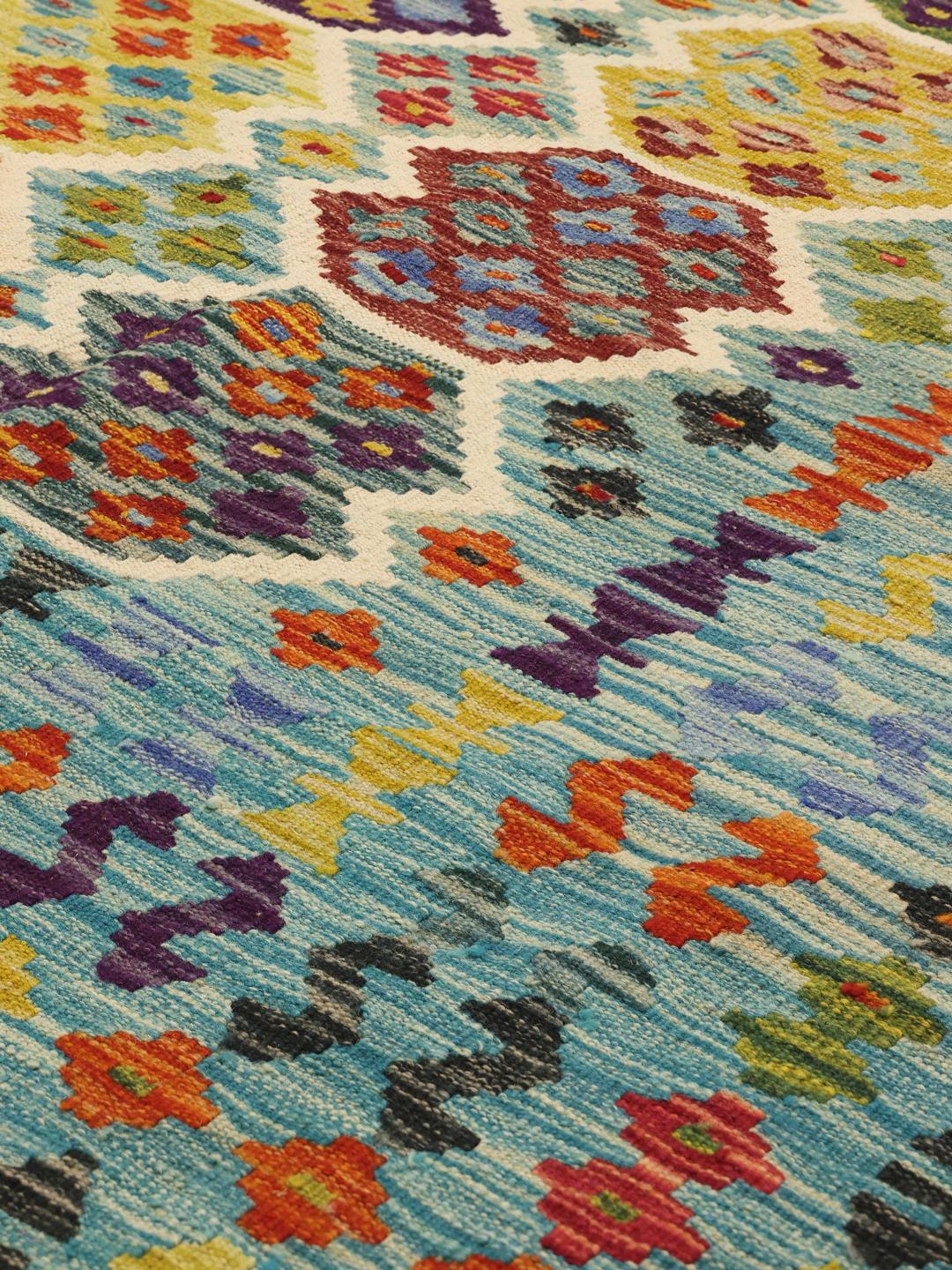
Signature design elements in these rugs often include stylized medallions, diamonds, and repeating geometric motifs that hold symbolic meaning related to protection, fertility, and tribal heritage. The use of vibrant, contrasting colours is a defining characteristic, often achieved through the careful arrangement of complex patterns. This particular piece showcases a masterful use of colour, with its teal field providing a modern backdrop for the traditional, multi-hued medallions.
Collecting Afghan Kelims is a way of preserving a vanishing art form that emphasises human skill and cultural continuity. These rugs are highly valued for their ability to bridge the gap between ancient tradition and modern interior design. By owning such a piece, you are not only acquiring a beautiful floor covering but also participating in a long-standing history of artistry, ensuring that these incredible weaving techniques continue to be celebrated and appreciated.