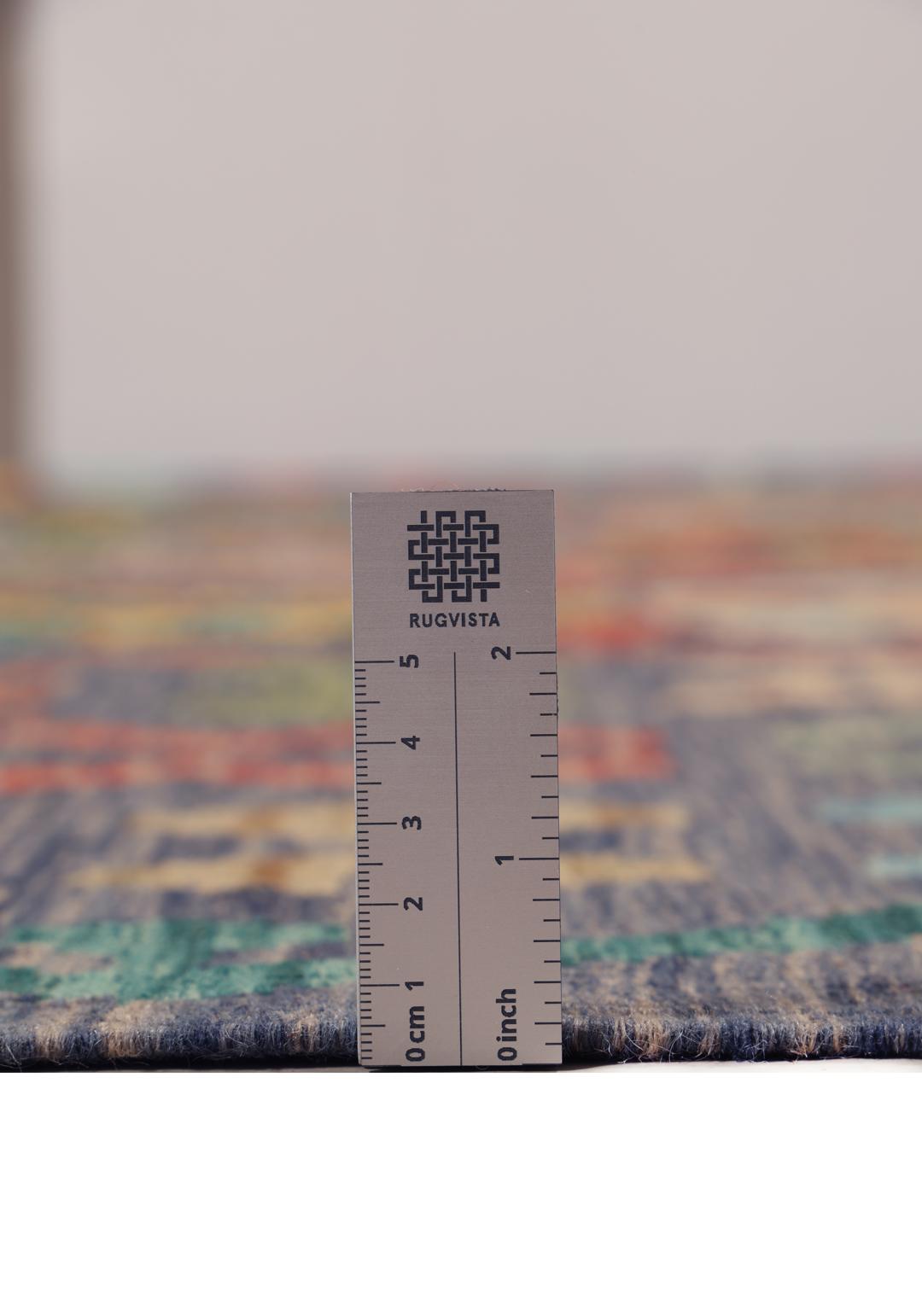
Kelim rugs have a long and storied history across the Middle East, serving as essential elements of nomadic and village life for centuries. Historically, these flat-woven textiles were used as floor coverings, blankets, and storage bags, designed for both portability and utility. The Afghan tradition, in particular, is celebrated for its robust construction and the use of locally sourced Wool, reflecting the rugged beauty of the region's landscape.
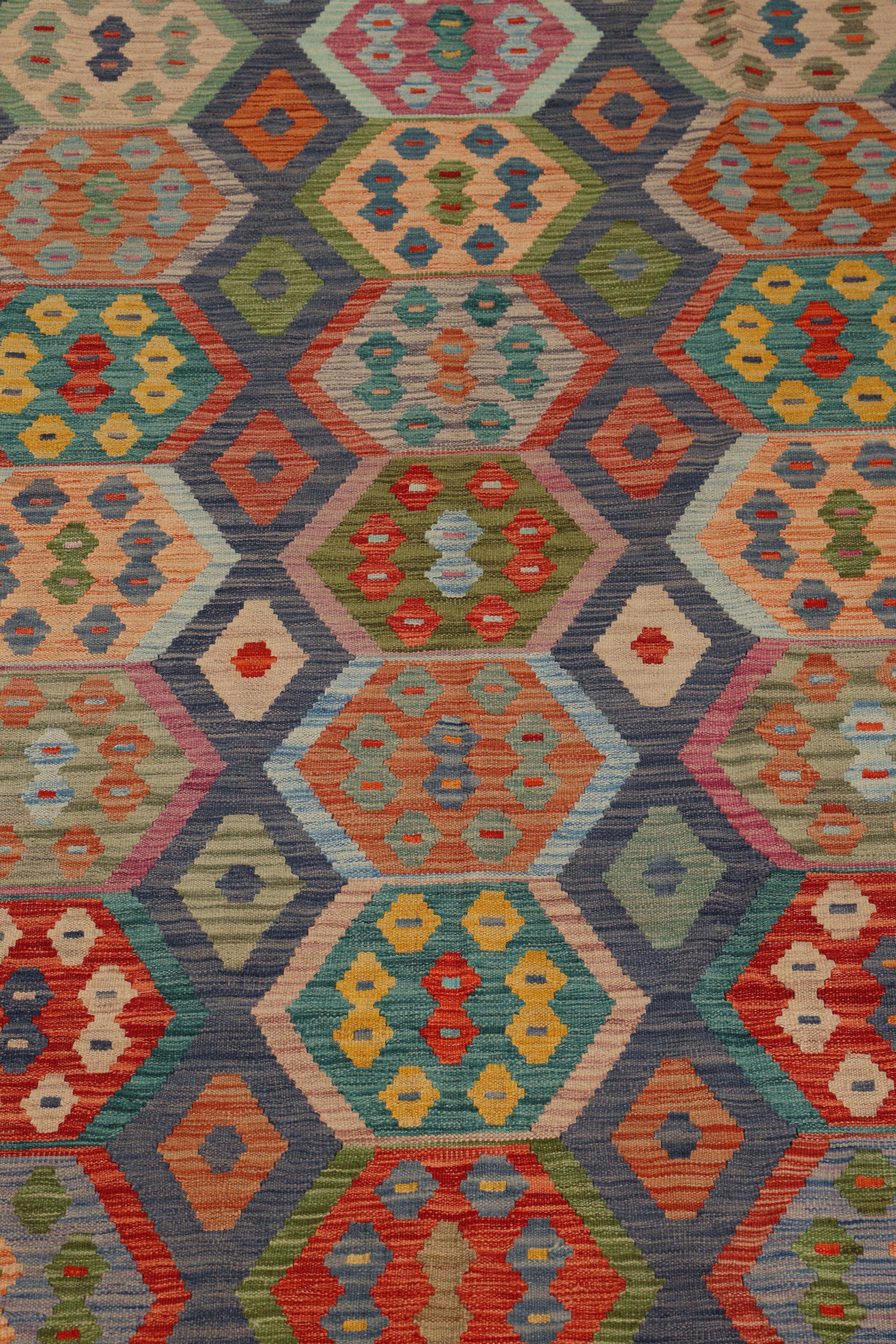
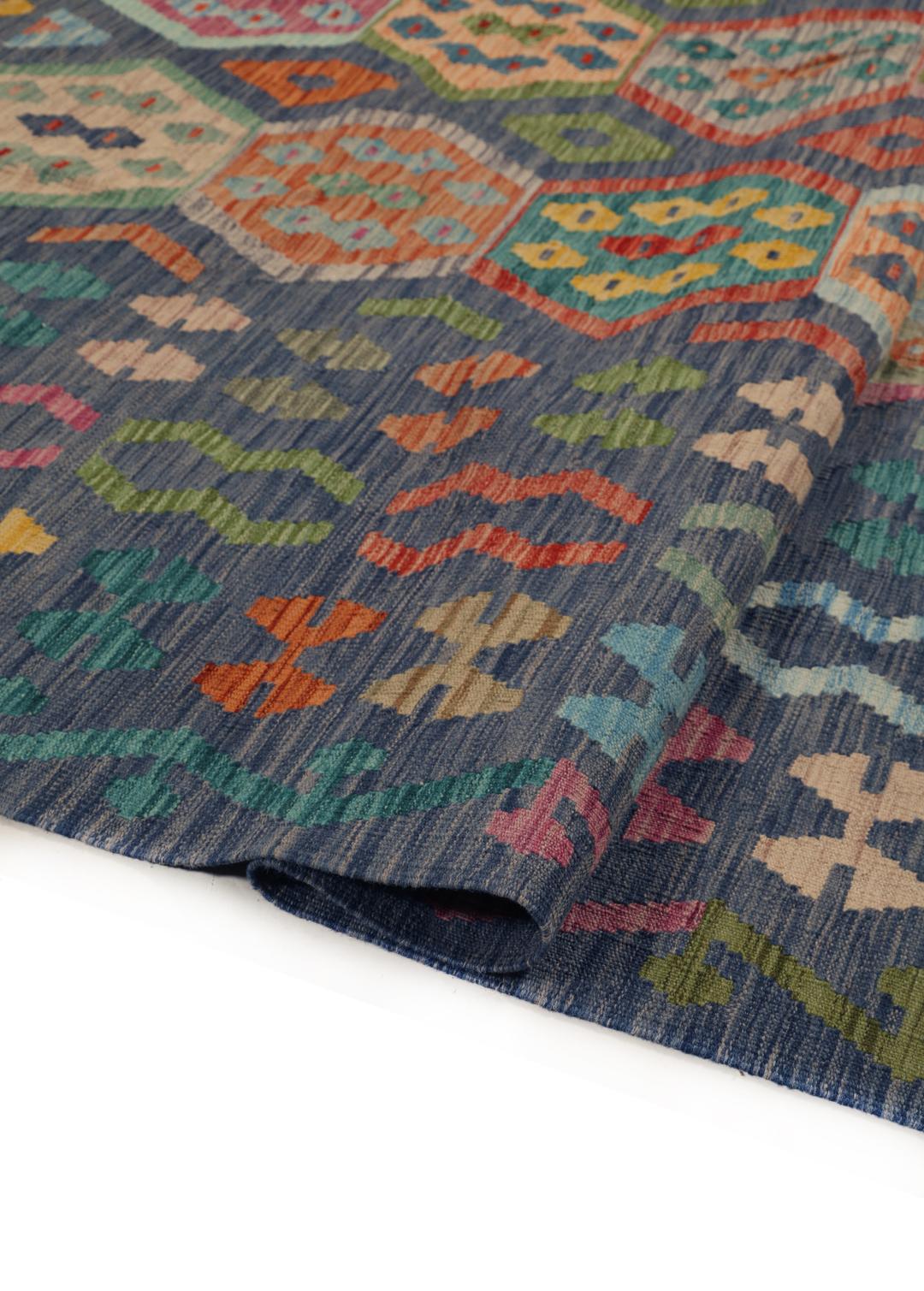
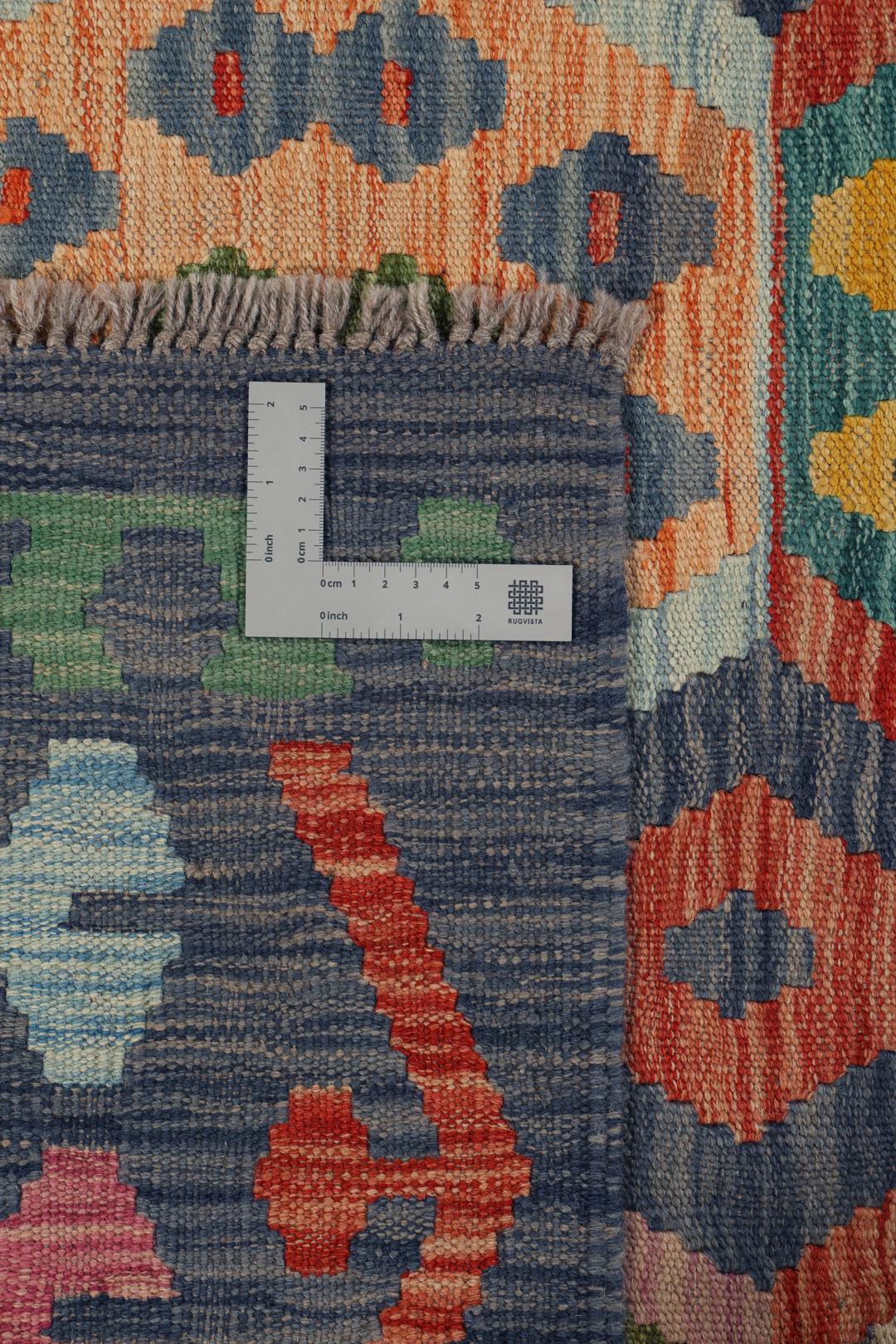
The term Kelim refers to the specific flat-weave technique where the warp and weft are interlaced so tightly that no pile is formed. This method creates a thin, reversible rug that is incredibly durable and lightweight. Mastering this technique requires a deep understanding of tension and geometry, as the weaver must calculate the placement of every colour change to ensure the intricate patterns remain precise and symmetrical.
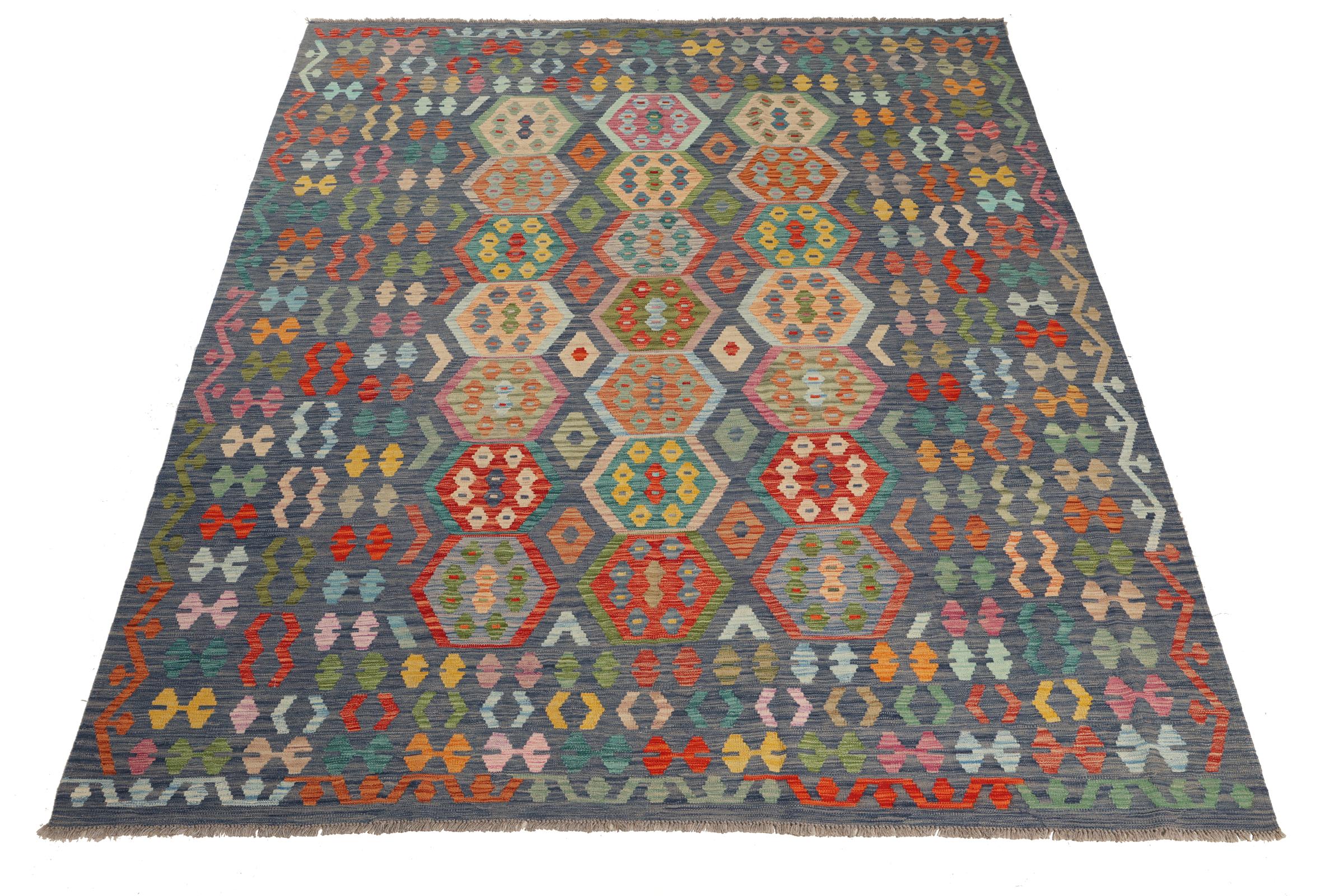
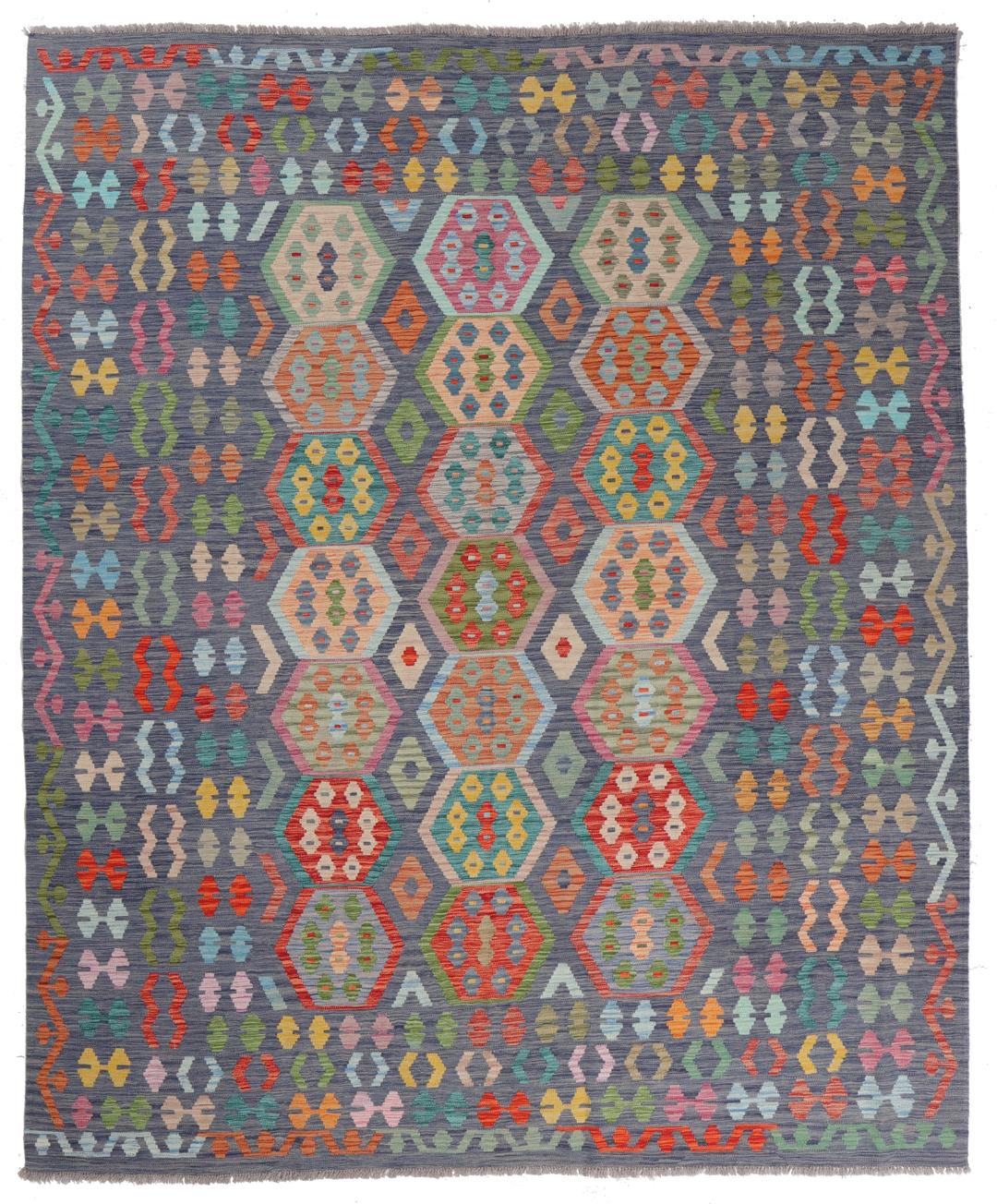
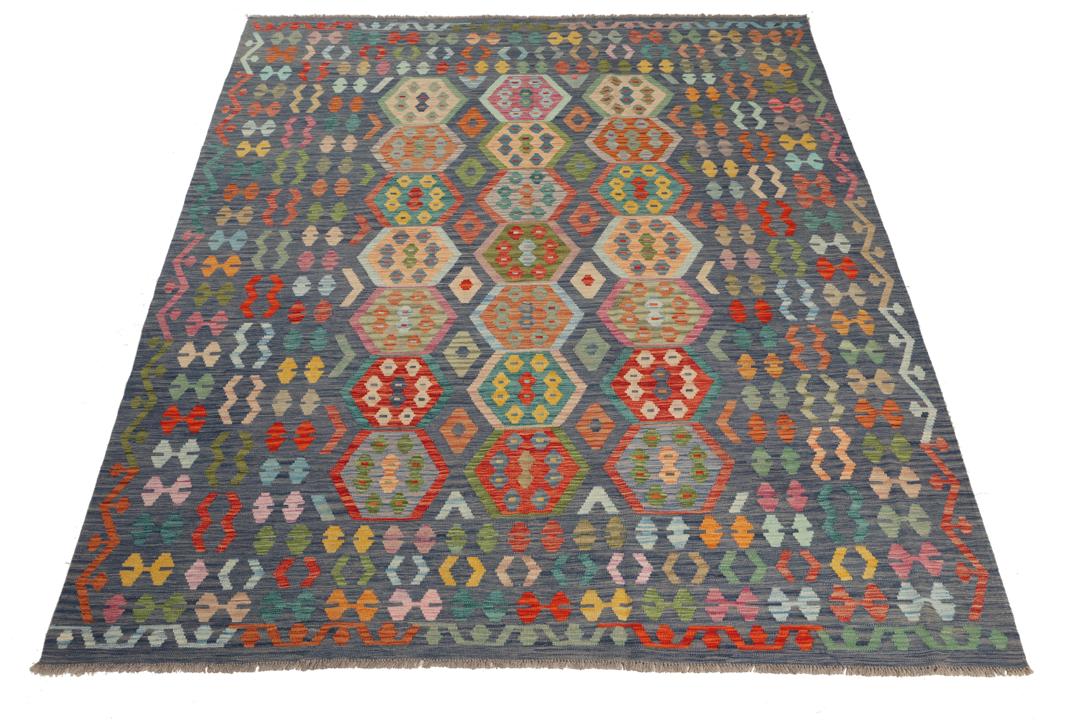
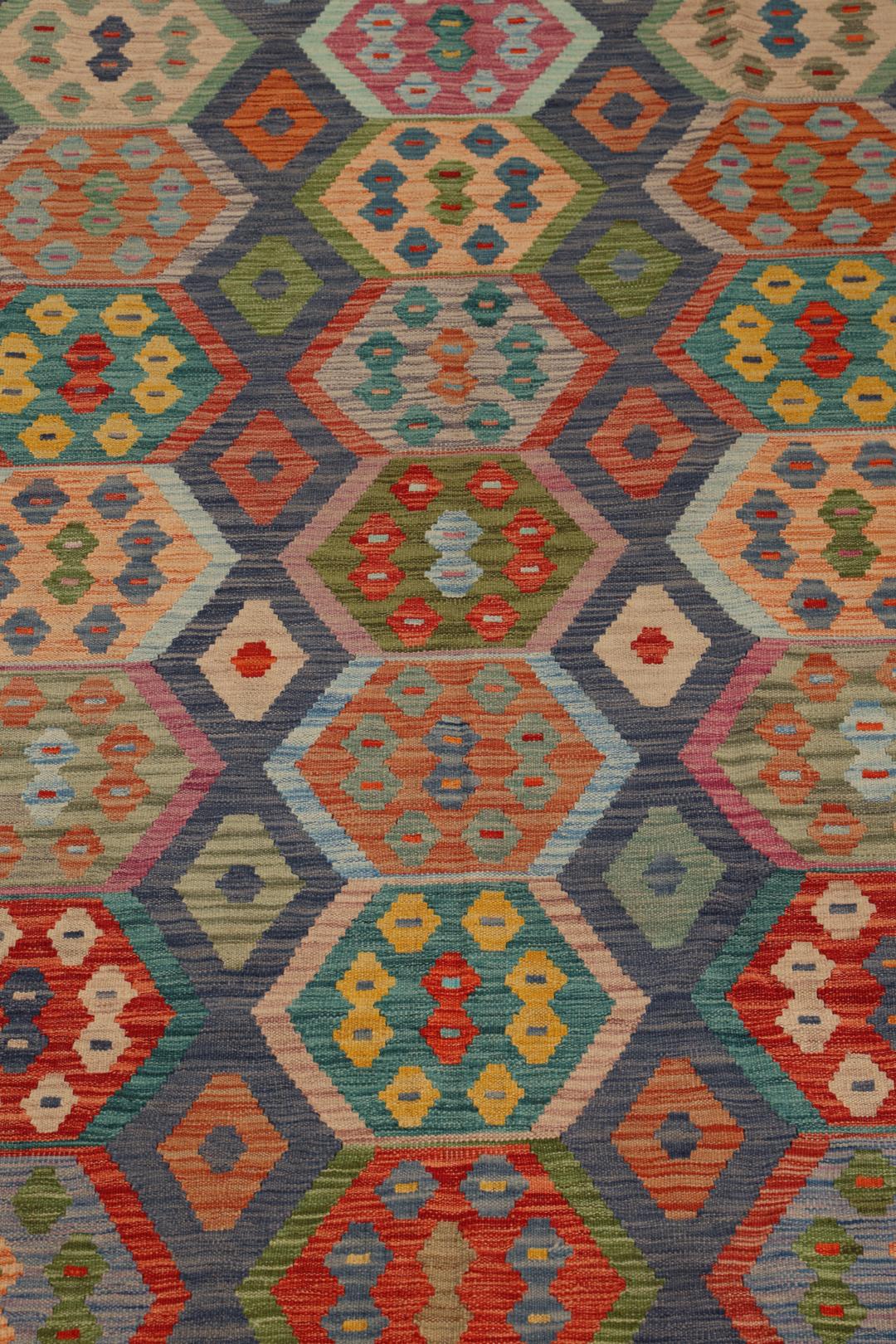
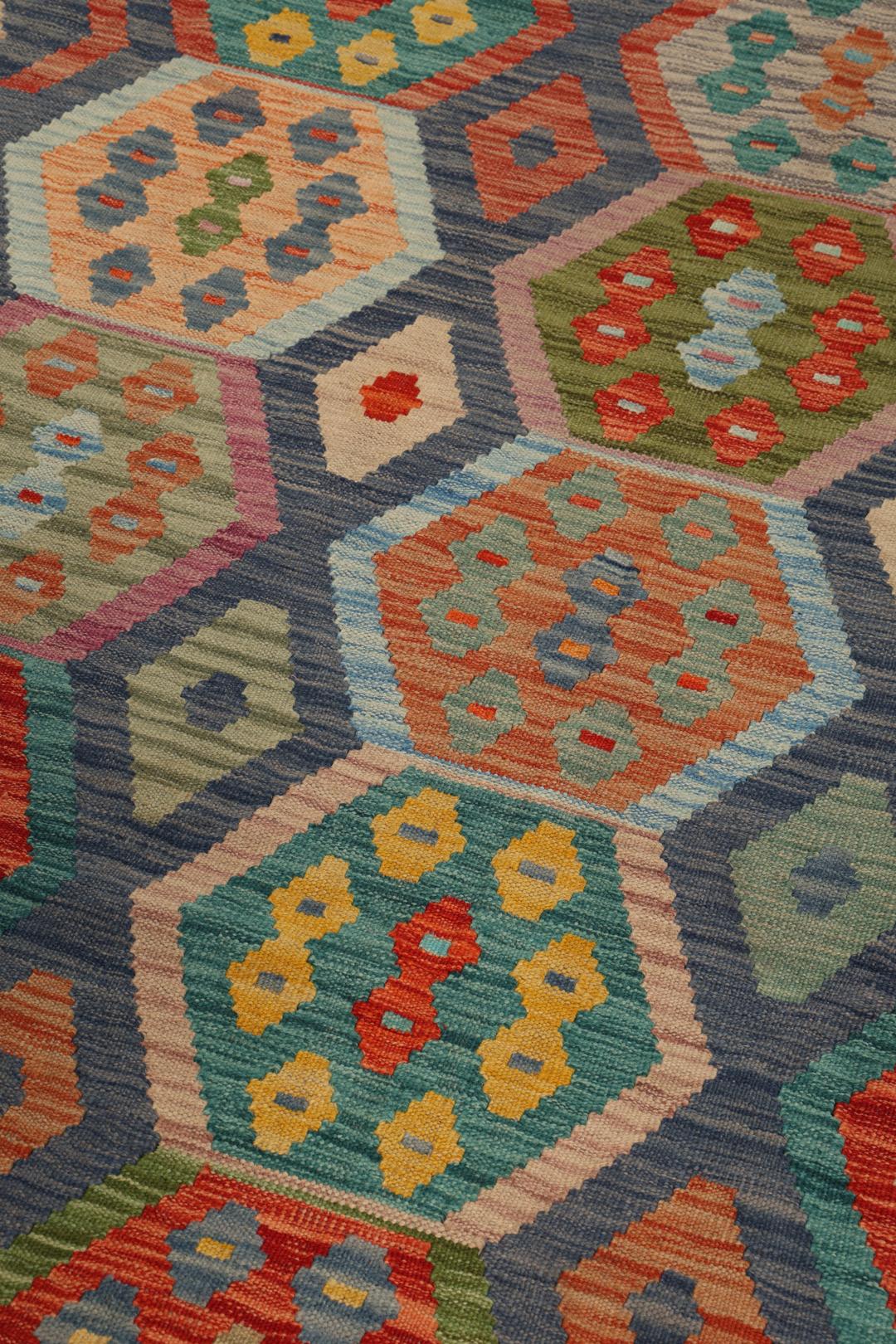
The signature design language of these rugs often centres on geometric motifs, such as the hexagonal medallions seen here, which are frequently inspired by tribal symbolism and the natural environment. Each shape and colour choice can carry cultural significance, often passed down through generations of weaving families. This rug stands out for its bold, rhythmic arrangement of shapes, which showcases the weaver's ability to balance complex geometry with a harmonious colour scheme.
Owning a Kelim is more than just a purchase, it is an entry into a long-standing cultural dialogue. These rugs are highly valued by collectors for their authenticity and the sheer human effort required to produce them. By preserving these traditional designs, we maintain a connection to the artistic heritage of the region, ensuring that these skills are celebrated and cherished in modern homes.