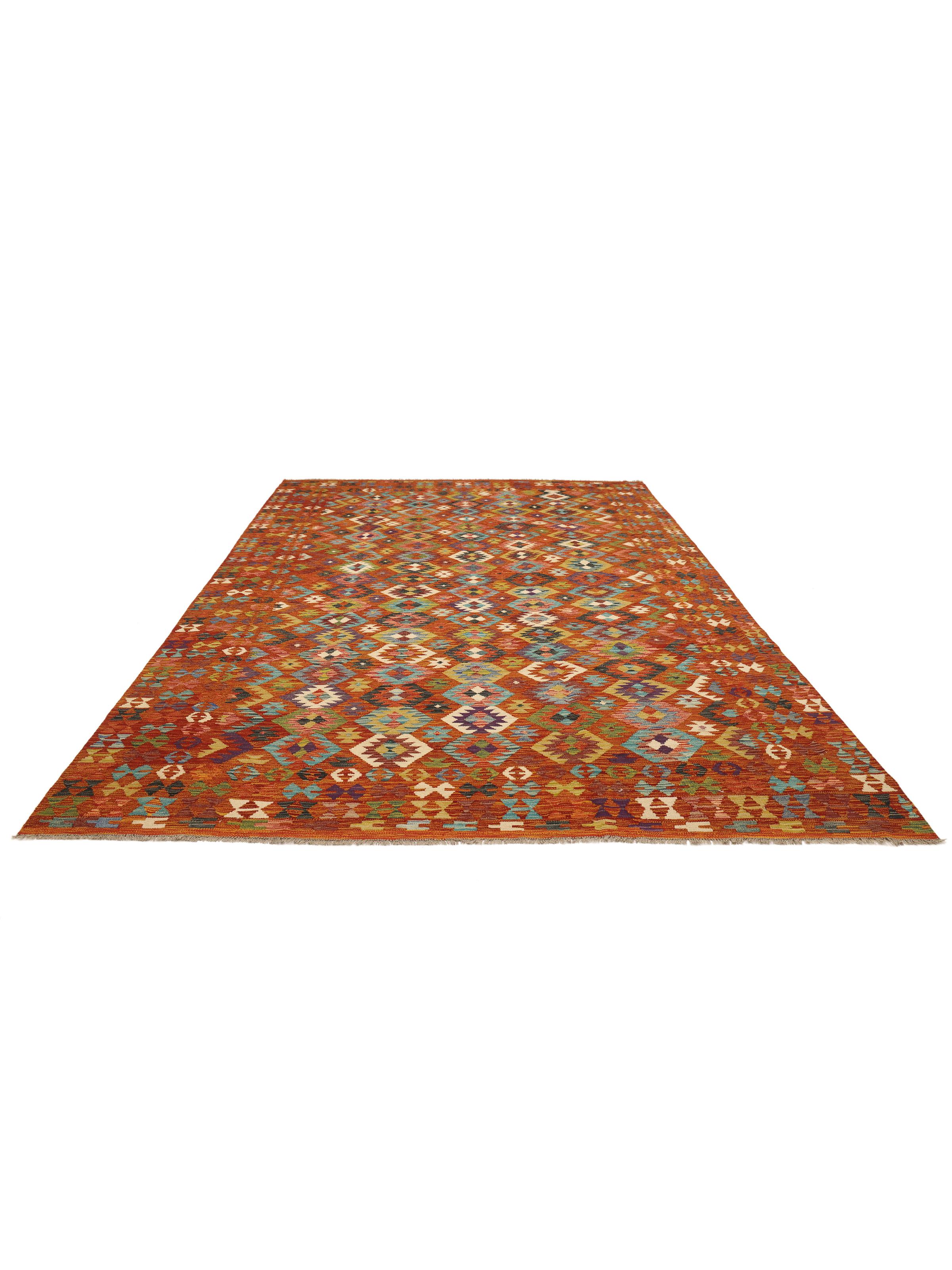
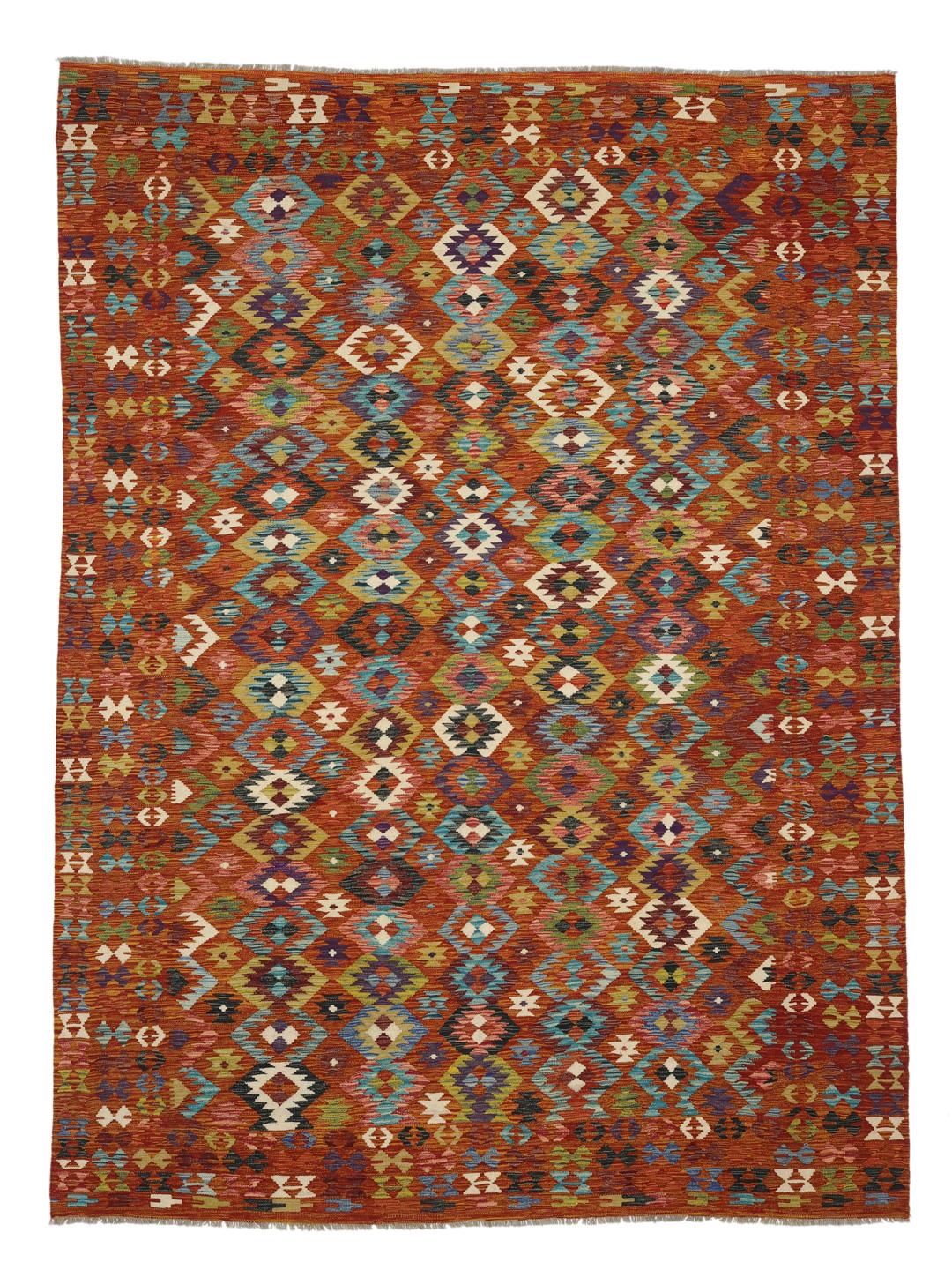
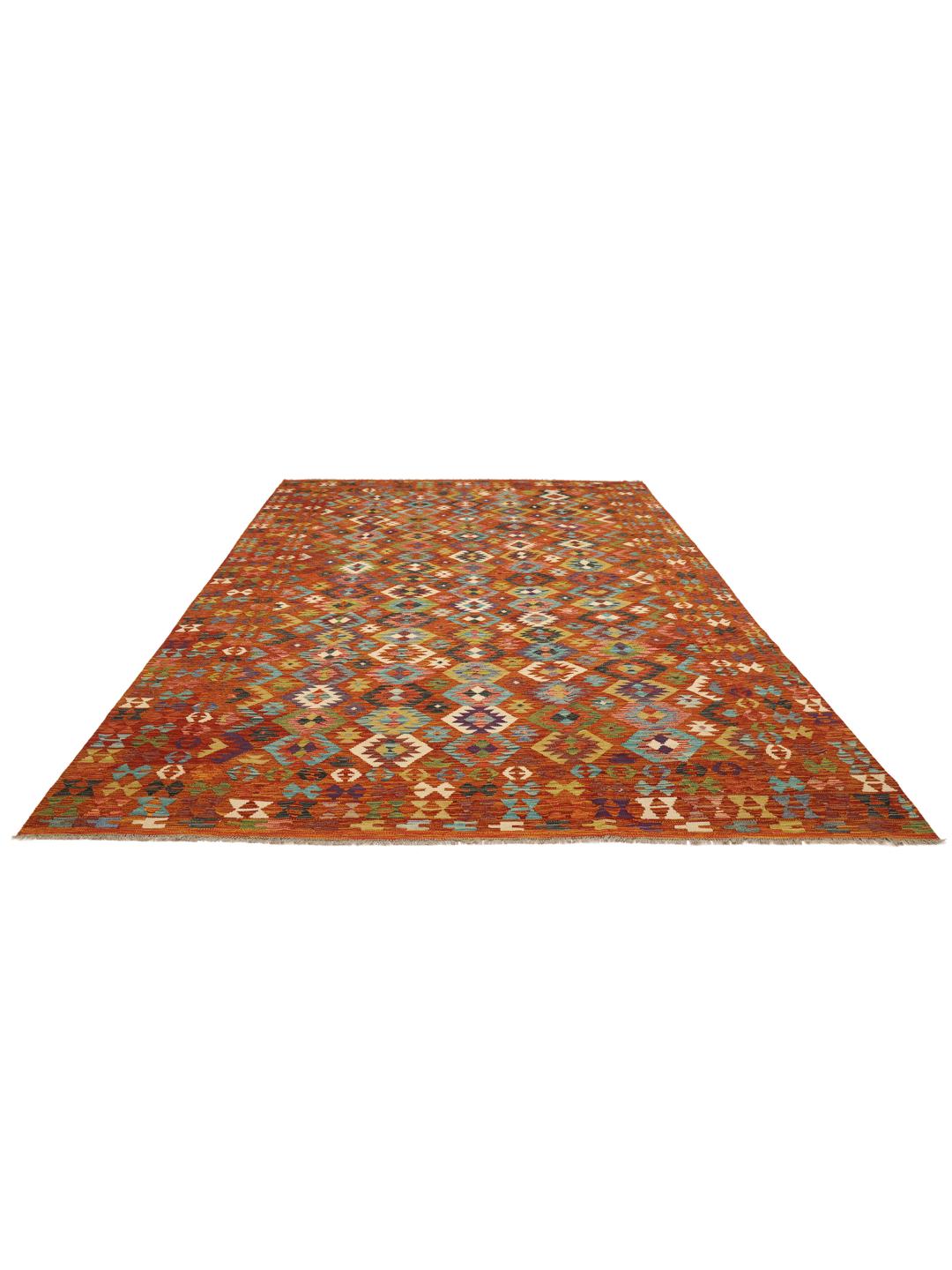
The tradition of weaving Kelims in Afghanistan is deeply rooted in the nomadic and semi-nomadic cultures that have traversed the region for centuries. These flat-woven textiles were originally designed to be versatile and portable, serving as floor coverings, blankets, and storage bags for families on the move across the rugged landscapes of Central Asia.
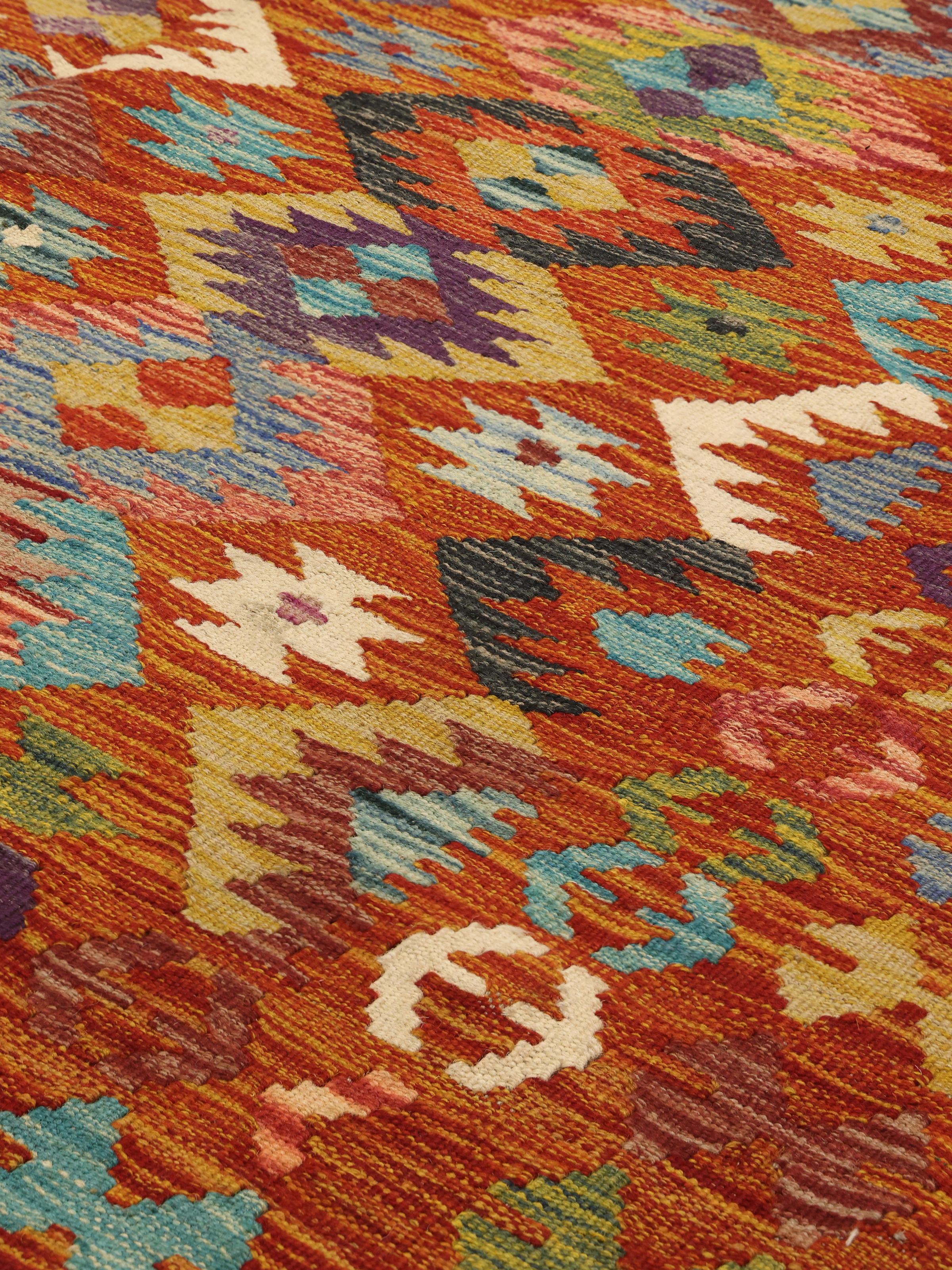
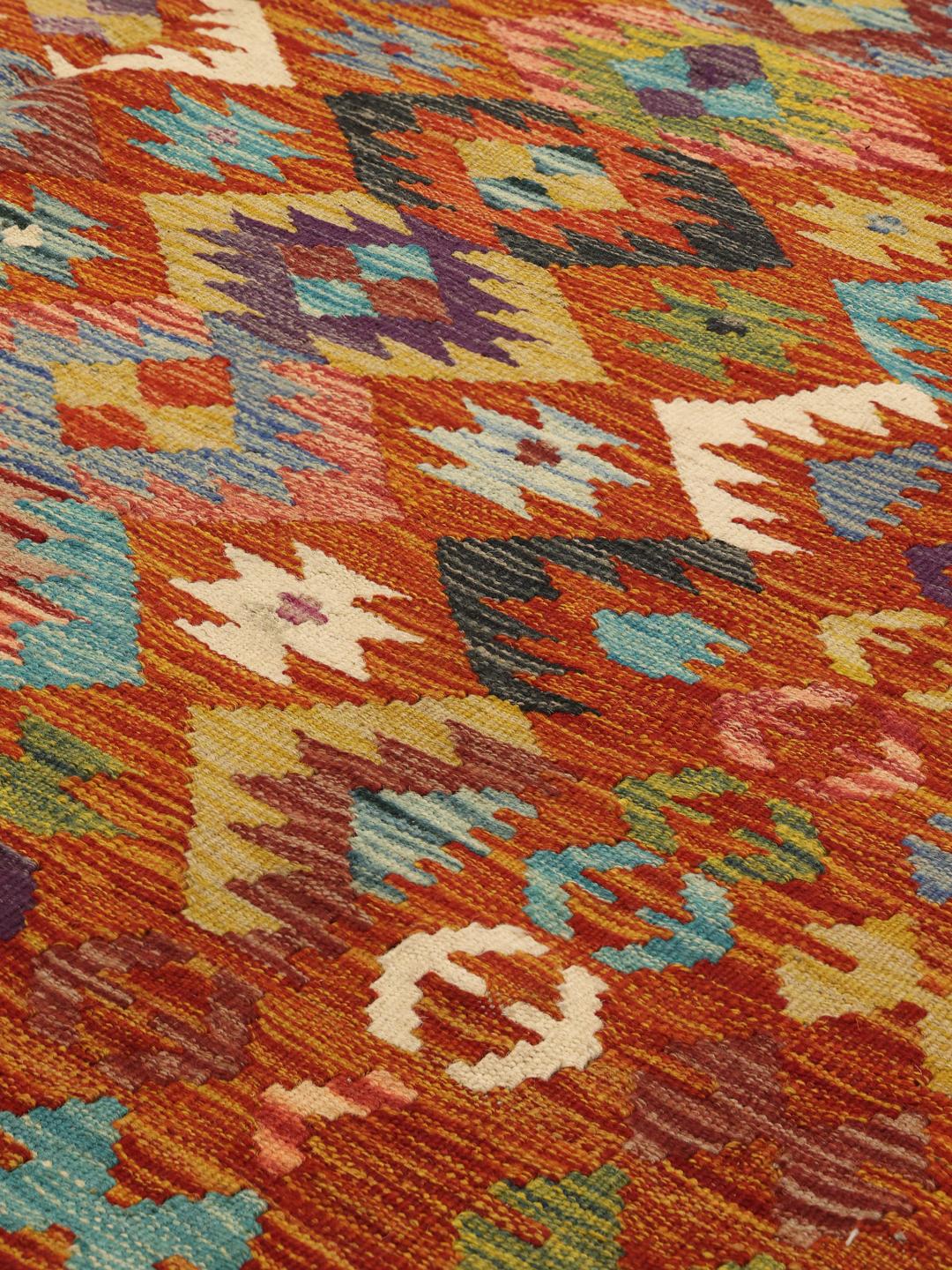
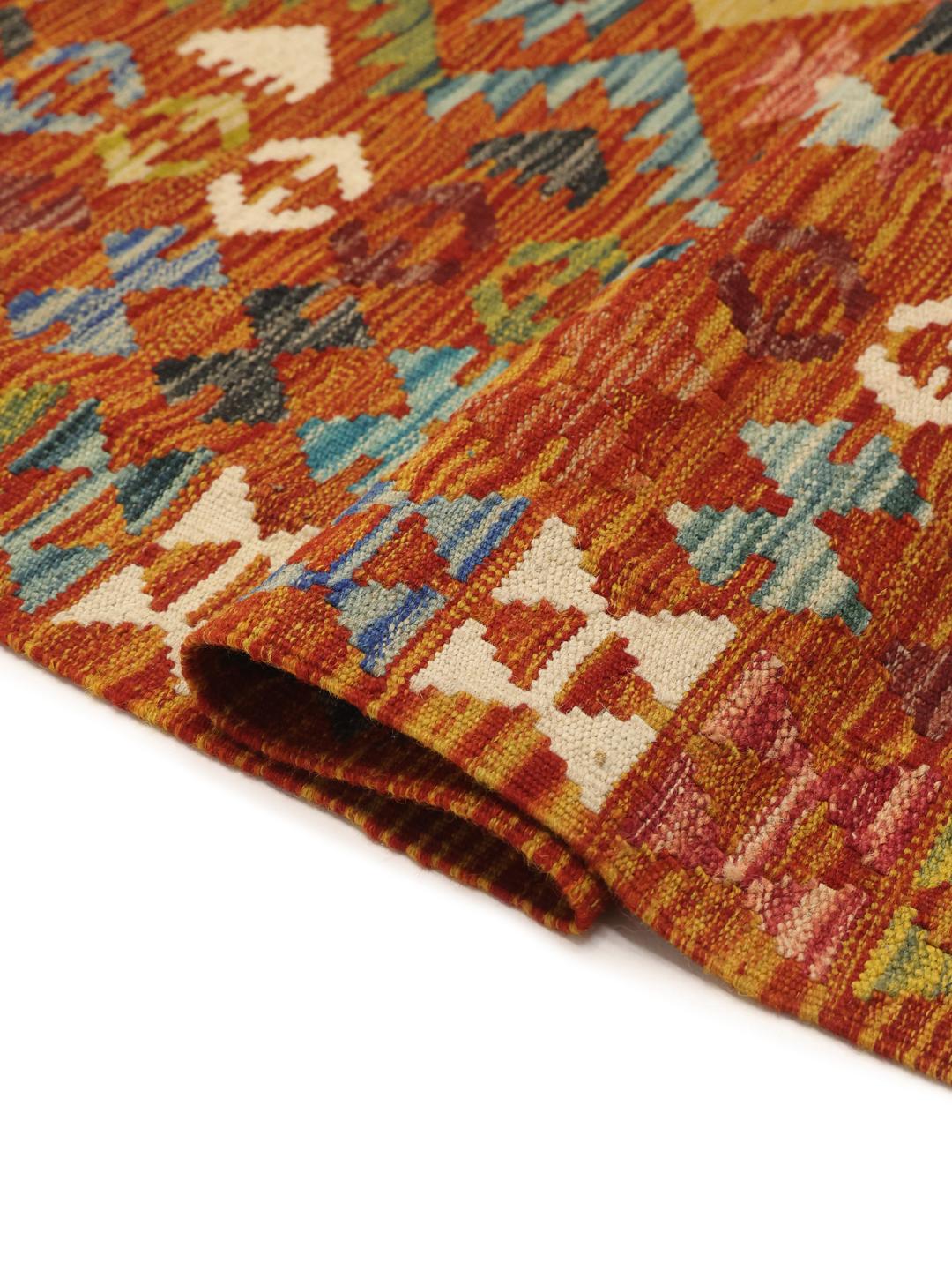
Kelim construction is defined by its distinct lack of pile, where the pattern is created by tightly interlocking the horizontal weft threads with the vertical warp threads. This technique results in a reversible, lightweight, and durable fabric that has been a staple of Middle Eastern textile production for generations. The quality of a Kelim is determined by the tightness of this weave, which prevents the rug from losing its shape over time.
The design language of these rugs is primarily geometric, featuring motifs that often carry symbolic meanings or reflect the tribal identity of the weaver. You will frequently see diamonds, triangles, and stylized floral elements arranged in repetitive, rhythmic patterns. The use of vibrant, natural-inspired dyes is a hallmark of this tradition, creating the characteristic earthy and bold look that makes these rugs so recognisable.
Owning an Afghan Kelim is a way to connect with a storied past and the enduring skill of the artisans who keep these traditions alive. These rugs are highly valued by collectors for their authenticity and the unique narrative each piece holds. By bringing one into your home, you are not just choosing a decorative item, but celebrating a heritage of craft that has remained largely unchanged for centuries.