Kelim rugs have long been a cornerstone of nomadic life in the Middle East and Central Asia. Traditionally, these flat-woven textiles were crafted by tribal communities to serve a variety of practical purposes, from floor coverings and room dividers to saddlebags and wall hangings. The Afghan Kelim, in particular, has evolved from these ancient roots, drawing on generations of knowledge passed down through families to create rugs that are as functional as they are beautiful.
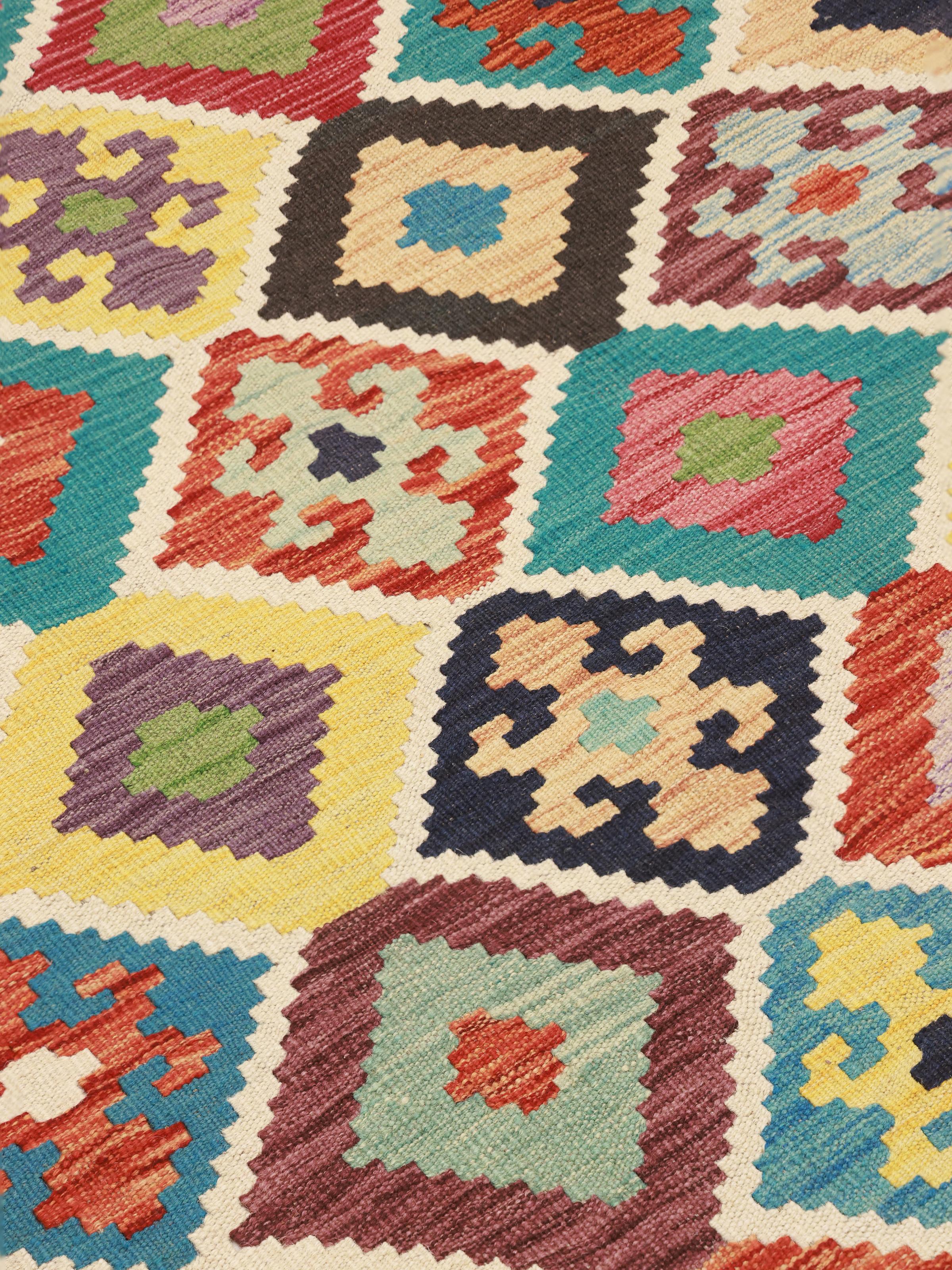
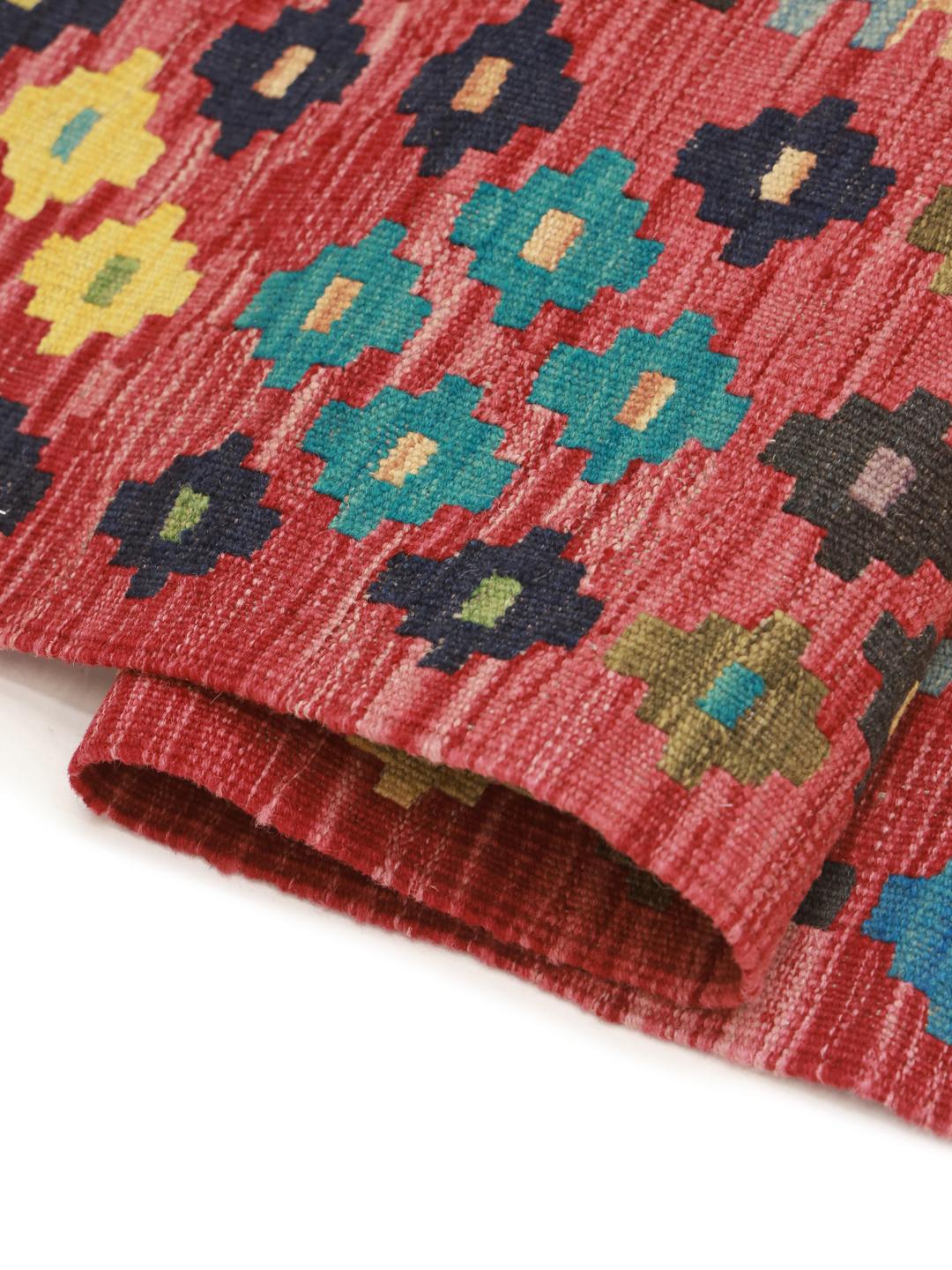
The term 'Kelim' refers to the specific flat-weaving technique used to create these rugs, which involves interlacing the warp and weft strands to create a smooth surface without a pile. This method is highly prized for its versatility and strength. Because there is no pile to wear down, these rugs are incredibly durable and reversible, making them a practical choice for homes that see a lot of activity while maintaining a light, elegant profile.
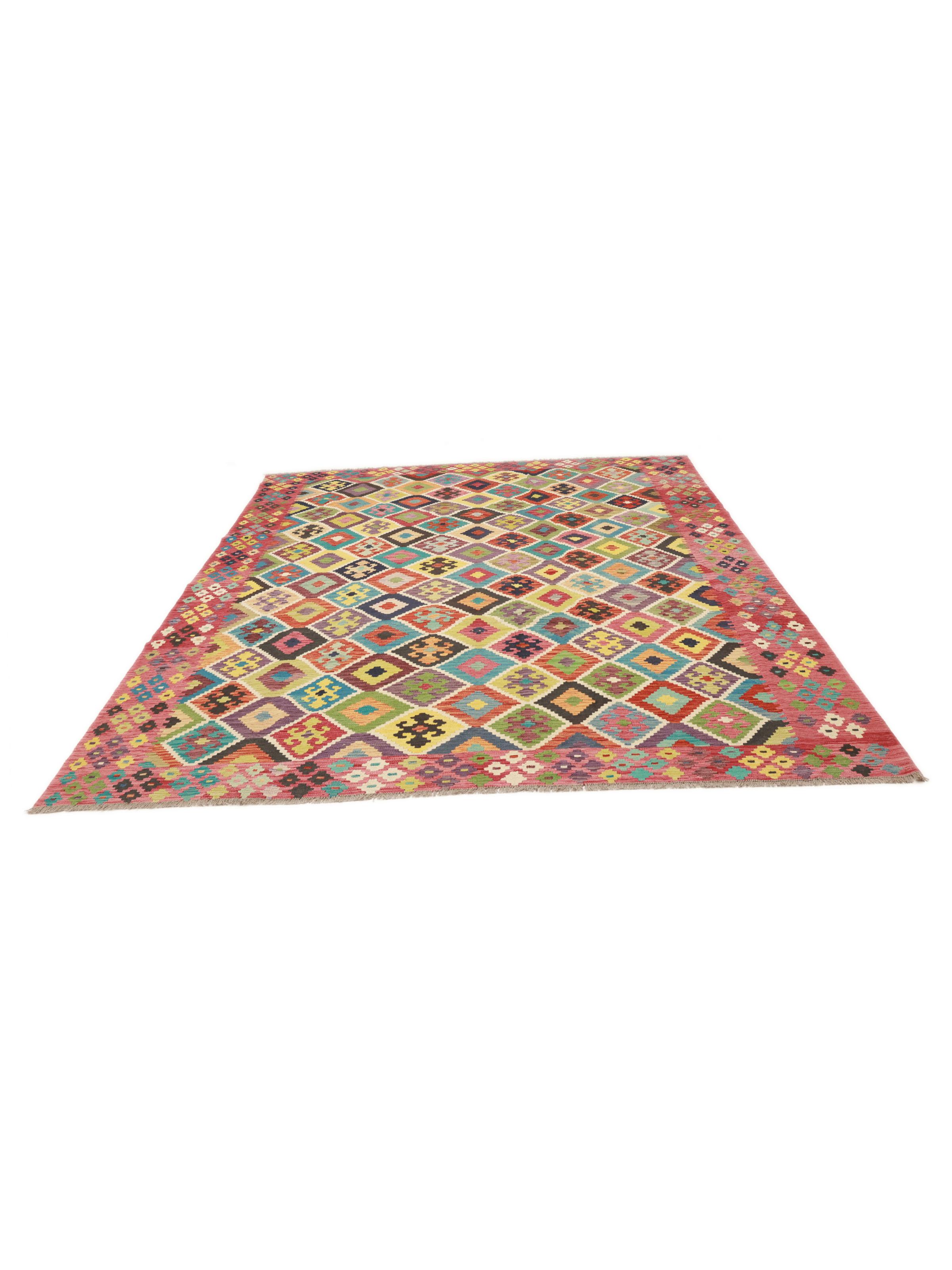
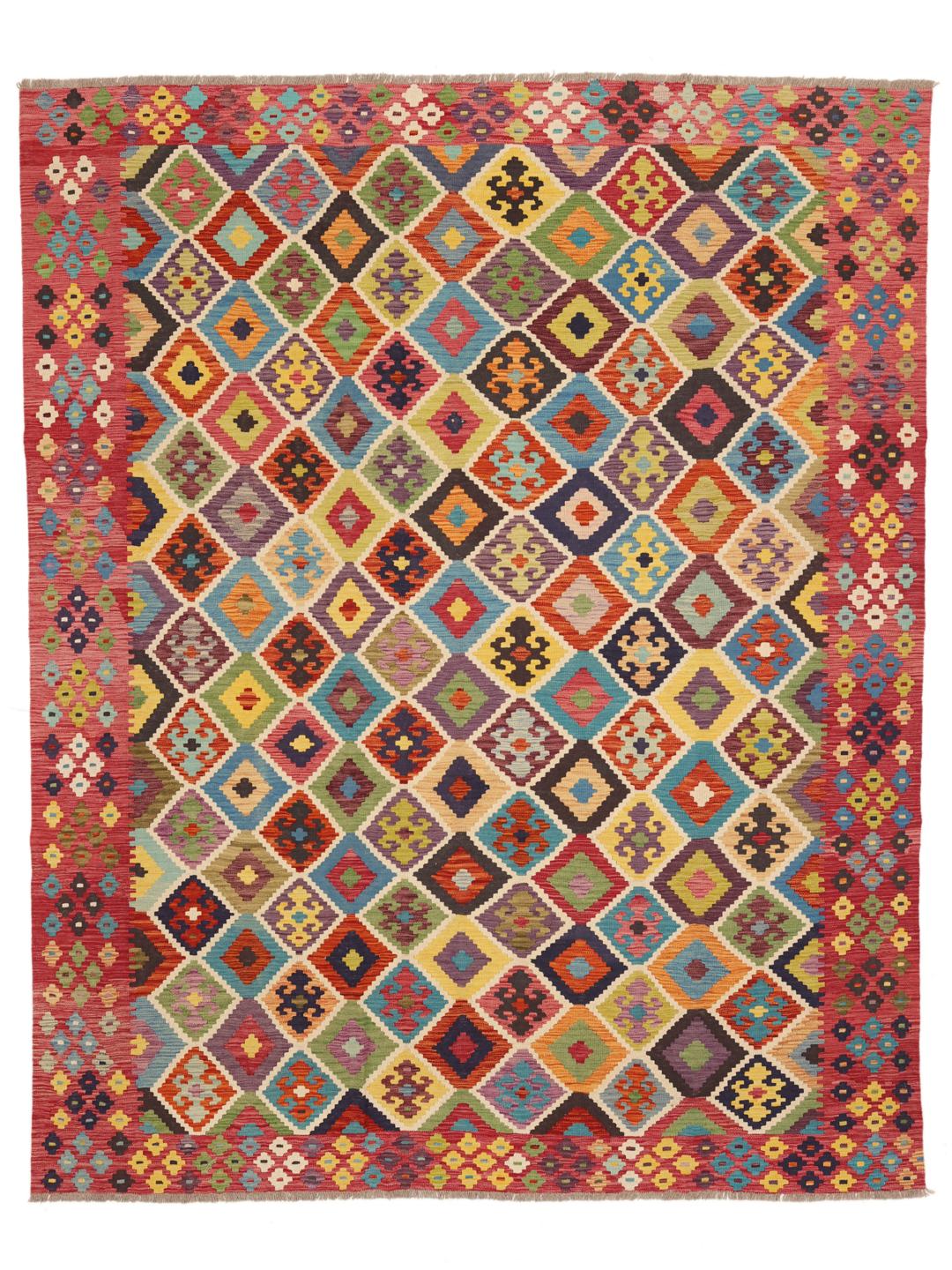
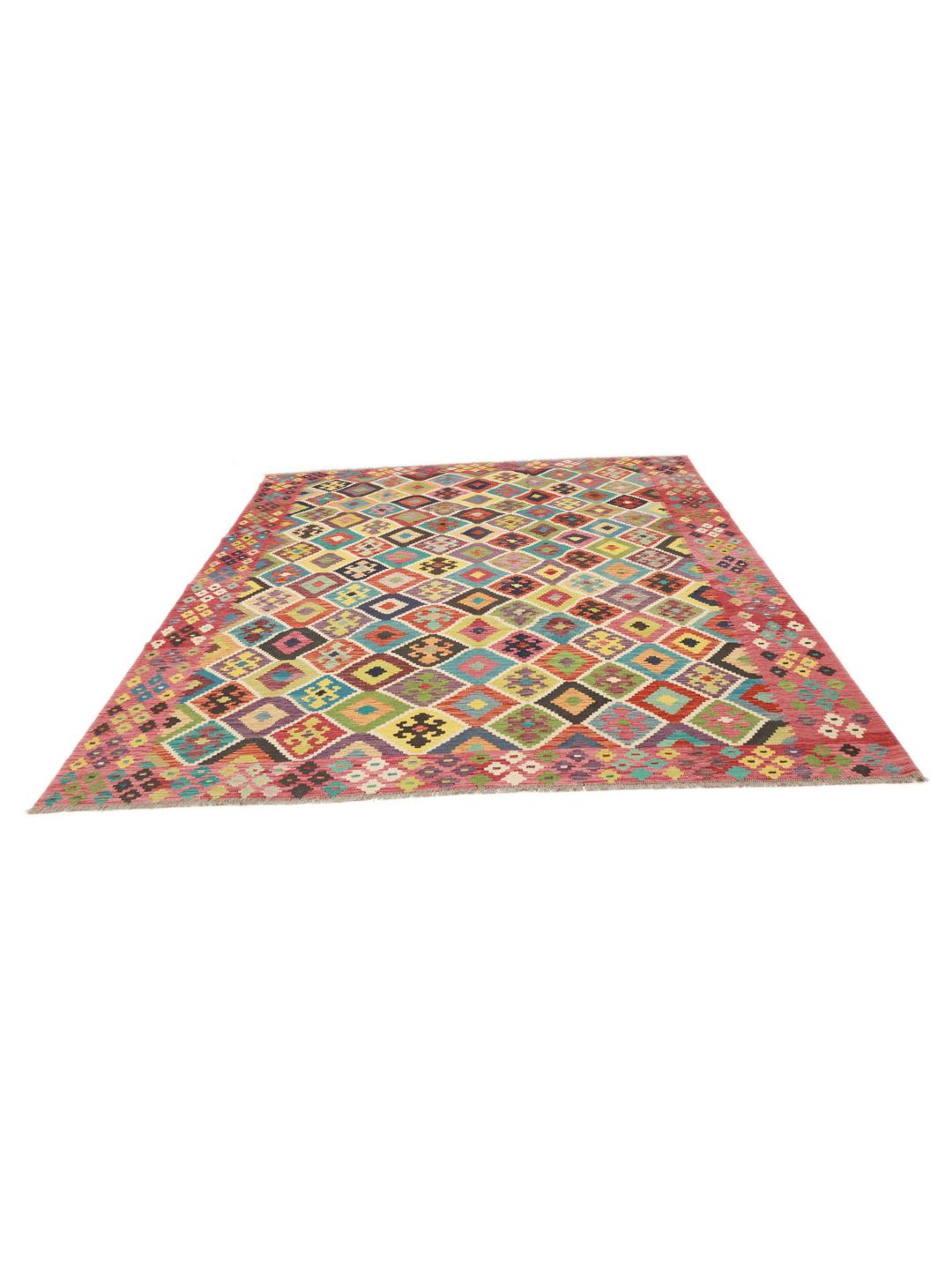
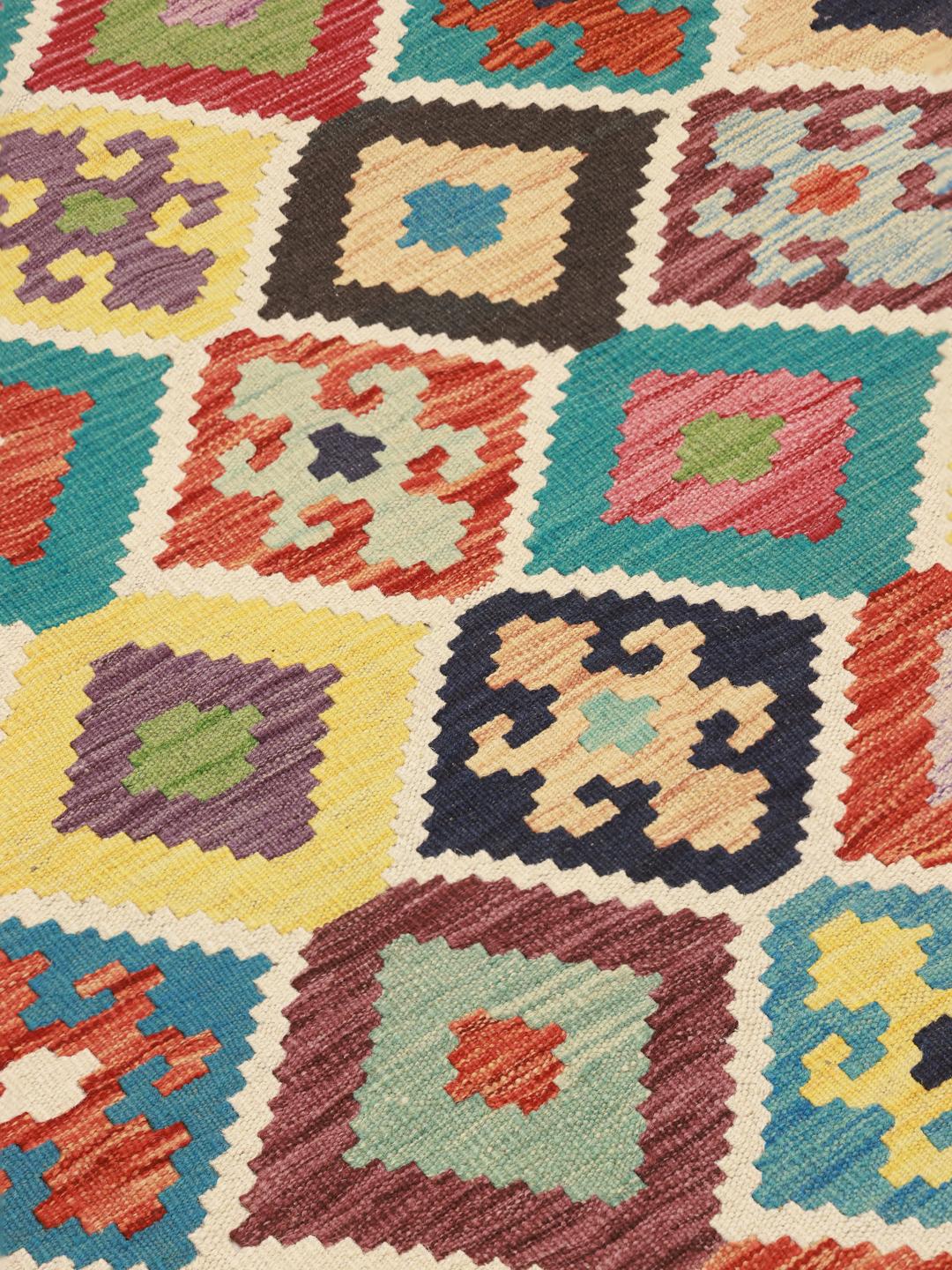
The design language of the Kelim Afghan is defined by its bold, geometric motifs. The diamond patterns seen here are a classic element, often representing protection or fertility within the weaver's culture. These motifs are typically arranged in a structured grid, though the hand-woven nature of the rug often introduces slight, charming variations in the spacing and colour transitions. The borders are equally significant, serving to frame the field and add a layer of complexity to the overall composition.
Owning a Kelim is an invitation to engage with a living tradition. These rugs are valued by collectors and homeowners alike for their authenticity and the human effort required to bring them into existence. They represent a bridge between the past and the present, offering a timeless aesthetic that feels both rooted in history and perfectly suited for a modern, global home.