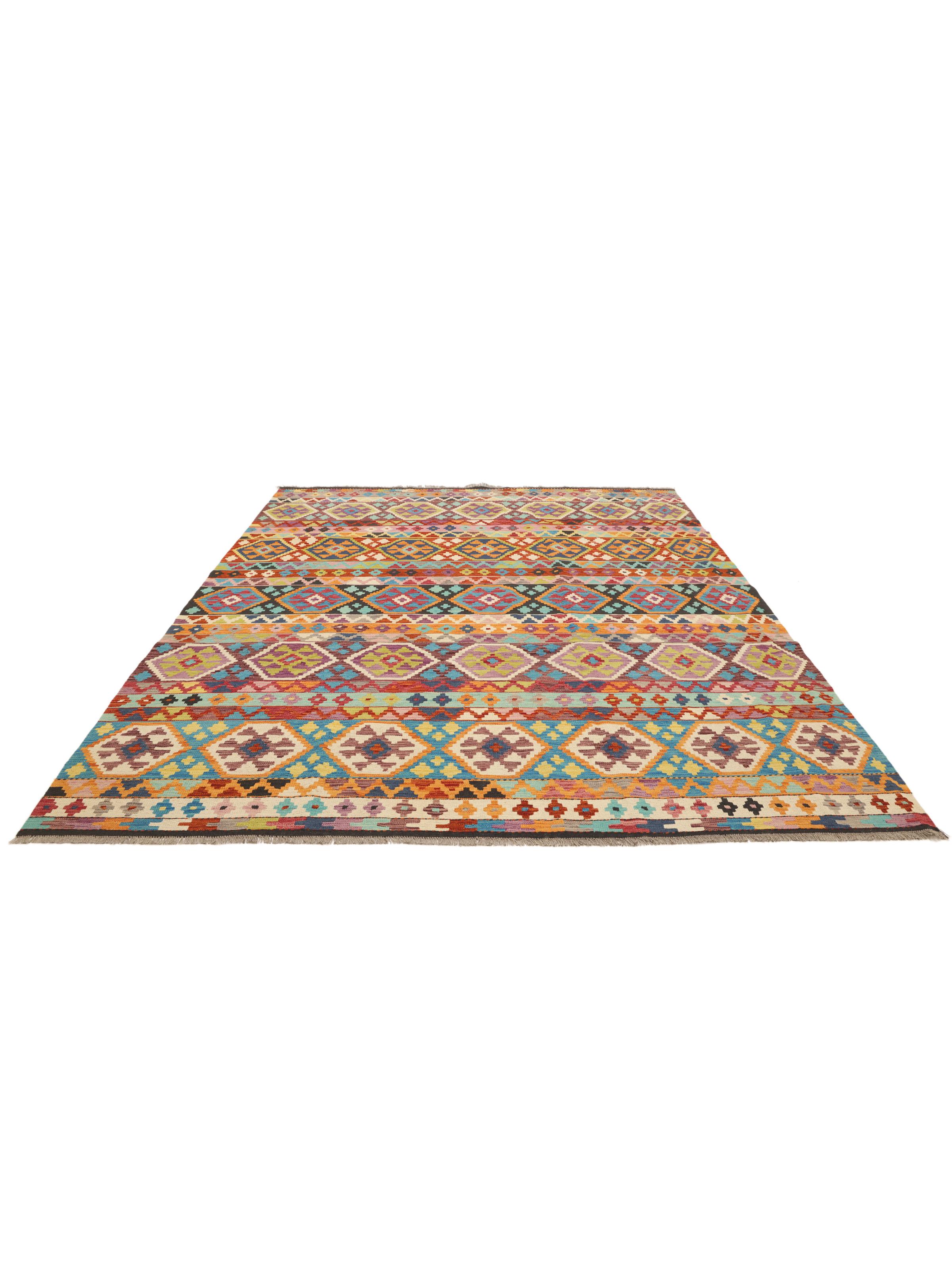
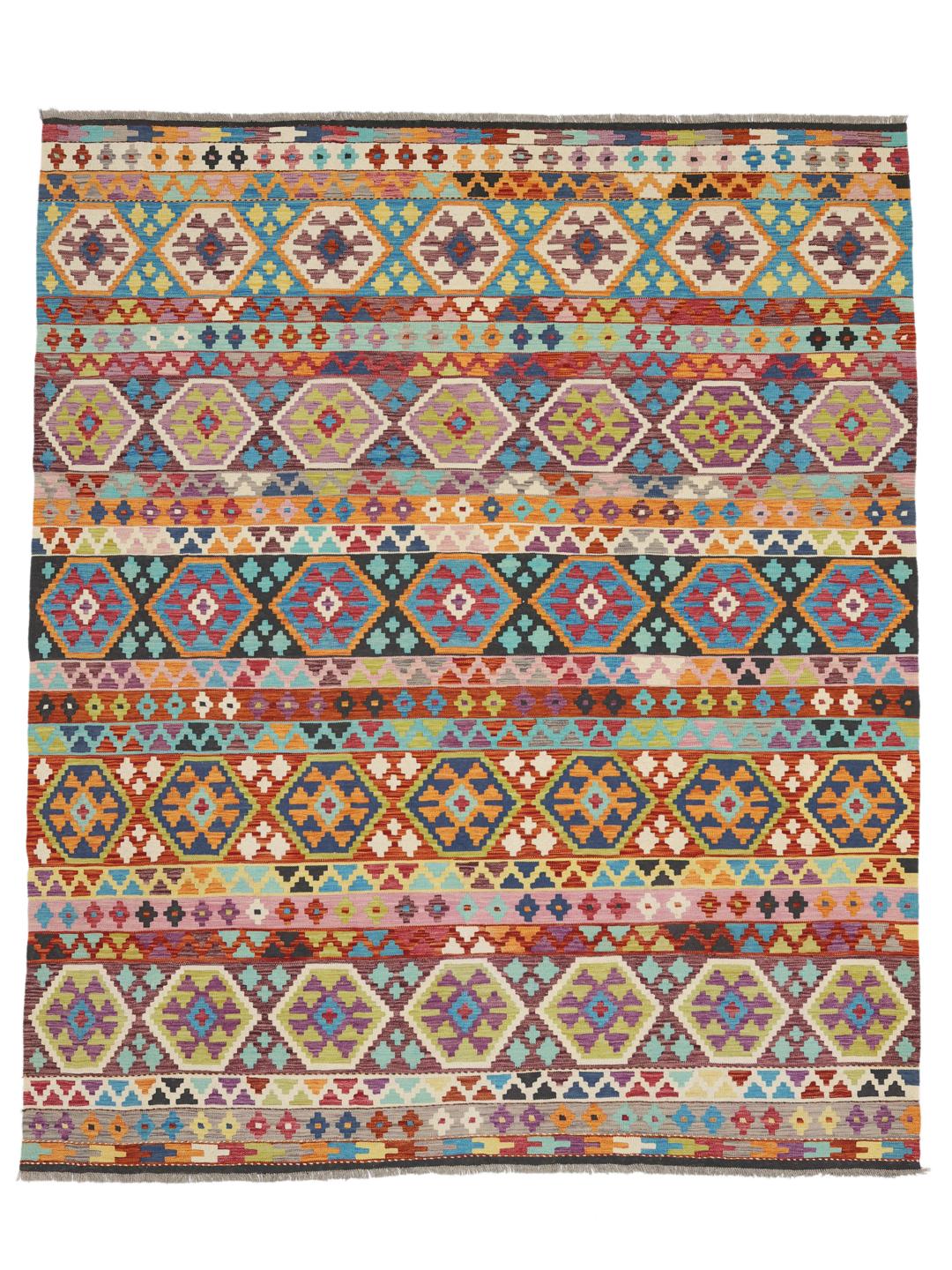
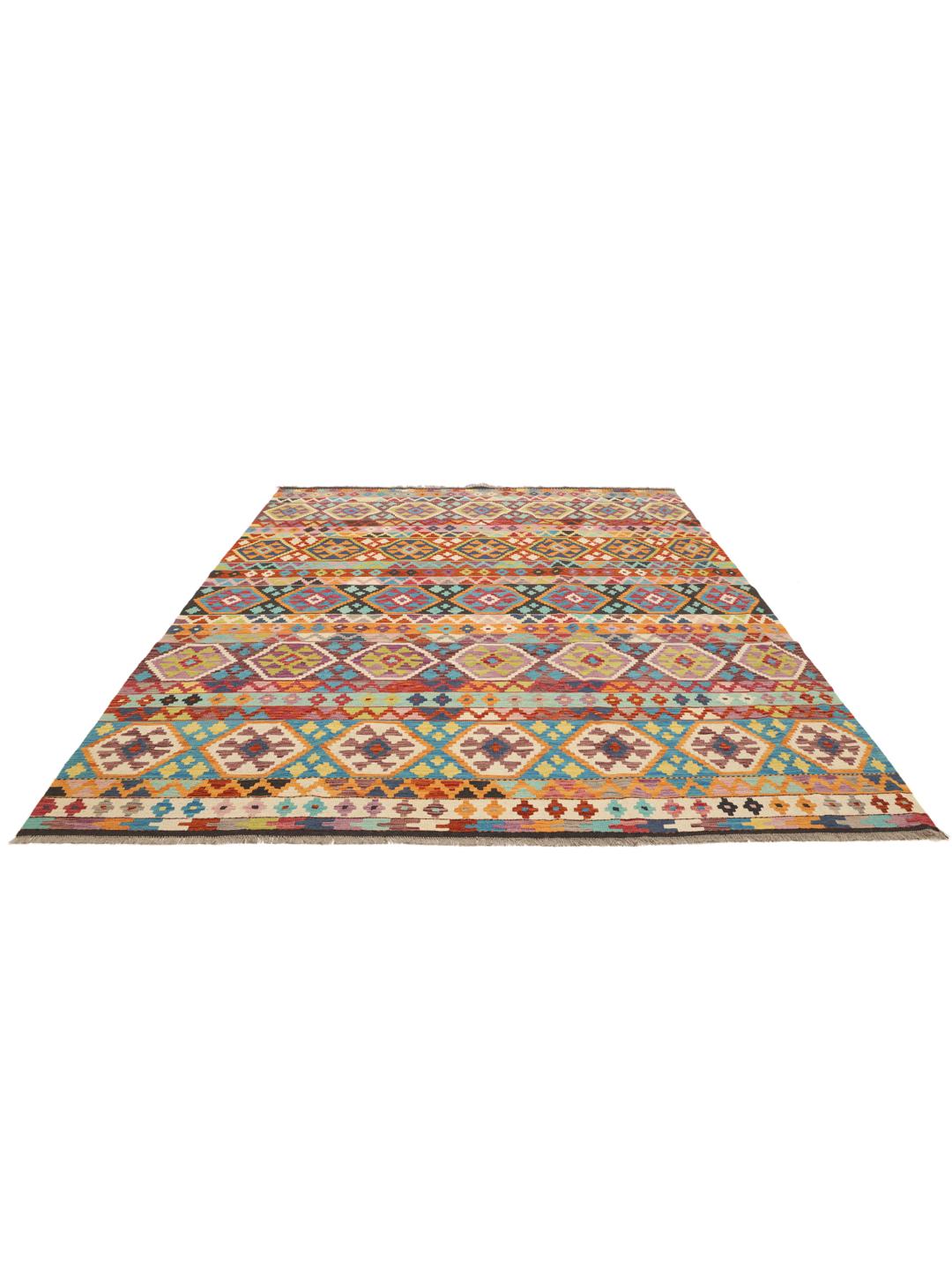
Kelim rugs have long been a cornerstone of nomadic and village life across the Middle East and Central Asia. Originally created as utilitarian items—used as floor coverings, blankets, and storage bags—these flat-woven textiles were designed by tribal weavers to be durable and transportable, reflecting the rhythms of a migratory lifestyle.
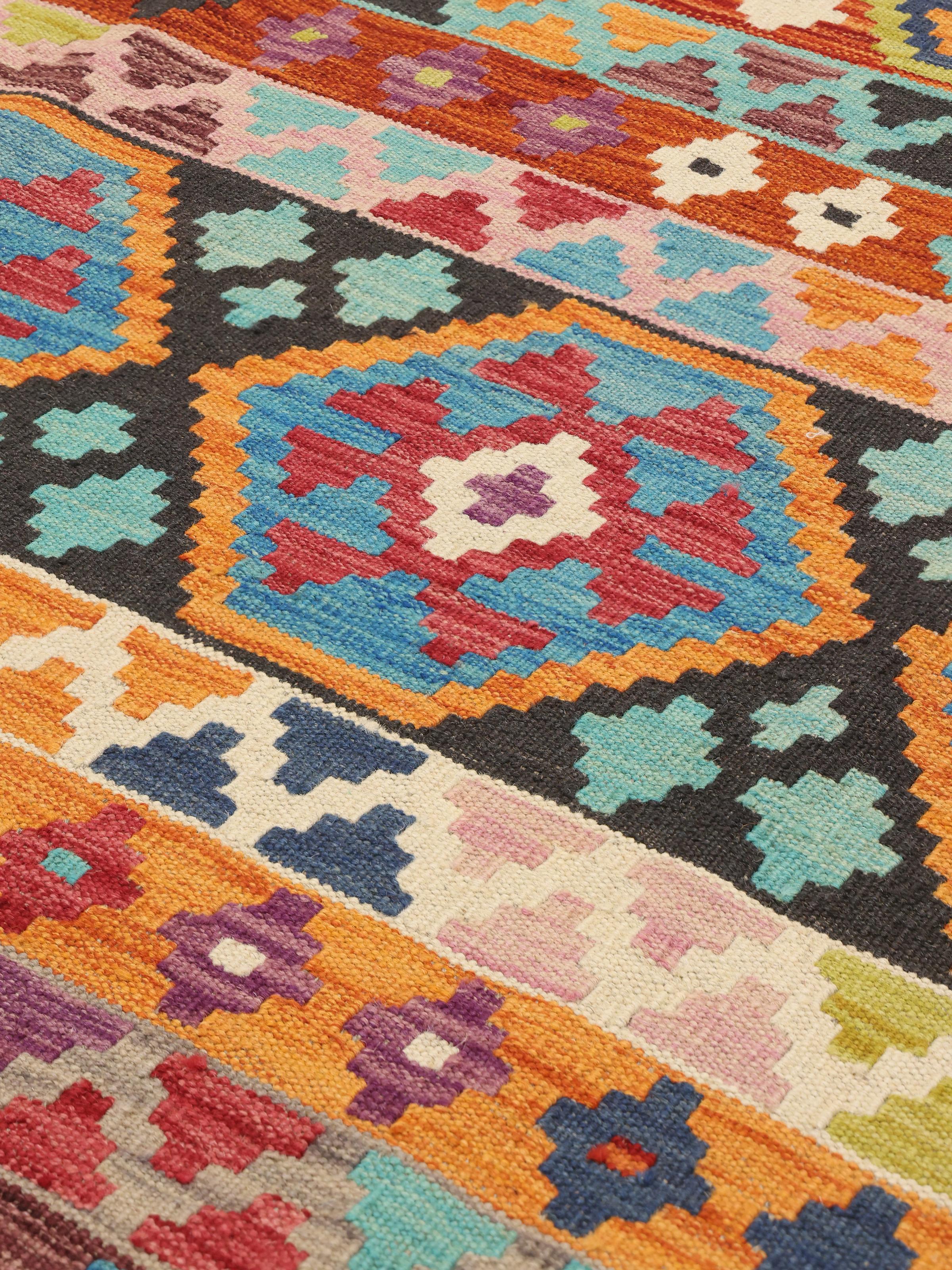
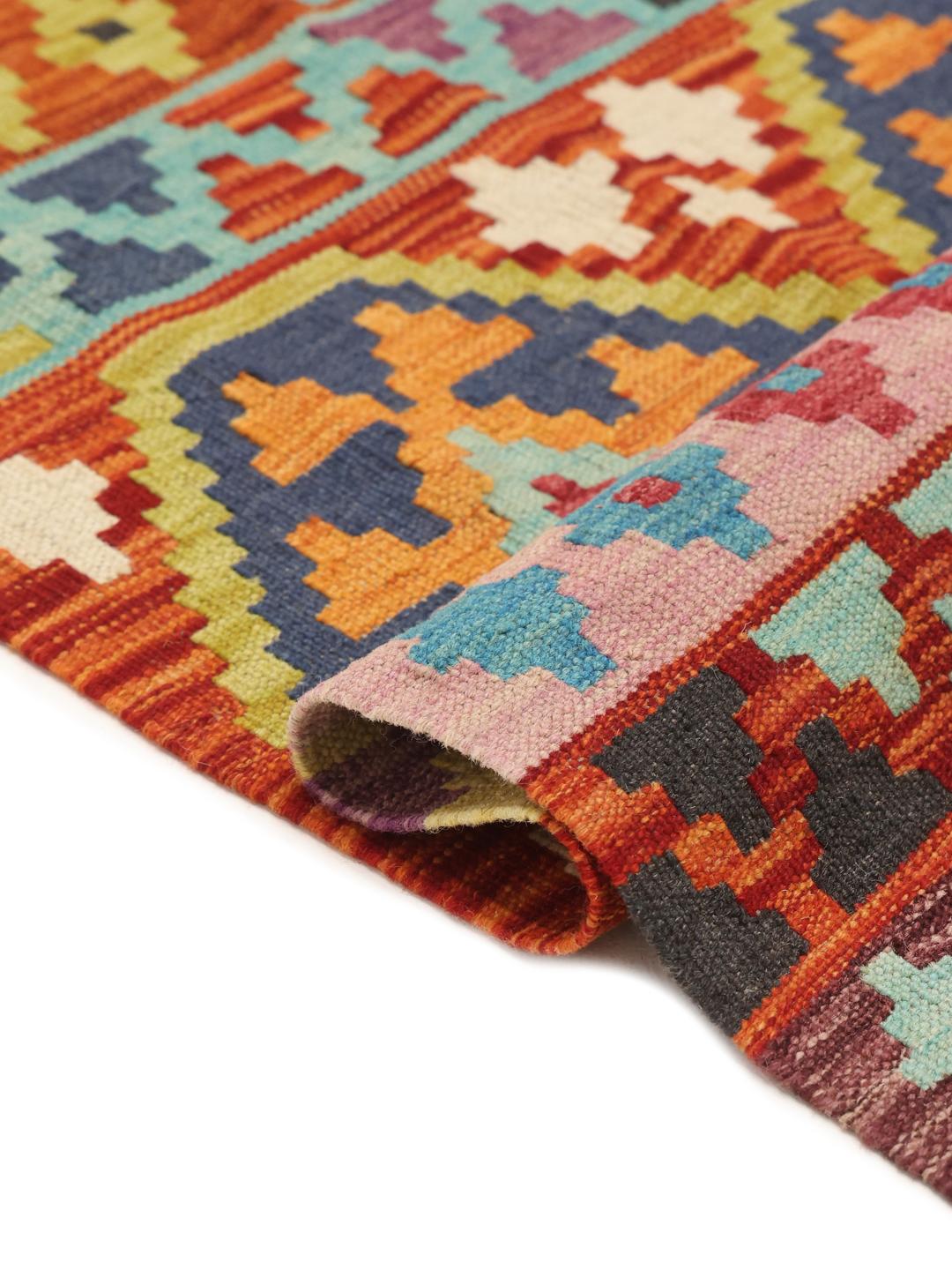
The term 'Kelim' refers specifically to this flat-weave construction, which lacks the raised pile of traditional knotted rugs. This technique relies on the weft threads being passed over and under the warp threads to create the design, which results in a reversible or near-reversible textile that is prized for its longevity and clean, graphic finish.
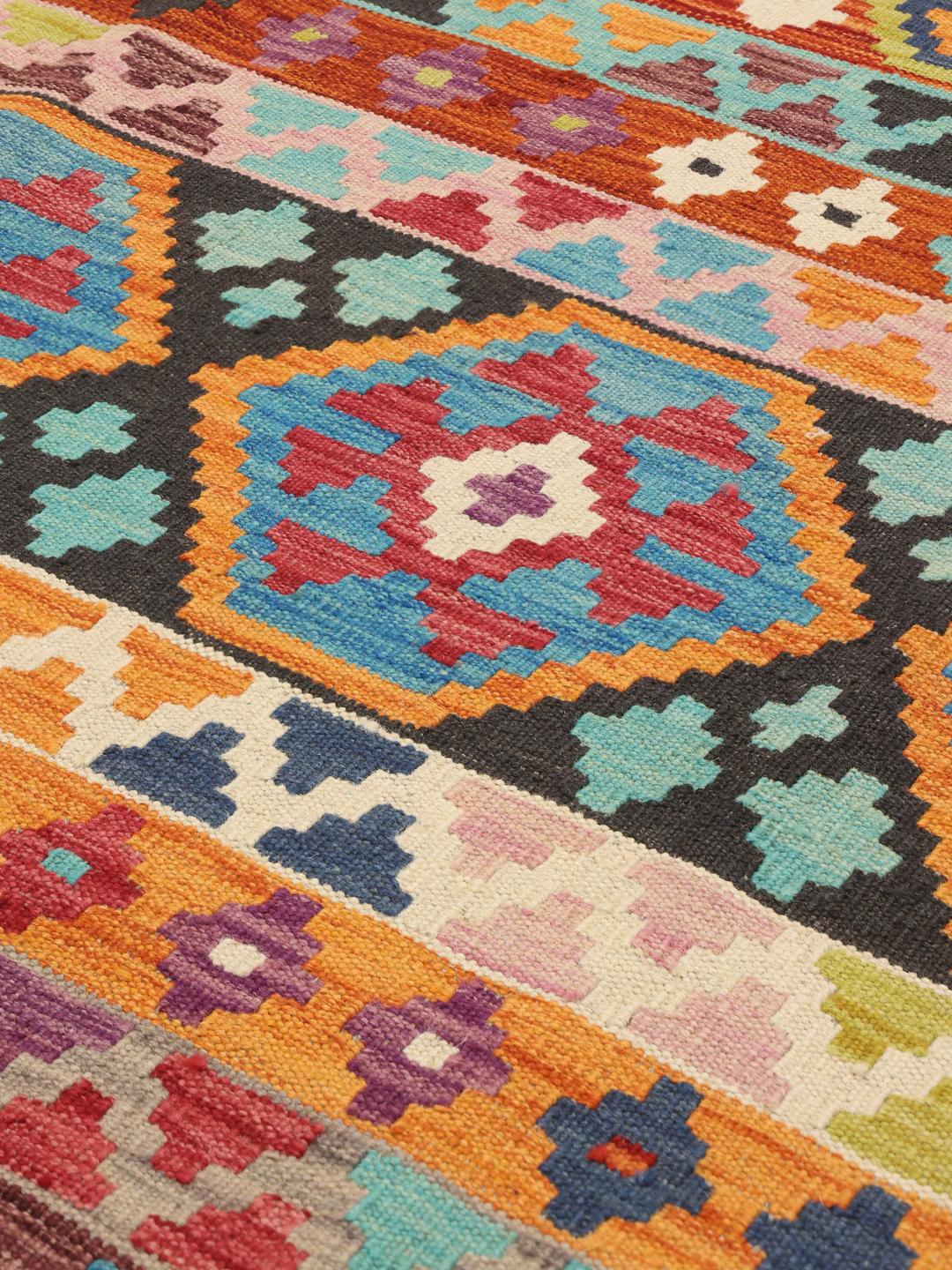
The design vocabulary of this rug is deeply symbolic, featuring geometric motifs that have been refined over centuries. These patterns, often including diamonds and intricate borders, are not merely decorative but serve as a visual language, often telling stories of tribal identity, family history, and regional pride. The vibrant, contrasting colours are traditionally derived from natural dyes, giving them a rich depth that softens beautifully over time.
Today, these rugs are celebrated for their cultural weight and the undeniable skill they represent. Collectors value them not only for their aesthetic appeal but for the connection they offer to an ancient craft that prioritises human touch and tradition over industrial mass production. Owning one is an opportunity to preserve a piece of history that continues to bring warmth and vitality to modern homes.