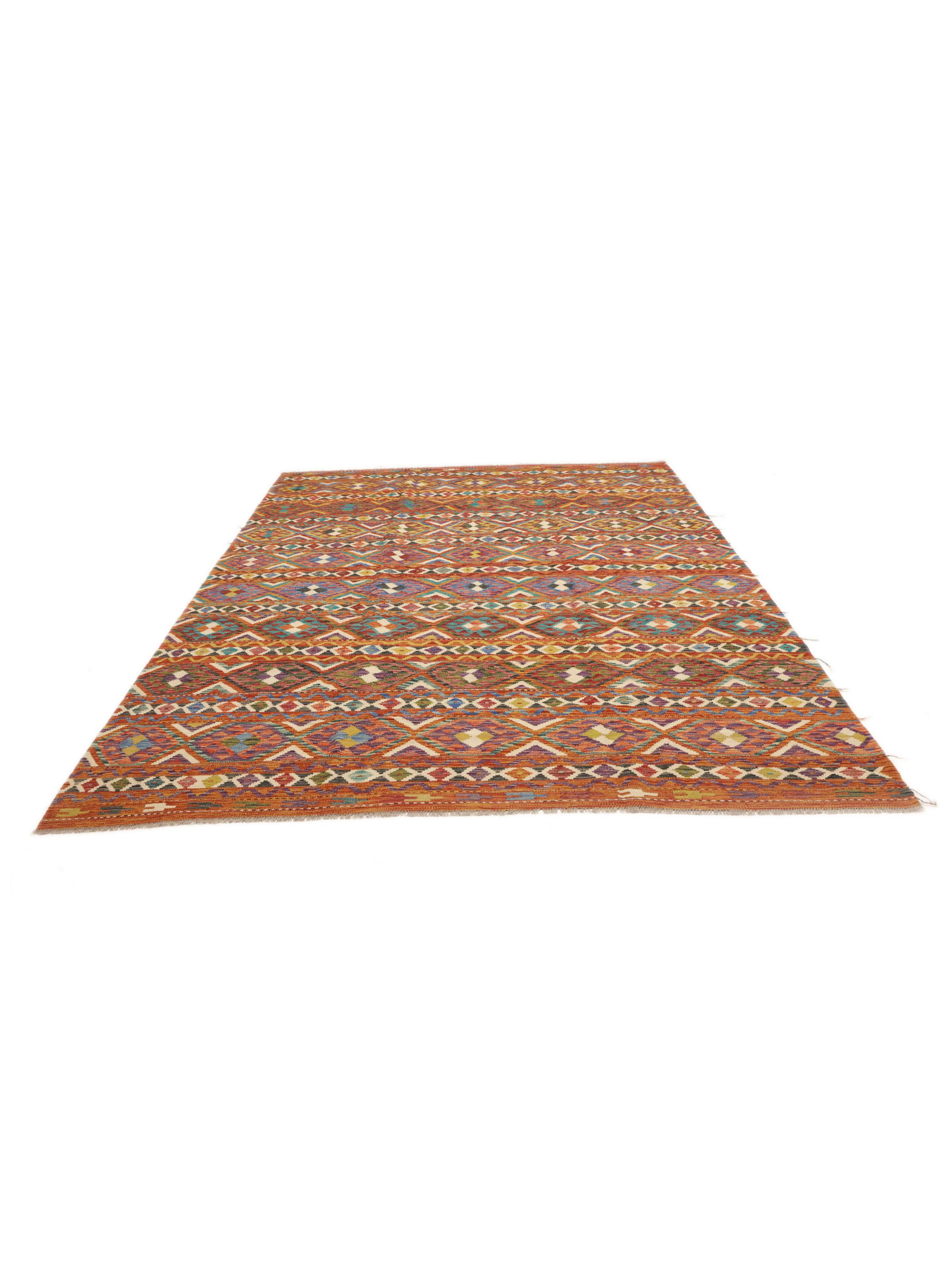
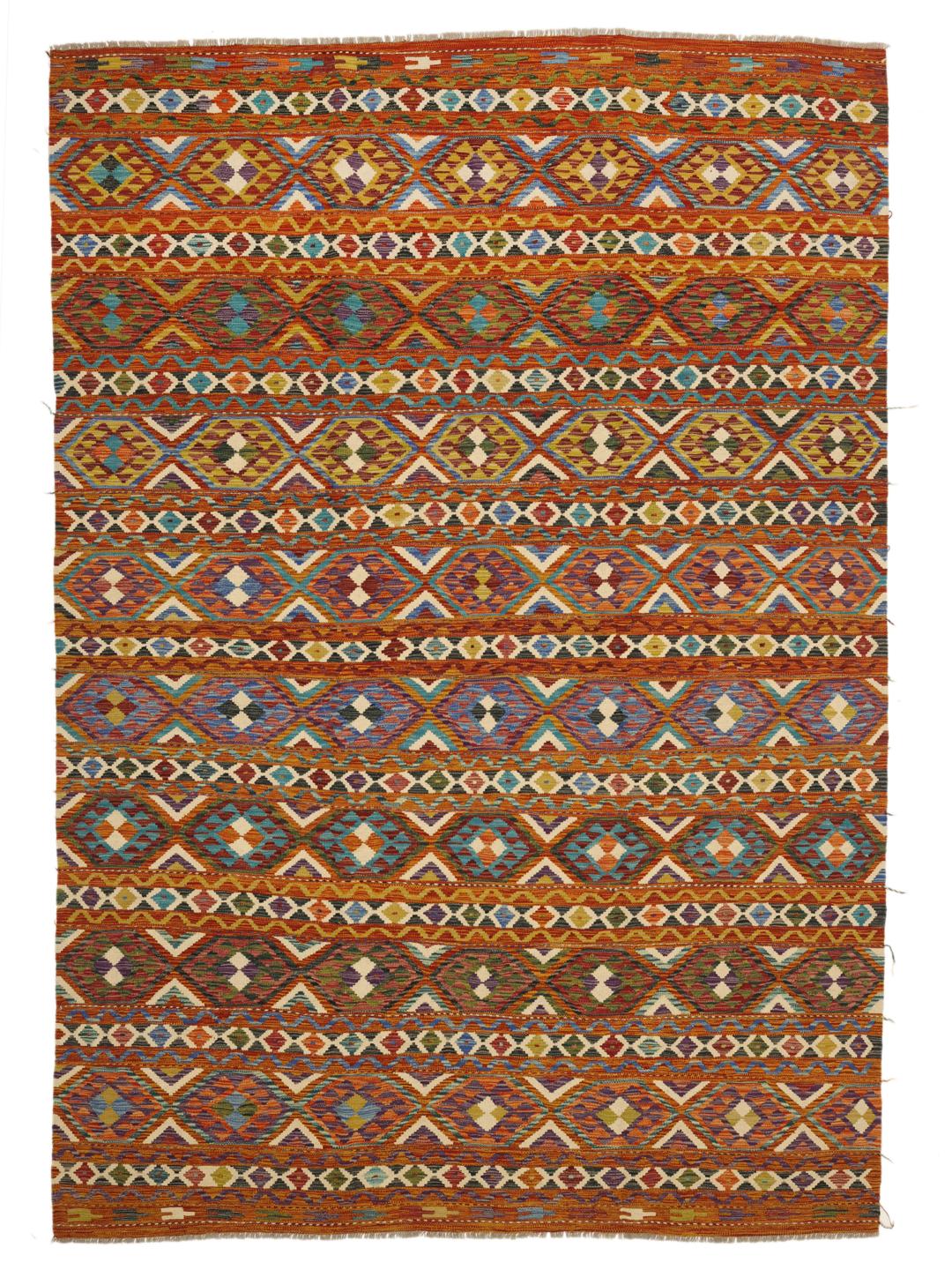
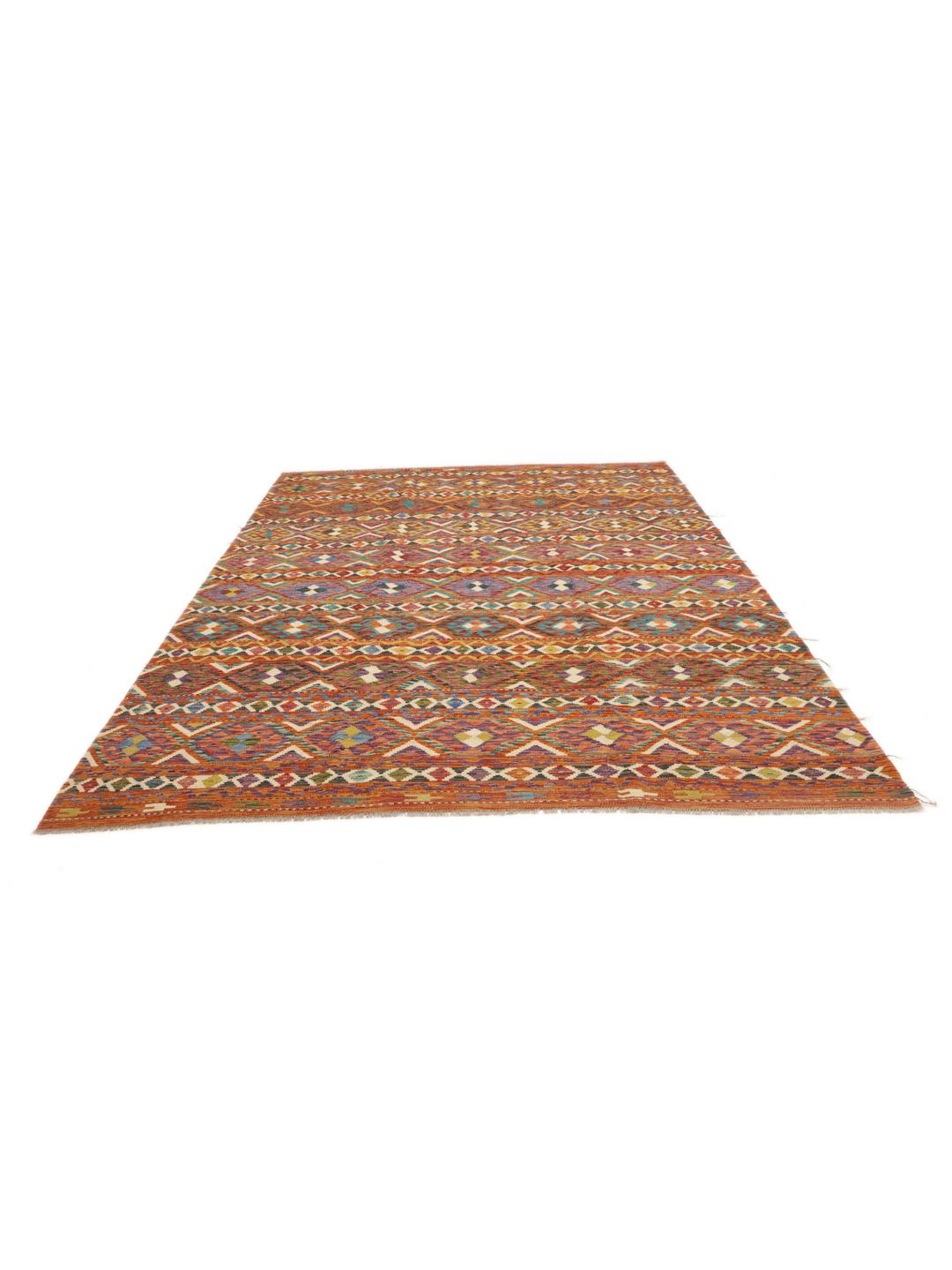
Kelim rugs have long been a cornerstone of nomadic life in the Middle East and Central Asia. Historically, these flat-woven textiles were crafted by tribal artisans as functional items for tents, serving as floor coverings, wall hangings, or storage bags. The tradition of weaving these rugs in Afghanistan has been passed down through countless generations, reflecting the migratory history and cultural identity of the region's diverse ethnic groups.
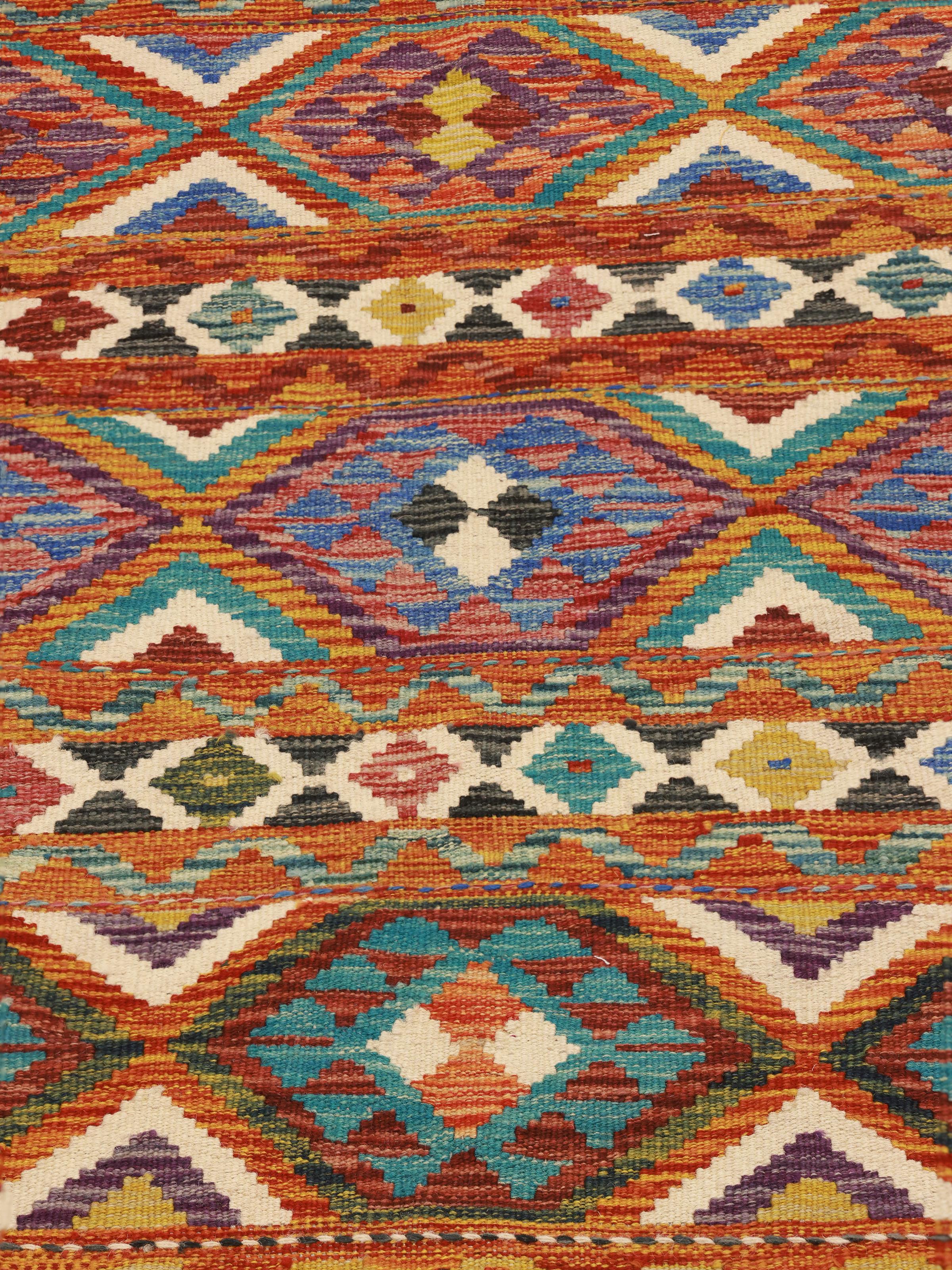
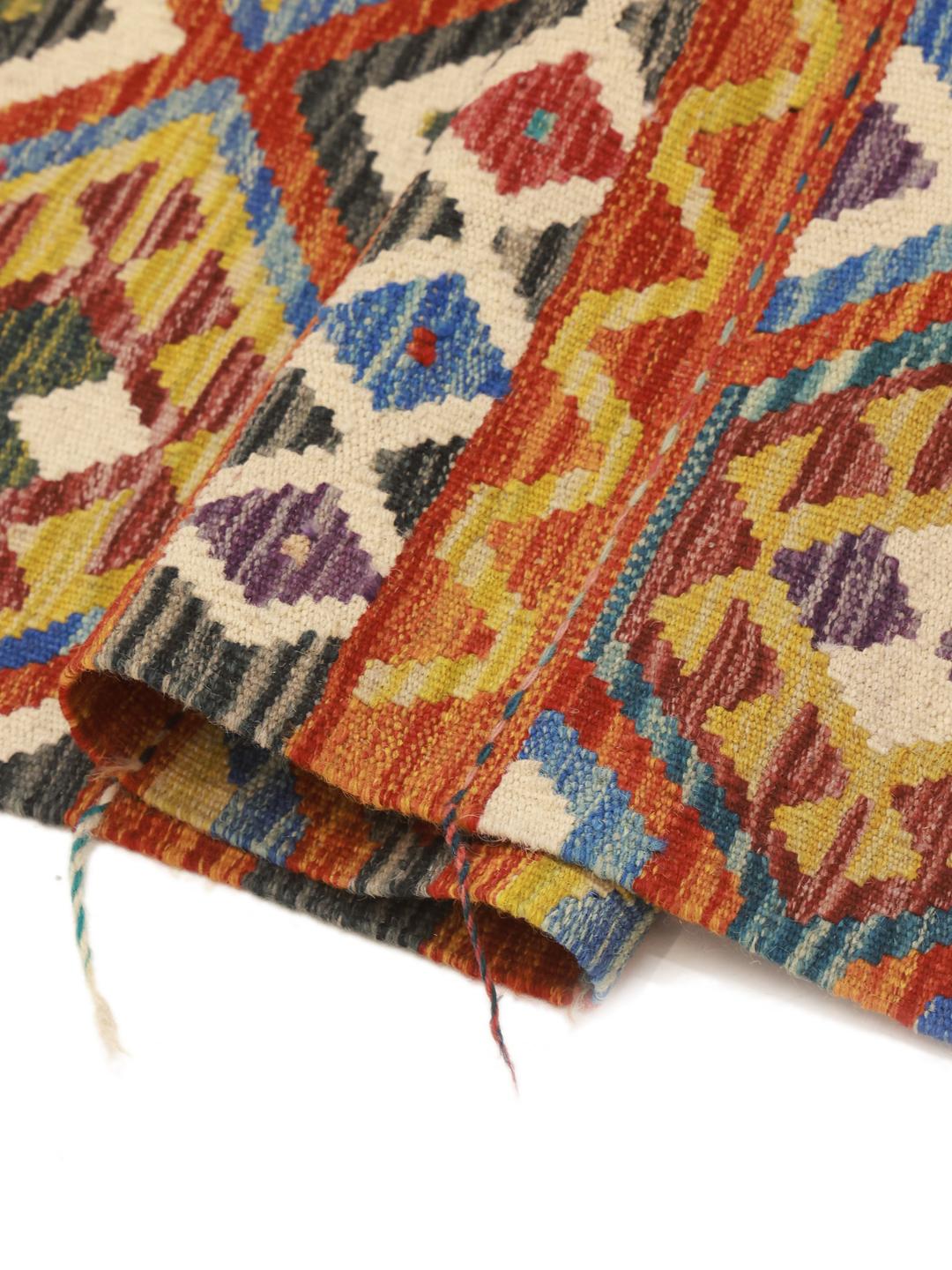
The term 'Kelim' refers specifically to the flat-weaving technique where the weft strands are pulled tightly down to hide the warp, resulting in a durable and reversible fabric. This style of construction is prized for its simplicity and strength. Because no knots are used in the traditional sense, the weaver must rely on a masterful command of tension and colour sequencing to build the design, a skill that requires years of dedicated practice to perfect.
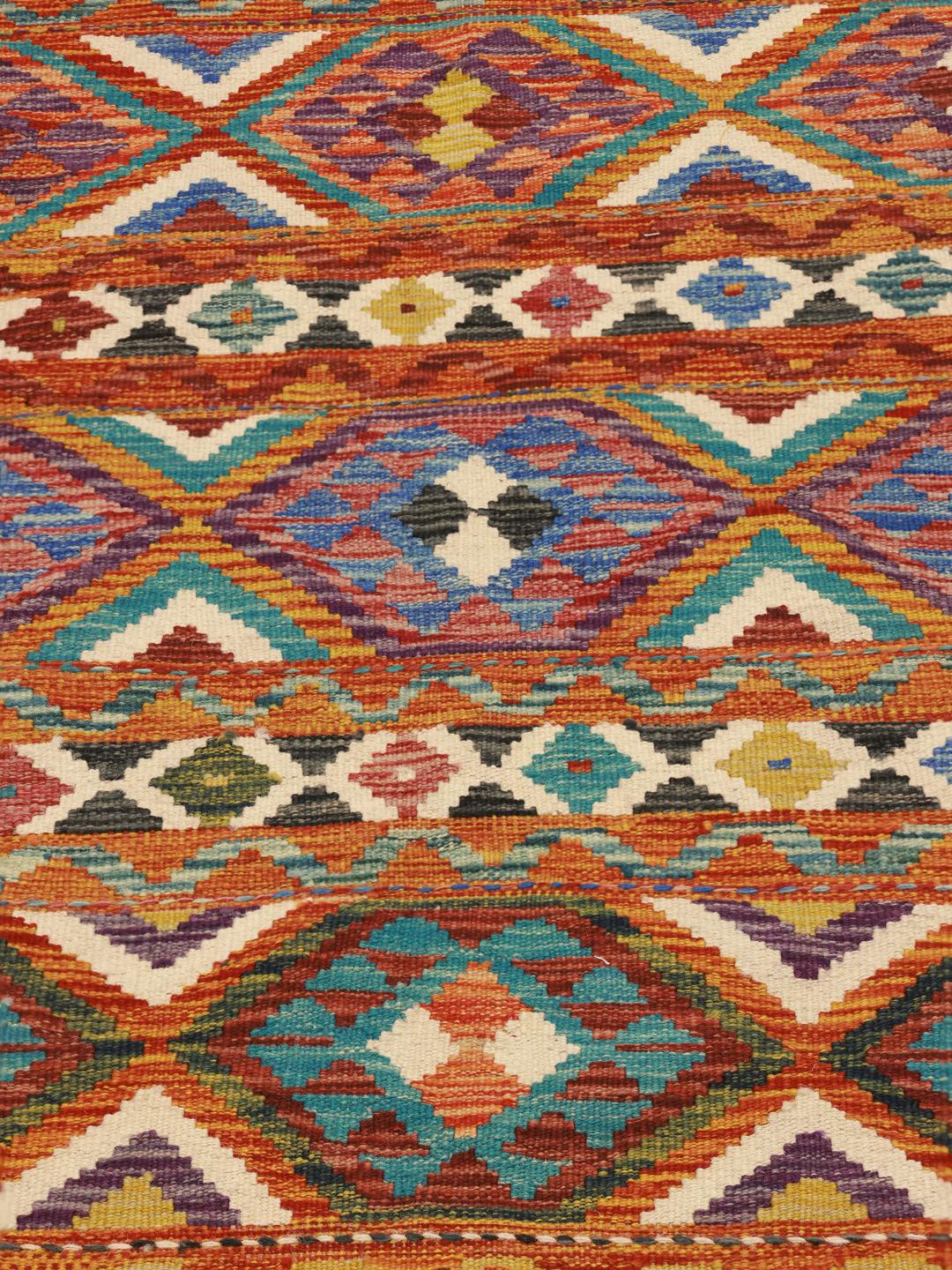
The aesthetic language of Afghan Kelims is deeply rooted in geometric symbolism. You will often see repeating diamond, triangle, and latch-hook motifs, which were historically used to convey tribal allegiances or protective charms. The use of vibrant, earthy tones is a hallmark of this tradition, traditionally derived from local natural dyes. This specific piece features a striking arrangement of these motifs, showcasing a masterful balance of colour and form that honours its historical lineage.
Owning an Afghan Kelim is an opportunity to connect with a legacy of artistry that transcends time. Collectors value these pieces not only for their visual impact but for the human story embedded in their fibres. Each rug represents a unique chapter in a continuing tradition, offering a sense of history and warmth that mass-produced floor coverings simply cannot replicate.