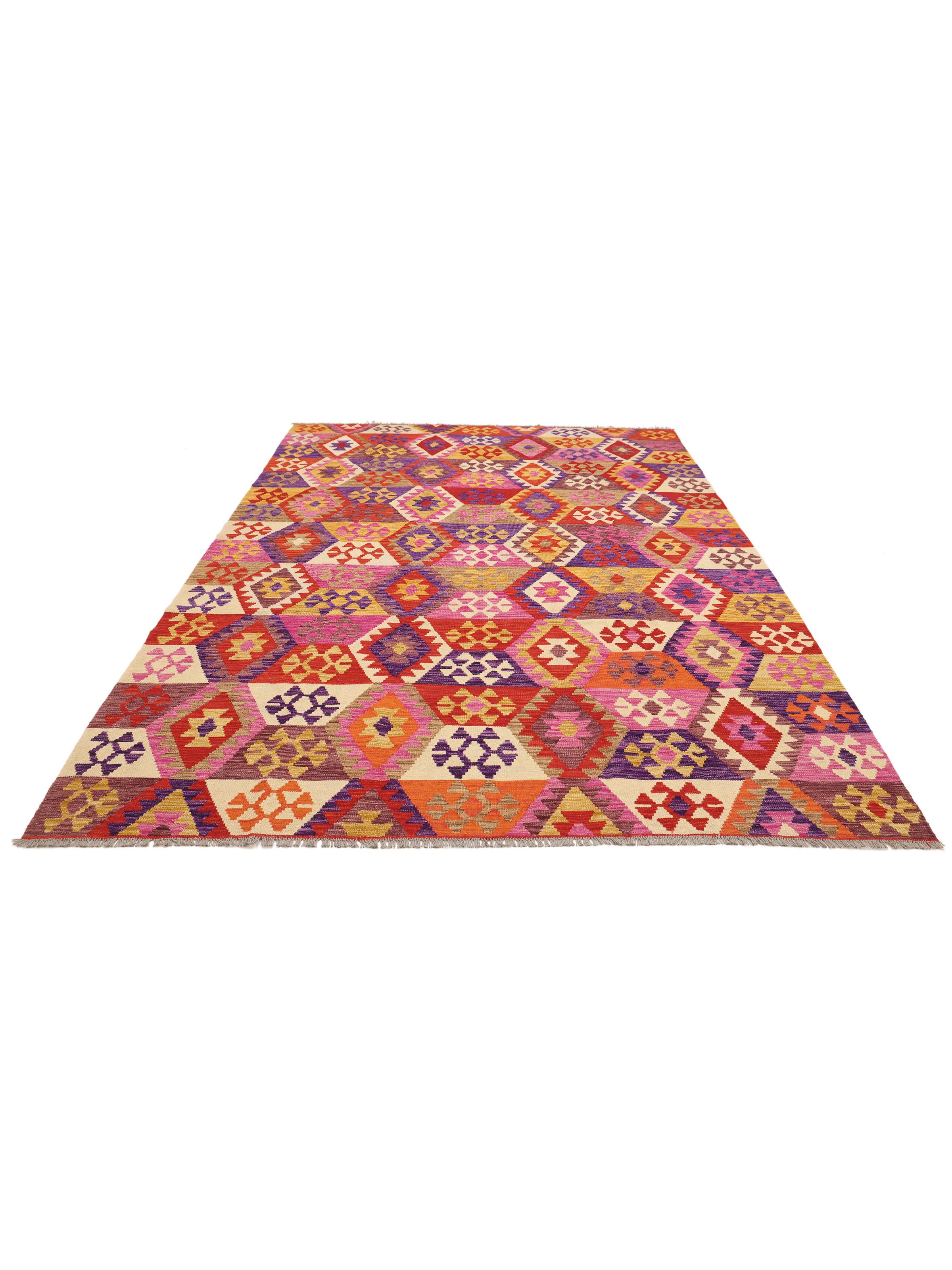
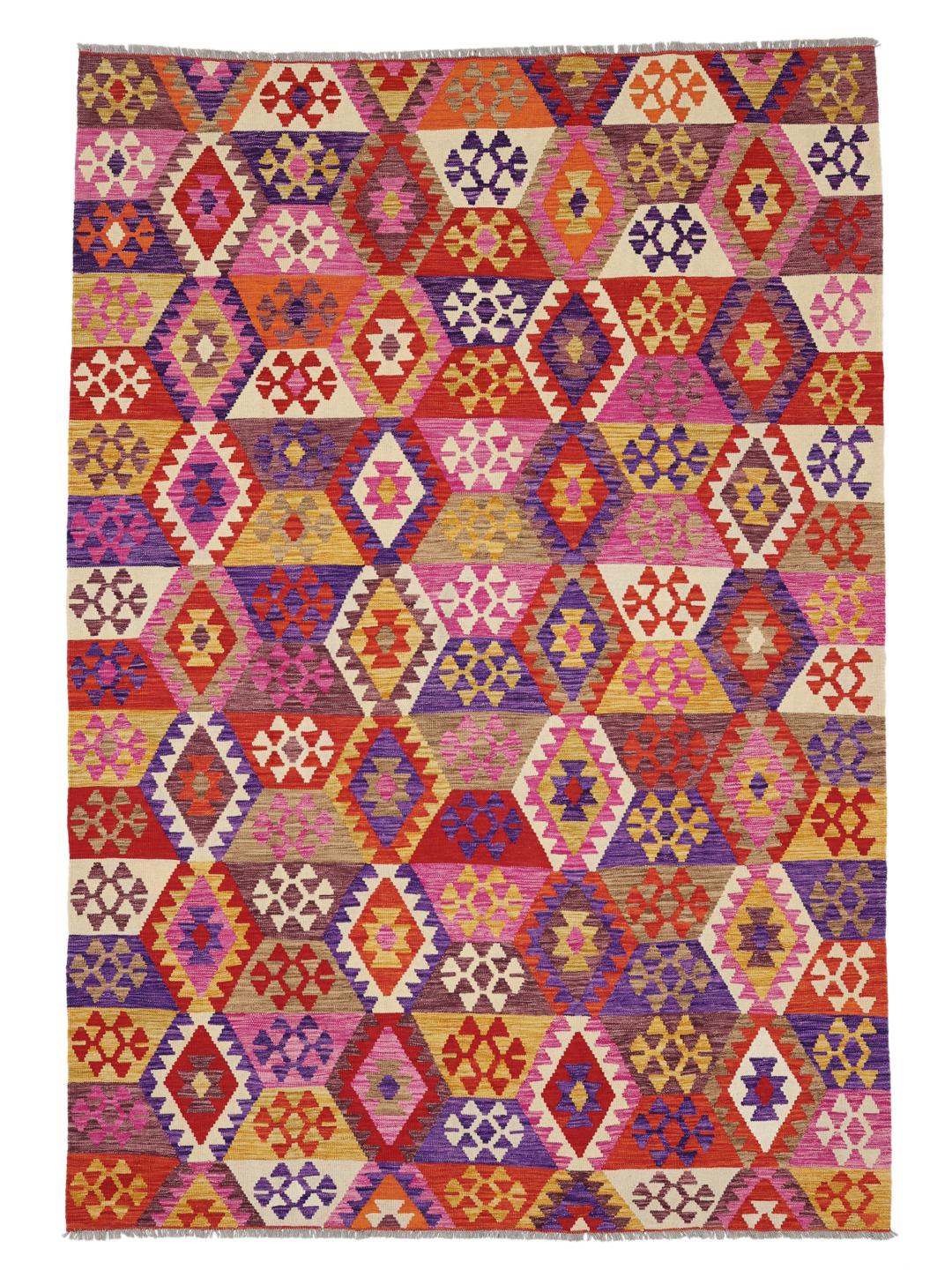
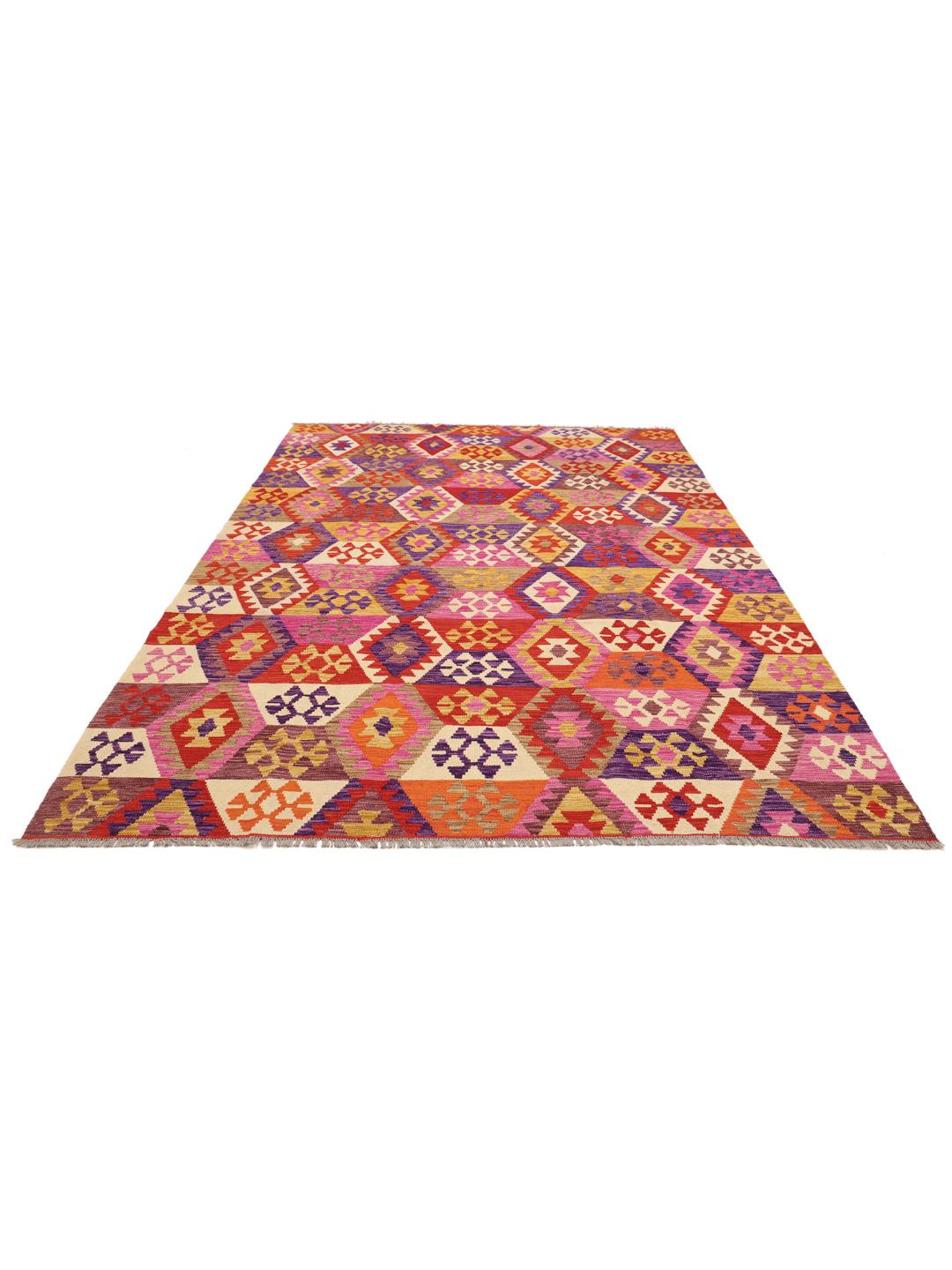
The Kelim tradition in Afghanistan is deeply rooted in the nomadic and semi-nomadic cultures of the Middle East, where flat-woven rugs served as essential, portable furnishings for dwellings. These rugs were traditionally crafted by tribal weavers to meet the functional needs of their households, evolving over centuries into a recognised art form celebrated for its strength and utility.
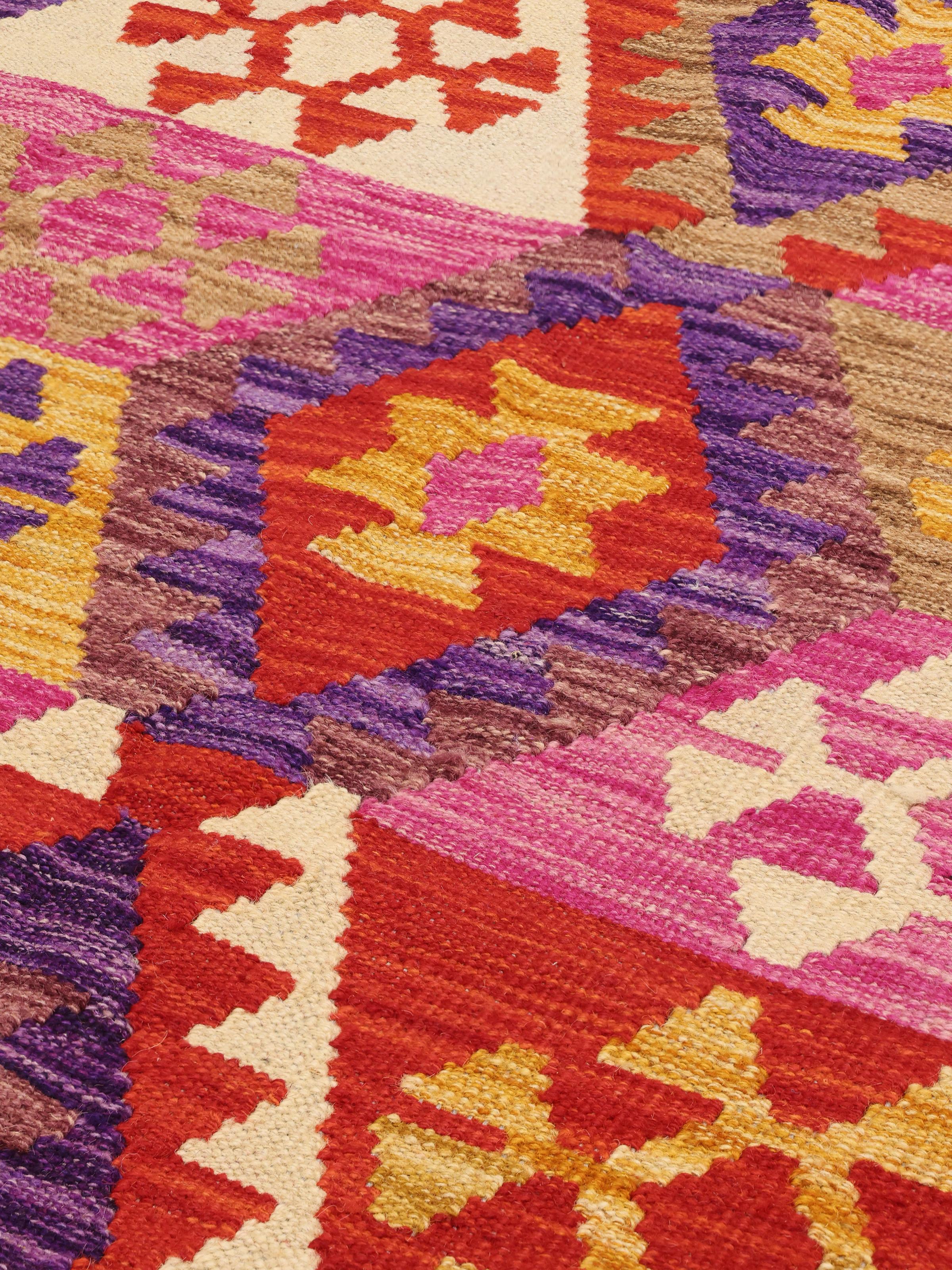
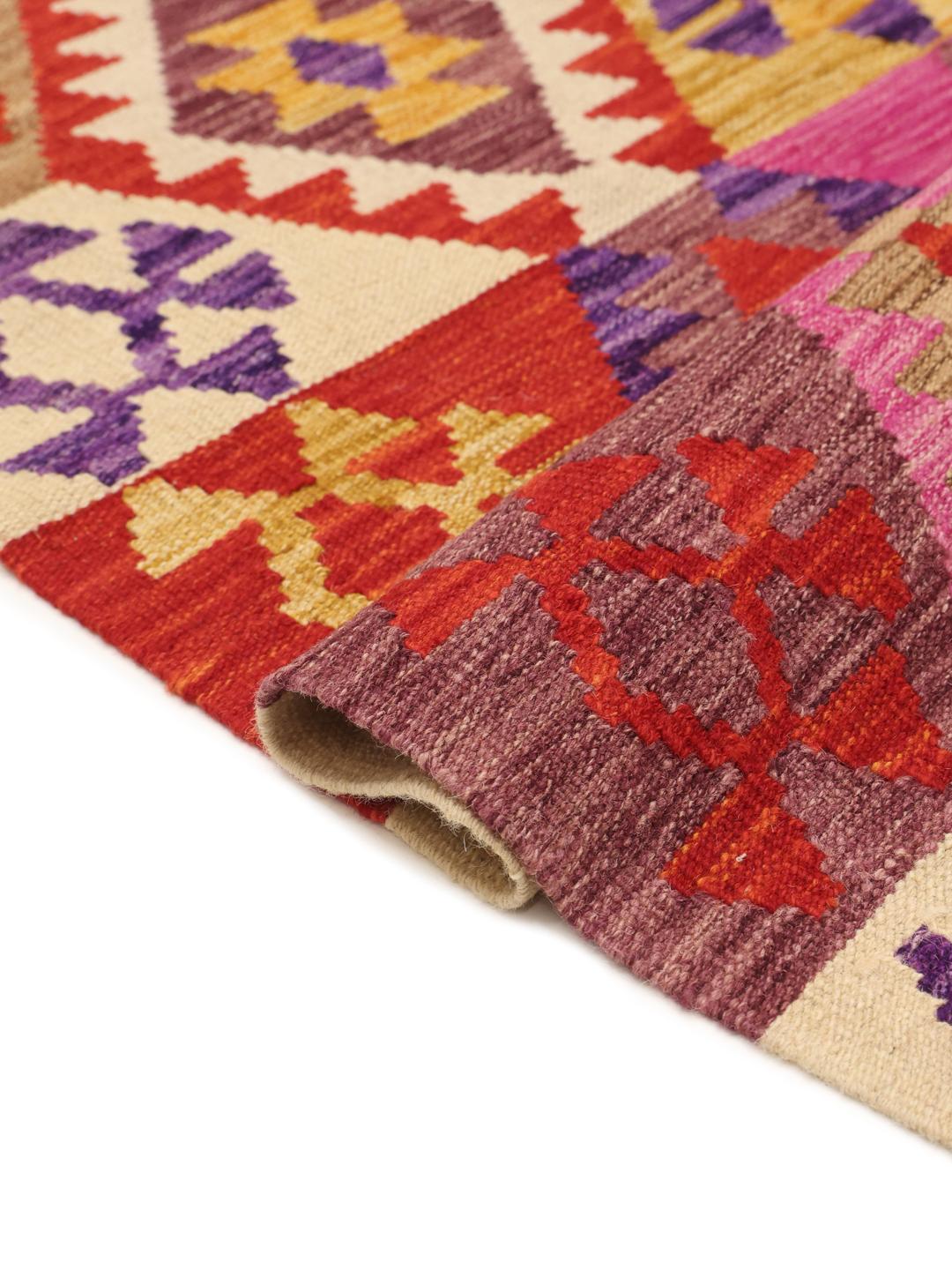
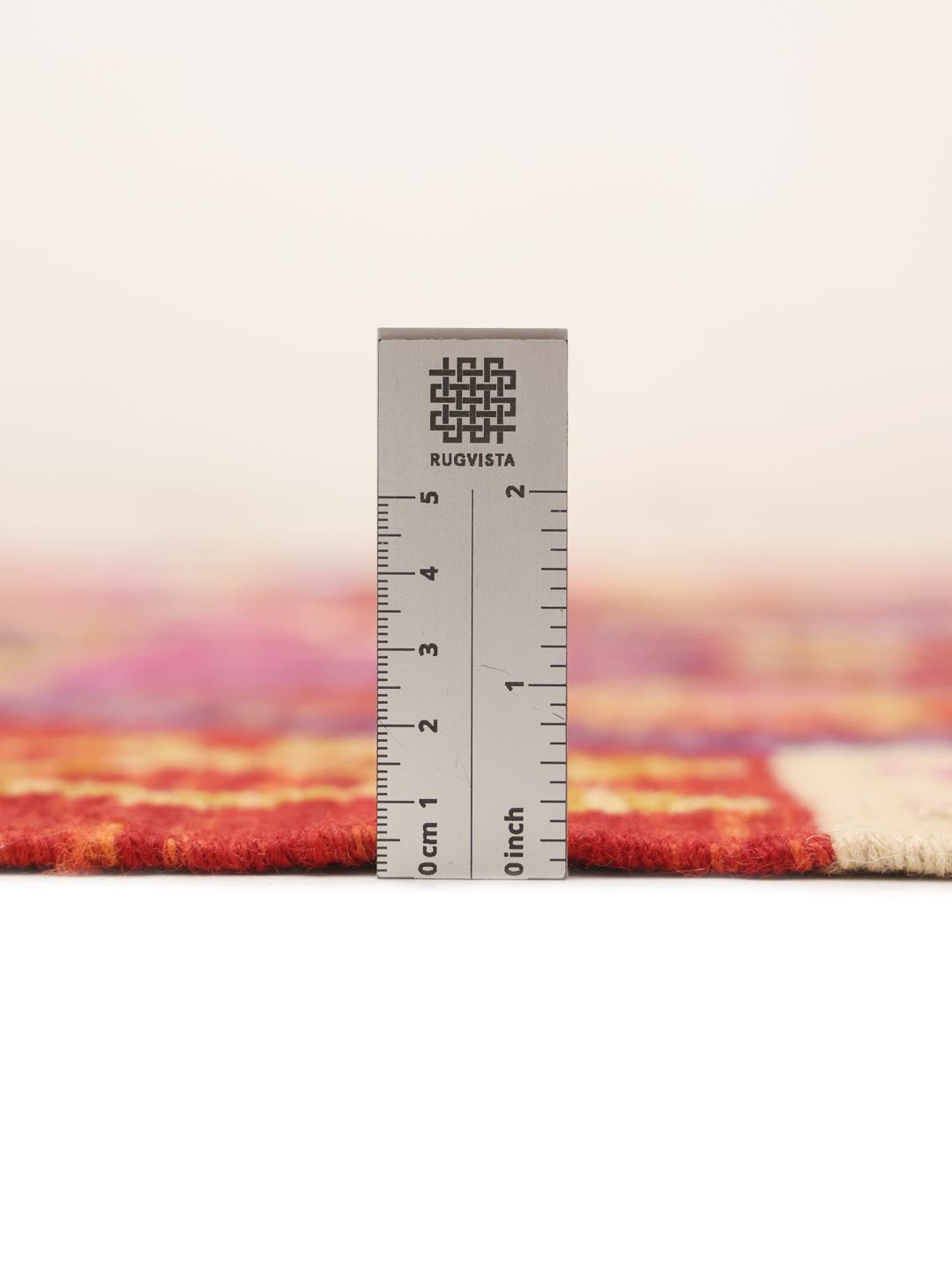
Technically, a Kelim is a flat-weave rug, meaning it lacks a pile. This is achieved by tightly interweaving the coloured weft strands with the warp strands, creating a surface that is reversible and remarkably durable. This technique allows for sharp, crisp geometric patterns and a lightweight profile that is easy to move and maintain, making it a highly practical choice for active living spaces.
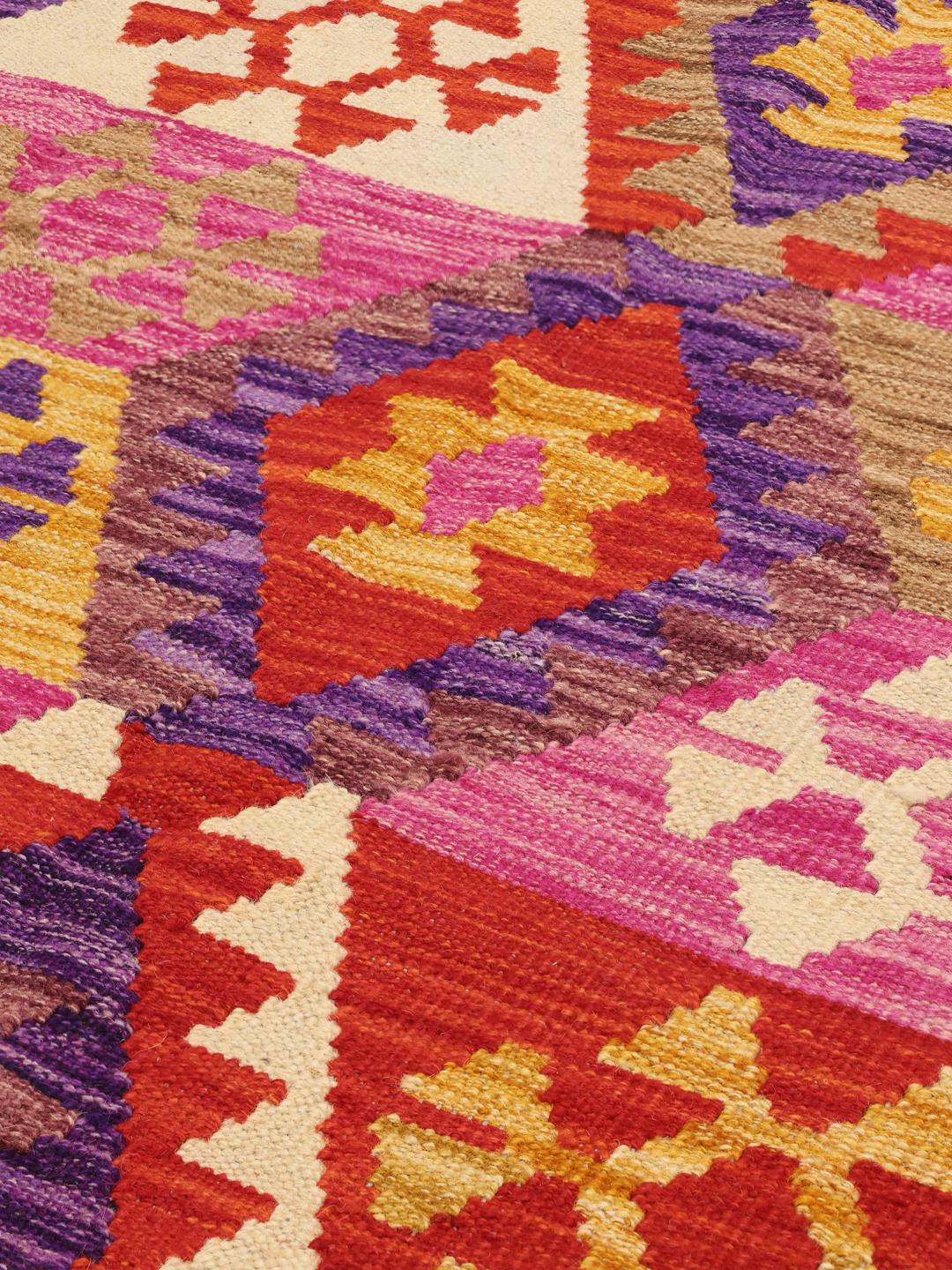
The visual language of Afghan Kelims is defined by bold geometric patterns, including repeating diamonds, triangles, and intricate borders. These motifs are often symbolic, passed down through generations of weavers to represent tribal identity or regional folklore. The use of vibrant, deep colours is a hallmark of the region, achieved through a long history of utilising natural dyes that lend a rich, storied appearance to the final piece.
Collecting Afghan Kelims is a way to preserve a rich cultural heritage that values skill, patience, and visual storytelling. Each rug acts as a record of the weaver's creative choices and regional influences, offering a sense of authenticity that mass-produced items cannot provide. By bringing one into your home, you are continuing a legacy of craftsmanship that has been cherished by families and collectors for generations.