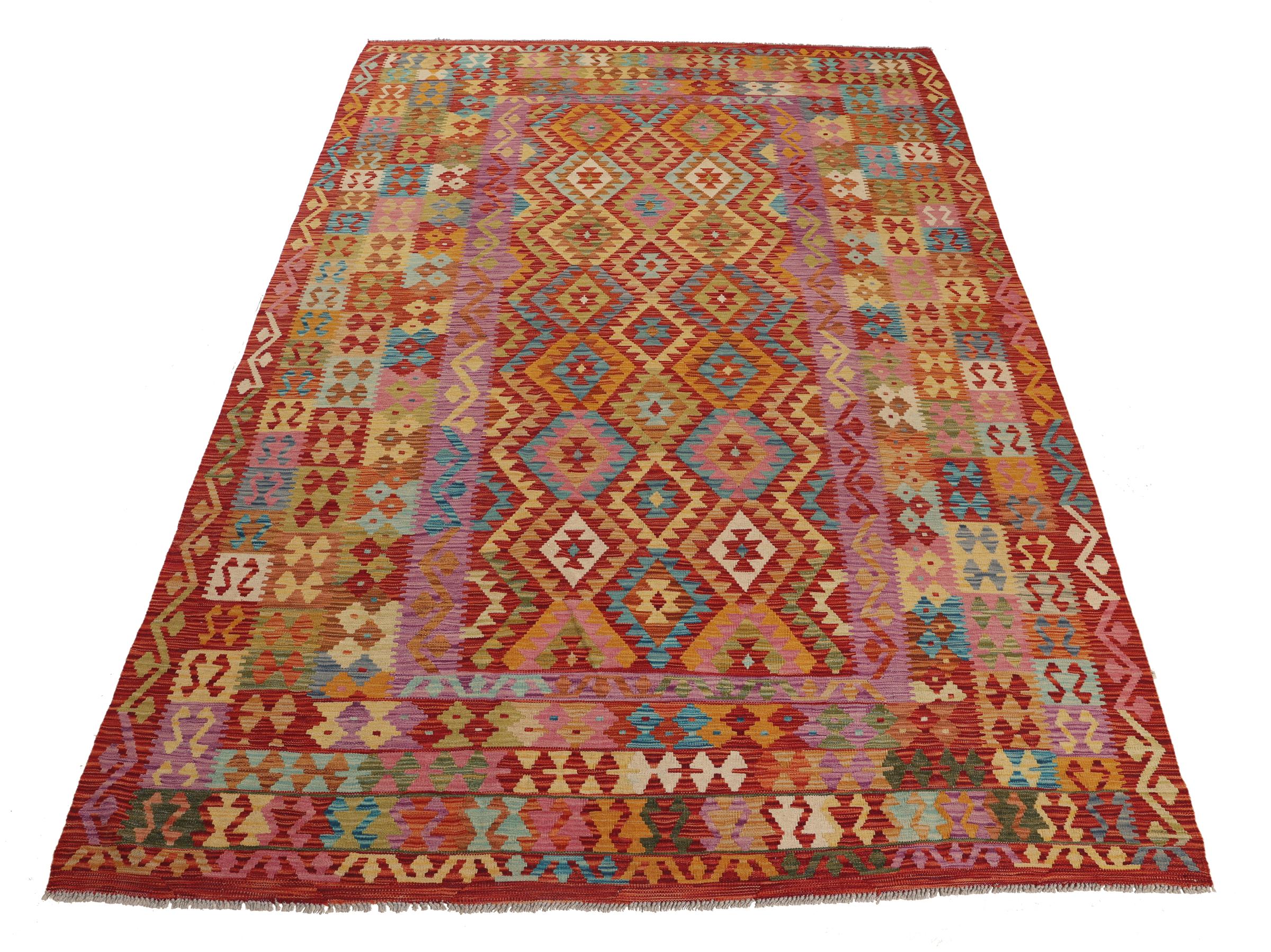
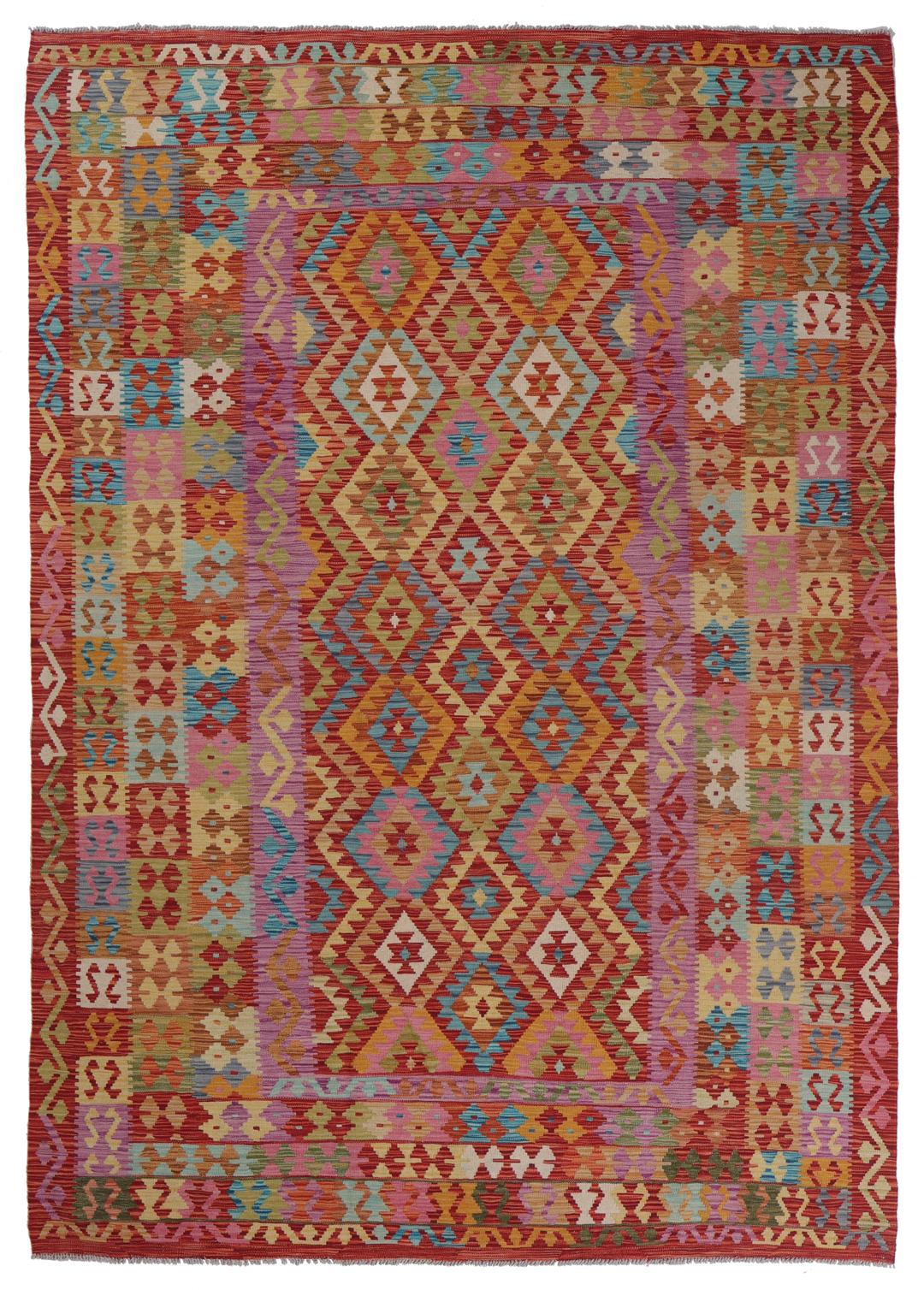
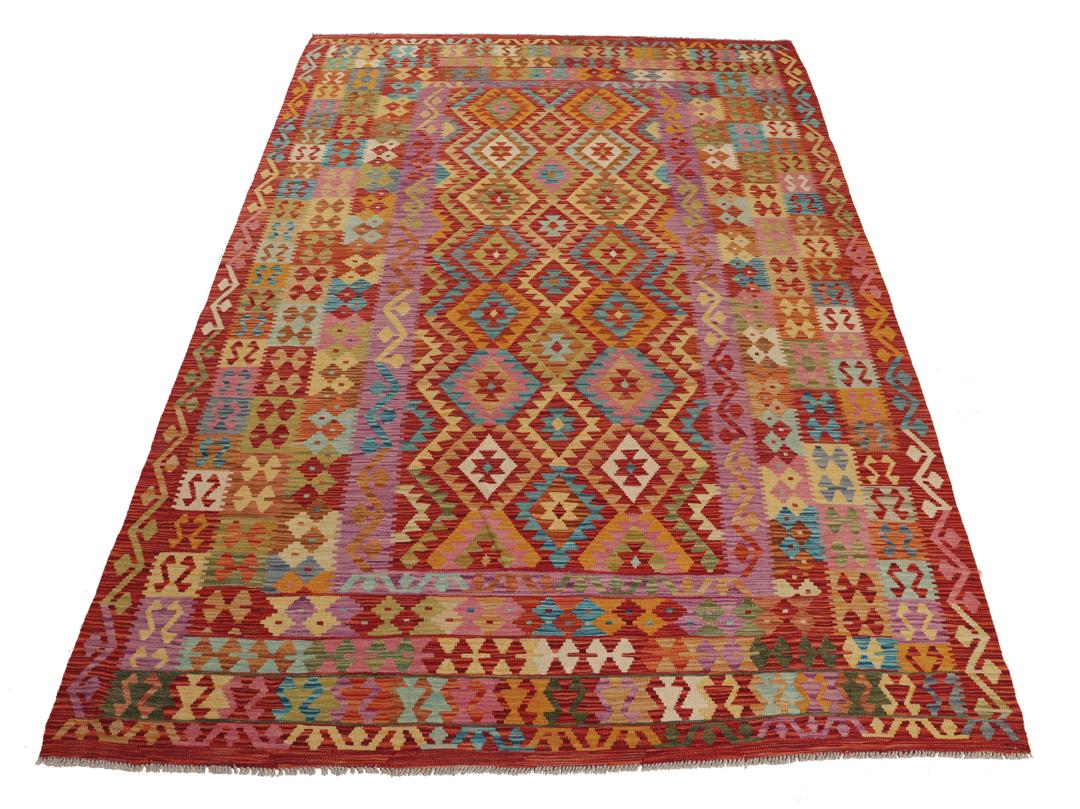
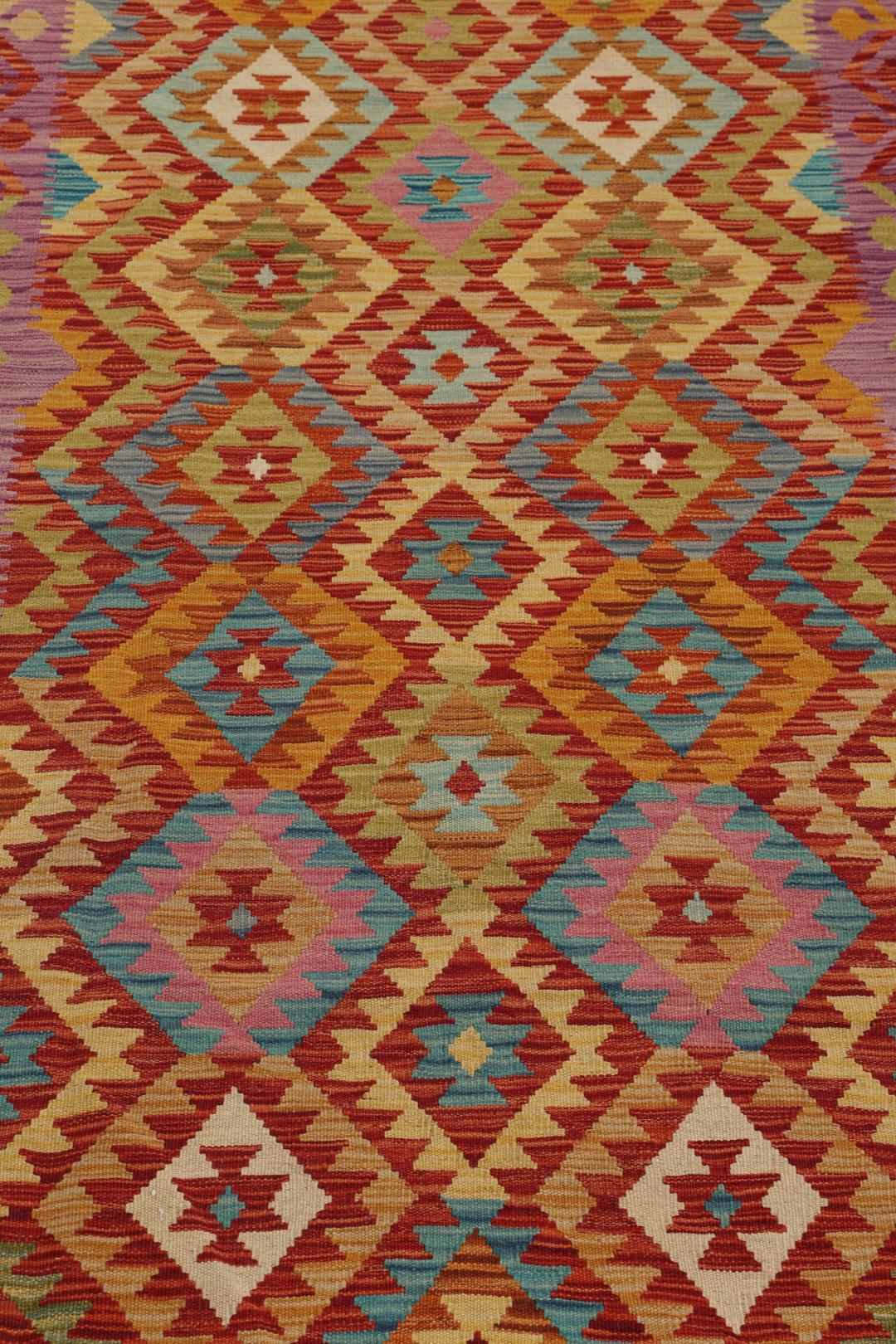
Kelim rugs have long been a cornerstone of nomadic life in the Middle East and Central Asia. Traditionally, these flat-woven textiles were crafted by tribal artisans as functional items for tents, serving as floor coverings, blankets, or saddlebags. Over centuries, these utilitarian objects evolved into highly prized artistic expressions, with each region developing its own distinct visual vocabulary.
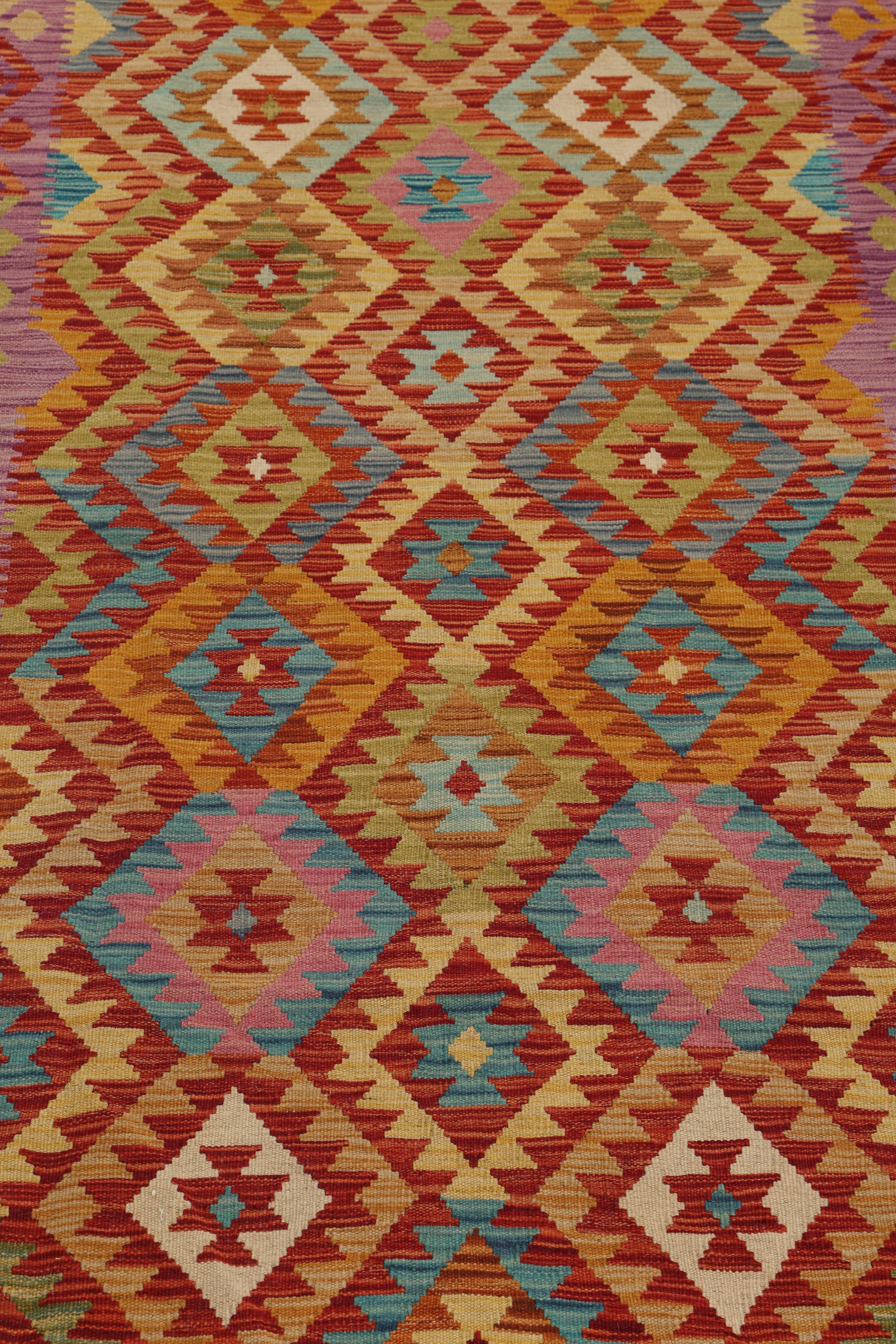
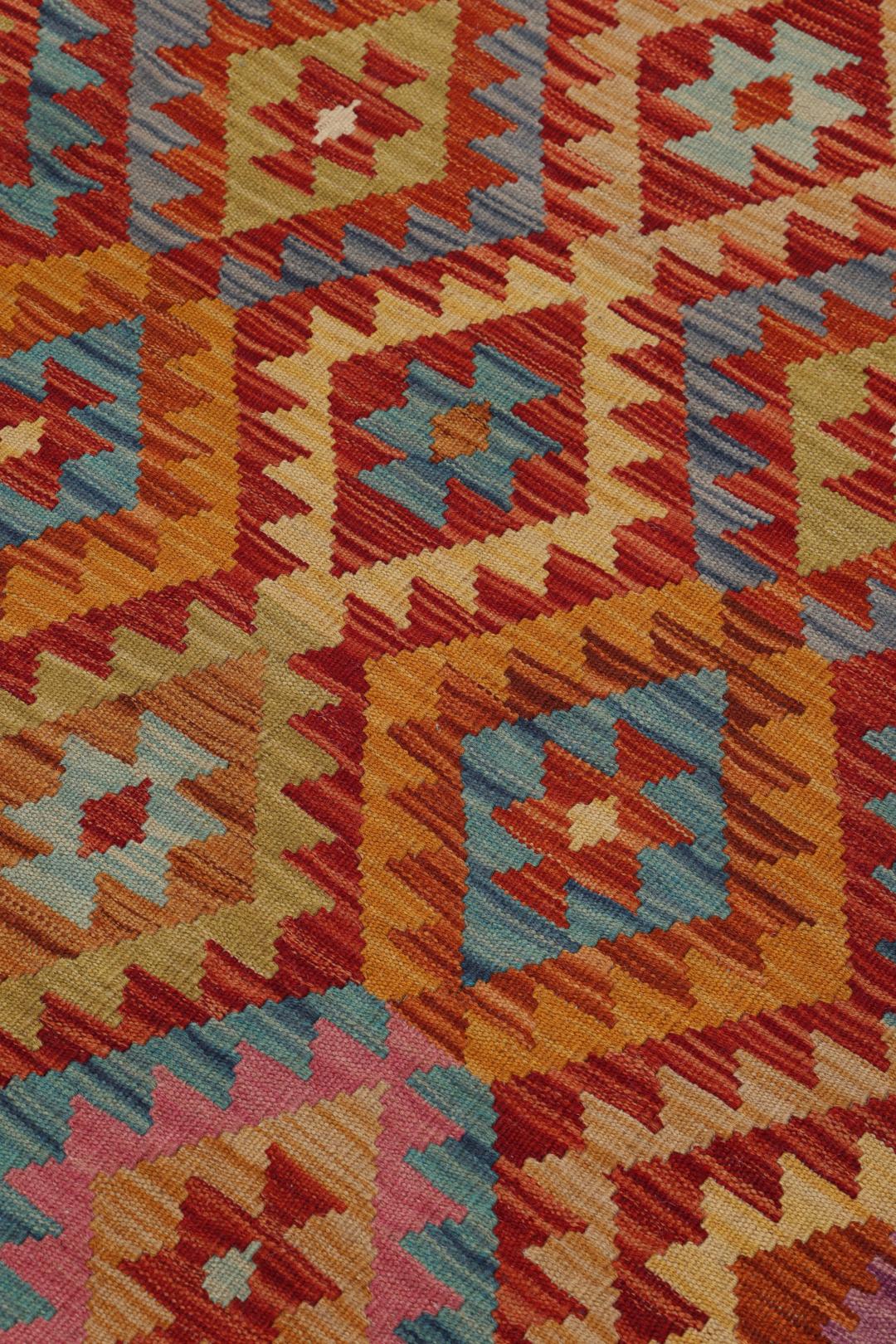
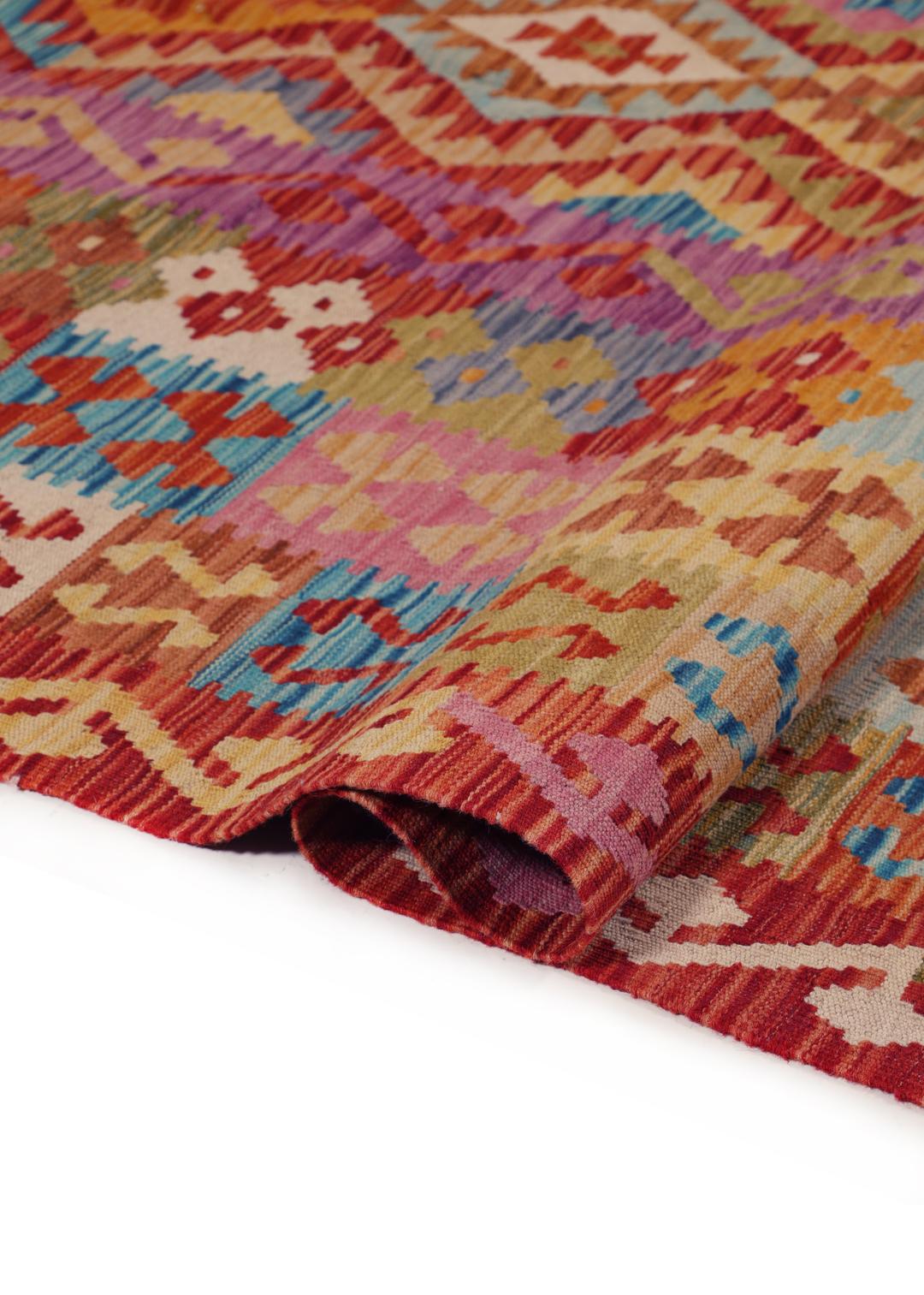
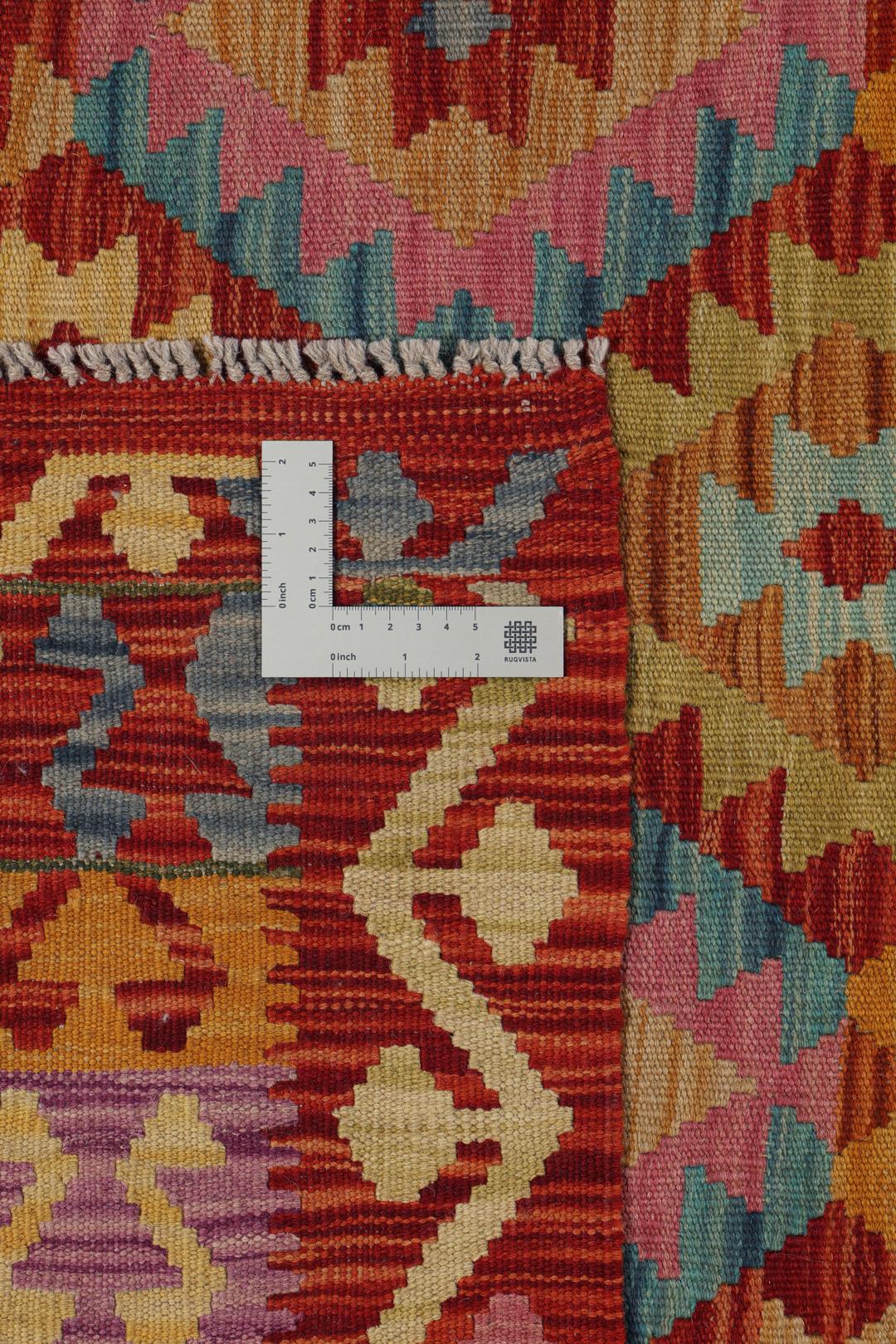
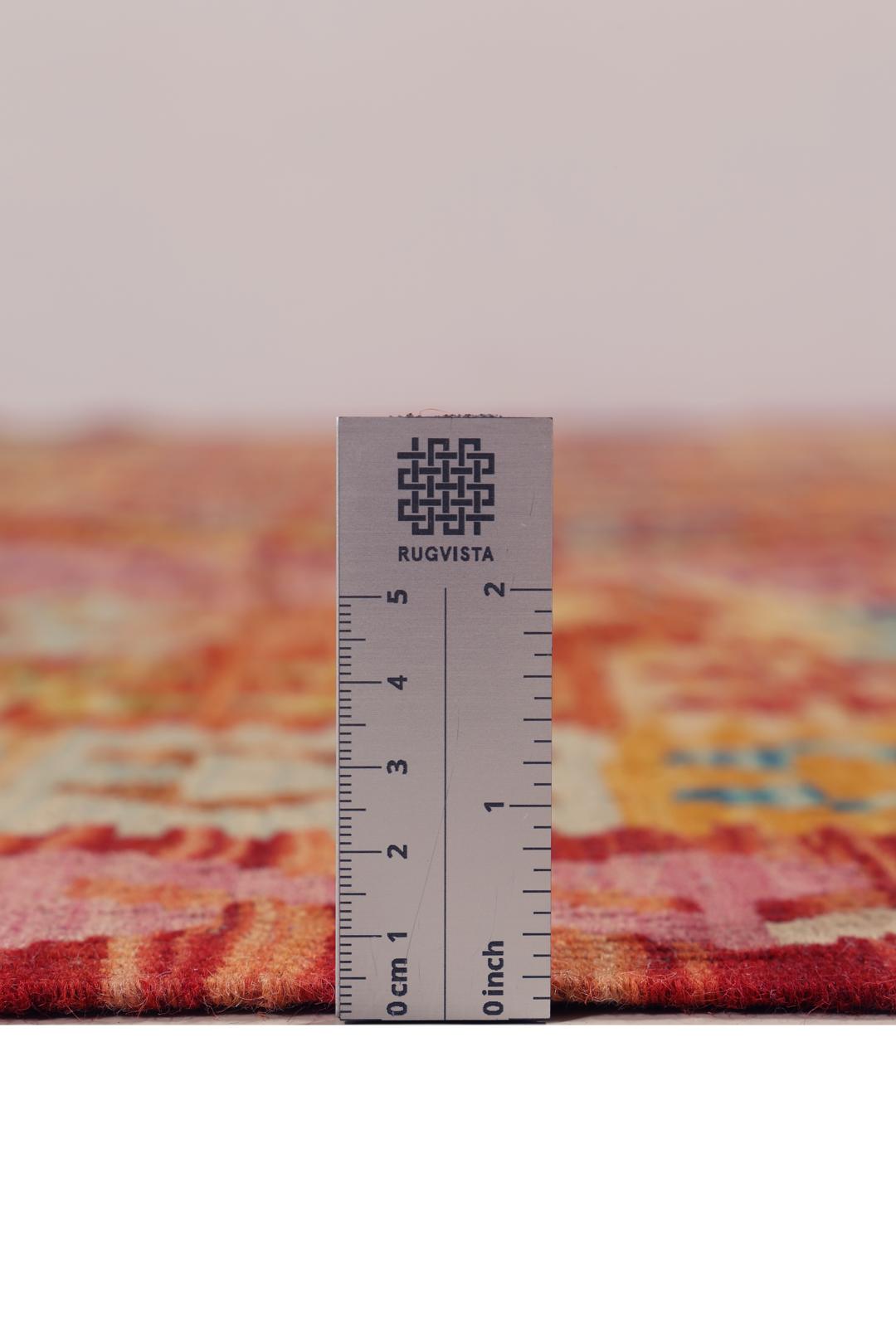
The term 'Kelim' refers to the specific flat-weaving technique where the weft threads are passed through the warp threads to create the design, resulting in a rug that has no pile. This construction method allows for sharp, crisp geometric lines and reversible patterns. Because there is no pile, the rug's durability depends entirely on the quality of the wool and the tightness of the weave, which provides a clean, smooth surface that is highly resistant to wear.
Visually, Afghan Kelims are celebrated for their bold geometric compositions, often featuring diamonds, triangles, and intricate border motifs. The use of vibrant, saturated colours is a hallmark of this tradition, reflecting the natural dyes historically sourced from local plants and minerals. The arrangement of these motifs is not merely decorative; they often carry symbolic meanings related to protection, fertility, and the weaver’s tribal identity.
Today, these rugs are highly sought after by collectors who value the blend of ancient technique and timeless design. Owning an Afghan Kelim is an opportunity to connect with a rich cultural heritage, as every piece tells a story of the migration and creative evolution of the people who made it. It is a testament to the enduring human desire to infuse beauty into the objects we use every day.