Kelim rugs have long been a cornerstone of nomadic life in the Middle East and Central Asia. Traditionally, these flat-woven textiles were used by nomadic tribes for everything from floor coverings and blankets to saddlebags and tent dividers. Their portable nature and durable construction made them essential tools for people on the move, reflecting a culture that valued both functionality and artistic expression.
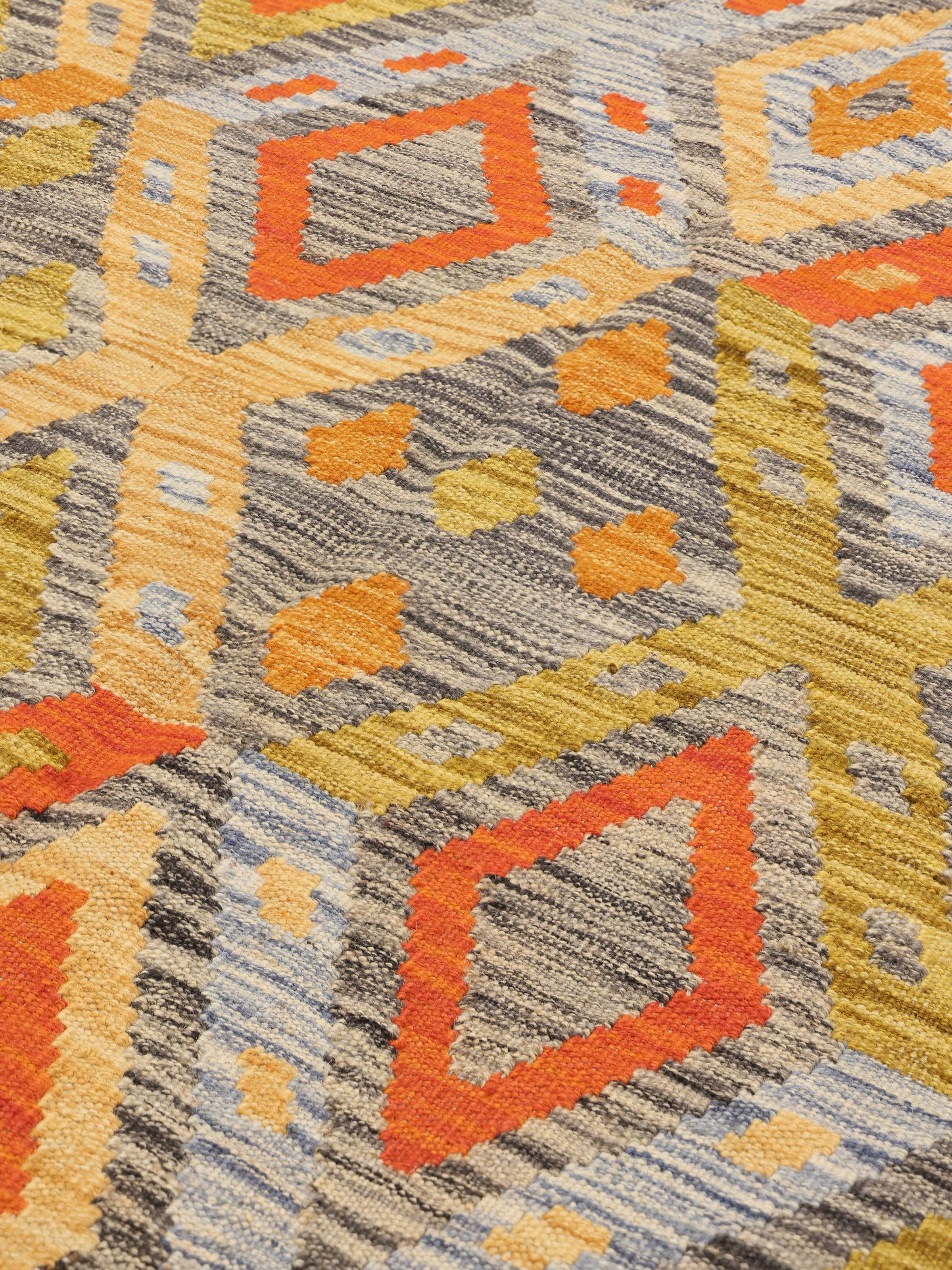
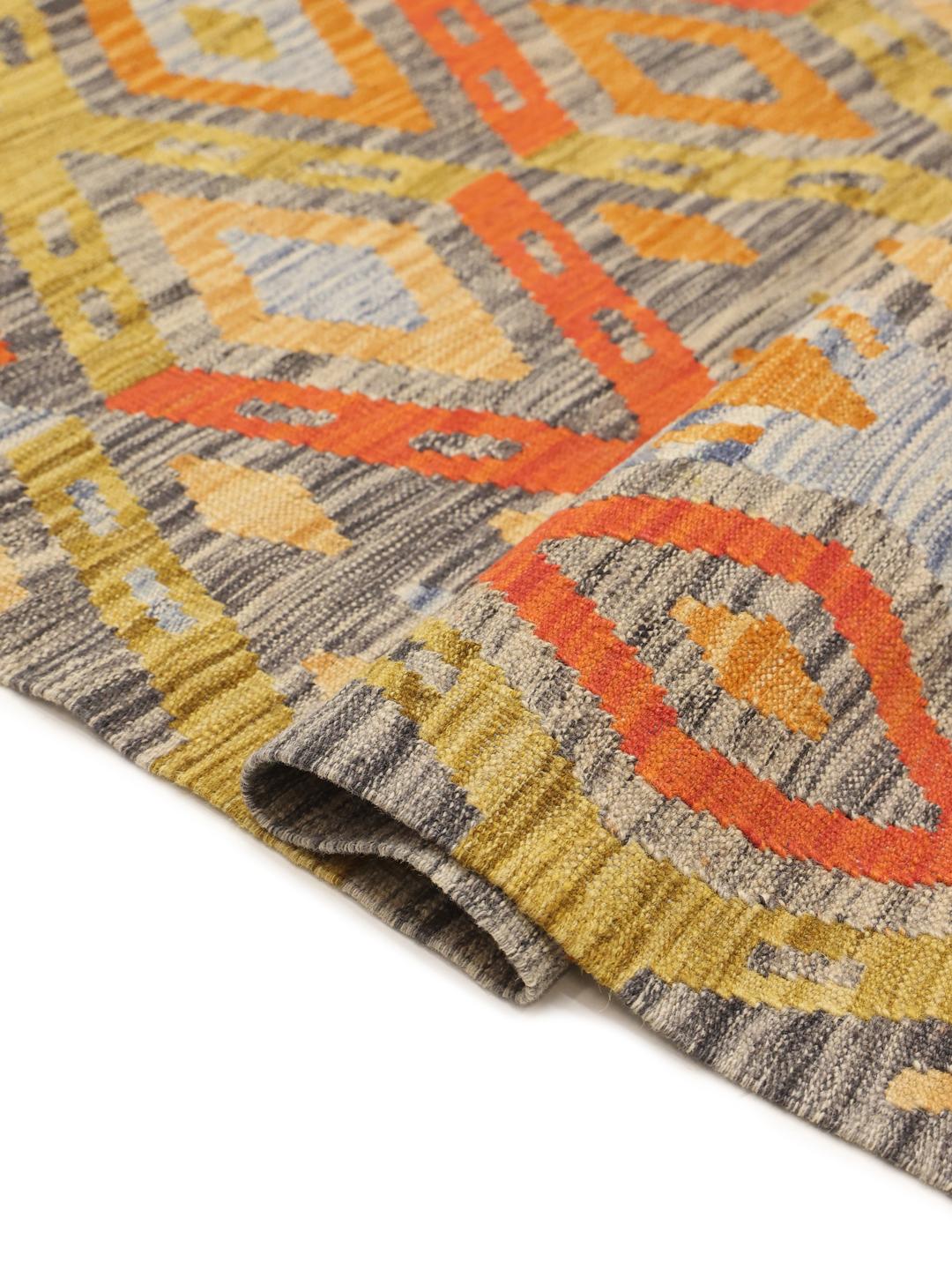
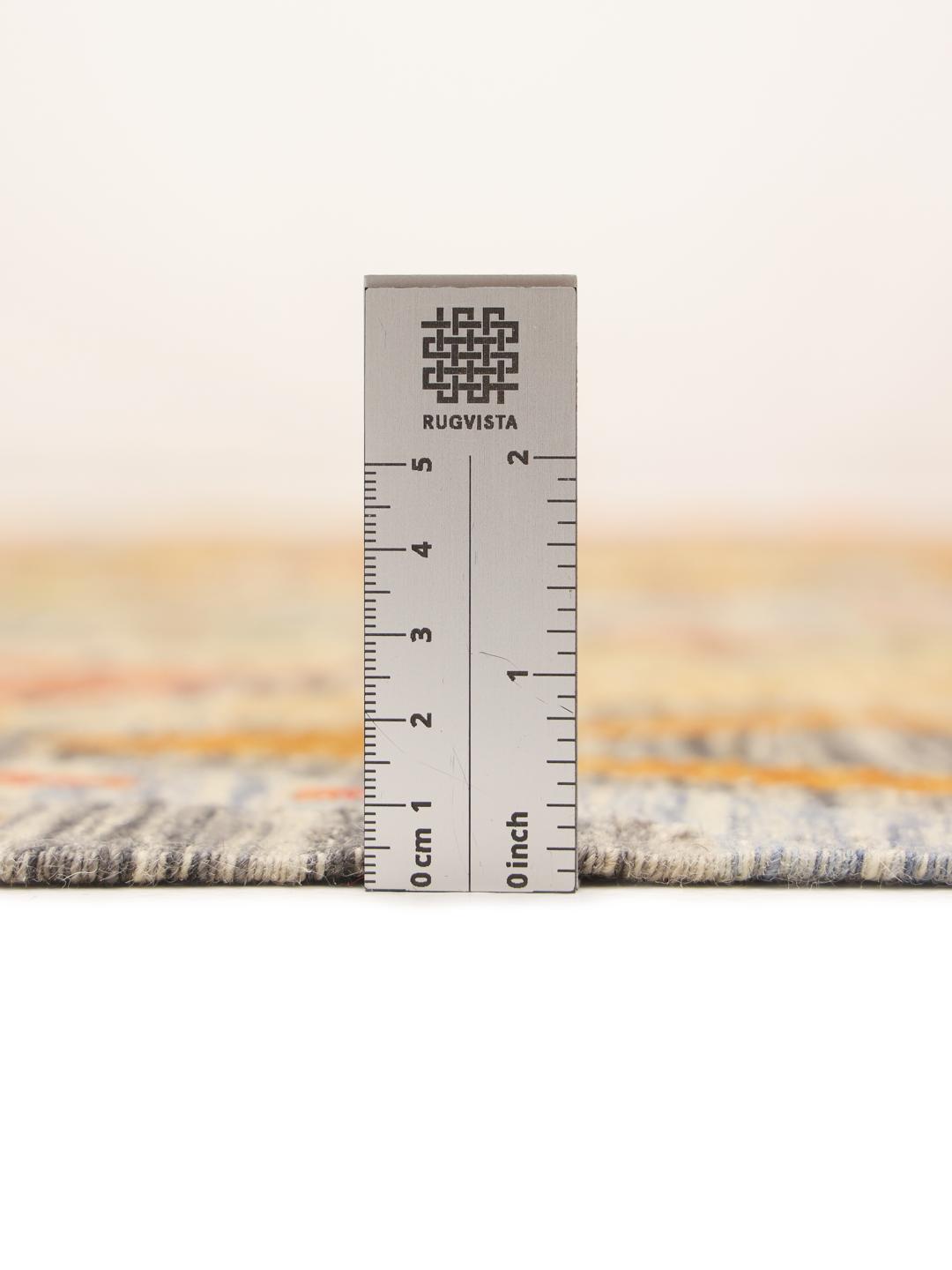
The term 'Kelim' refers specifically to the technique of tapestry weaving where the weft threads are passed back and forth through the warp to create the pattern. Unlike knotted rugs, there is no pile, which results in a thinner and lighter textile. This technique requires an immense amount of precision, as the weaver must constantly manage the colour changes to ensure the geometric motifs remain sharp and clear on both sides of the rug.
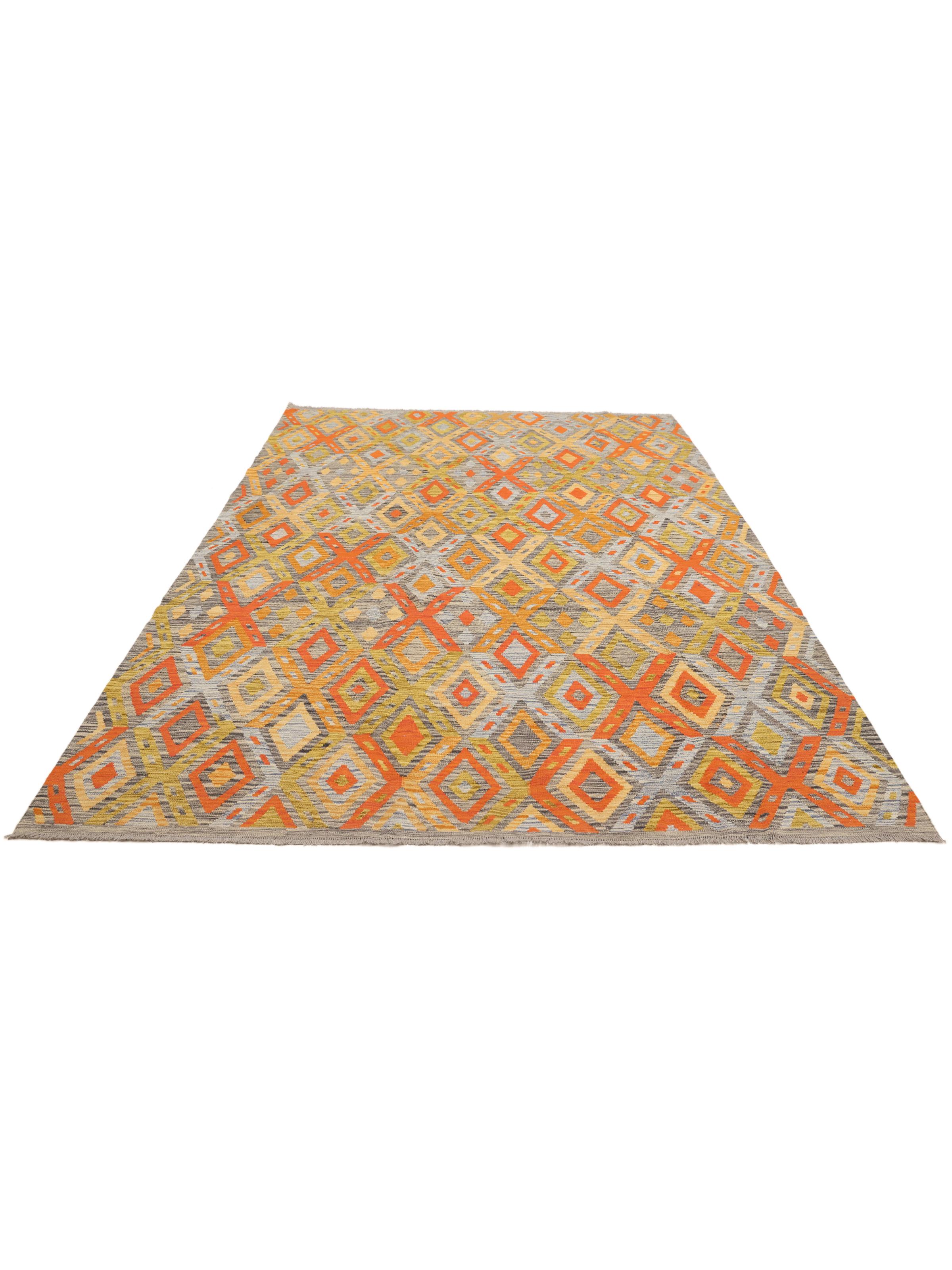
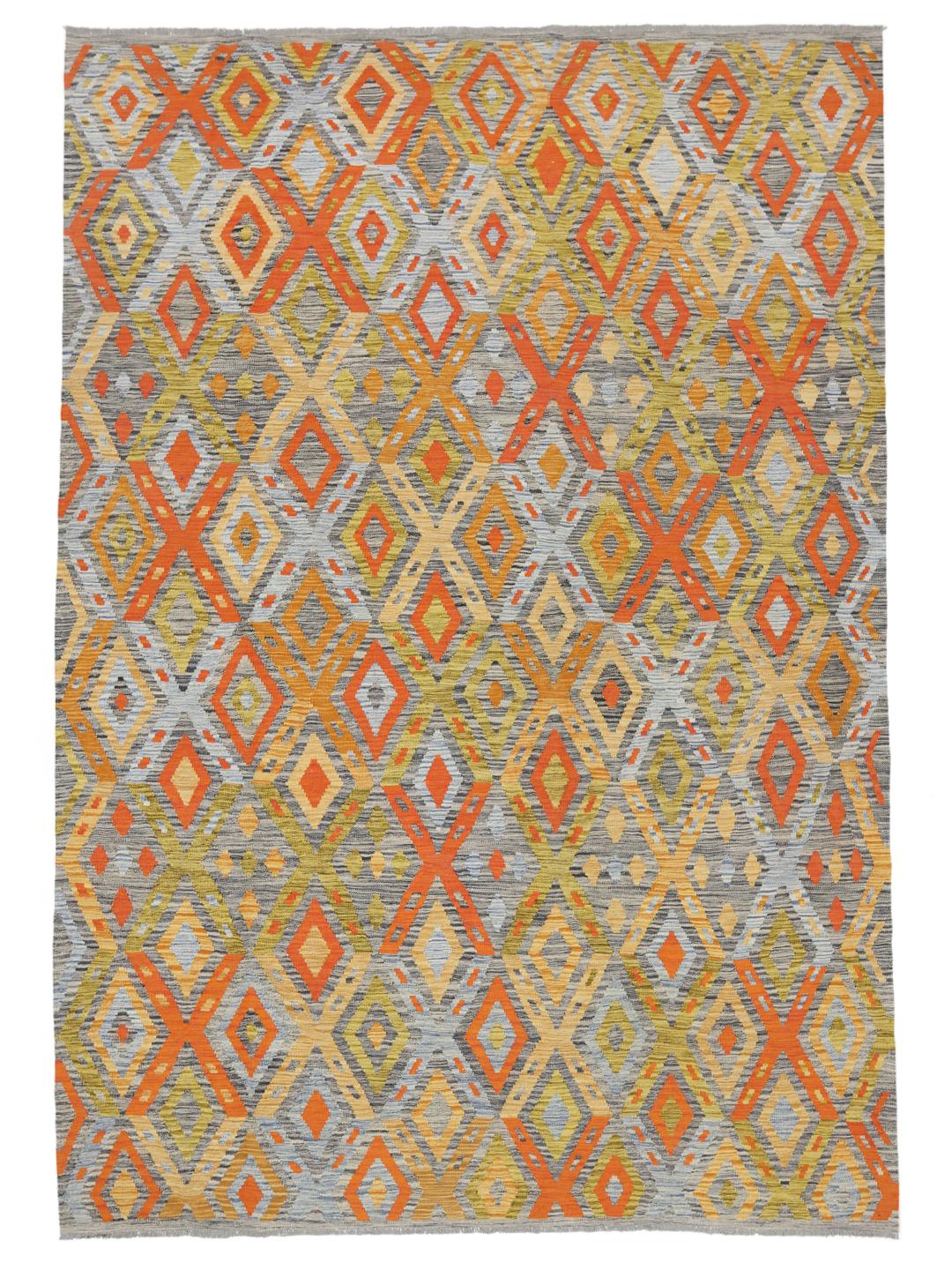
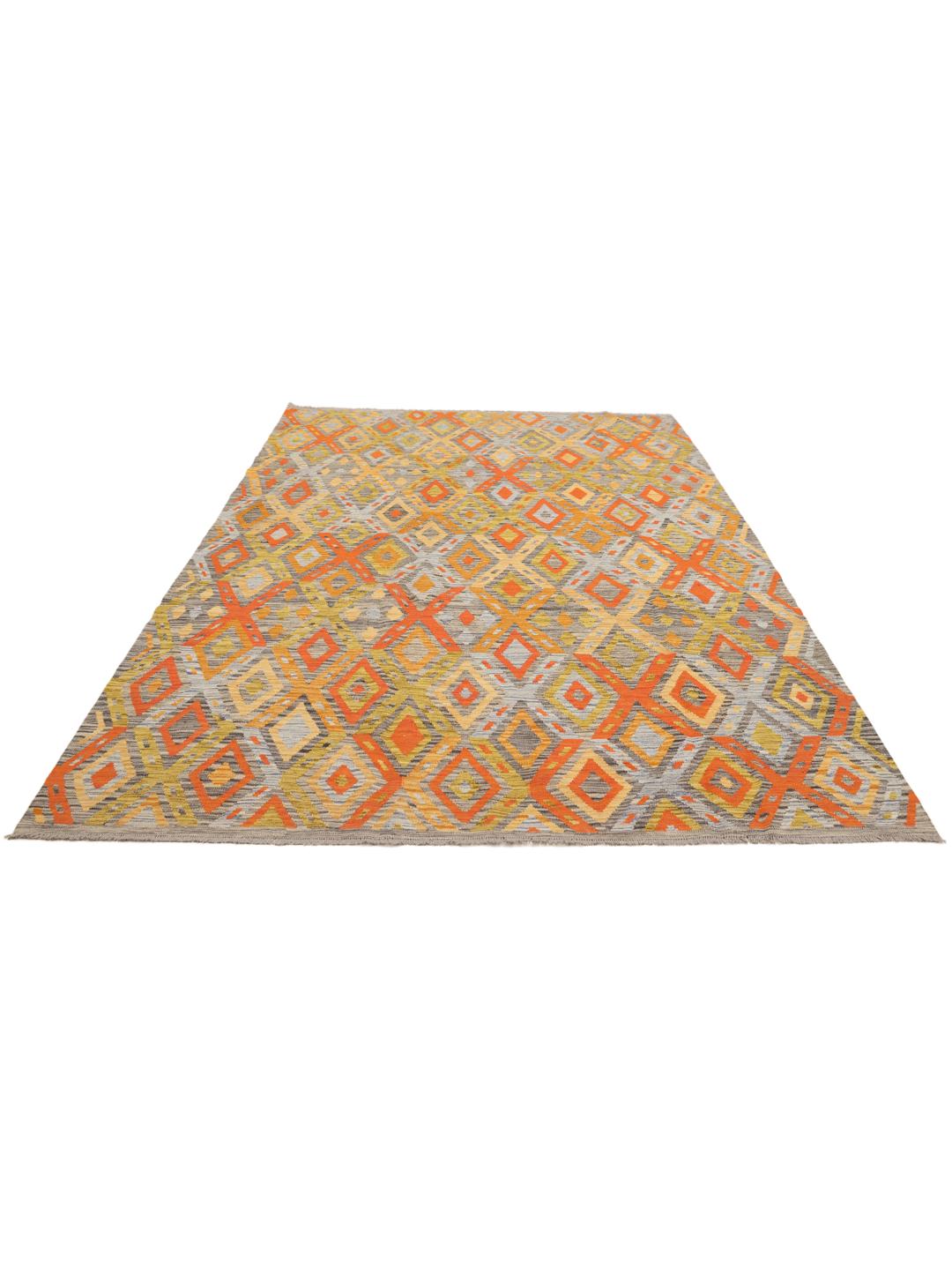
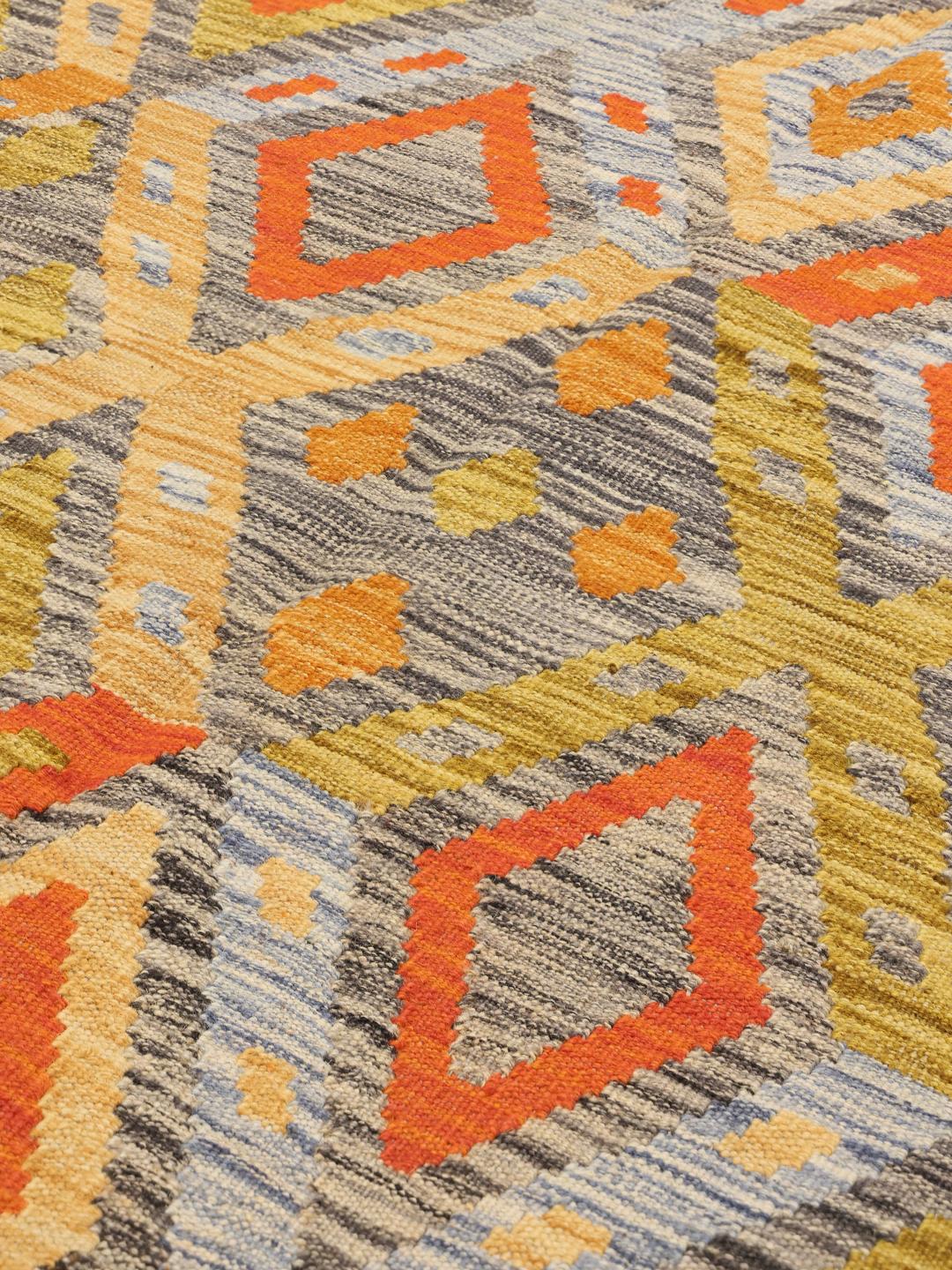
The design language of this Afghan tradition is dominated by bold geometric forms, particularly diamonds, triangles, and stepped motifs. These patterns are not merely decorative; they often carry symbolic meaning, reflecting the weaver's environment or the history of their tribe. In this specific piece, the diamond arrangement is a classic example of how traditional motifs can create a sense of movement and depth, even within a flat-woven surface.
Collecting a Kelim is an investment in a living craft tradition. These rugs are valued for their raw, authentic aesthetic and the story they tell of the region's cultural evolution. By choosing a piece from Afghanistan, you are connecting with a lineage of artisans who have kept these specific techniques alive for generations, ensuring that this heritage continues to be celebrated in modern homes.