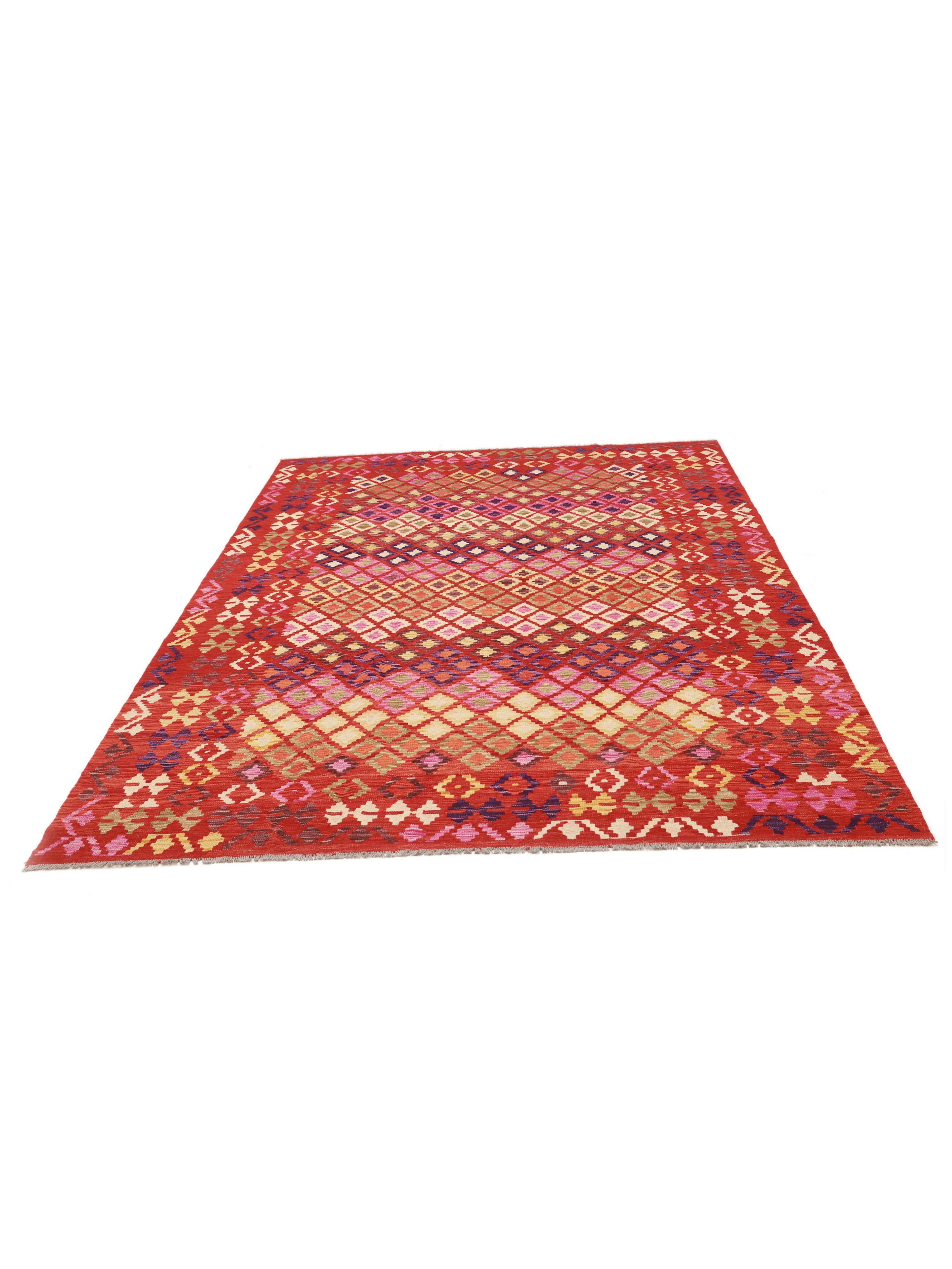
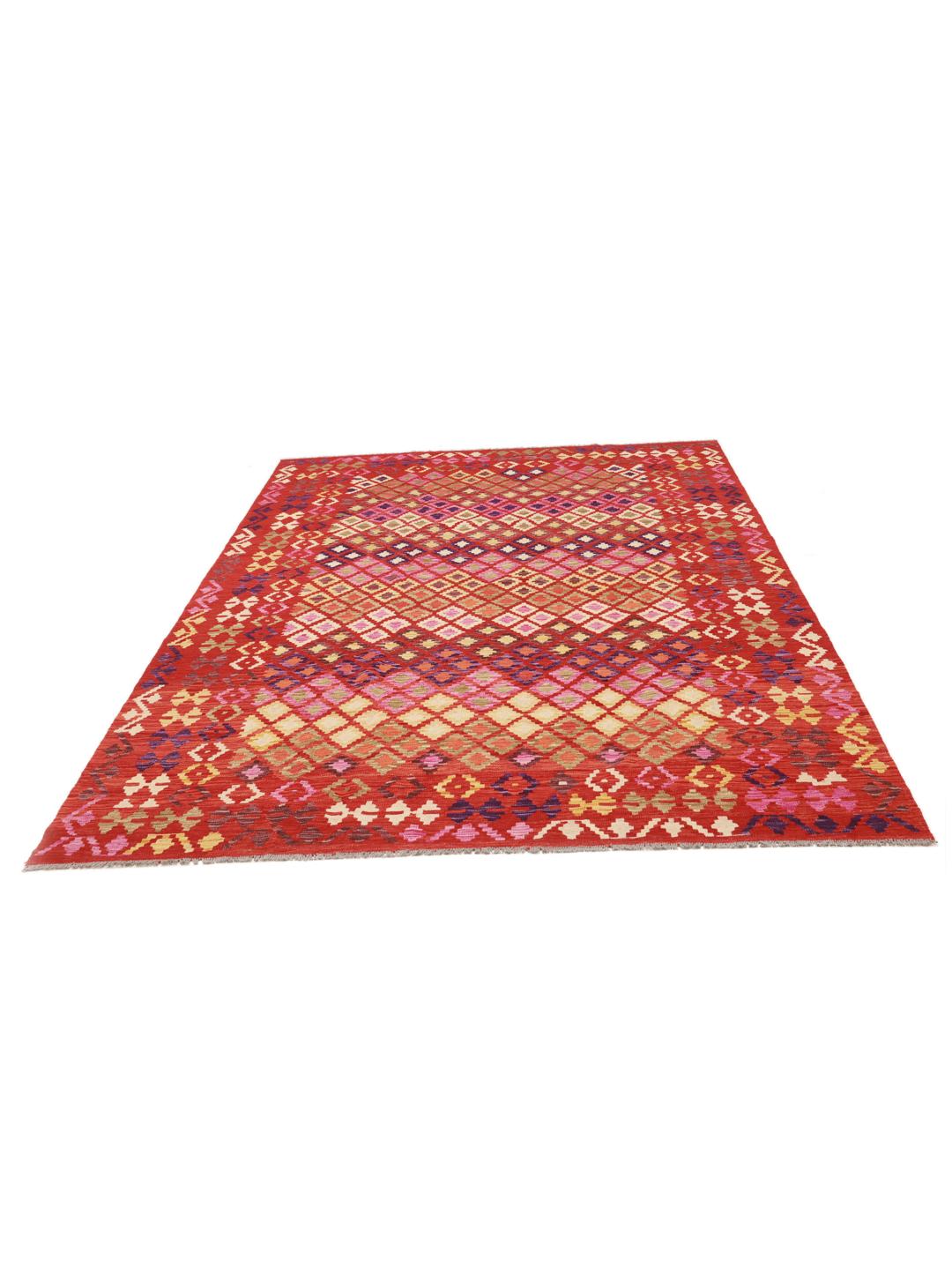
The Kelim tradition in Afghanistan is deeply rooted in the nomadic history of the region, where flat-woven textiles were essential for everyday life. These rugs were originally crafted by tribal groups as versatile, portable coverings that could serve as floor mats, blankets, or wall hangings. The evolution of these styles has led to the distinct 'Old Style' designs we see today, which honour traditional motifs while adapting to contemporary home aesthetics.
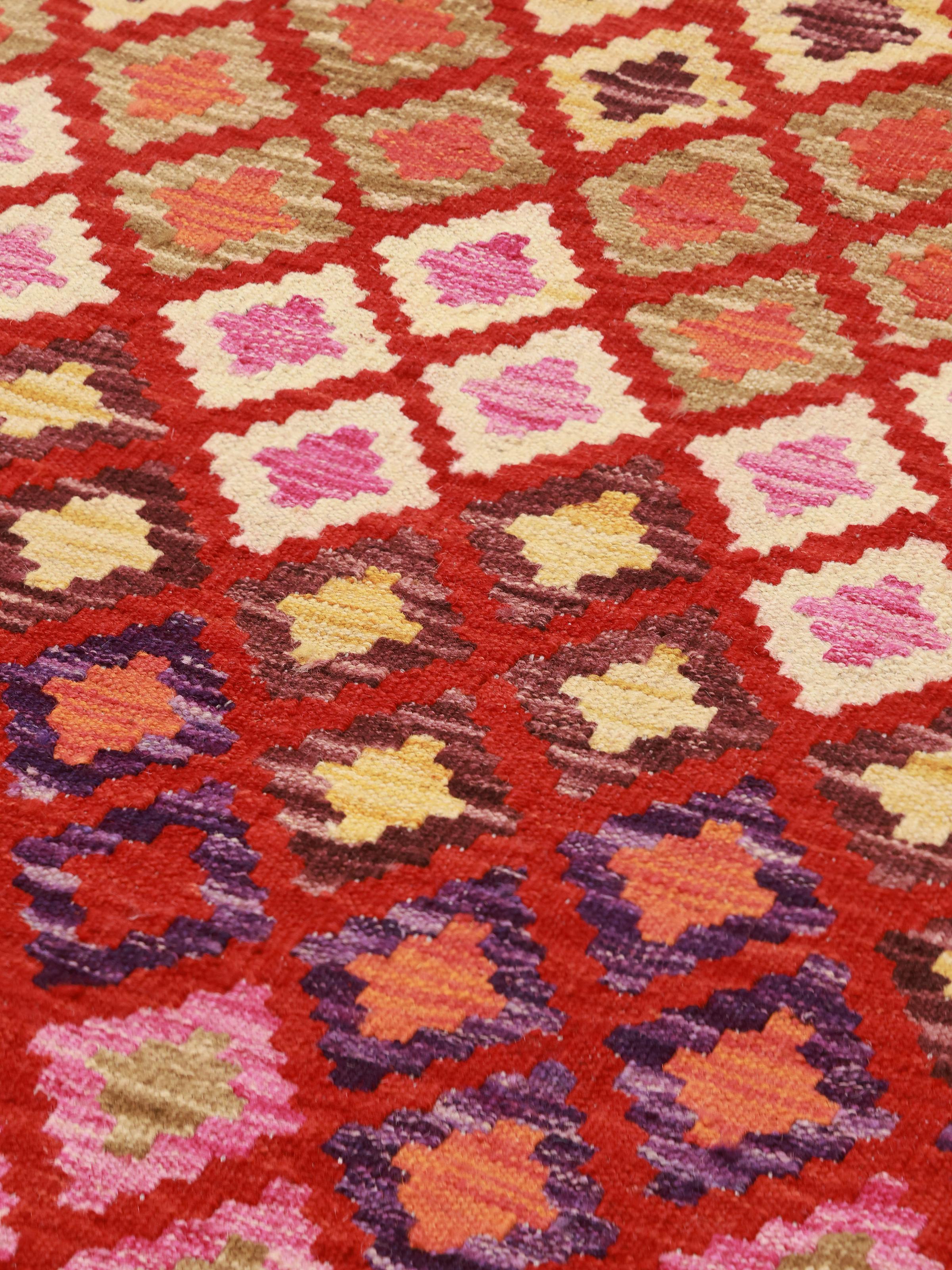
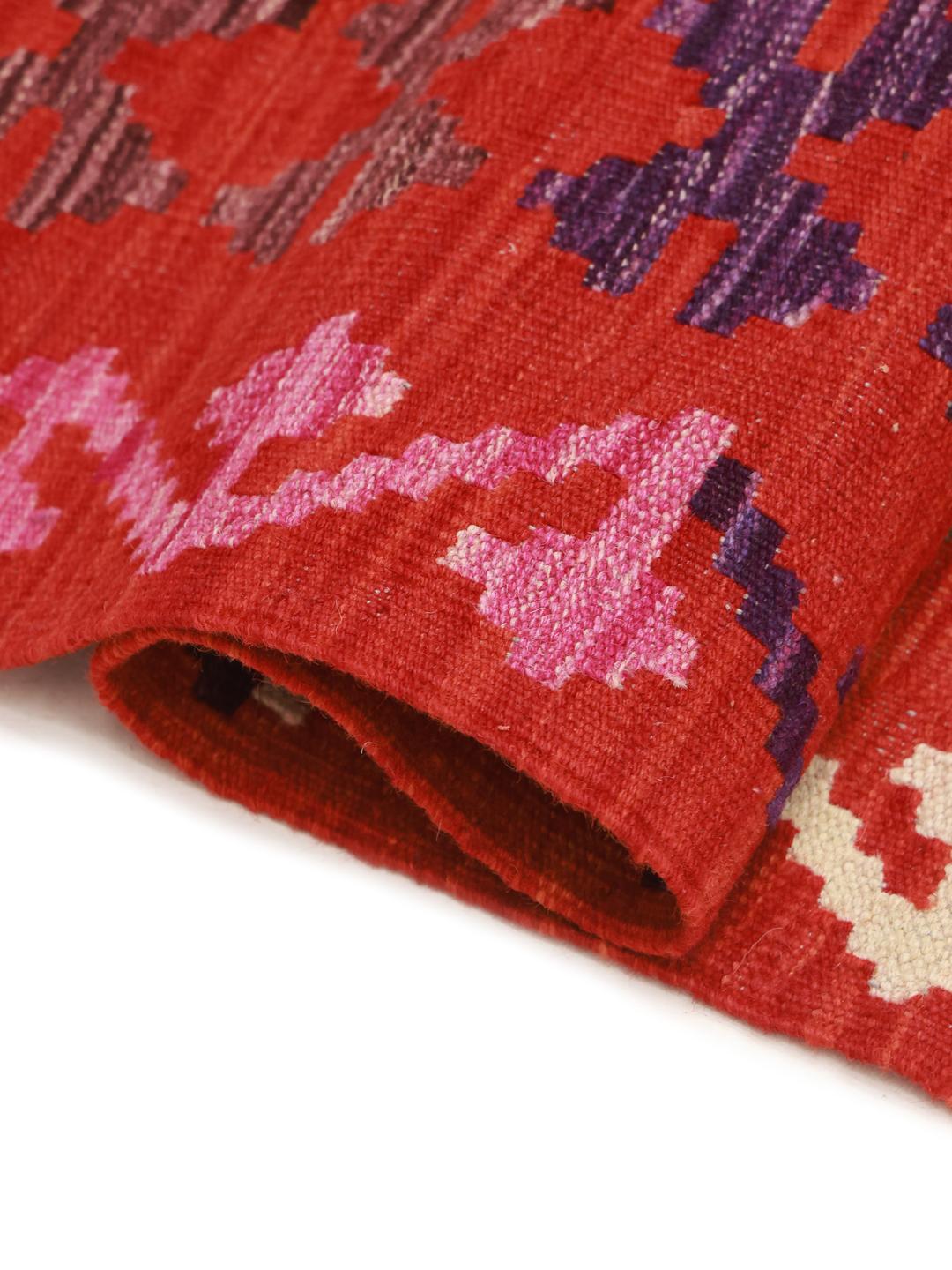
The term 'Kelim' refers specifically to the flat-weaving technique where the warp and weft threads are interlaced to form the pattern. Unlike knotted pile rugs, this method creates a smooth, reversible surface that is incredibly durable. This technique is a hallmark of regional craft, requiring an intimate knowledge of thread tension and colour placement to ensure the geometric patterns remain crisp and aligned throughout the weaving process.
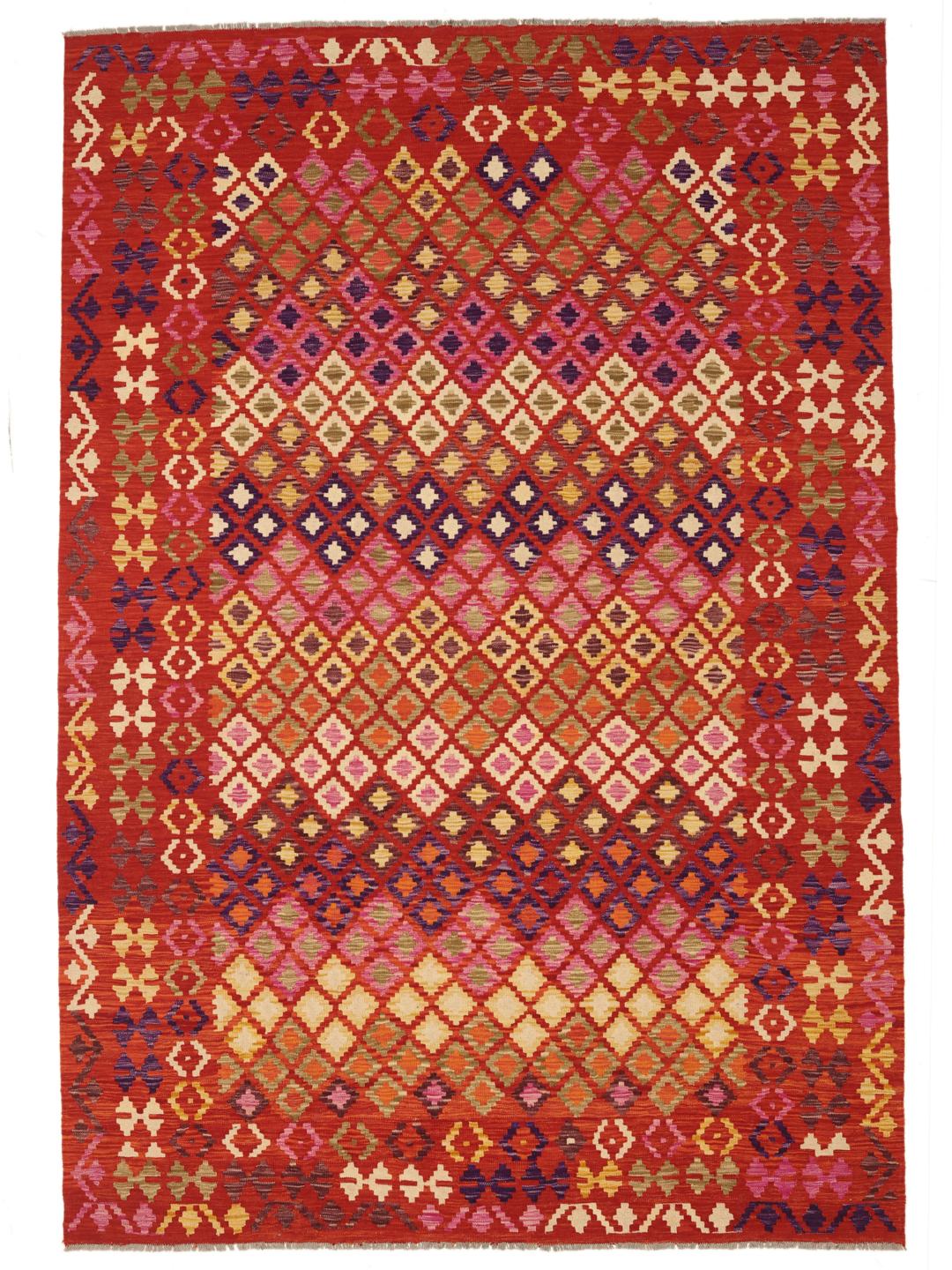
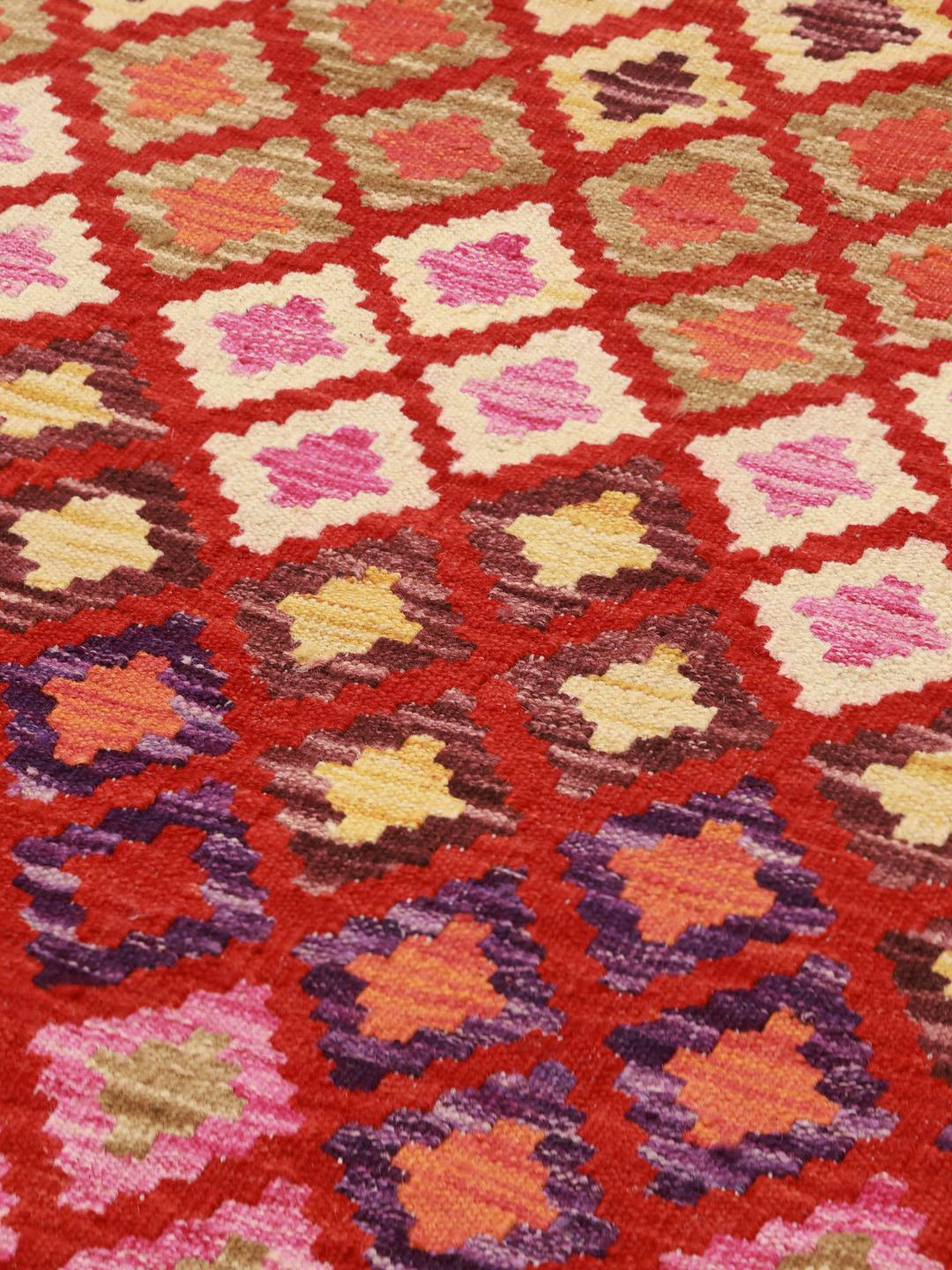
Signature elements of these rugs include the repetitive use of geometric shapes, such as diamonds and triangles, which are often arranged in rows or larger, complex medallions. These motifs are not merely decorative but are deeply symbolic, often representing tribal identity or protection. The bold use of red combined with secondary tones like purple, orange, and beige is a classic signature of Afghan weaving, reflecting the natural dyes historically available in the region.
Collectors value these pieces for their authenticity and the sheer skill required to produce them without the aid of a loom-based pattern guide. Owning an Afghan Kelim is an opportunity to connect with a long-standing textile tradition that prioritises utility, beauty, and cultural expression. It represents a commitment to supporting human-centric craft and preserving methods that have been passed down through generations.