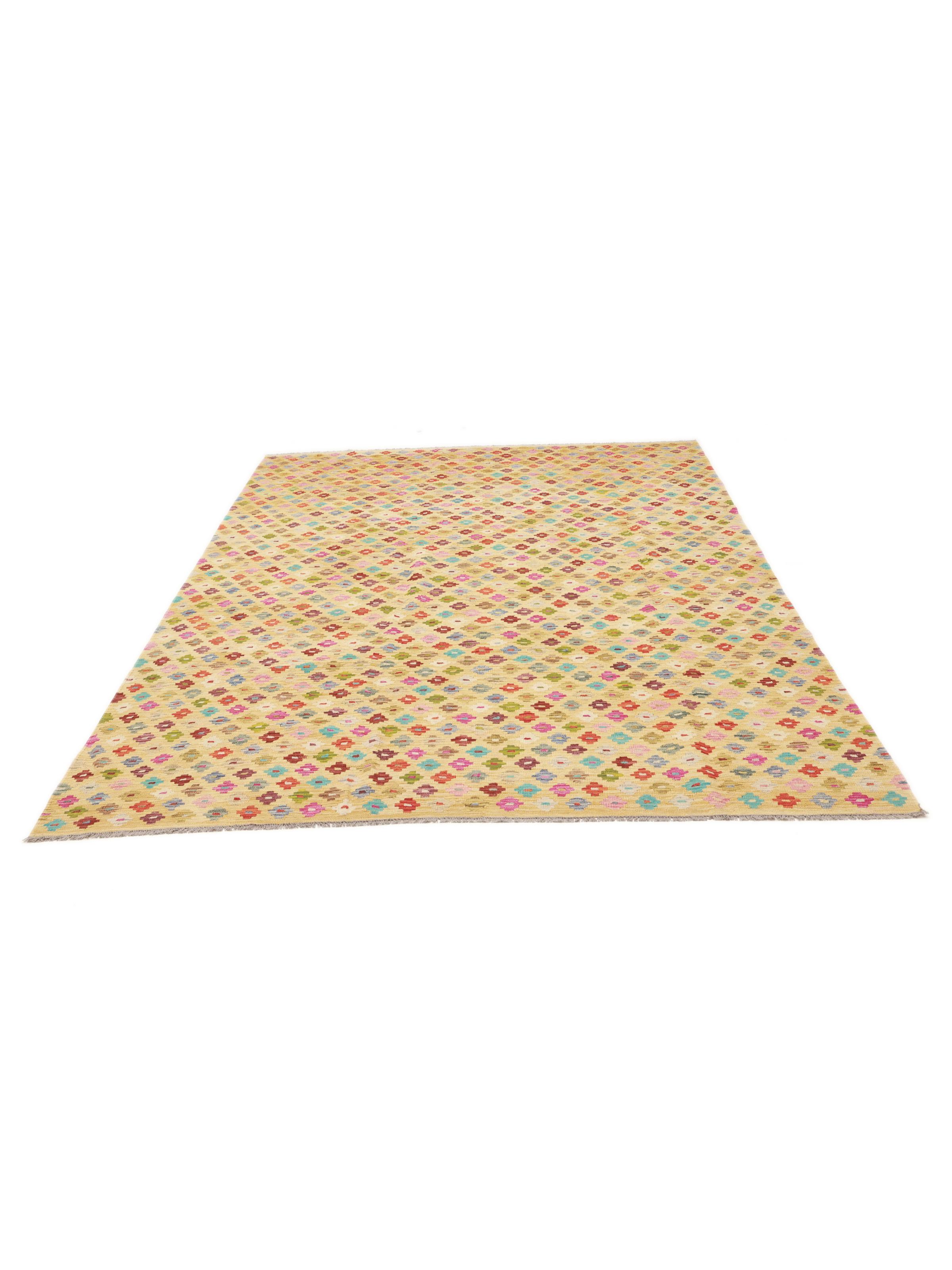
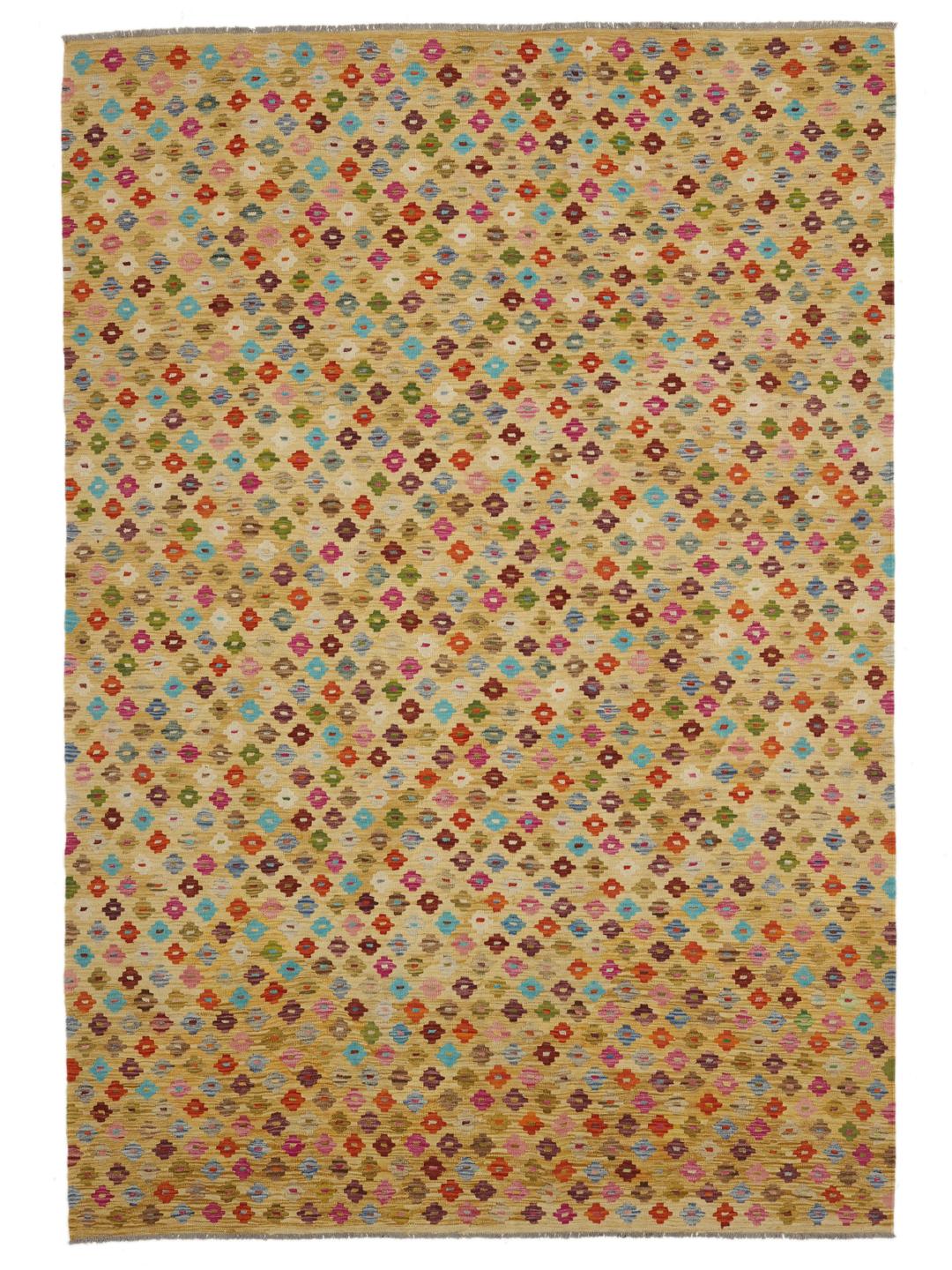
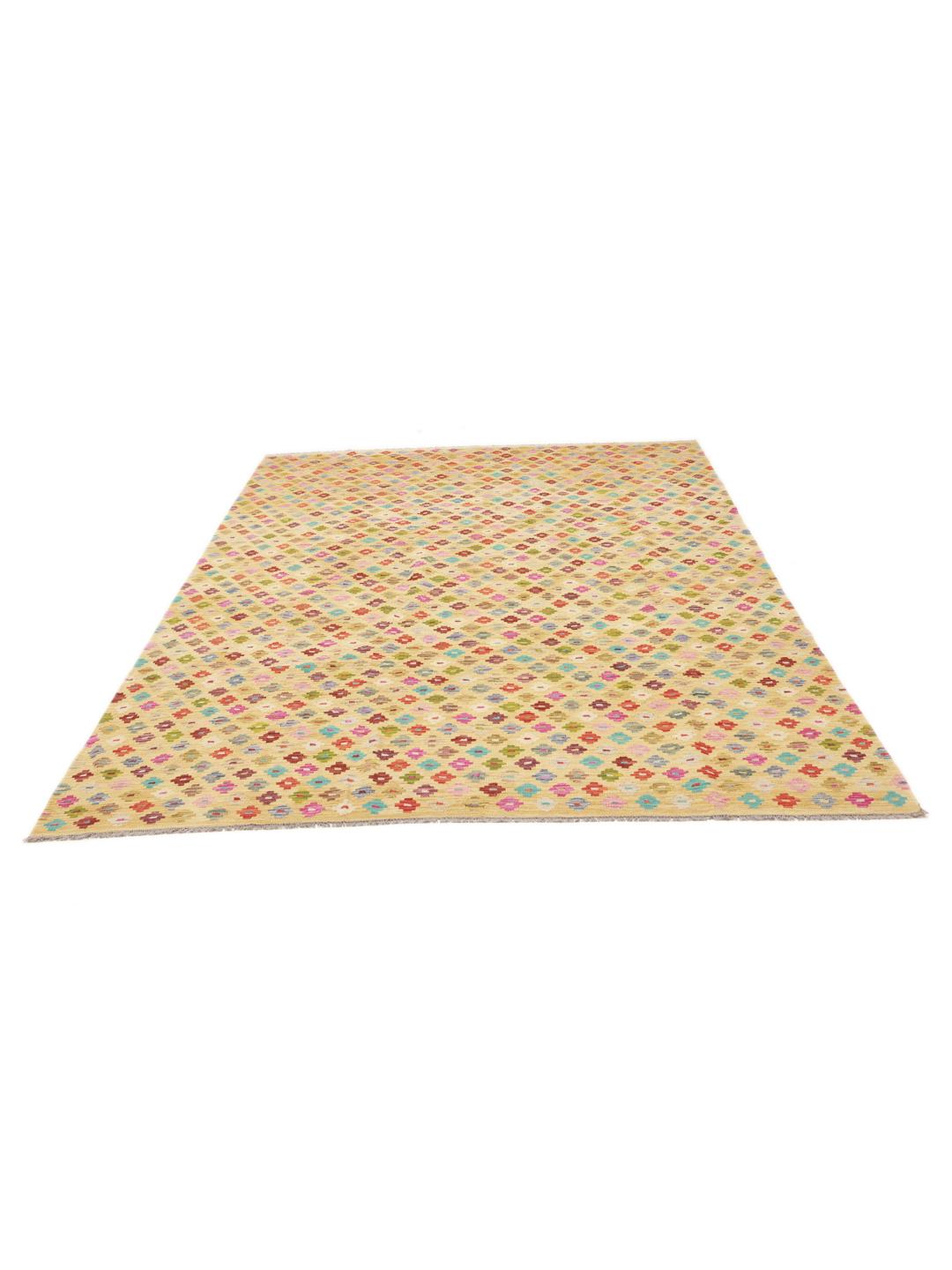
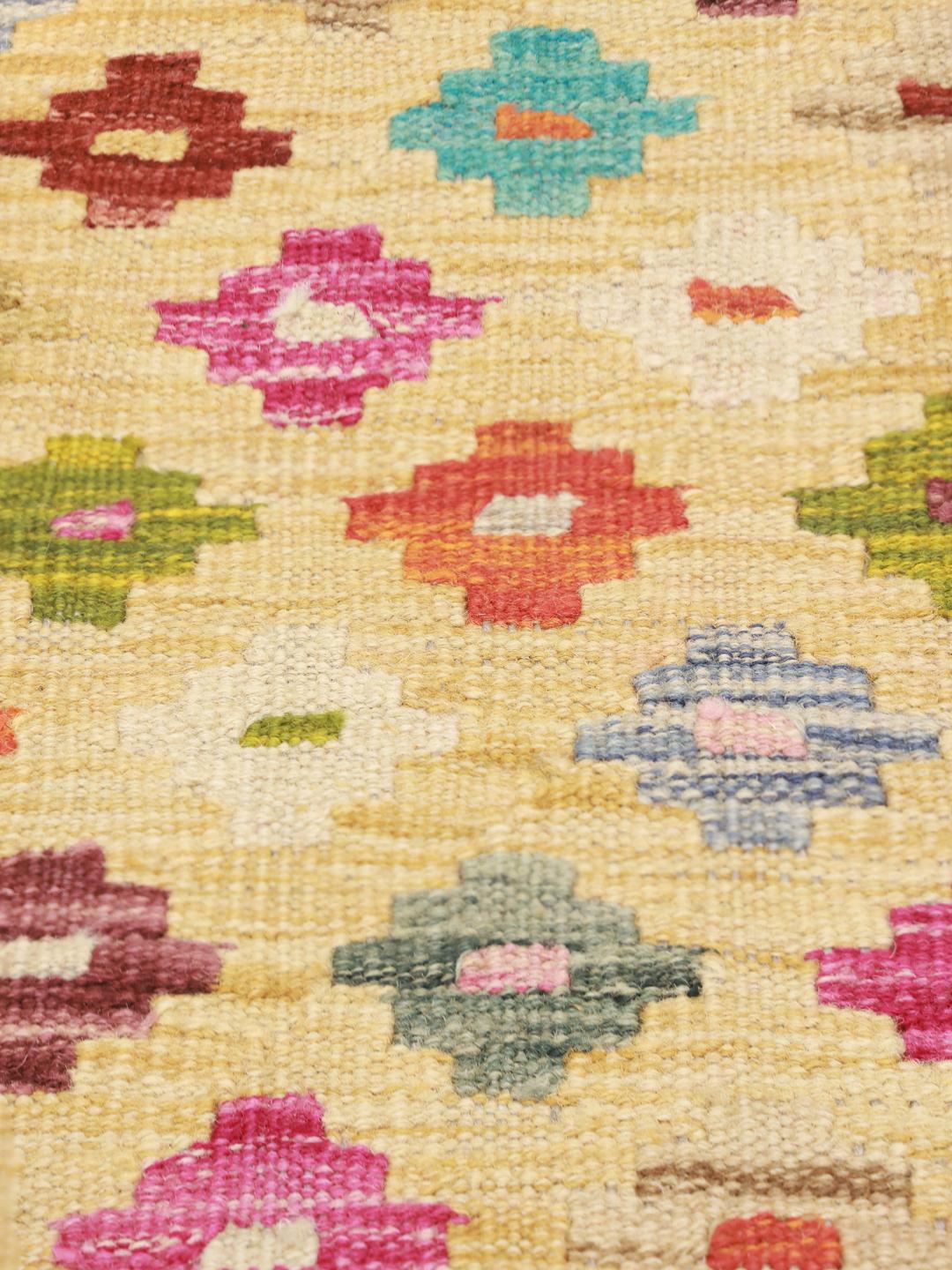
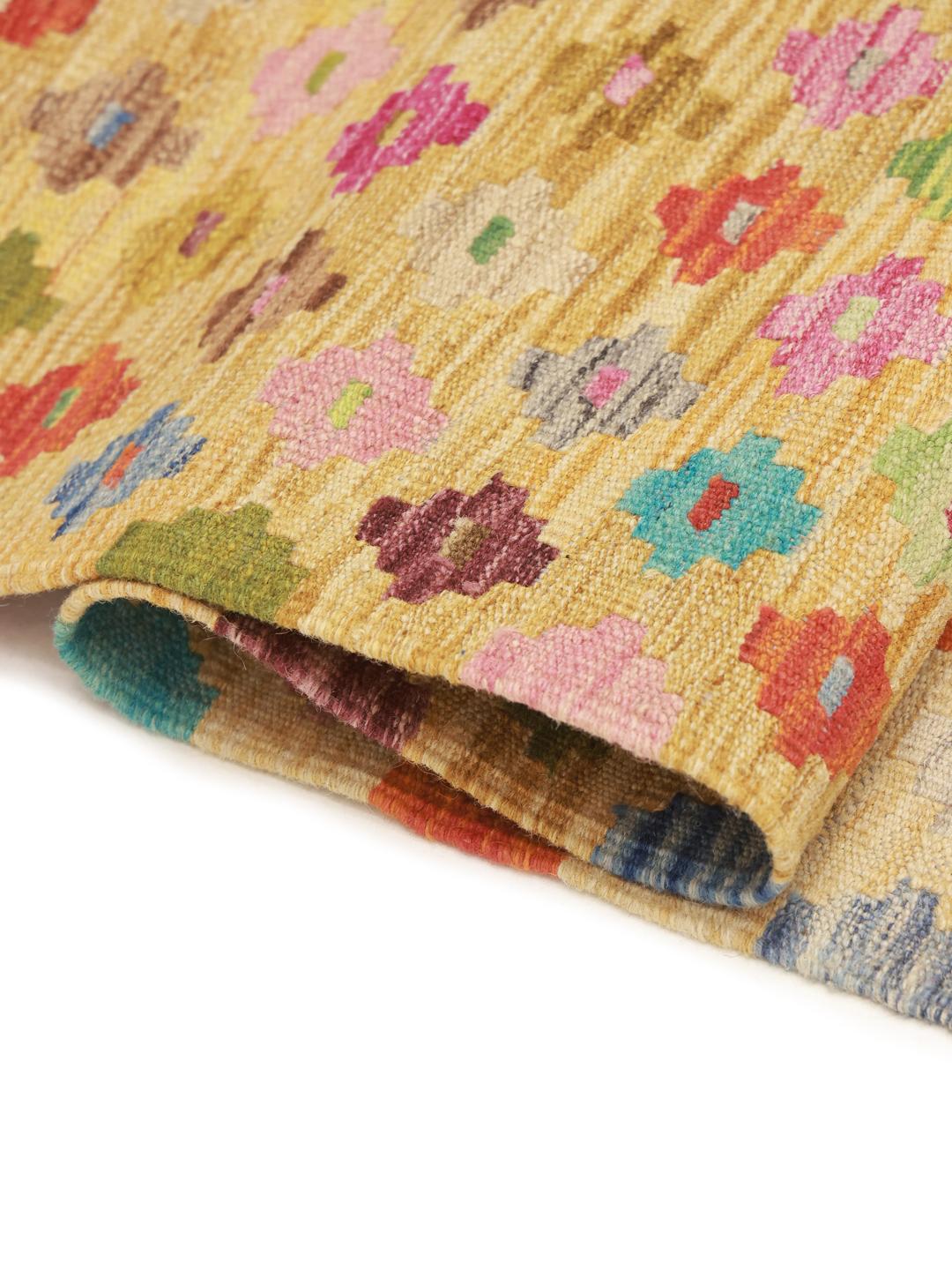
Kelim rugs have a long and storied history across the Middle East and Central Asia, serving as functional textiles that doubled as expressions of regional identity. The Afghan tradition, in particular, is celebrated for its earthy, grounded tones and geometric clarity, often utilising the natural characteristics of local wool to create durable, long-lasting floor coverings.
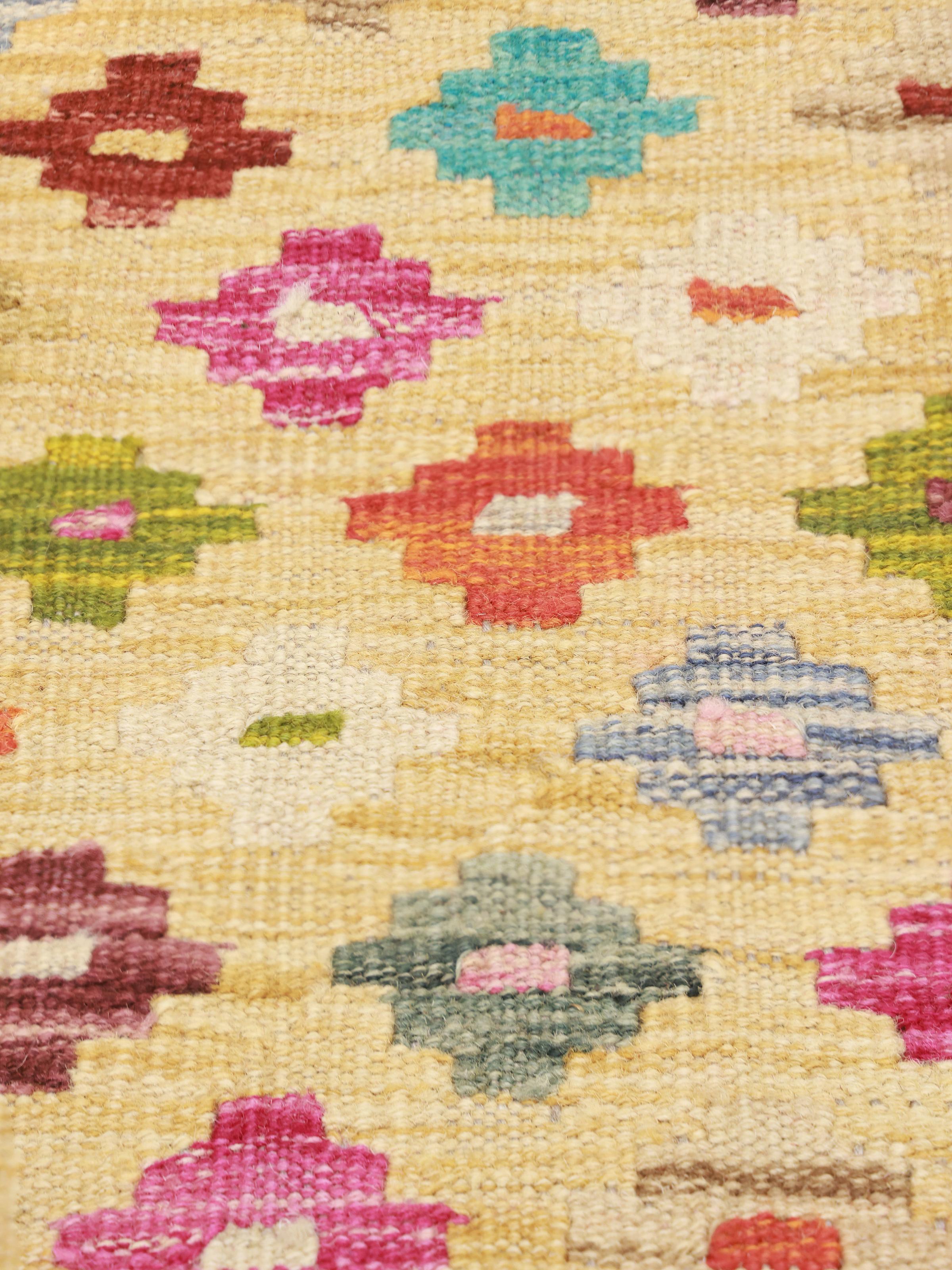
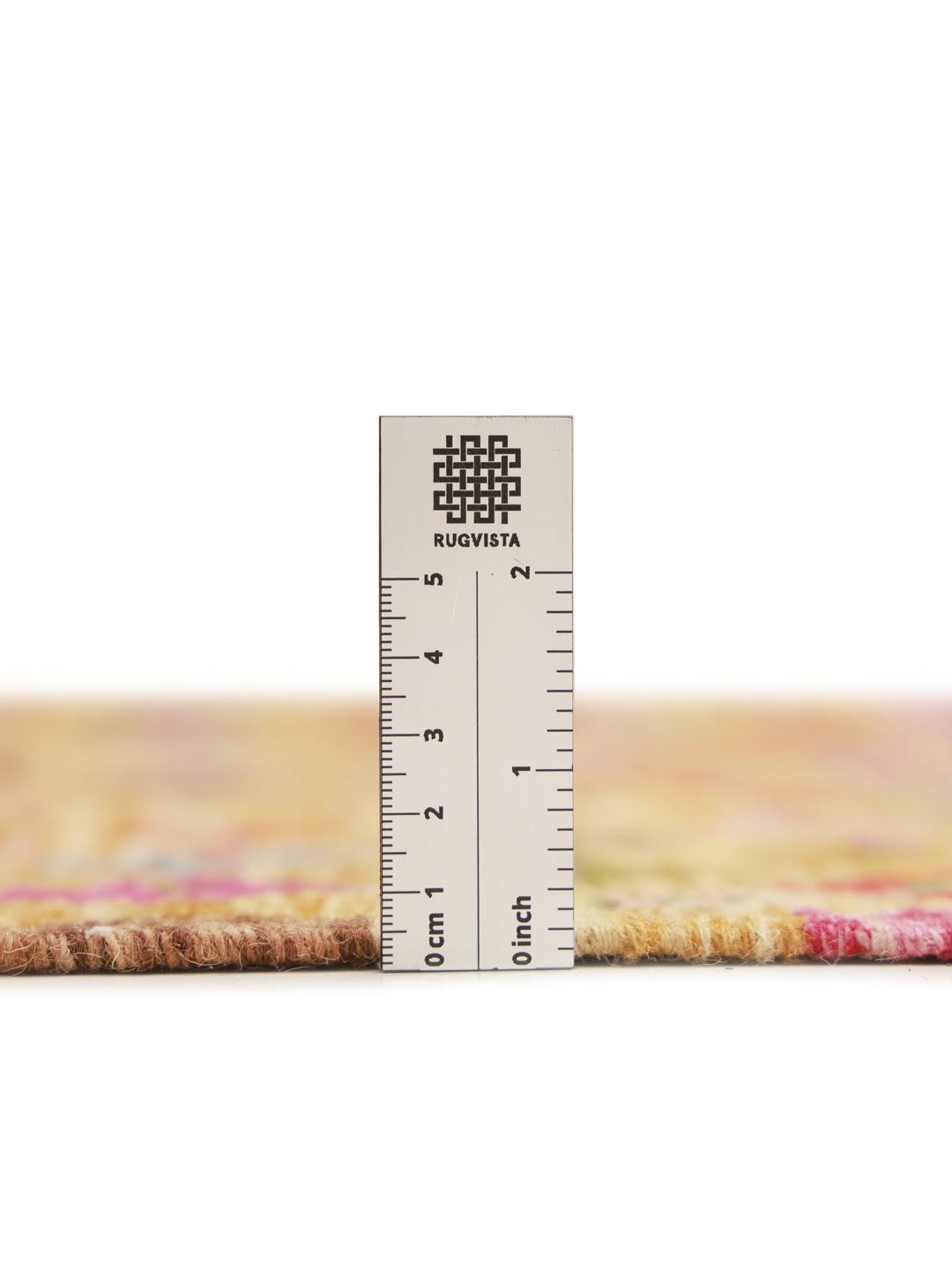
The term 'Kelim' refers to a flat-woven textile, meaning the rug lacks a raised pile. This technique is one of the oldest methods of rug making, requiring the weaver to create the pattern by changing the colours of the weft threads as they go. This produces a rug that is reversible and remarkably resilient, making it a staple of nomadic life where textiles needed to be both beautiful and portable.
Design-wise, these rugs are defined by their rhythmic, repeating motifs. While many traditions favour bold, large-scale medallions, the Afghan style often incorporates smaller, intricate shapes that fill the field with a sense of movement and energy. The use of vibrant, contrasting colours against a neutral background is a classic hallmark, intended to brighten the interior of traditional dwellings.
Collecting an Afghan Kelim is more than just a decor choice; it is an investment in a living heritage. These rugs are valued for their honesty of construction and the profound skill required to maintain pattern symmetry without the aid of modern technology. By bringing such a piece into your home, you are preserving a craft tradition that has been passed down through generations of dedicated artisans.