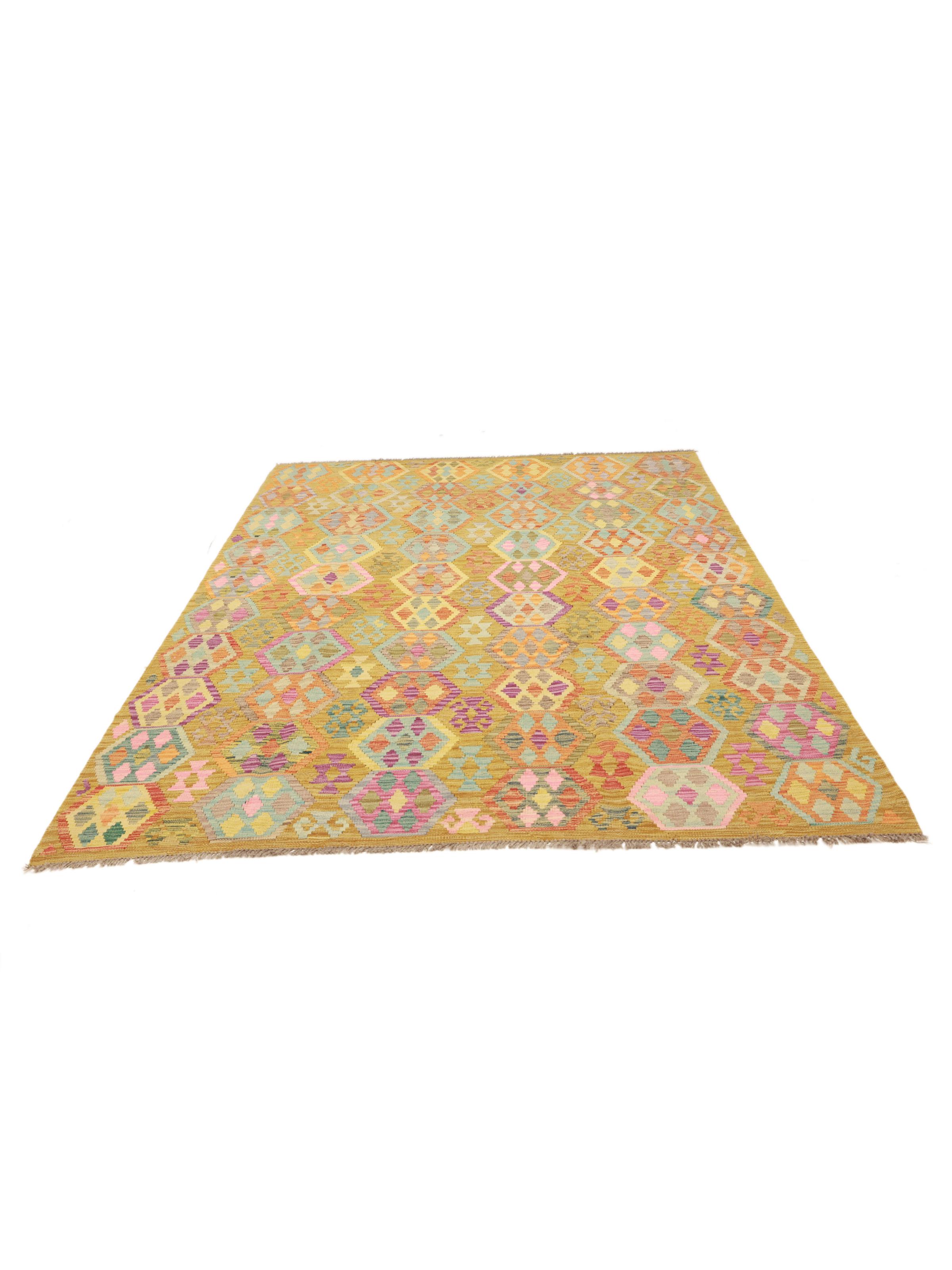
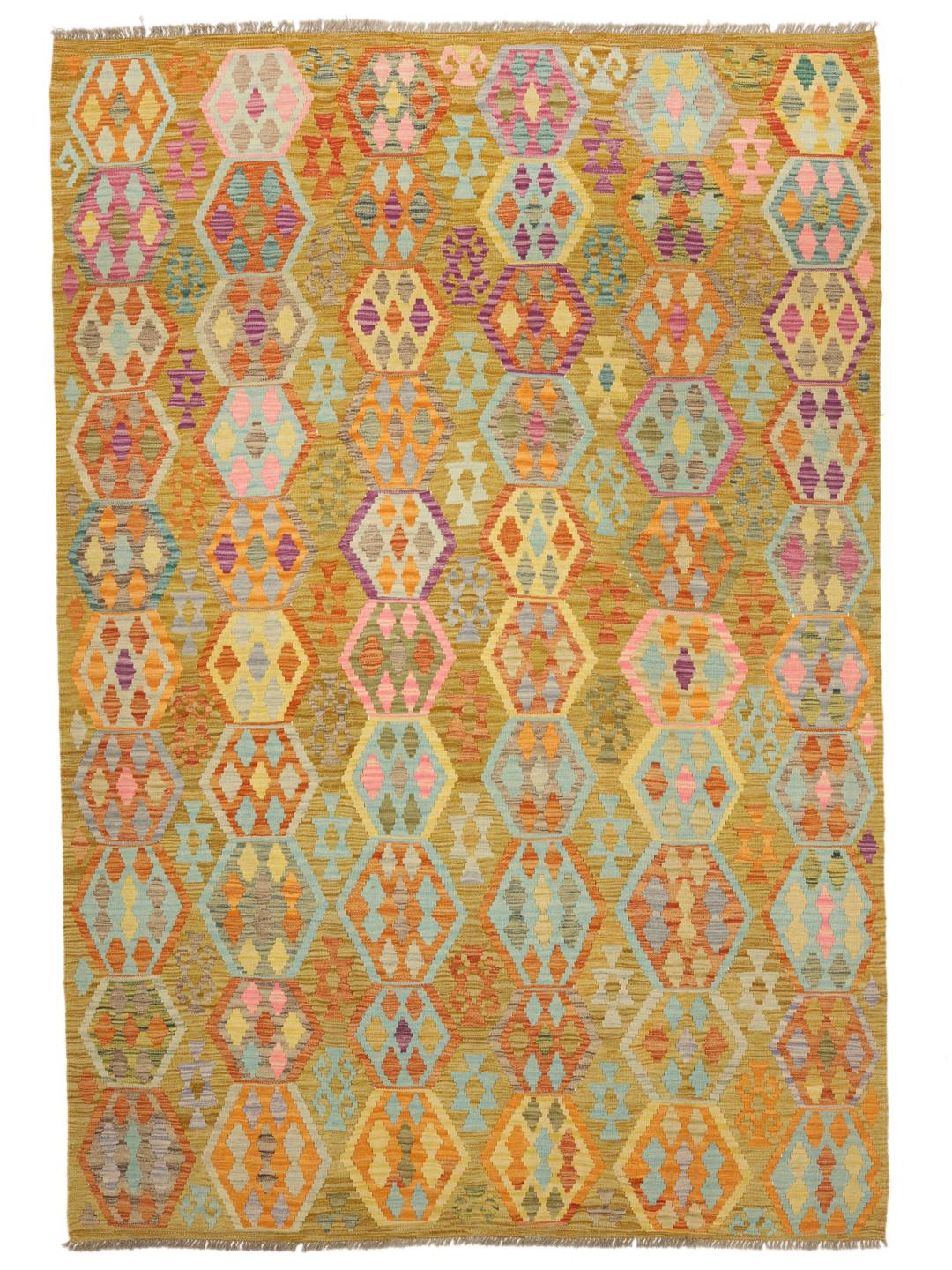
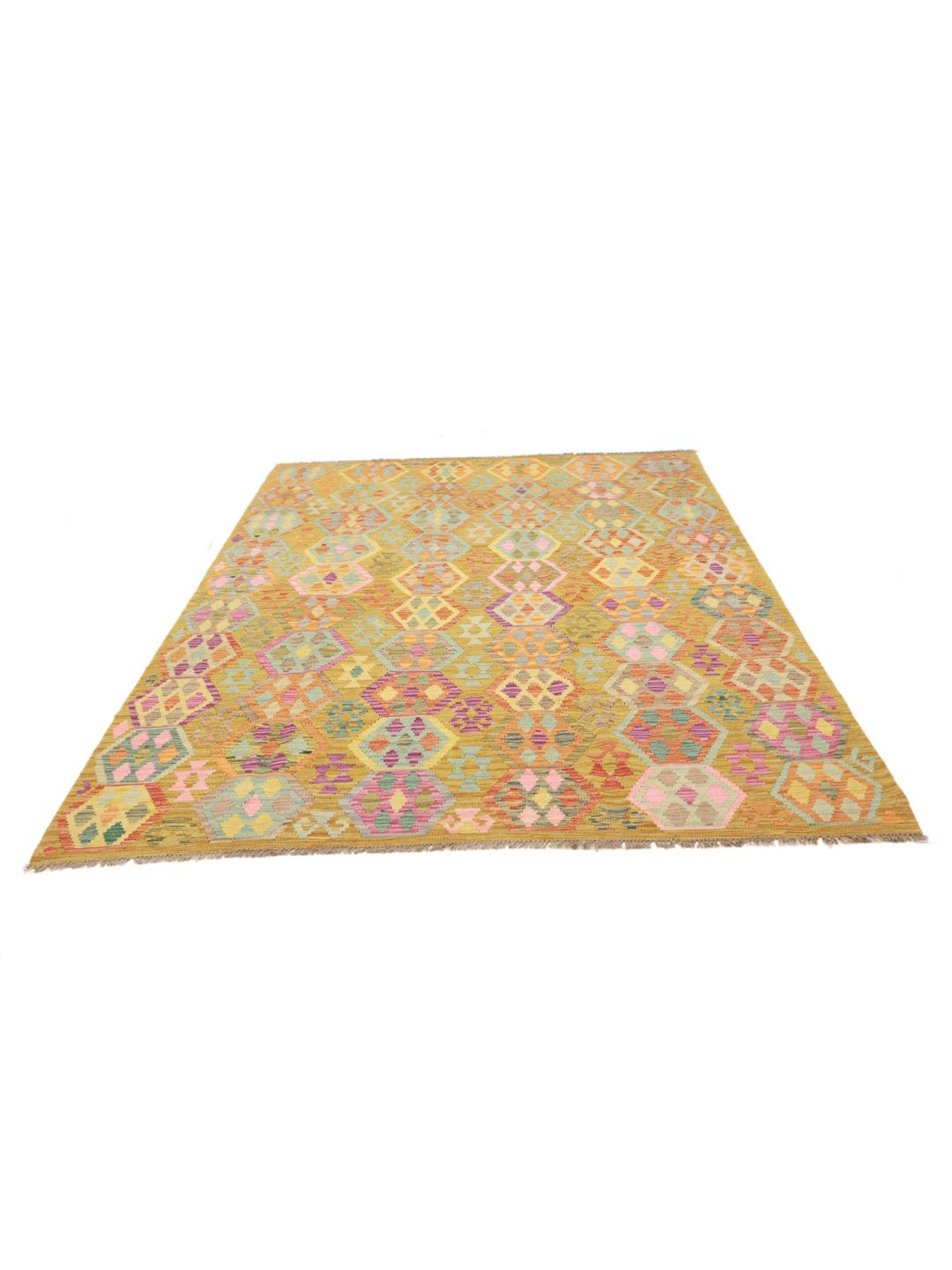
The Kelim Afghan rug tradition is deeply rooted in the nomadic and semi-nomadic cultures of Afghanistan. These flat-woven textiles have historically served as essential functional items for families, used as floor coverings, wall hangings, and storage bags. The migration of these weaving techniques across the region has allowed for a diverse evolution of styles, yet the core commitment to hand-woven excellence remains a constant in Afghan artistry.
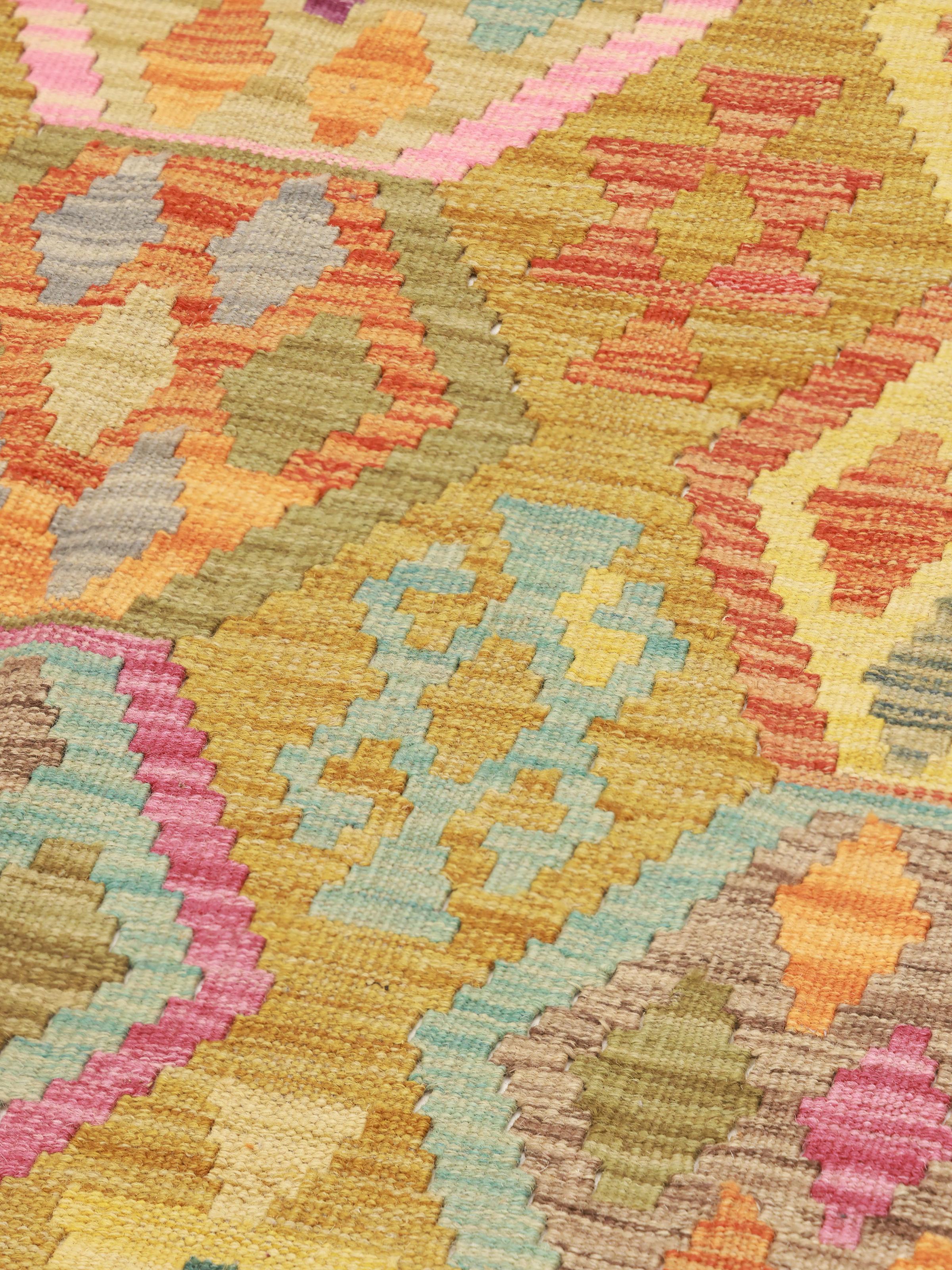
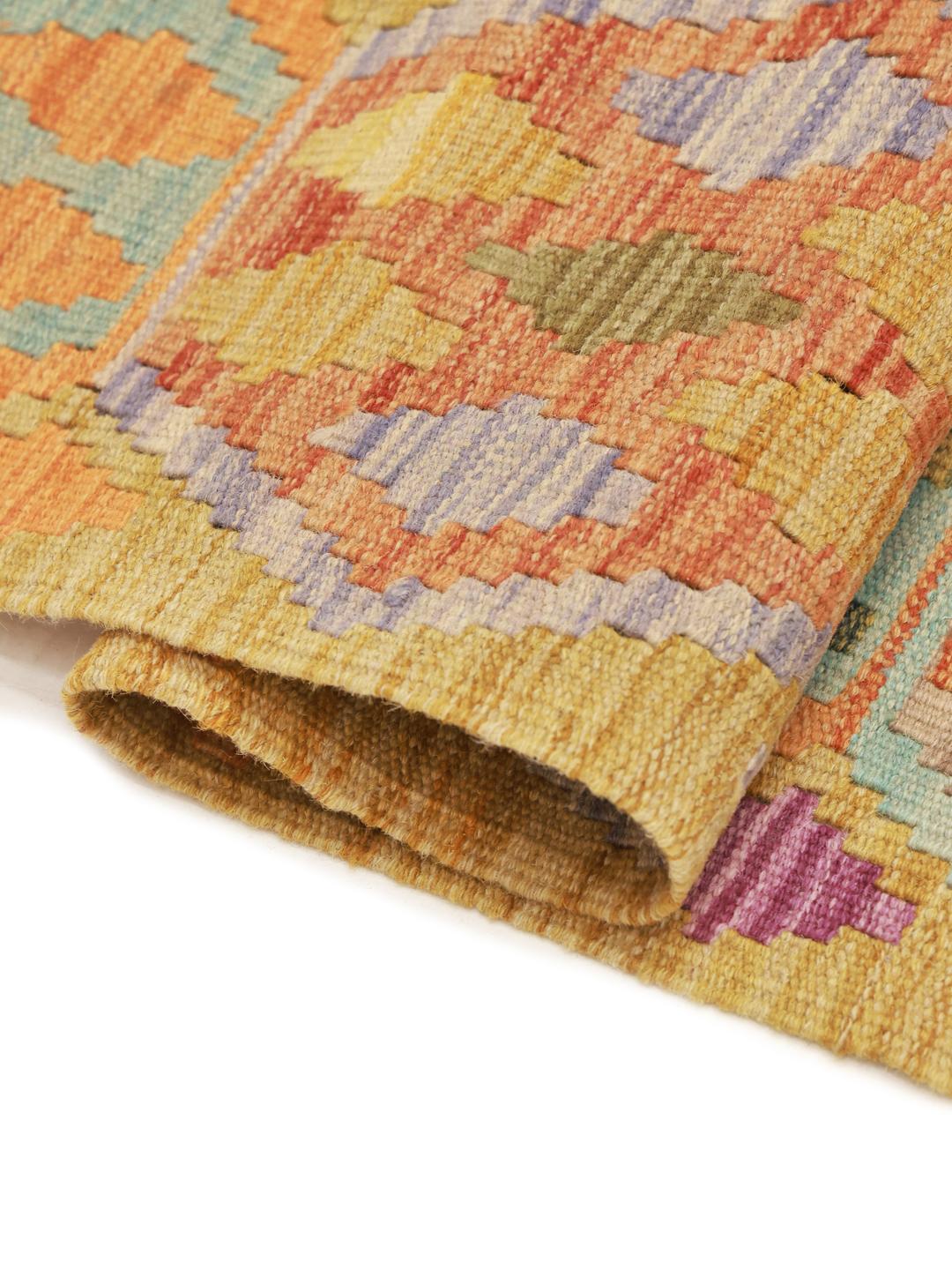
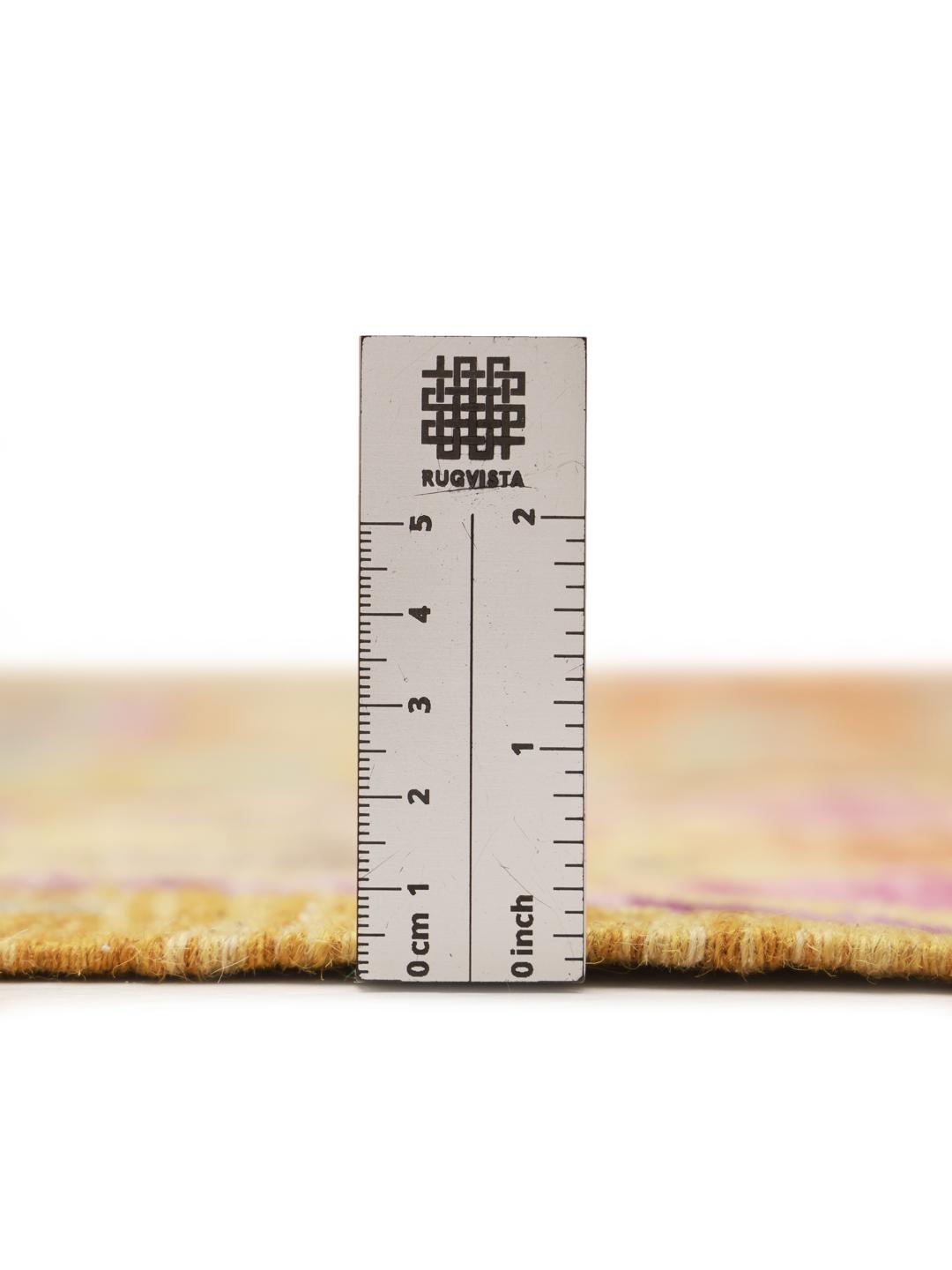
The term 'Kelim' refers to the specific flat-weaving technique where the warp and weft threads are interlaced to create a smooth, pile-less surface. Unlike knotted rugs, these textiles are created by passing the weft threads over and under the warp threads, a method that requires immense precision to maintain tension and pattern alignment. This technical approach results in a lighter, highly portable, and extremely durable textile that is prized for its longevity.
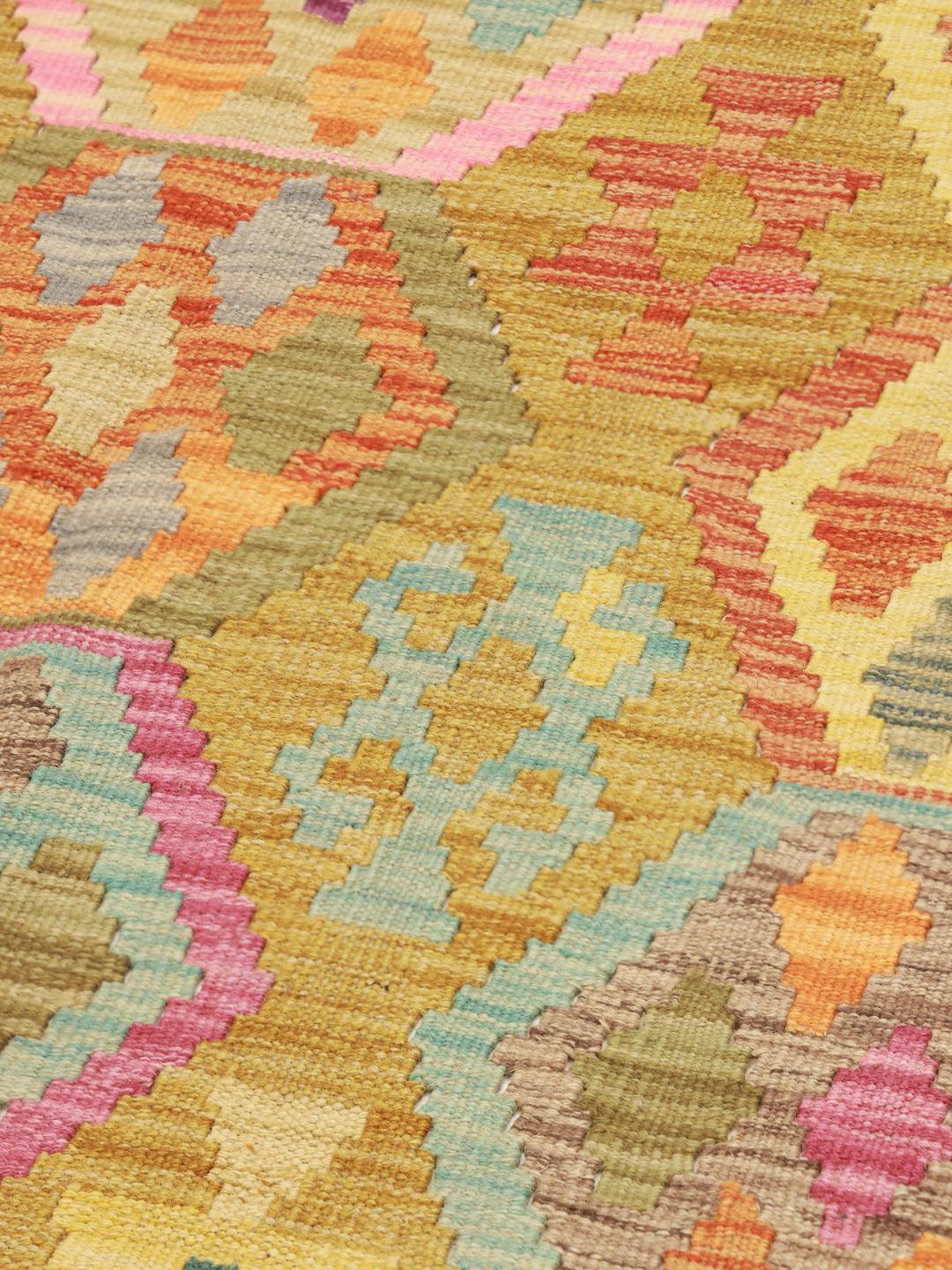
Visually, these rugs are defined by their bold geometric language. The use of repeating medallions, diamonds, and angular motifs is a signature of the Afghan tradition, often reflecting the natural landscape and cultural symbolism of the region. The colour palettes are typically derived from natural dyes, resulting in rich, complex hues that harmonise beautifully within a home, offering a timeless aesthetic that feels both ancient and contemporary.
Collecting a Kelim Afghan is an investment in human skill and cultural history. These rugs are valued not just for their utility, but for the narrative they carry and the years of practice required to master the loom. By bringing one into your home, you are preserving a legacy of craft and supporting the artisans who keep these age-old traditions alive in the modern world.