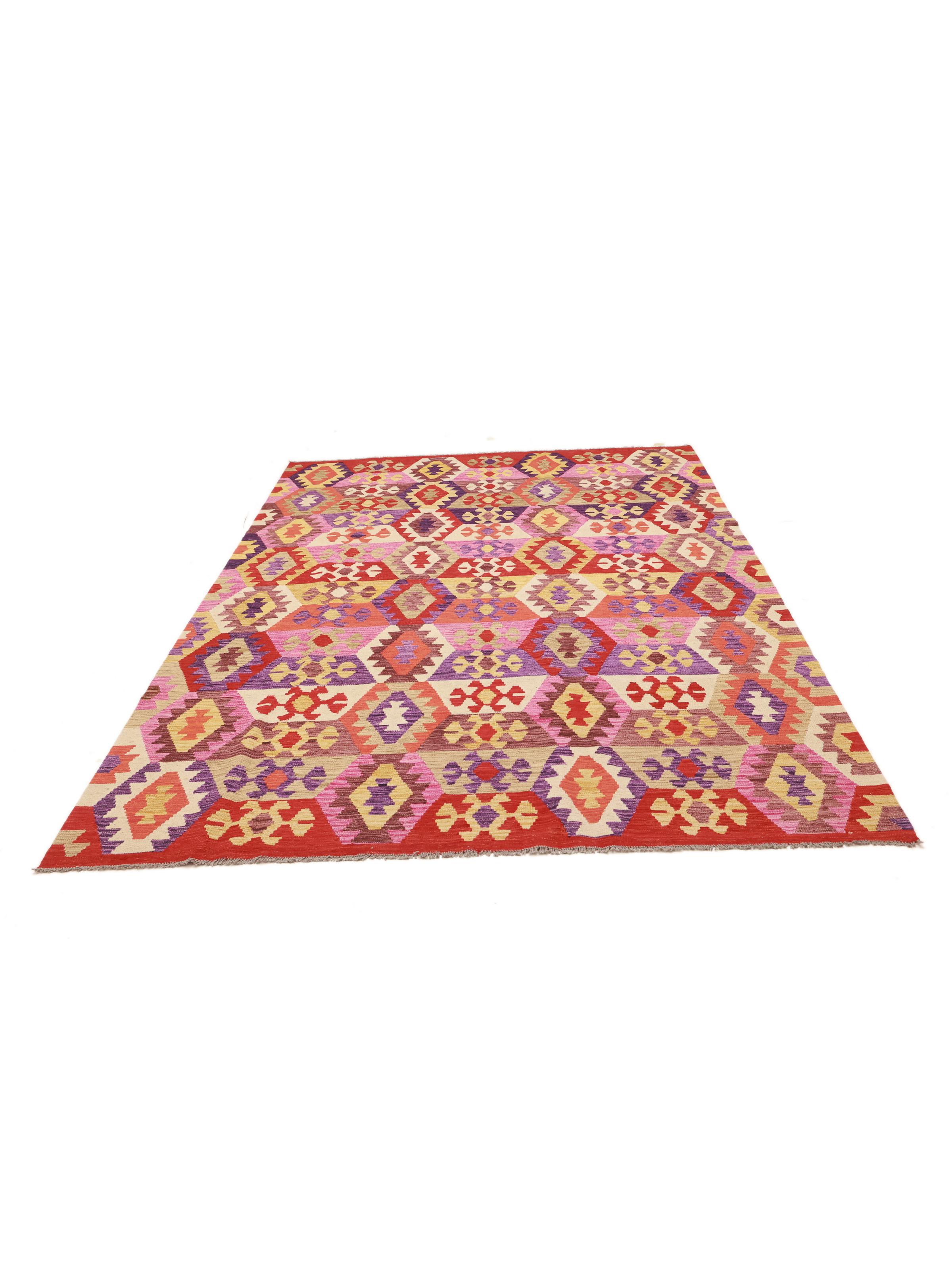
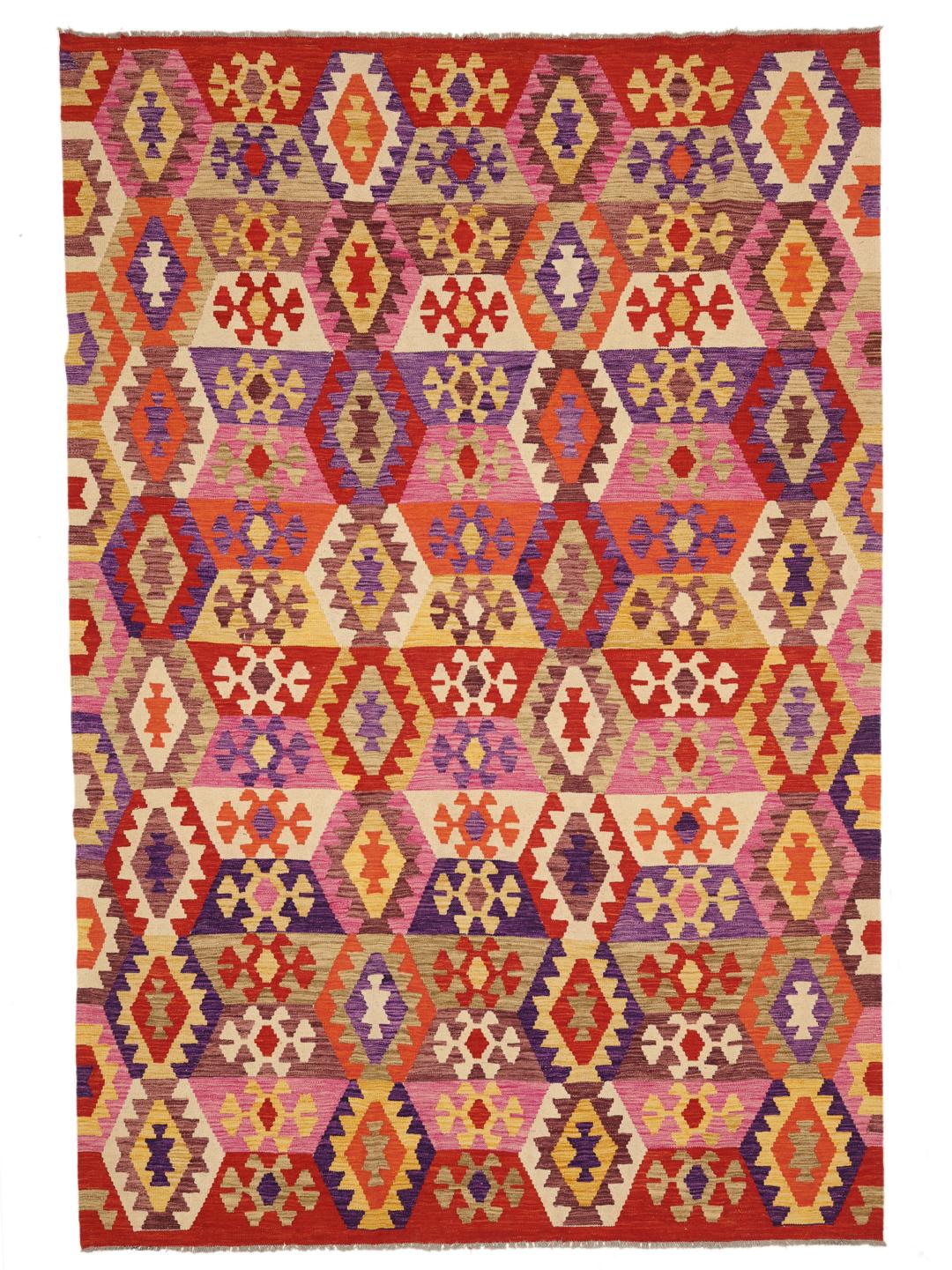
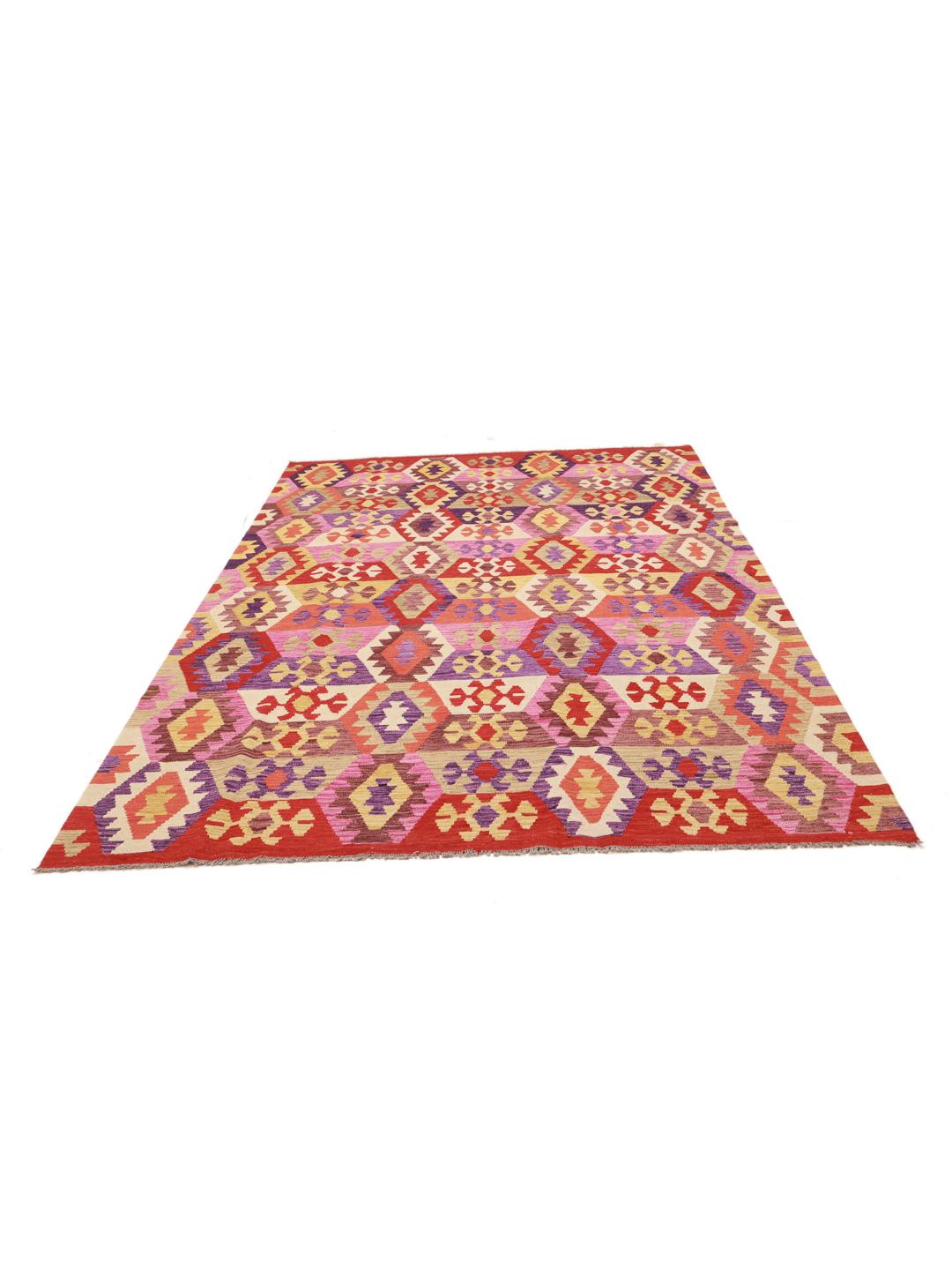
The Kelim tradition in Afghanistan is deeply rooted in the nomadic and semi-nomadic lifestyles of the region. These flat-weave textiles have been produced for centuries, serving essential functions as floor coverings, blankets, and storage sacks during seasonal migrations. Over time, these practical items evolved into sophisticated expressions of local identity and artistic talent.
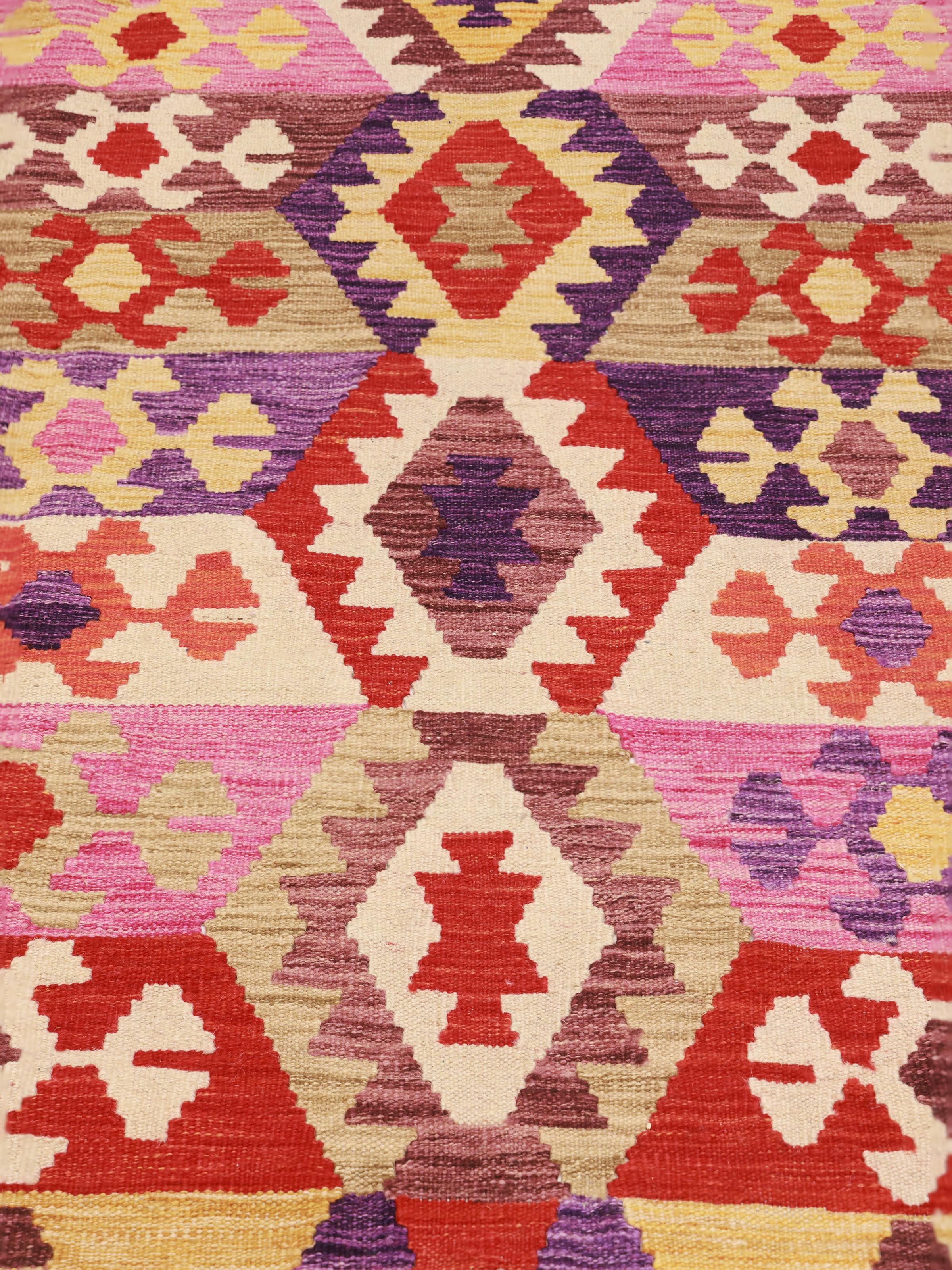
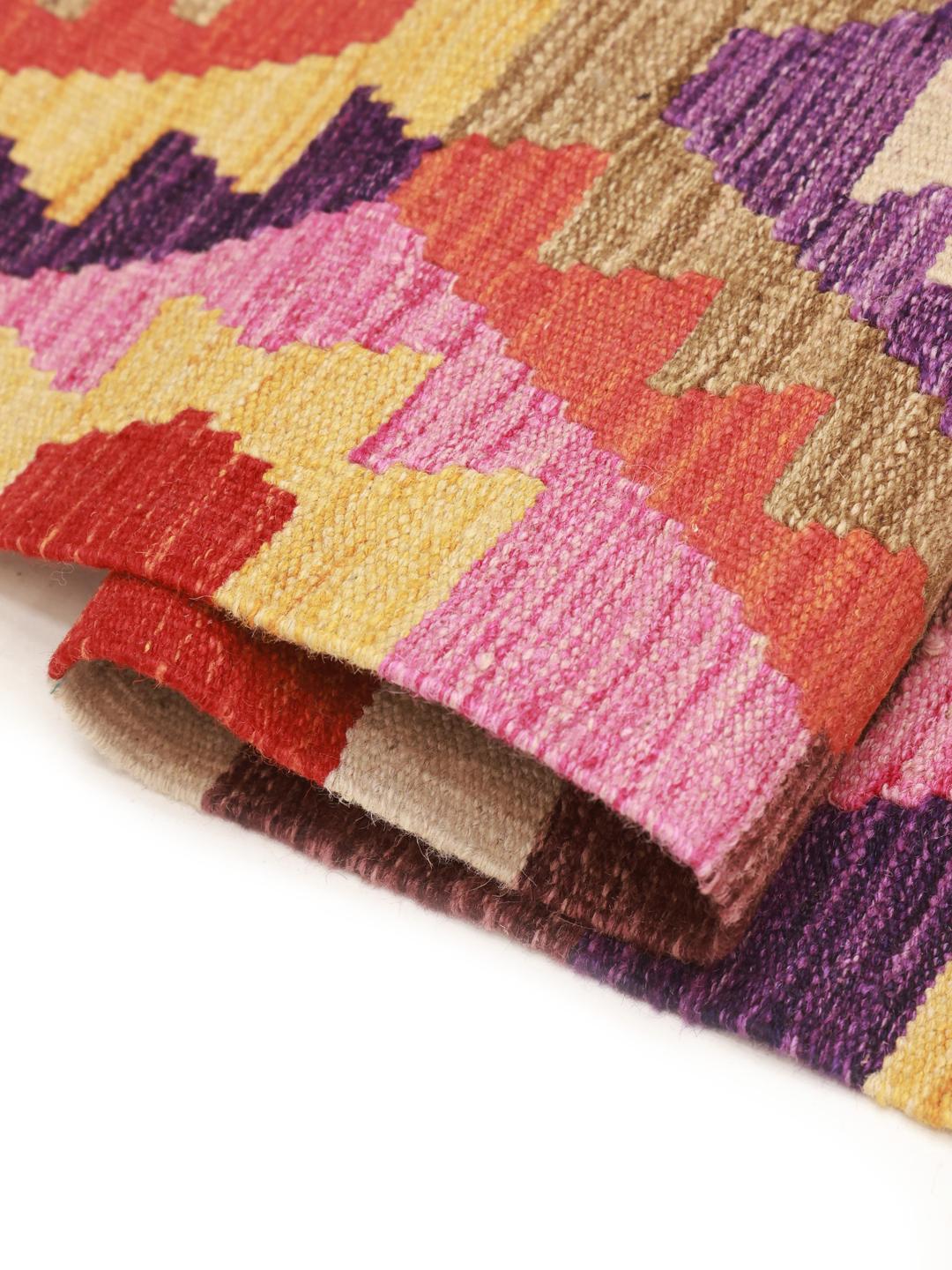
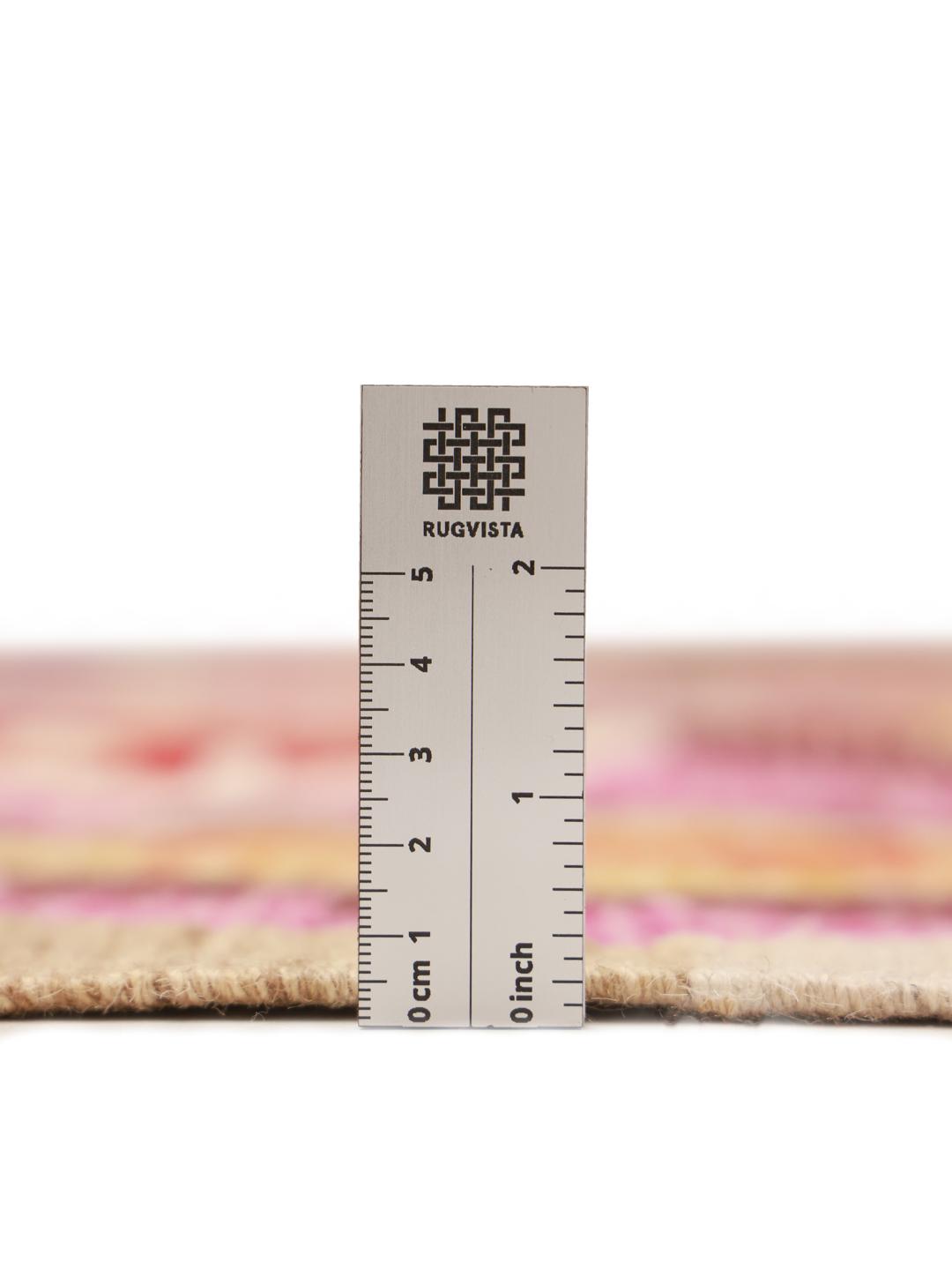
The term 'Kelim' refers to a specific tapestry-weave technique where the weft threads are passed over and under the warp threads to create the pattern. Unlike knotted rugs, this method creates a reversible, thin, and durable textile. The absence of pile allows for incredibly sharp, clean geometric designs, as the pattern is built directly into the structure of the fabric.
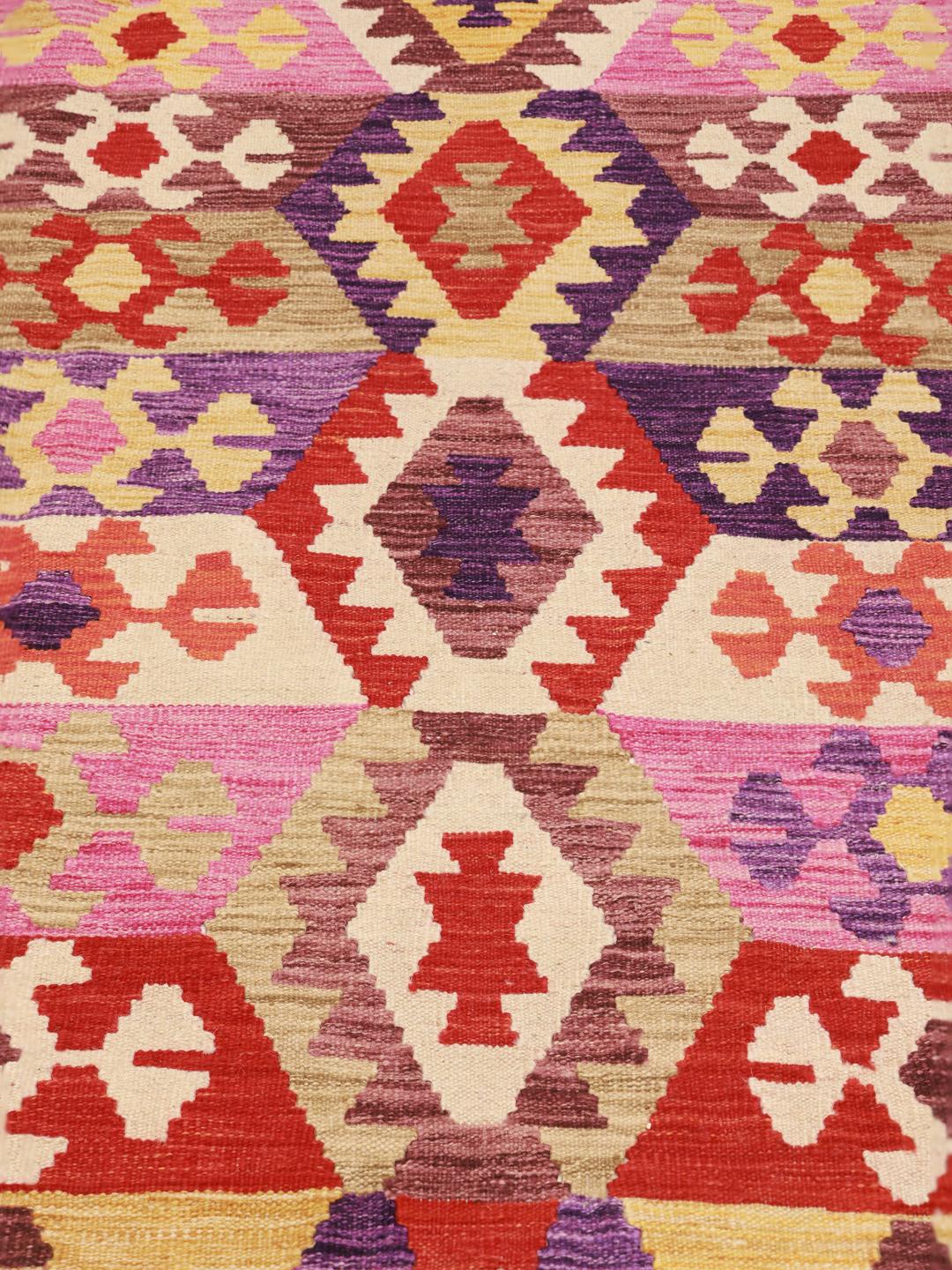
The visual language of this tradition is defined by bold geometric motifs and a rich, saturated palette. The field is often filled with repeating diamond or medallion shapes, which hold symbolic meaning within the weaving communities. These patterns are enclosed by intricate, multi-layered borders that frame the composition, showcasing a balance between symmetry and vibrant, spontaneous colour choices.
Collecting Afghan Kelims is an act of preserving a living cultural heritage. These rugs are highly valued for their authenticity and the sheer skill required to maintain complex patterns without the aid of modern technology. By bringing one into your home, you are acquiring a piece of history that continues to hold its value and beauty, serving as a bridge between ancient nomadic customs and modern interior design.