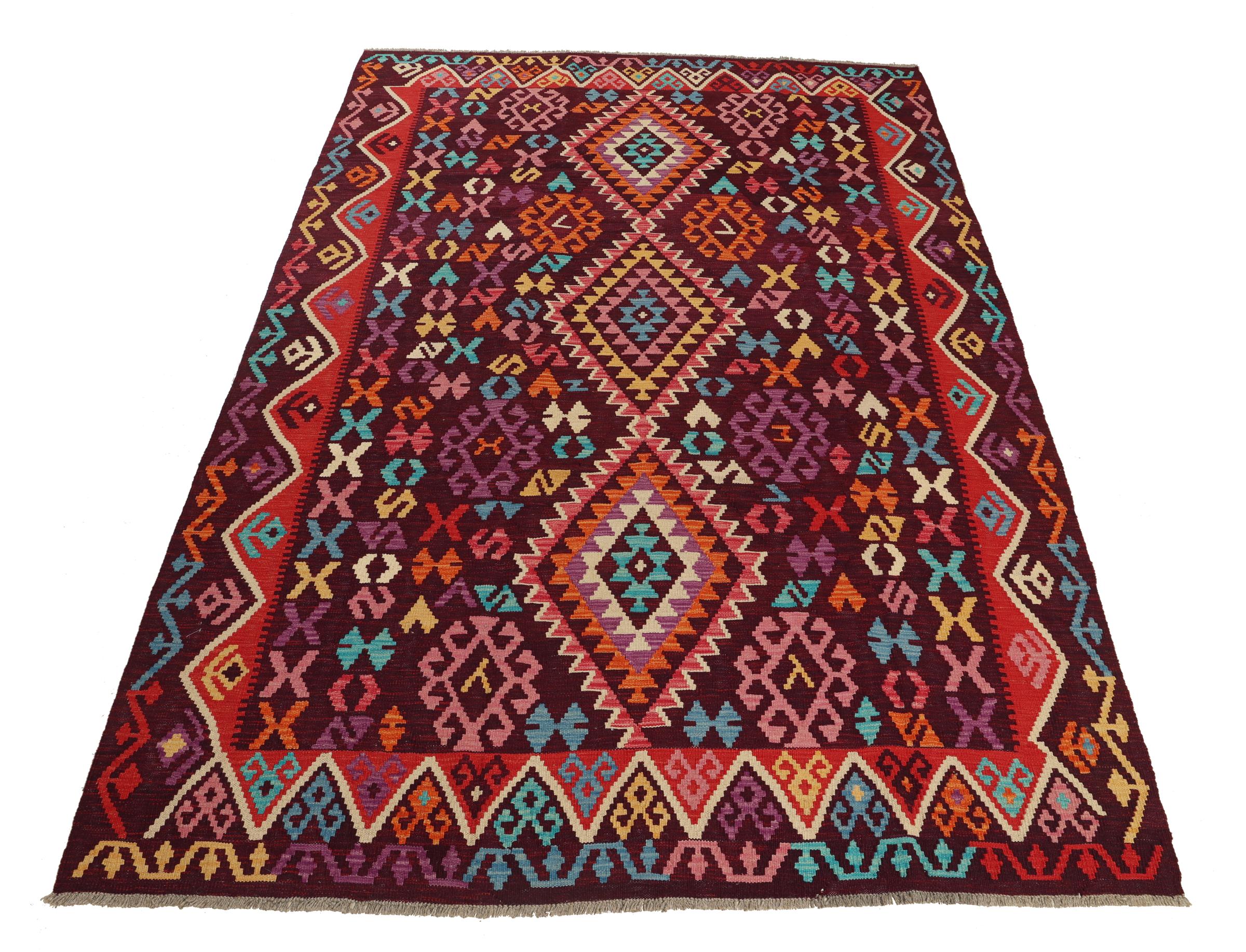
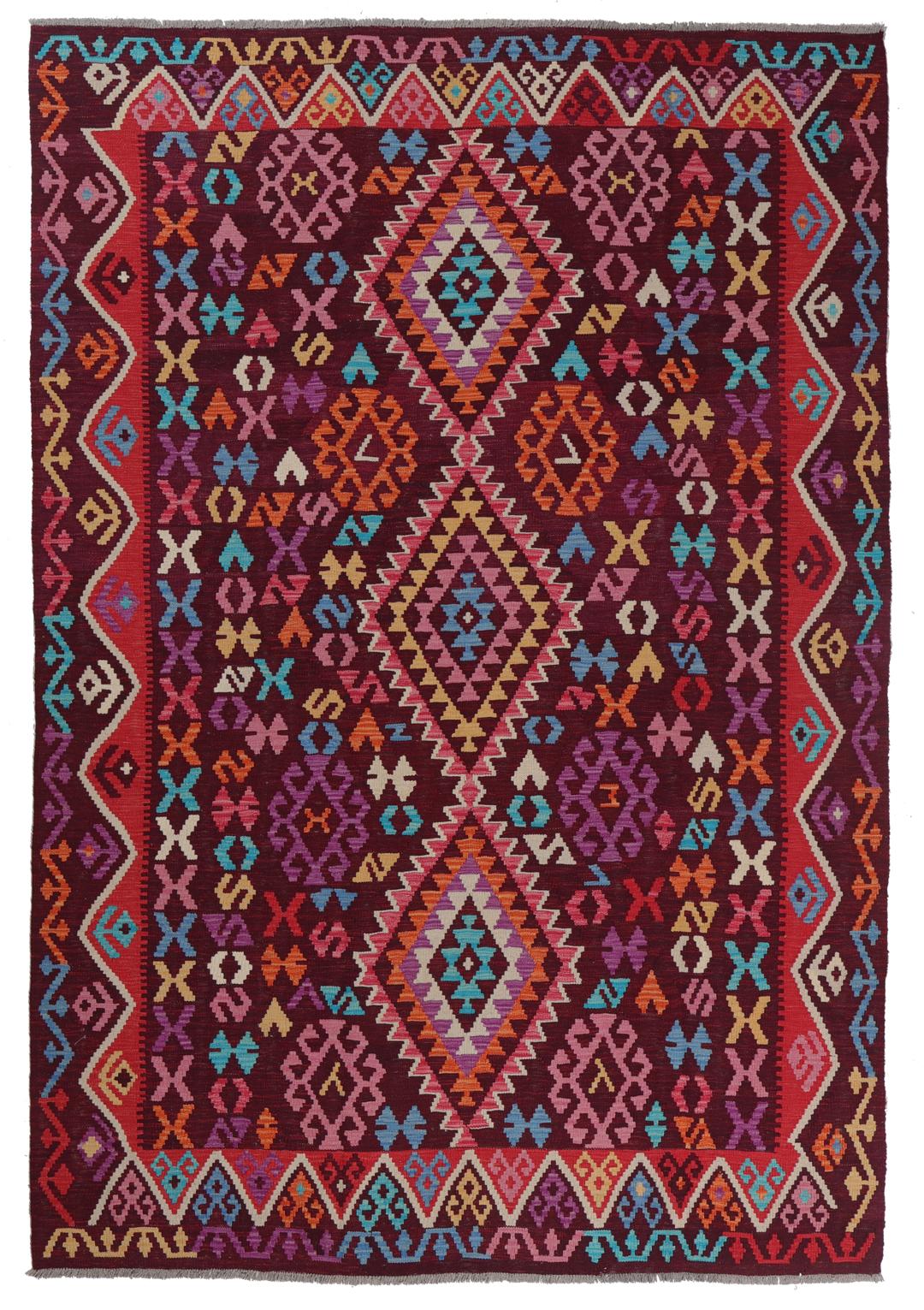
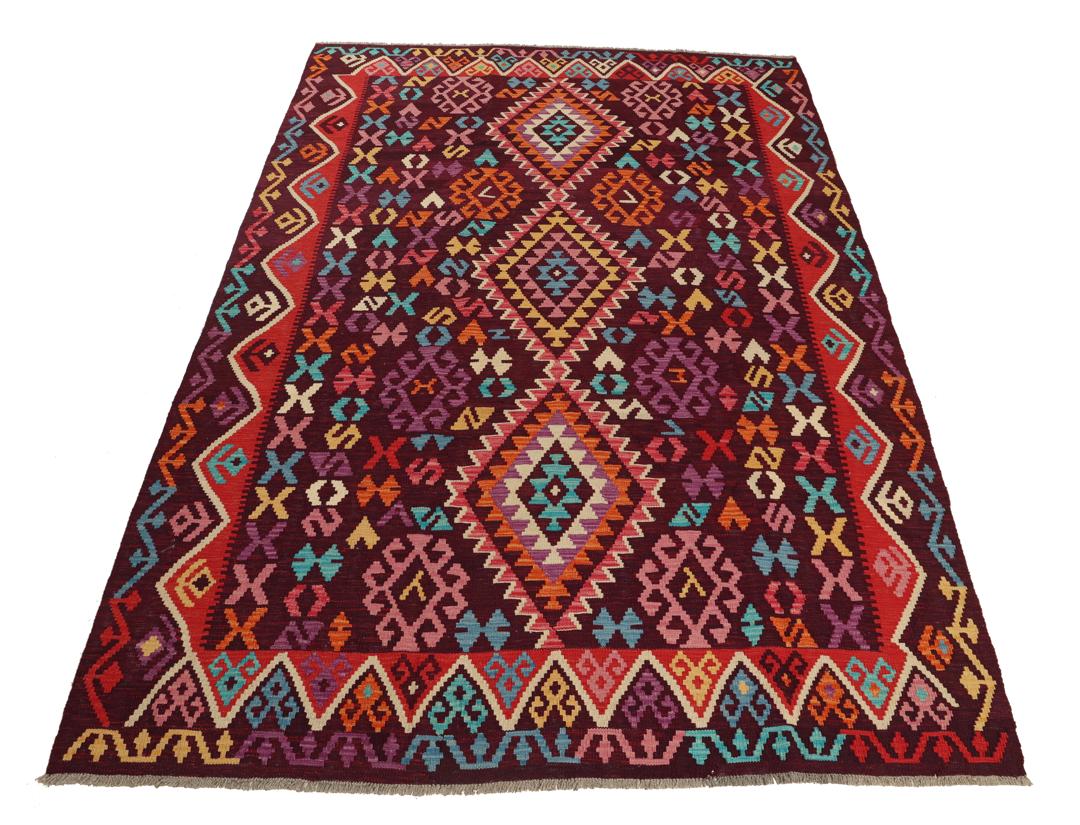
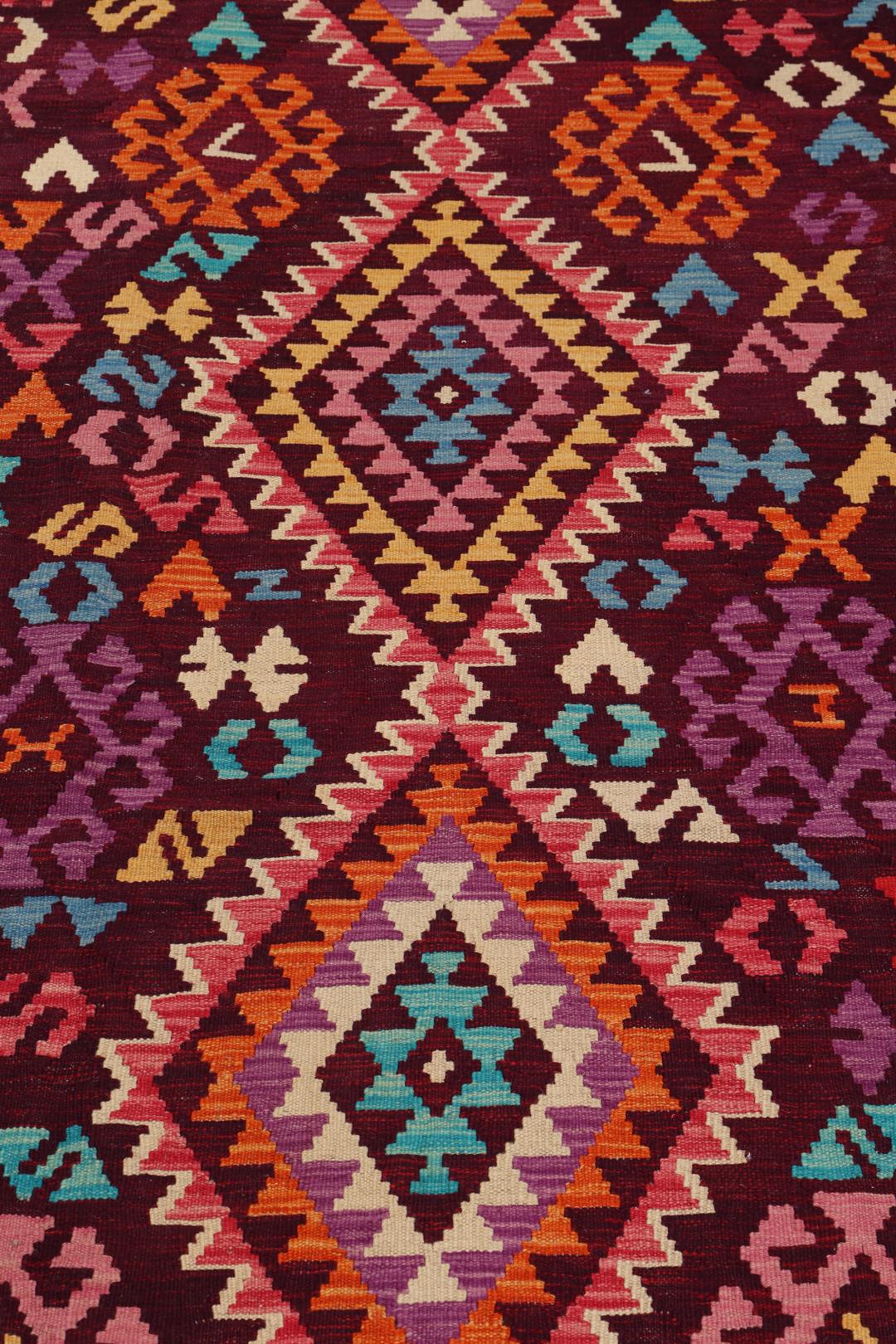
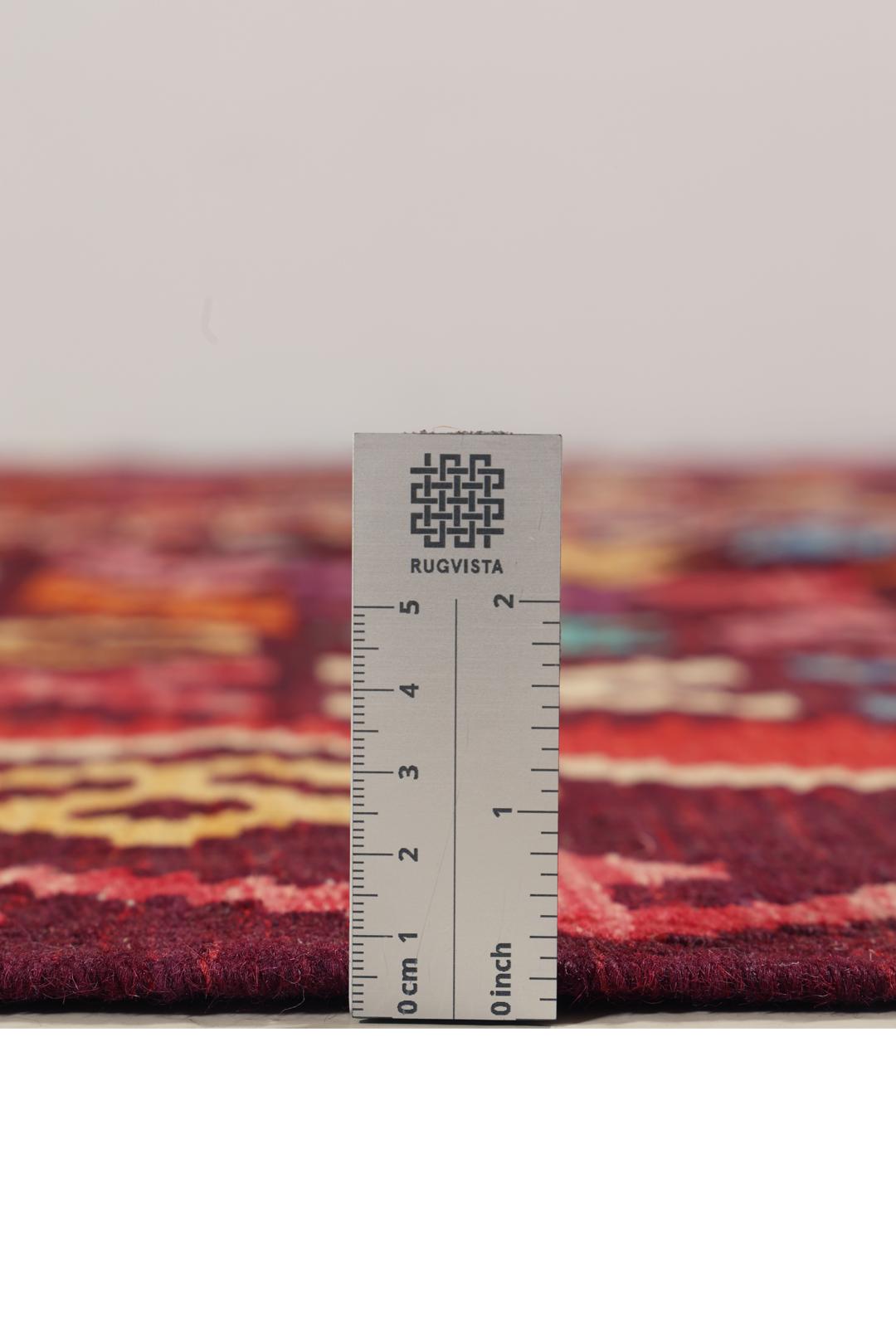
The tradition of weaving Kelims in Afghanistan is deeply embedded in the history of the region. These flat-woven rugs have served as essential household items for nomadic and village communities for centuries, acting as floor coverings, blankets, and storage bags. The migration of weaving techniques across the Middle East has allowed these styles to evolve, blending ancient tribal motifs with the specific regional aesthetics of the Afghan landscape.
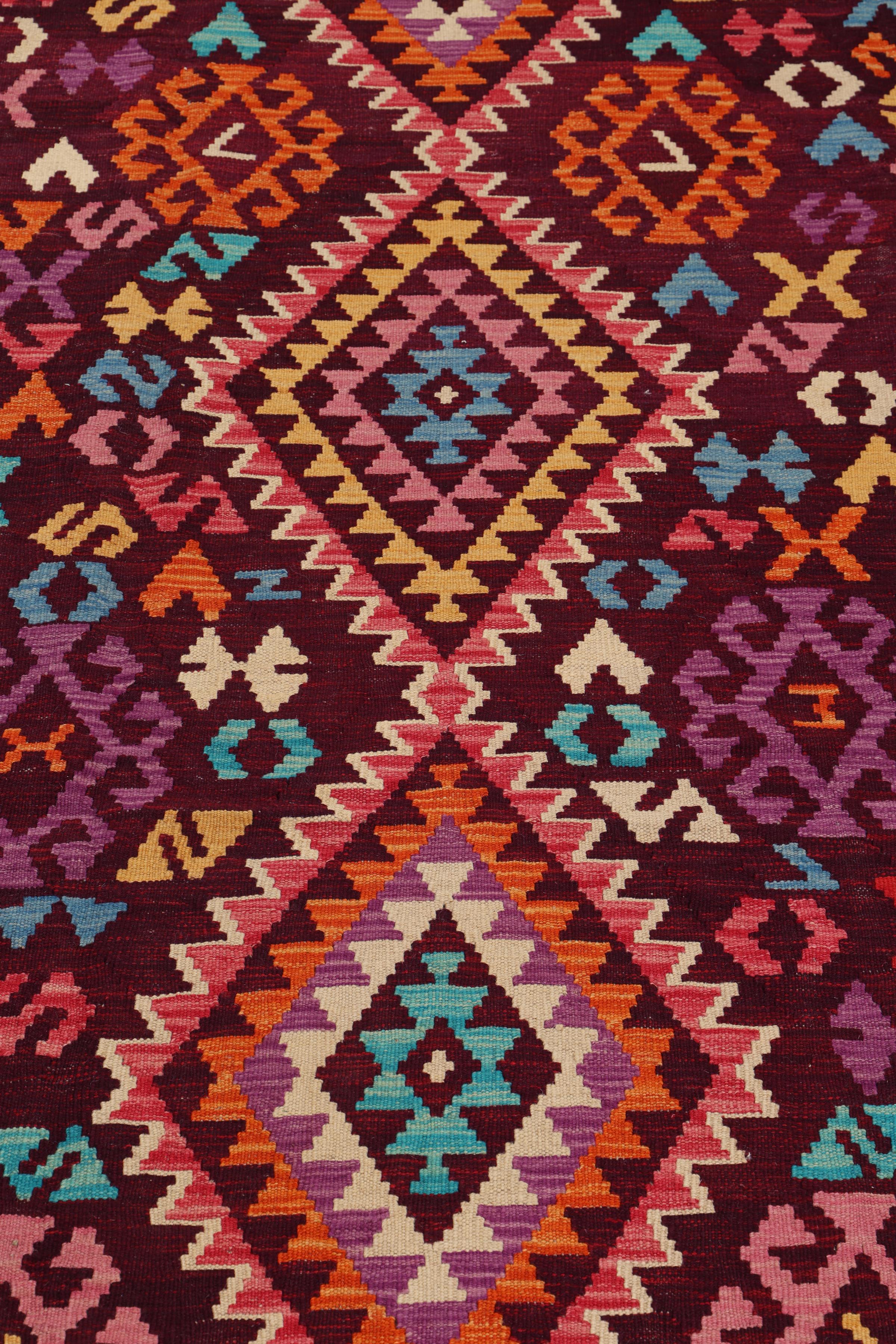
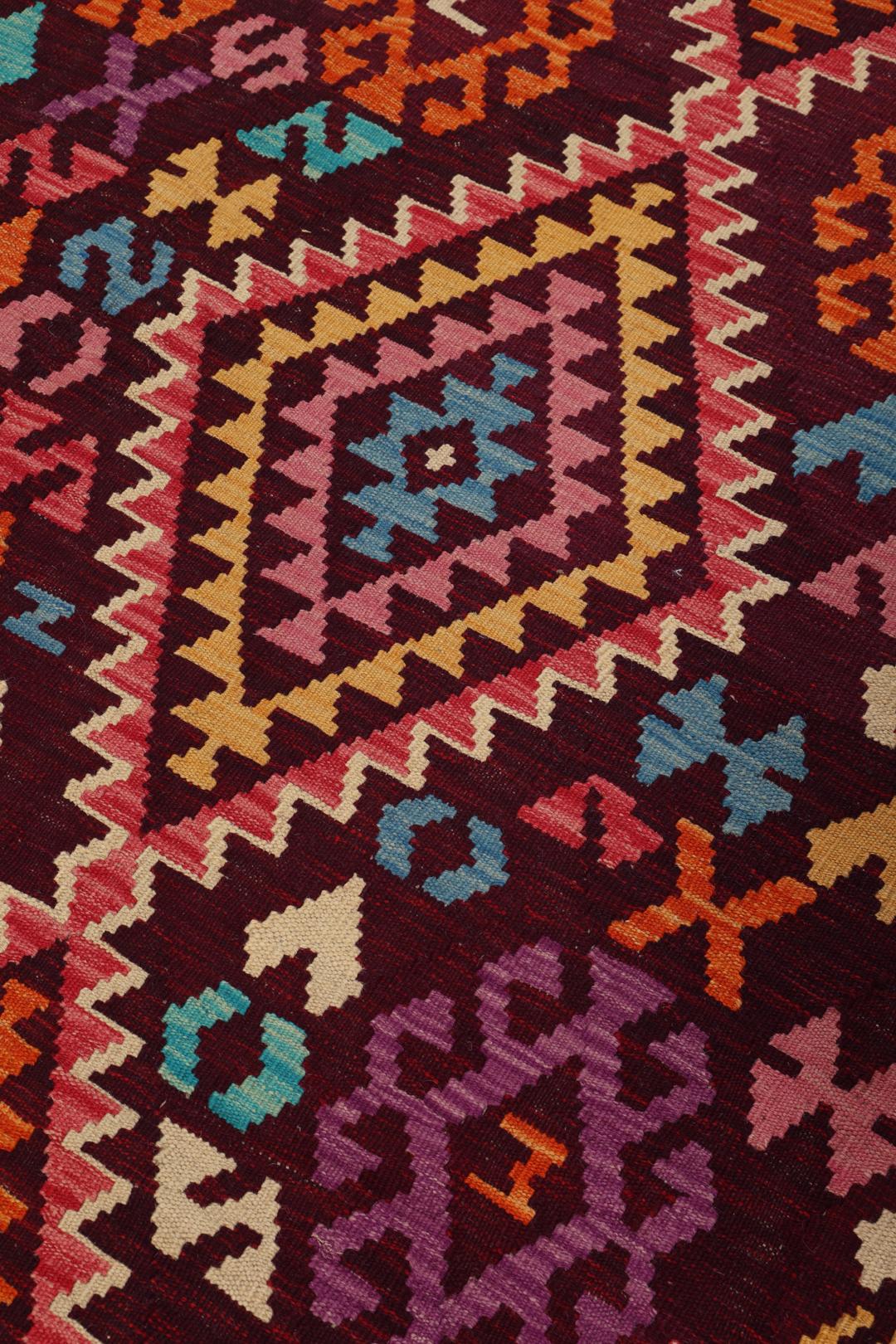
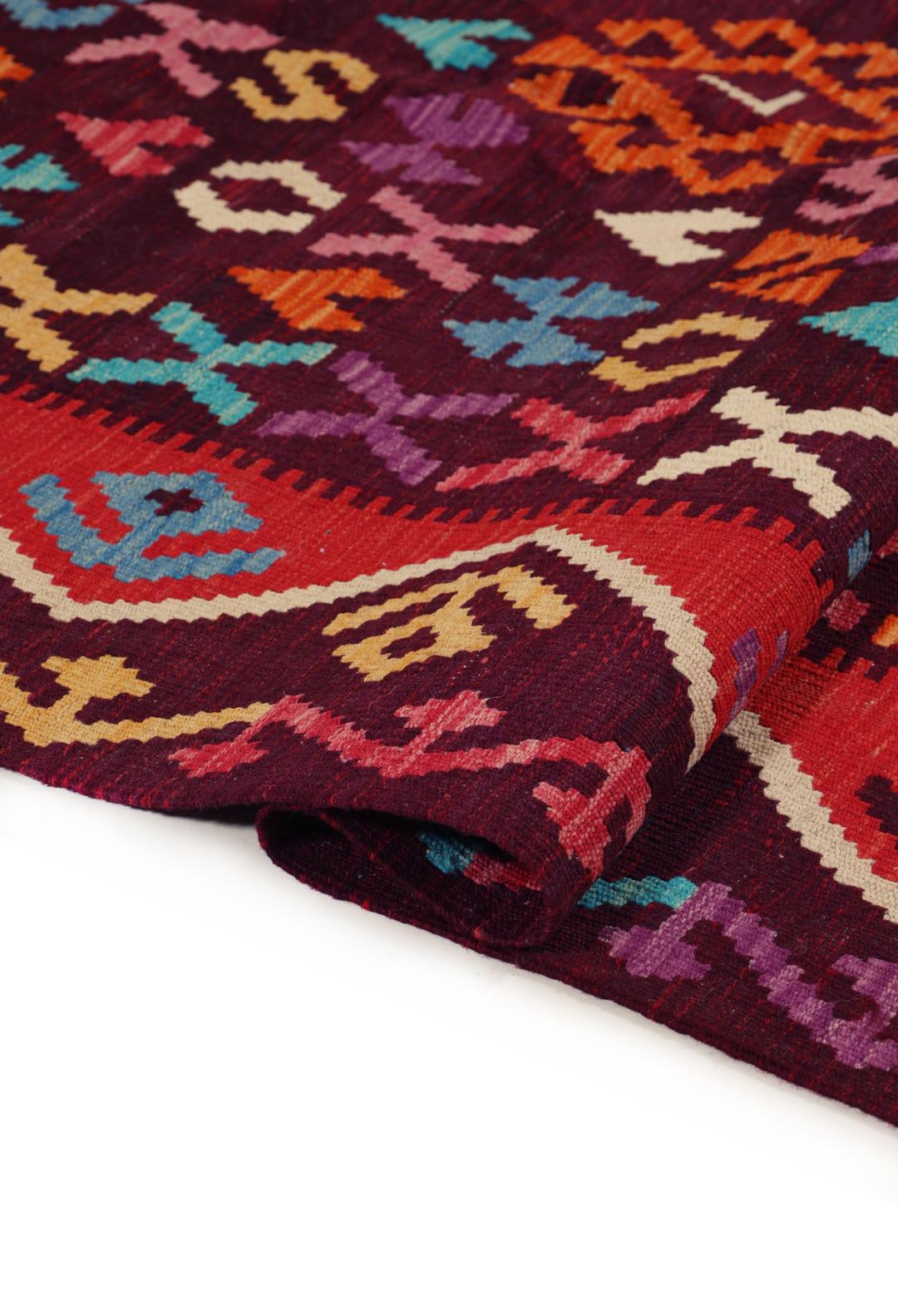
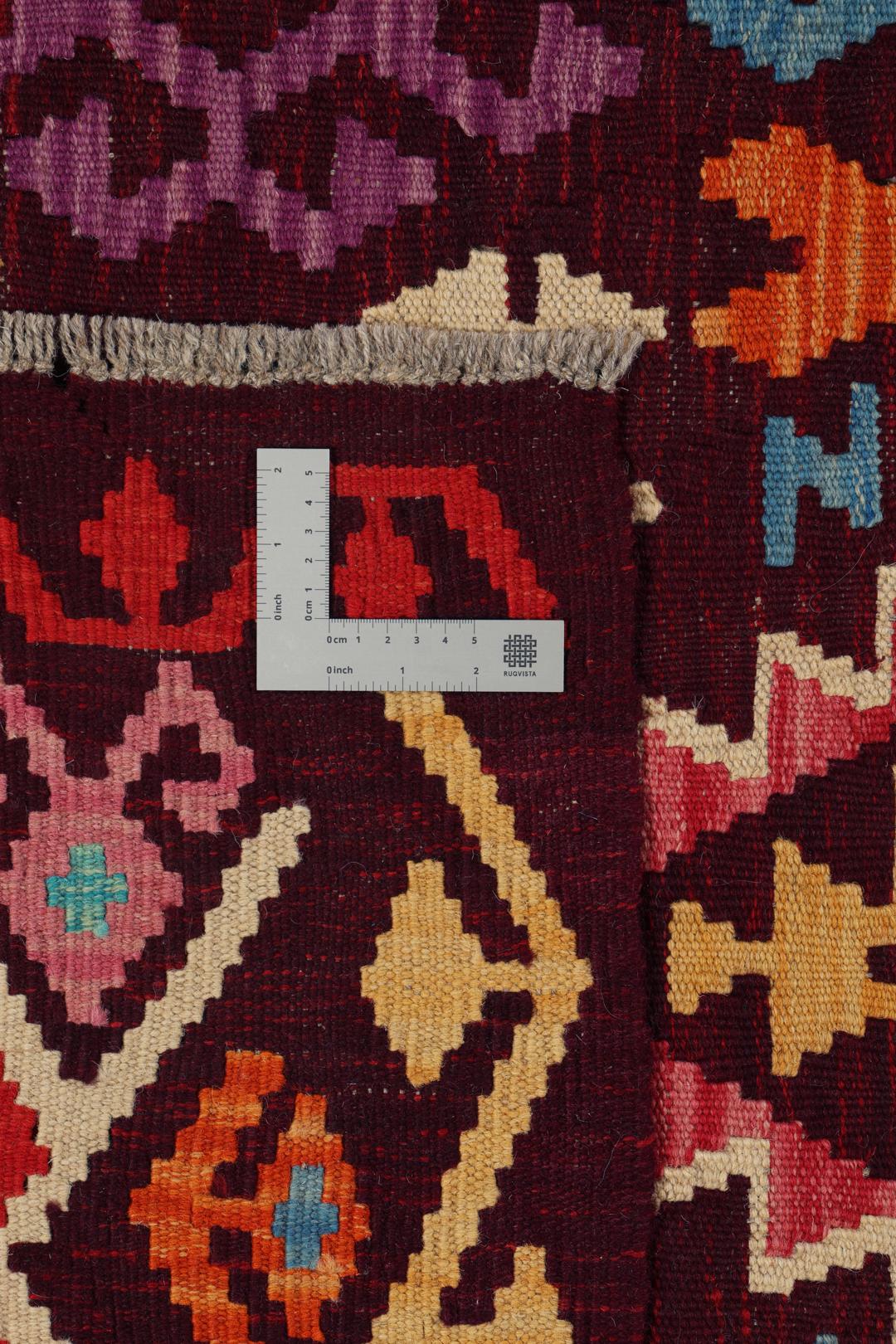
A Kelim is defined by its lack of a pile, created through a weft-faced weaving technique where the horizontal threads are tightly packed to cover the vertical warp. This method results in a lightweight yet incredibly strong fabric that is reversible and easy to maintain. The lack of pile allows the weaver to create sharp, crisp geometric designs, as every colour change is dictated by the precise intersection of the threads.
The signature design elements of this tradition often feature bold, repeated geometric shapes such as diamonds, zig-zags, and stylised floral or animal motifs. These patterns are not merely decorative; they often carry cultural meanings related to protection, fertility, or the weaver's personal history. The use of vibrant, contrasting colours set against a deep field is a hallmark of the Afghan style, designed to stand out in the often muted tones of traditional mud-brick or stone dwellings.
Collecting a Kelim is an act of preserving a tangible piece of cultural heritage. Because they are made without the use of templates, each rug reflects the unique vision and skill of the individual weaver. Owning such a piece is an investment in human artistry, offering a connection to a long-standing tradition that values patience, precision, and the beauty of natural materials.