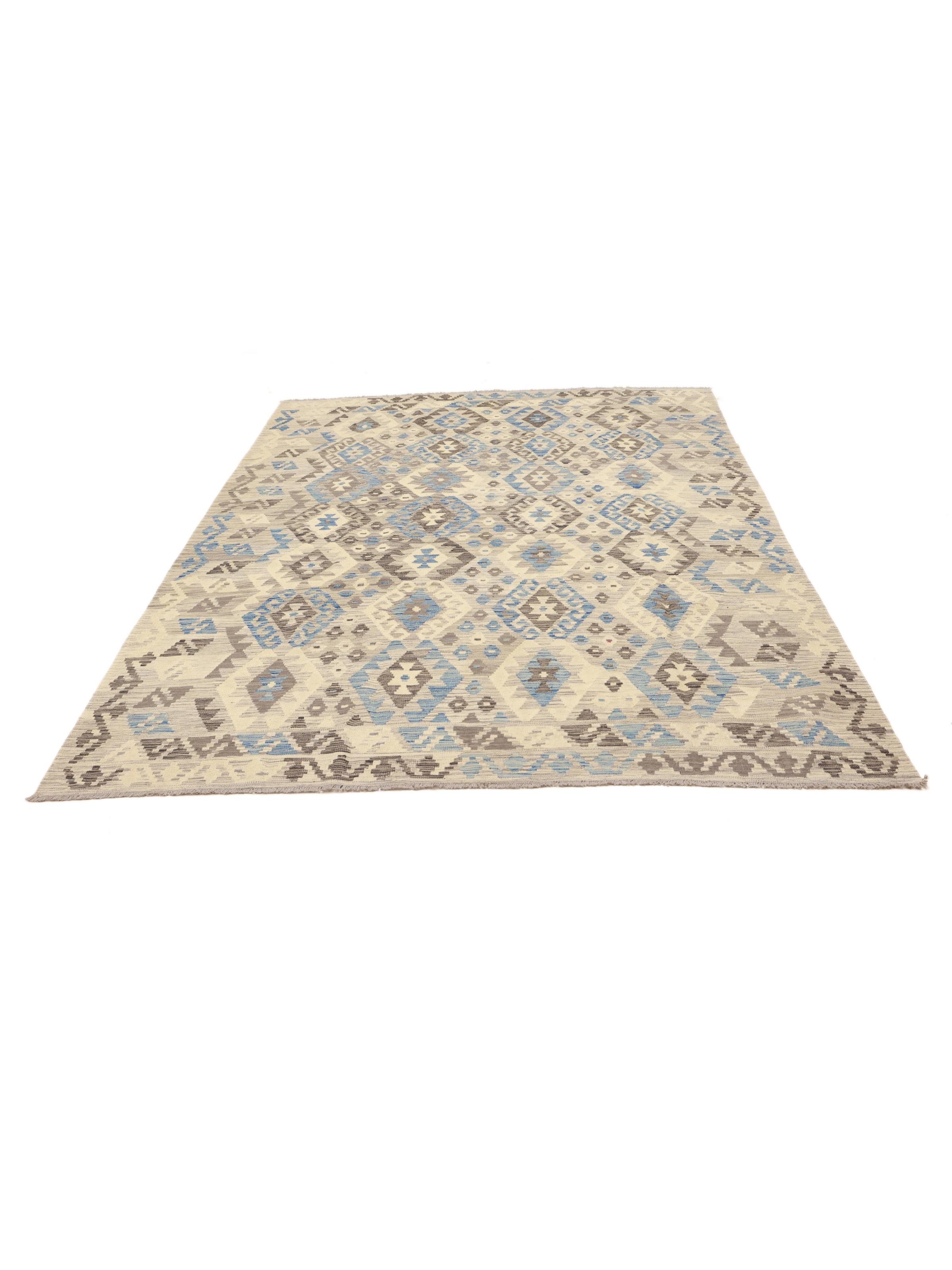
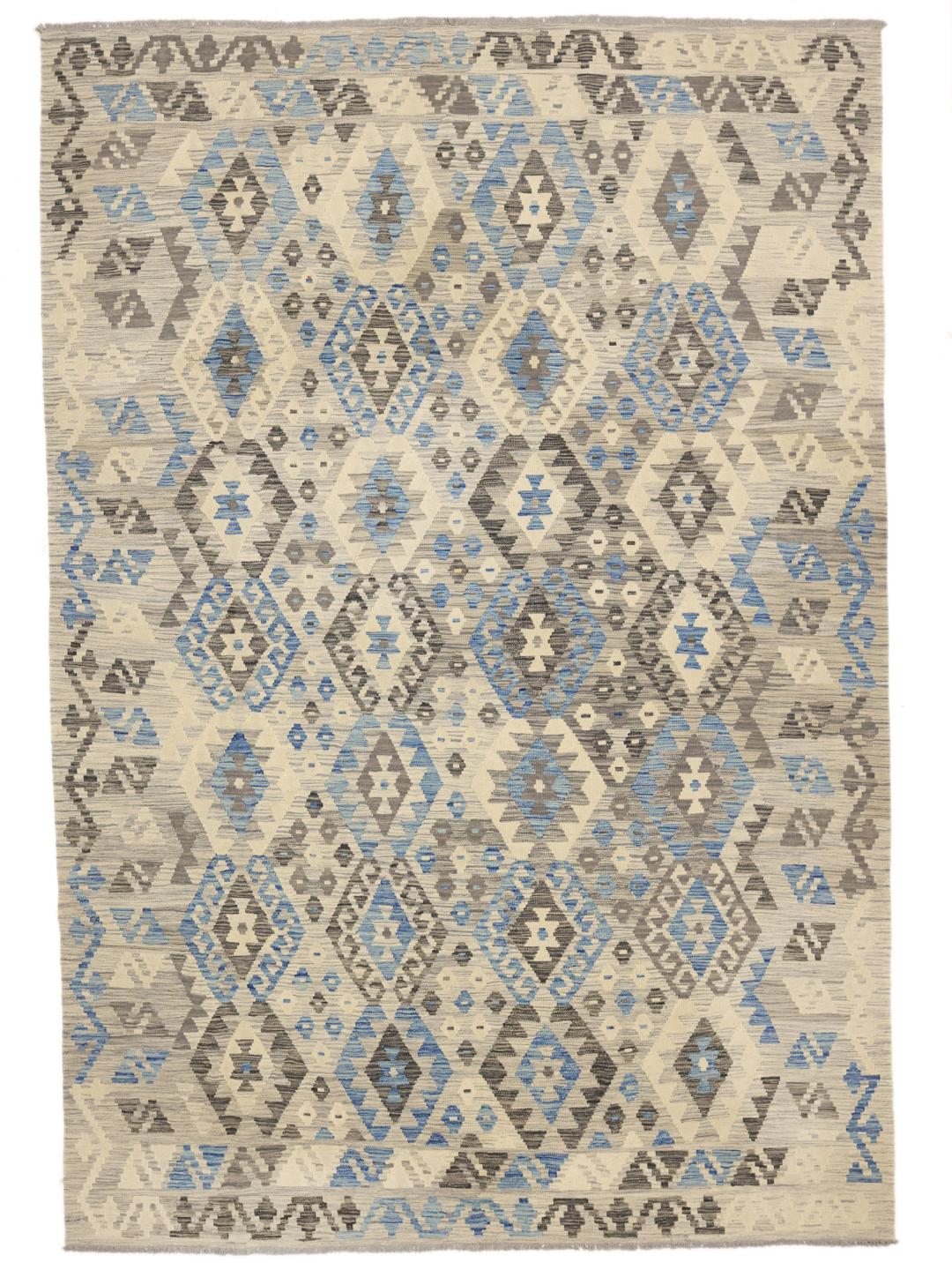
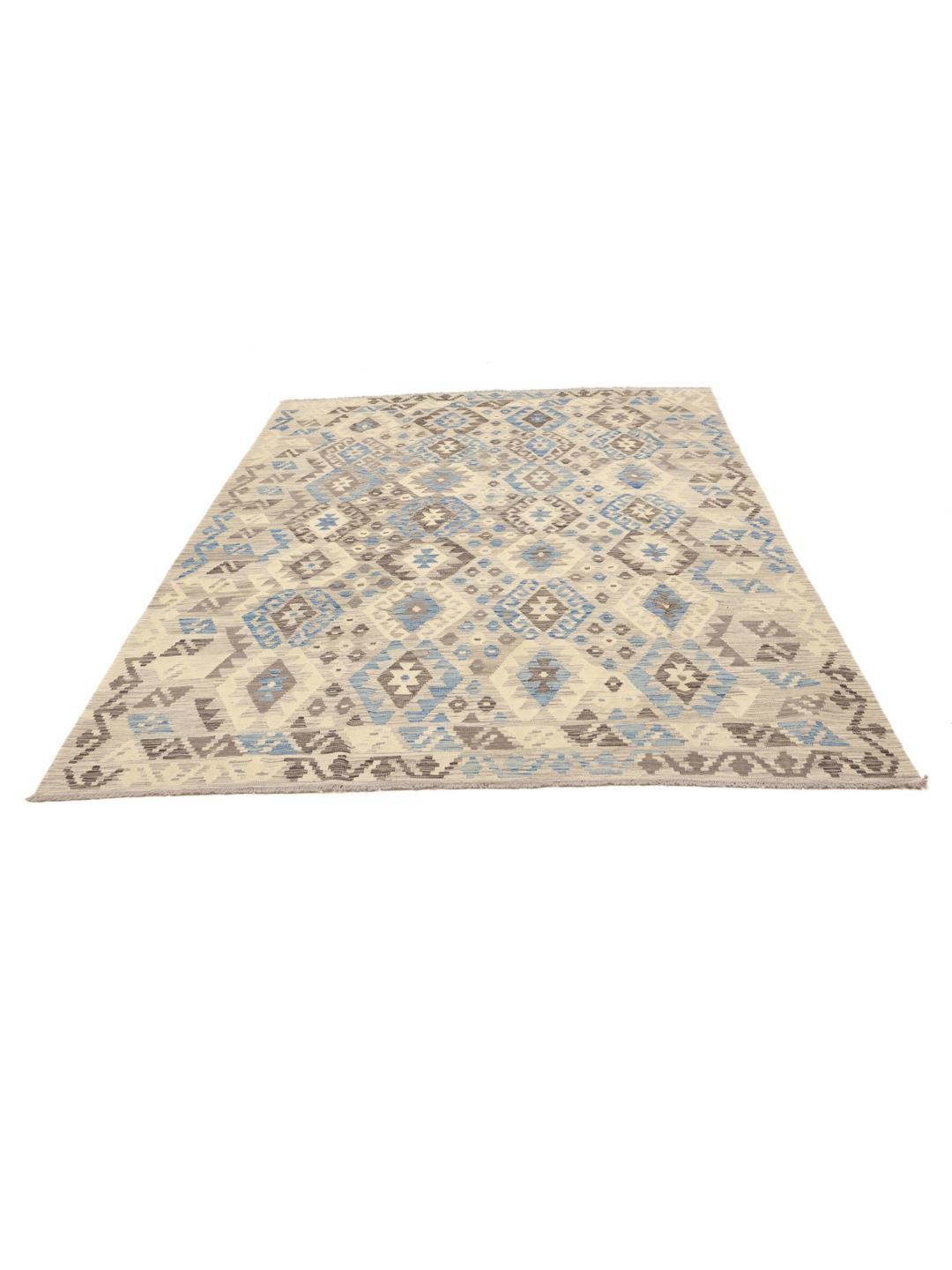
The Kelim tradition in Afghanistan is deeply rooted in the nomadic and village cultures of the Middle East. For centuries, these flat-woven rugs have served as essential, portable items for families, used as floor coverings, wall hangings, and storage bags. The transition from purely functional household goods to sought-after decorative pieces has allowed these traditional patterns to reach a global audience while maintaining their authentic cultural identity.
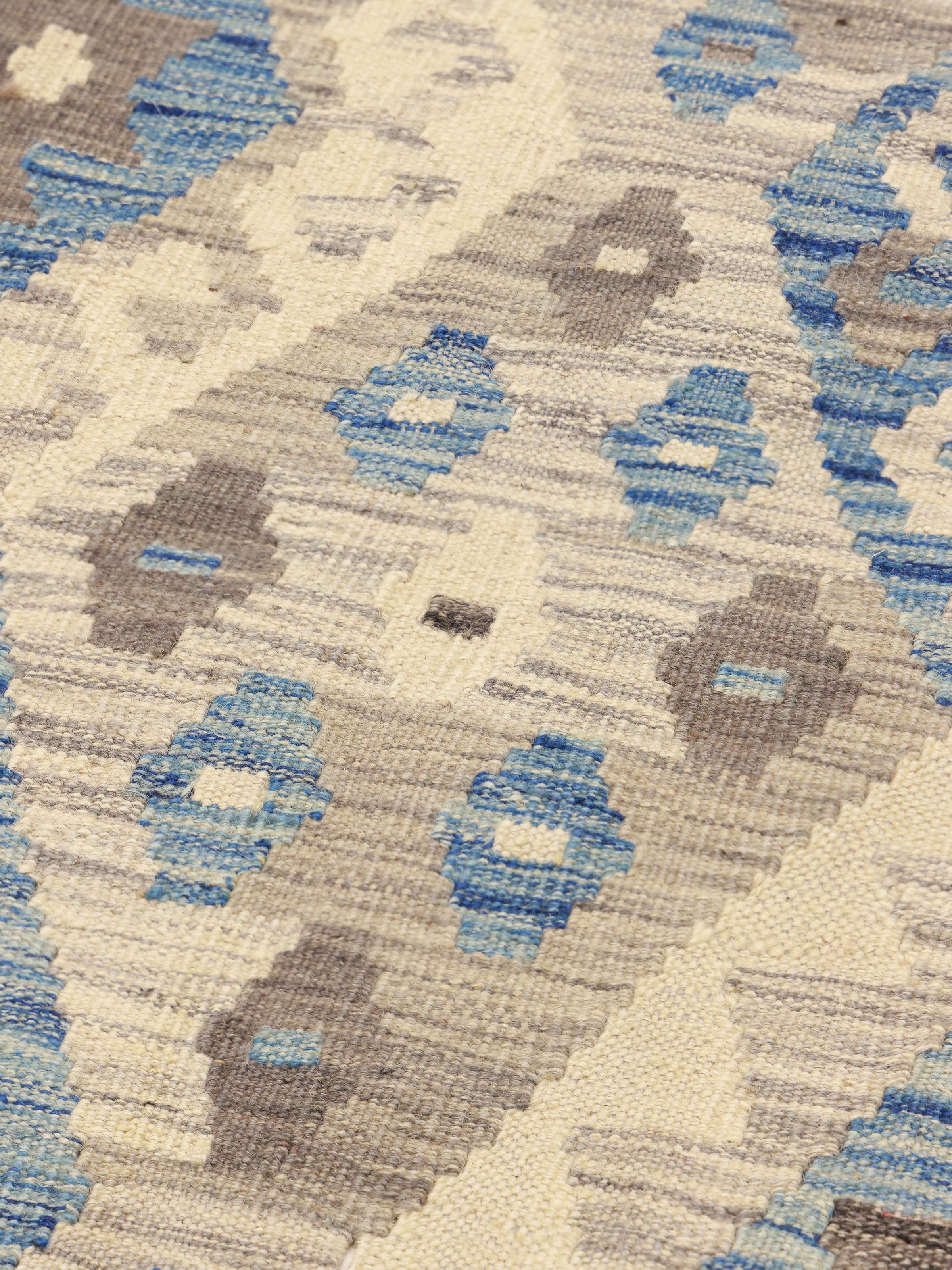
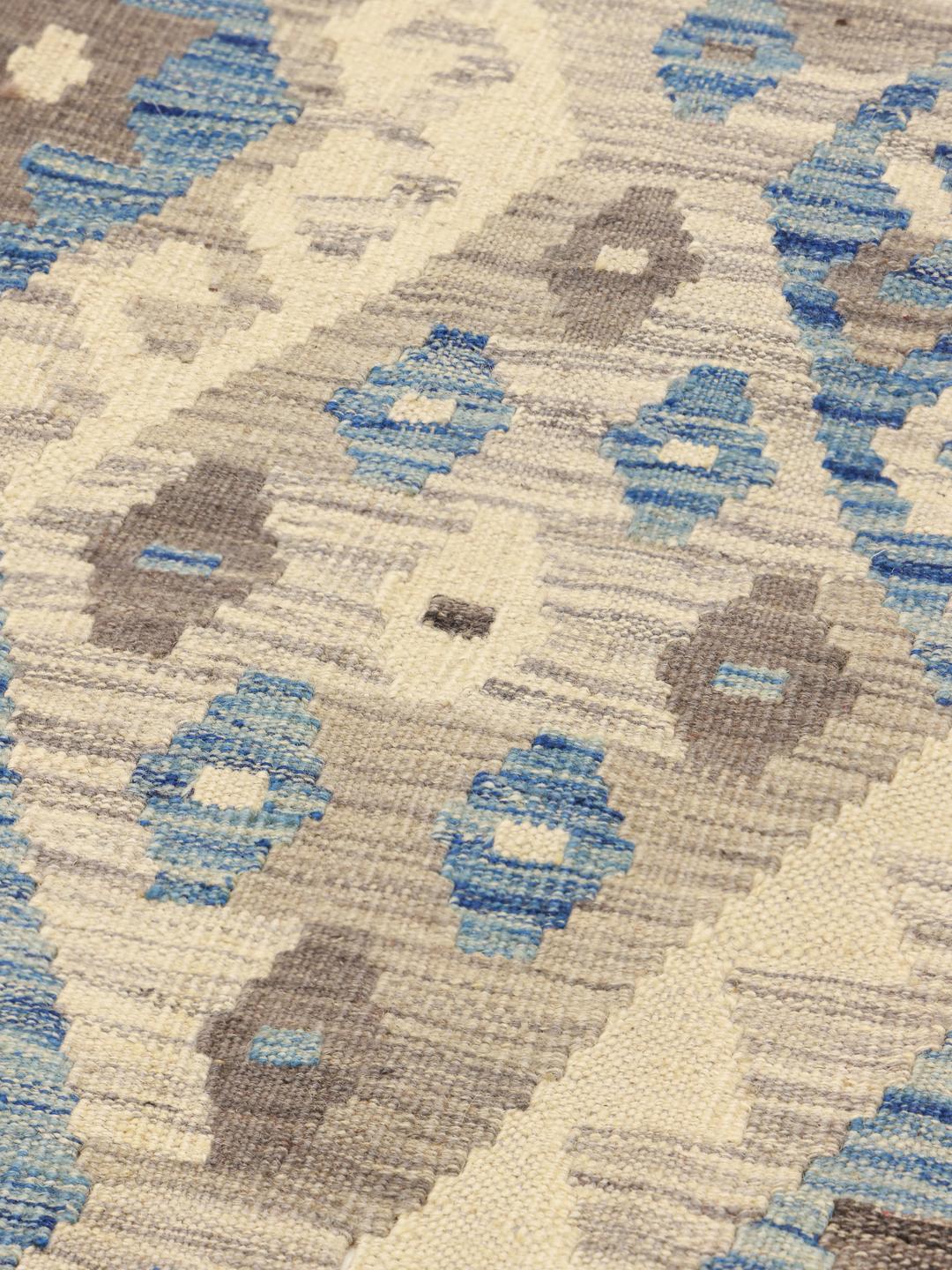
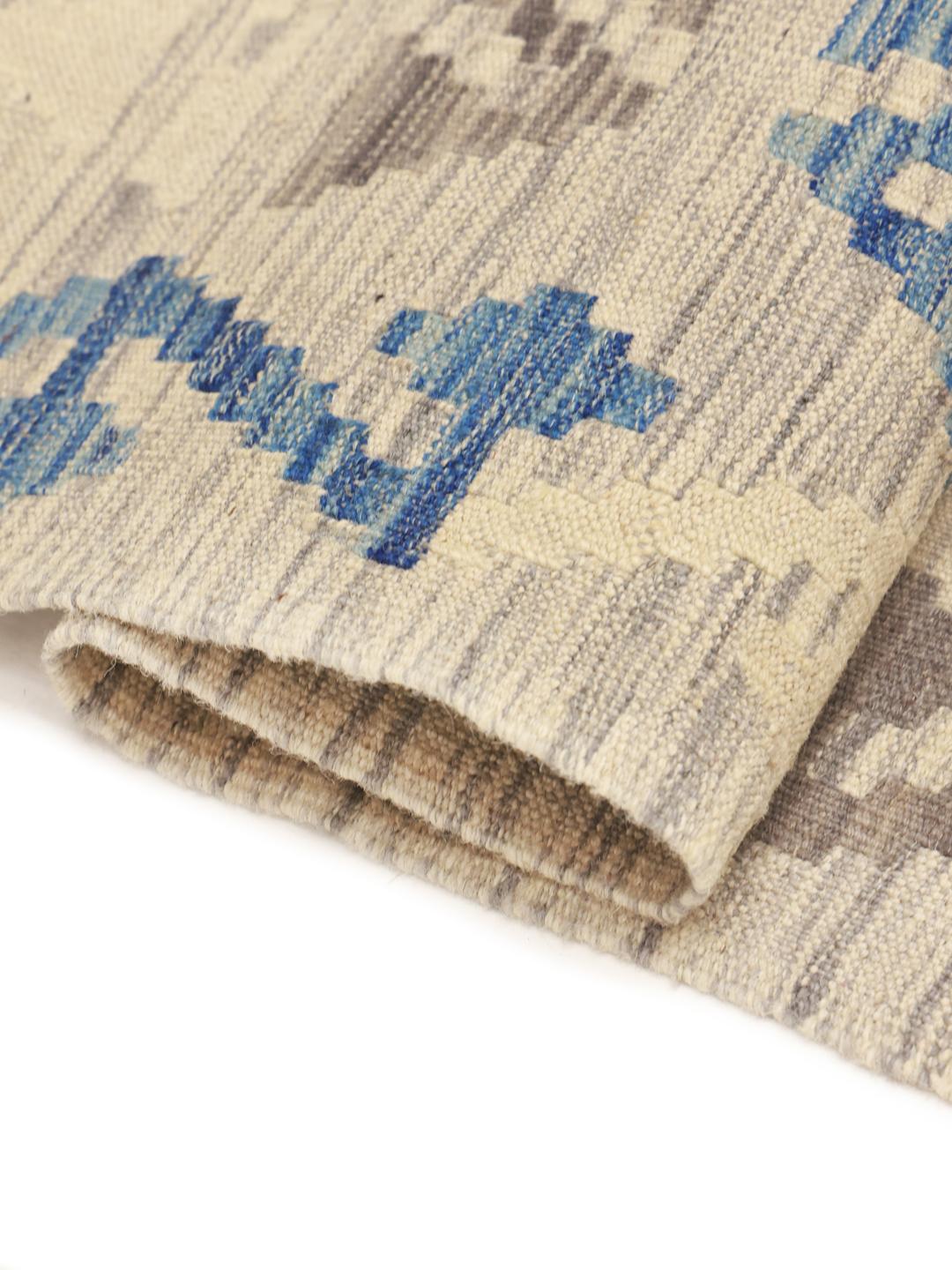
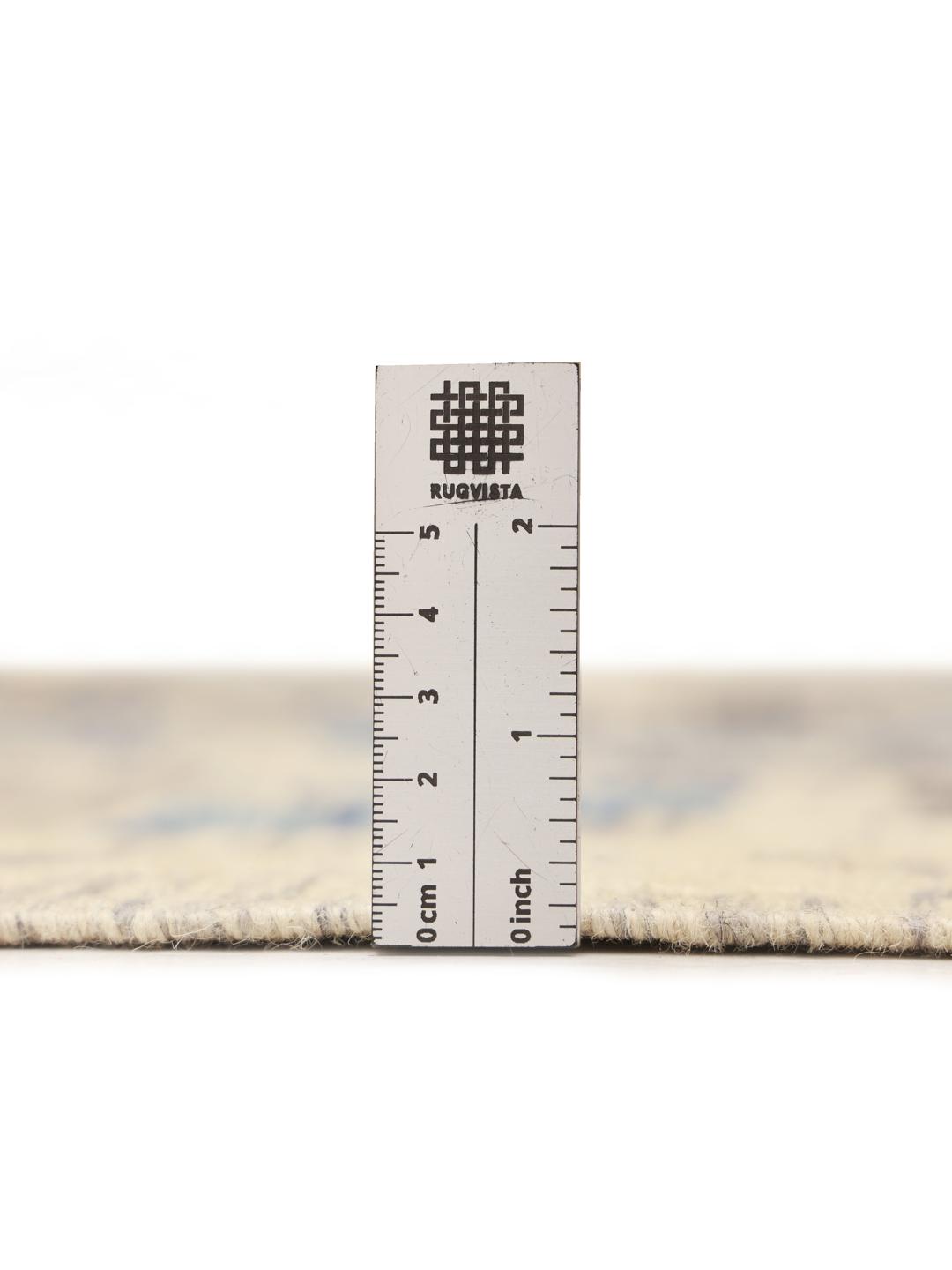
The term Kelim refers to a specific type of tapestry weave where the weft threads are passed through the warp threads to create the design, resulting in a rug that is identical on both sides. This technique is prized for its ability to produce crisp, sharp geometric motifs without the need for a raised pile. The resulting surface is smooth, durable, and highly valued for its clean aesthetic.
Afghan Kelims are famous for their bold, geometric language, often utilising diamonds, triangles, and stylised floral motifs that hold symbolic meaning within the weaving communities. The use of natural dyes and the characteristic interplay of light and dark tones often seen in these rugs reflect the natural landscape of the region, creating a visual dialogue between the artisan and their environment.
Collecting these rugs means acquiring a tangible connection to an ancient craft. Because they are produced by hand in small batches or as individual commissions, they carry the personal signature of the weaver, making each piece a distinct historical document. Owning a Kelim is a way to preserve a legacy of skill and cultural expression that is increasingly rare in the modern world.