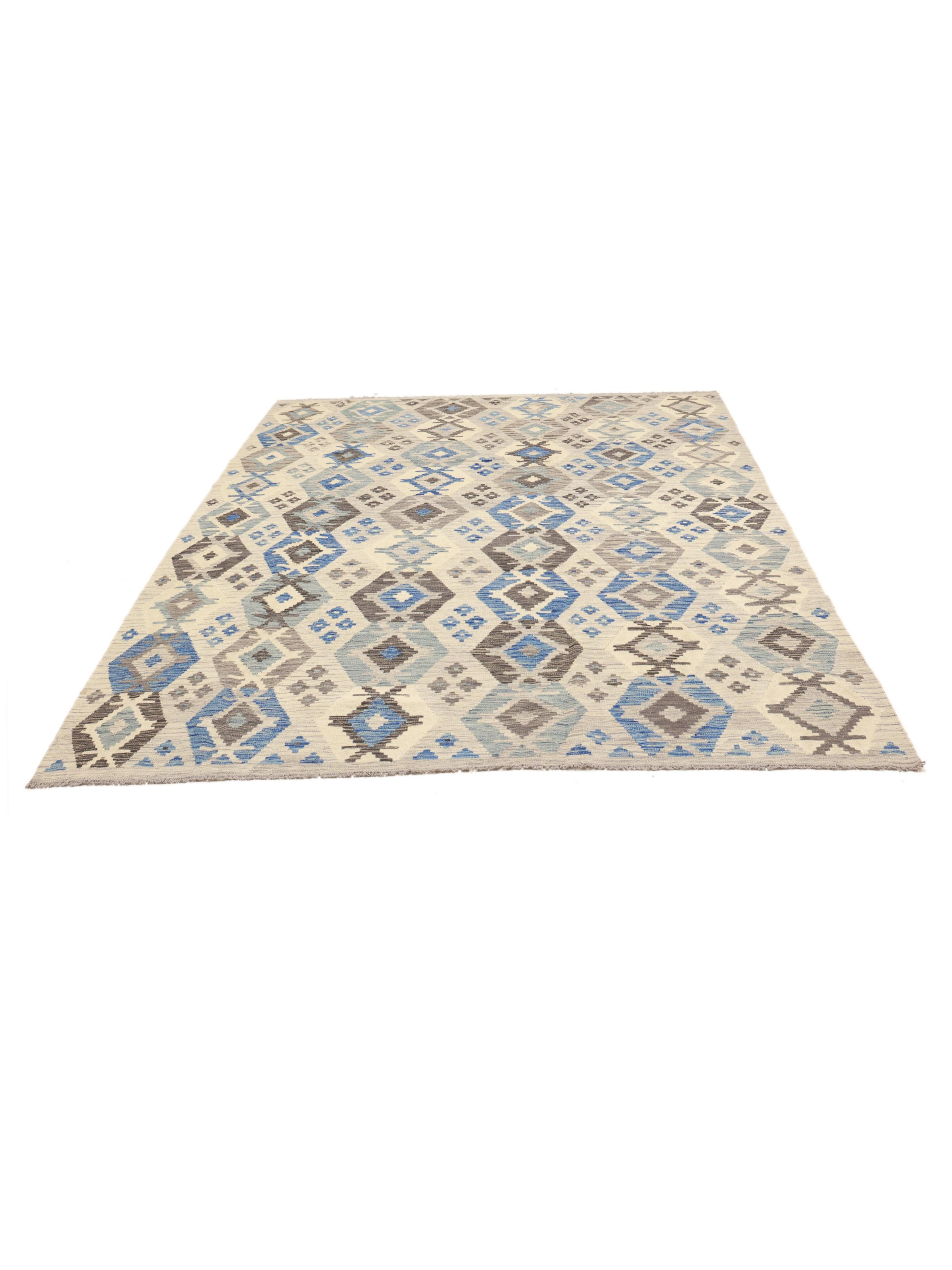
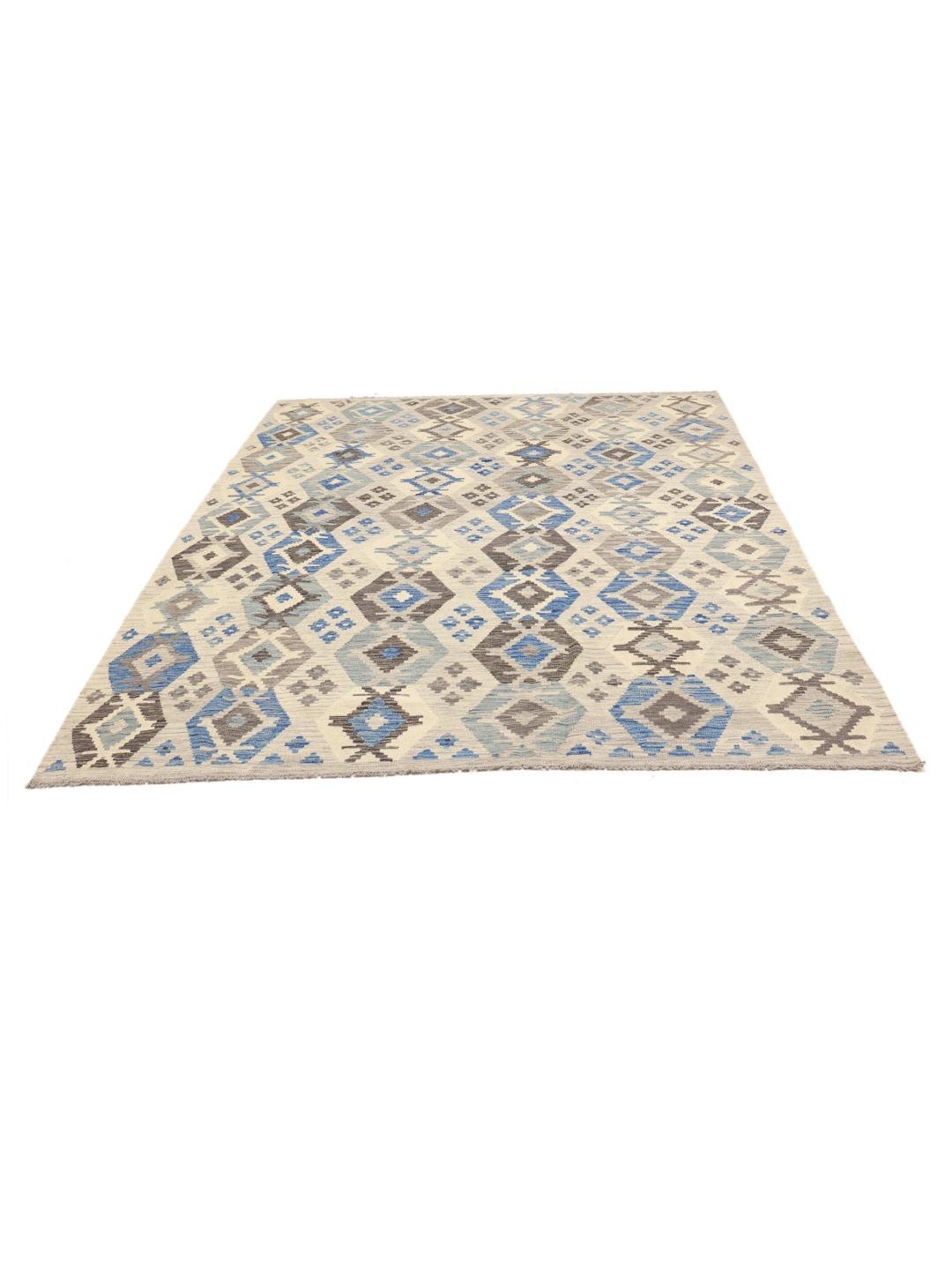
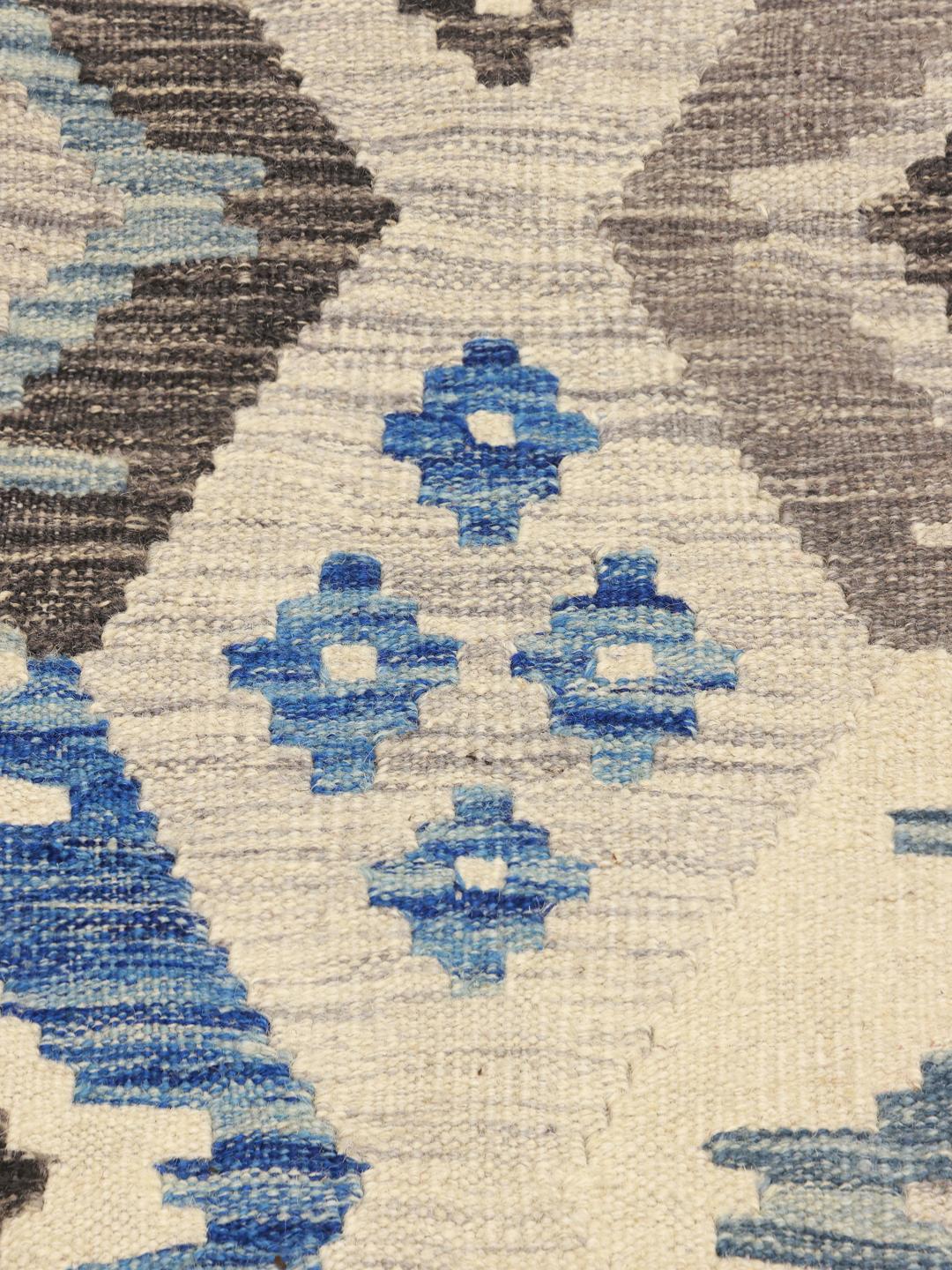
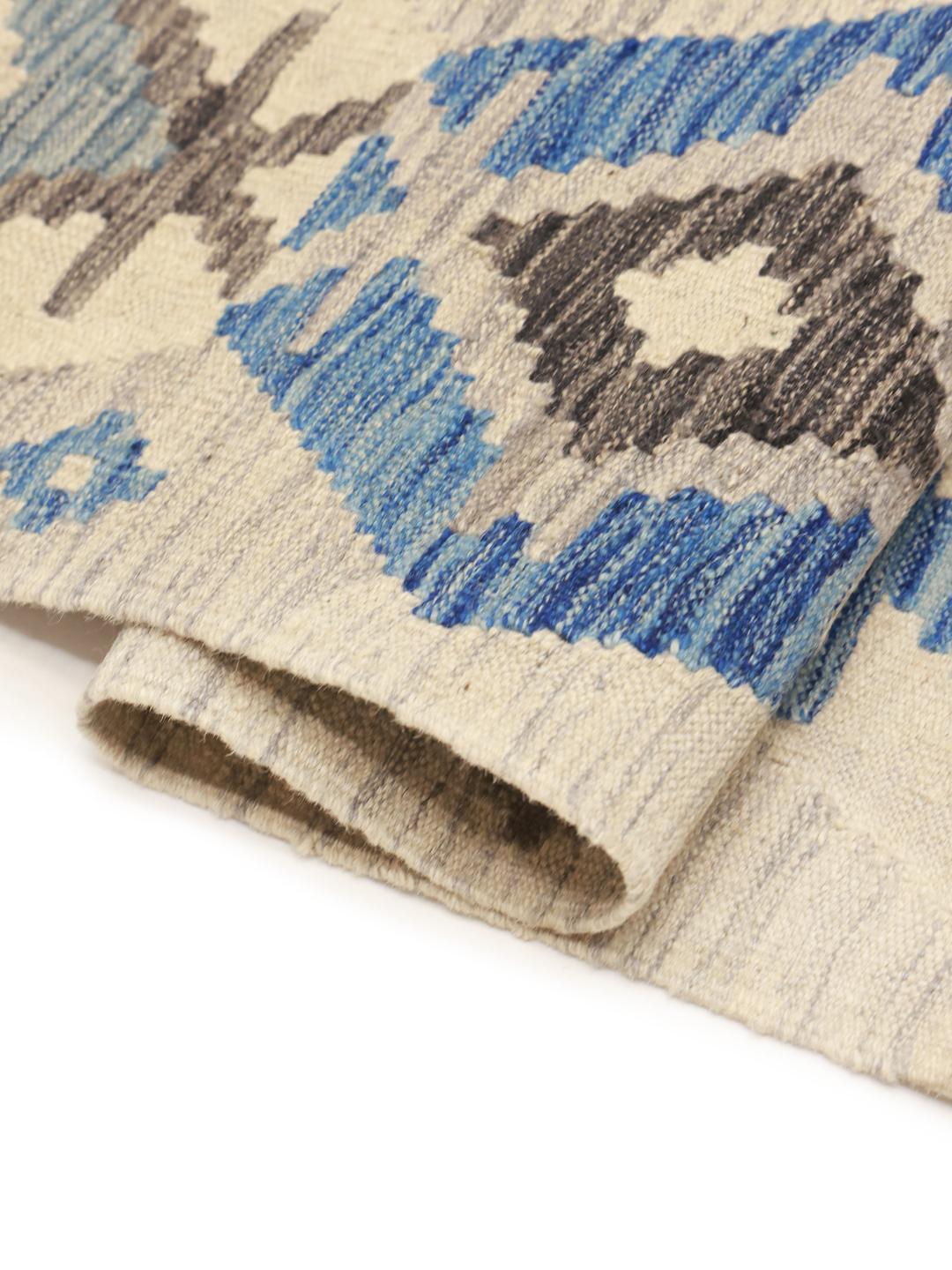
The Kelim, or Kilim, is a storied tradition of flat-woven textiles originating from the nomadic cultures of the Middle East and Central Asia. These rugs were historically created by tribal weavers to serve as functional items for daily life, such as floor coverings, blankets, and storage bags, reflecting the nomadic need for durable and portable objects that could be easily transported across landscapes.
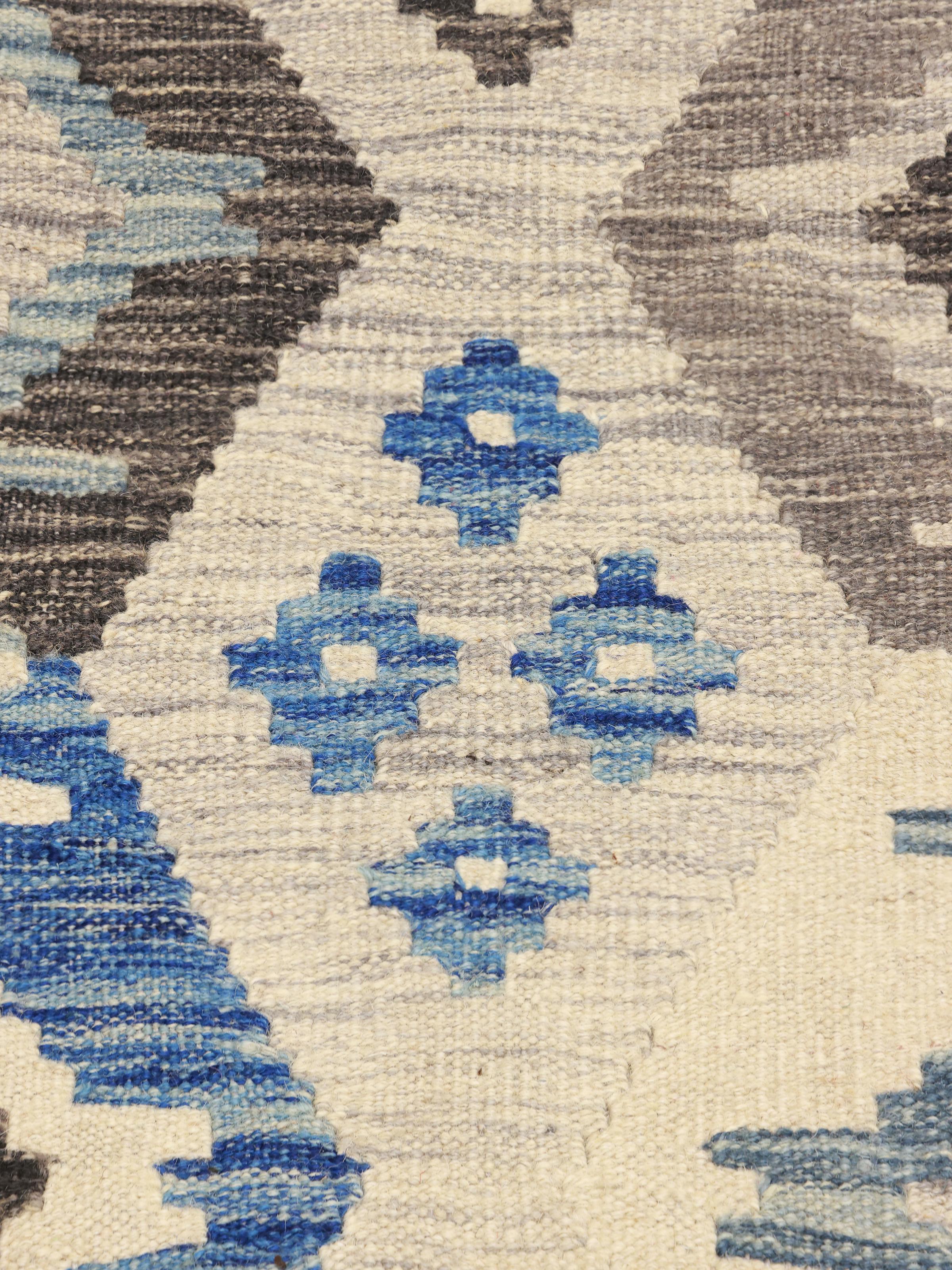
The term Kelim refers to the specific technique of interweaving the warp and weft strands to create a flat surface without a pile. This method results in a lightweight yet exceptionally sturdy textile. Because there is no pile, the intricate geometric designs are visible on both sides of the rug, a hallmark of the craft that showcases the precision required during the weaving process.
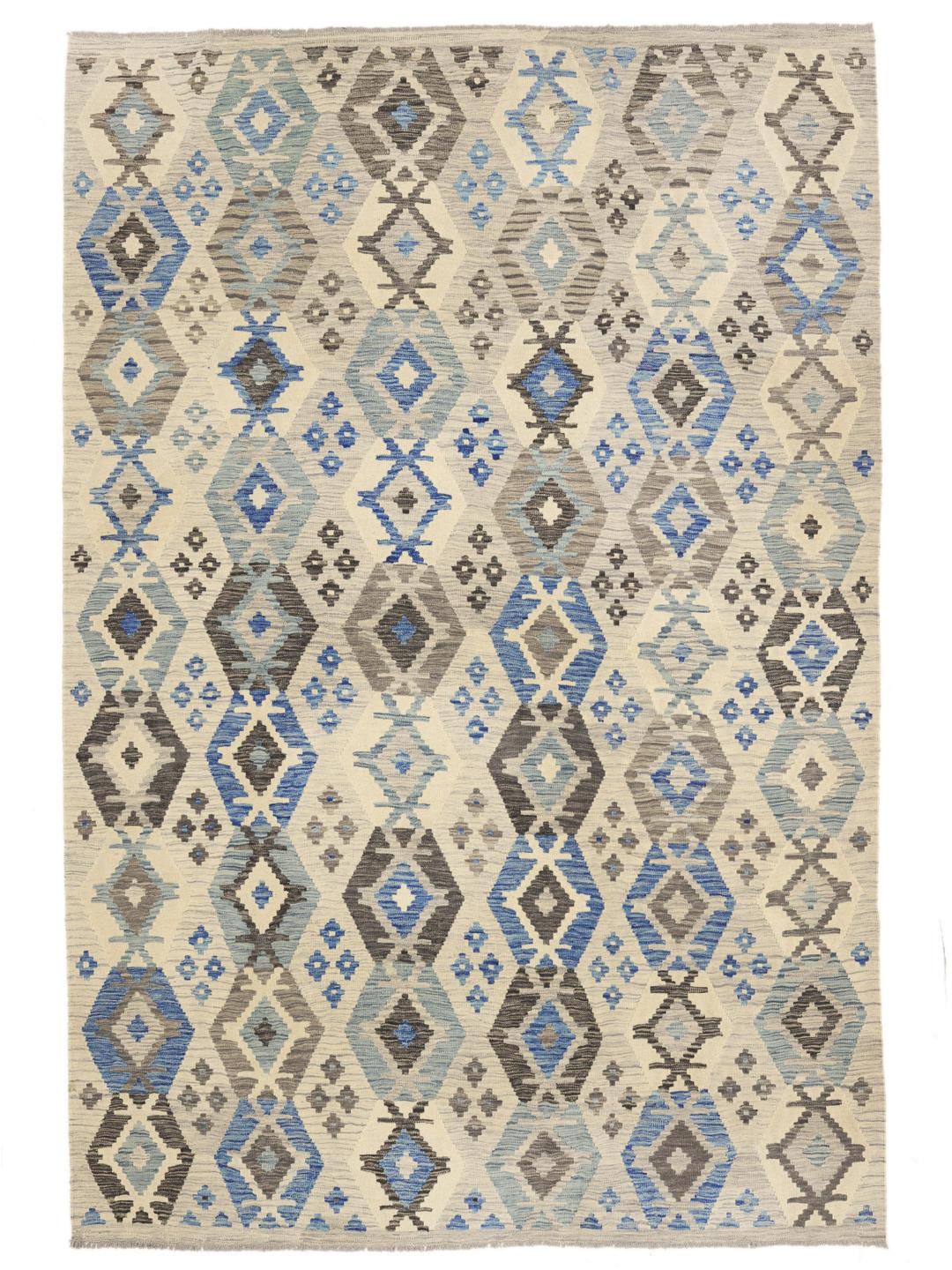
Signature design elements of the Afghan Kelim tradition often include bold, repeating geometric motifs such as diamonds, triangles, and stylized floral shapes. These patterns are typically arranged in a balanced, symmetrical field, often framed by decorative borders that anchor the composition. The use of natural, earthy tones paired with traditional dyes creates a visual language that is both ancient and remarkably suited to contemporary interiors.
Owning an authentic Afghan Kelim is an investment in cultural heritage and human skill. These rugs are highly valued by collectors not just for their aesthetic beauty, but for the story they tell about regional craftsmanship and the dedication required to maintain these traditional methods. By bringing such a piece into your home, you are preserving a legacy of artistry and supporting the continued vitality of a timeless craft.