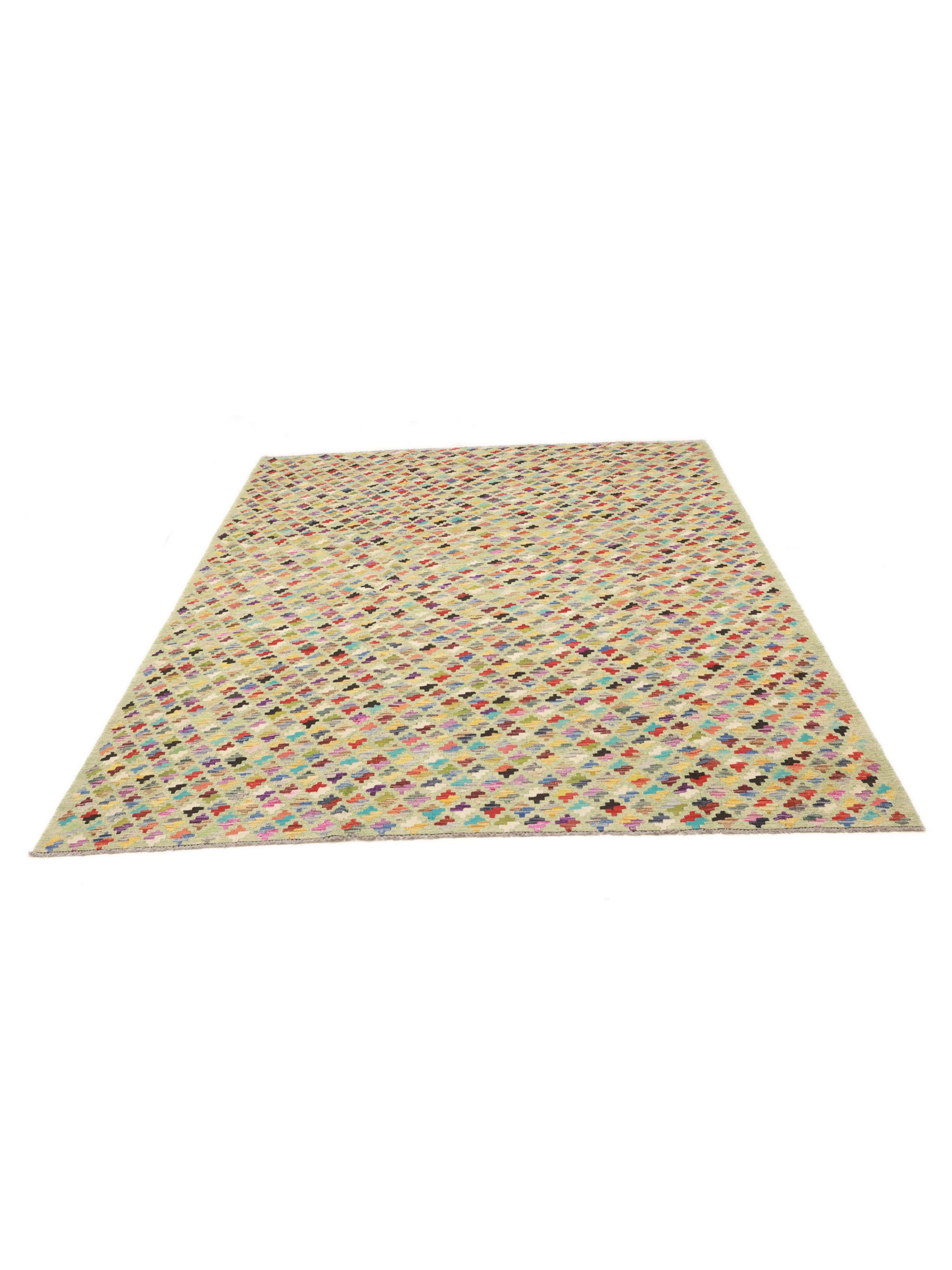
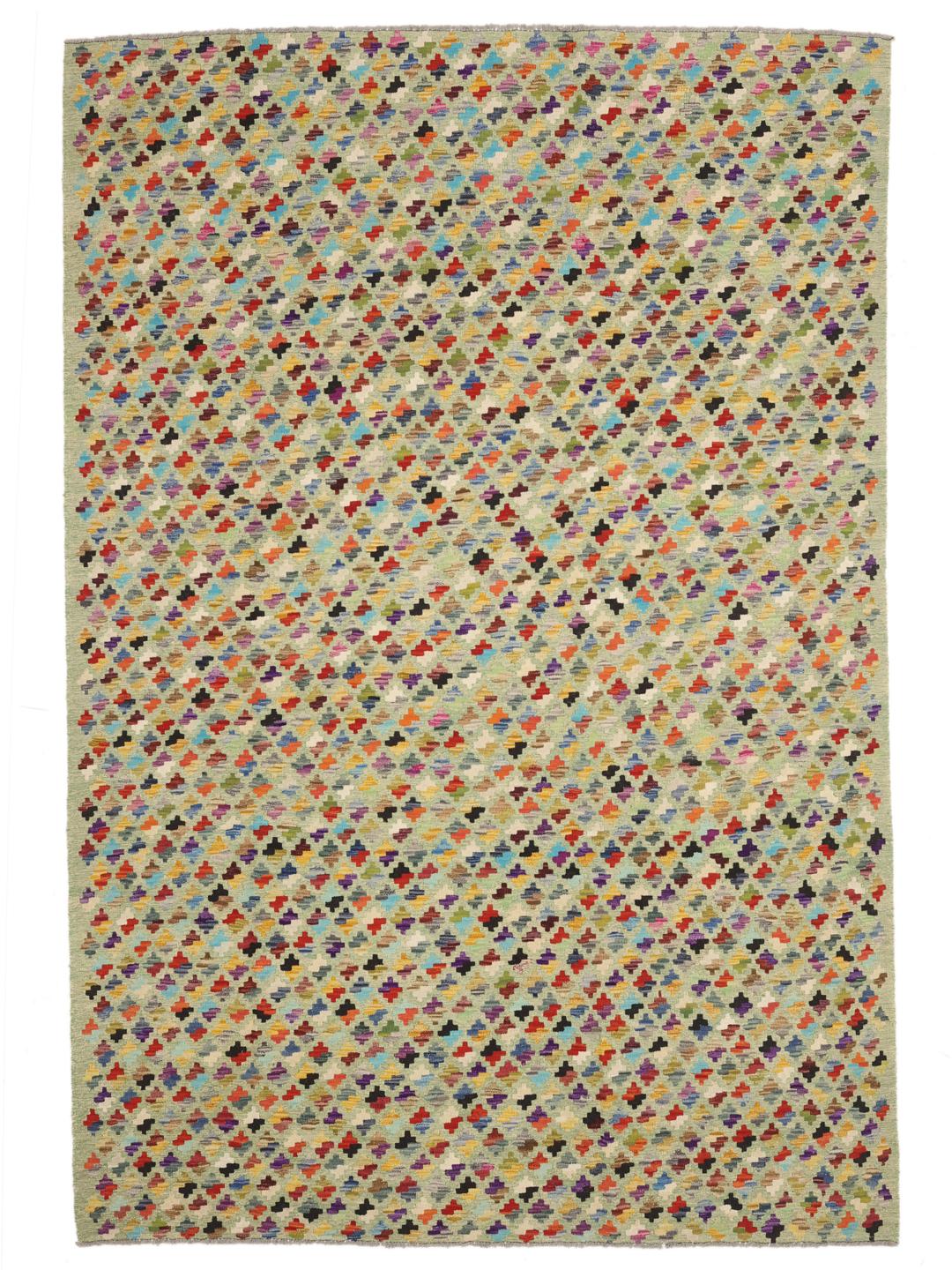
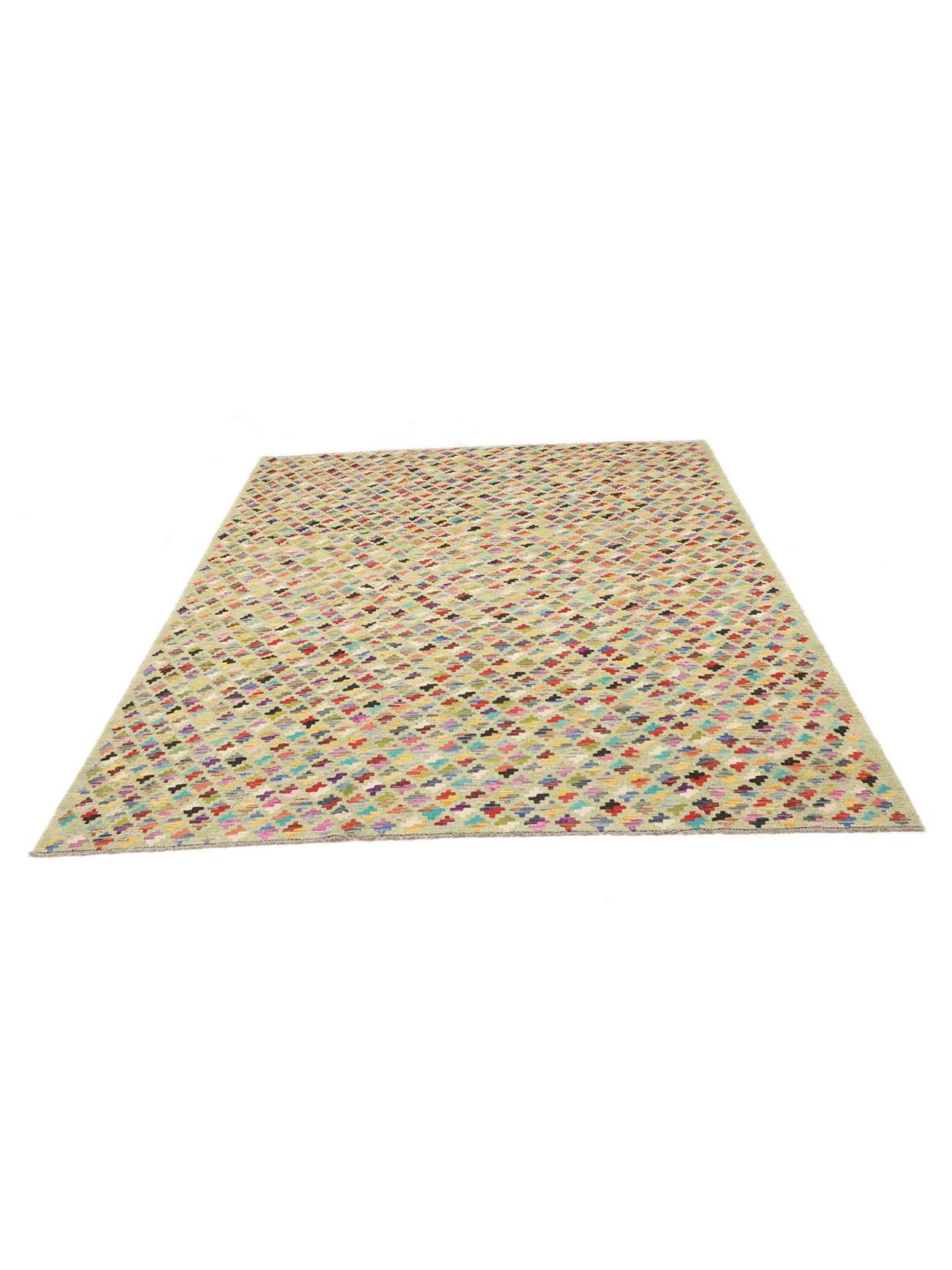
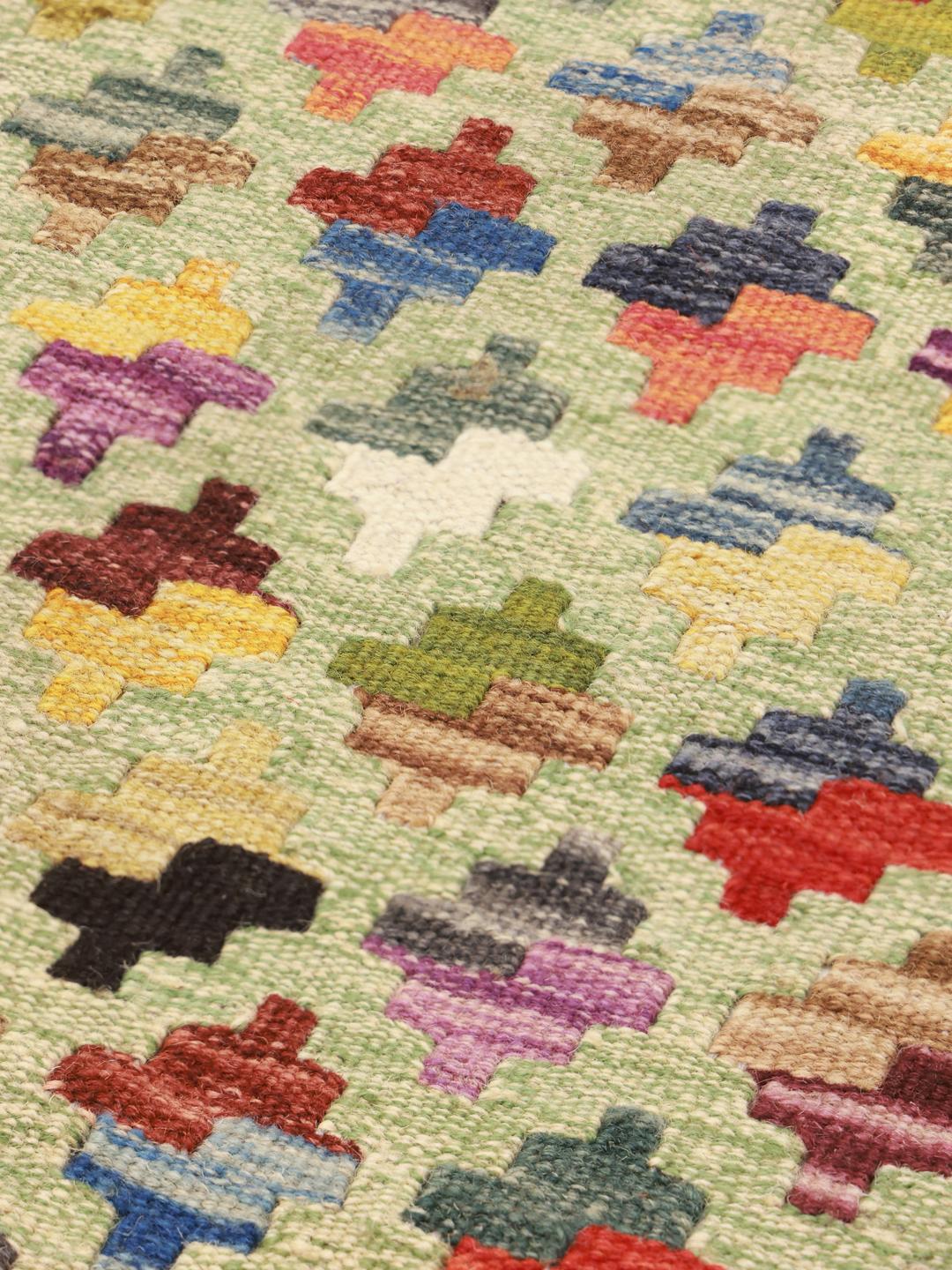
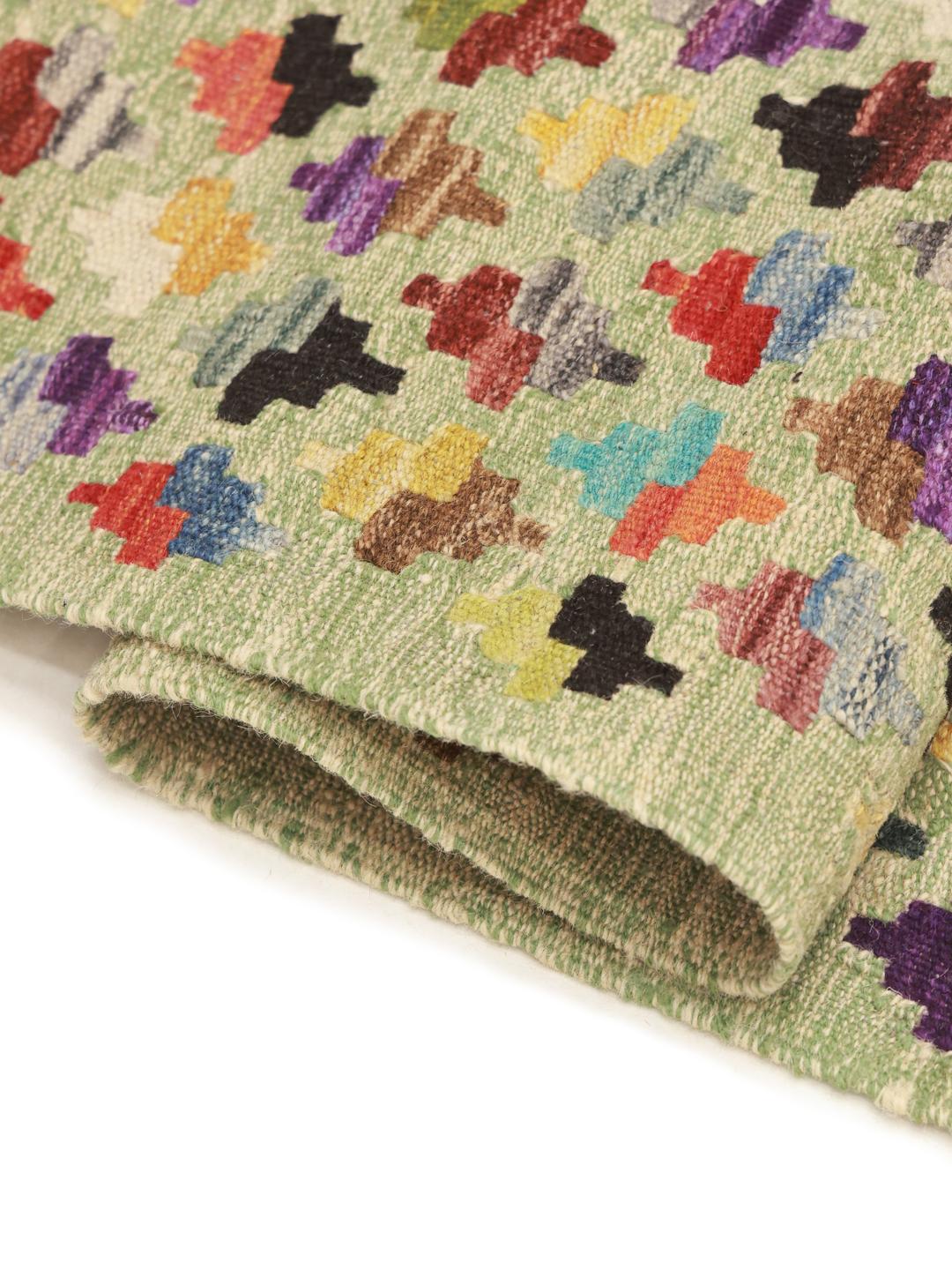
The Kelim tradition in Afghanistan is deeply connected to the semi-nomadic lifestyles of the region, where these flat-woven rugs were historically designed to be portable, durable, and multifunctional. These rugs were essential to daily life, serving as floor coverings, blankets, and storage bags for families travelling across the rugged landscapes of the Middle East. This nomadic heritage is why the designs are often so bold, geometric, and expressive.
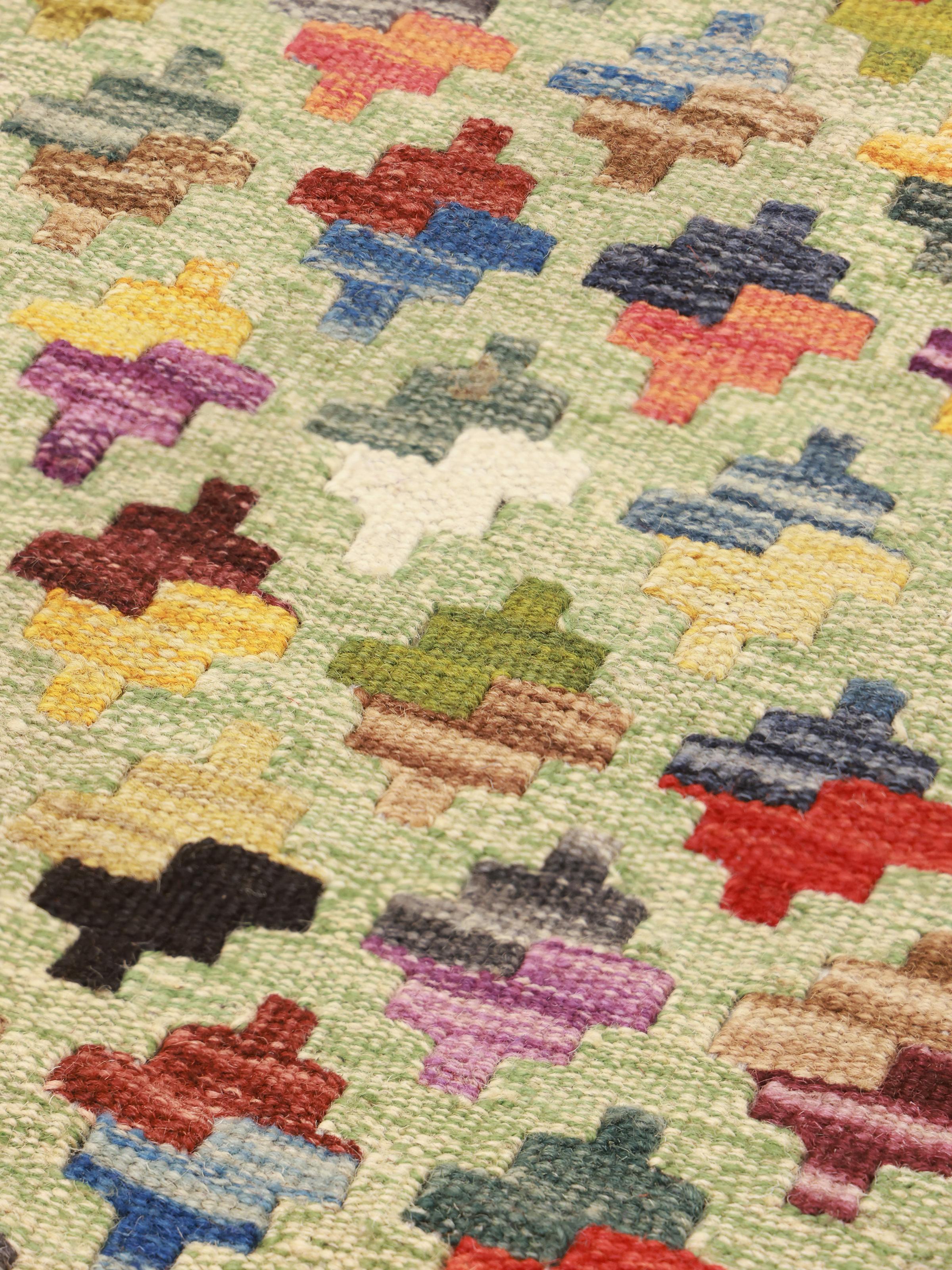
Technically, the term Kelim refers to the slit-weave technique, where the weft threads are woven back and forth through the warp threads to create the pattern. Because there is no pile, the rug is reversible and possesses a crisp, clean aesthetic that highlights the intricacy of the weave. This method demands a high level of skill, as the weaver must manage multiple colour changes throughout the process to ensure the design remains sharp and consistent.
The signature design elements of these rugs often include repeating geometric motifs, such as diamonds or small stylized shapes, which are arranged in rhythmic, vibrant patterns. While colour palettes can vary, the use of bright, saturated tones is a hallmark of this tradition, designed to stand out against the earthy, neutral backgrounds of traditional homes. This specific rug showcases a lively, multicoloured display that honours the playful and creative spirit of its makers.
Collecting a Kelim from this region is a way to preserve a piece of living history. These rugs are highly valued for their authenticity and the way they represent a bridge between ancient techniques and modern home life. Owning one is a testament to the skill of the artisans and the enduring importance of traditional craftsmanship in an increasingly automated world.