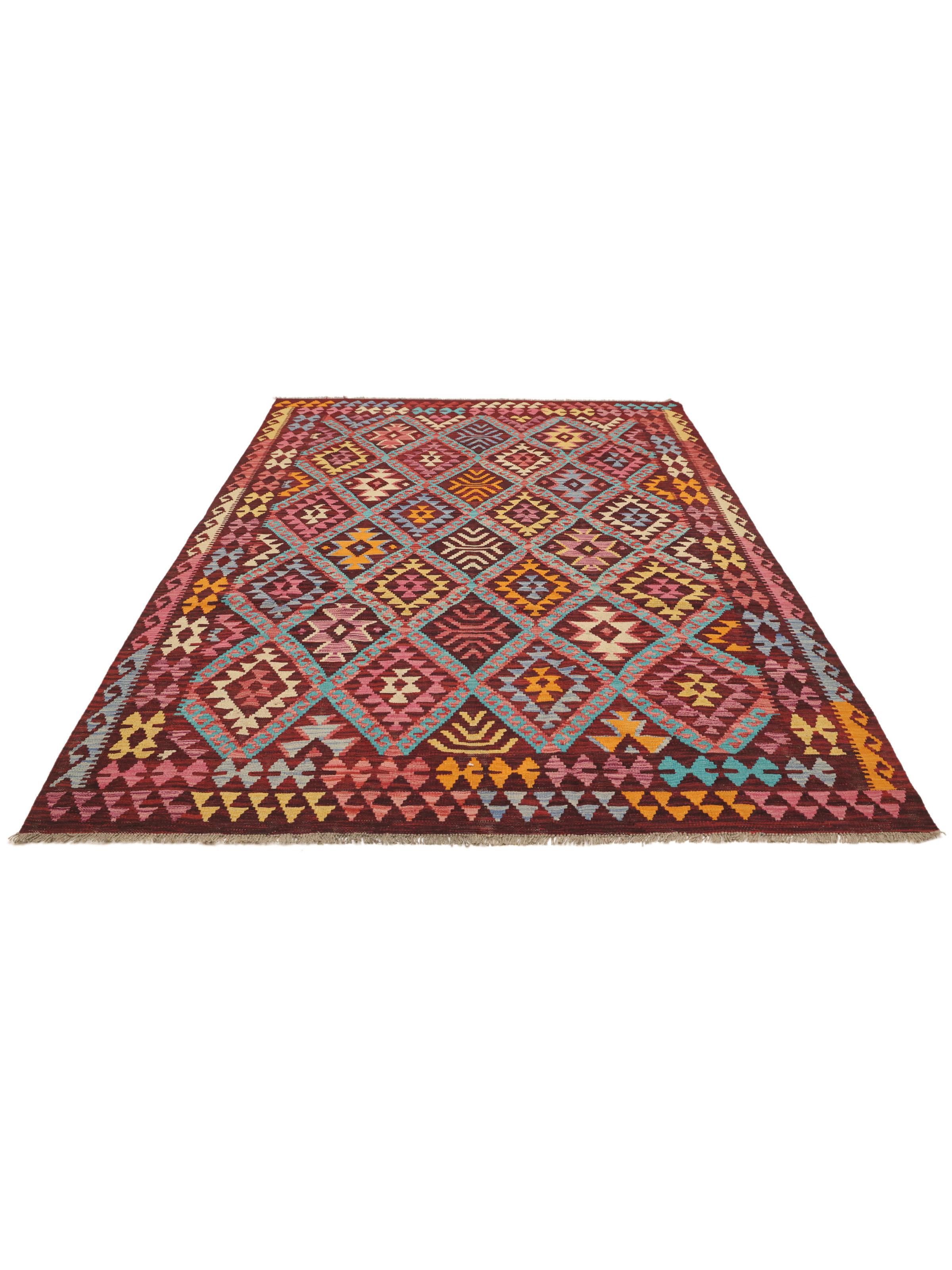
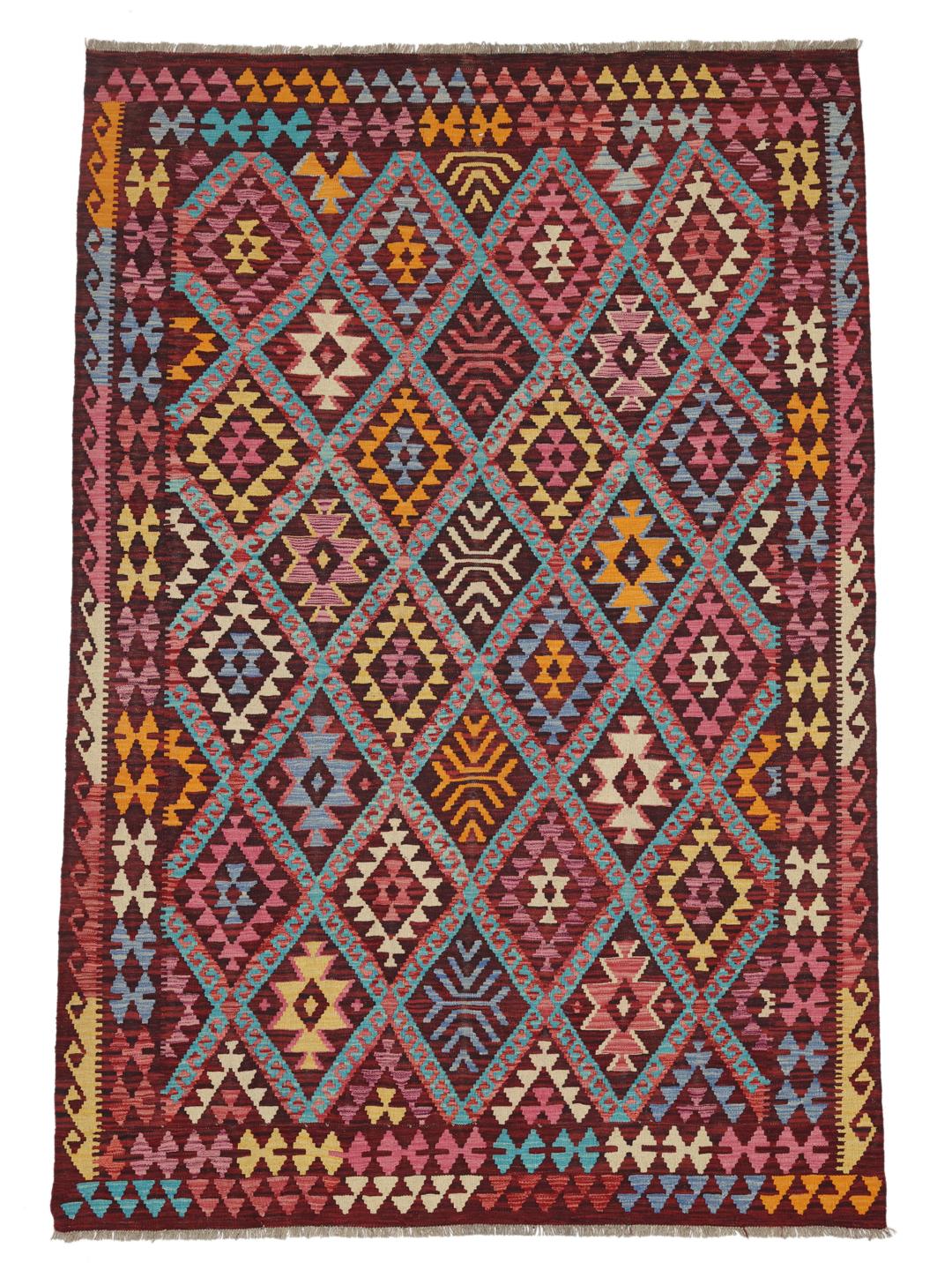
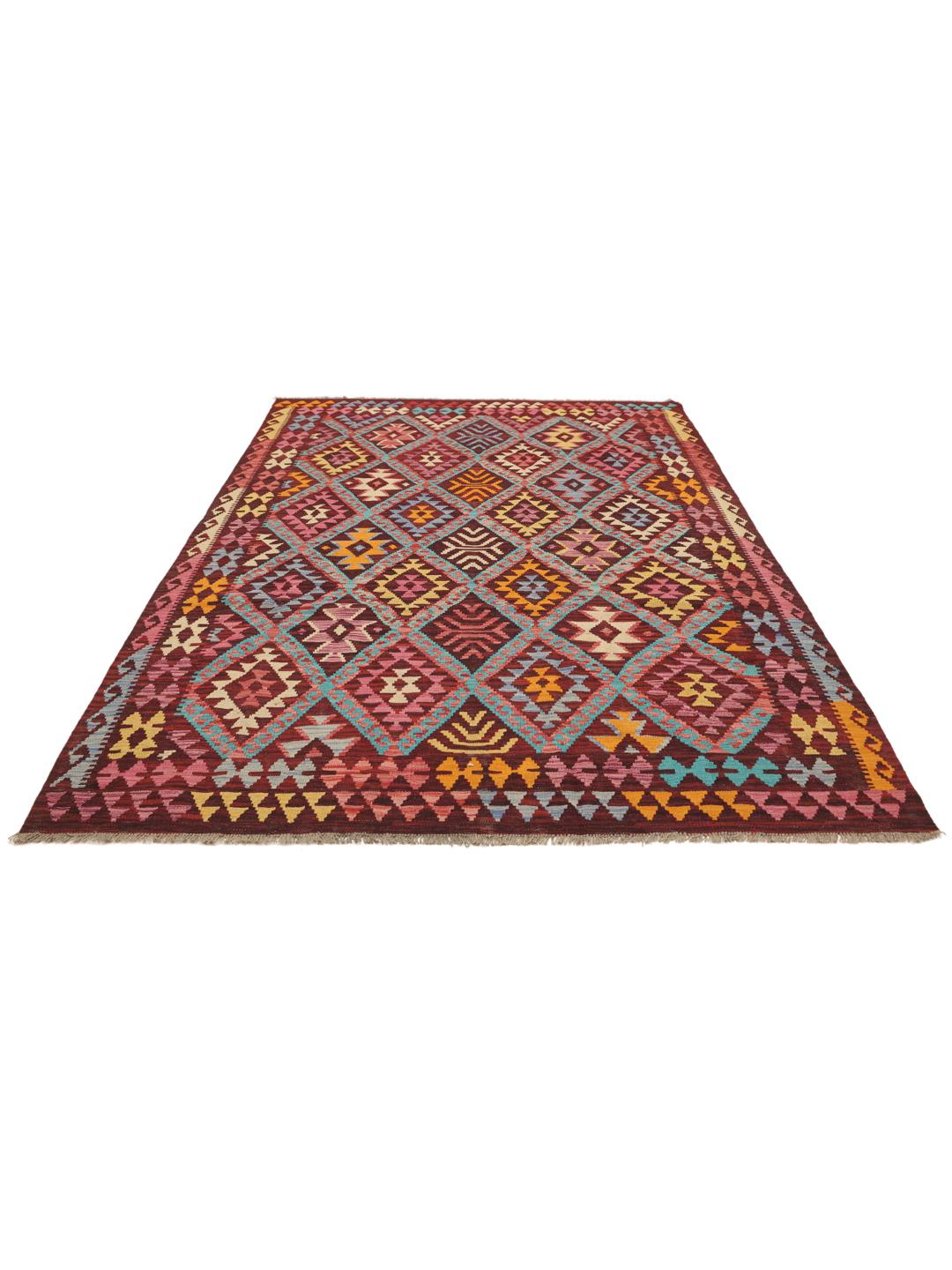
The Kelim tradition in Afghanistan is deeply rooted in the nomadic and semi-nomadic cultures of the region. These rugs have been crafted for centuries, serving not just as floor coverings, but as essential, multi-functional items that could be easily rolled up and transported. This history of movement has influenced their design, leading to the development of flat-weave techniques that are both lightweight and remarkably durable.
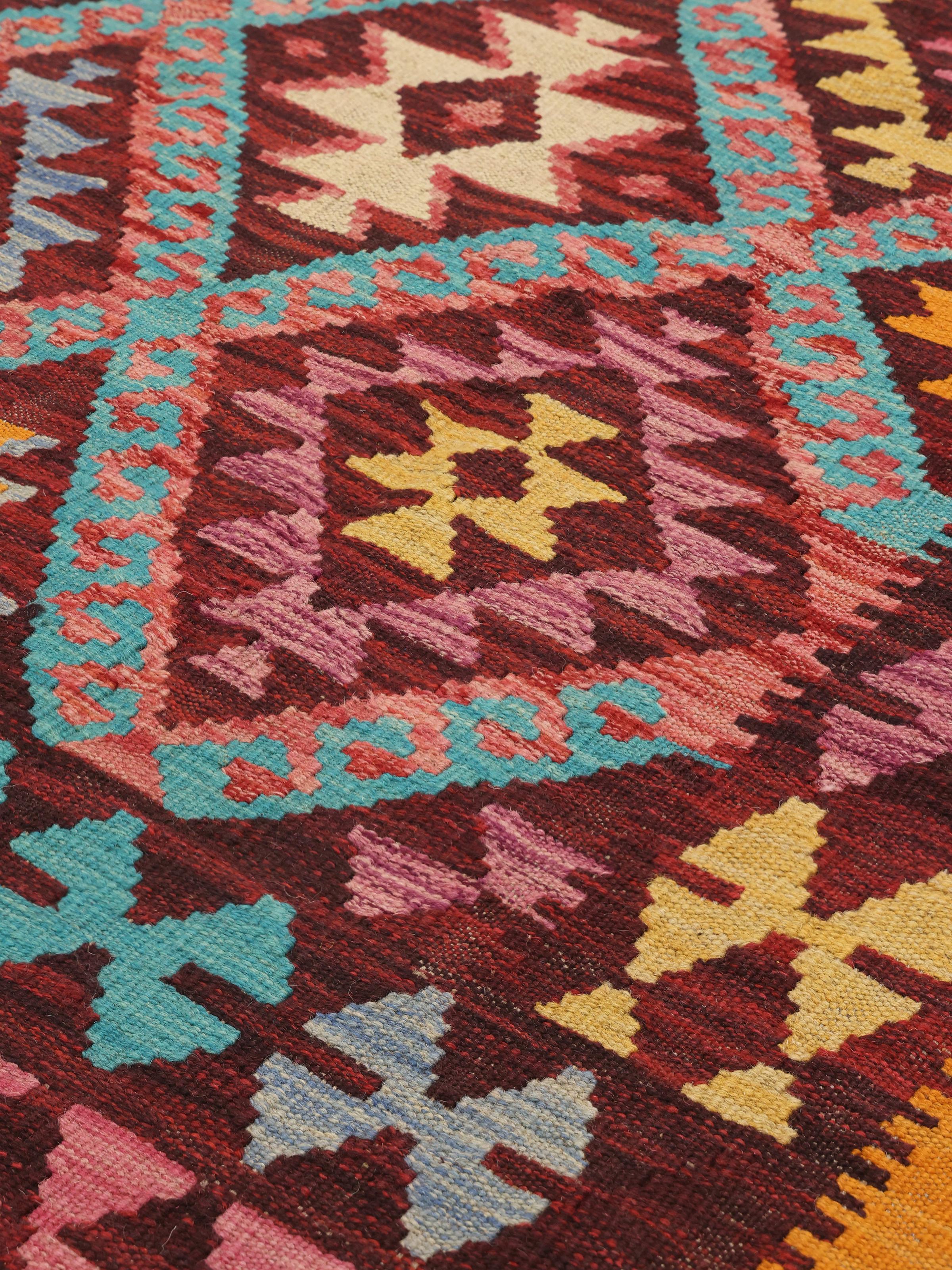
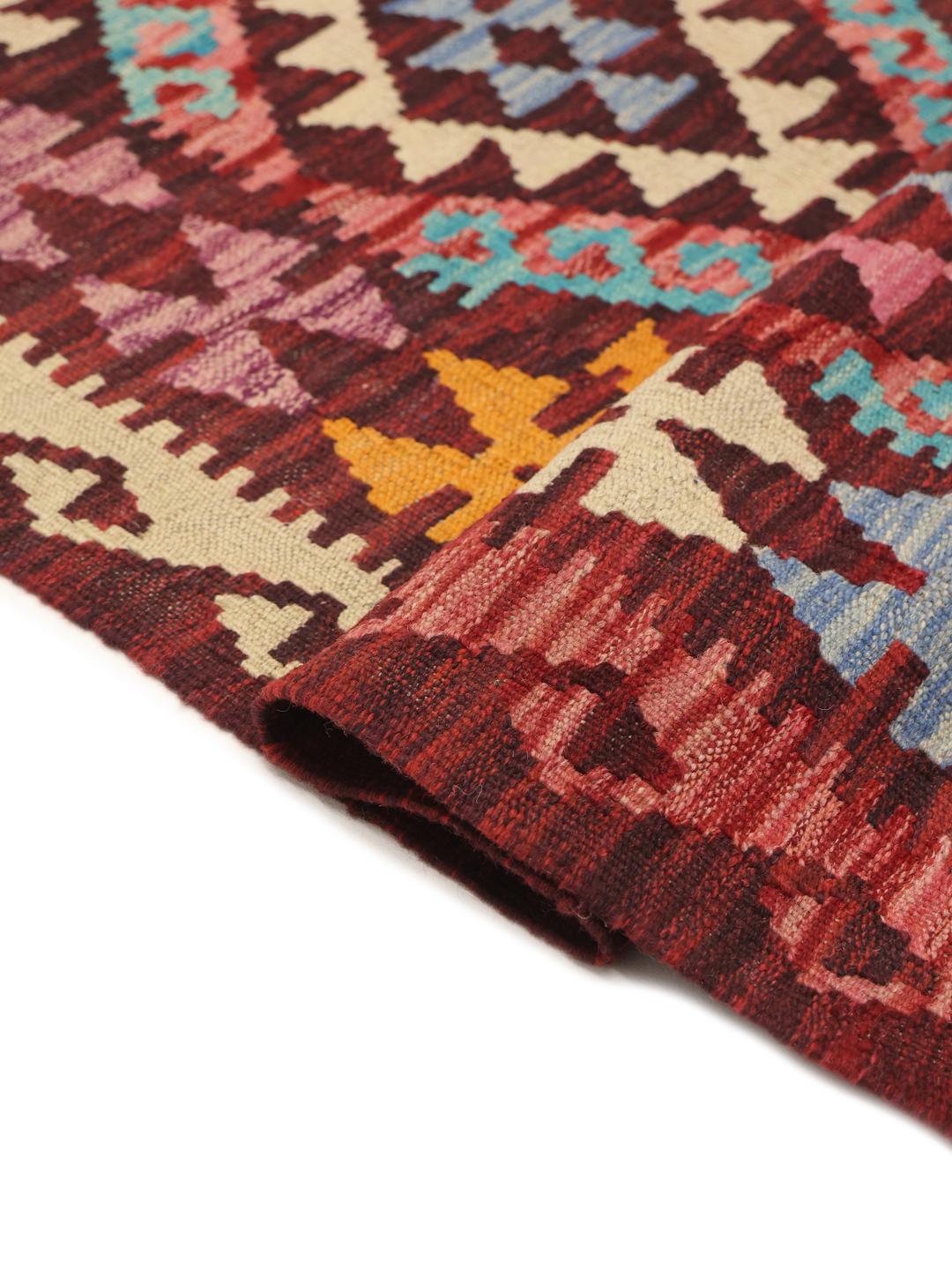
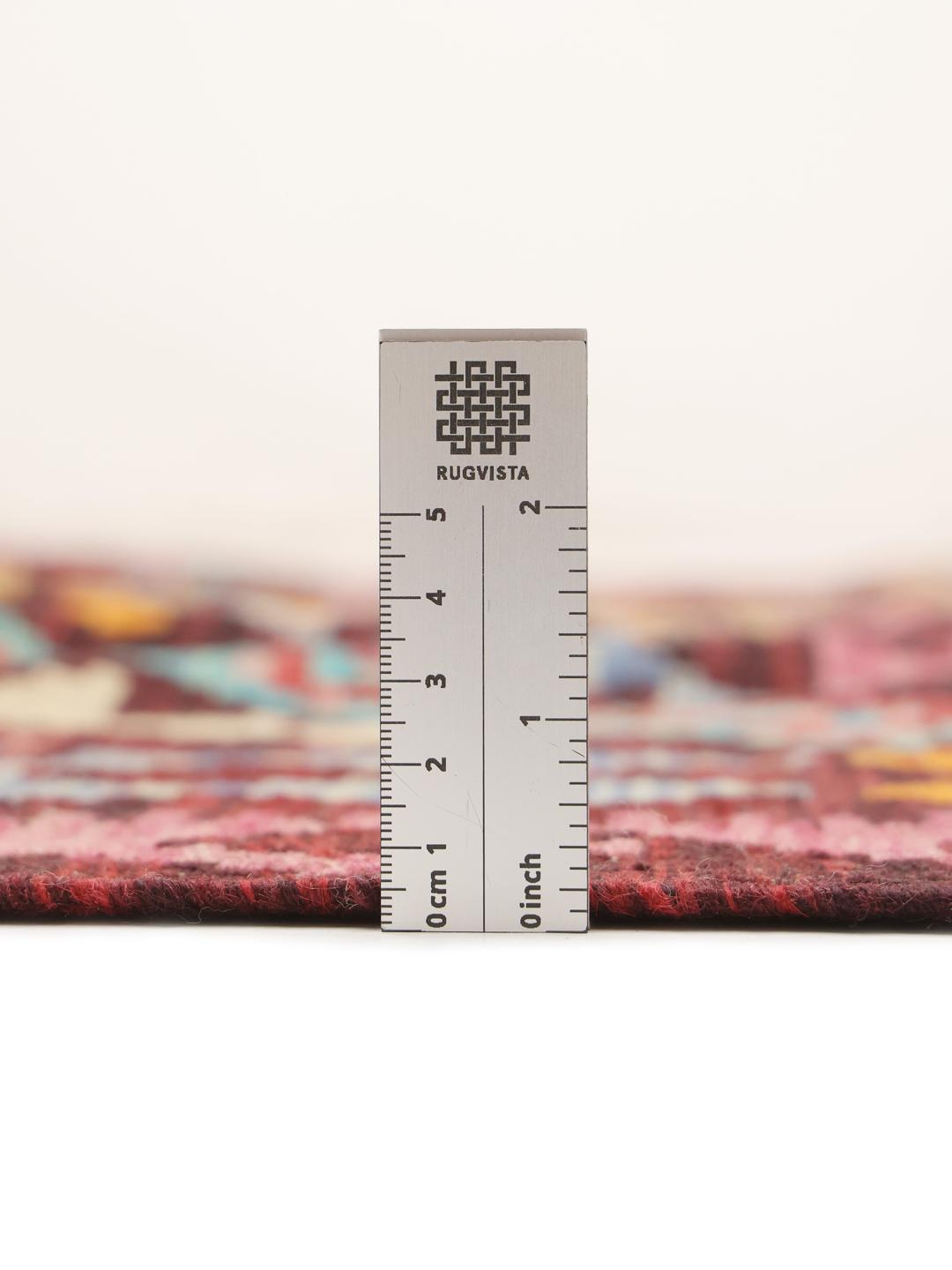
Technically, a Kelim is a flat-weave rug, meaning it lacks the knotted pile found in many other types of carpets. The pattern is created by interweaving the coloured weft threads through the warp, resulting in a rug that looks nearly the same on both sides. This technique produces a clean, sharp aesthetic and a slim profile that is highly prized for its versatility and ease of maintenance.
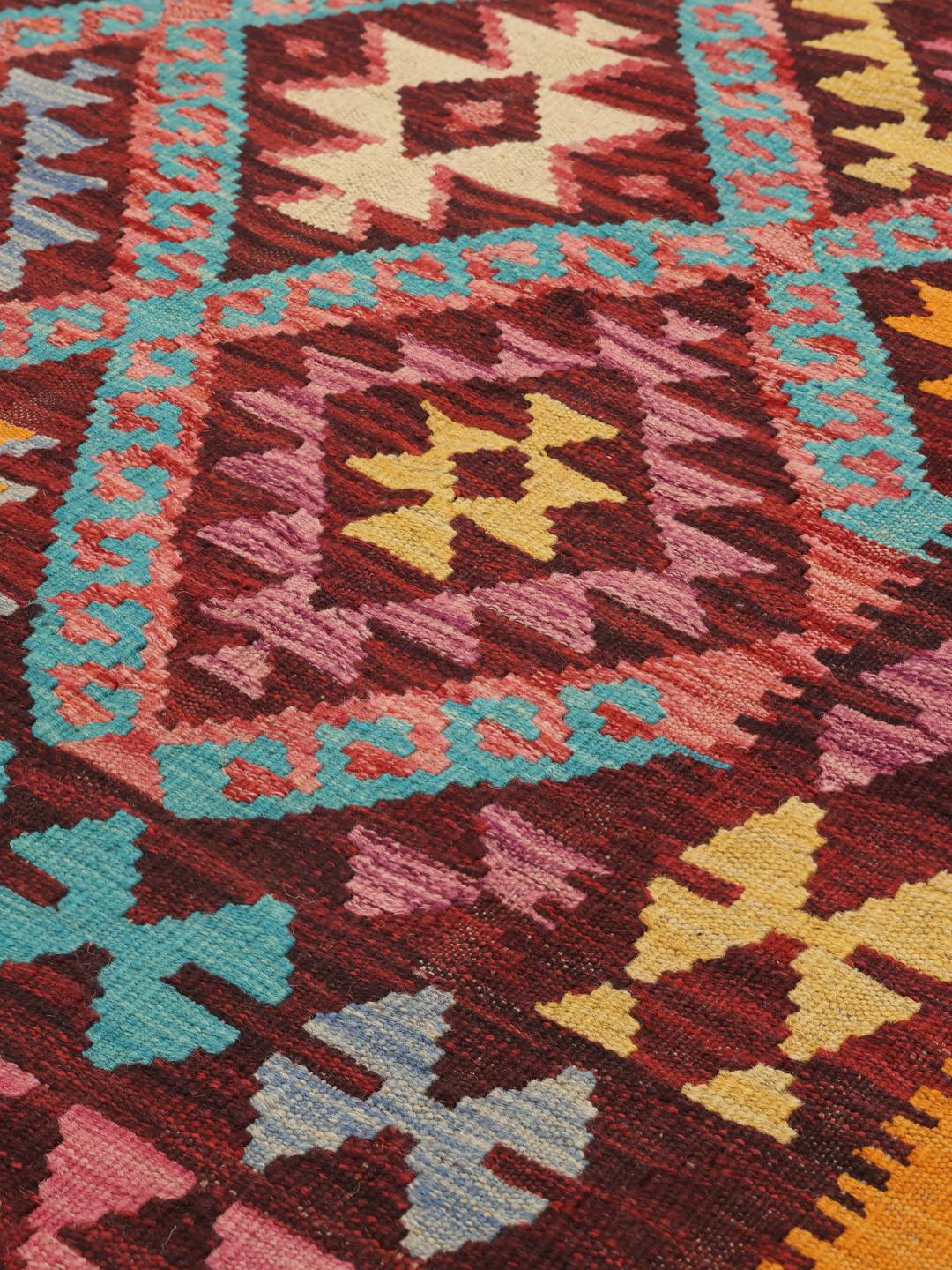
The design language of these rugs is defined by bold geometric motifs, such as the diamonds and tribal symbols seen here. These patterns are often passed down through generations, with each region or tribe having its own set of signature shapes and colour traditions. Using natural dyes in the past, these rugs were characterised by earthy tones, while modern examples often incorporate vibrant, expressive colour combinations that highlight the intricate geometric arrangements.
Owning an Afghan Kelim is more than just a decorative choice, it is an investment in a storied craft. These pieces represent the skill and cultural identity of the weavers who produce them. By preserving these traditional methods, collectors and homeowners alike help ensure that the artistry of the region continues to thrive, making each Kelim a meaningful addition to a modern home.