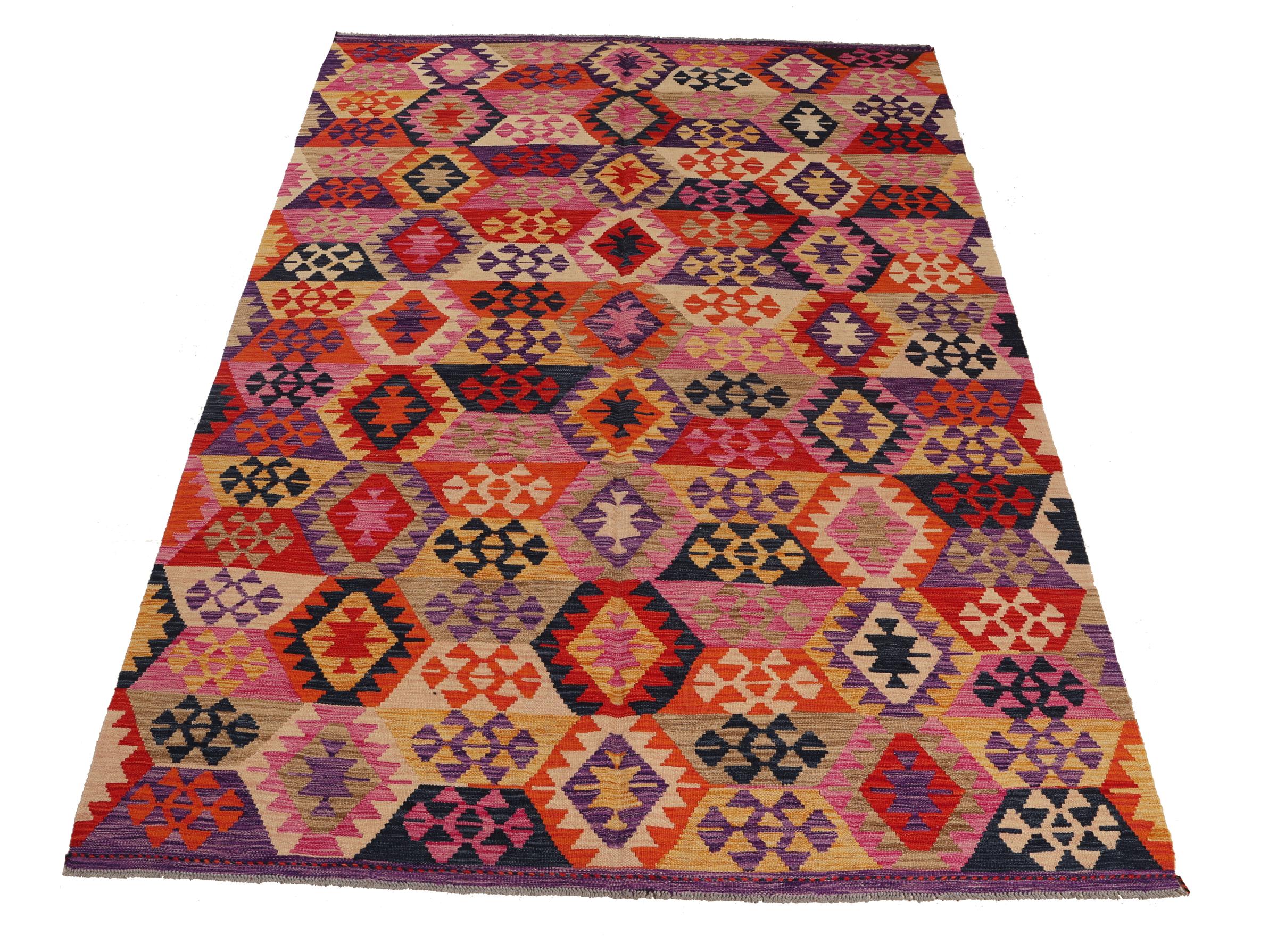
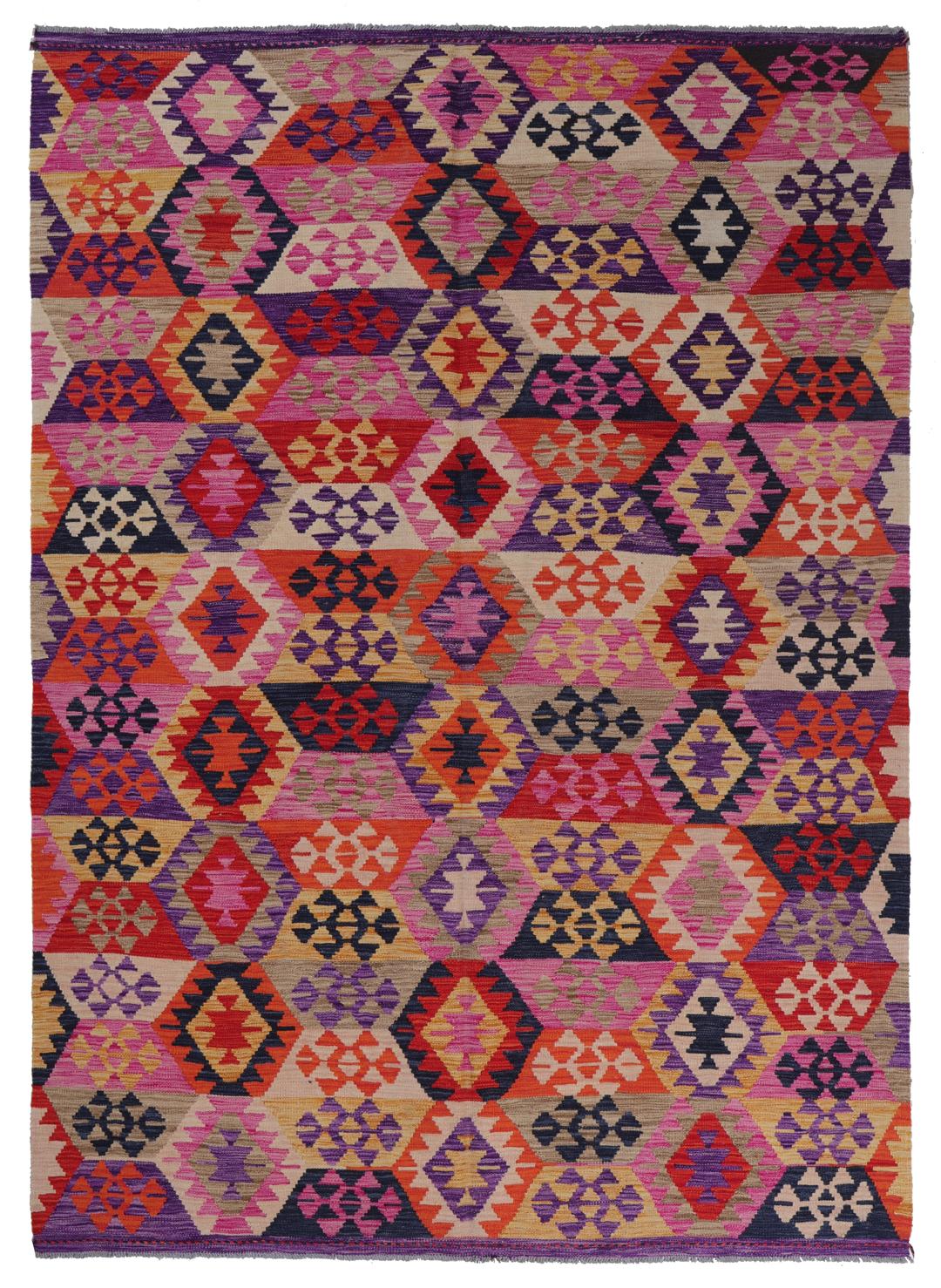
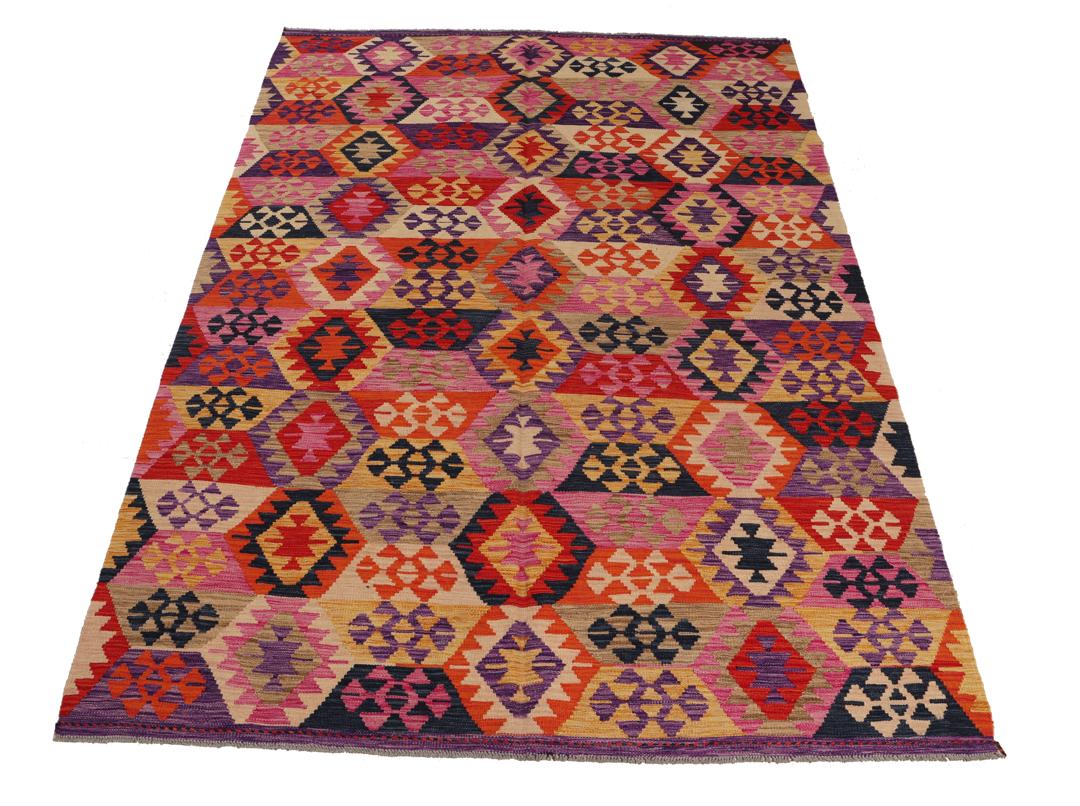
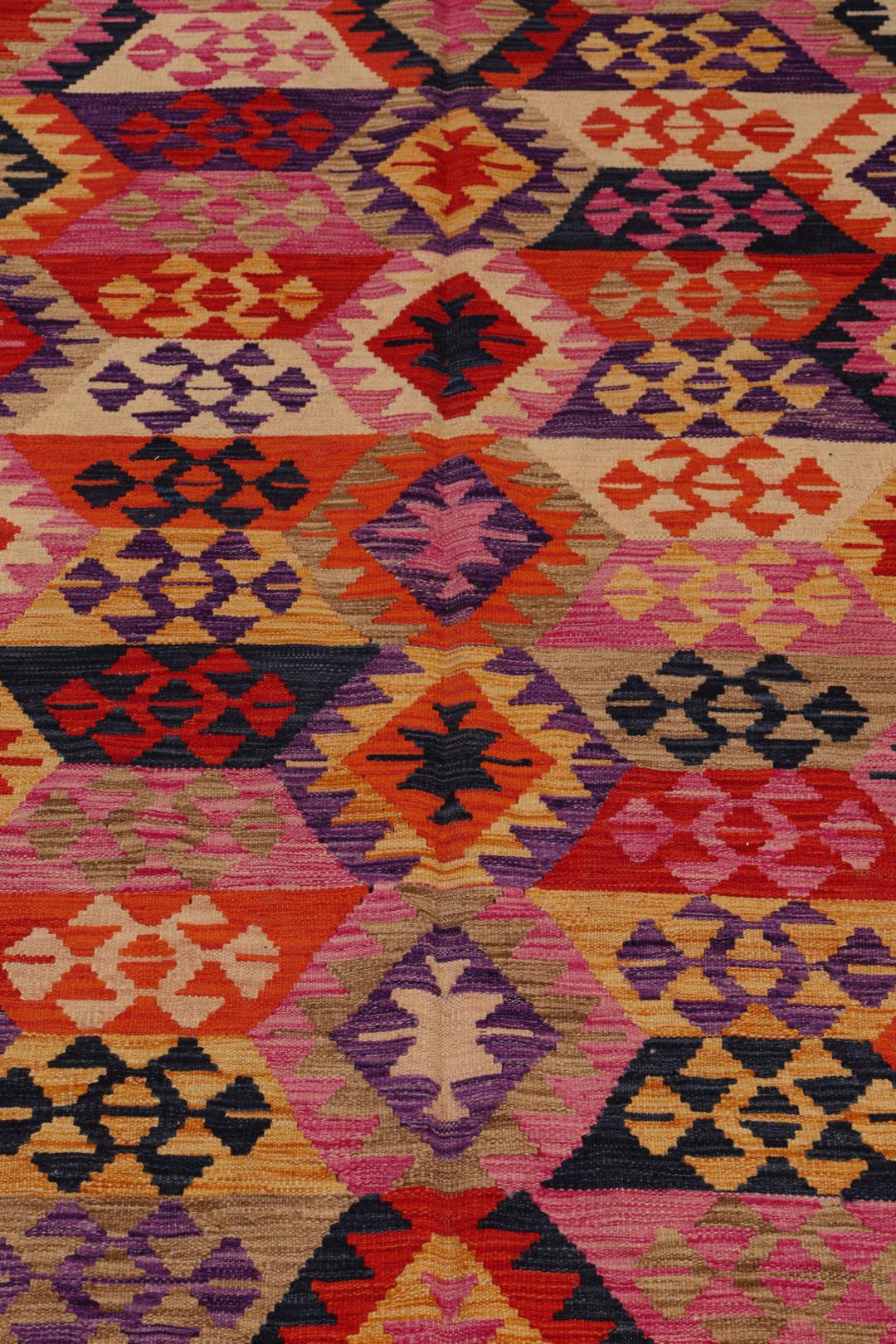
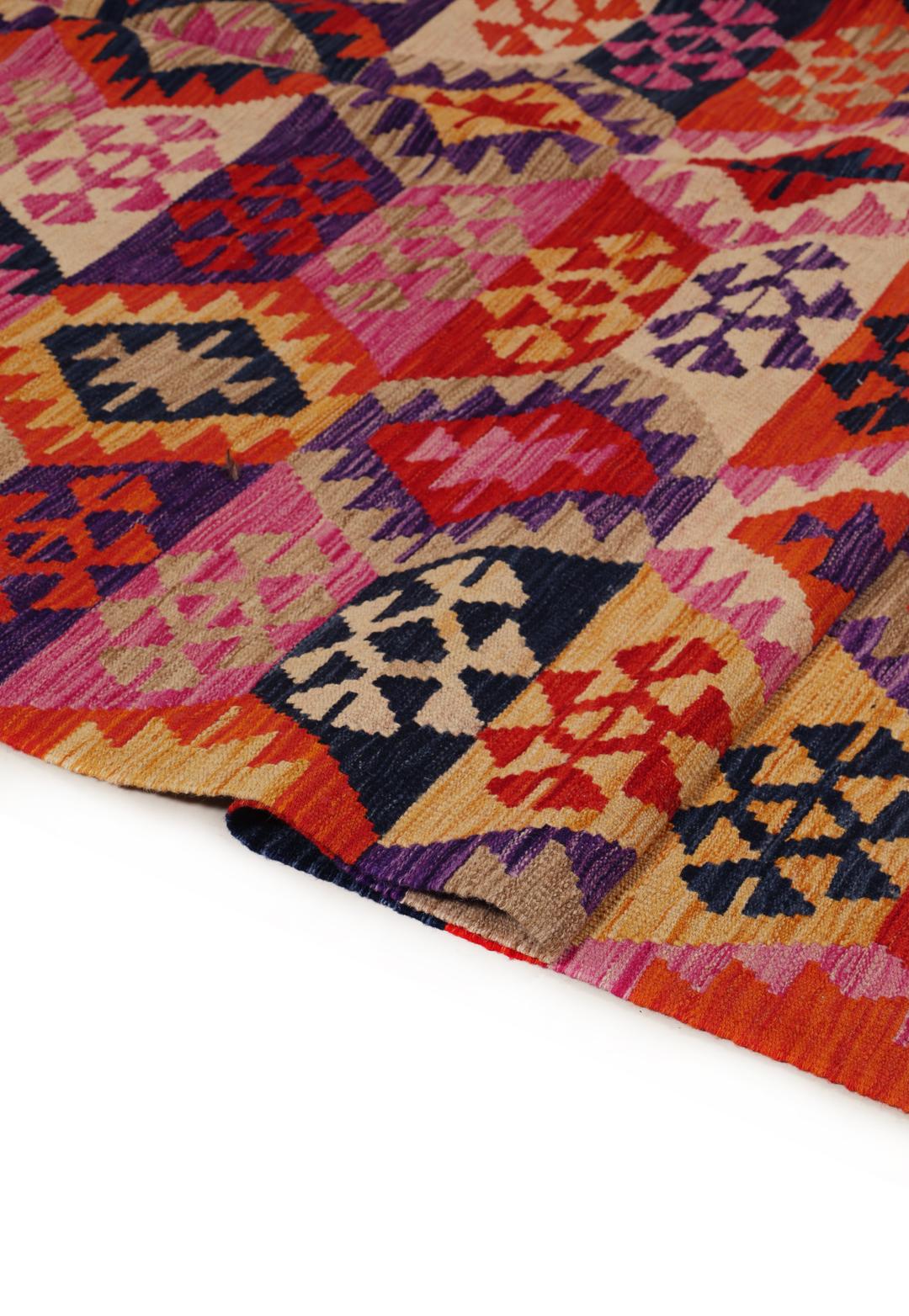
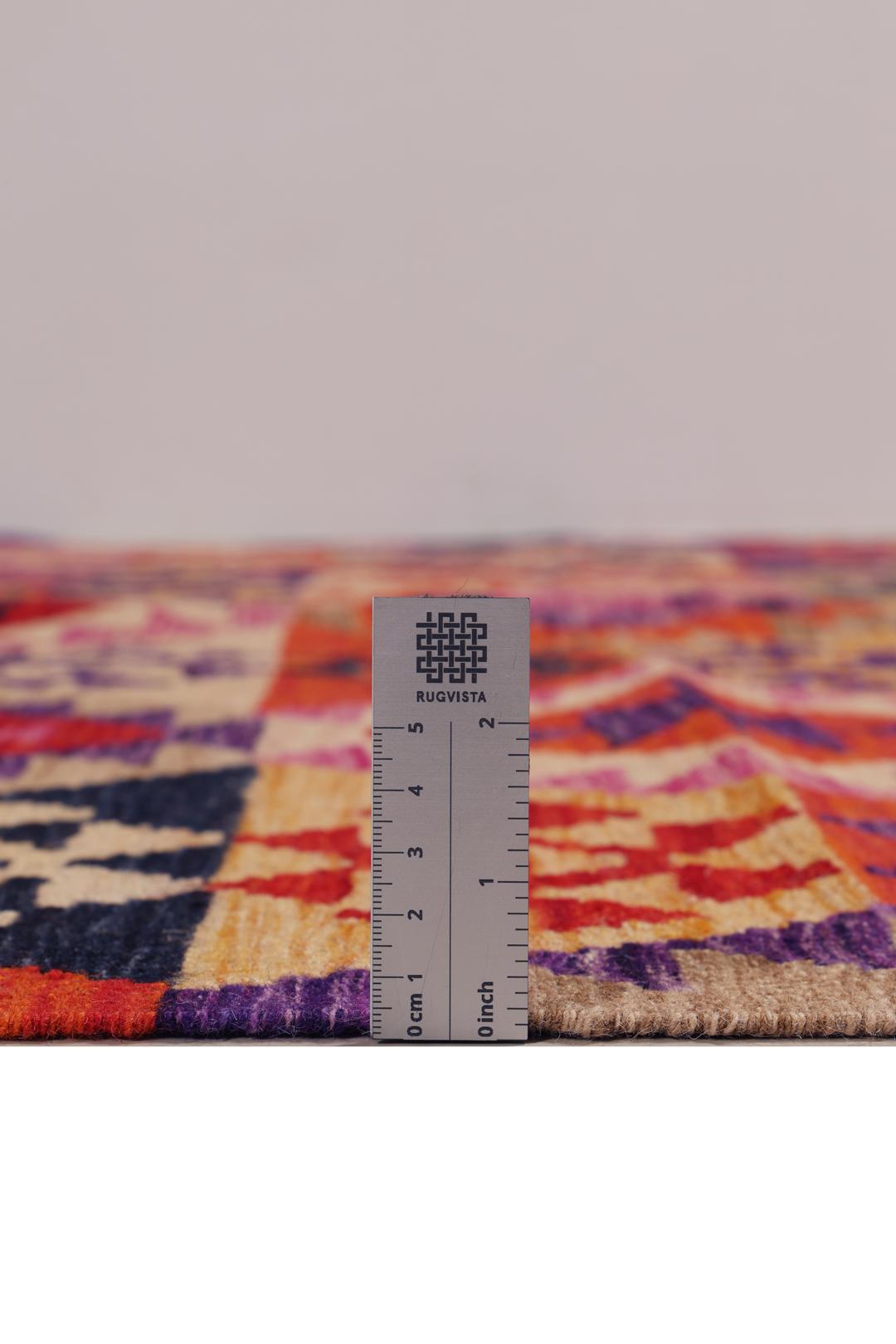
The Kelim tradition is deeply rooted in the nomadic cultures of the Middle East and Central Asia. These rugs were historically created by tribal weavers as functional items for daily life, serving as floor coverings, wall hangings, or storage bags. The migration of these weaving techniques across the region has resulted in a diverse evolution of styles, with Afghanistan becoming a renowned hub for these flat-woven masterpieces.
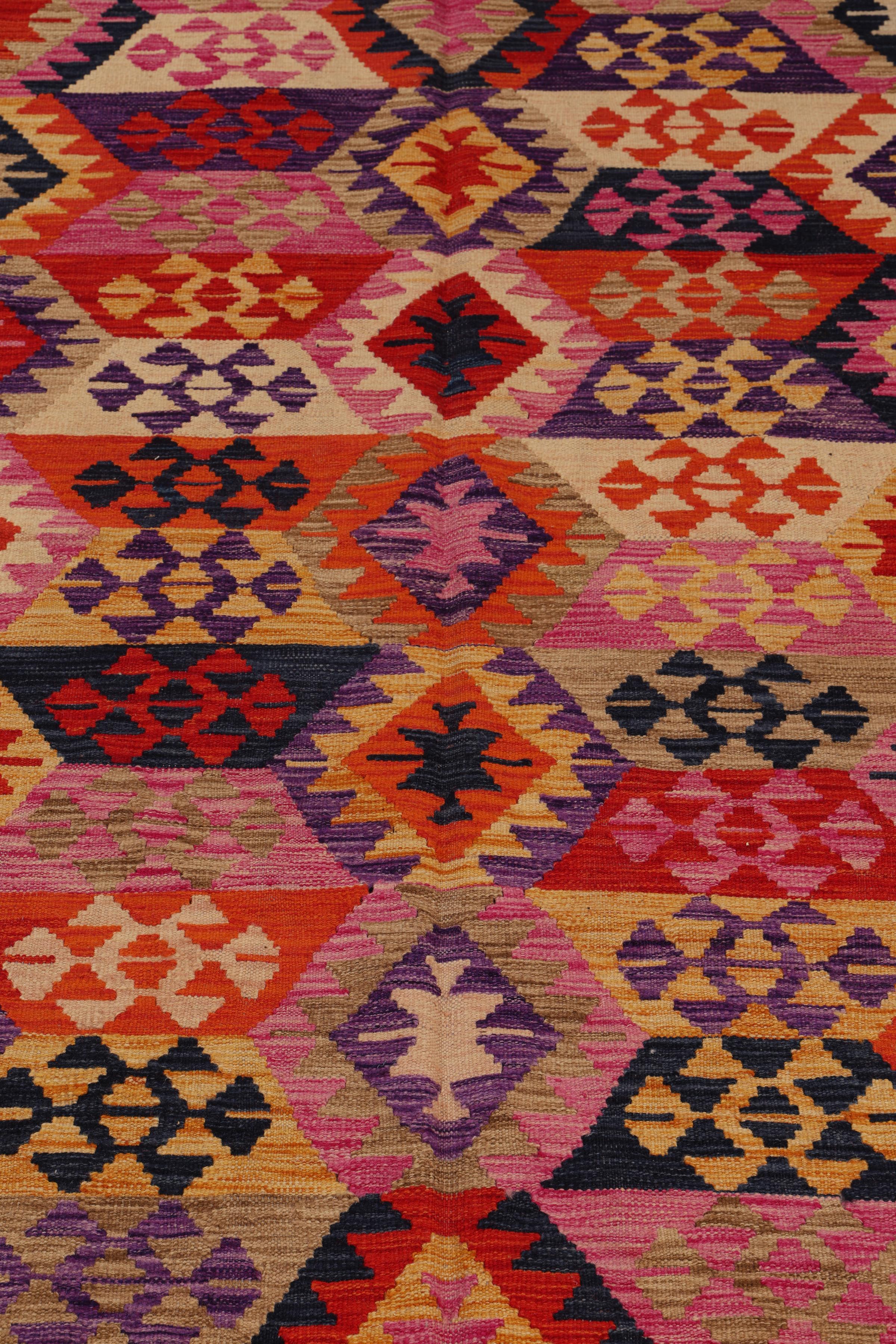
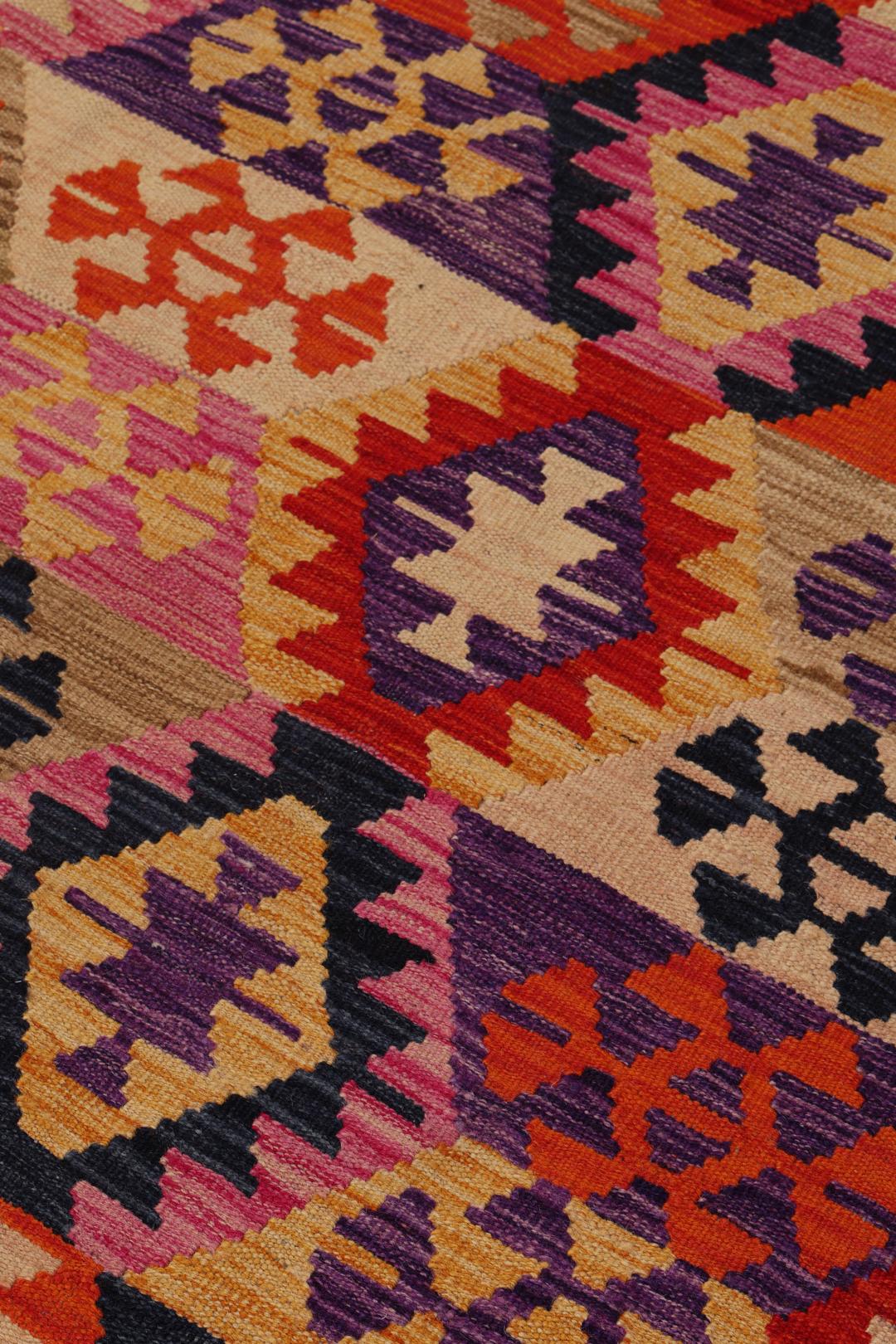
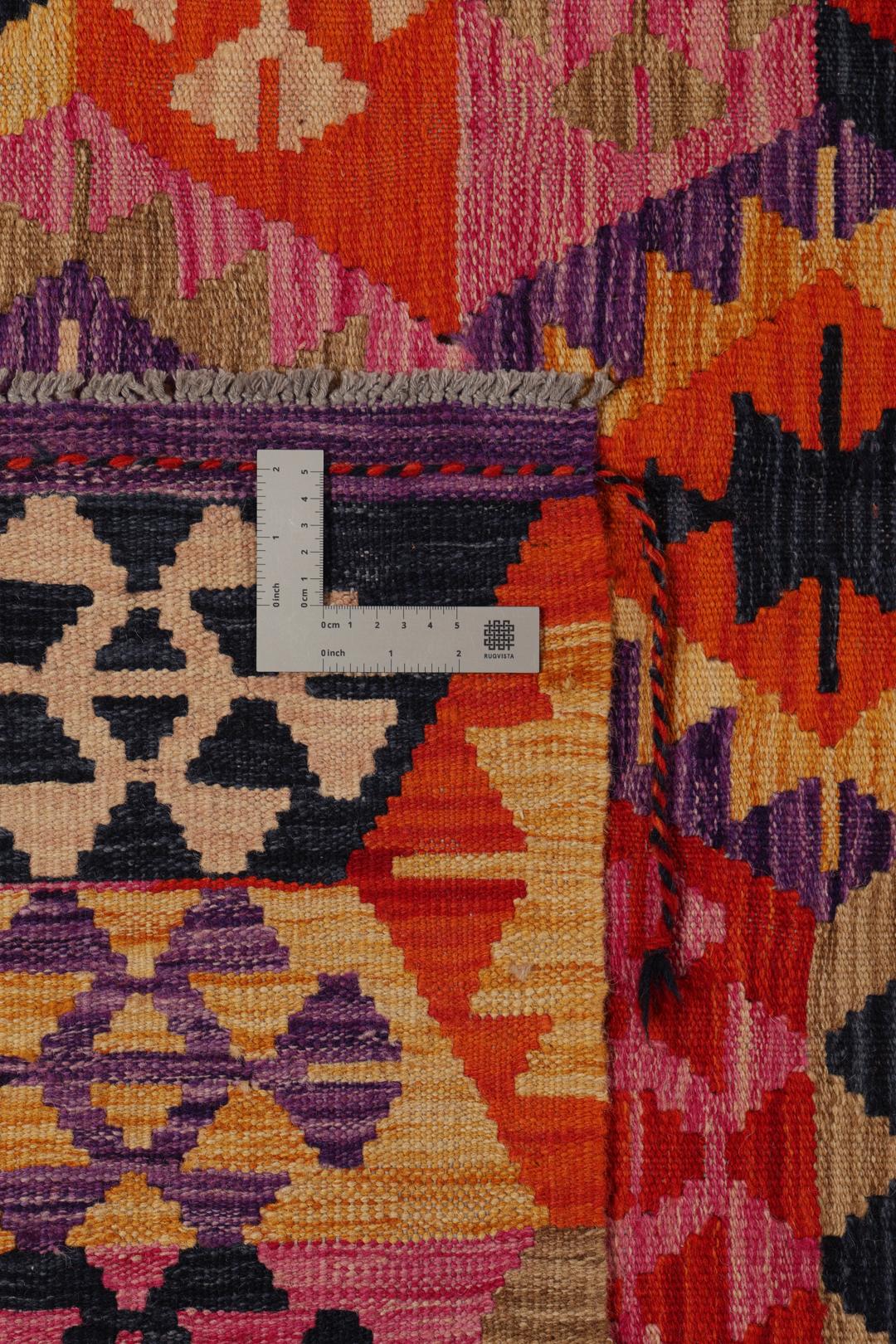
The term 'Kelim' refers to a specific flat-weaving technique where the weft threads are woven tightly around the warp to create a reversible, pileless surface. This method is fundamental to the rug's durability and its distinct, sharp-edged aesthetic. Because there is no pile to hide the weave, the precision of the artisan is clearly visible, making the clarity of the design a hallmark of high-quality craft.
Signature design elements in Afghan Kelims often include bold geometric motifs such as diamonds, triangles, and stylised floral shapes. These patterns are frequently arranged in repeating, rhythmic sequences that create a sense of movement across the surface. The use of deep, saturated colours is a classic tradition in this region, often achieved through natural dyes that soften beautifully over time.
Owning an Afghan Kelim is more than just a decor choice; it is an appreciation of a heritage that has been passed down through generations. These rugs are highly valued by collectors for their cultural weight and the skill required to produce them. By bringing one into your home, you are preserving a timeless craft tradition and adding a piece of history to your living environment.