Kelim rugs from the Middle East are rooted in a long-standing tradition of nomadic weaving, where functional floor coverings were essential for life on the move. These rugs evolved from the practical needs of tribal groups, who utilised the wool from their own flocks to create durable, portable, and aesthetically rich textiles that could serve as floor coverings, blankets, or wall hangings.
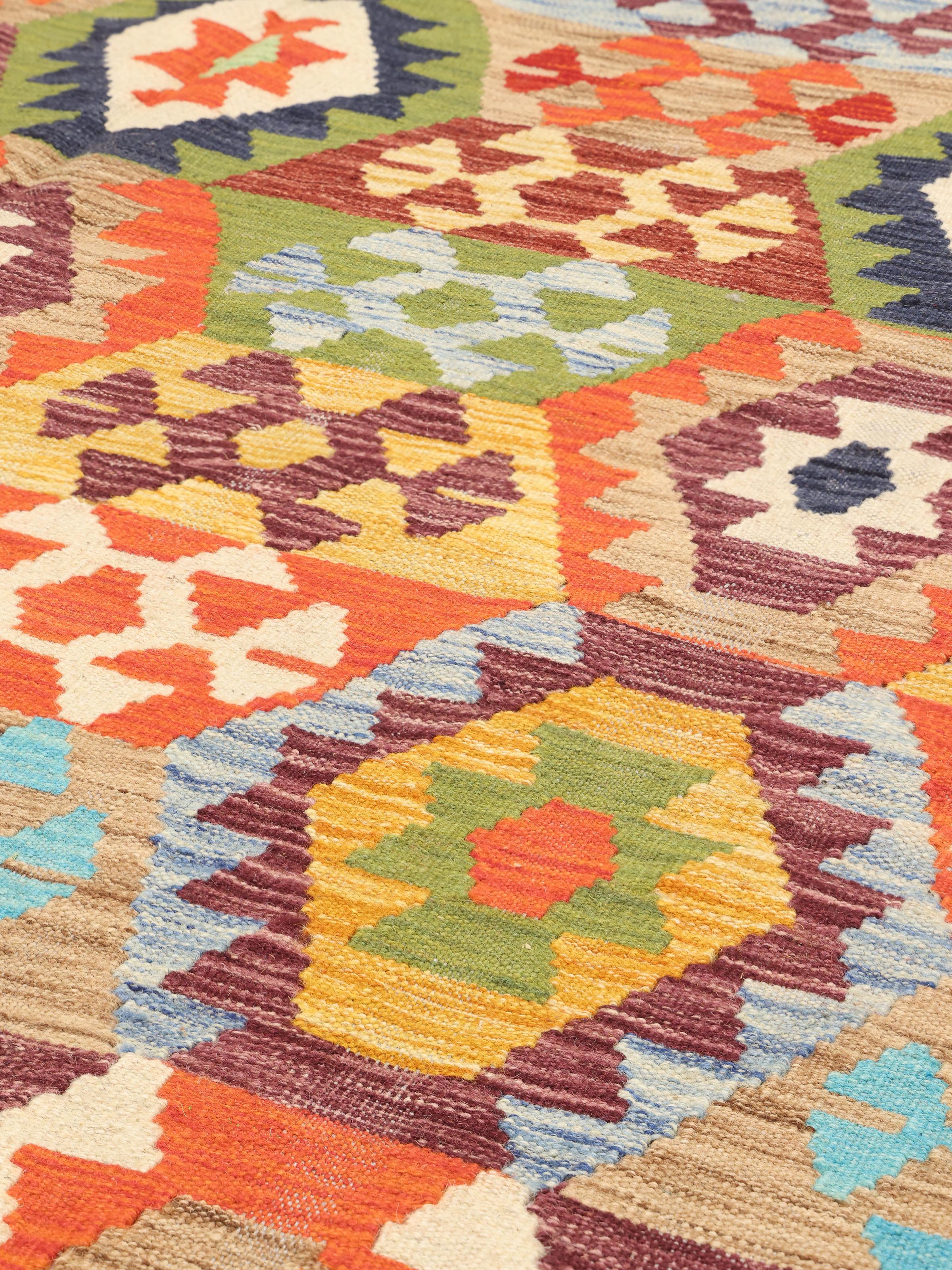
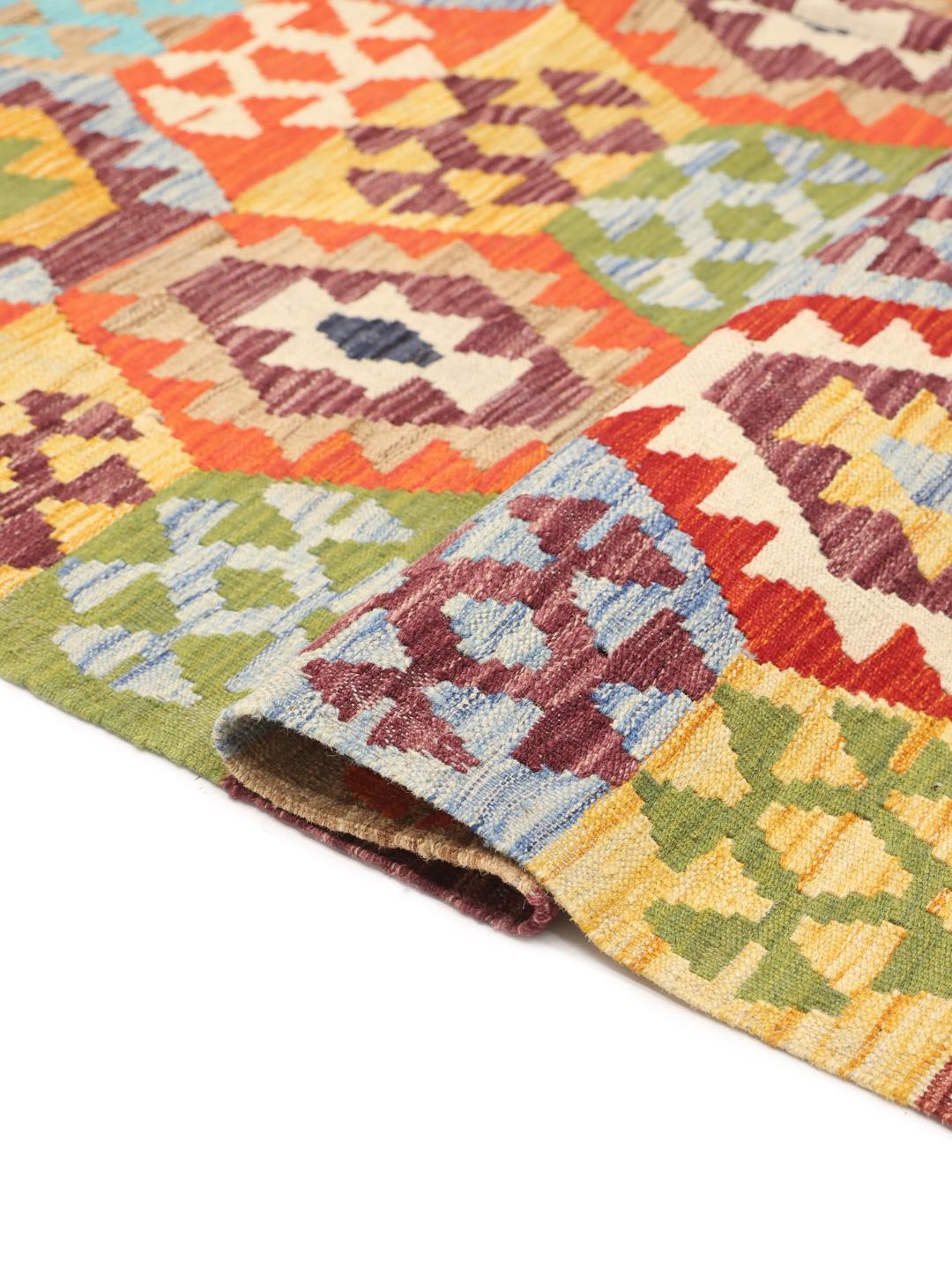
The flat-weave technique is a defining feature of the Kelim, created by interlacing the warp and weft threads without forming a pile. This traditional method requires a high level of skill, as the weaver must create the pattern simultaneously with the structure of the rug itself. The result is a thin, reversible, and lightweight textile that showcases the raw beauty of the wool and the complexity of the design from both sides.
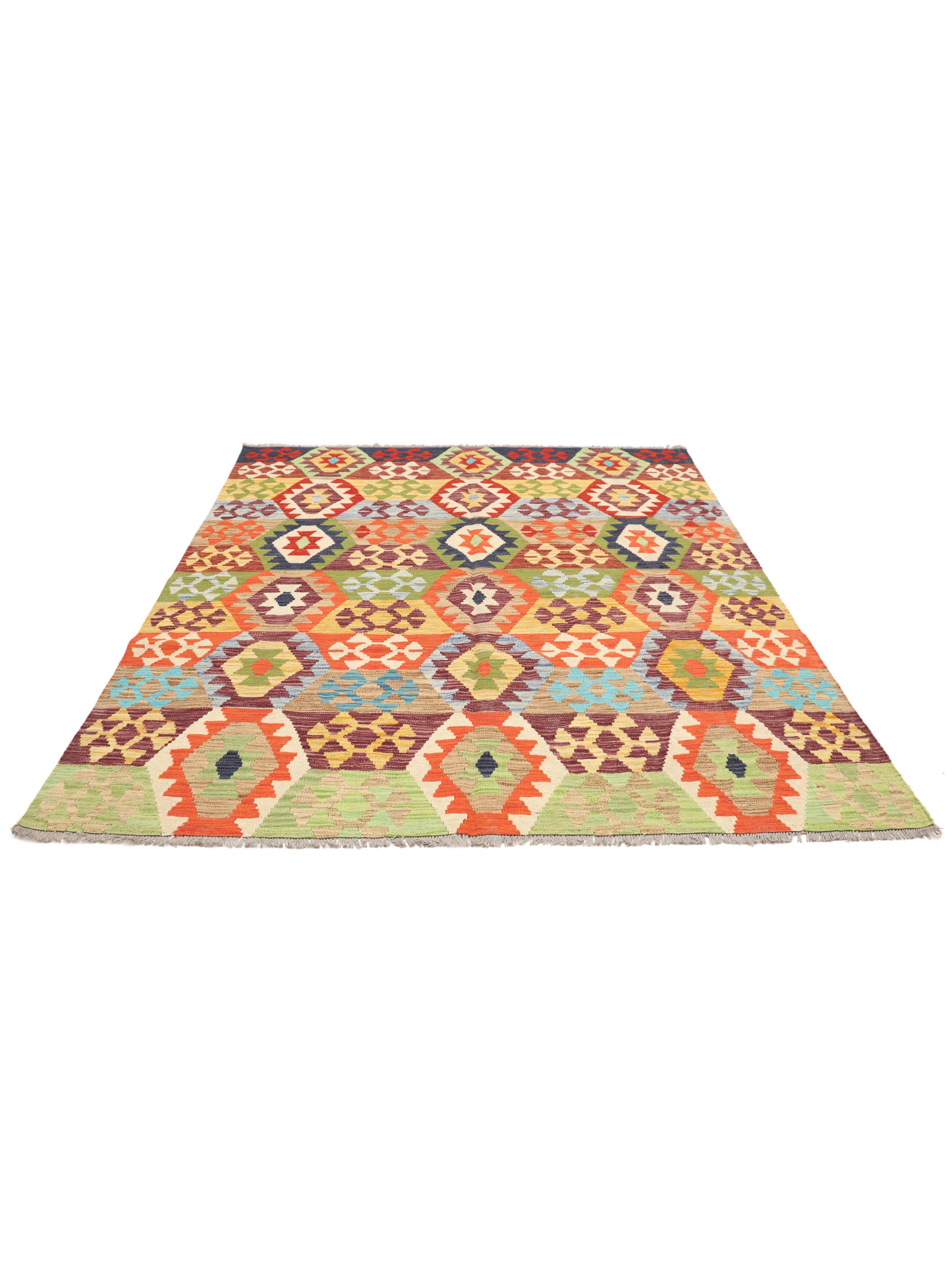
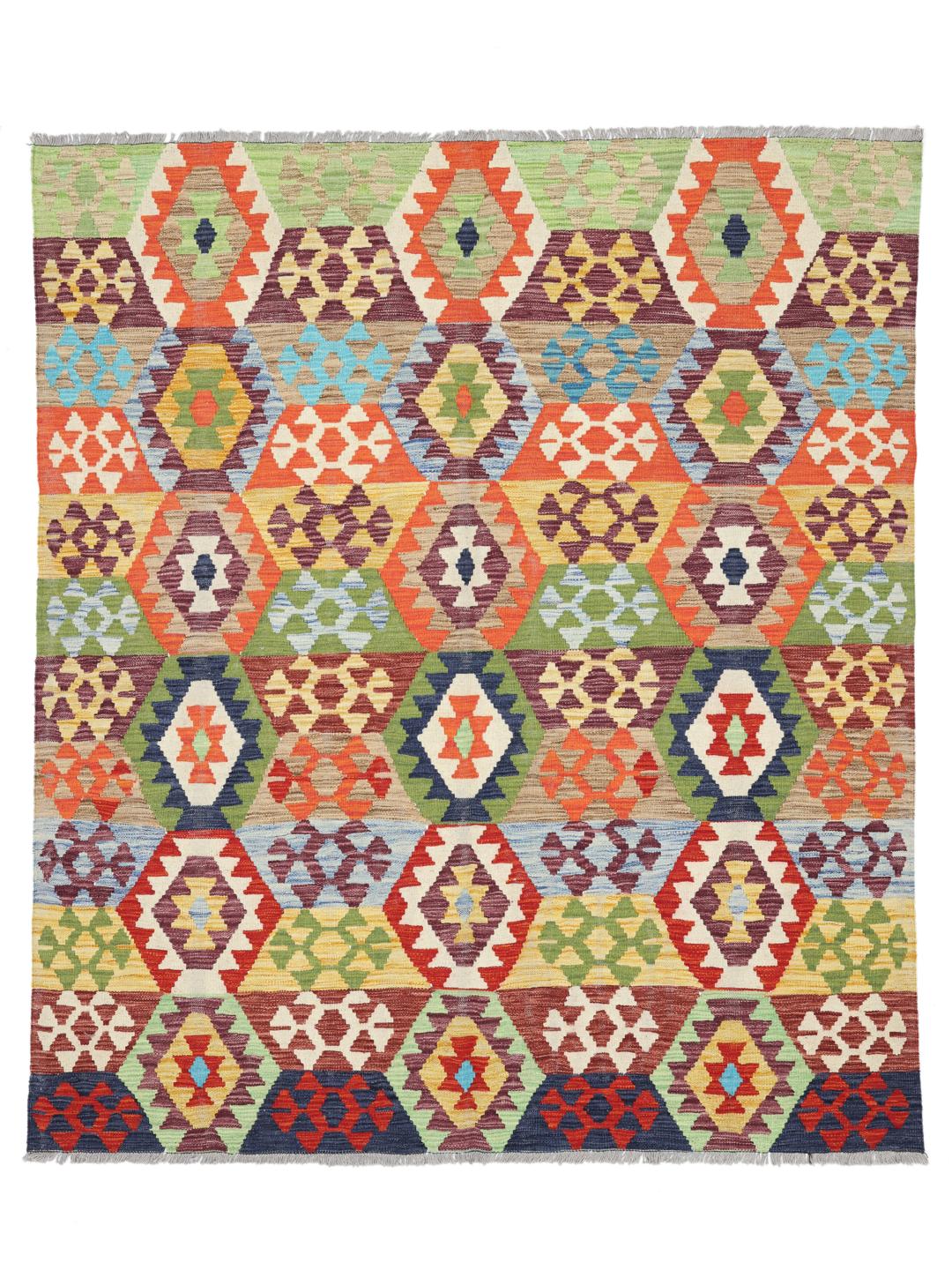
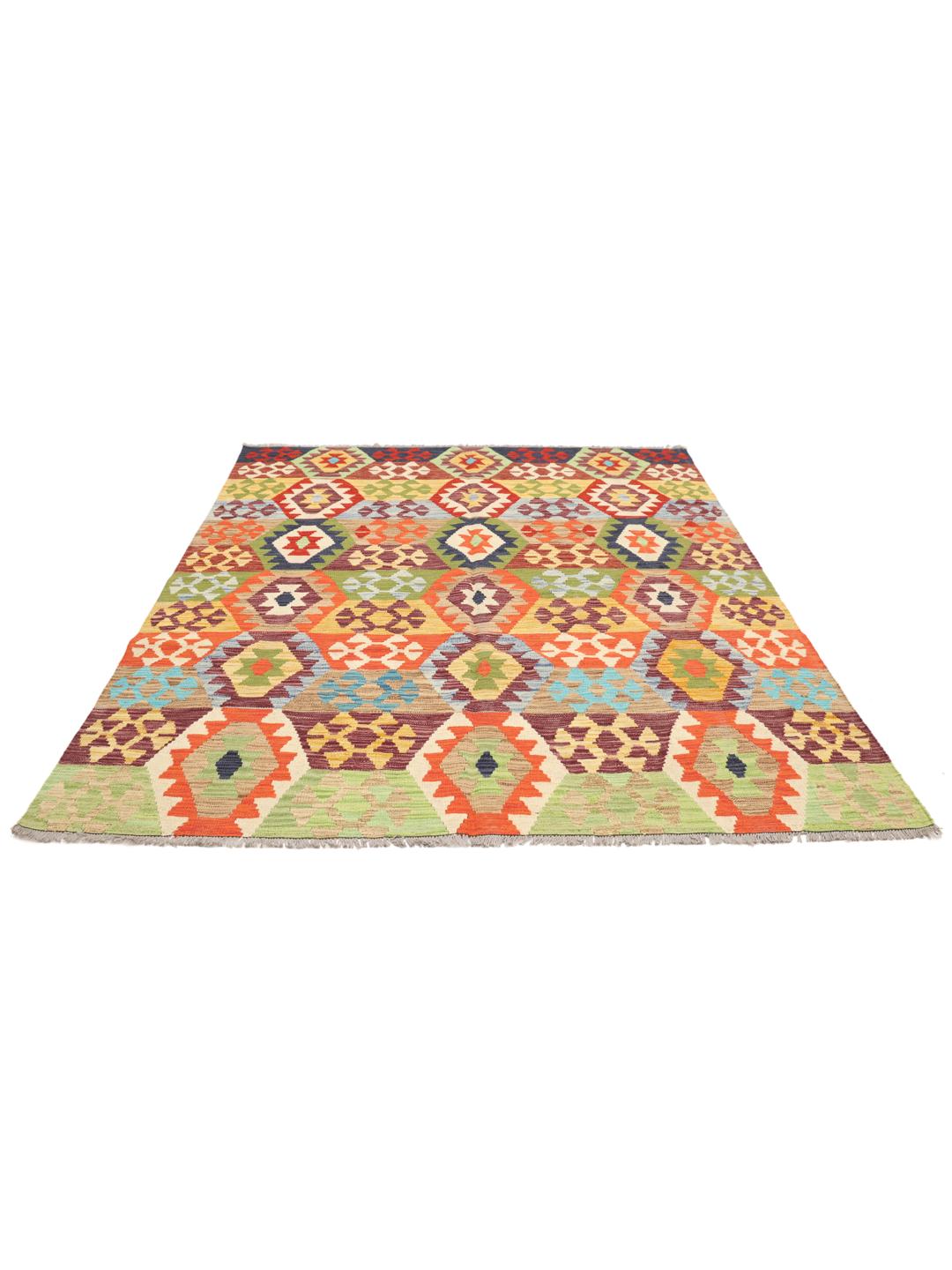
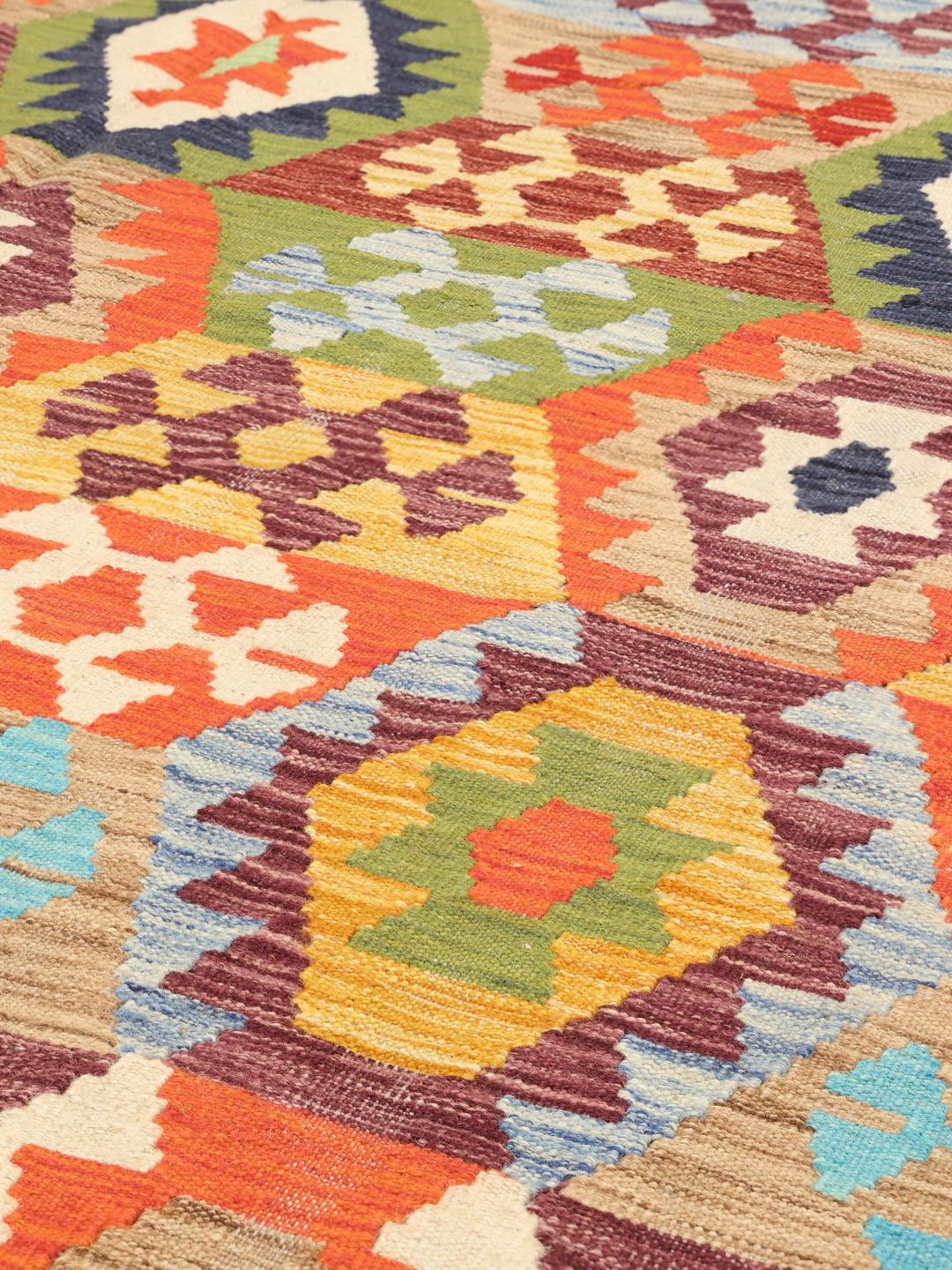
Visually, these rugs are celebrated for their bold geometric motifs, which often include diamonds, triangles, and intricate borders. The use of vibrant, natural-inspired colours is a hallmark of the Middle Eastern tradition, often reflecting the landscape and cultural symbols of the region. This particular piece displays a masterfully arranged series of repeating shapes, showcasing the mathematical precision that defines the best examples of the craft.
Owning an Afghan Kelim is an invitation to bring a piece of cultural history into your home. These rugs are highly valued by collectors not only for their beauty but for the human story they carry within every weave. By acquiring this piece, you are preserving an artistic legacy and celebrating the enduring skill of the artisans who keep this ancient craft alive.