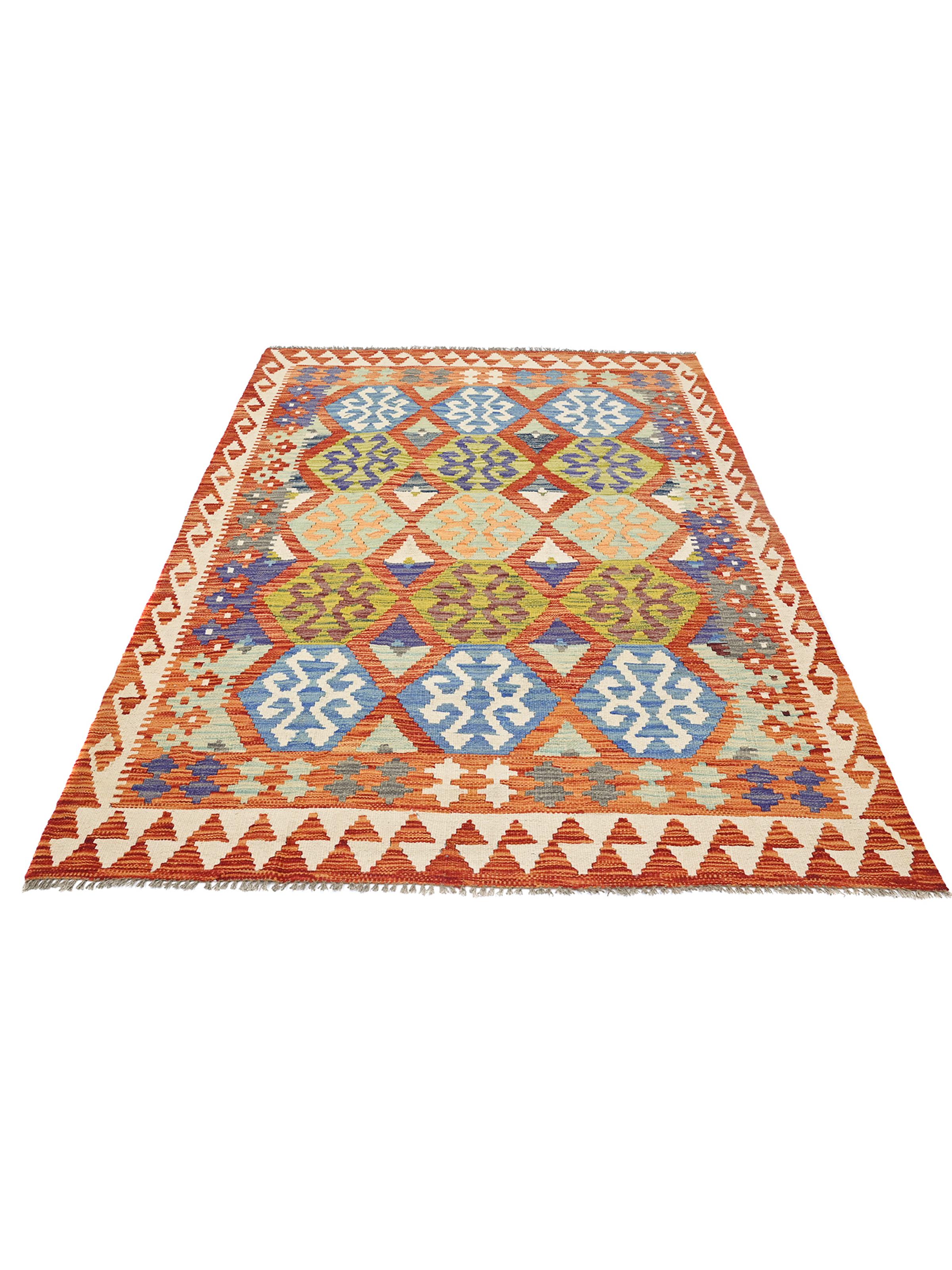
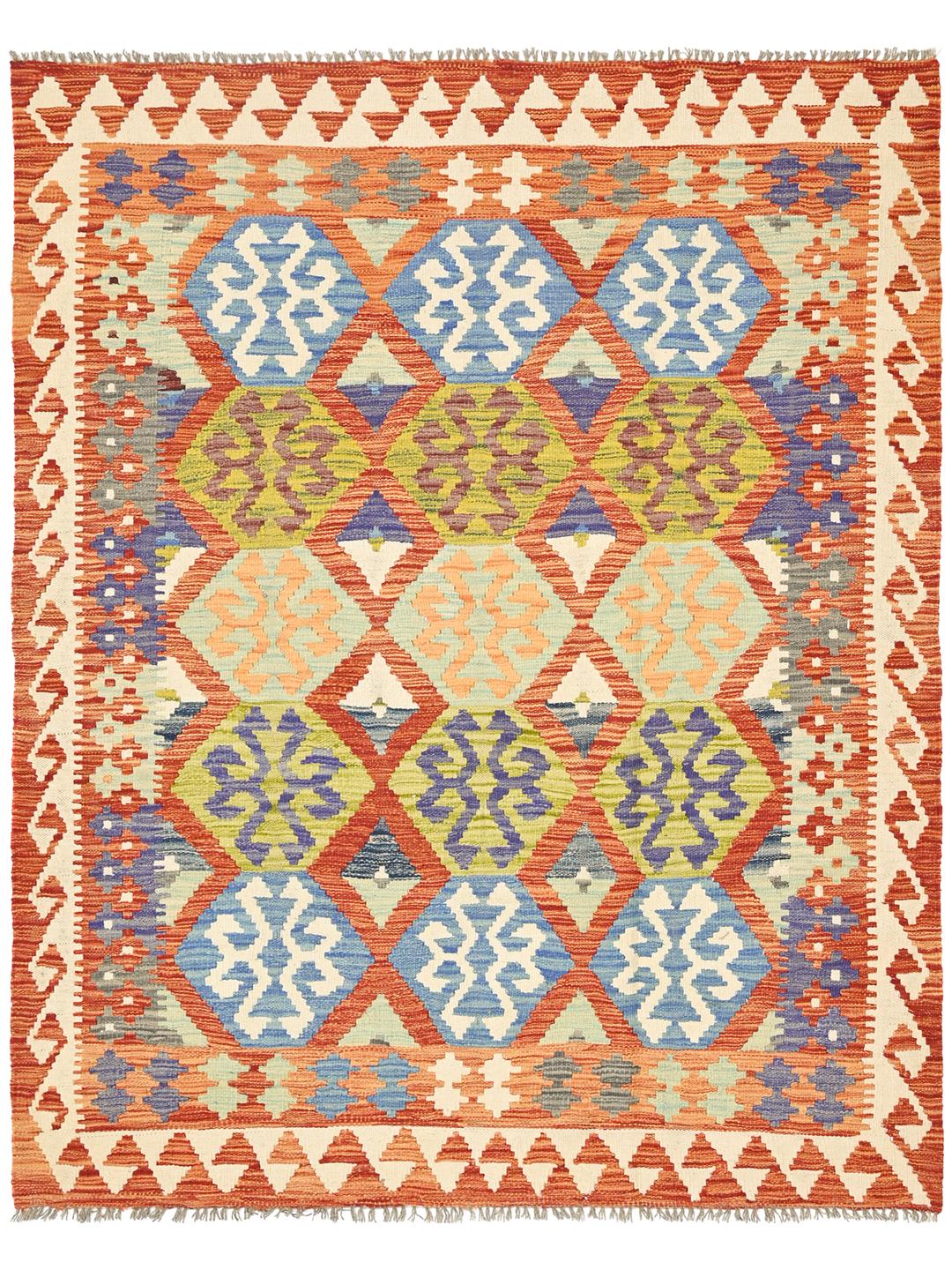
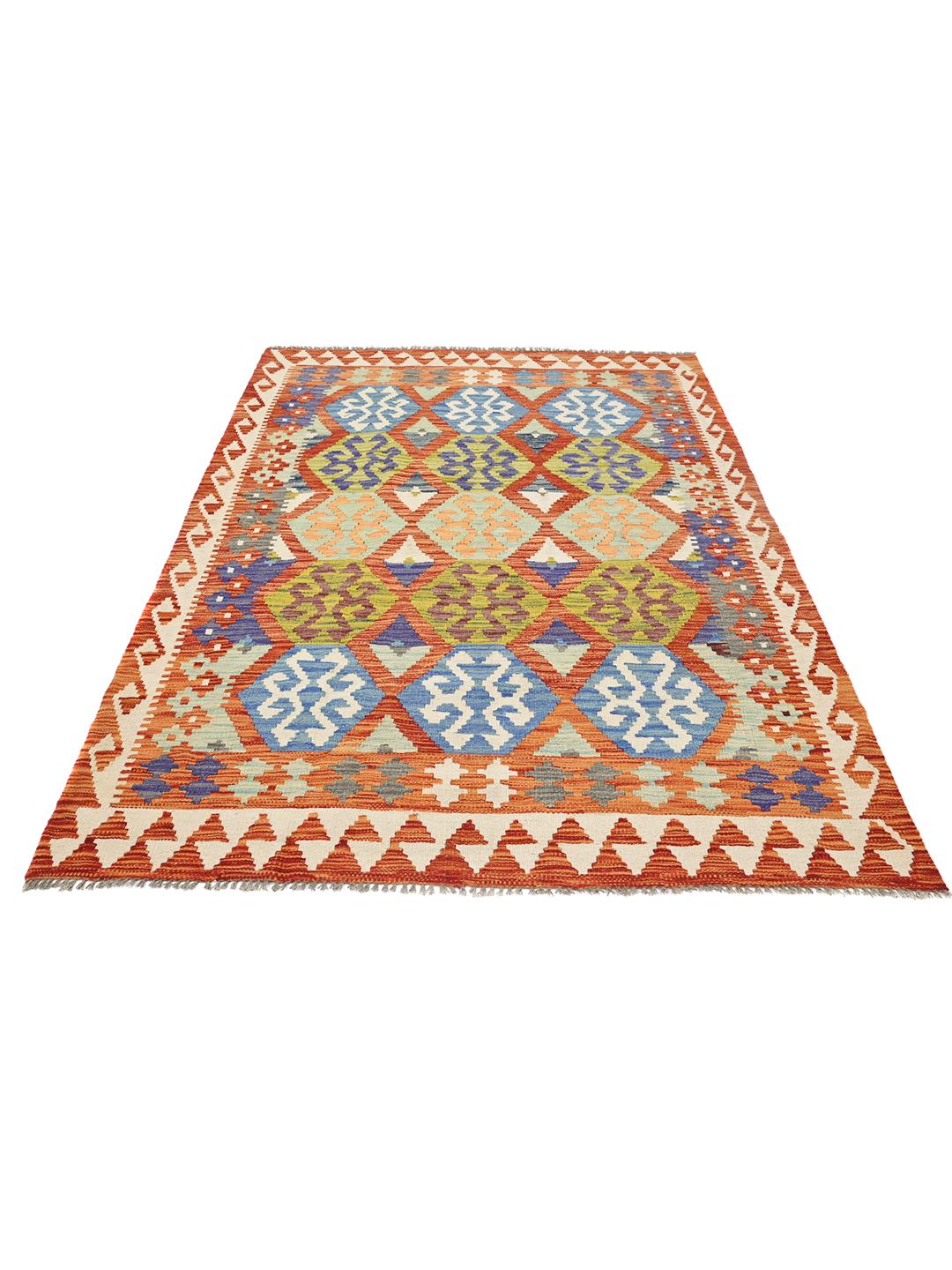
The Kelim, or Kilim, is a hallmark of Middle Eastern textile heritage, with a history that spans centuries of nomadic and village life. These rugs originated as functional, portable floor coverings and storage bags for tribal communities, evolving into the sophisticated decorative pieces we admire today. Afghan Kelims are particularly celebrated for their robust construction and the use of traditional, regionally sourced Wool.
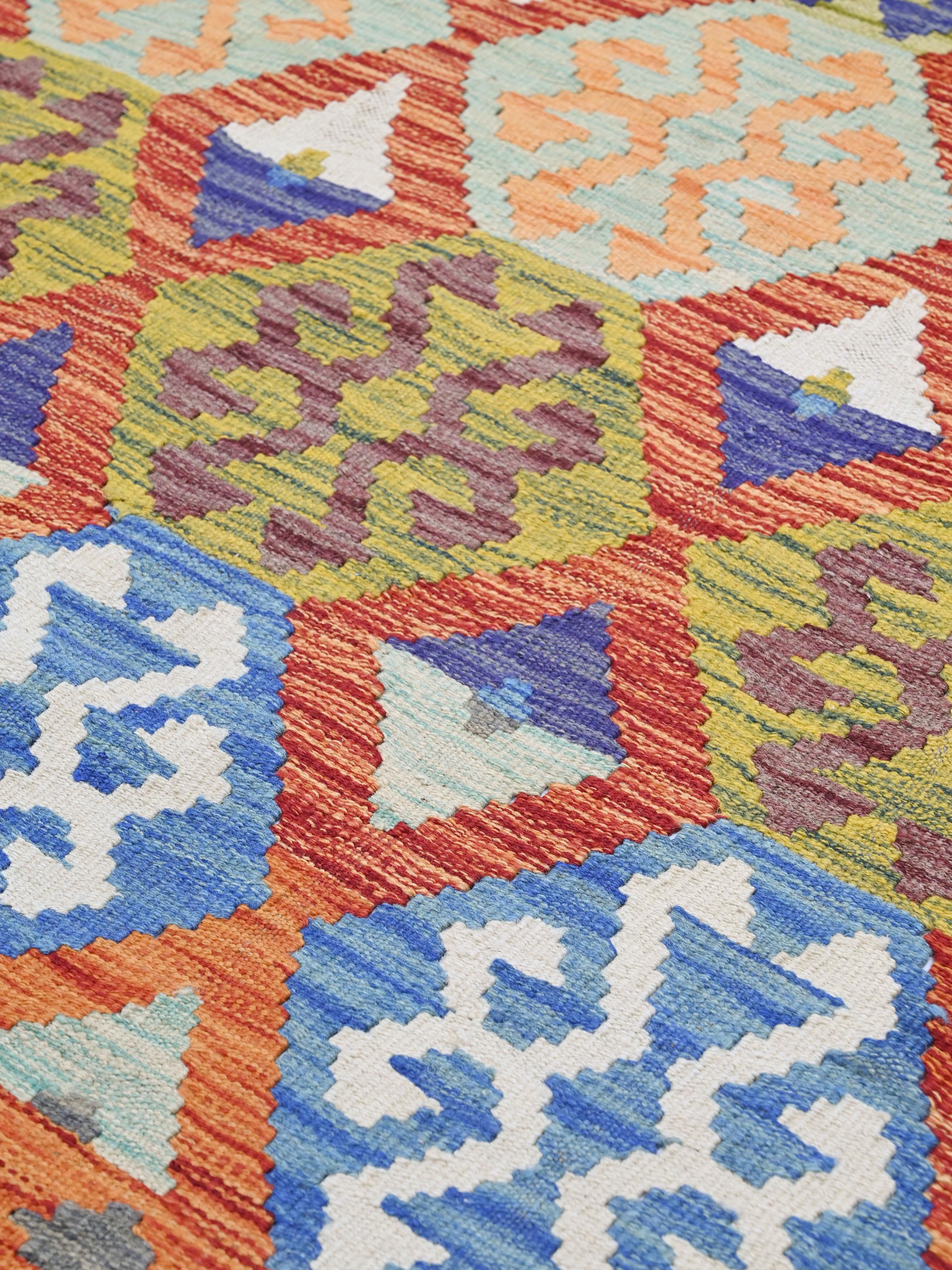
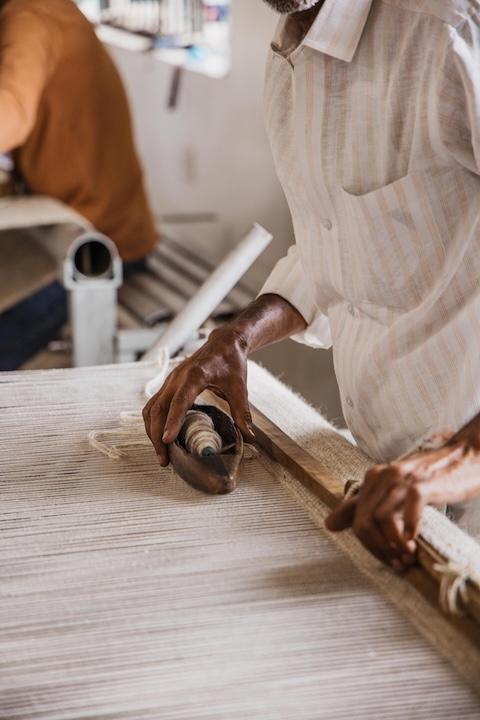
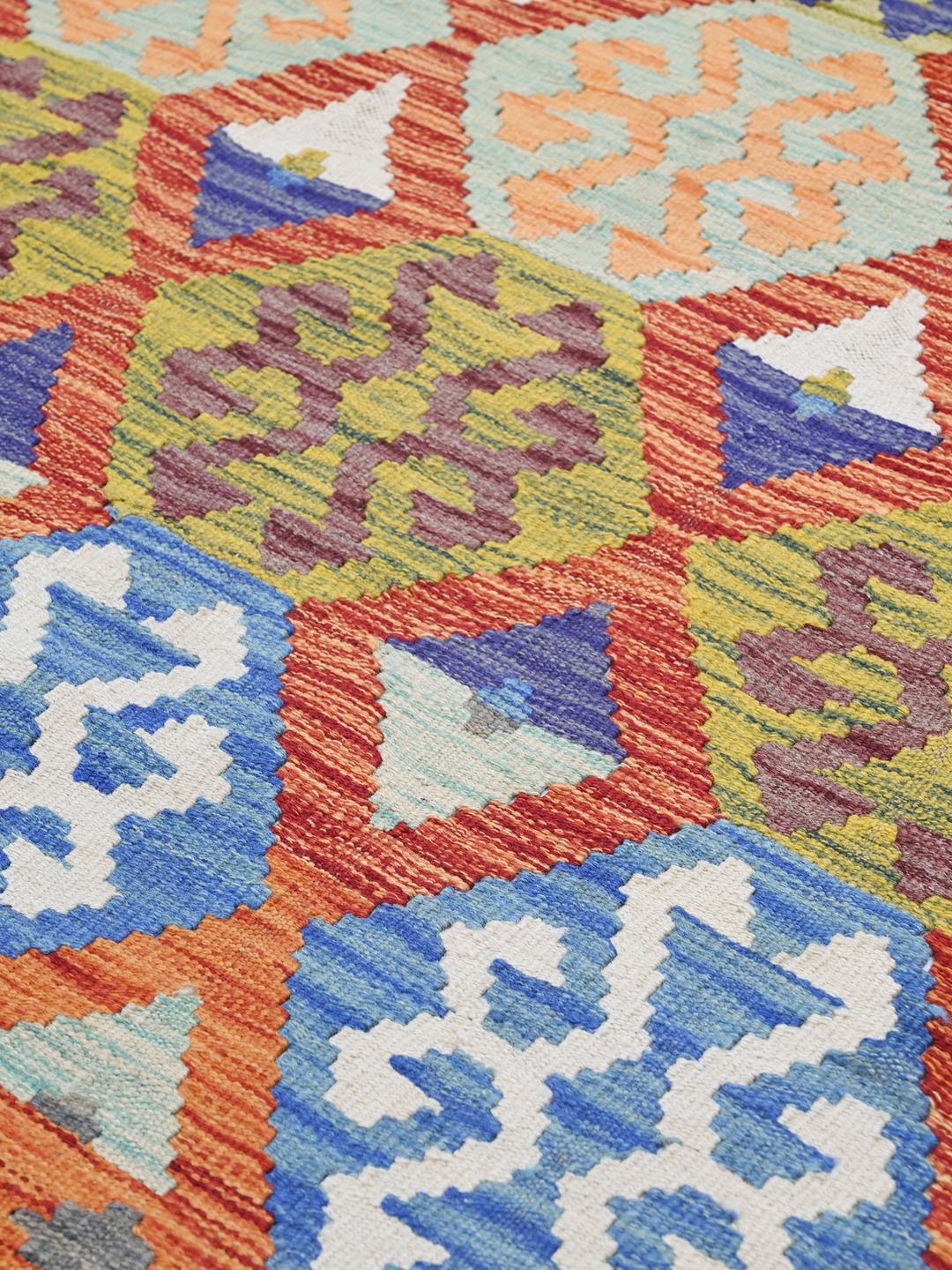
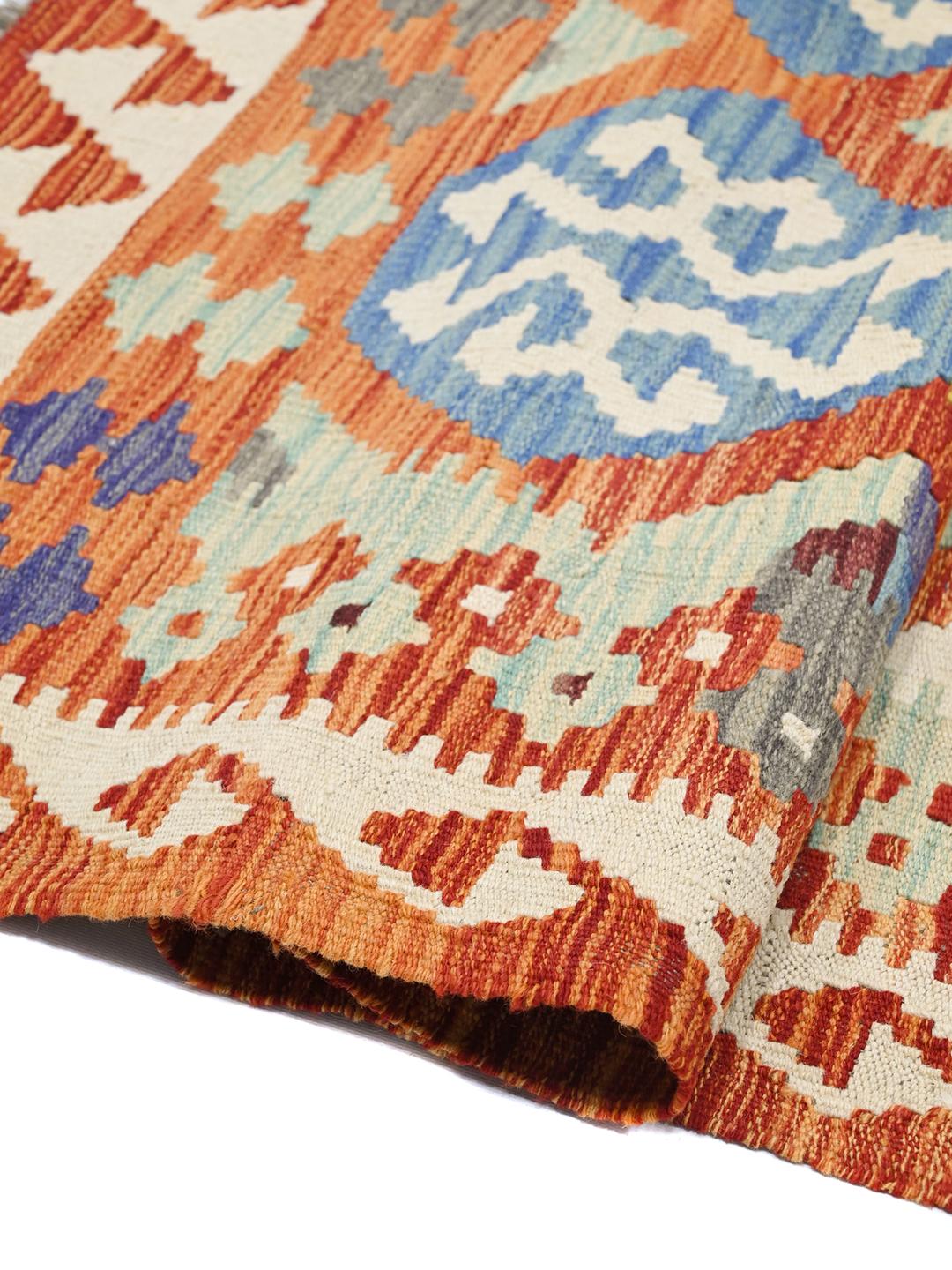
The term 'Kelim' refers to a flat-weaving technique that avoids the use of a knotted pile, instead relying on the tight interweaving of horizontal and vertical threads. This method is technically demanding, as it requires the weaver to manage complex colour changes to create intricate, sharp-edged patterns. This mastery of the loom results in a rug that is not only visually stunning but also lightweight and exceptionally versatile.
The design language of this rug is deeply rooted in tribal symbolism, featuring repetitive geometric motifs such as diamonds and stylized medallions. These patterns often serve as a visual language, representing protection, prosperity, or the natural environment of the weaving community. The use of bold, contrasting colours is a signature of this tradition, designed to stand out against the earthy interiors of traditional homes.
Collecting an Afghan Kelim is an investment in cultural preservation and human skill. These rugs are valued not just for their aesthetic appeal, but for the history and stories woven into every strand. By owning this piece, you are maintaining a link to an ancient craft, ensuring that these traditional skills continue to be appreciated and honoured in modern homes worldwide.