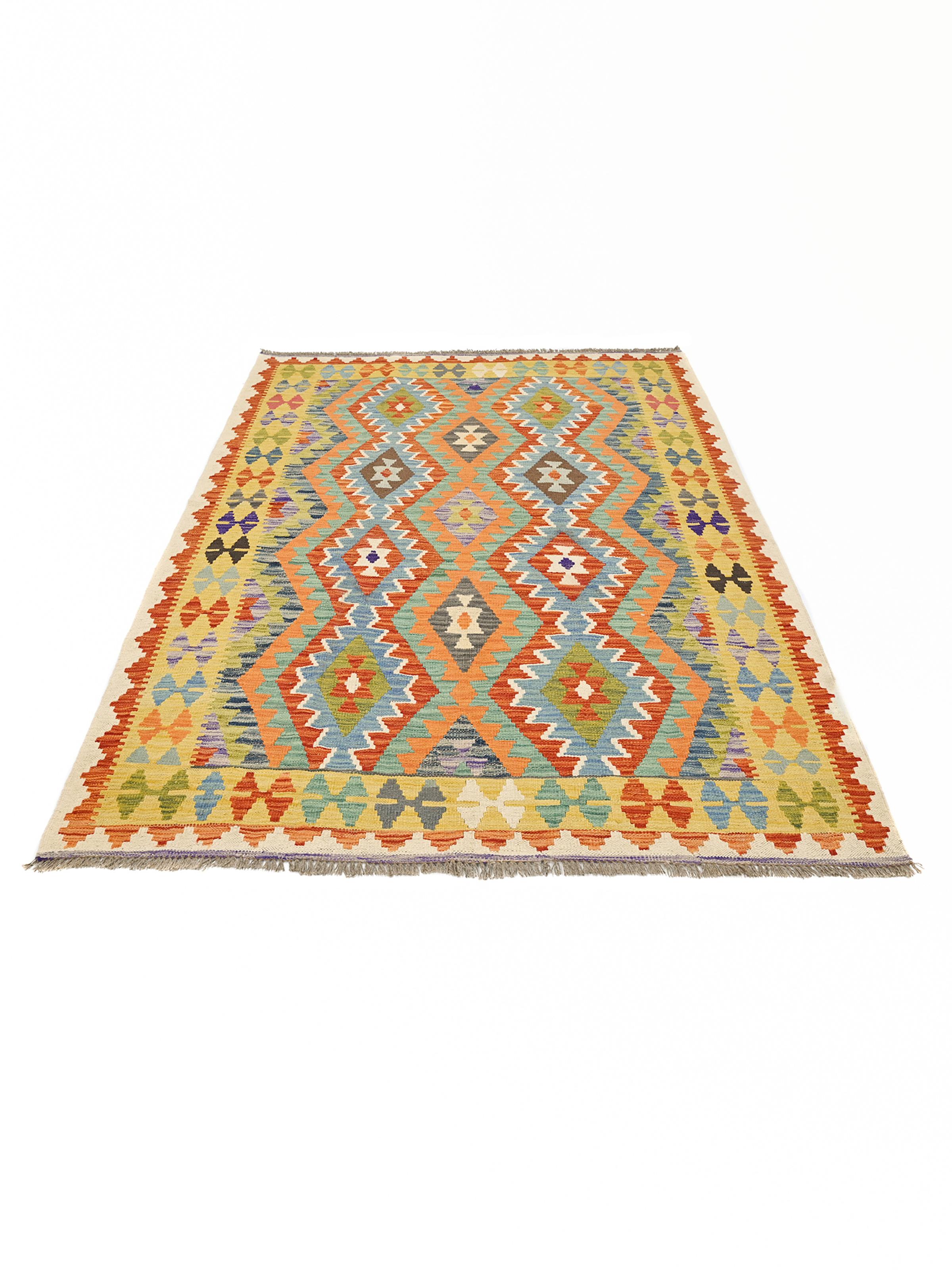
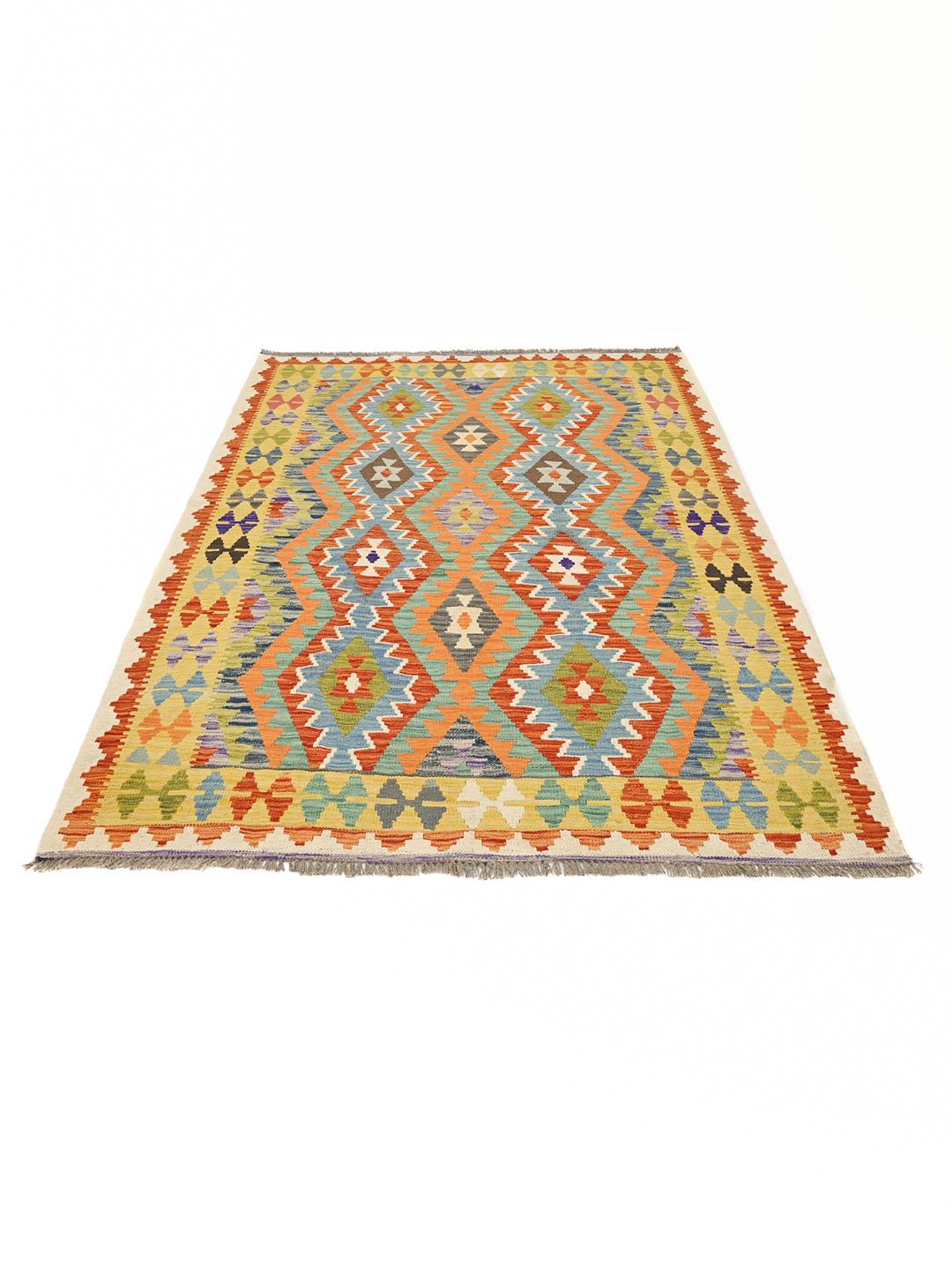
The Kelim tradition in Afghanistan is deeply rooted in the nomadic history of the region, where these flat-woven rugs served as essential, portable elements of daily life. Historically, they were used as floor coverings, blankets, and storage sacks by tribal weavers who travelled across the rugged landscapes of the Middle East, adapting their designs to reflect their environment and cultural heritage.
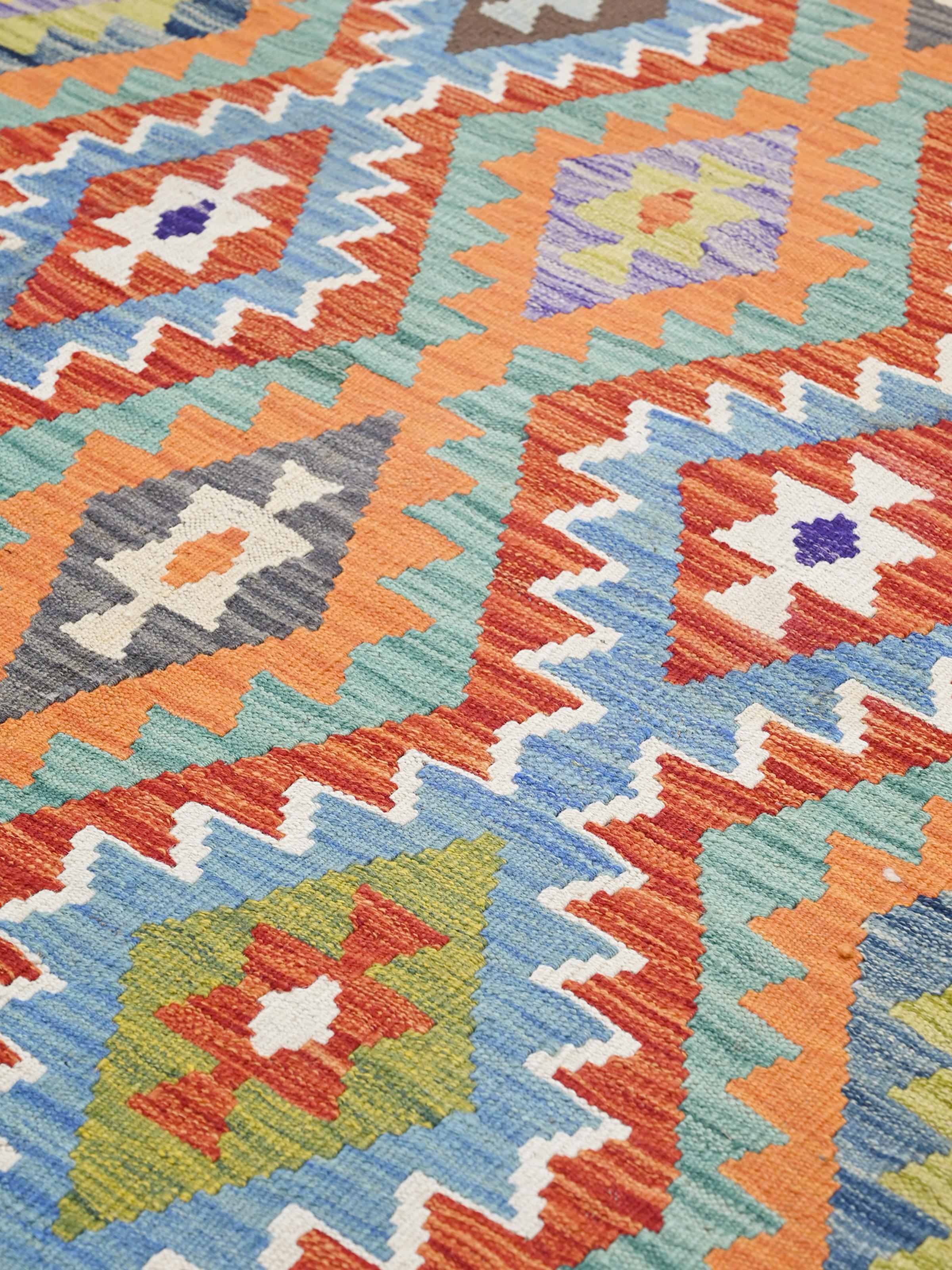
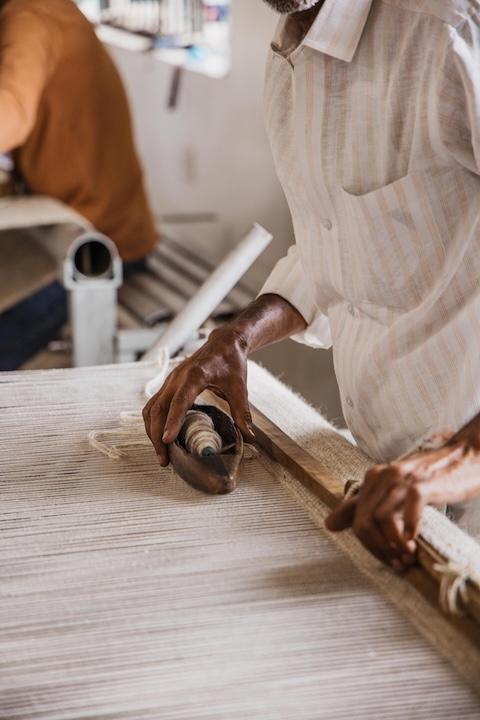
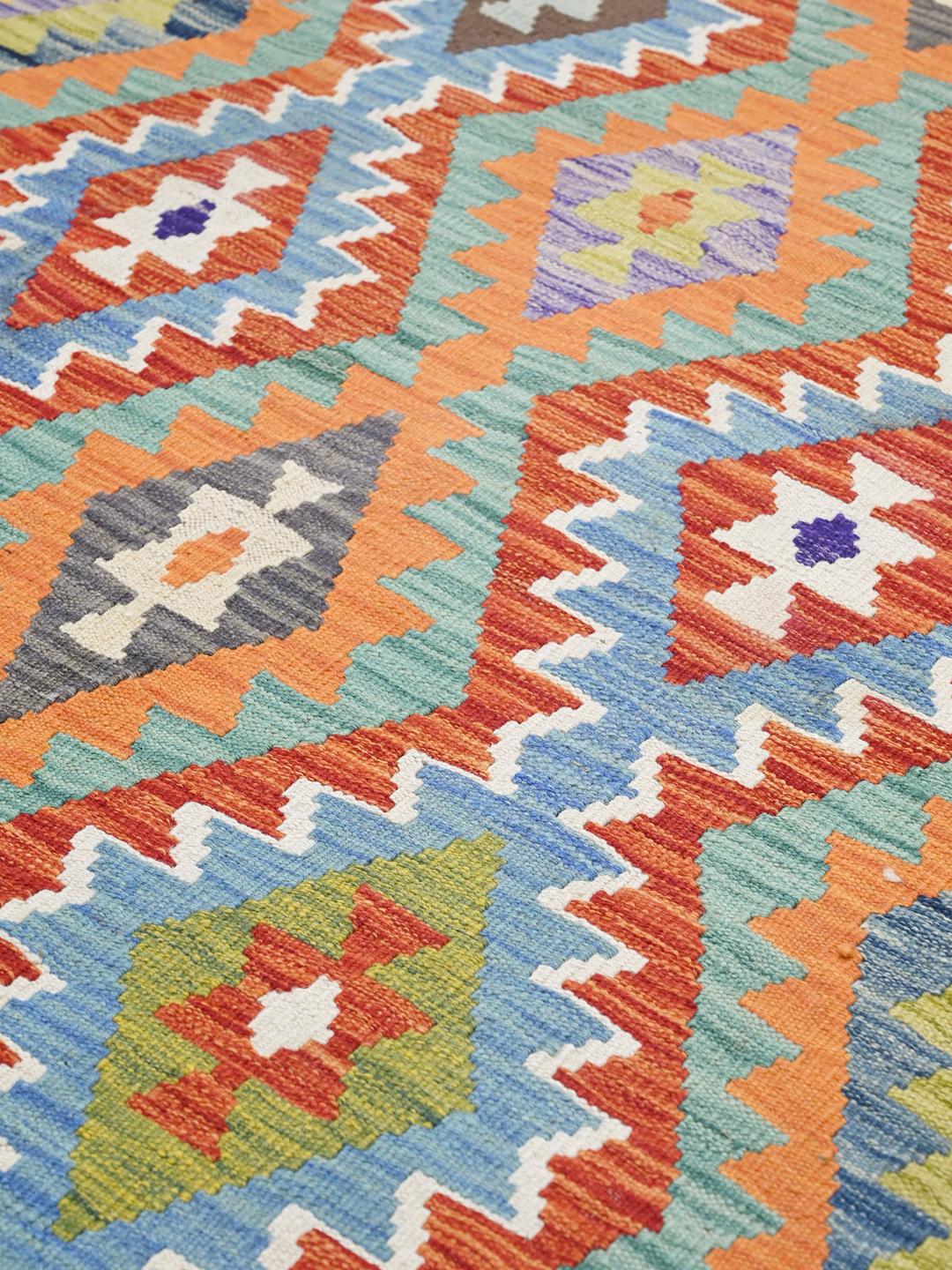
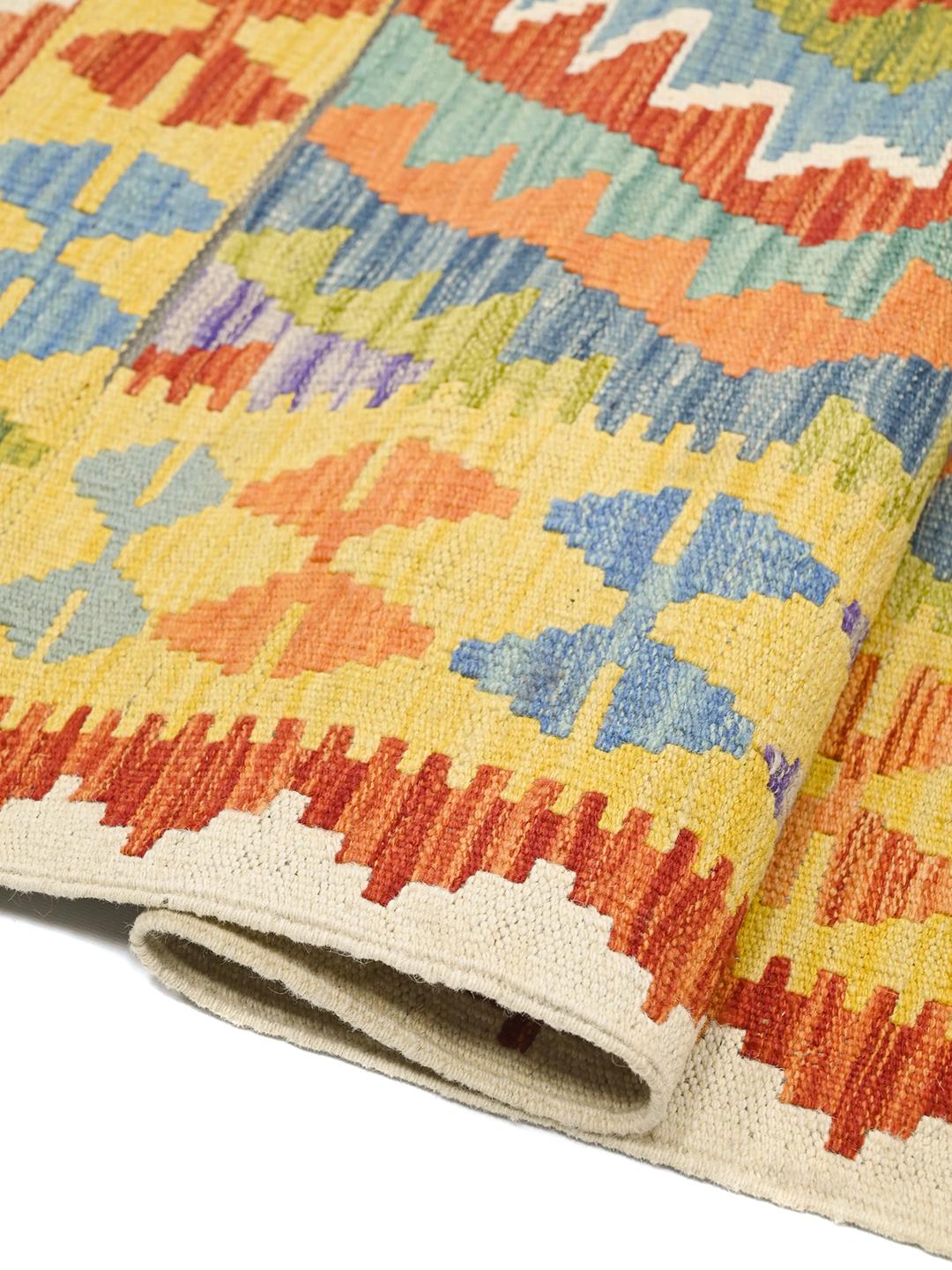
The term 'Kelim' refers to the specific technique of tapestry weaving, where the weft threads are passed through the warp threads to create a smooth, pileless surface. This method allows for sharp, crisp geometric lines and intricate colour transitions that define the category's aesthetic. Because there is no pile to hide the weave, the precision of the weaver is on full display, making the technical execution a primary indicator of quality.
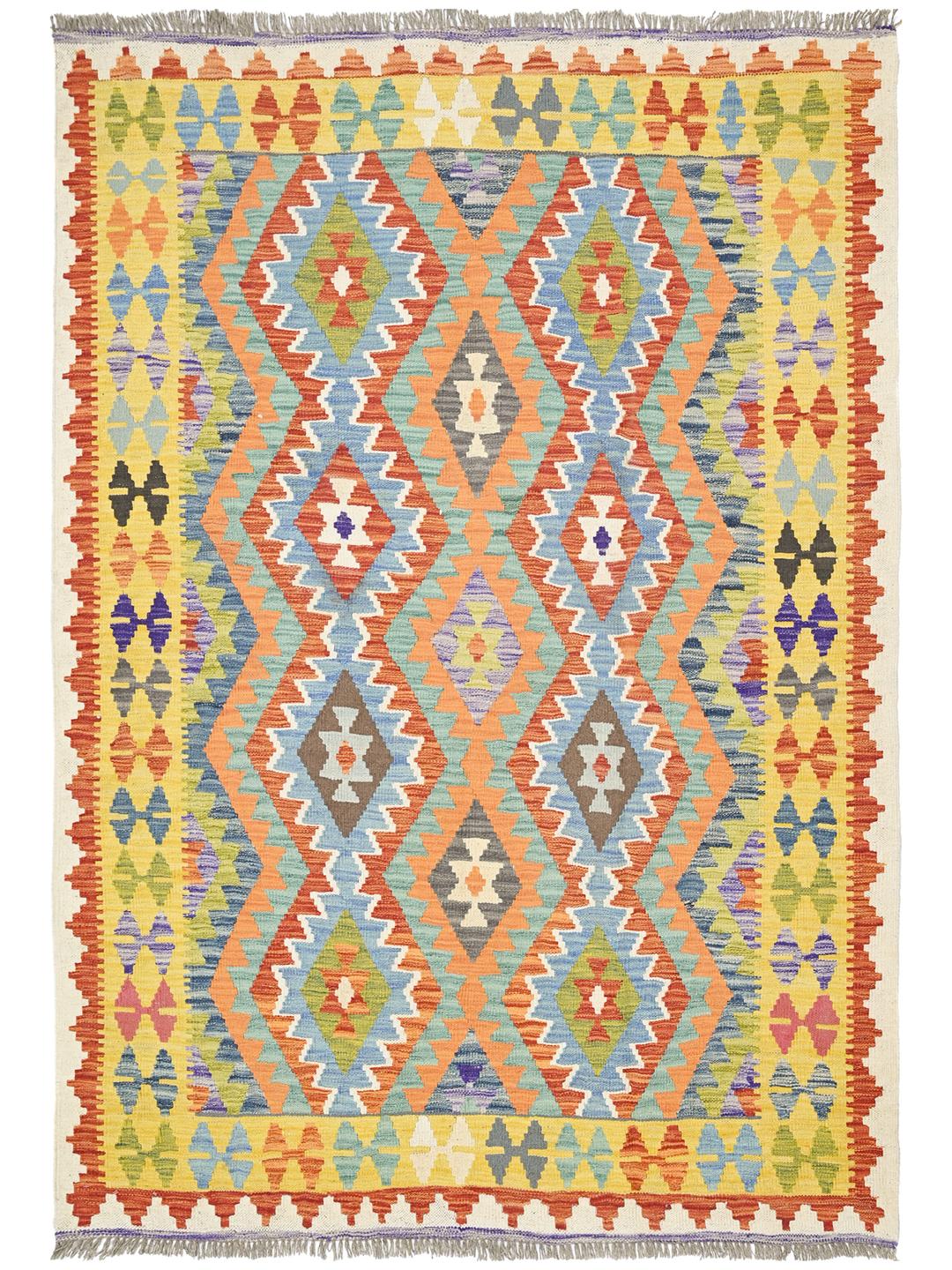
Design motifs in Afghan Kelims are often characterised by bold geometric shapes, most notably the diamond and tribal symbols that represent protection, fertility, and family history. The use of vibrant, saturated colours is a hallmark of this tradition, often derived from natural dyes that age gracefully over time, giving each piece a rich, storied appearance that deepens in character as the years pass.
Collecting an Afghan Kelim is an investment in a living craft tradition. These rugs are highly valued for their authenticity and the human story woven into every thread. By choosing a piece like this, you are preserving an ancient art form and bringing a sense of history and human connection into your living space.