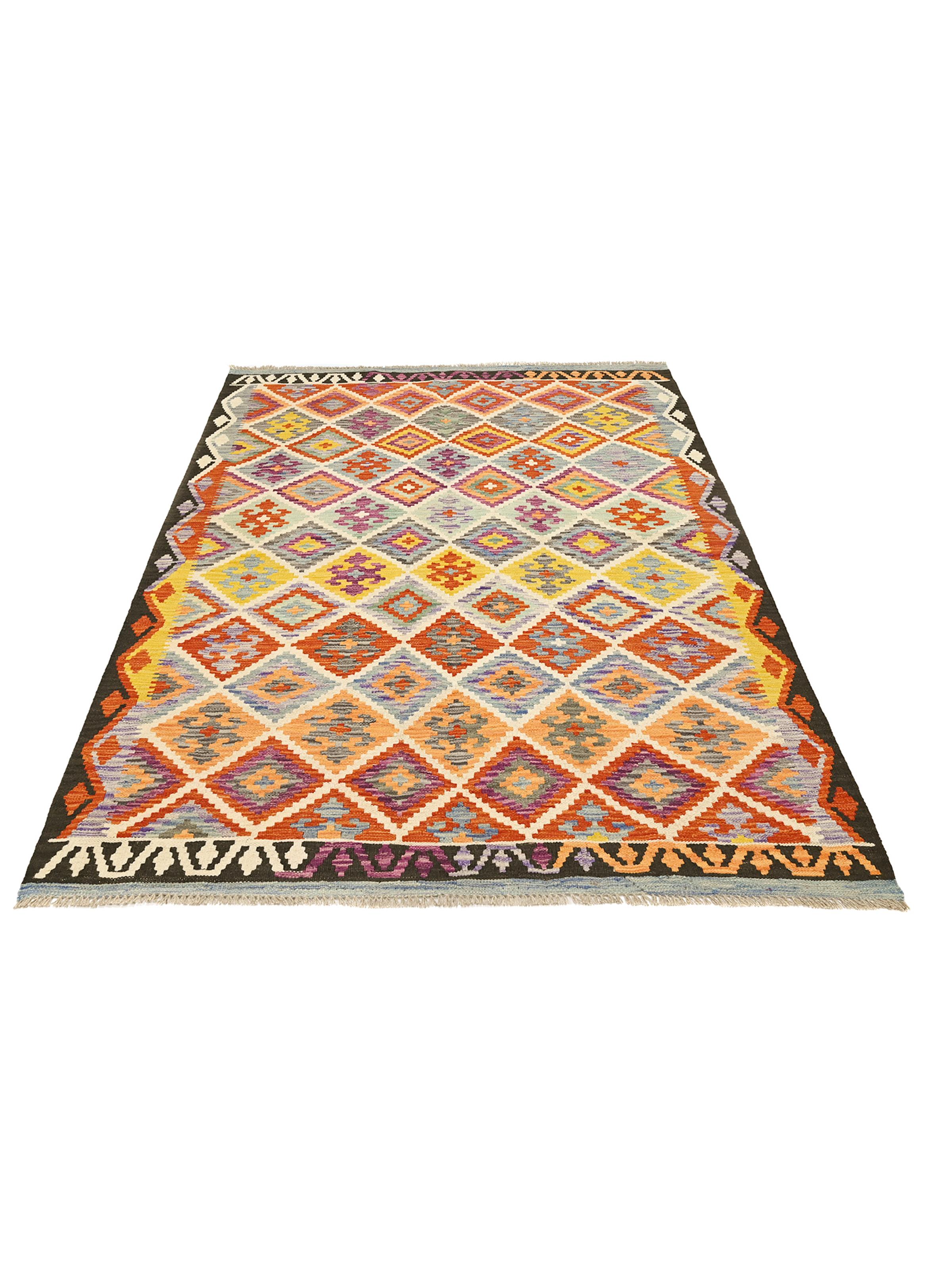
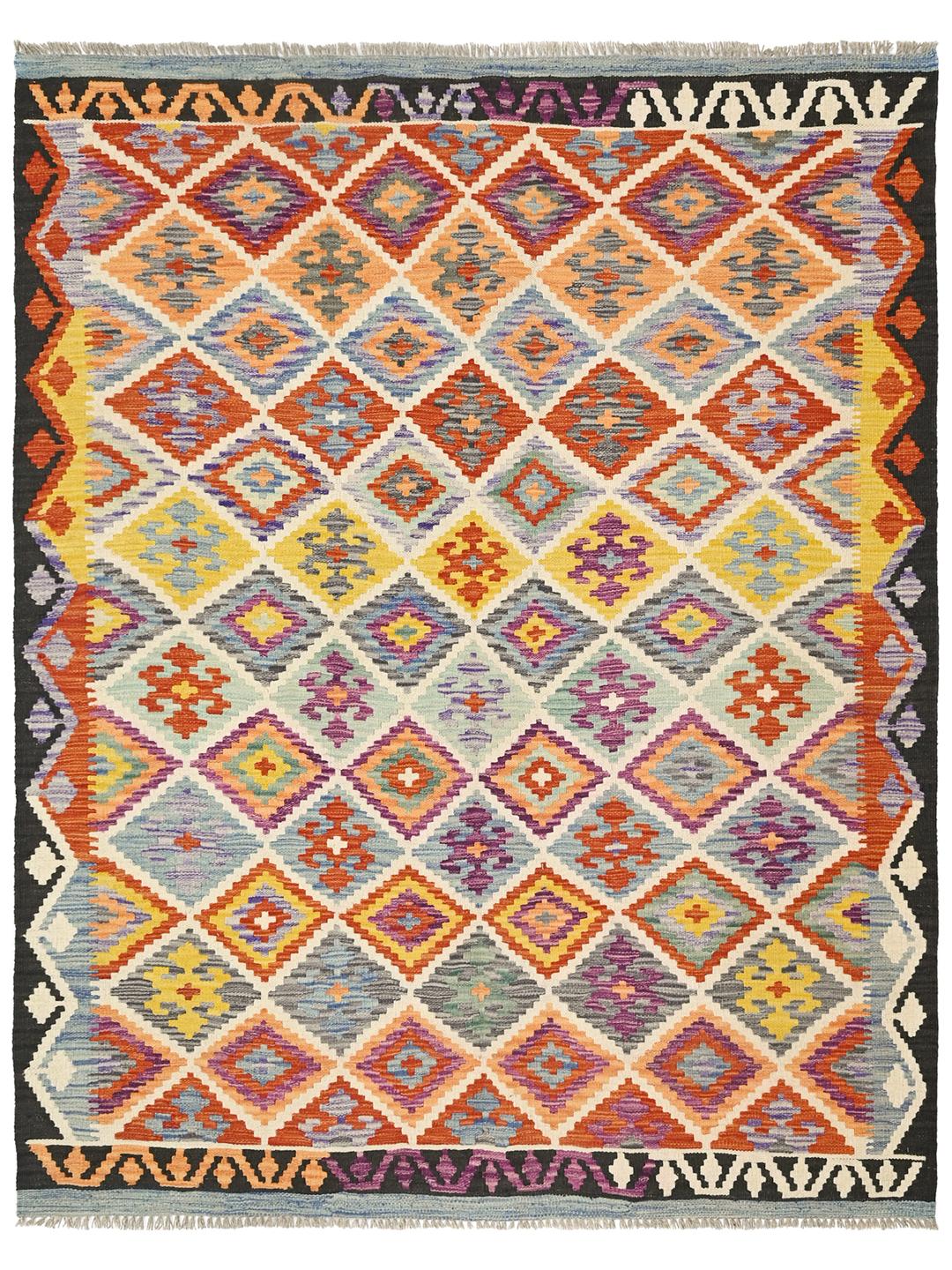
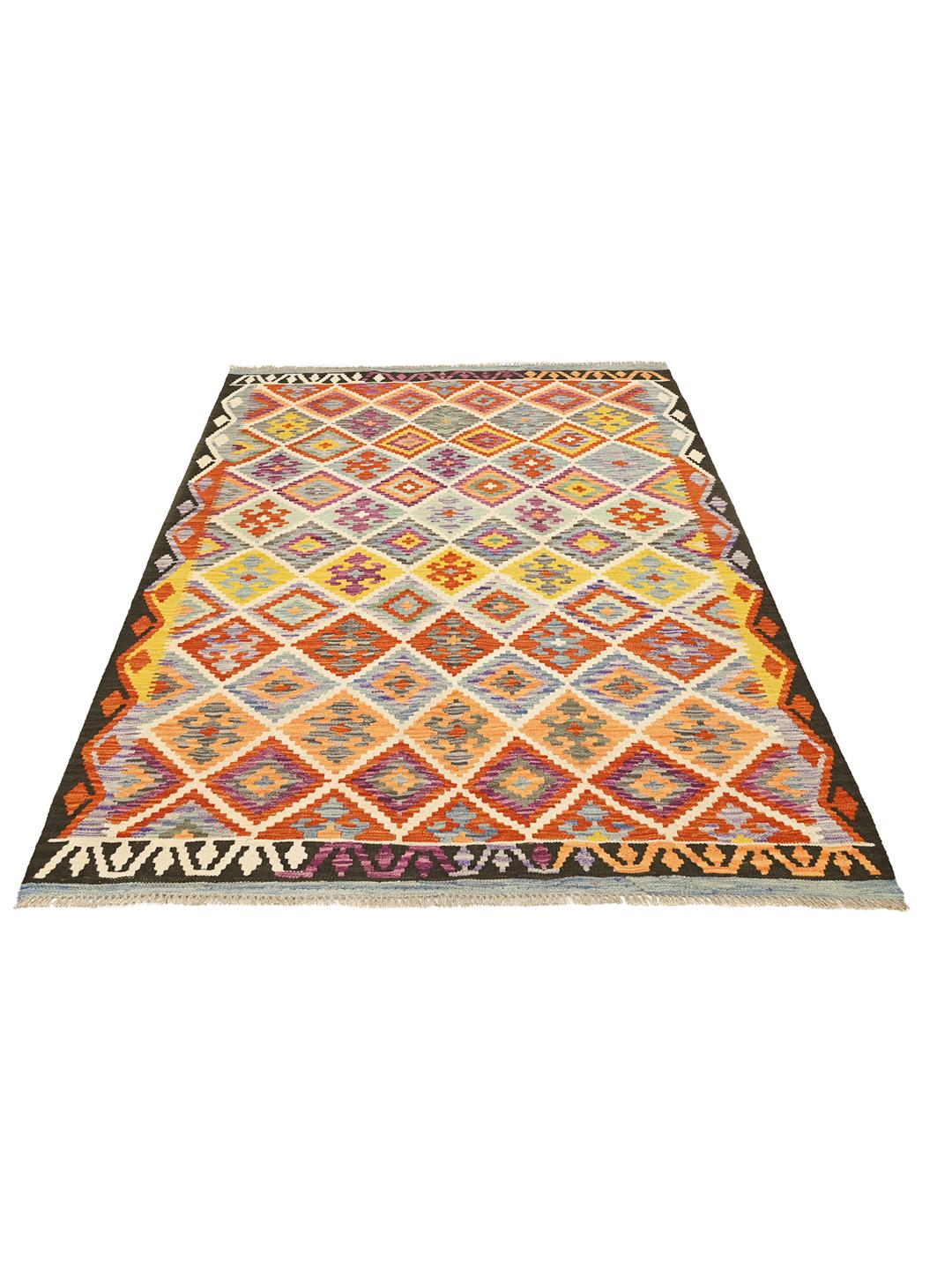
The Kelim tradition is one of the oldest and most respected forms of textile art in the Middle East. Originating from nomadic tribes who needed durable, portable, and beautiful floor coverings, these rugs have evolved through centuries of cultural exchange along the ancient trade routes. Afghan Kelims are particularly celebrated for their bold, expressive designs and their ability to reflect the landscape and spirit of the region.
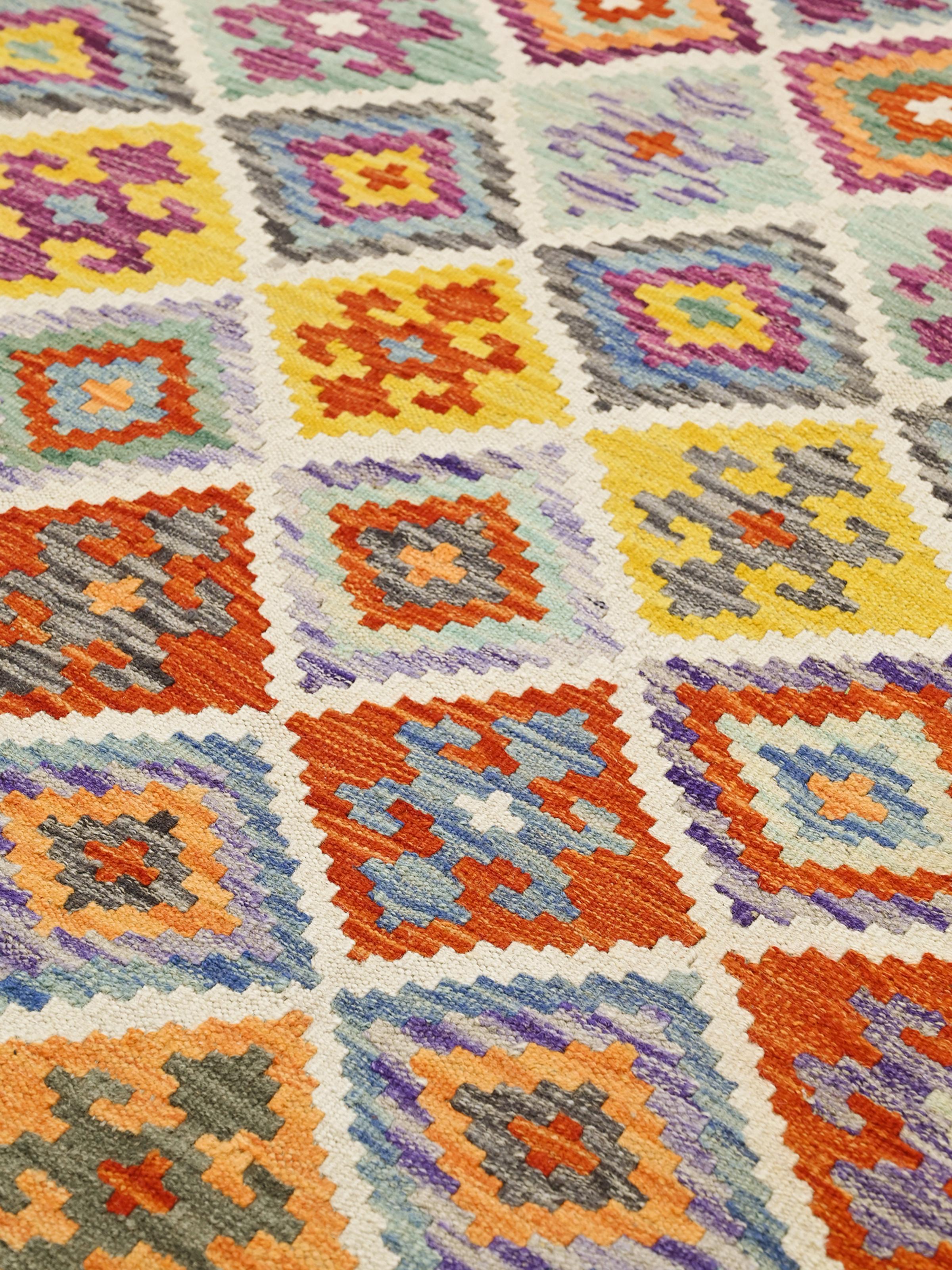
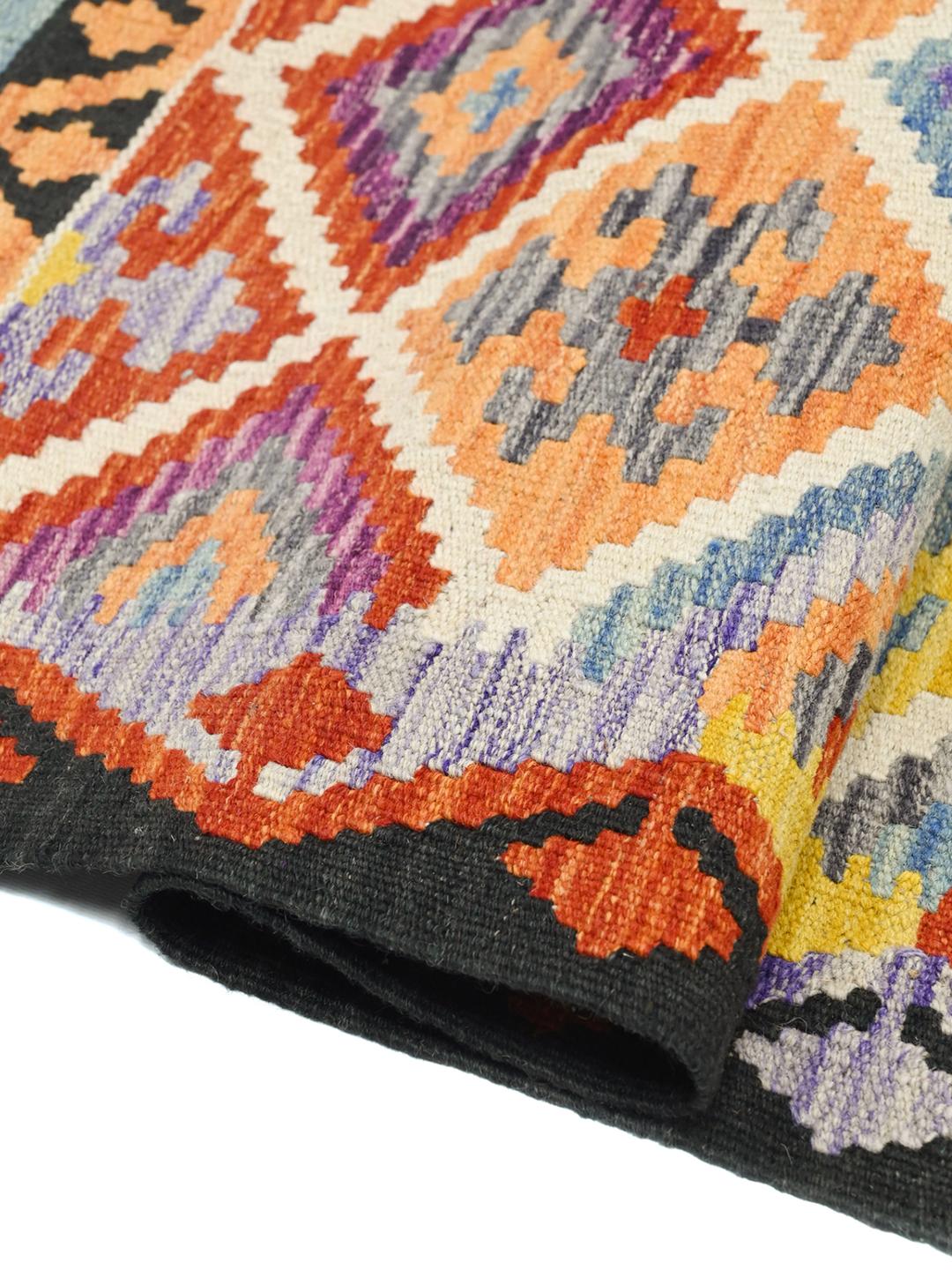
The term Kelim refers to a specific flat-weaving technique where the weft threads are passed through the warp threads to create the pattern, rather than knotted into a pile. This technique creates a reversible, lightweight, and incredibly strong fabric. The quality of a Kelim is determined by the tightness of the weave and the quality of the Wool used; finer, tighter weaving results in a sharper design and a longer-lasting rug that can withstand daily use without losing its form.
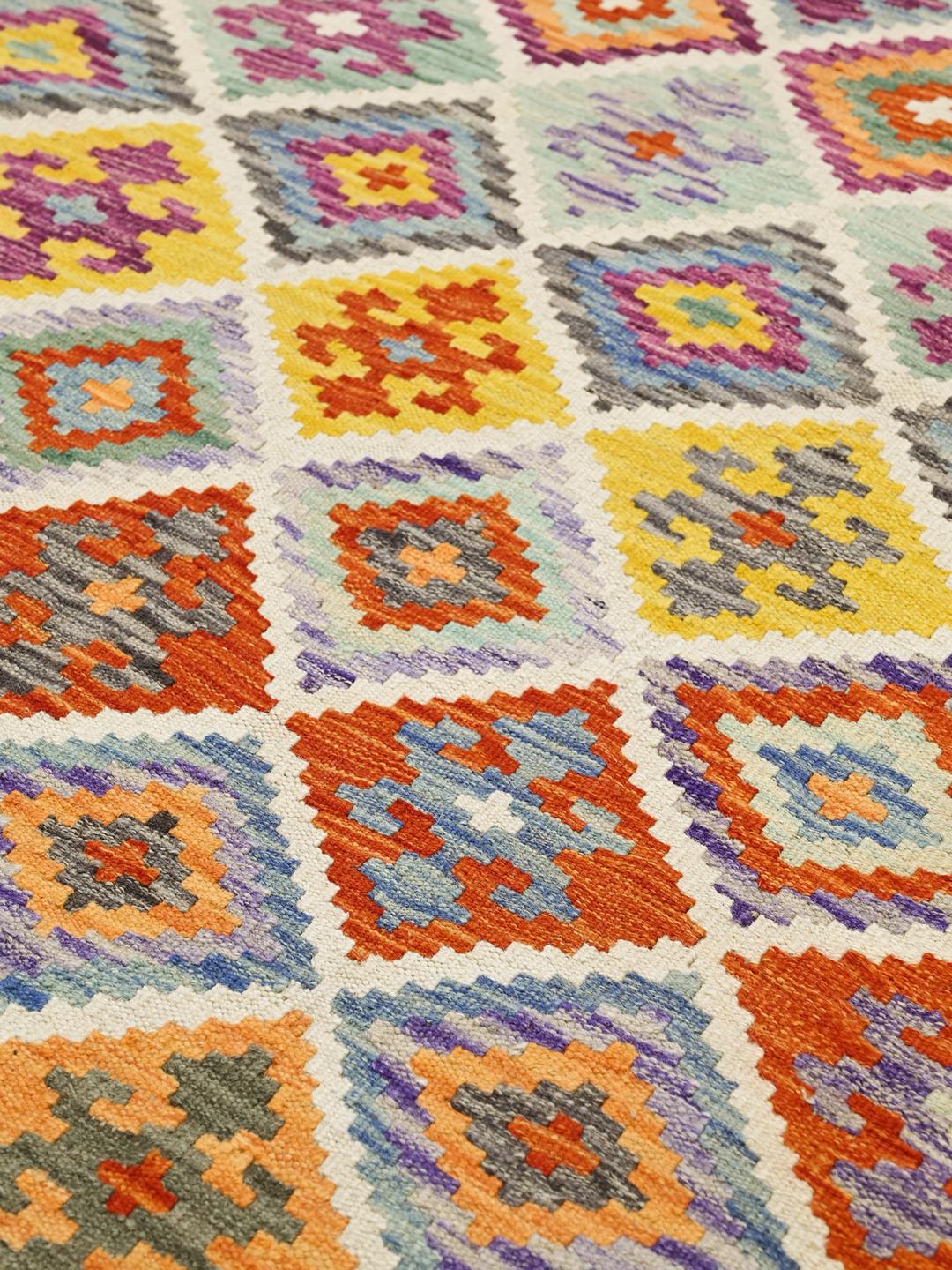
Visually, these rugs are defined by their geometric language. Traditional Afghan Kelims often feature repeating diamonds, triangles, and stylized motifs that hold deep symbolic meaning, often representing protection, prosperity, or tribal identity. The use of vibrant, natural-inspired colours is a hallmark of the style, with deep reds, earthy oranges, and bright yellows often contrasted against darker borders to create a balanced, dynamic composition.
Collecting an Afghan Kelim is a way of preserving a vital piece of human history. These rugs are not merely decorative items; they are records of the skill and vision of the artisans who created them. By choosing a piece from this tradition, you are participating in a long-standing lineage of craft, ensuring that these beautiful, storied techniques continue to be appreciated and honoured in modern homes around the world.