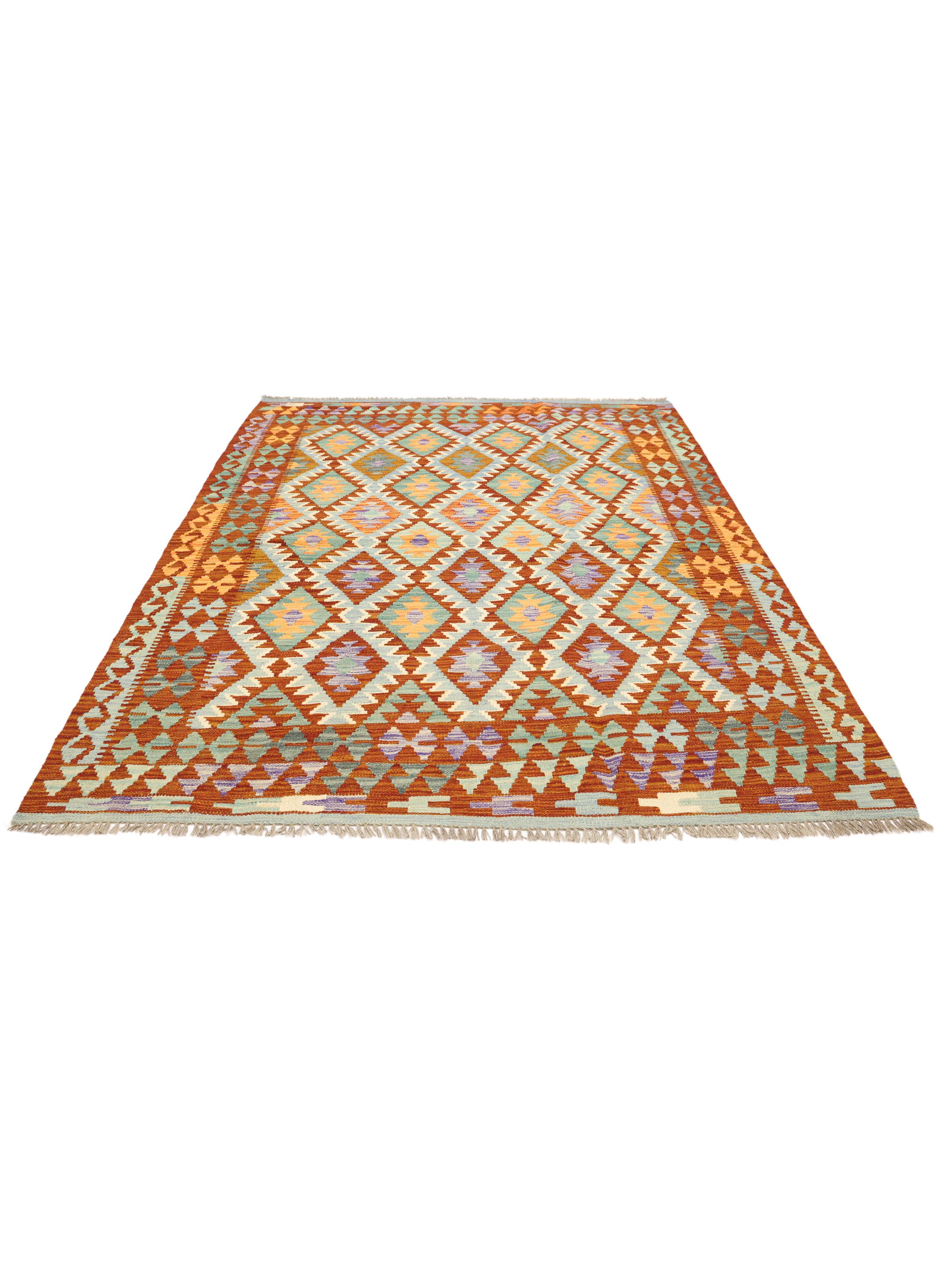
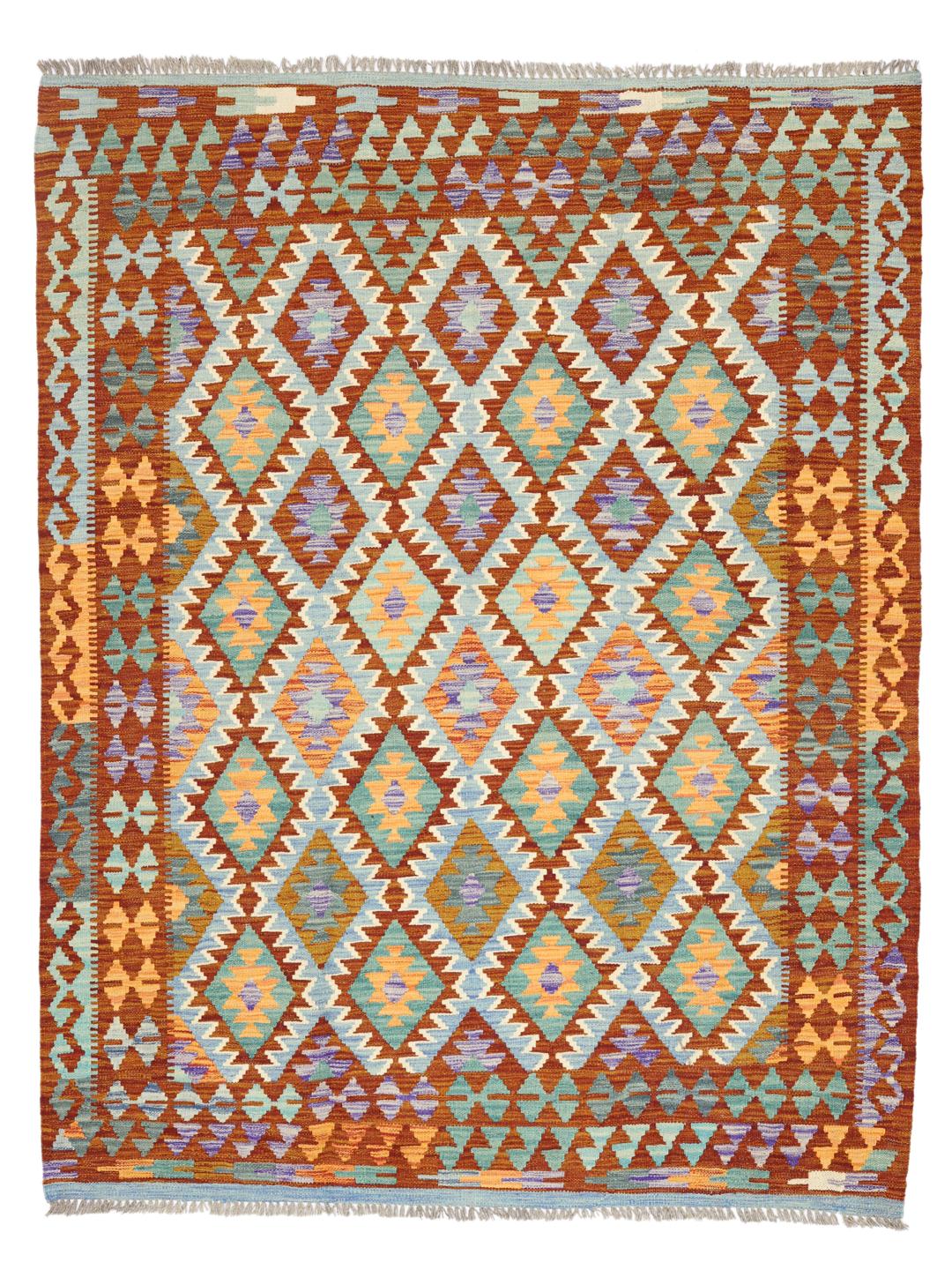
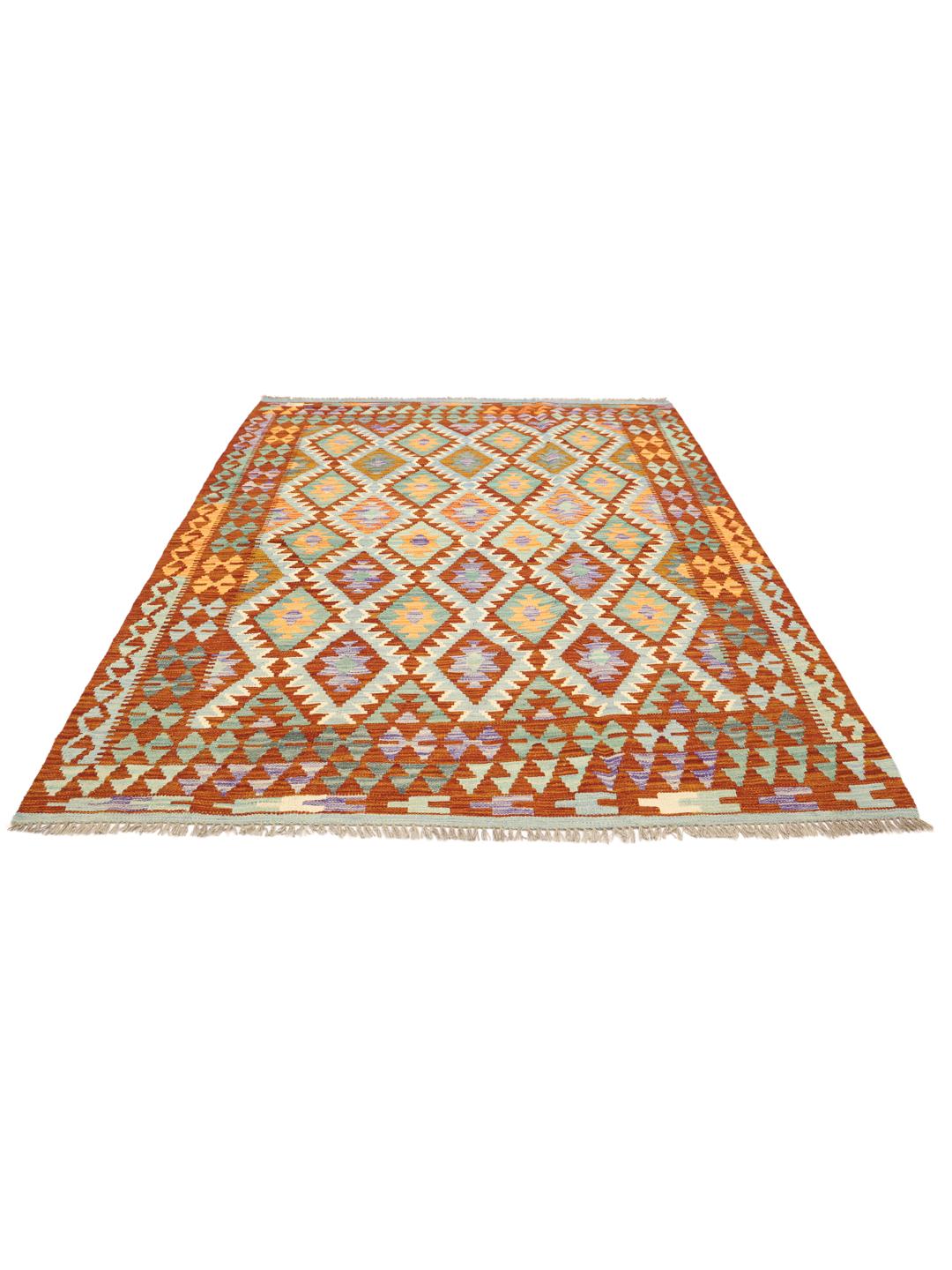
The Afghan Kelim is a celebrated textile tradition originating from the rugged landscapes of Afghanistan. These rugs are deeply rooted in the nomadic and village cultures of the region, where weaving has served as both a practical necessity and a vital form of artistic expression for centuries. Historically, these flat-woven rugs were designed for versatility, serving as floor coverings, wall hangings, or even bags, reflecting the mobile lifestyles of their creators.
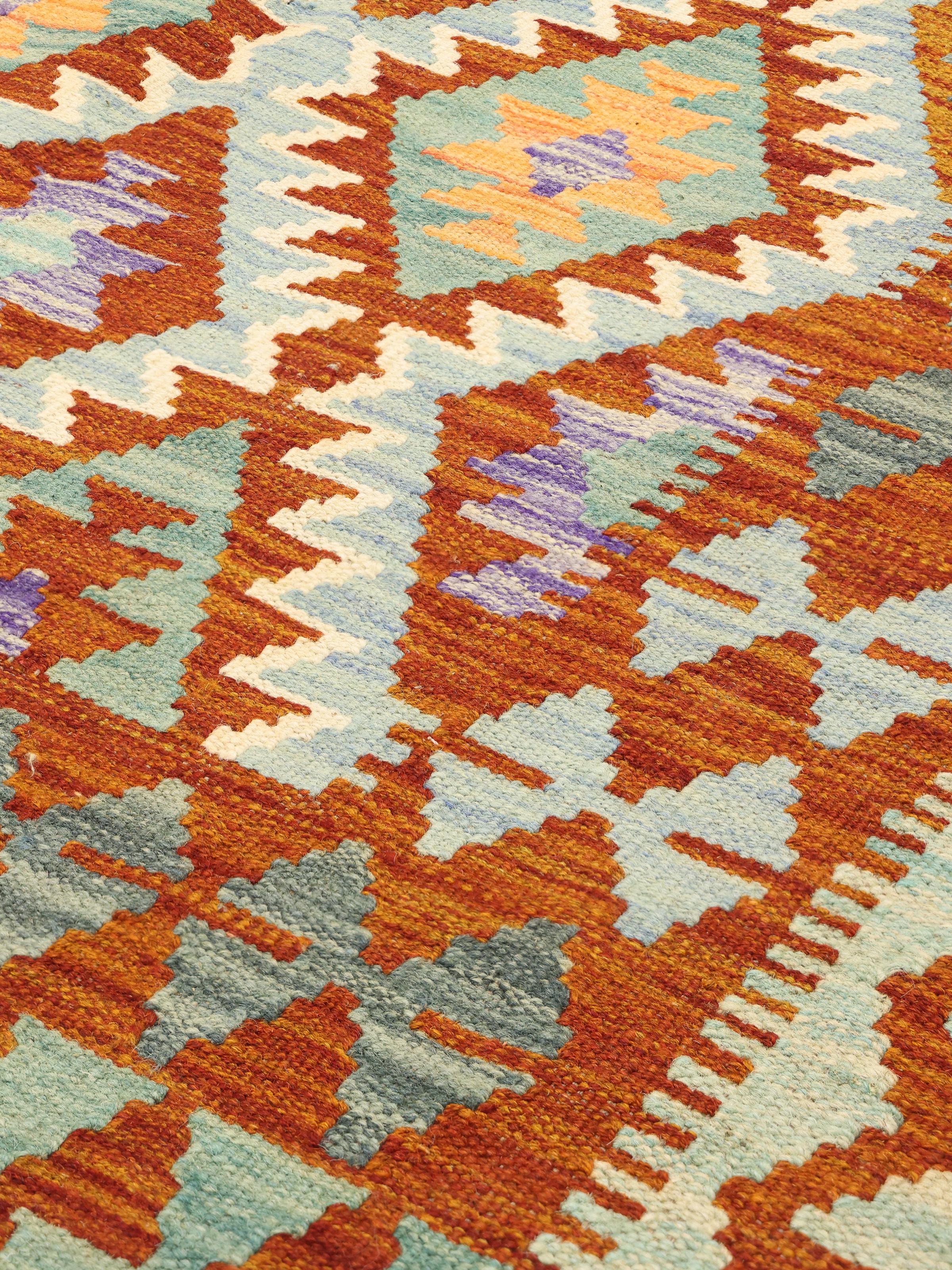
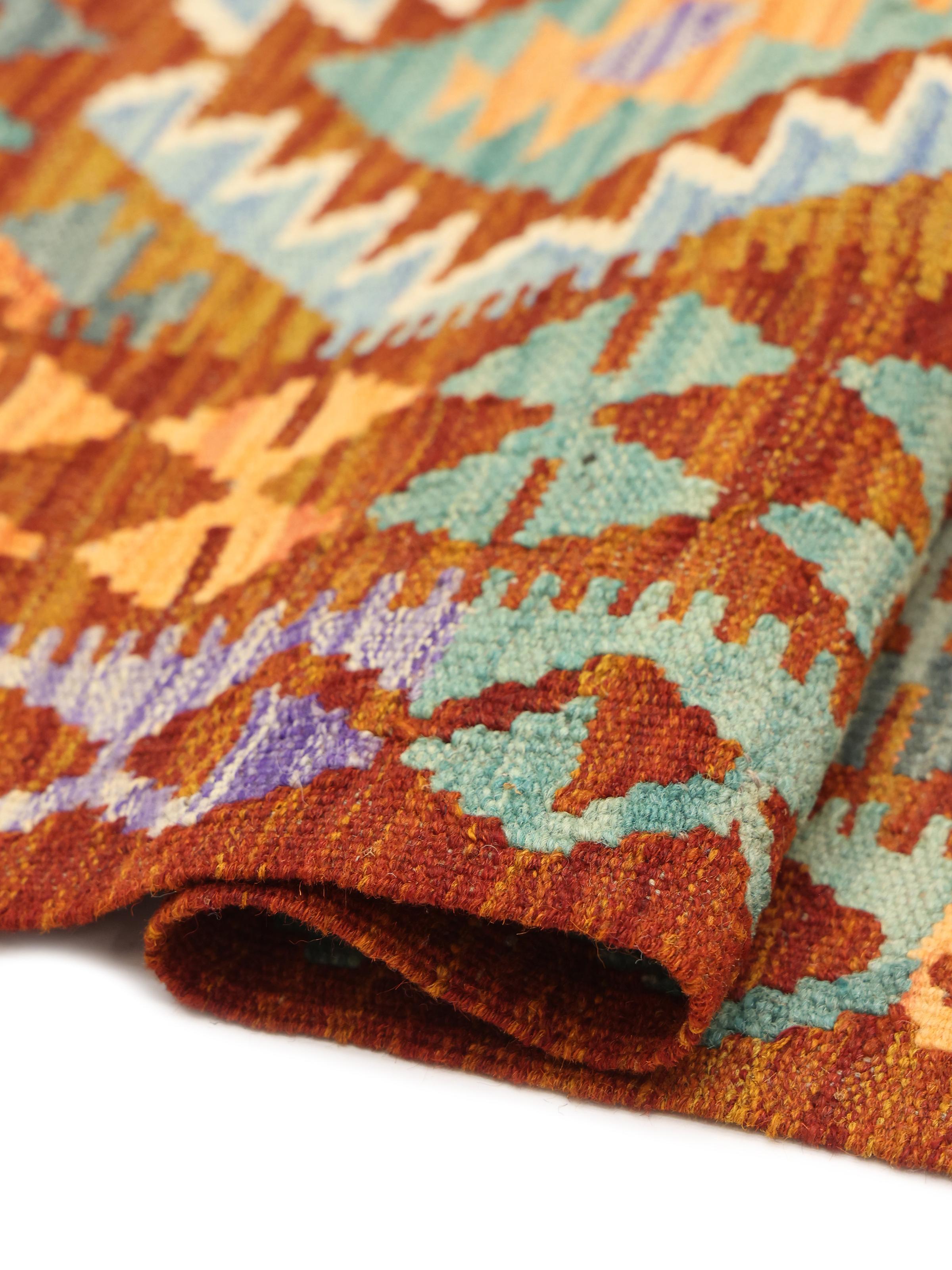
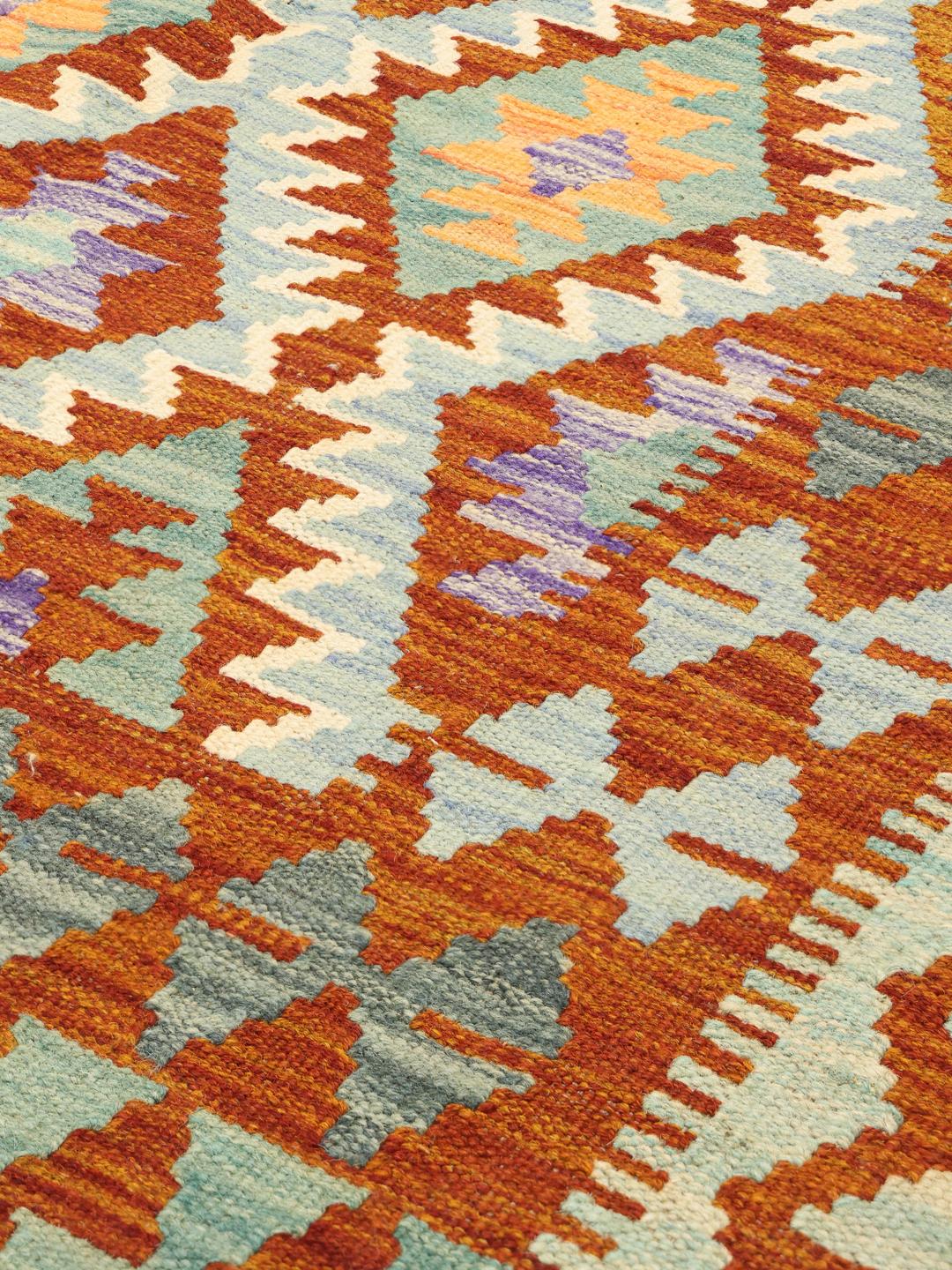
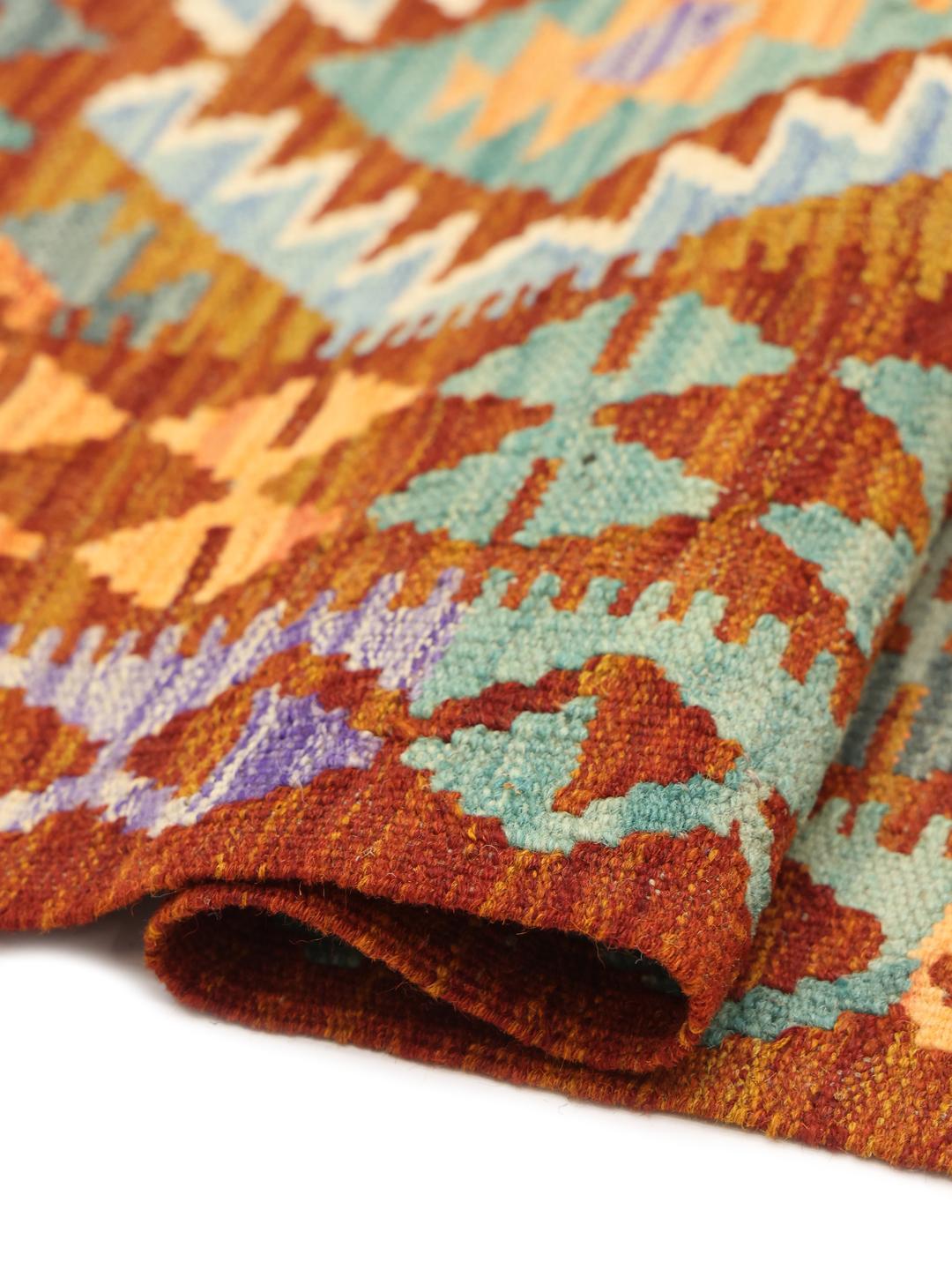
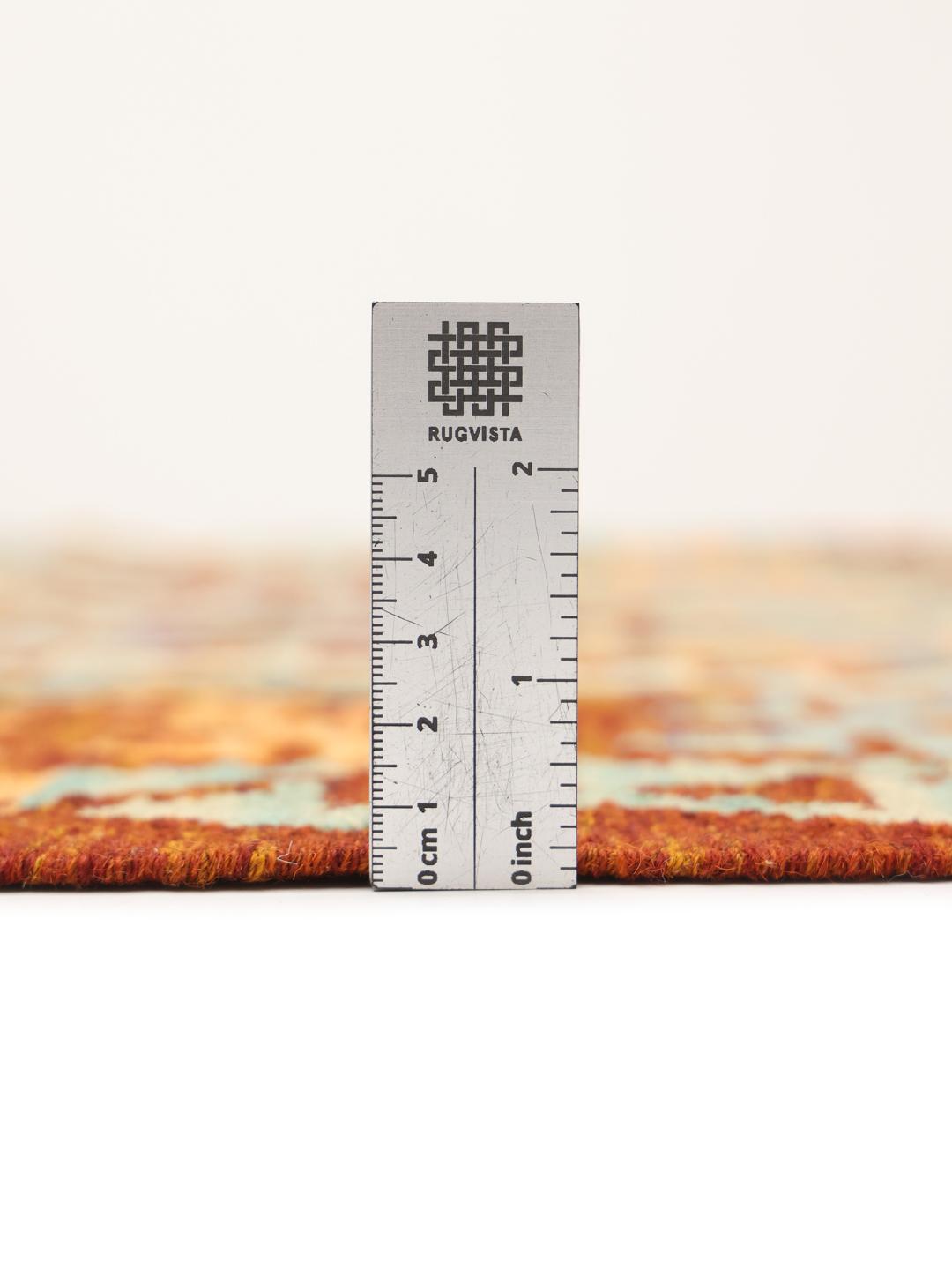
The term 'Kelim' refers to a specific flat-weaving technique where the warp and weft threads are interwoven to create a smooth, pileless surface. This method is distinct from knotted pile rugs, resulting in a lighter, thinner, and highly portable textile. Because there is no pile to wear down, these rugs are incredibly resilient, making them a staple in households across the Middle East for their ability to withstand the demands of daily life.
Signature design elements of these rugs include bold geometric shapes, most notably the diamond or 'gul' motifs, which are often arranged in repeating rows to cover the entire field. The colour palettes are traditionally sourced from natural dyes, producing the deep, warm earth tones that are iconic to the region. The inclusion of vibrant secondary colours within the diamond borders is a hallmark of this specific style, creating a sense of movement and depth.
Today, these rugs are highly valued by collectors and enthusiasts who appreciate the human story behind every piece. Owning an authentic Afghan Kelim is an investment in cultural heritage and a testament to the enduring skill of the artisans who preserve these ancient techniques. Each rug acts as a visual record of its maker's creativity, offering a depth of character and a connection to history that is increasingly rare in the modern world.