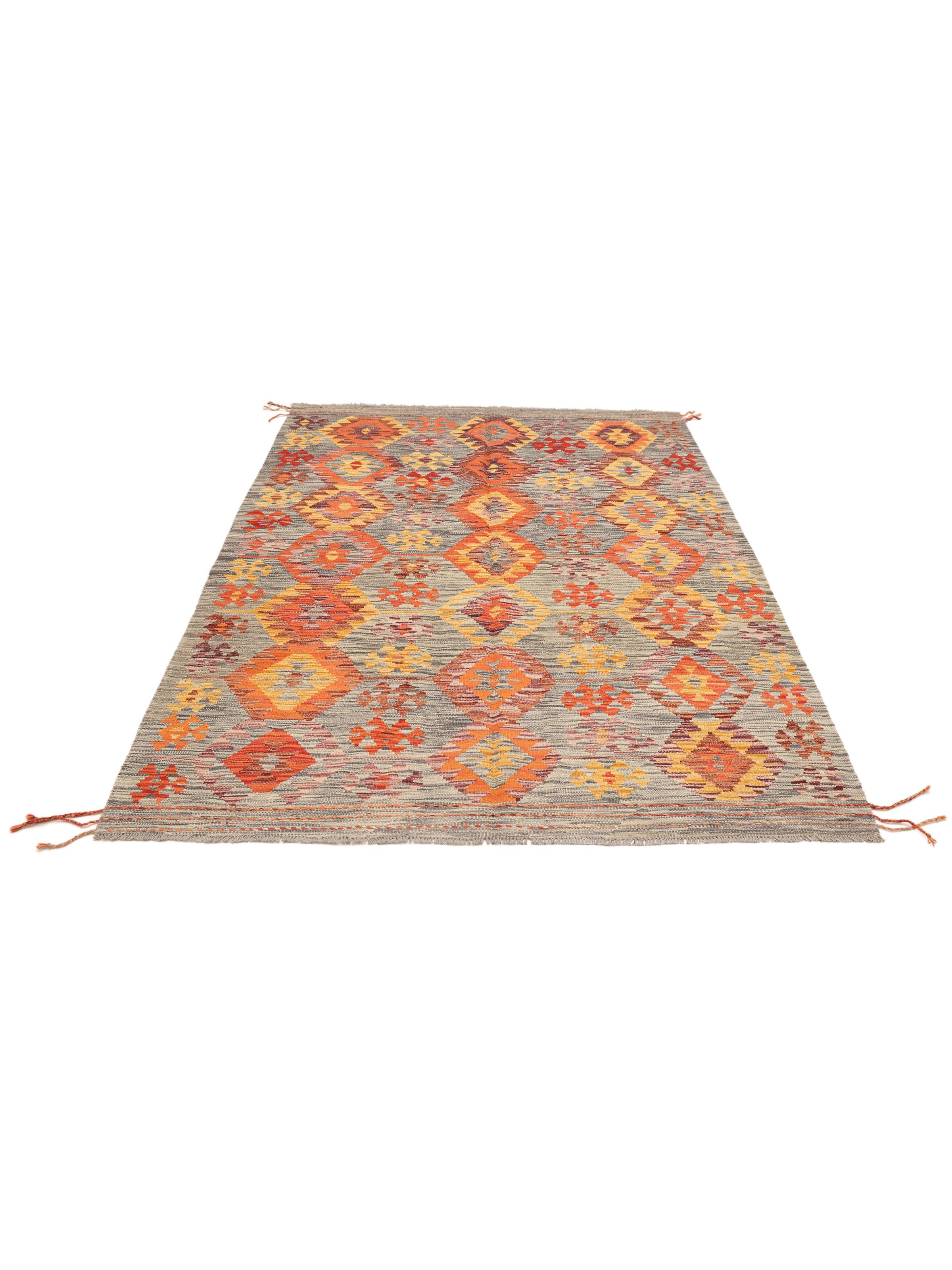
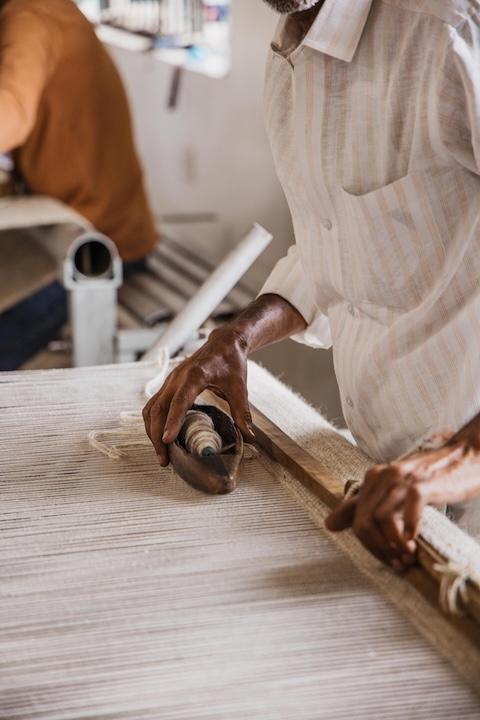
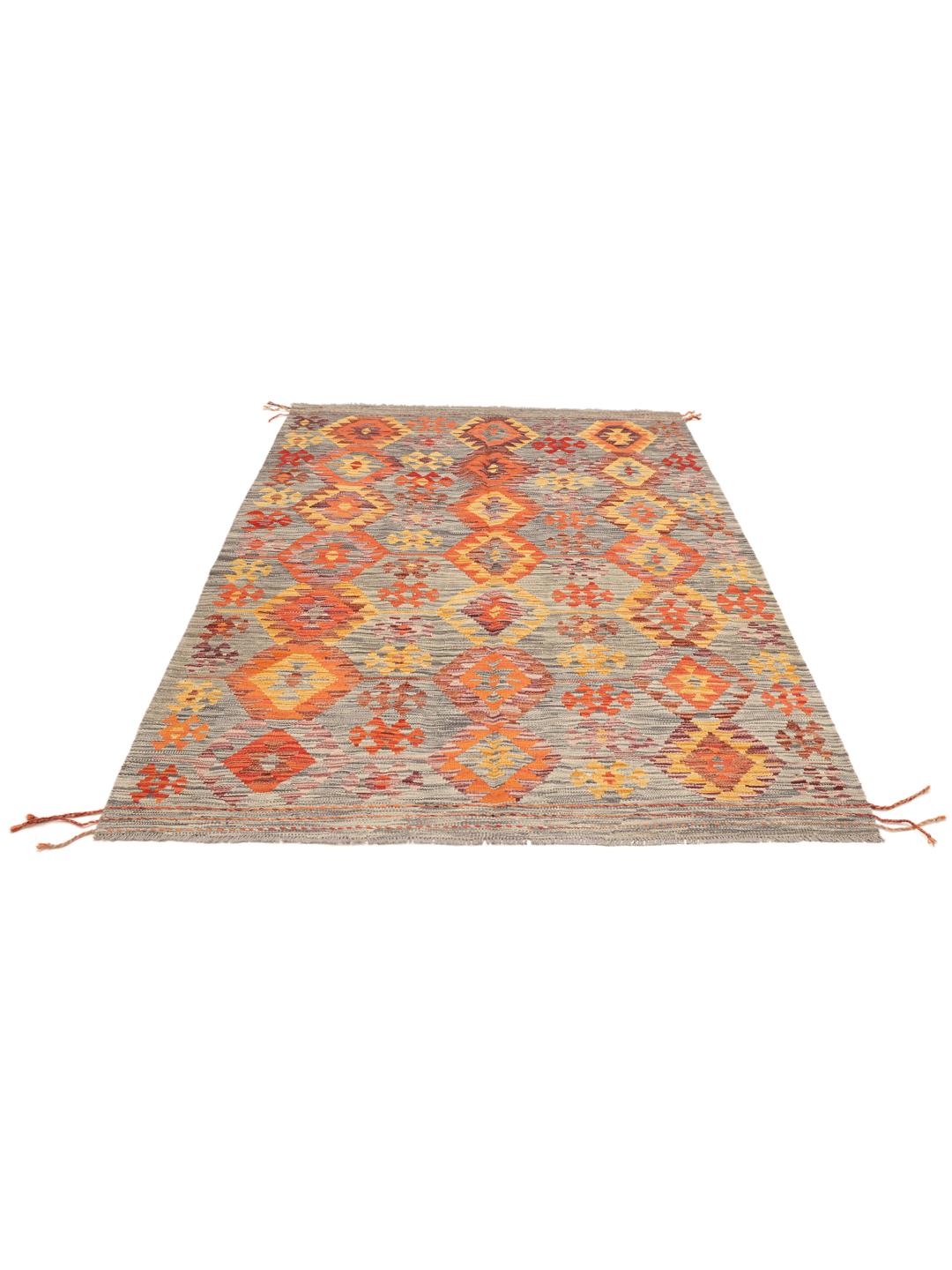
The Kelim Afghan Old Style rug tradition is deeply rooted in the nomadic and village cultures of Afghanistan. These flat-woven textiles have been produced for generations, serving as essential, multi-functional items in the home, used as floor coverings, wall hangings, and storage bags. The techniques have been passed down through families, preserving a cultural identity that is reflected in every woven strand.
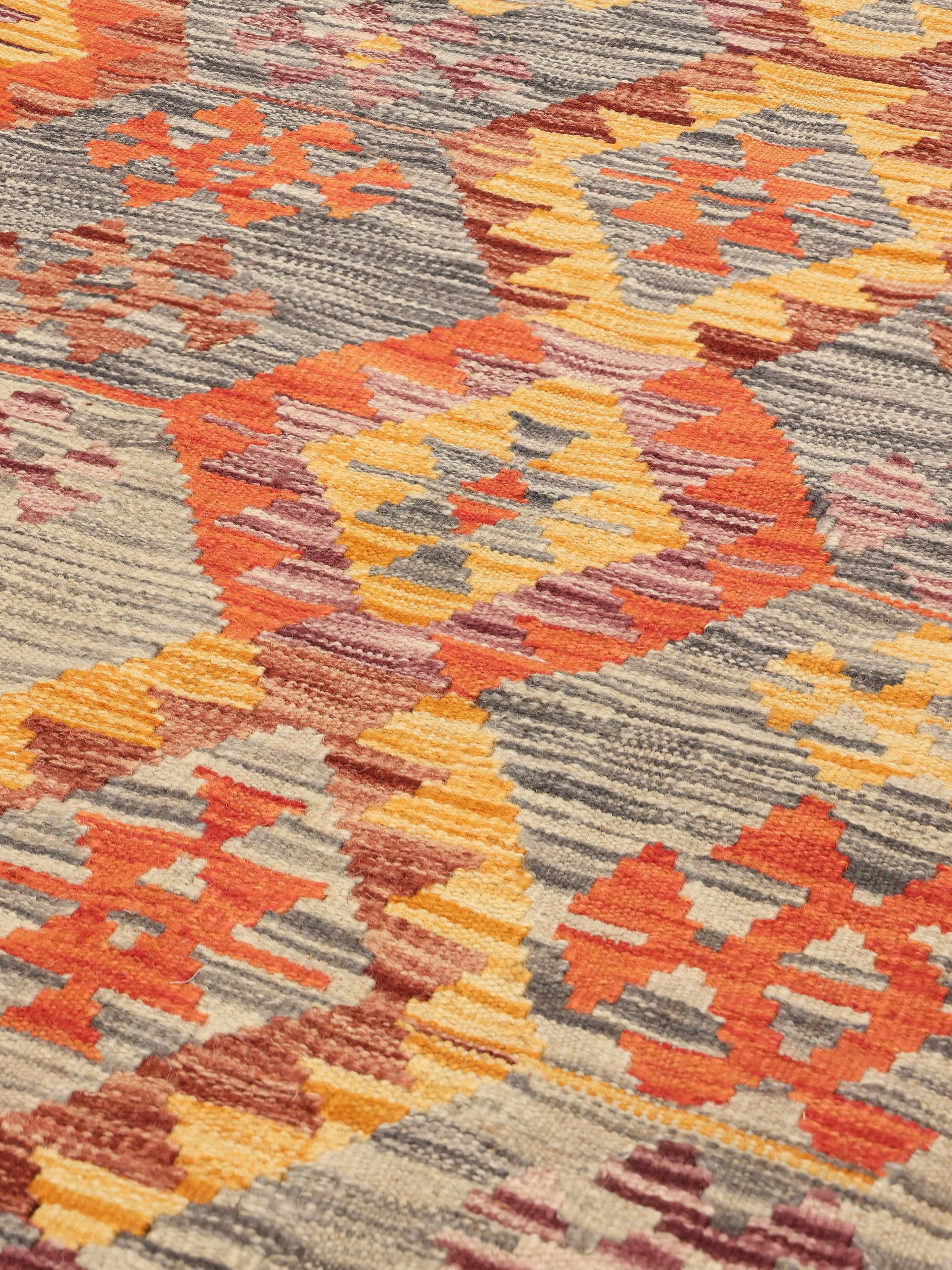
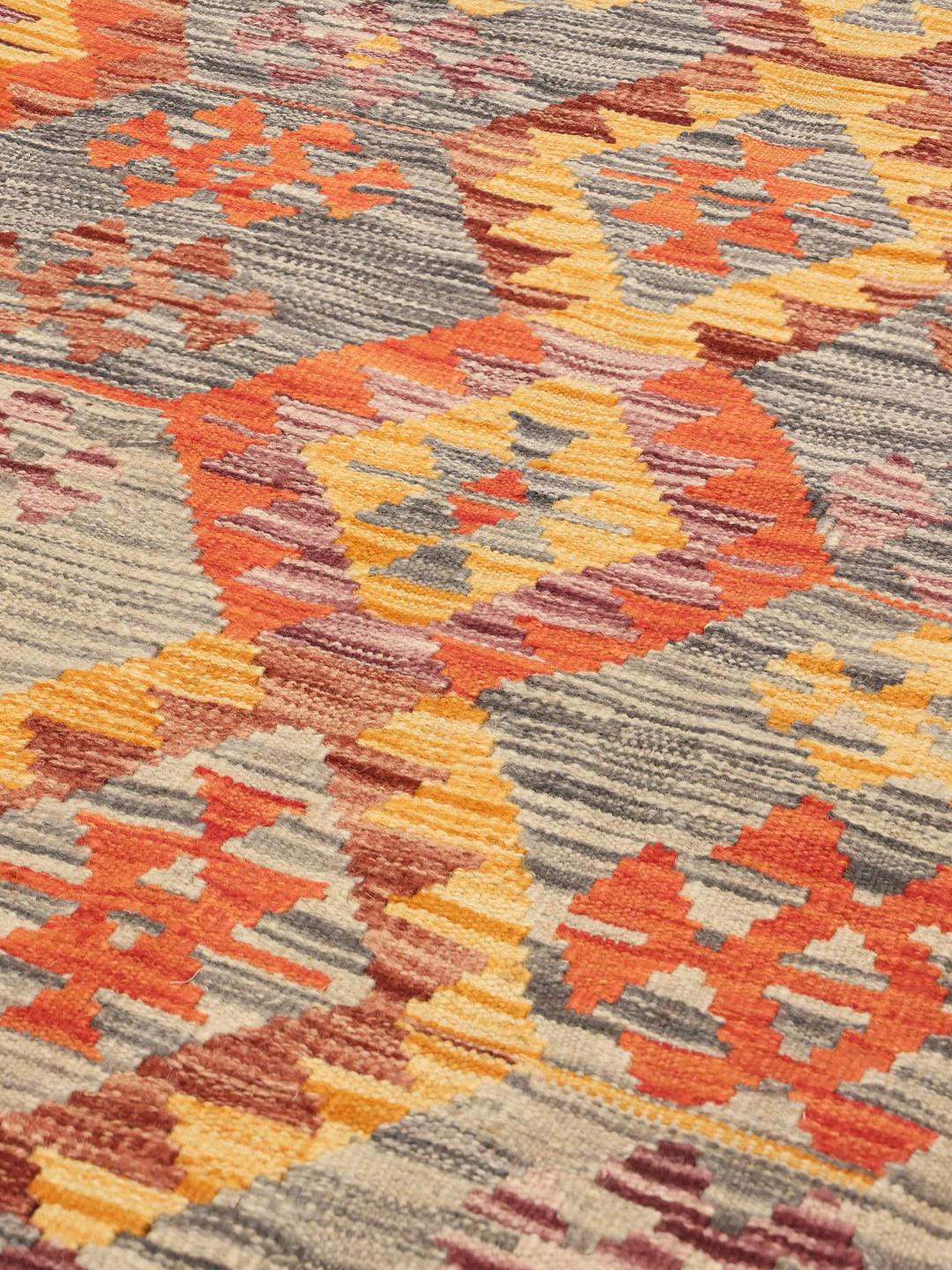
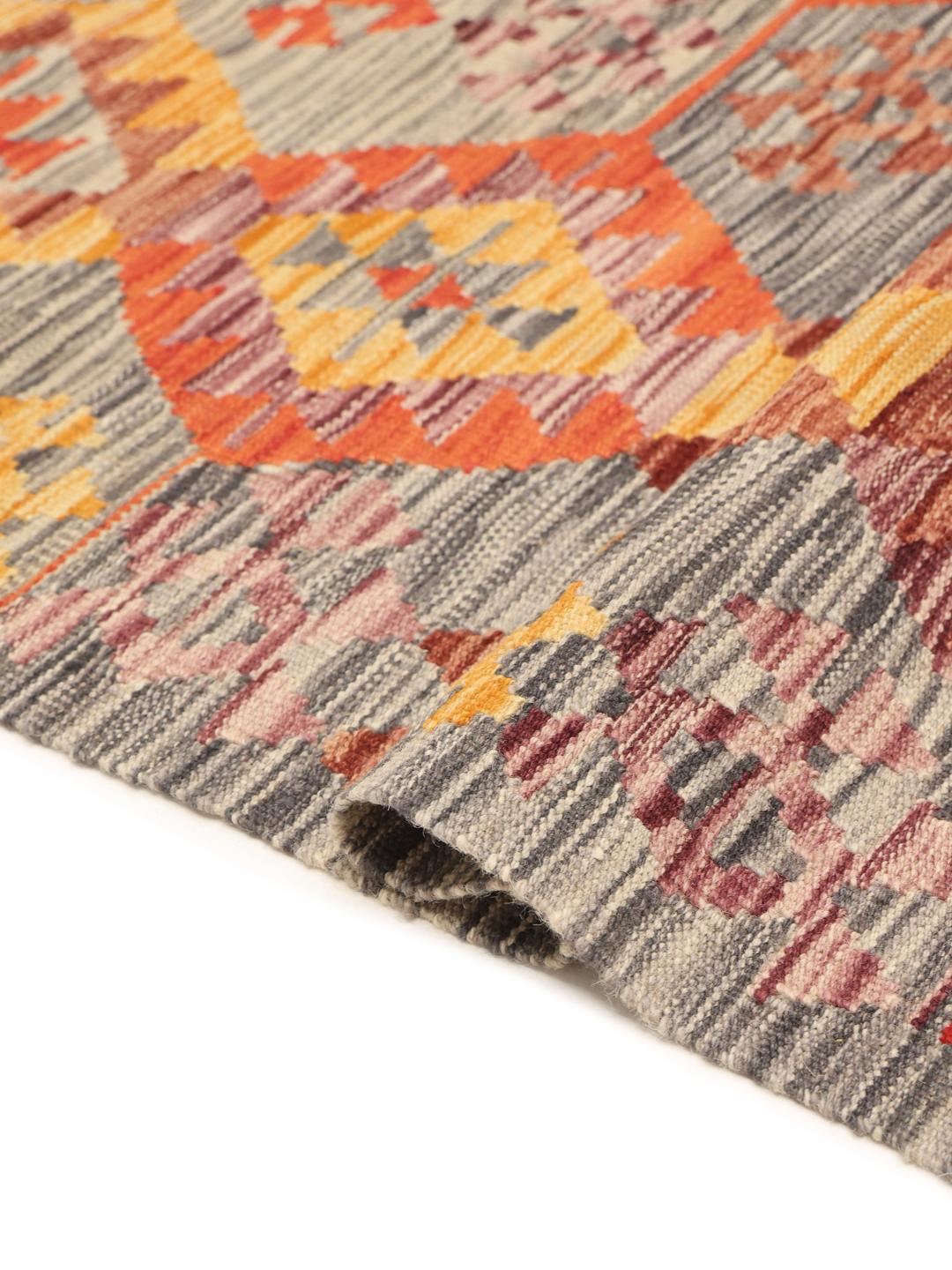
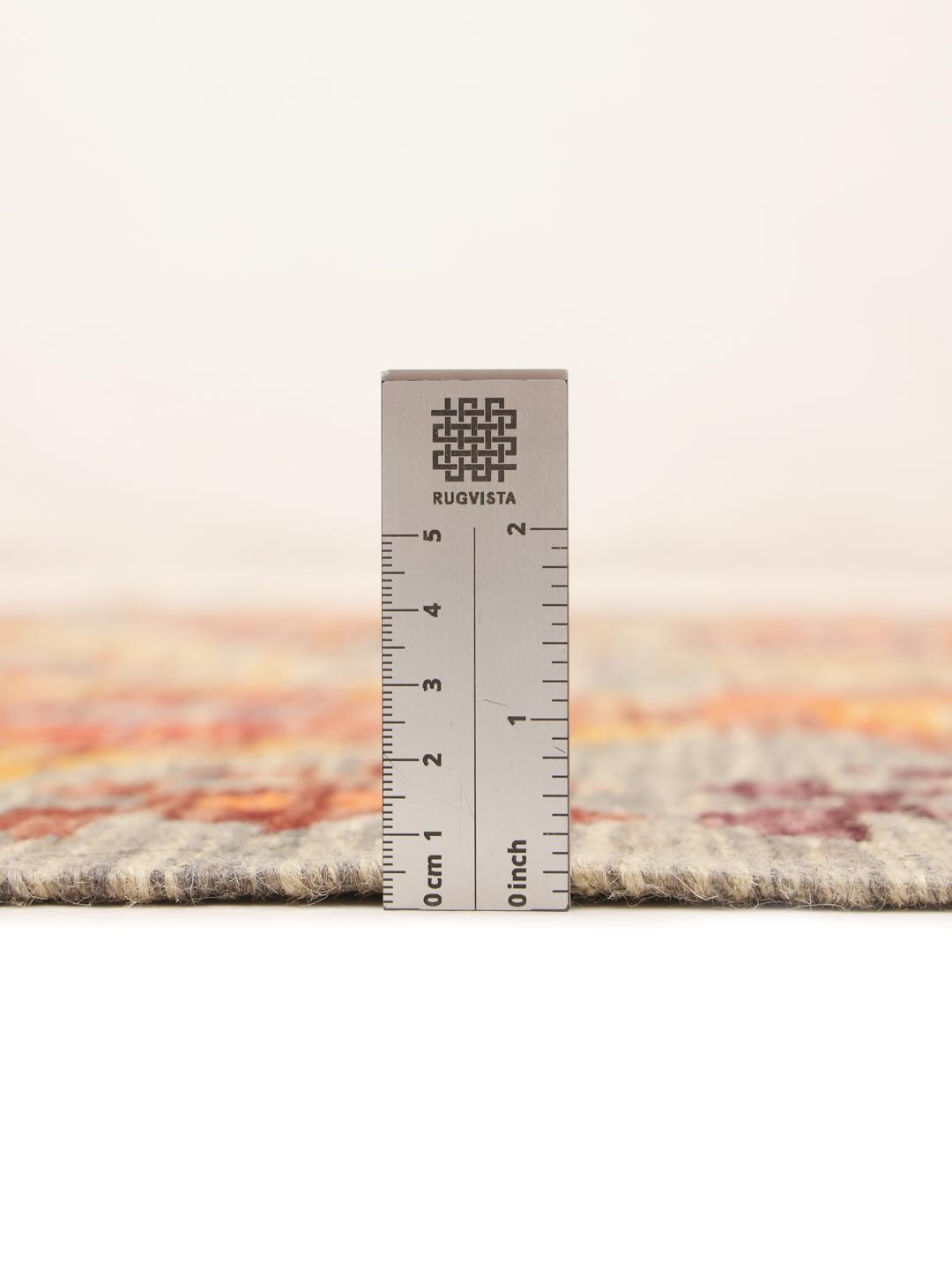
A Kelim is defined by its flat-weave construction, where the horizontal weft threads are passed over and under the vertical warp threads to create the pattern. Unlike knotted rugs that feature a pile, these rugs are smooth and lightweight. This method requires a high degree of precision, as the design is built directly into the structure of the rug, creating a reversible piece that is prized for its strength and versatility.
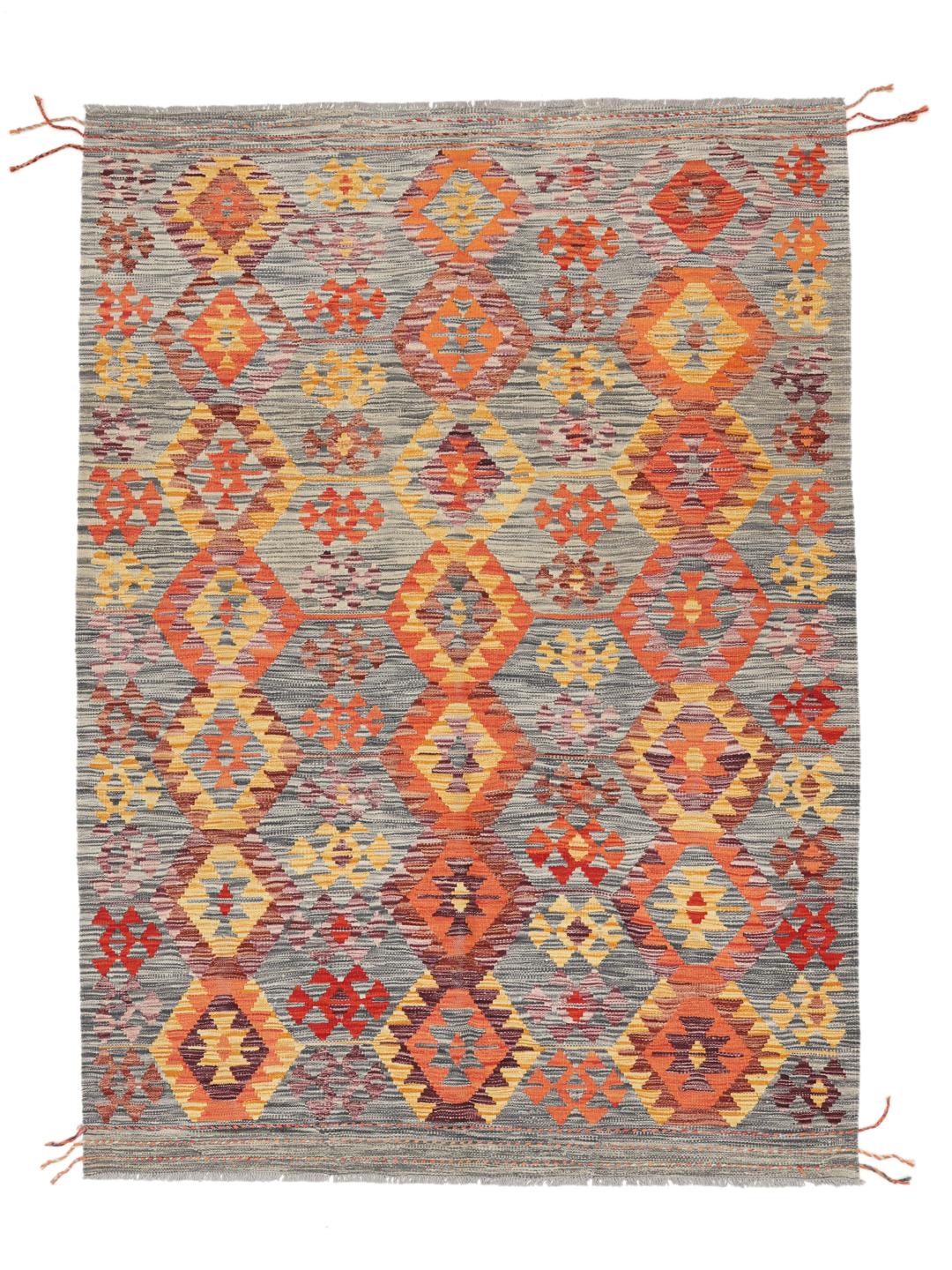
The visual language of these rugs is dominated by geometric motifs, with the diamond being a primary element. These shapes are often arranged in repeating patterns that symbolise protection or local tribal identity. The colour palette typically draws from natural dyes, featuring warm reds, oranges, and earthy tones that contrast beautifully against the grey background, creating a balanced and harmonious look.
These rugs are highly valued by collectors and enthusiasts for their cultural weight and the undeniable skill required to produce them. Owning a piece from this tradition is an investment in heritage, representing a bridge between ancient techniques and contemporary home design. It is a testament to the enduring appeal of items crafted with human hands rather than machines.