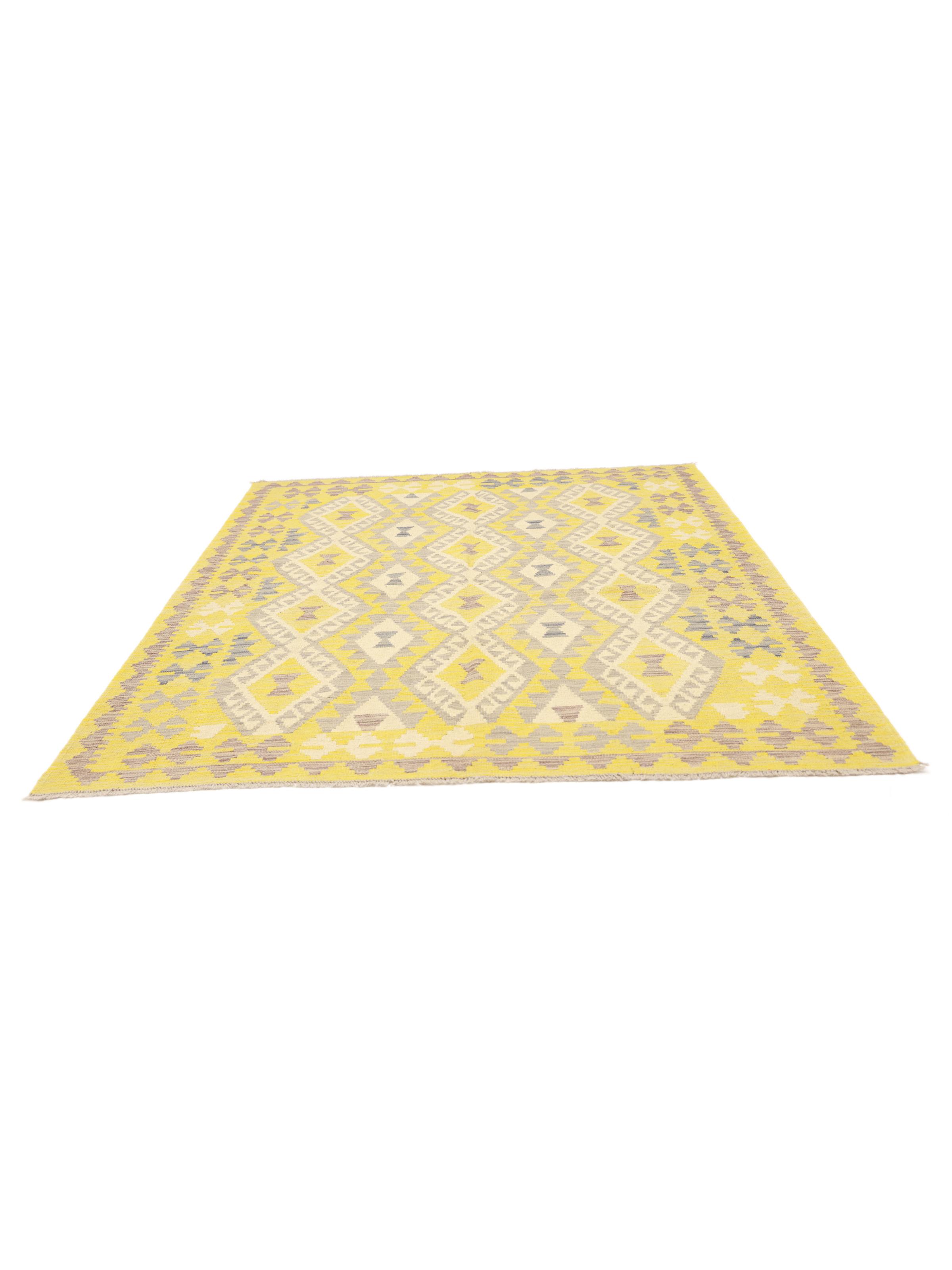
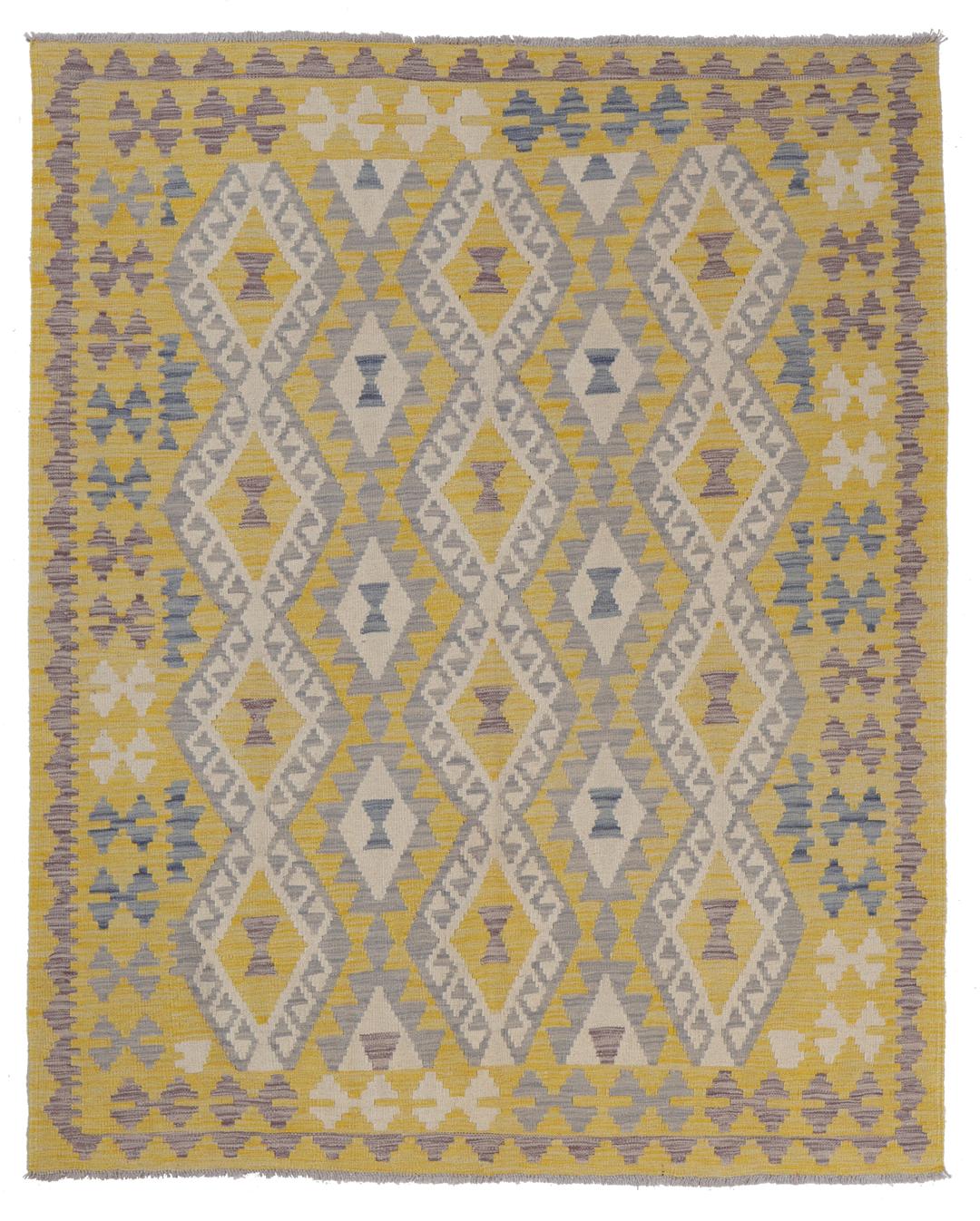
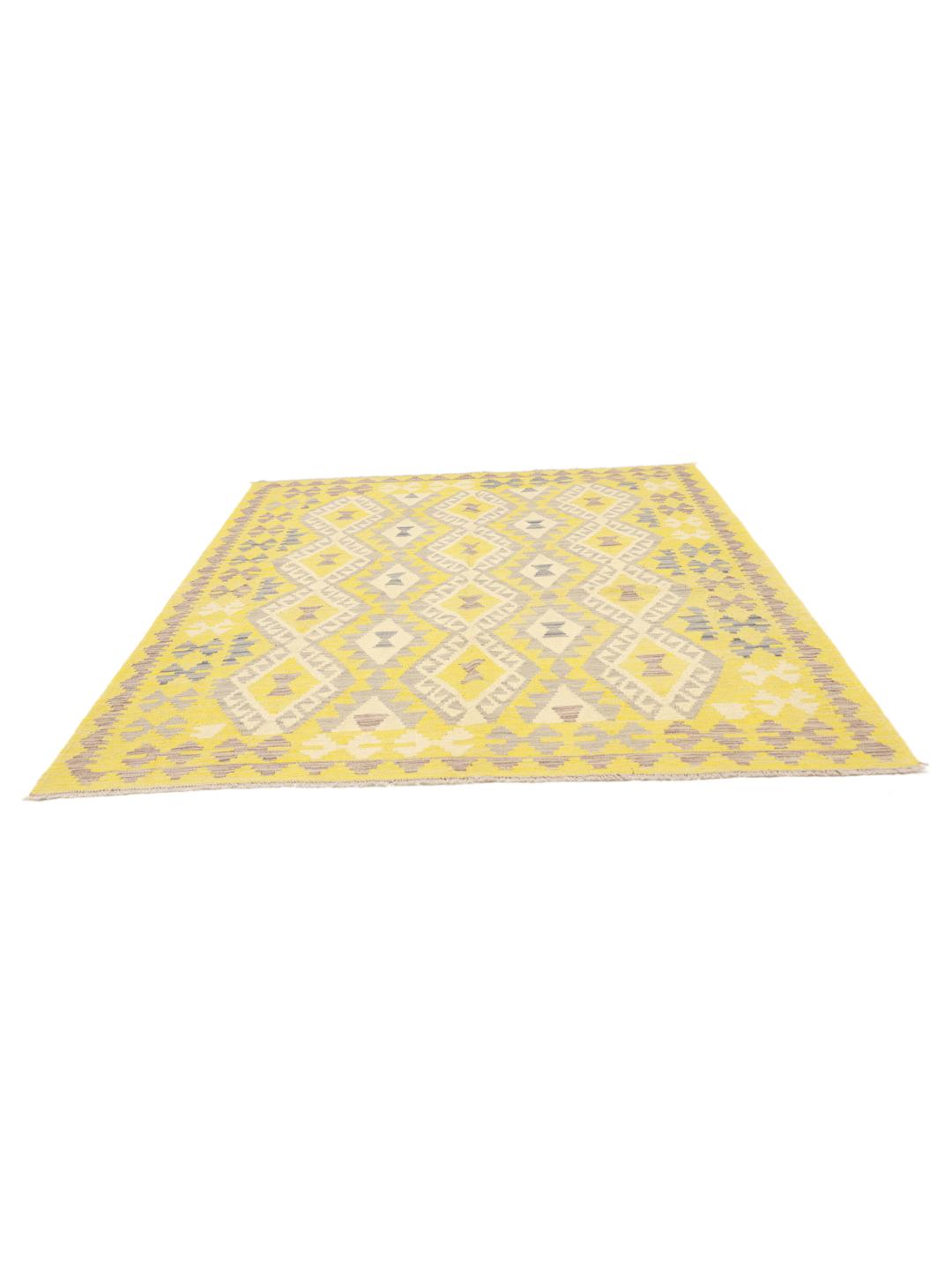
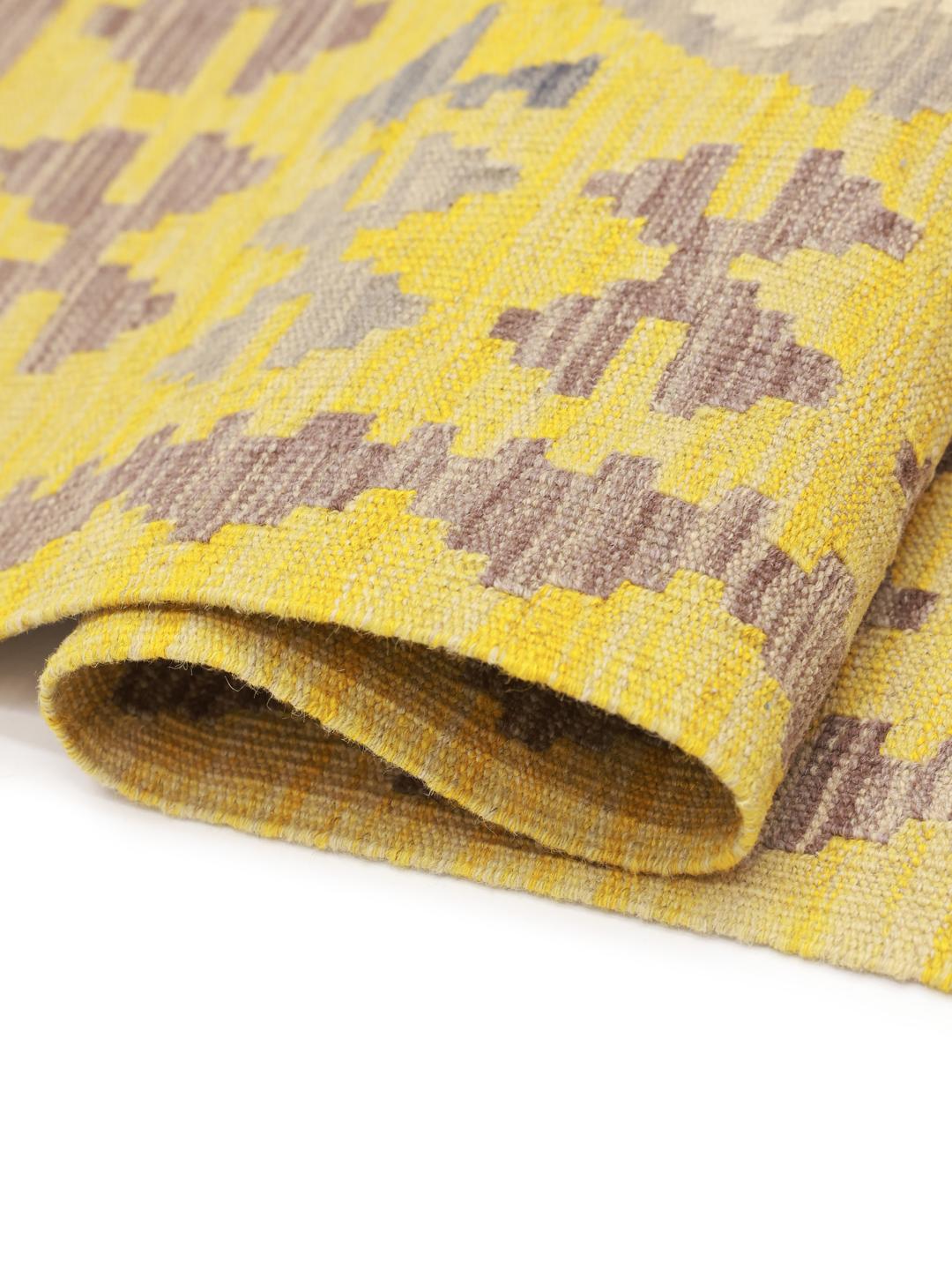
The Kelim tradition in Afghanistan is deeply rooted in the nomadic and semi-nomadic cultures of the region, where flat-woven textiles were essential for both utility and artistic expression. These rugs were historically crafted to serve as functional items, such as floor coverings, blankets, or saddlebags, designed to be easily transported during seasonal migrations. Over centuries, these traditions have evolved into a sophisticated craft that bridges the gap between historical necessity and decorative art.
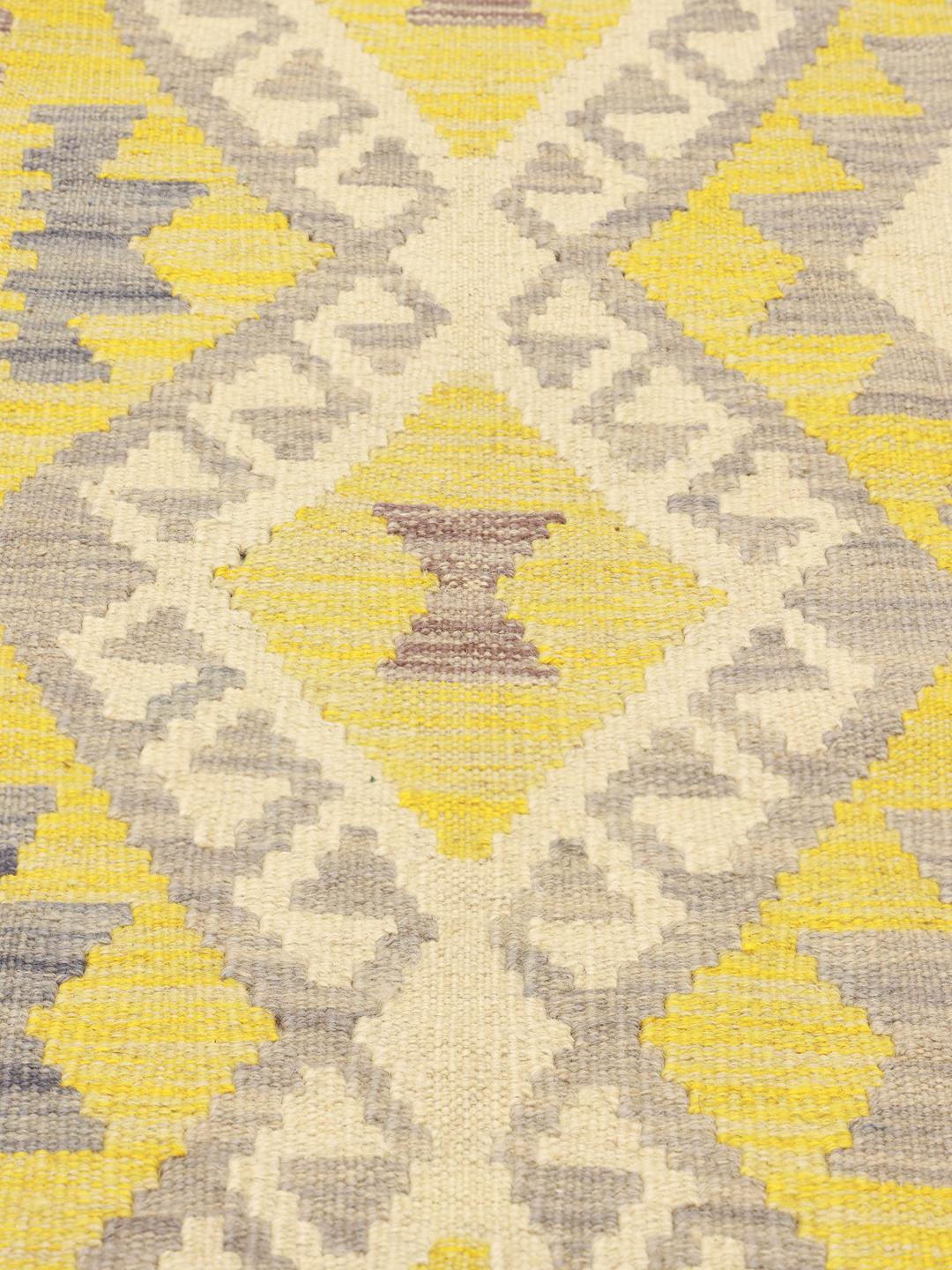
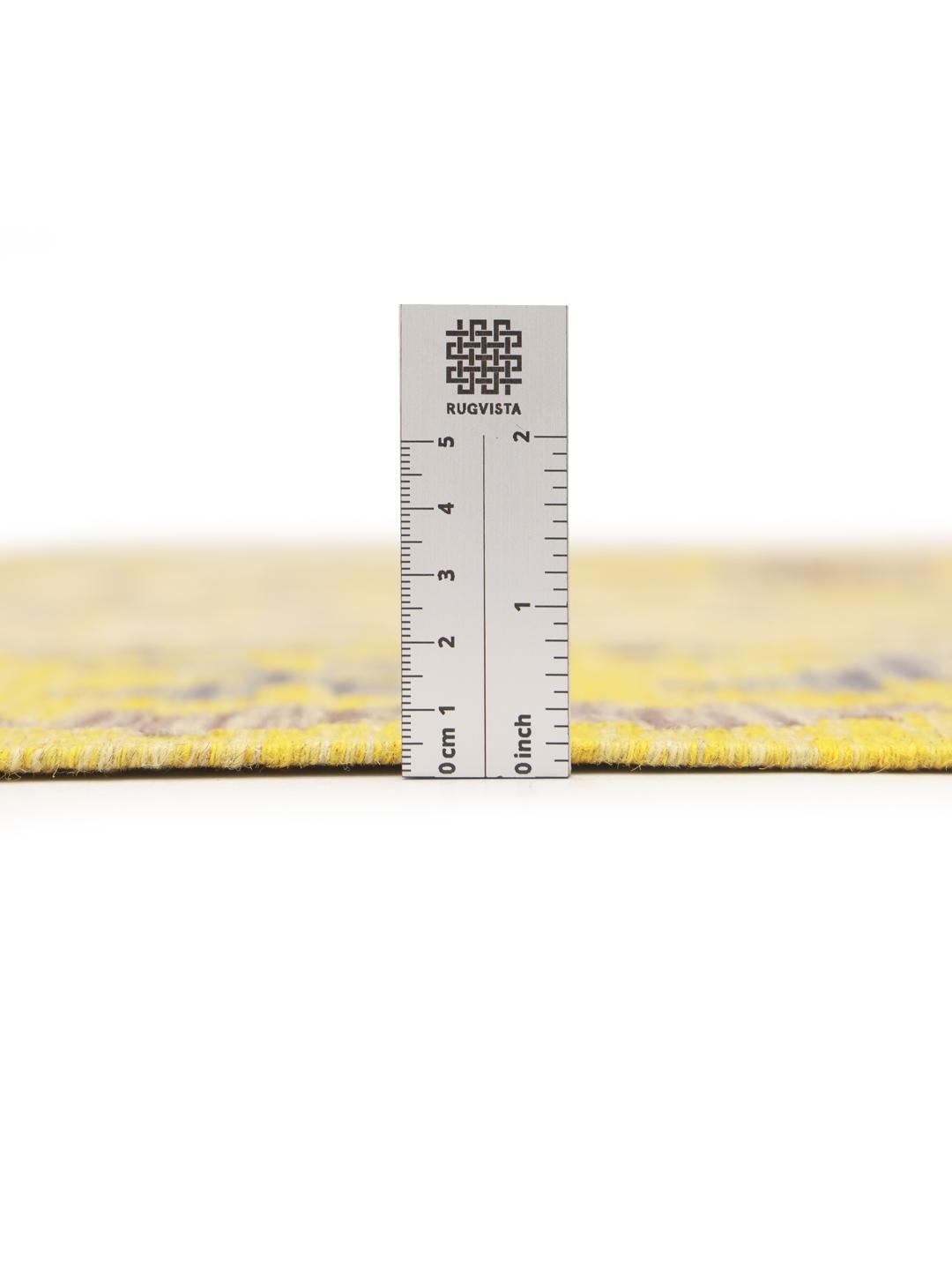
A Kelim is defined by its flat-weave construction, which distinguishes it from pile rugs. The process involves interweaving the warp and weft threads to create a smooth, tapestry-like surface that lacks the raised fibres of traditional knotted carpets. This technical distinction is crucial because it results in a reversible, lightweight, and incredibly durable textile that showcases the raw beauty of the wool while allowing for the creation of sharp, clean geometric designs.
The design vocabulary of Afghan Kelims is dominated by tribal and geometric motifs, often featuring diamonds, triangles, and stylized floral elements. These patterns are not merely aesthetic; they are symbolic expressions of the weaver's environment, beliefs, and heritage. The use of repeating medallions and borders is a hallmark of the style, creating a sense of order and harmony that has remained consistent for generations, even as the specific interpretations vary from one weaver to the next.
Collecting Afghan Kelims is an act of preserving a piece of cultural history. These rugs are highly valued for their authenticity and the sheer skill required to produce them without the aid of modern machinery. Owning a Kelim connects the modern home to a rich, cross-cultural heritage, serving as a testament to the enduring human capacity to create beauty through patience, tradition, and a deep understanding of natural materials.