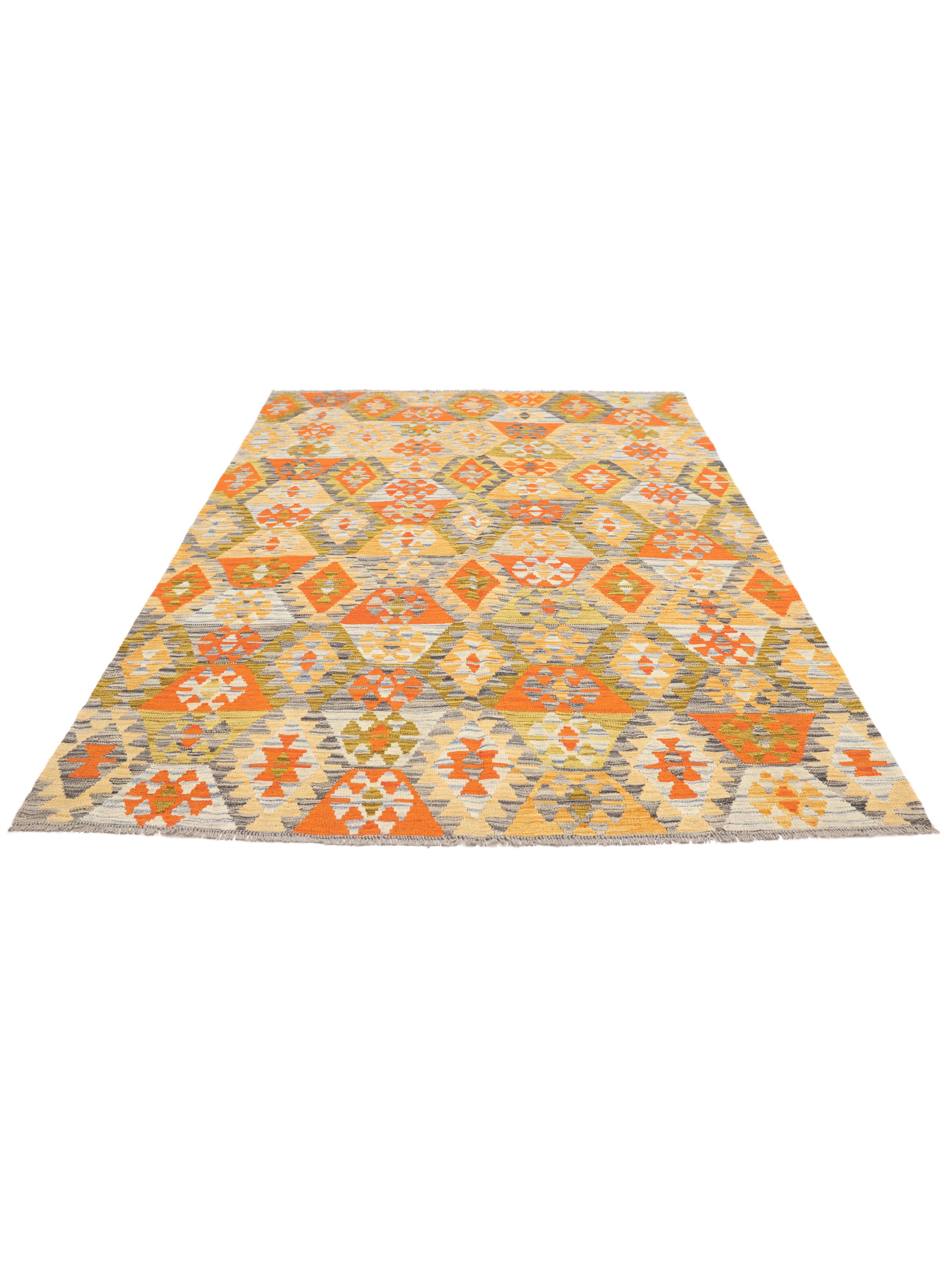
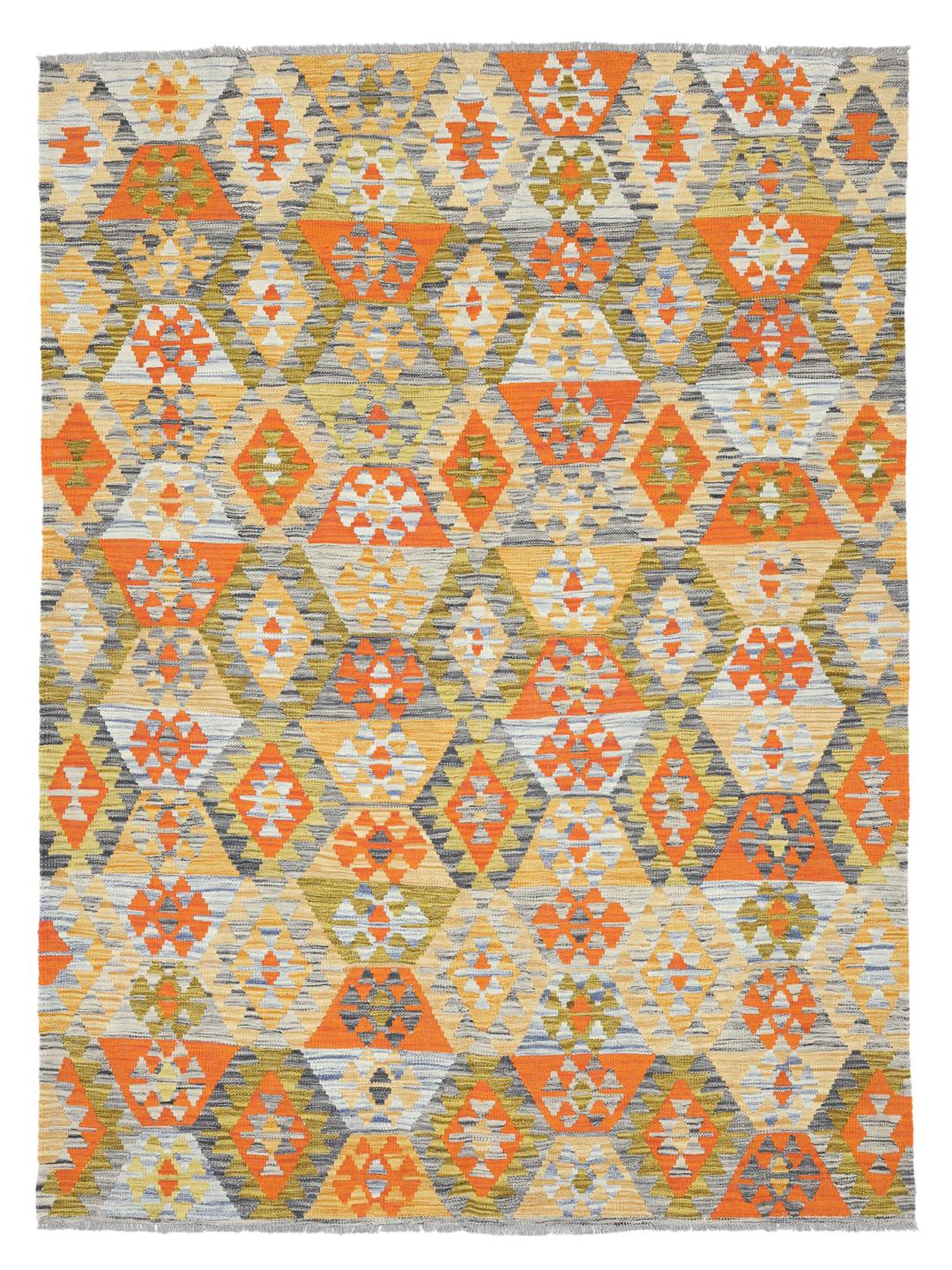
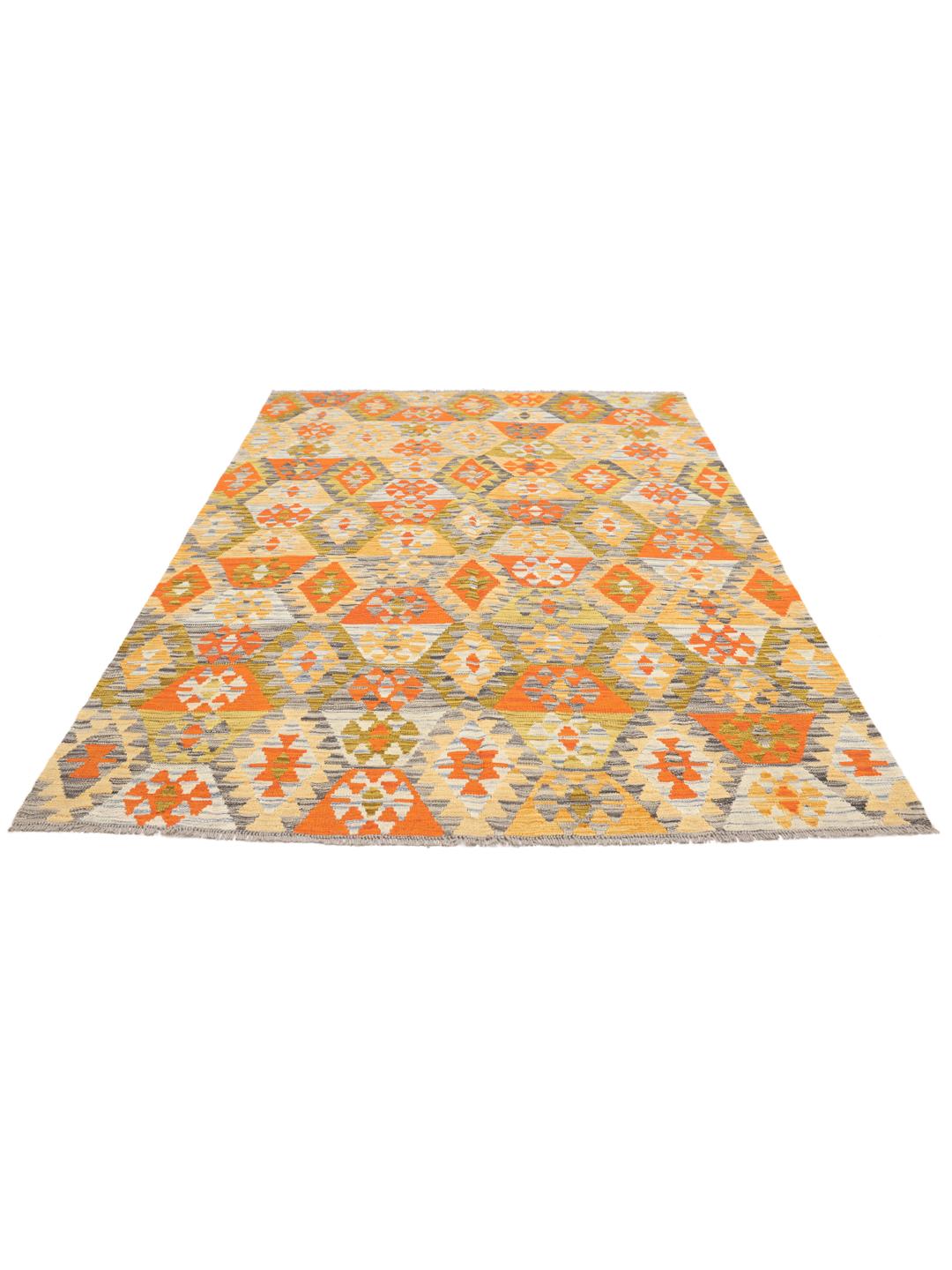
Kelim rugs have a rich history that spans centuries across the Middle East and Central Asia. Traditionally used by nomadic and semi-nomadic tribes, these flat-weave textiles served as versatile floor coverings, blankets, and storage bags. The tradition of weaving in Afghanistan is deeply rooted in this nomadic lifestyle, where functional items were imbued with artistic expression through intricate patterns and the use of natural dyes.
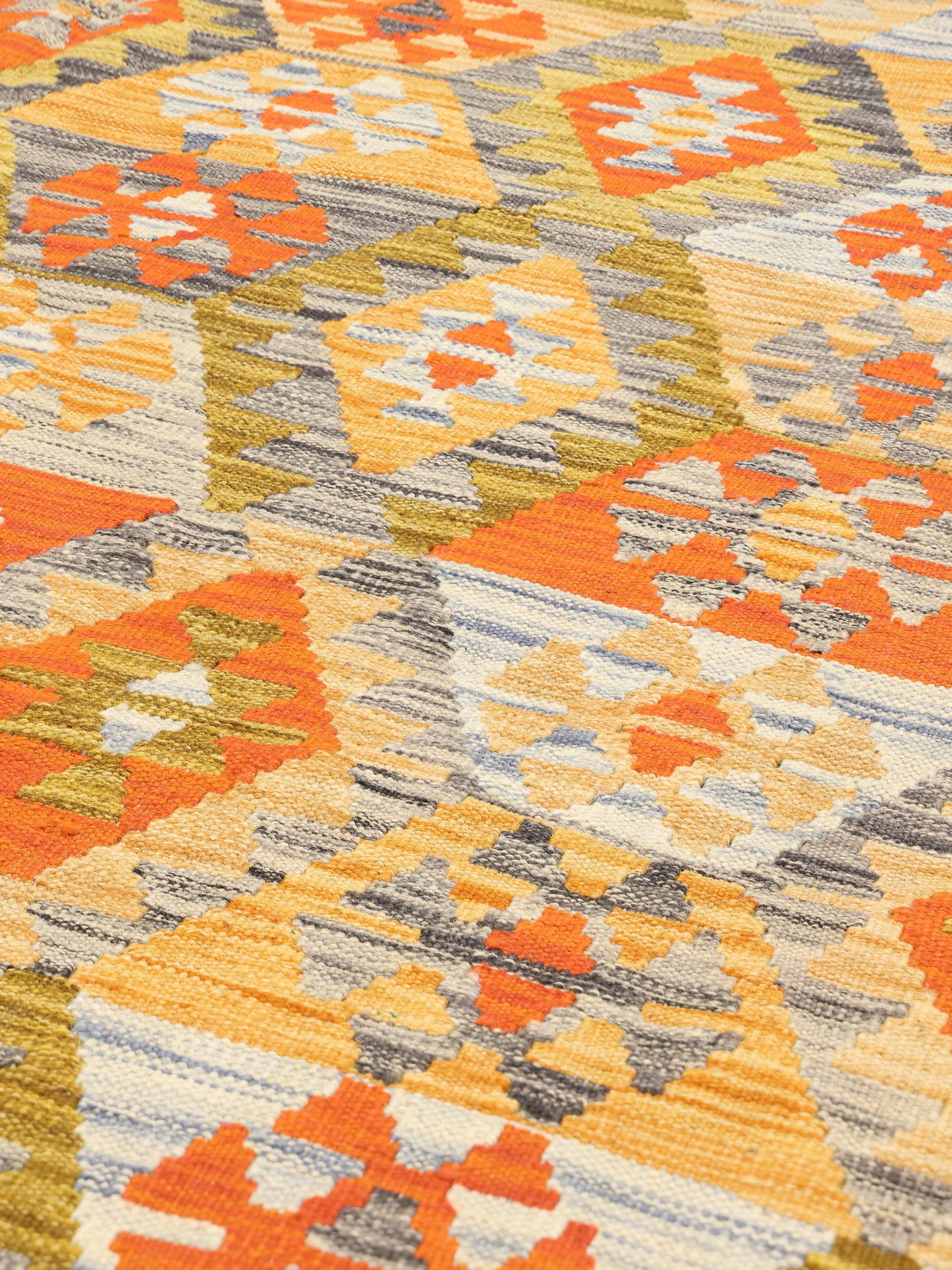
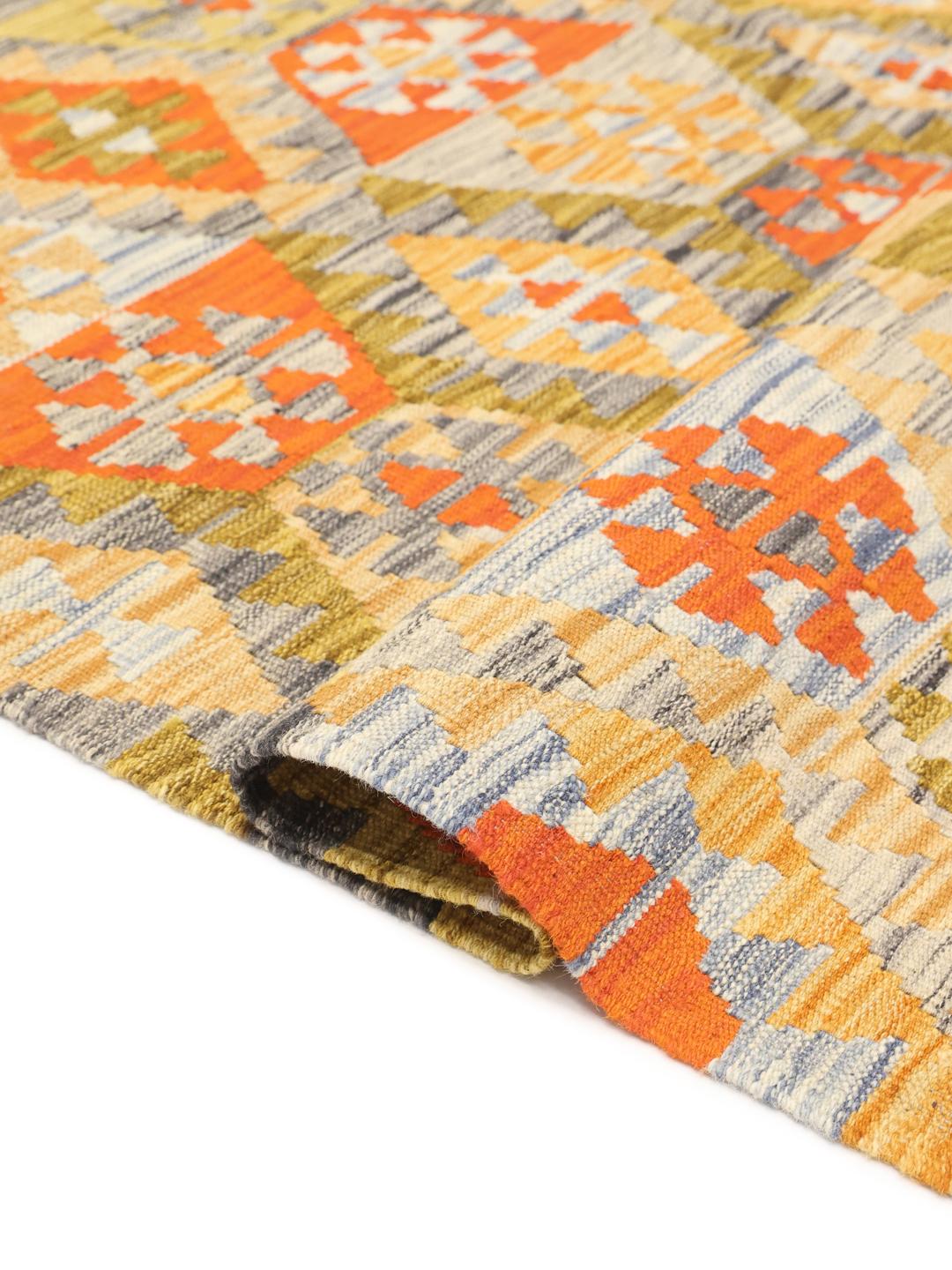
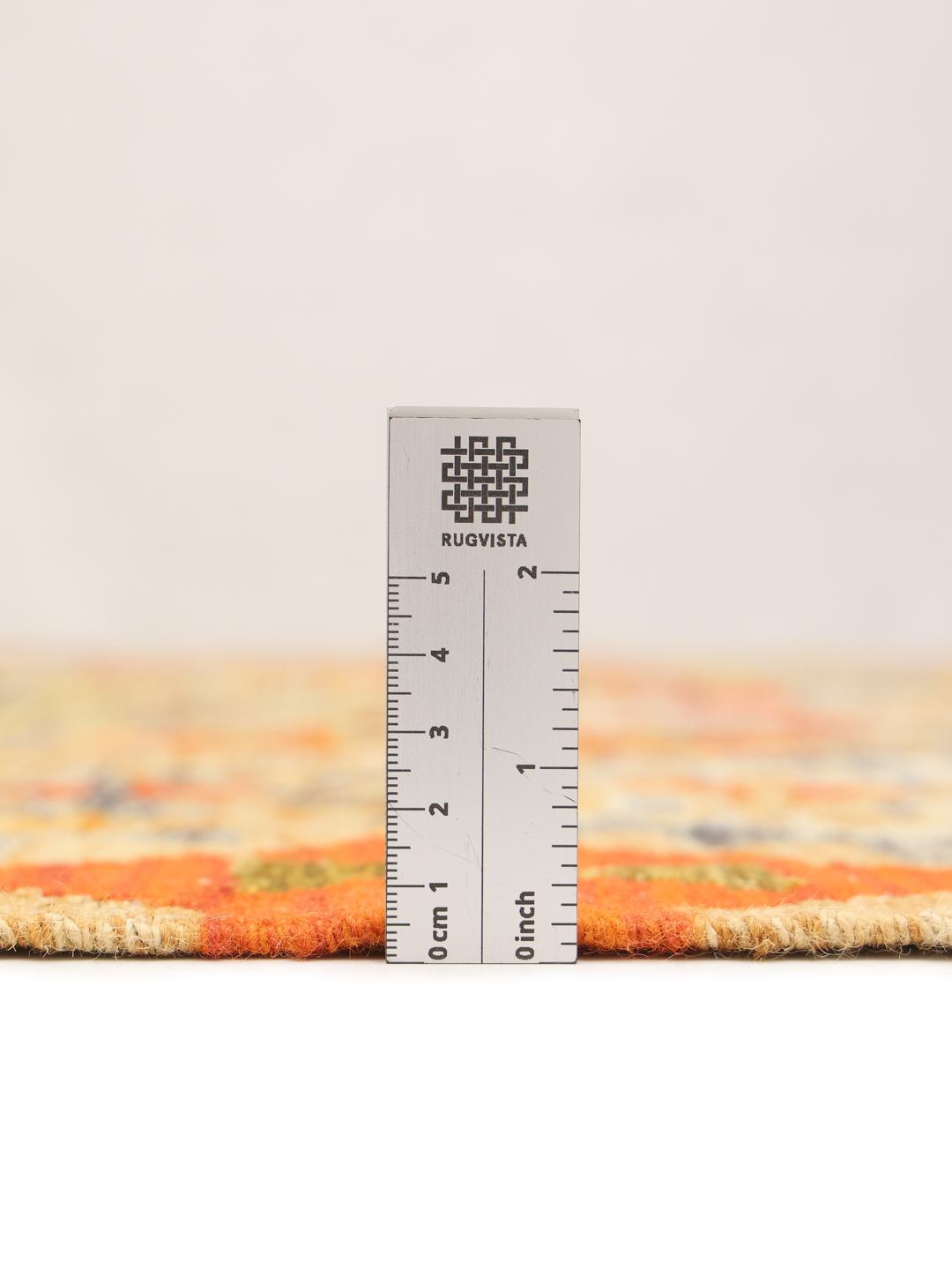
The term 'Kelim' refers to the specific weaving technique, which is distinct for its lack of a knotted pile. Instead, the design is created by weaving the coloured weft threads through the warp. This technique results in a reversible, lightweight, and durable fabric. Mastering this craft requires an understanding of tension and geometry, as the weaver must calculate the placement of every thread to maintain the integrity of the design across the entire surface.
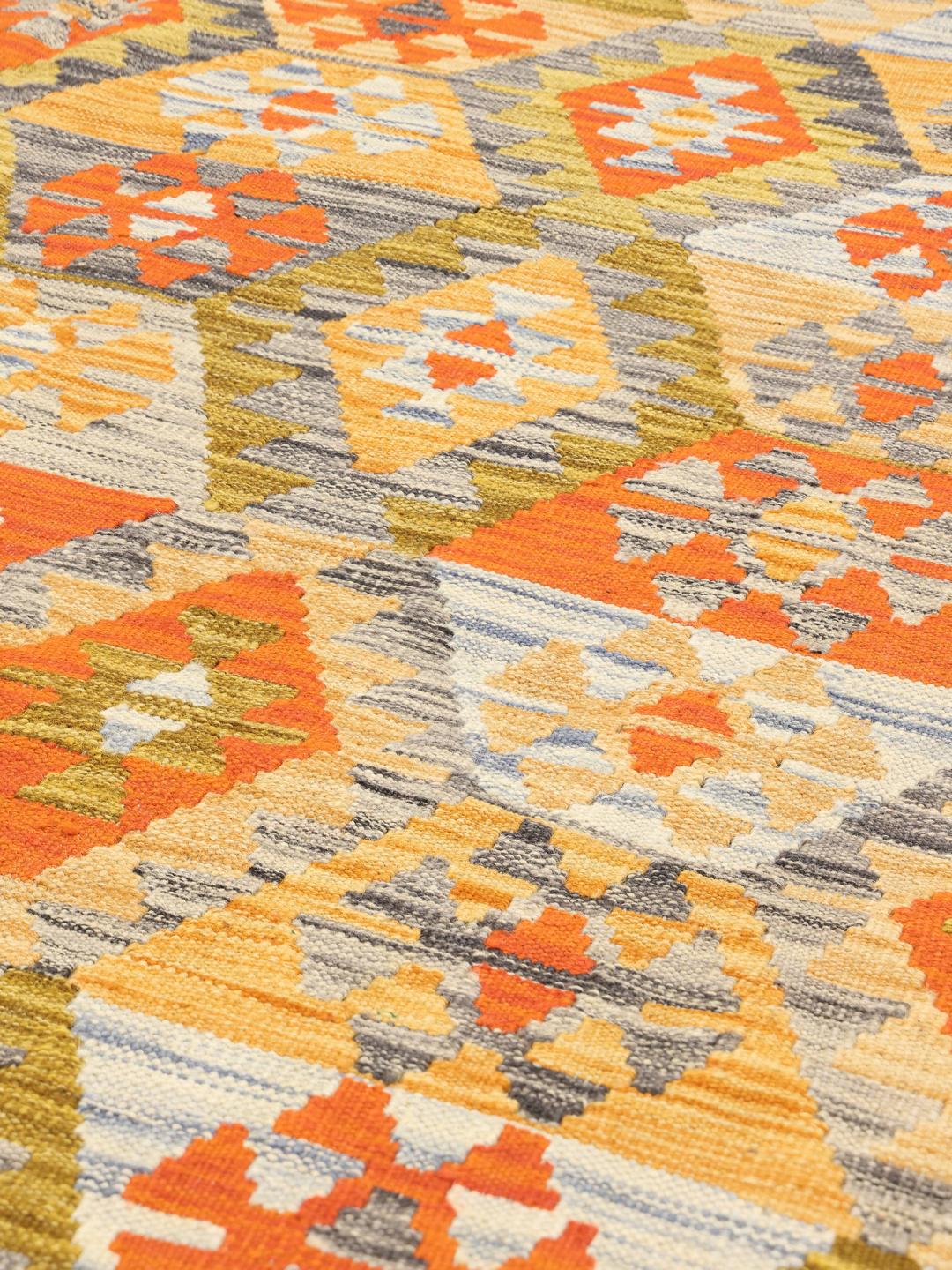
Signature design elements of Afghan Kelims often include bold geometric motifs such as diamonds, triangles, and stylised floral shapes. These patterns are frequently arranged in repeating, symmetrical compositions that draw the eye across the field. The use of vibrant, saturated colours is a hallmark of this tradition, often derived from local plant and mineral pigments, creating a visual language that is both ancient and remarkably contemporary.
Owning an Afghan Kelim is an invitation to connect with a storied craft tradition. These rugs are highly valued by collectors not only for their aesthetic appeal but also for the human effort and cultural history woven into every thread. By bringing this piece into your home, you are supporting the continuation of a centuries-old craft and adding a layer of authentic, artisanal quality to your living space.