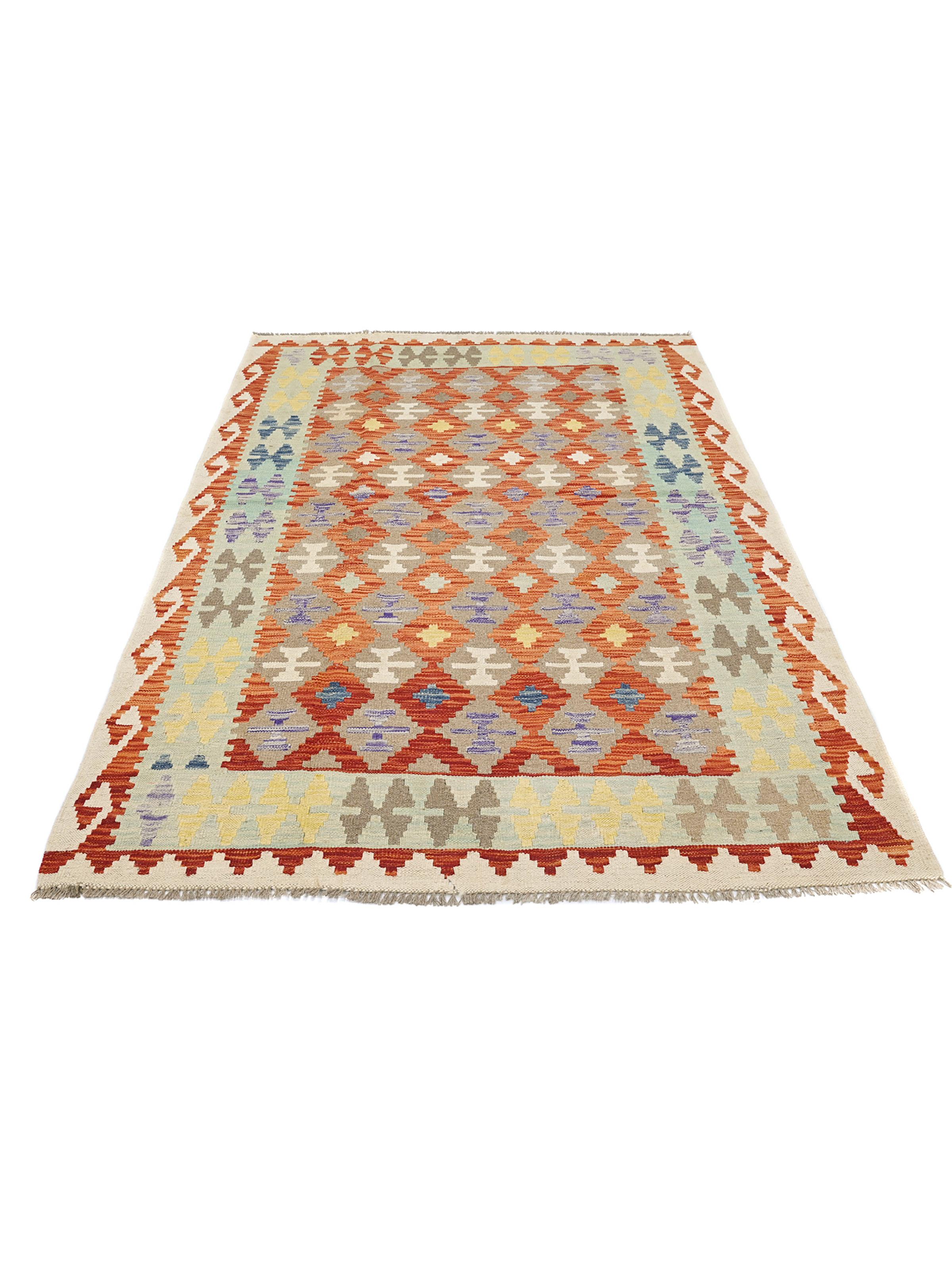
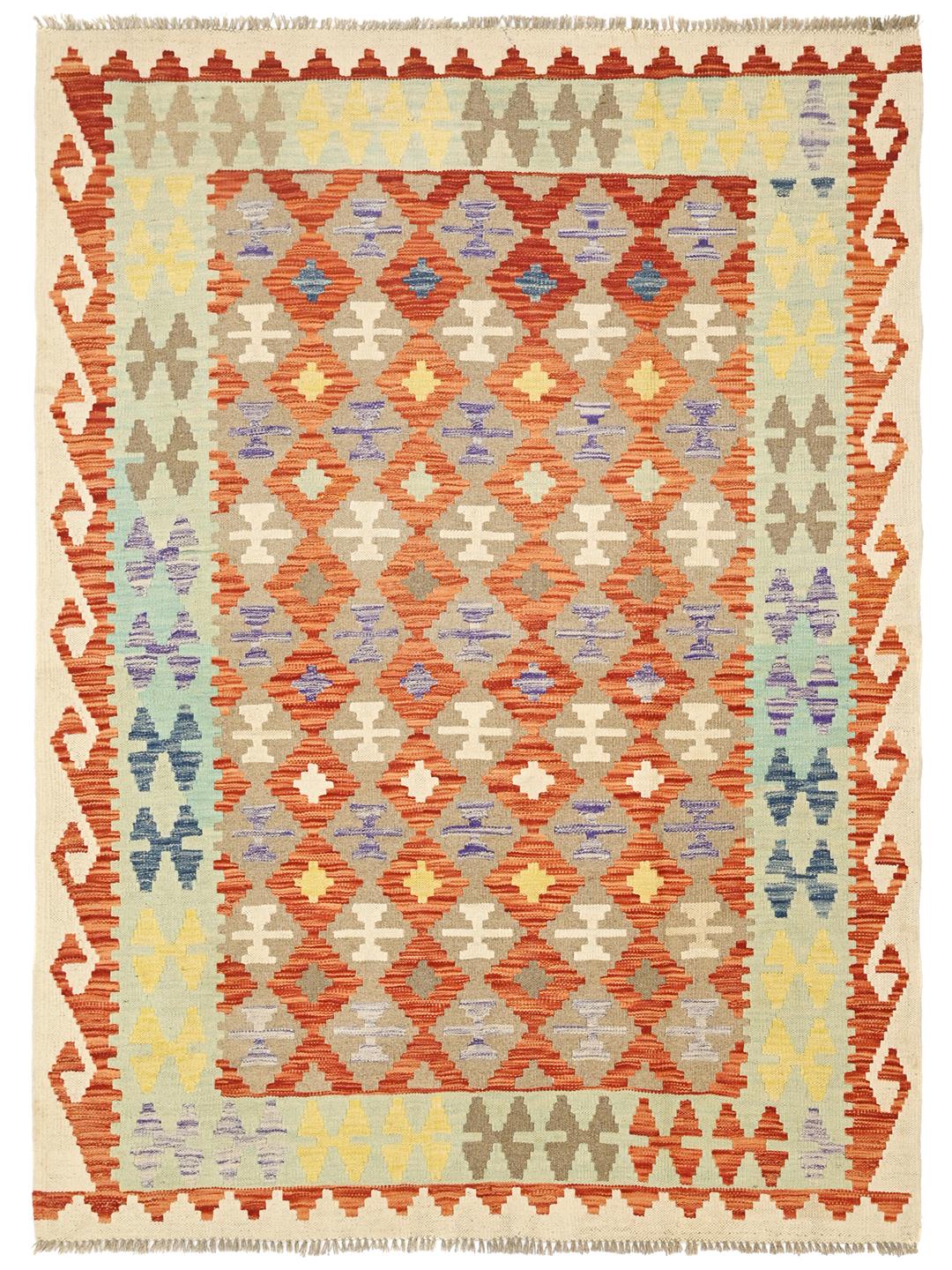
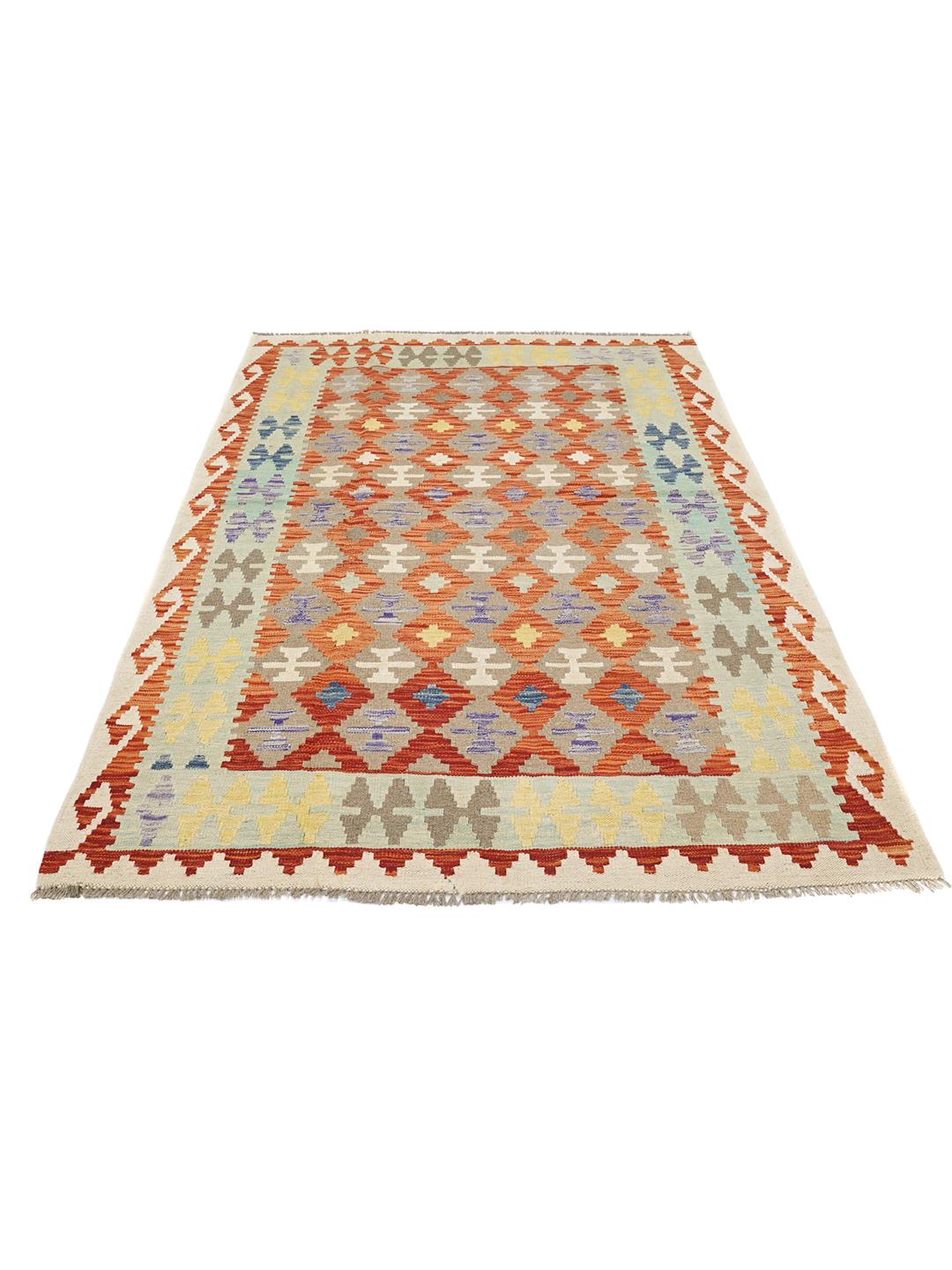
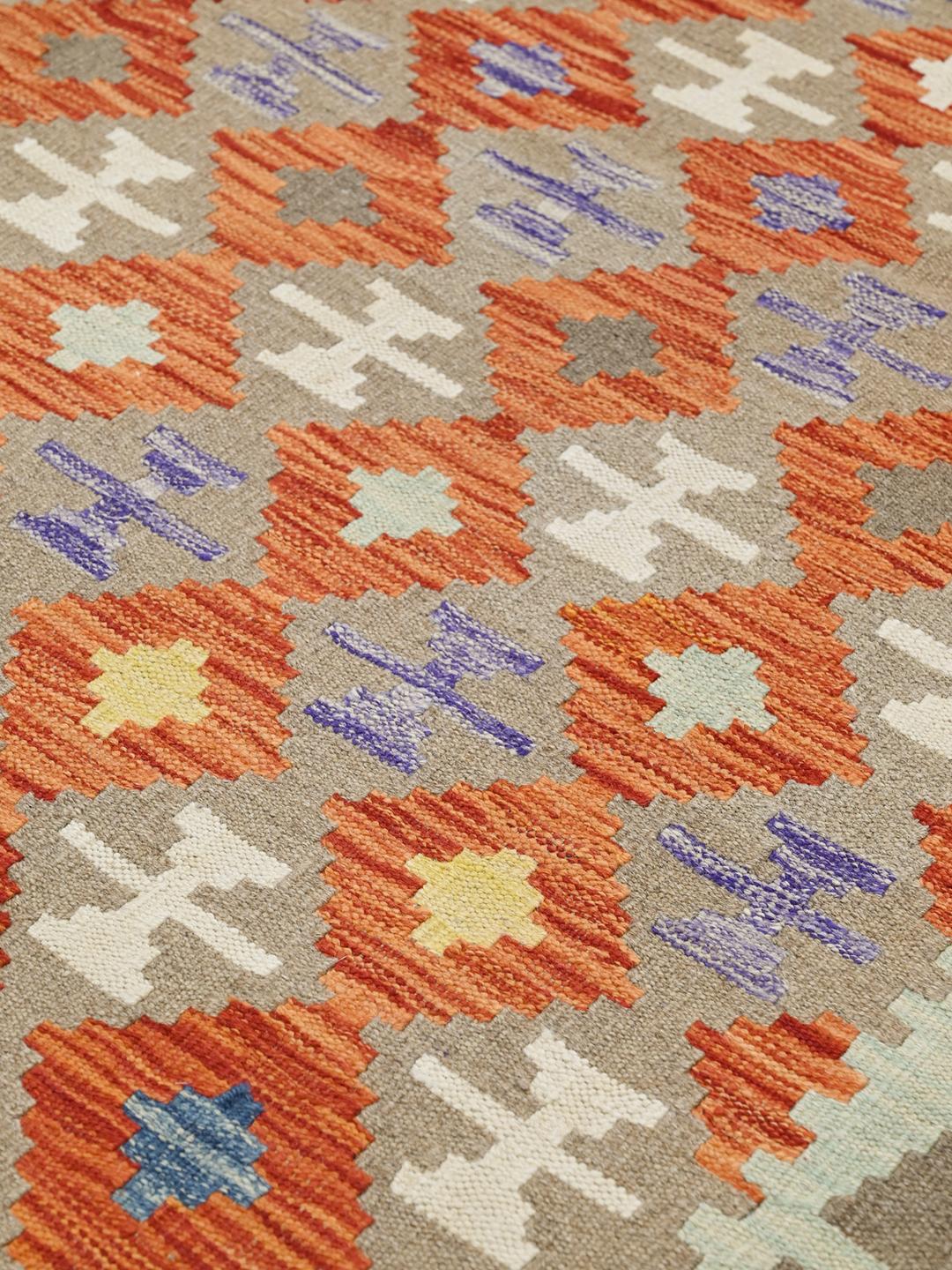
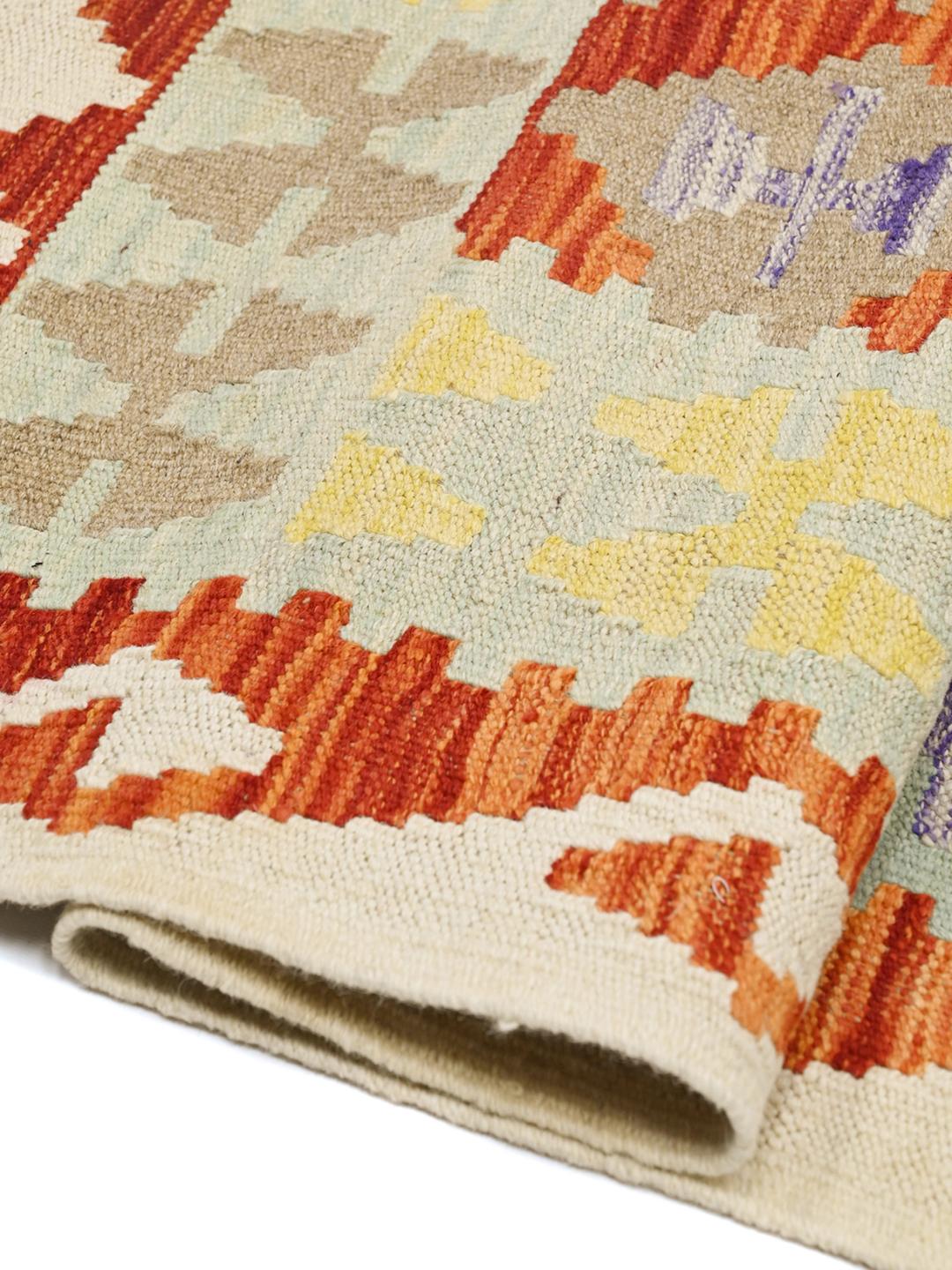
The Kelim tradition in Afghanistan is deeply rooted in the nomadic and semi-nomadic lifestyles of the region, where flat-woven textiles were historically essential for both practical and decorative purposes. These rugs were designed to be lightweight and portable, serving as floor coverings, blankets, or wall hangings within traditional dwellings, reflecting the resourceful and artistic spirit of the Middle Eastern weaving communities.
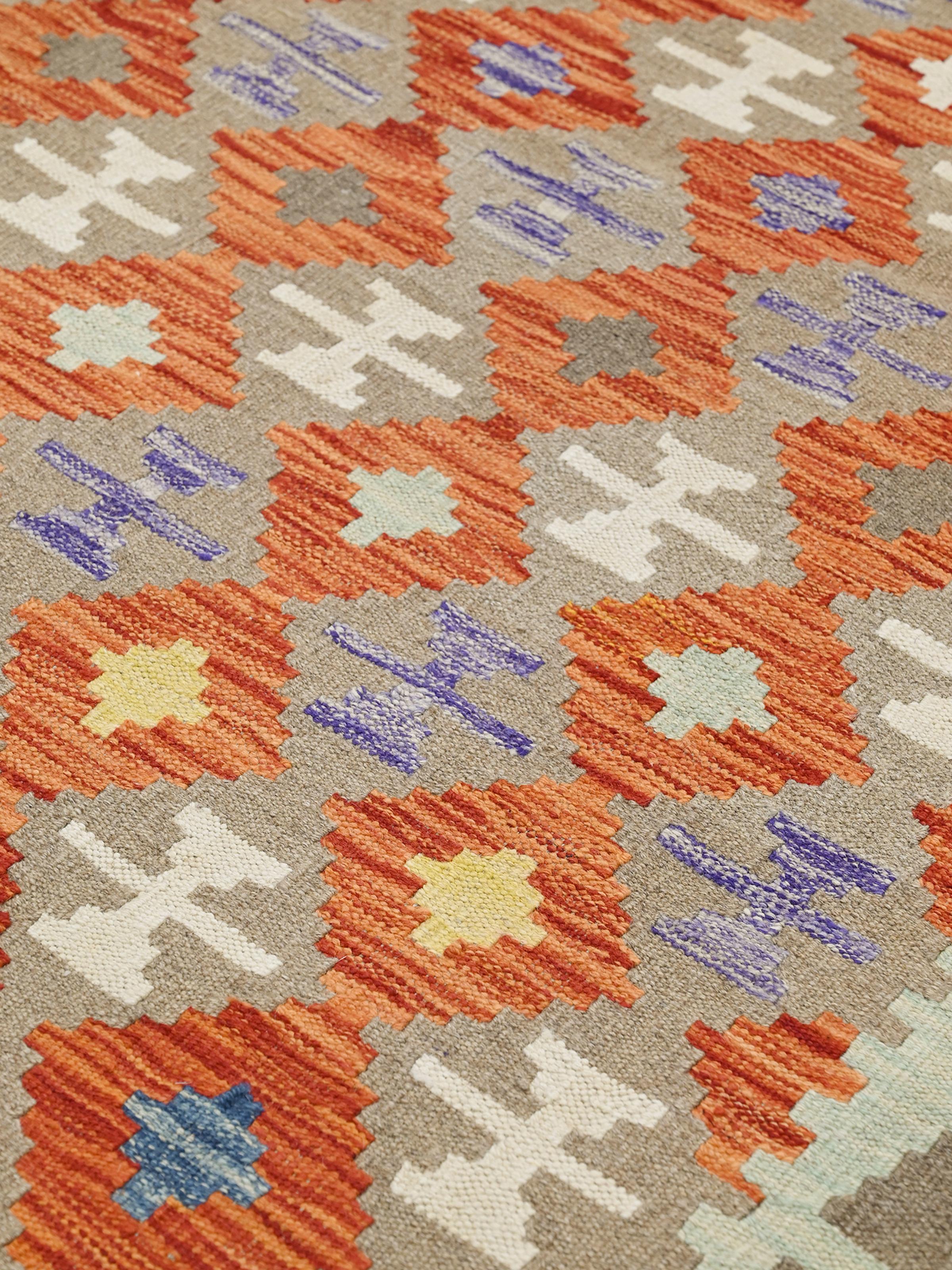
Technically, a Kelim is distinguished by its flat-weave construction, meaning it is created without a pile. The weaver interlocks the weft threads tightly around the warp to create the pattern, resulting in a rug that is equally beautiful on both sides. This technique requires an immense amount of precision, as the design must be carefully calculated and maintained throughout the entire weaving process to ensure the geometric integrity of the motifs.
Signature design elements of these rugs include bold, angular geometric shapes, most notably diamonds, triangles, and stepped medallions. These patterns are often arranged in repeating sequences, enclosed by decorative borders that frame the field. The use of vibrant, natural-toned dyes is a hallmark of this tradition, lending the rugs an earthy, authentic feel that complements a wide variety of interiors.
Valued for their durability and cultural significance, Afghan Kelims are more than just floor coverings; they are symbols of ancestral skill and heritage. Collectors treasure these pieces for their unique, hand-crafted character and the way they bridge the gap between ancient textile techniques and modern living. Owning one is an investment in a living tradition, a way to bring a piece of history into your home that is as enduring as it is beautiful.