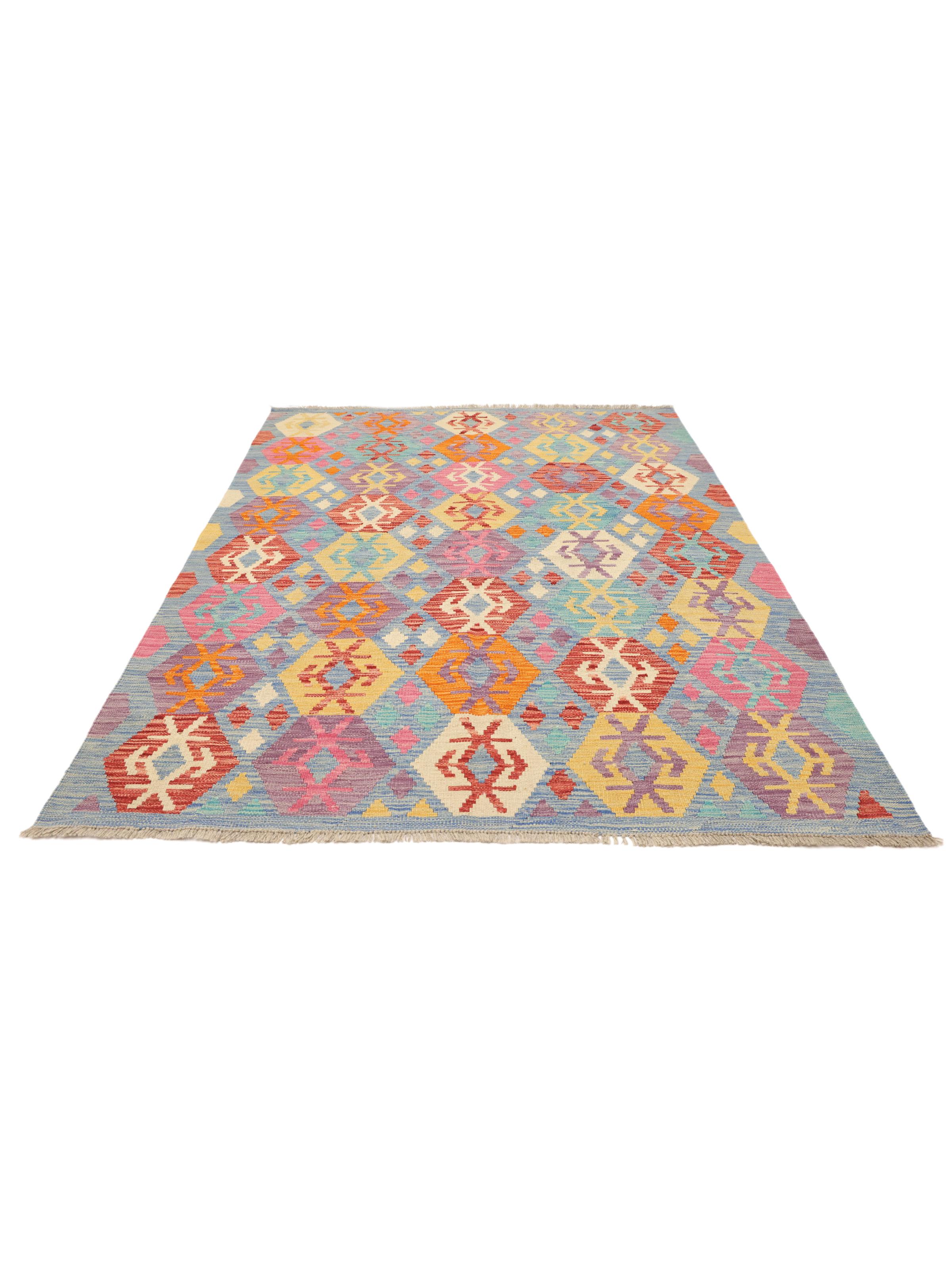
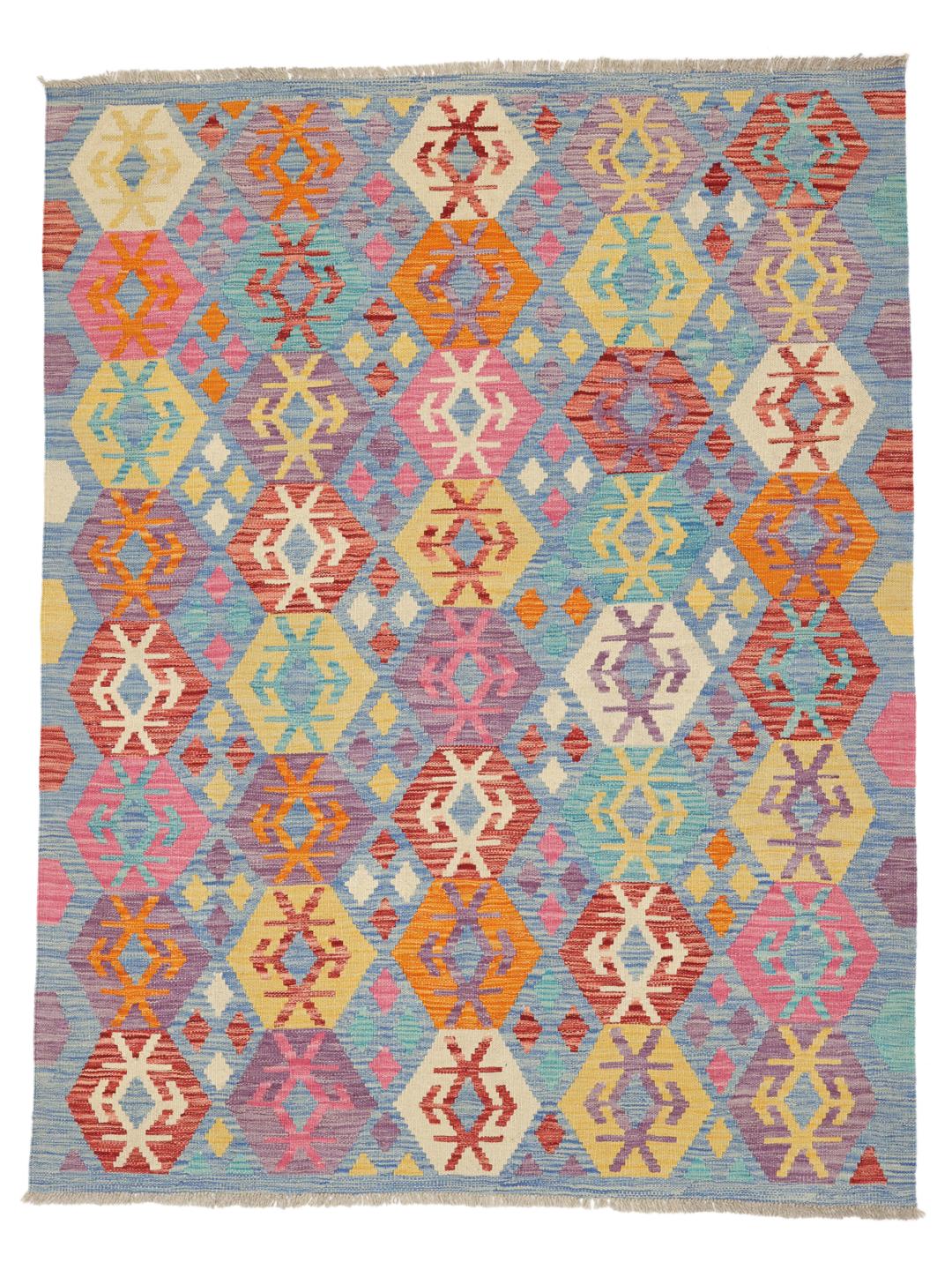
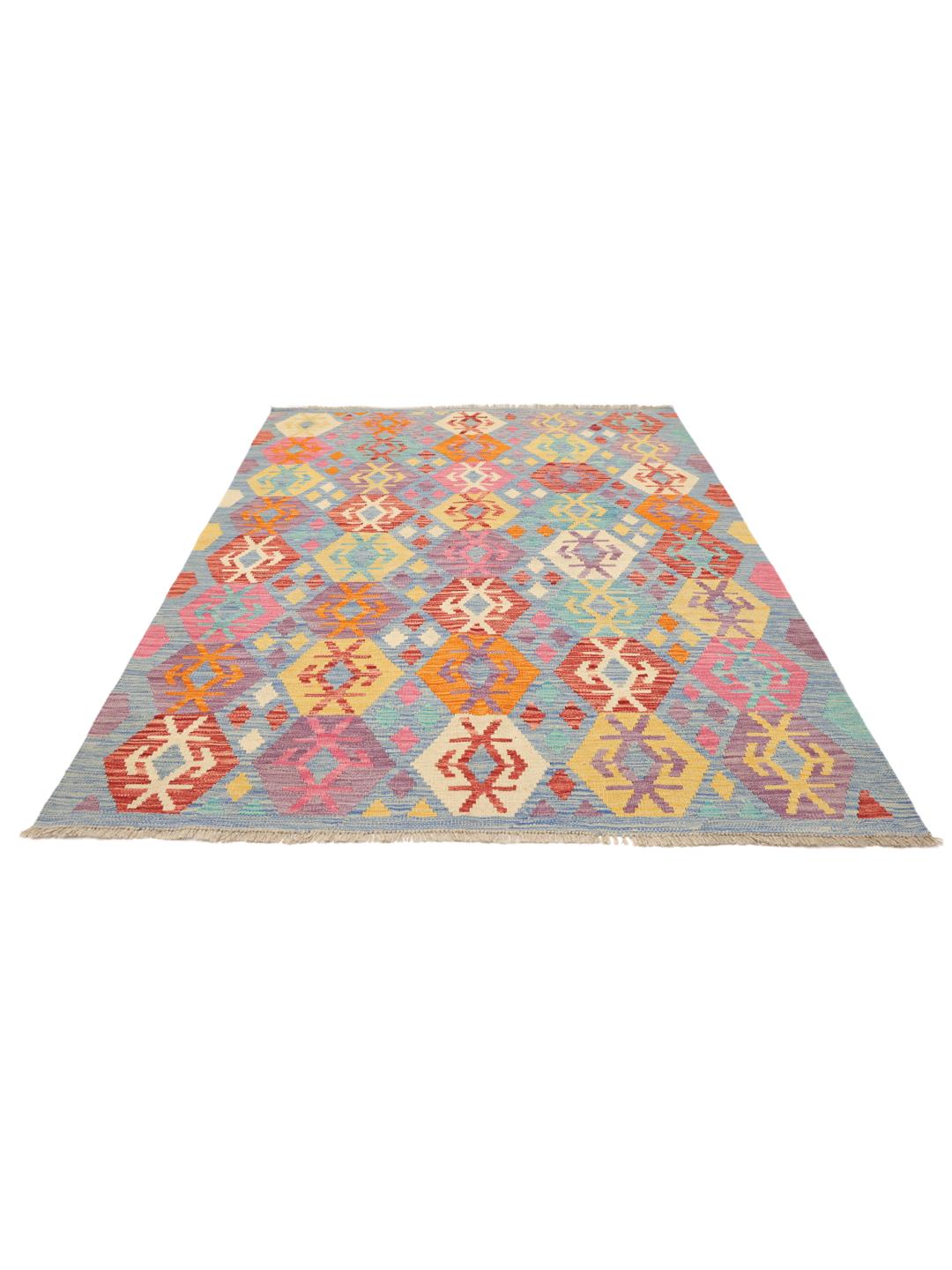
The Kelim tradition in the Middle East is deeply rooted in the nomadic history of the region. These rugs were originally created by tribal groups who needed lightweight, portable floor coverings that could serve multiple purposes, from insulating tents to decorating living spaces. Today, this tradition continues in settled communities that maintain these ancient weaving patterns, preserving a cultural legacy that spans centuries.
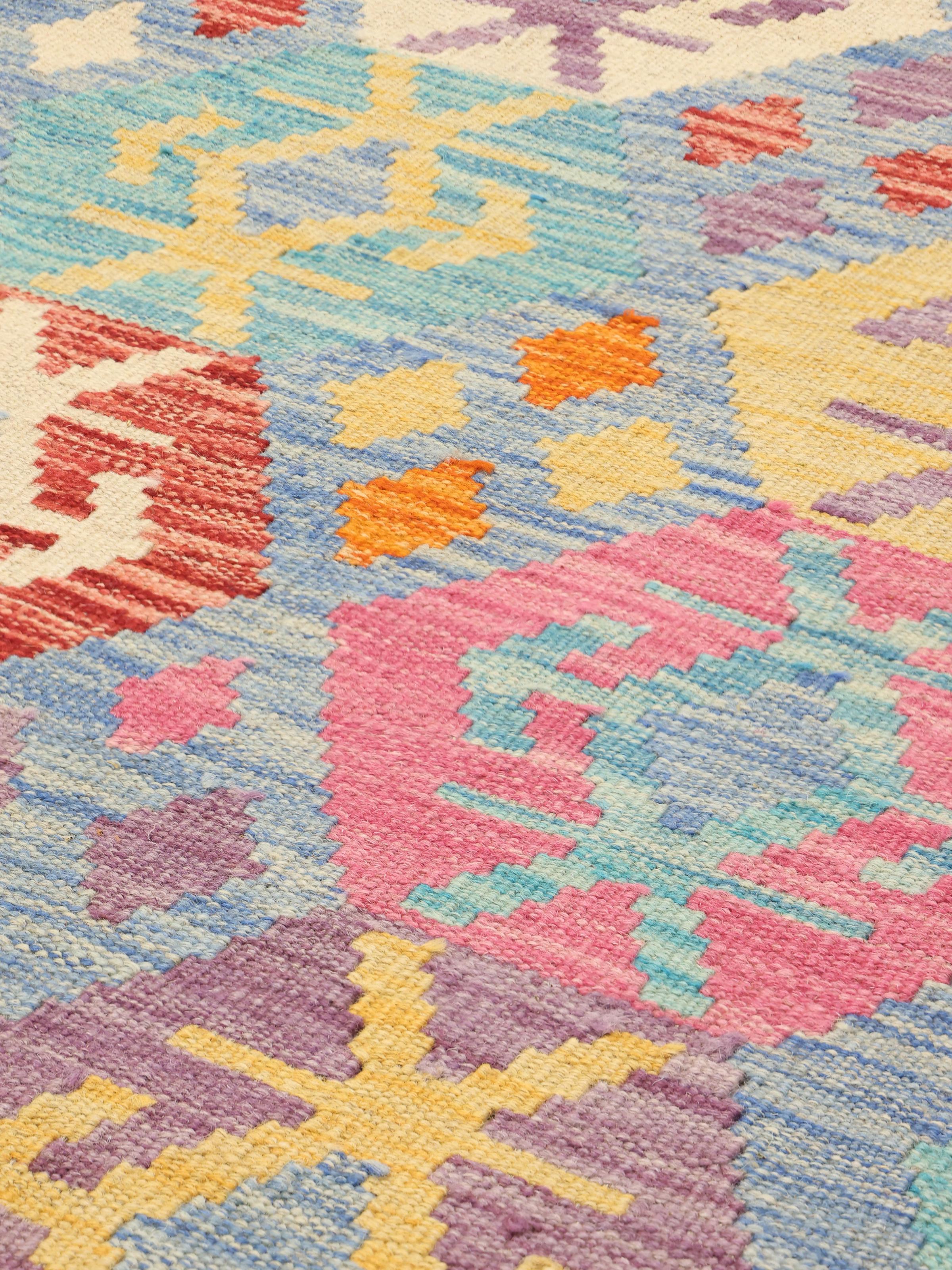
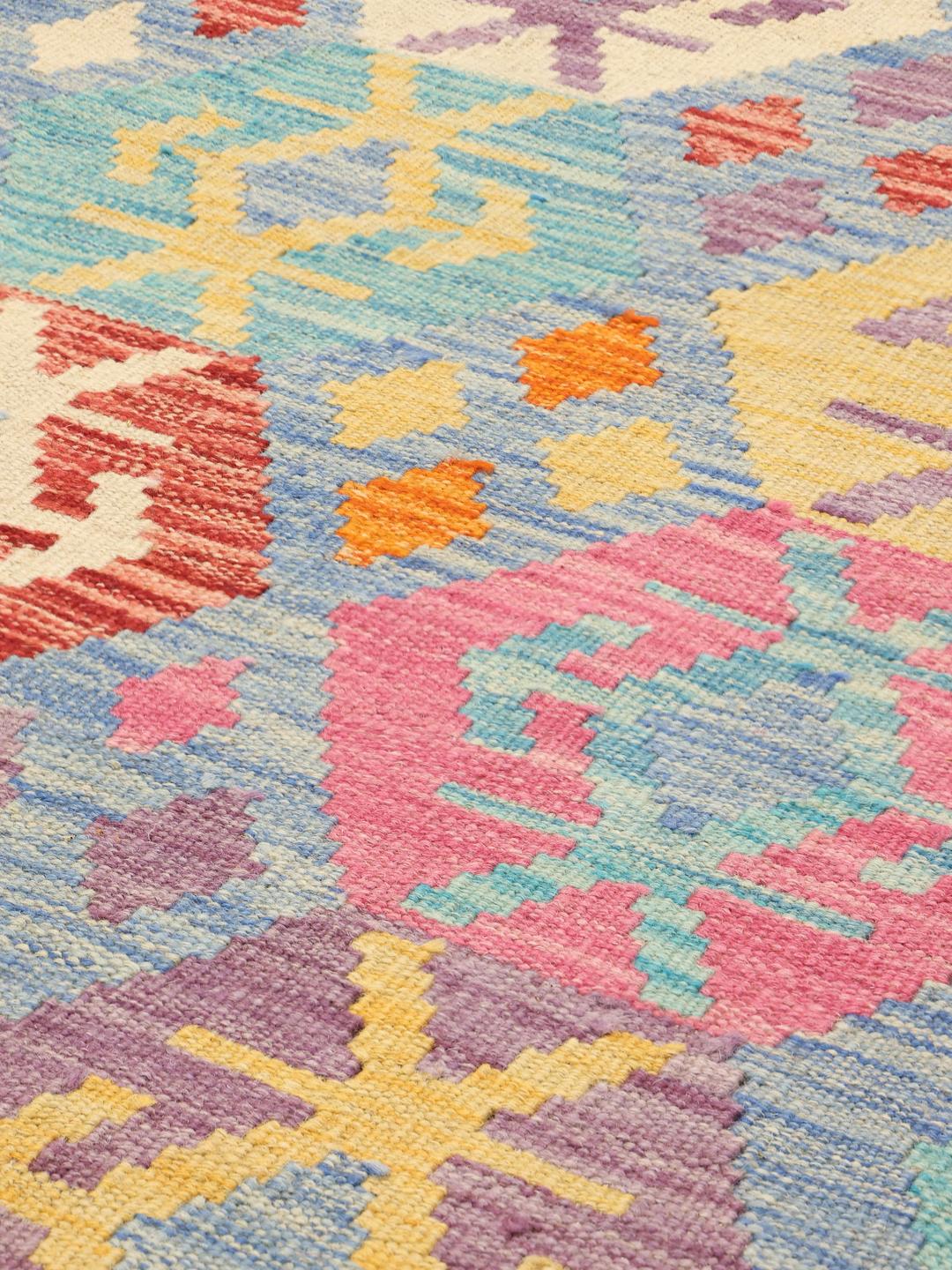
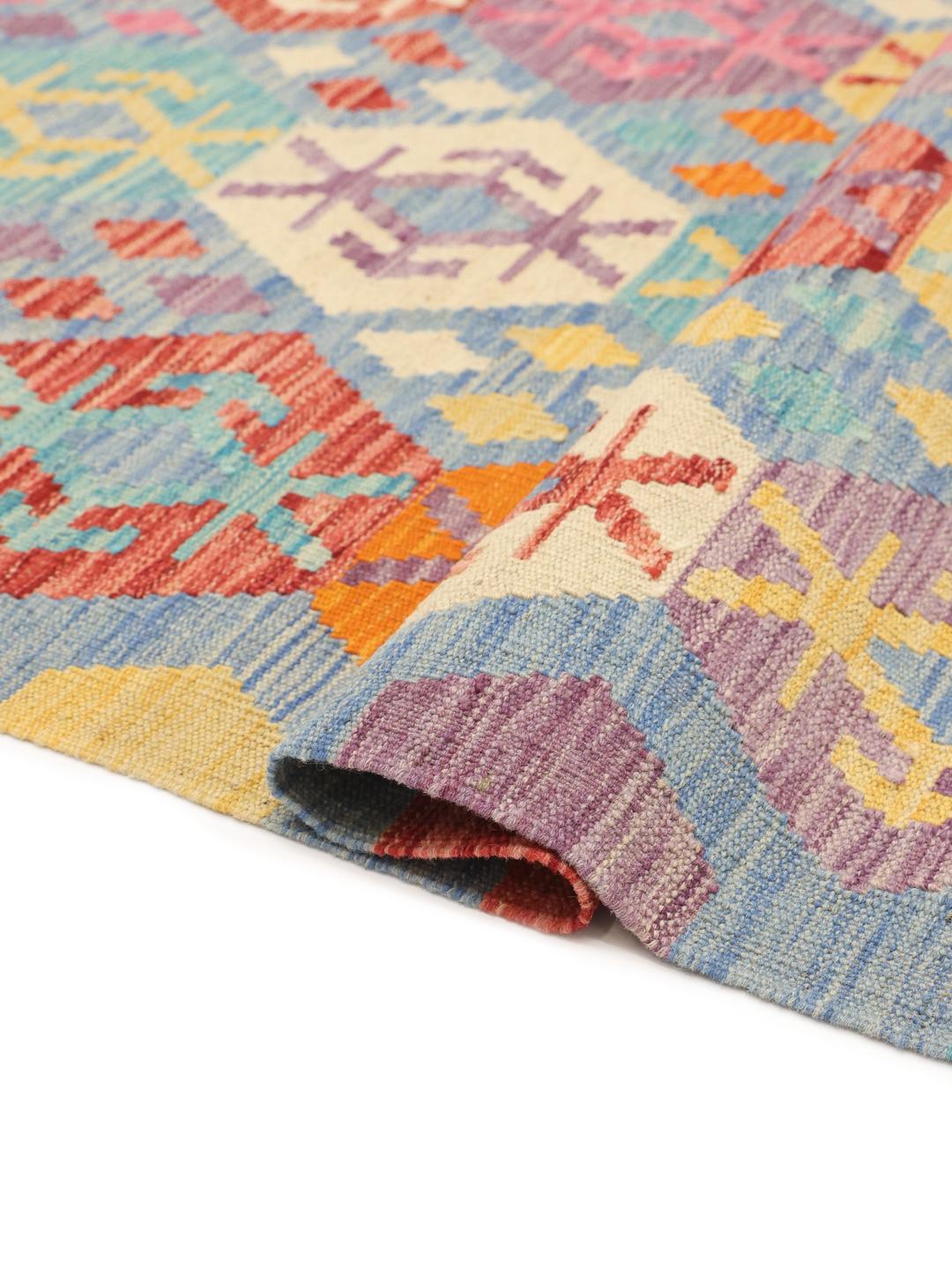
The term 'Kelim' refers to a specific flat-weaving technique where the weft and warp yarns are interlaced to create a smooth, pile-less surface. Unlike knotted rugs, the design is created directly through the weaving process, which requires high levels of skill to maintain consistent tension. This method is prized for its ability to produce clean, sharp geometric patterns that are as visible on the back as they are on the front.
Signature design elements in these Kelims often include bold geometric shapes, such as the hexagons seen here, which are frequently arranged in repeating patterns. These motifs often carry symbolic meaning related to protection, fertility, or tribal identity. The use of vibrant, contrasting colours is a hallmark of this style, reflecting the natural dyes historically derived from local plants and minerals found in the rugged landscape.
Owning such a Kelim is an investment in human skill and regional heritage. Collectors value these pieces not only for their striking aesthetic but for the way they represent a living connection to the past. Because each rug is finished by hand, it carries the unique perspective of the weaver, making it a culturally significant addition to any modern home.