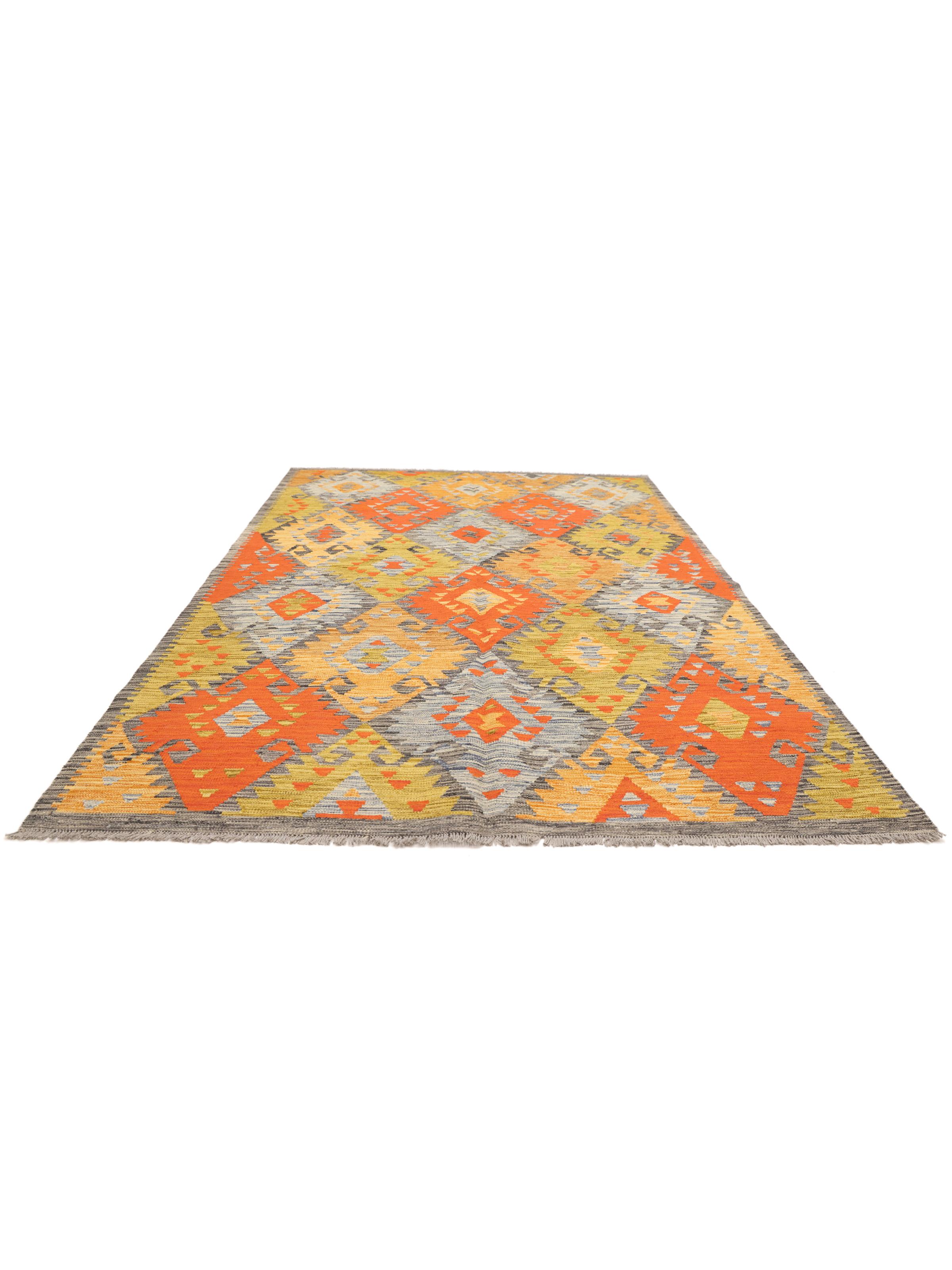
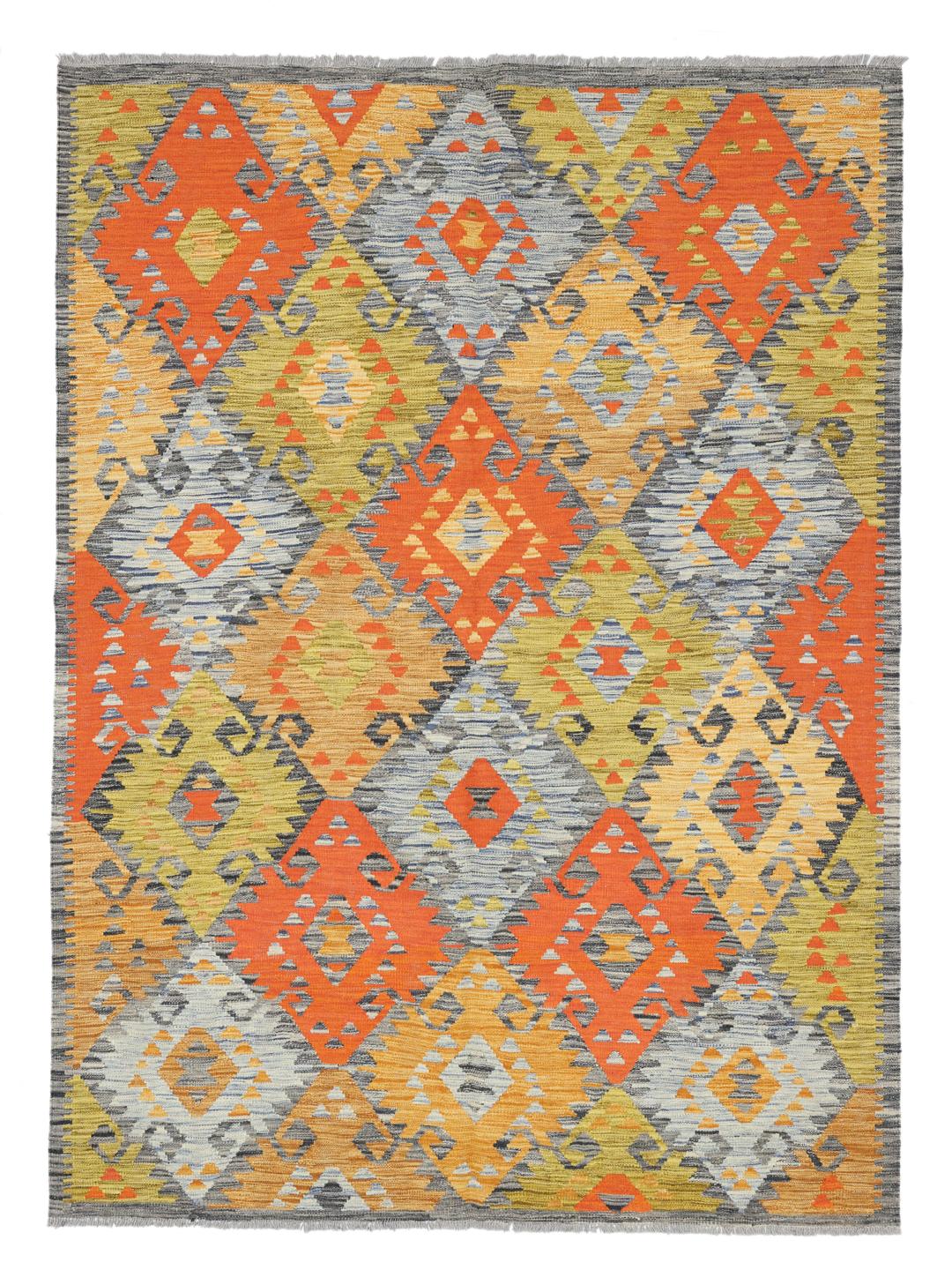
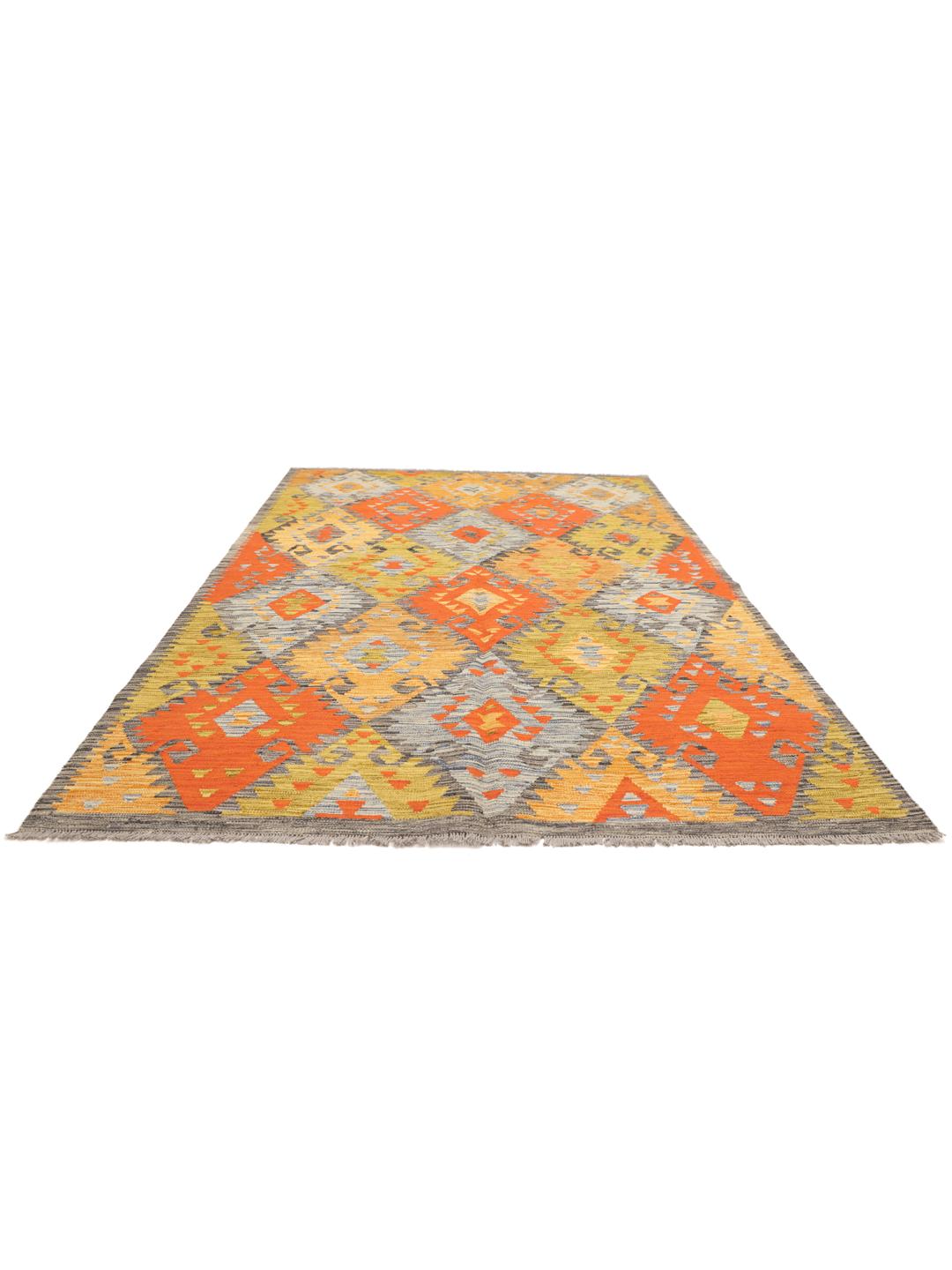
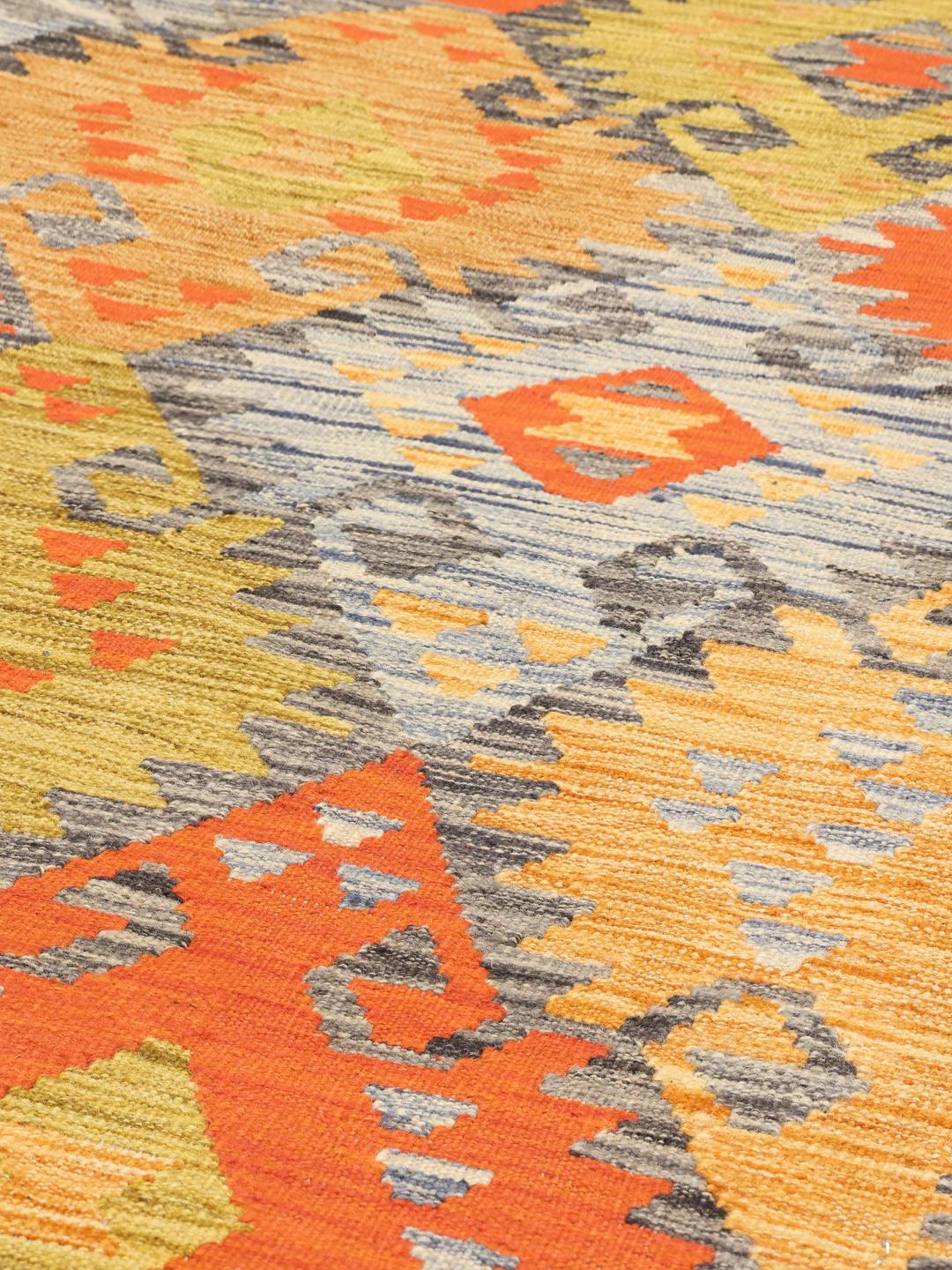
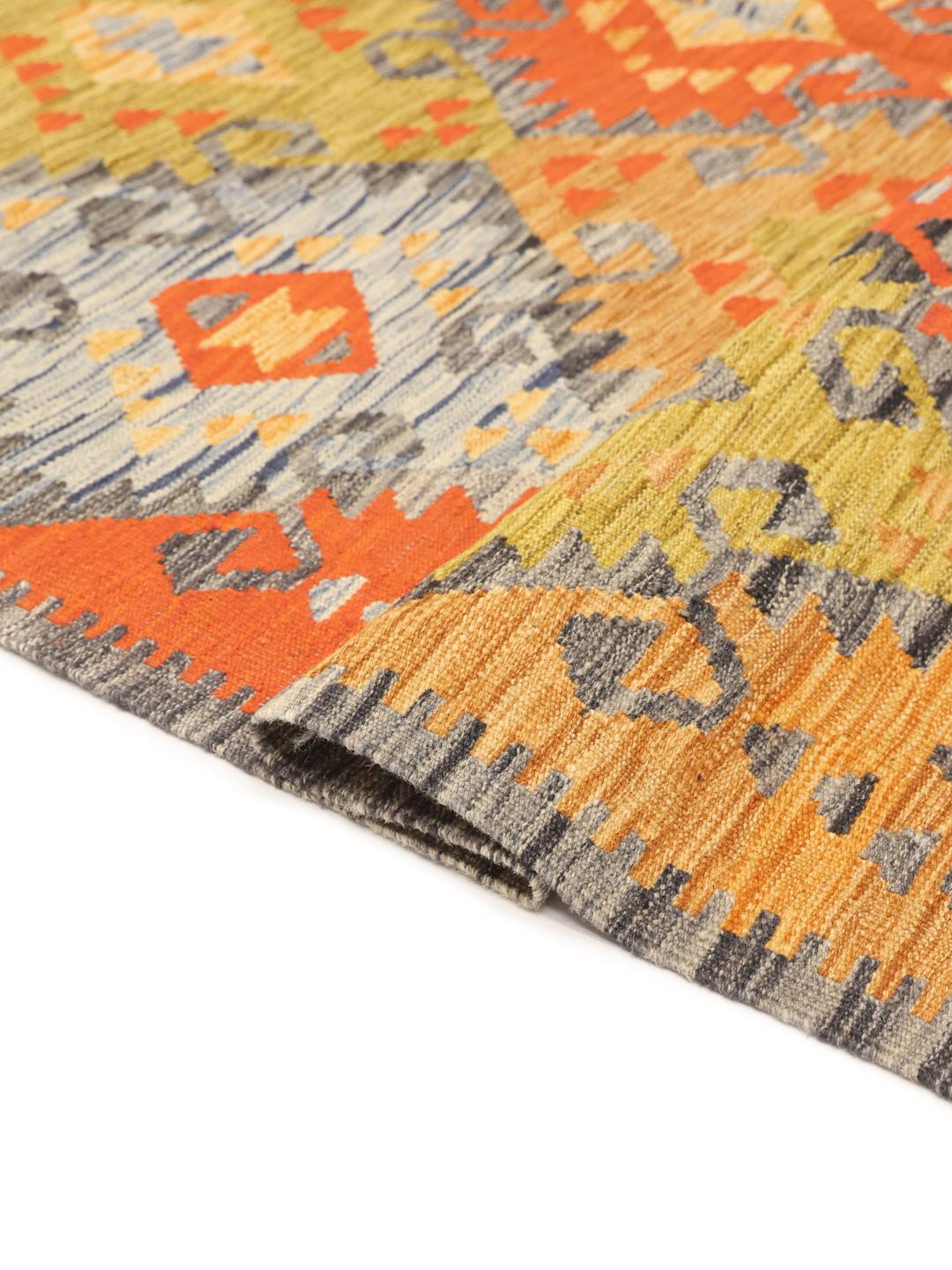
The Afghan Kelim is a celebrated textile tradition originating from the rugged landscapes of Afghanistan. For generations, nomadic and village weavers have utilised these flat-weave rugs not only for their aesthetic beauty but for their essential functionality as floor coverings, wall hangings, and storage bags within their tents and homes.
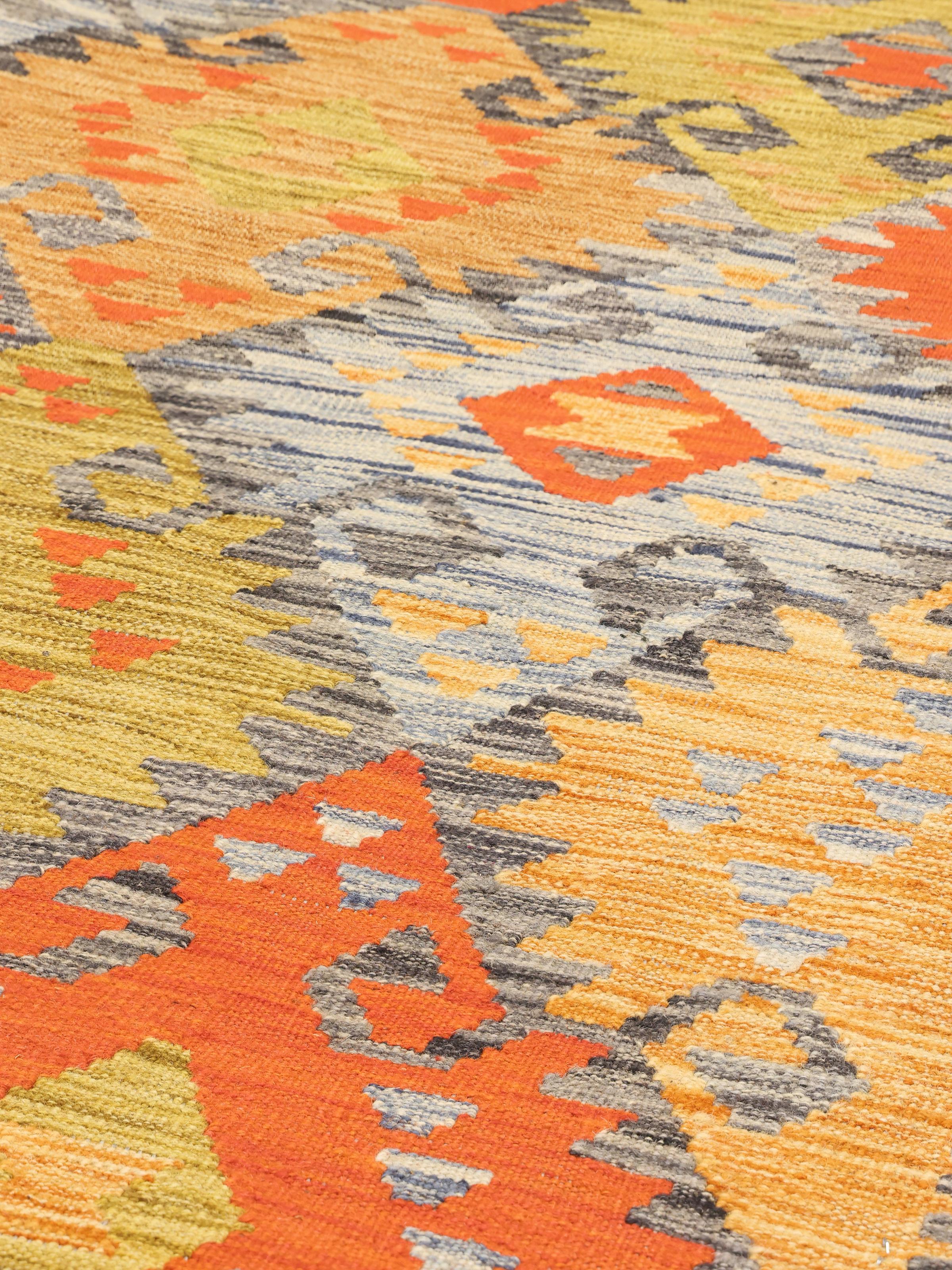
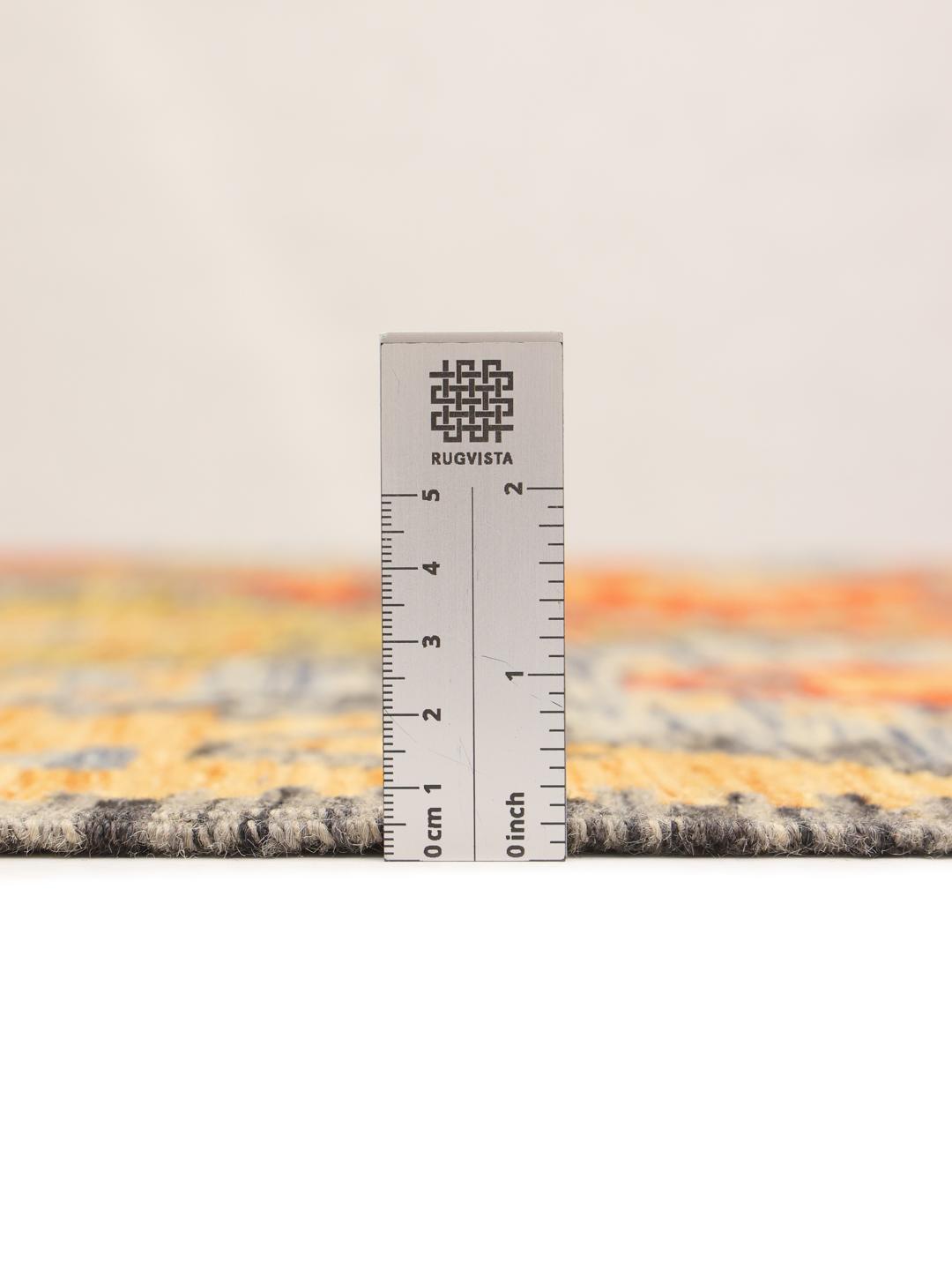
The term Kelim refers to the specific flat-weave technique where the weft threads are passed through the warp threads to create the pattern, resulting in a rug with no pile. This construction is highly valued for its durability and versatility, as the lack of pile makes it lightweight and portable. The technique requires a high degree of control to manage the tension and pattern alignment, ensuring a clean, crisp finish across the entire surface.
Signature design elements of these rugs often include bold, geometric motifs such as diamonds, triangles, and stylised floral or animal forms. These patterns are deeply rooted in tribal identity, with each motif often carrying symbolic meaning related to protection, fertility, or the natural environment. The use of vibrant, contrasting colours is a defining characteristic, often achieved through traditional natural dyeing methods that have evolved over centuries.
Collecting these rugs is an investment in cultural heritage and human ingenuity. They are prized by collectors for their authenticity and the way they bridge the gap between ancient nomadic traditions and contemporary design. Owning one of these pieces means participating in a legacy of craft that has survived through shifting borders and historical changes, making each rug a significant and enduring piece of folk art.