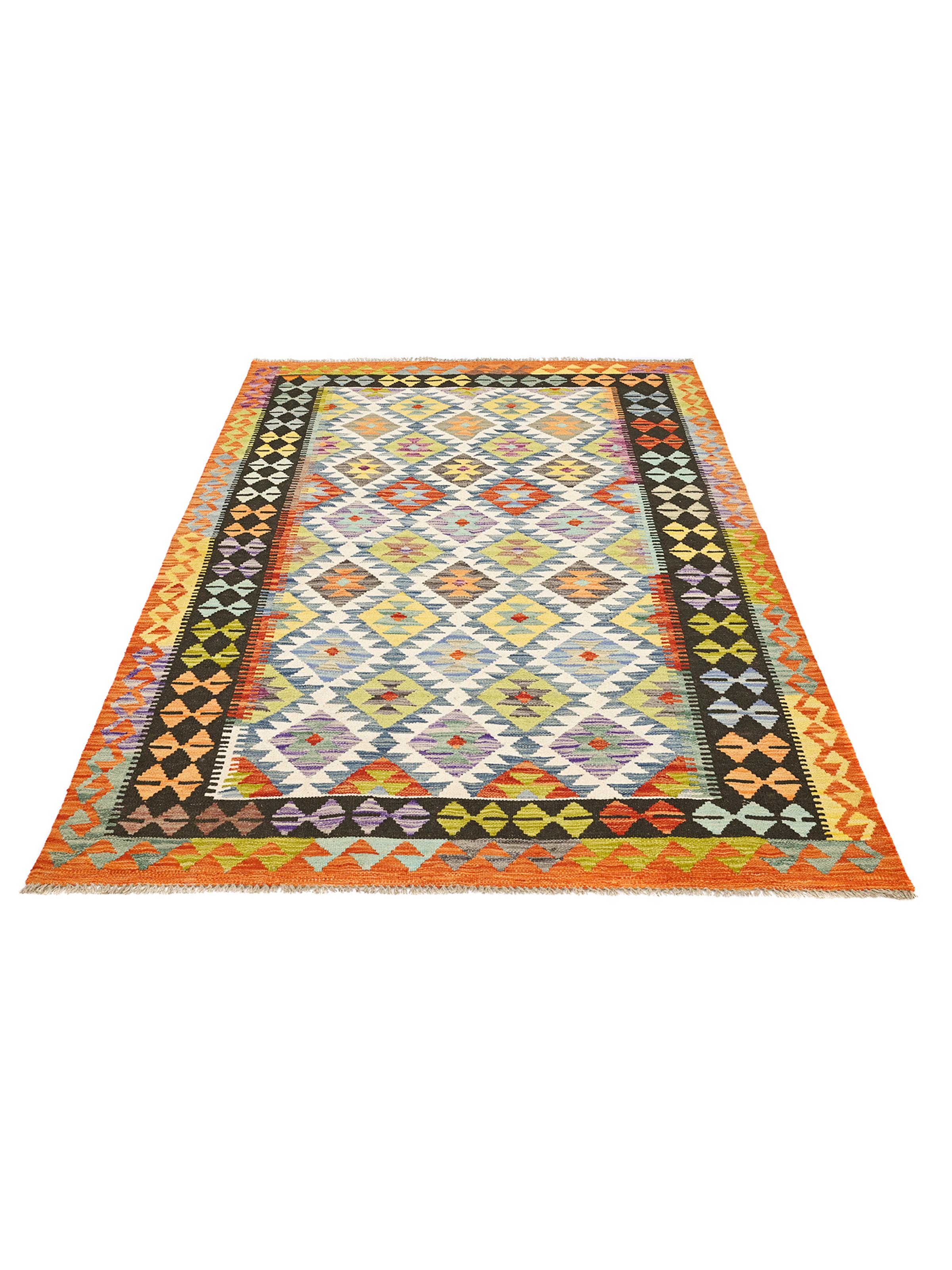
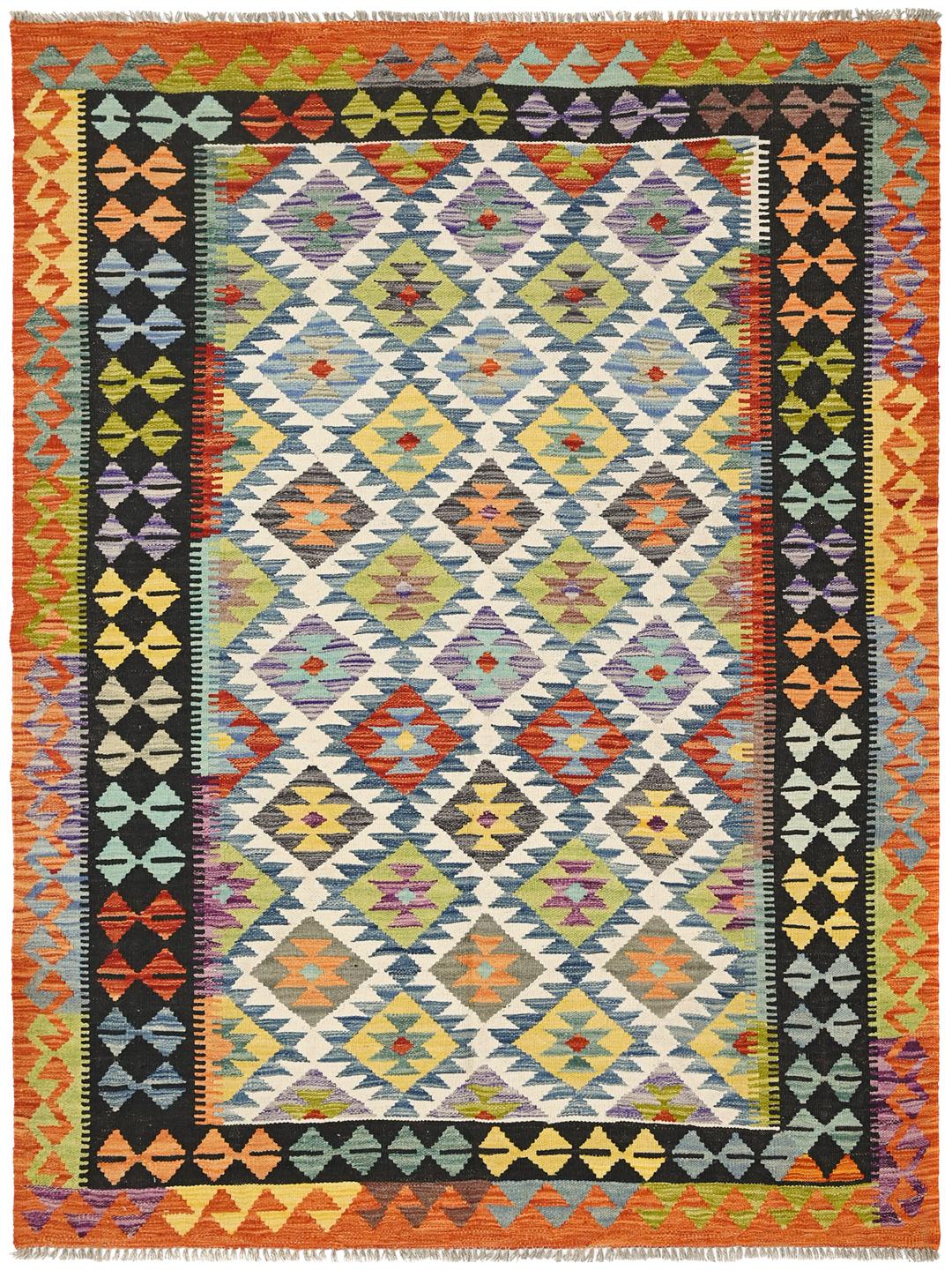
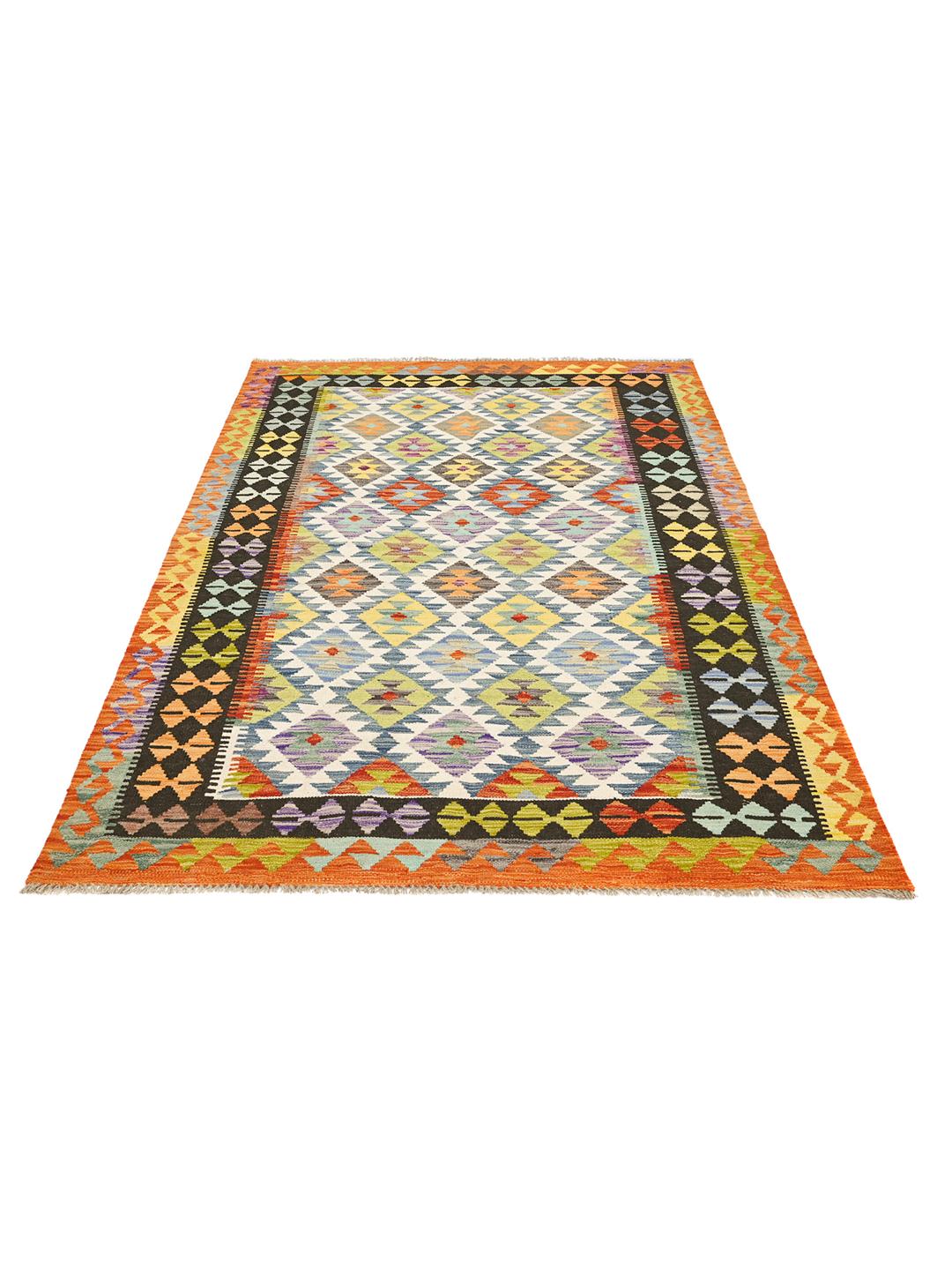
The Kelim Afghan tradition is deeply rooted in the nomadic history of the Middle East, where flat-weave rugs were essential for their versatility and portability. These rugs were traditionally used by tribal groups as floor coverings, wall hangings, and storage bags, reflecting a lifestyle that valued both beauty and utility. Over time, these weaving techniques evolved into the refined style we recognise today, maintaining the spirit of nomadic craft while adapting to modern home aesthetics.
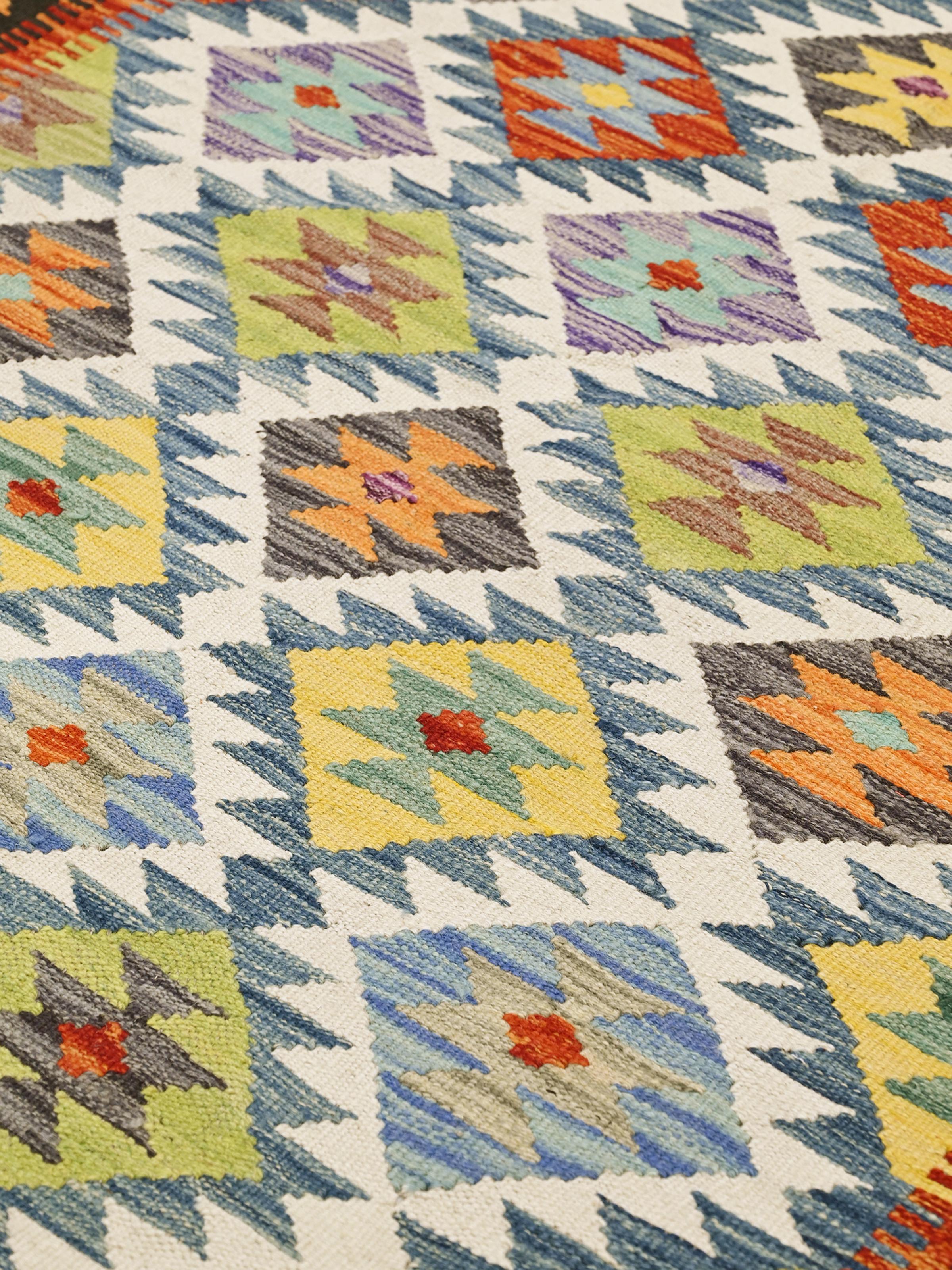
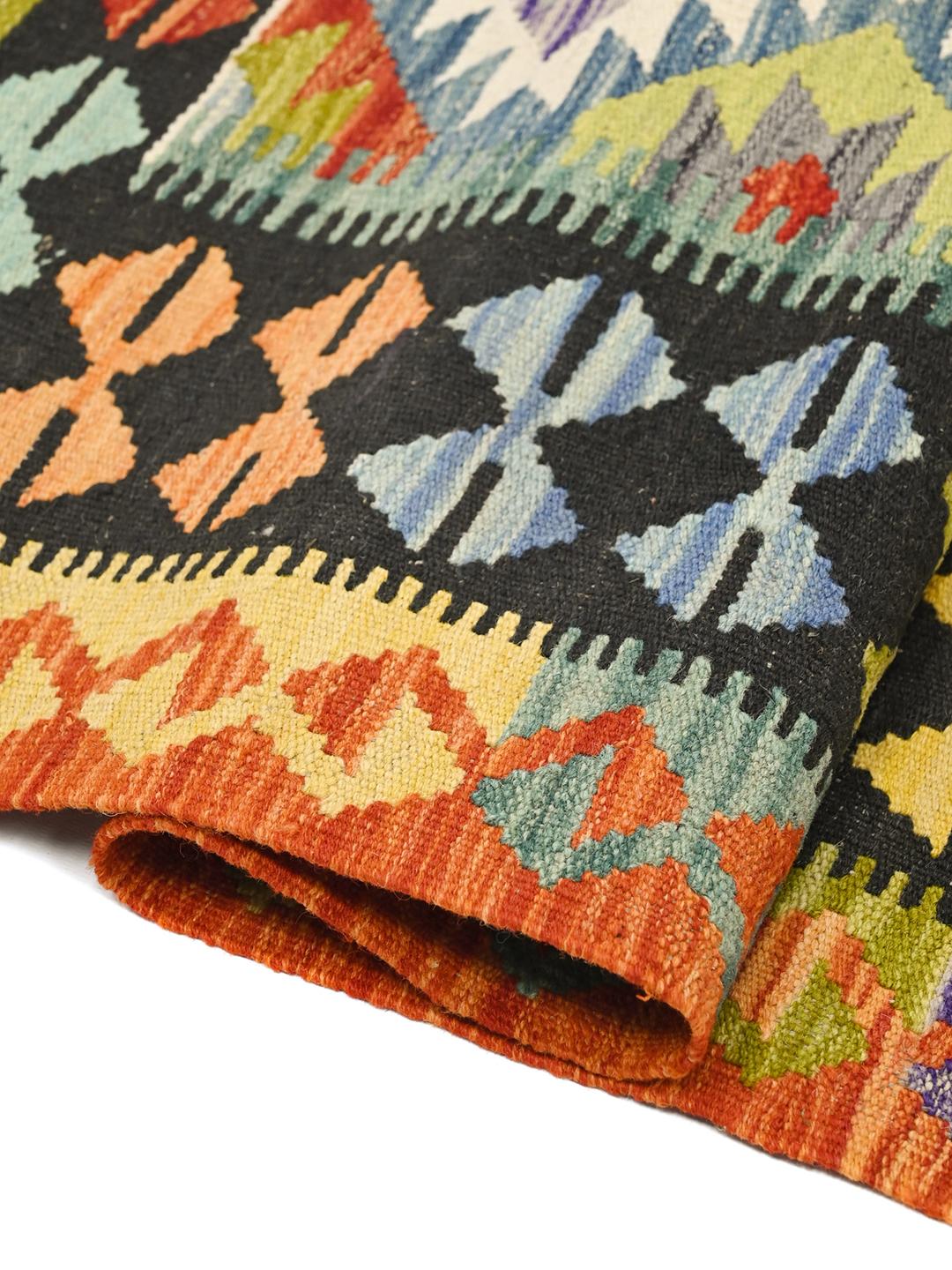
In the context of rug craft, the term Kelim refers to a tapestry-weave, which is a flat-weave construction without a pile. This technique is highly valued for its clean lines and the way it allows the weaver to create sharp, precise geometric patterns. Because there is no pile to wear down, these rugs are exceptionally durable and reversible, offering a practical solution for those seeking a long-lasting floor covering that retains its aesthetic charm.
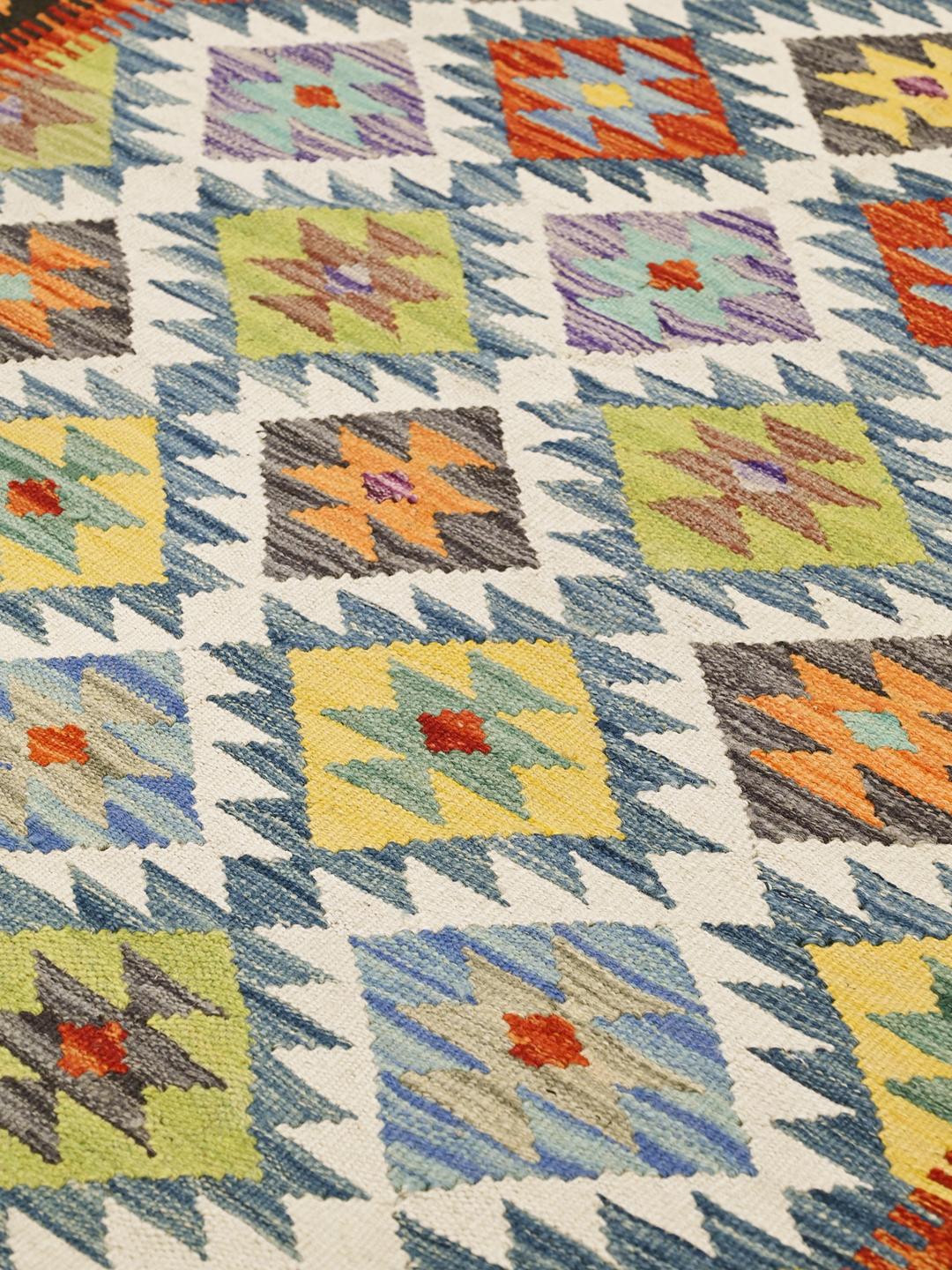
The visual language of this tradition is defined by bold geometric motifs and a disciplined use of borders. You will frequently find diamond patterns, triangles, and stylised floral elements that hold symbolic meaning within the weaving communities. The use of vibrant, contrasting colours is a hallmark of the Afghan style, often achieved through traditional dyeing methods that result in rich, deep tones that age gracefully and develop a unique character over time.
Owning an Afghan Kelim is a way to connect with a long-standing heritage of human skill and creativity. These rugs are highly sought after by collectors and interior enthusiasts alike because they represent a departure from mass-produced items, offering instead a sense of authenticity and cultural depth. By bringing one into your home, you are preserving a tradition that has been passed down through generations of skilled artisans.