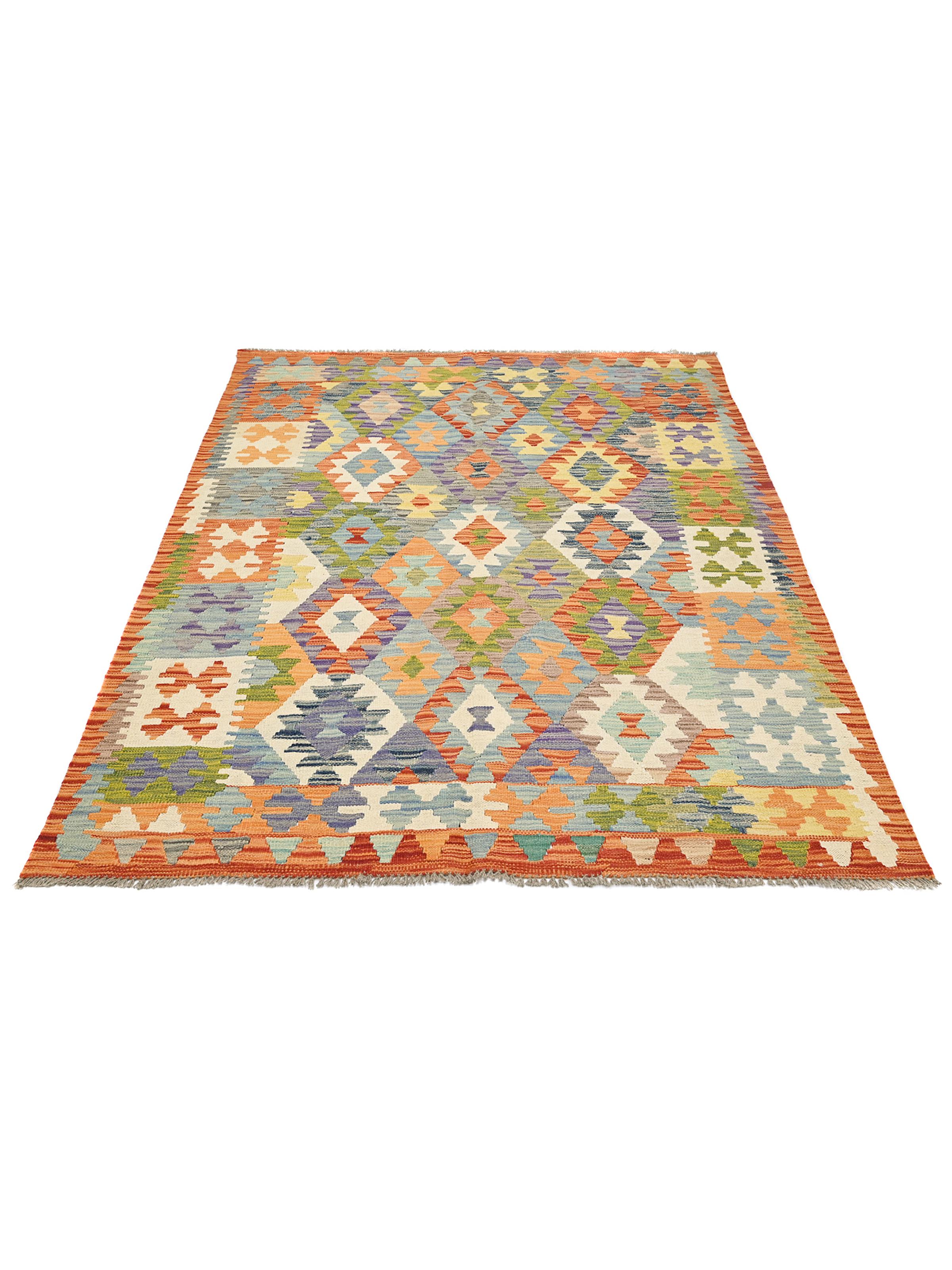
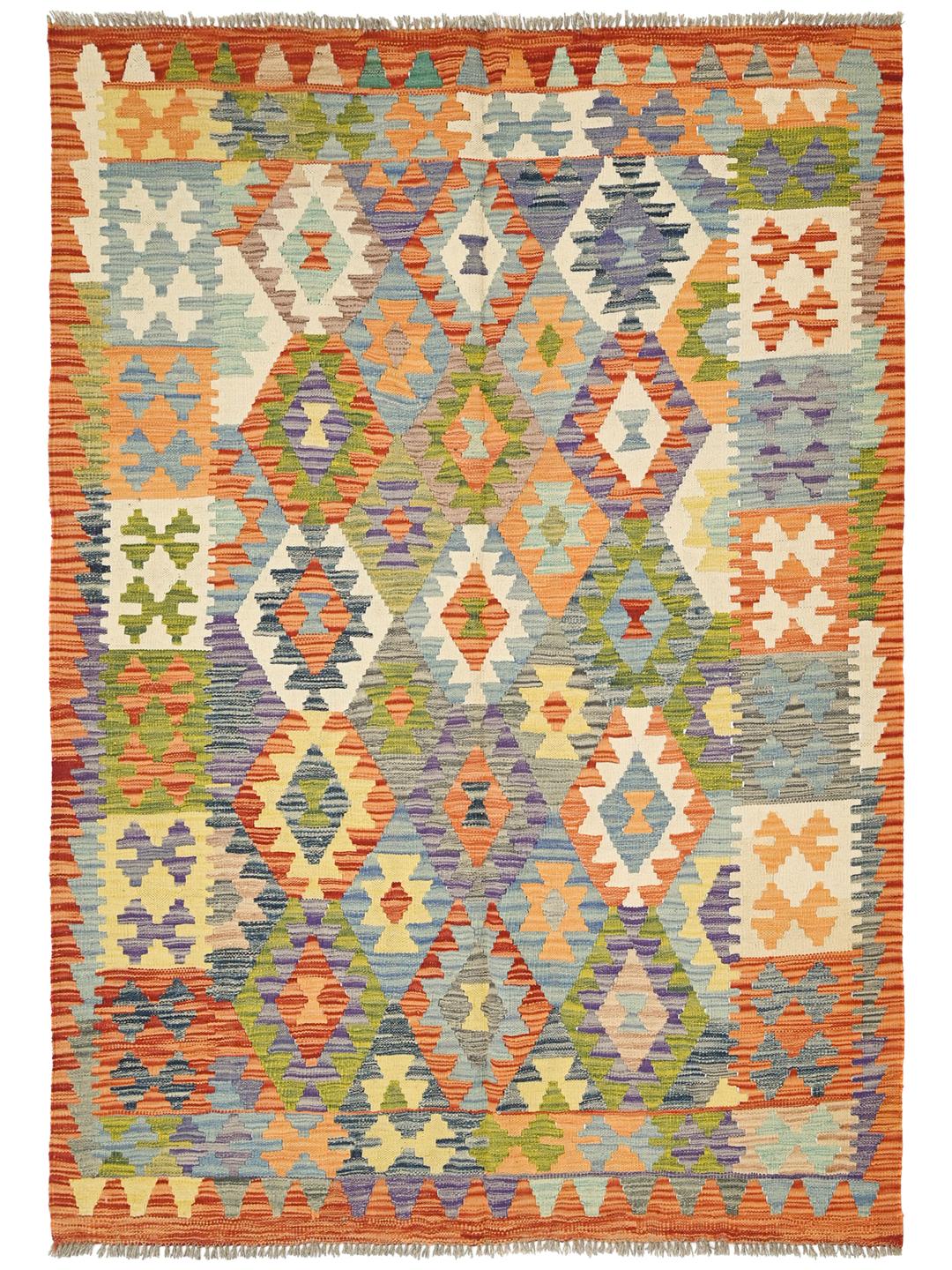
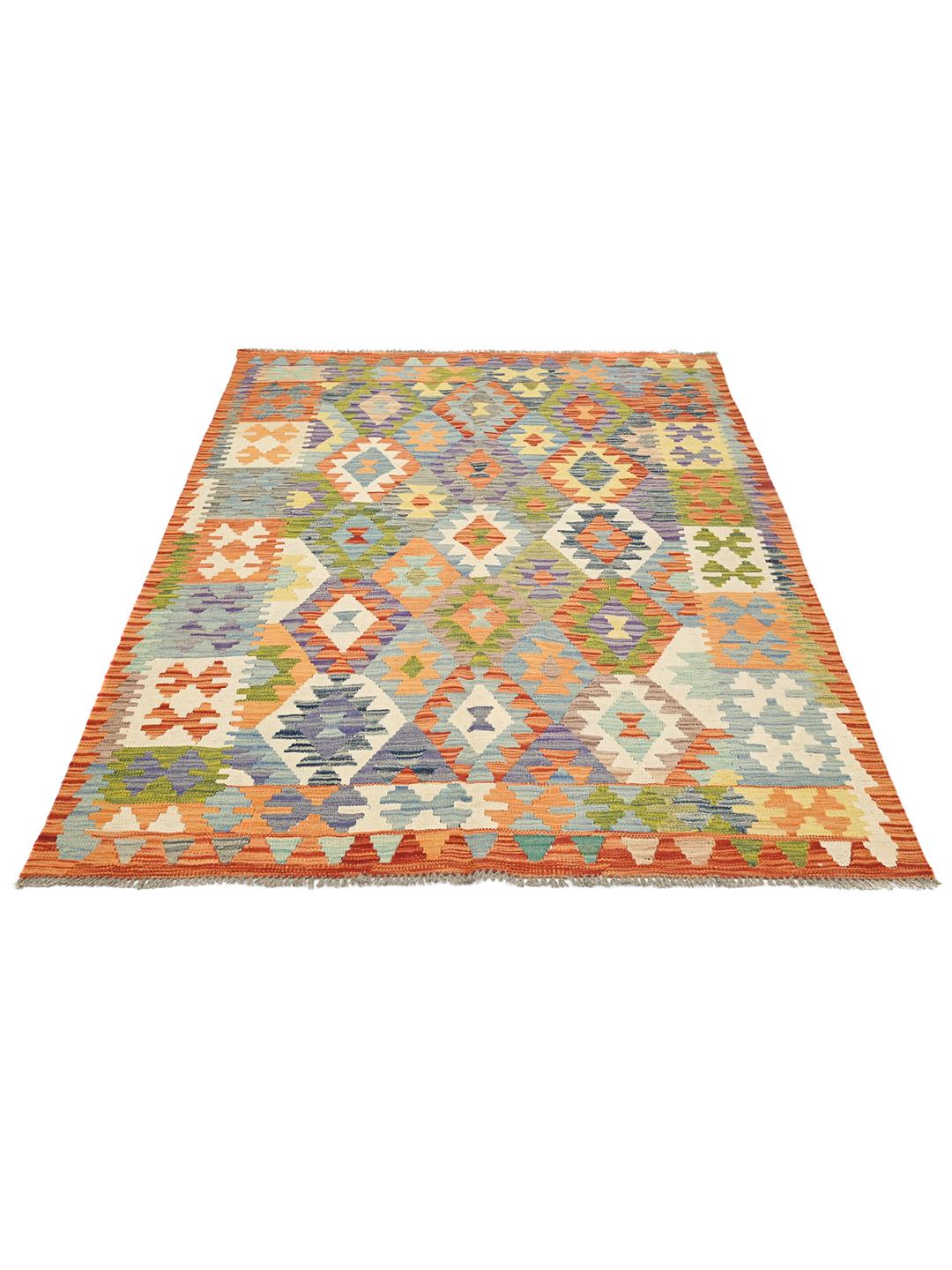
The tradition of weaving Kelims in Afghanistan is deeply rooted in the nomadic lifestyle of the region, where these flat-woven textiles were historically used as floor coverings, wall hangings, and functional storage bags. These pieces are more than just home decor, they are narratives woven in Wool, reflecting the environment and cultural identity of the weavers who created them.
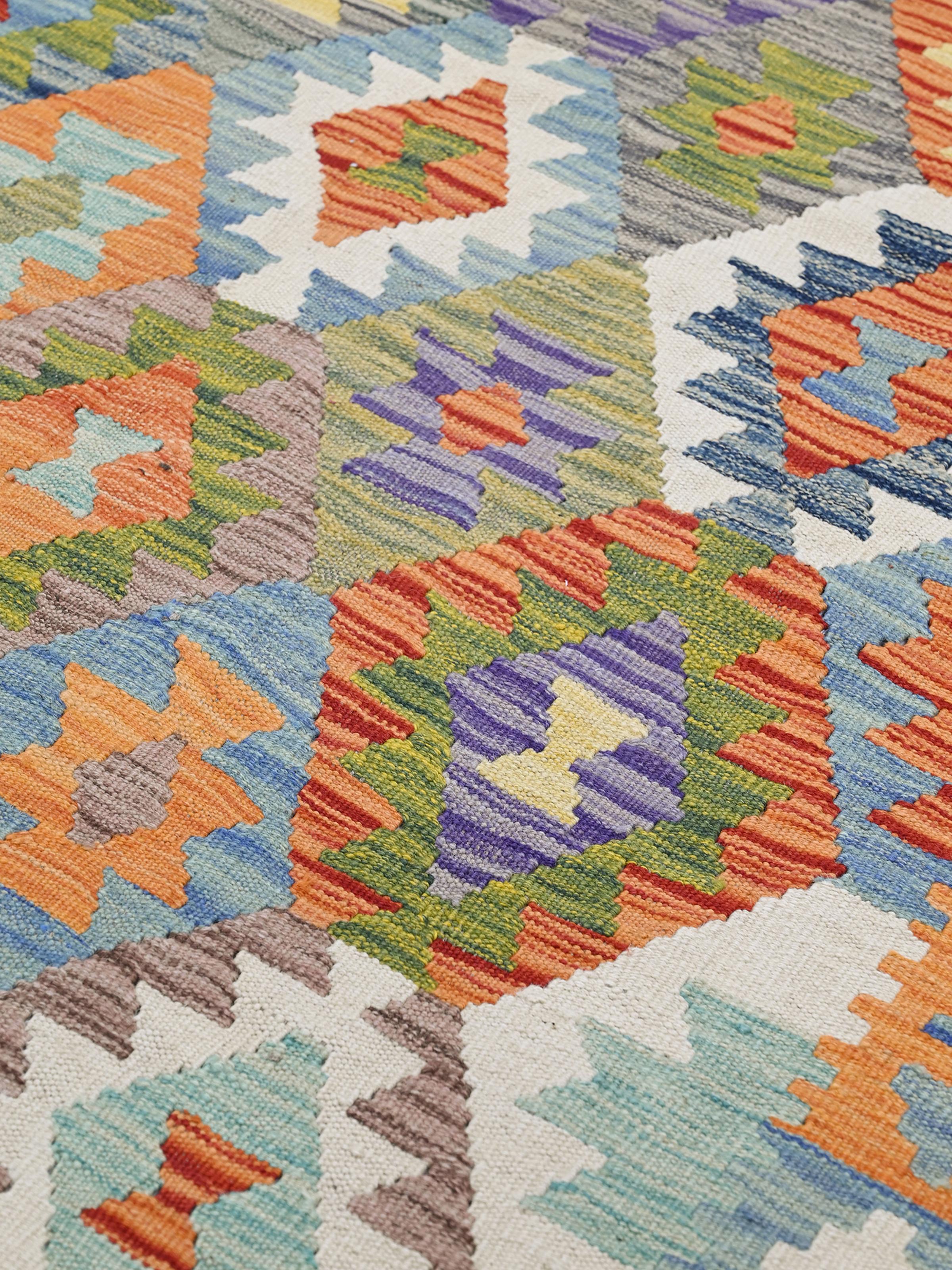
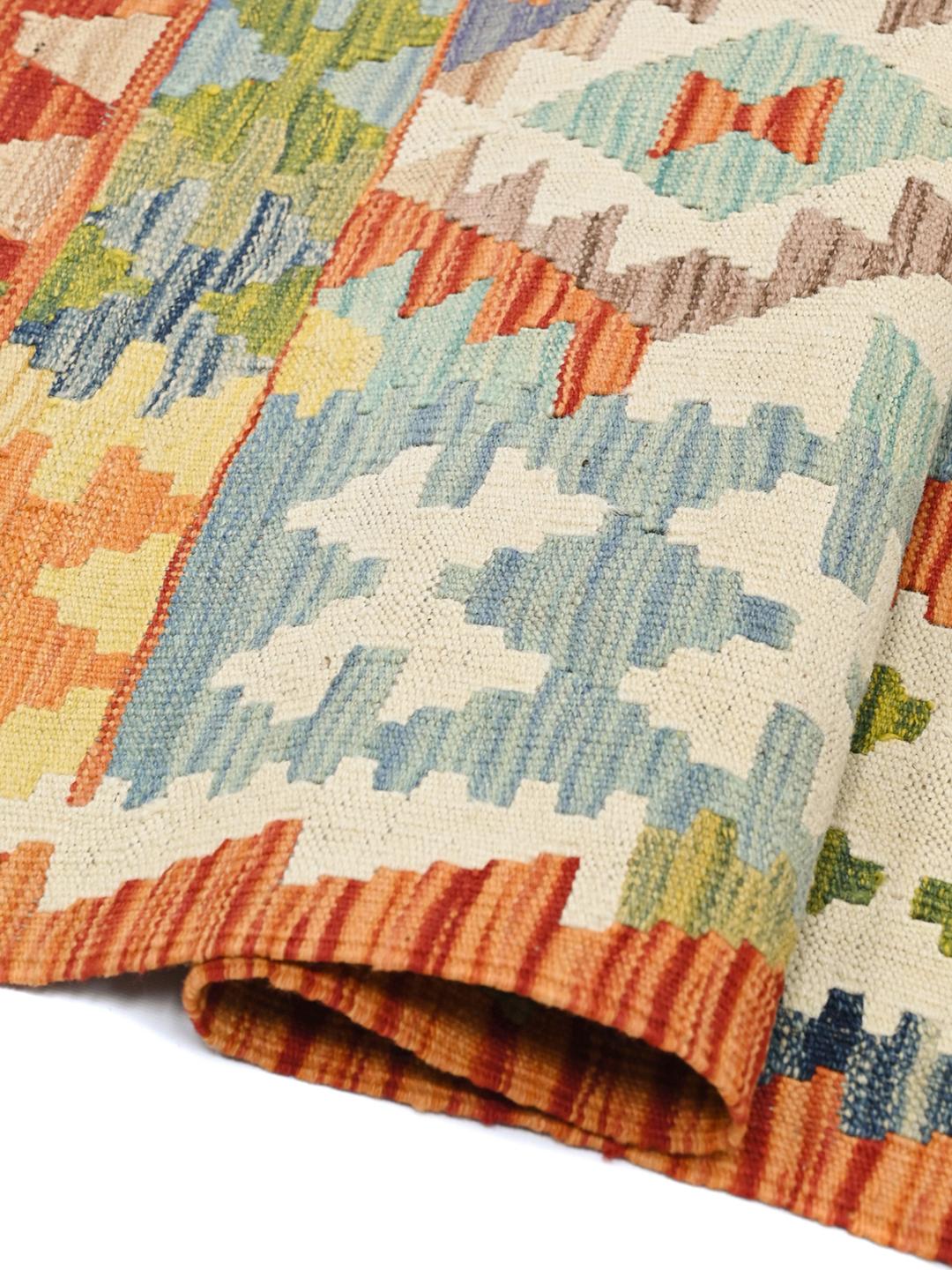
The term 'Kelim' refers to a tapestry-weave, a technique where the weft threads are passed through the warp threads to create patterns without the use of a pile. This results in a reversible, lightweight, and durable textile that showcases the weaver's ability to manipulate colour and geometry with remarkable precision, making them highly prized for their clean lines and intricate detail.
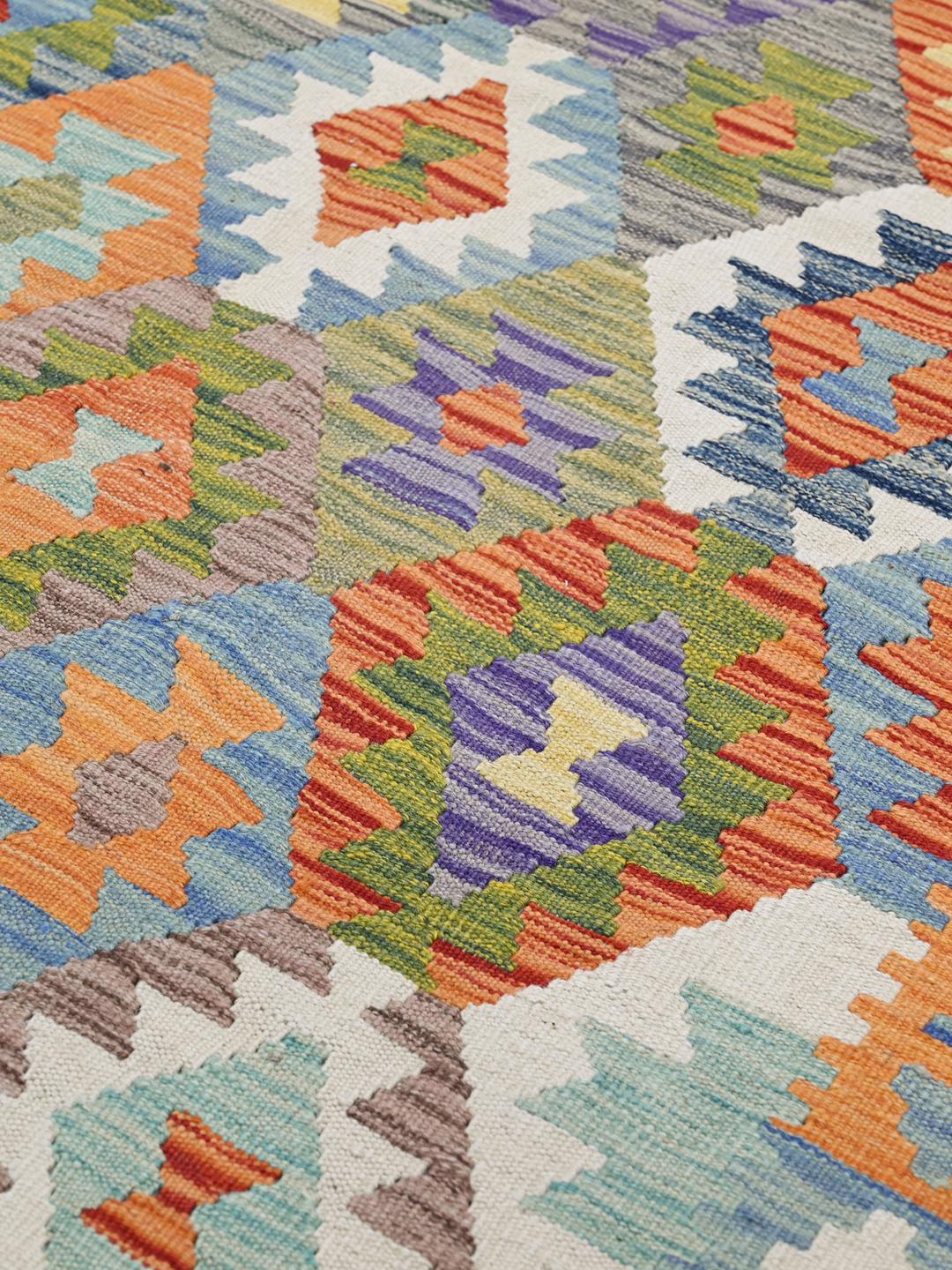
Signature design elements in Afghan Kelims often include bold geometric shapes, such as the diamonds seen in this piece, which are frequently arranged in repeating patterns. These motifs are not merely decorative but often hold symbolic meaning related to protection, fertility, or the natural landscape. The use of vibrant, contrasting colours is a hallmark of the old-style tradition, designed to stand out against the earthy tones of traditional nomadic dwellings.
Today, these rugs are cherished by collectors and enthusiasts who value the authenticity and historical weight they bring to a space. Owning a Kelim is an opportunity to connect with a long-standing craft tradition that emphasises skill, patience, and a deep respect for natural materials, ensuring that these pieces remain relevant and sought after in contemporary homes.