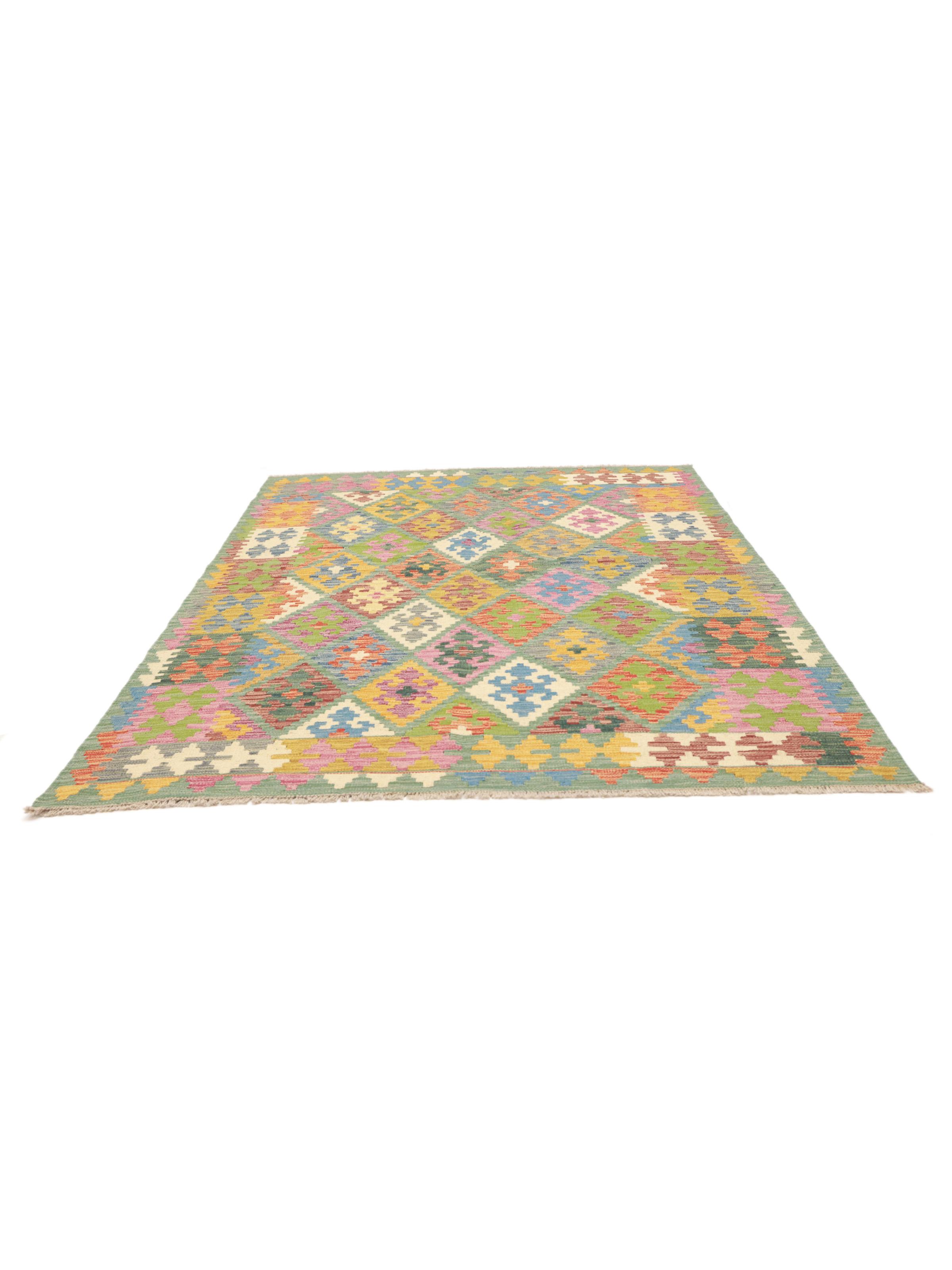
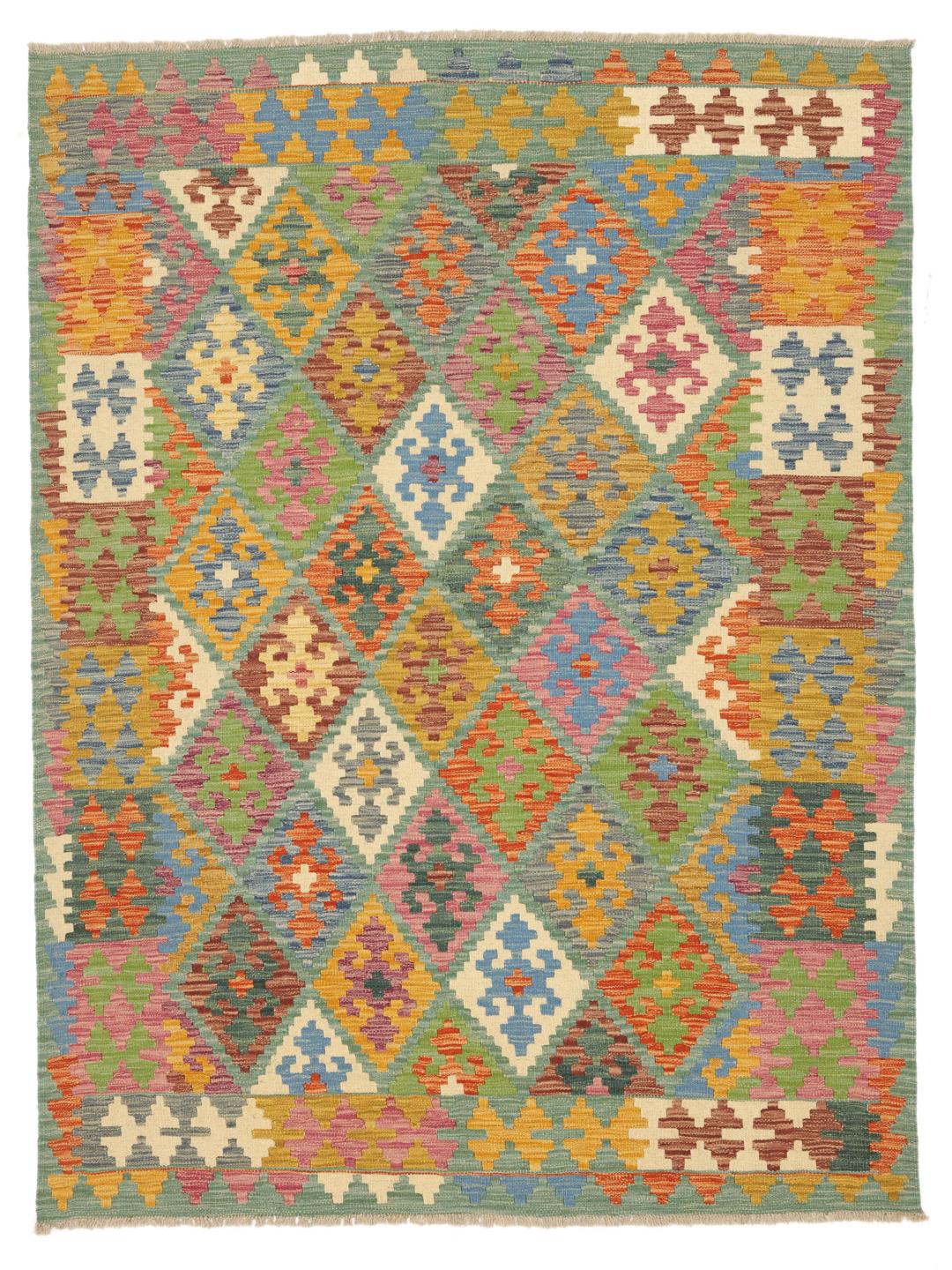
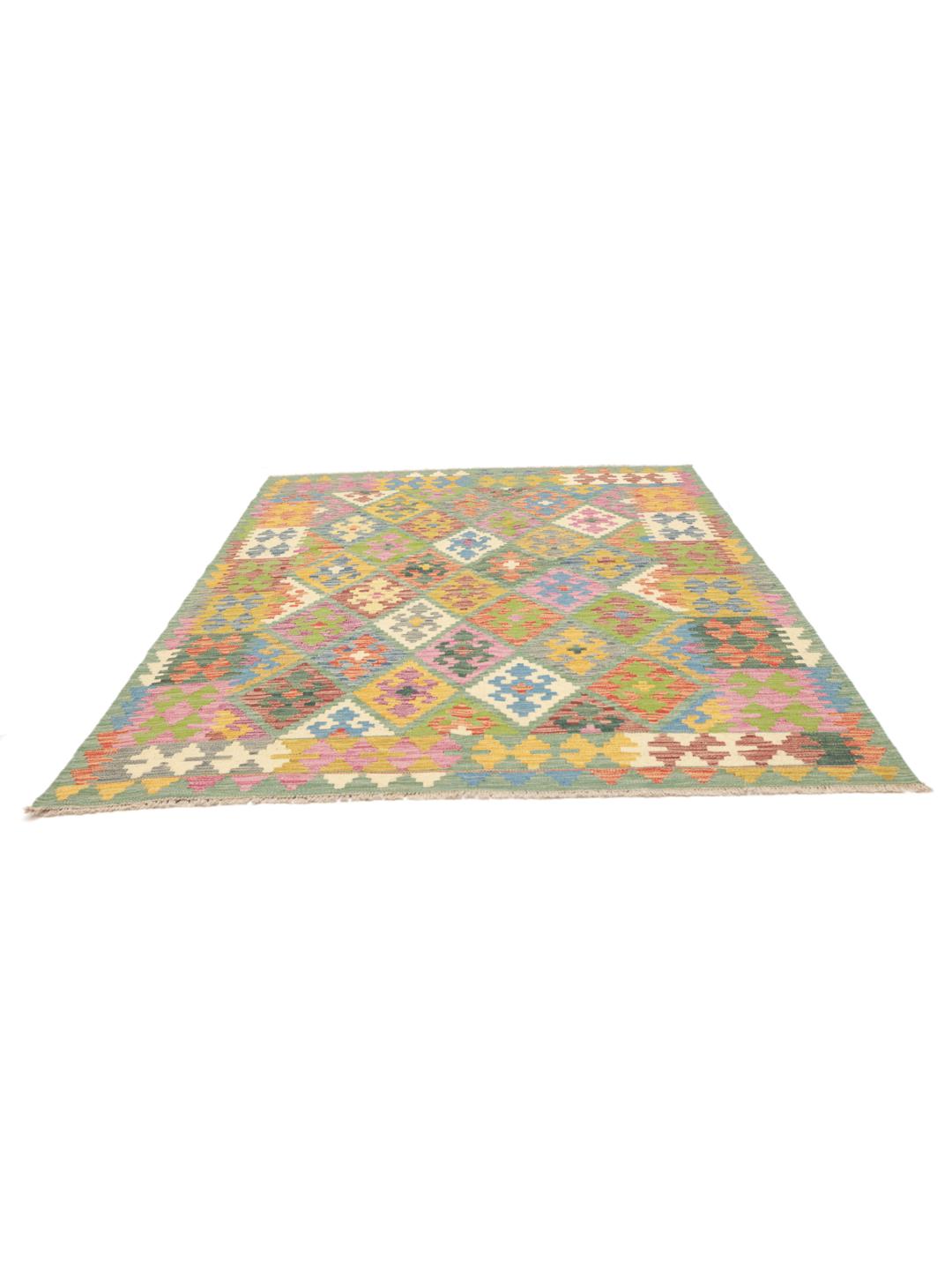
The Kelim tradition is deeply rooted in the history of the nomadic and semi-nomadic tribes of the Middle East and Central Asia. These flat-woven textiles were originally created as functional items for daily life, serving as floor coverings, blankets, or saddlebags. Over centuries, they have evolved into symbols of cultural identity, with each region developing its own distinct visual vocabulary.
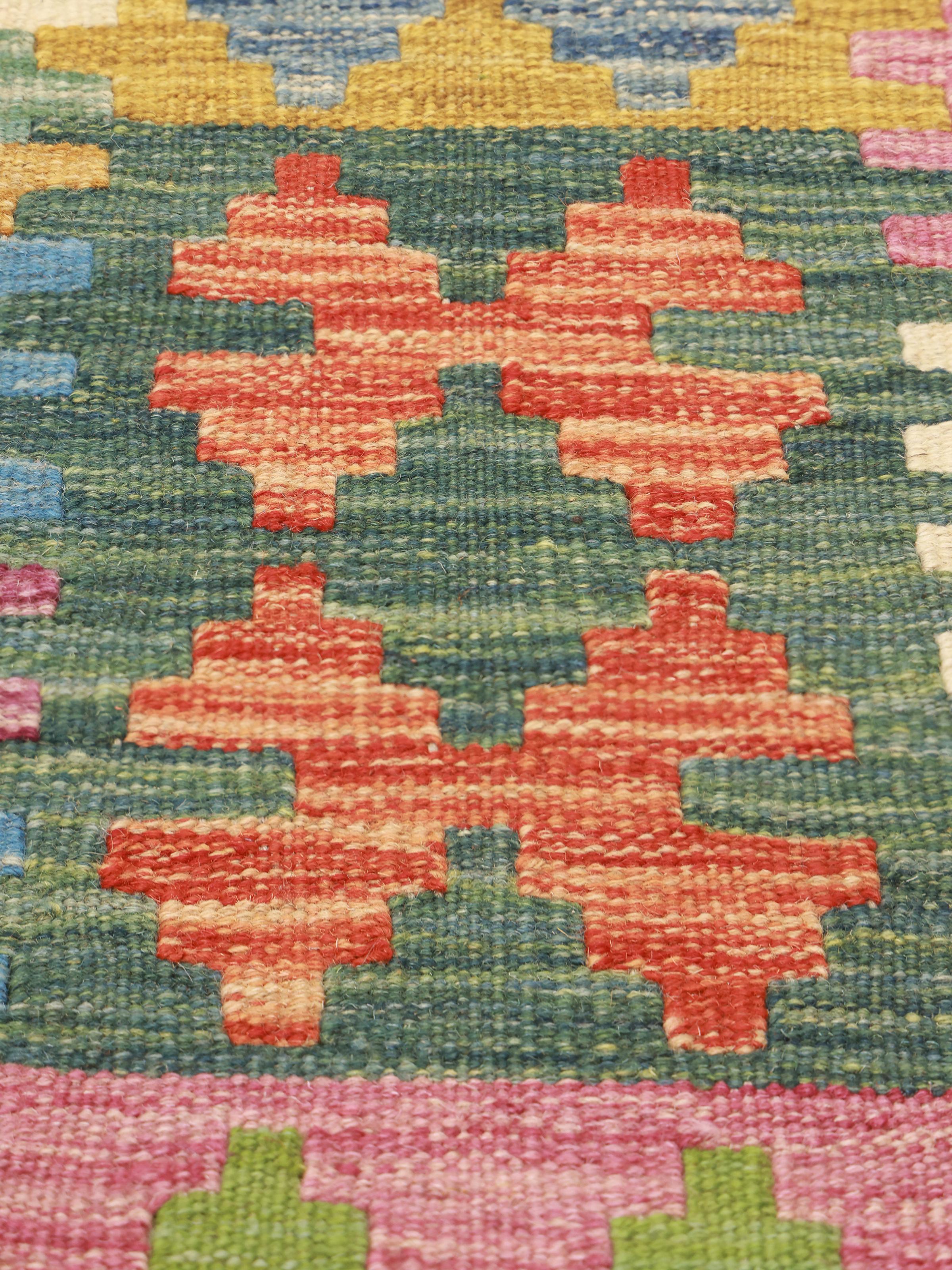
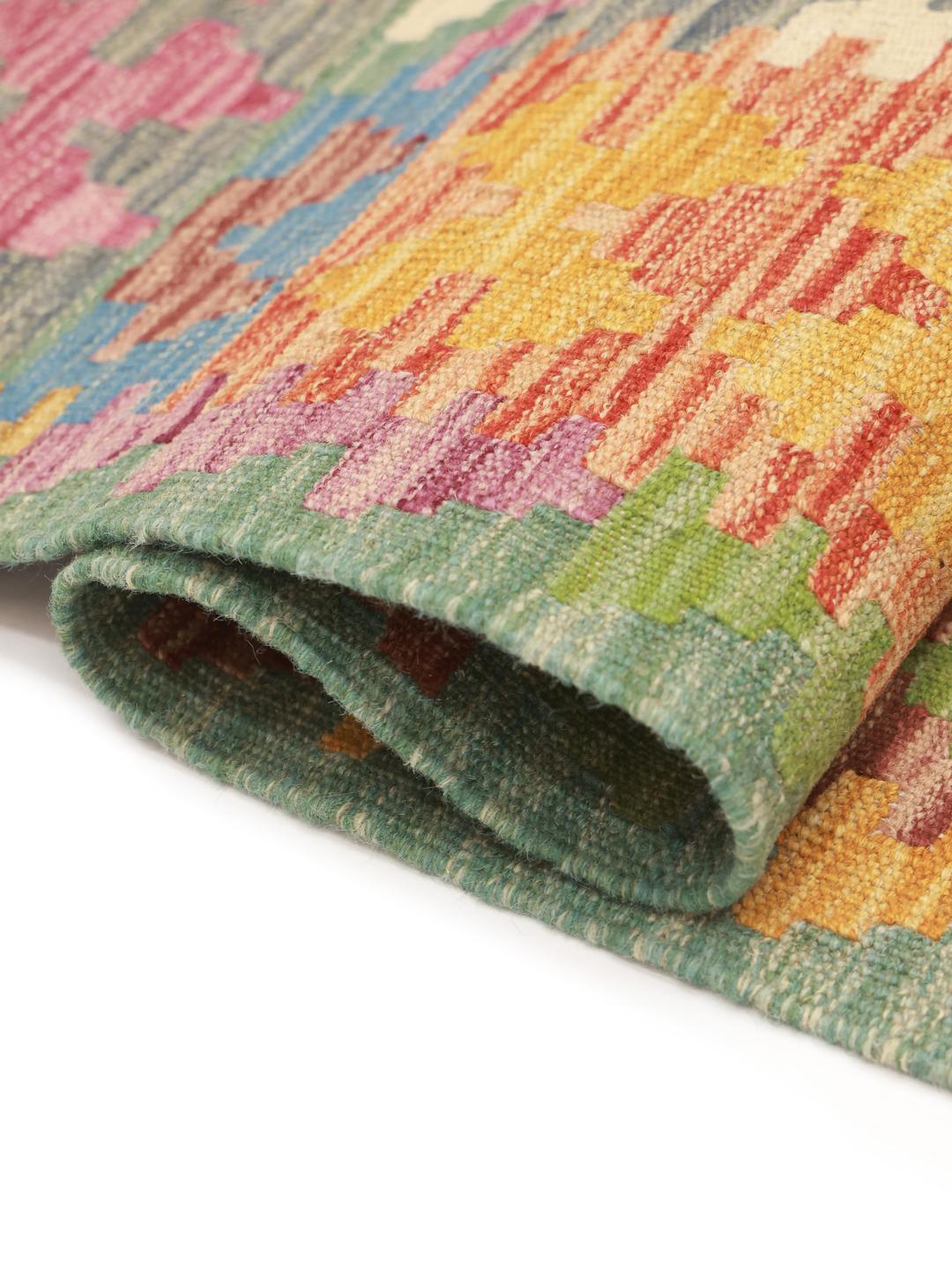
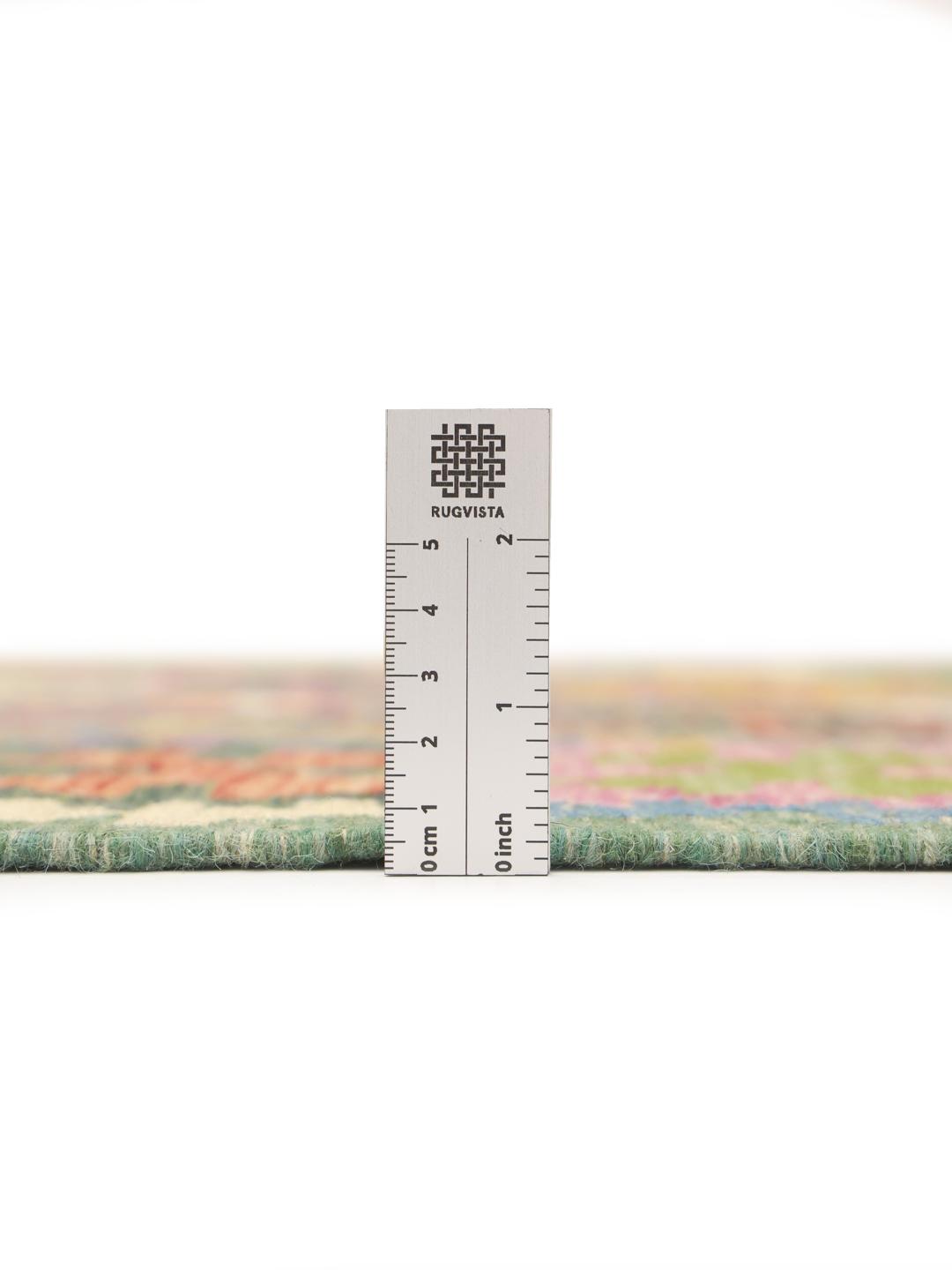
Technically, a Kelim is distinguished by its lack of a pile, created by interweaving the coloured weft threads through the warp threads. This technique produces a reversible rug that is lightweight yet incredibly tough. The absence of pile means that the pattern is visible on both sides, a hallmark of the craft that requires the weaver to have a complete mastery of the design before the first thread is even placed.
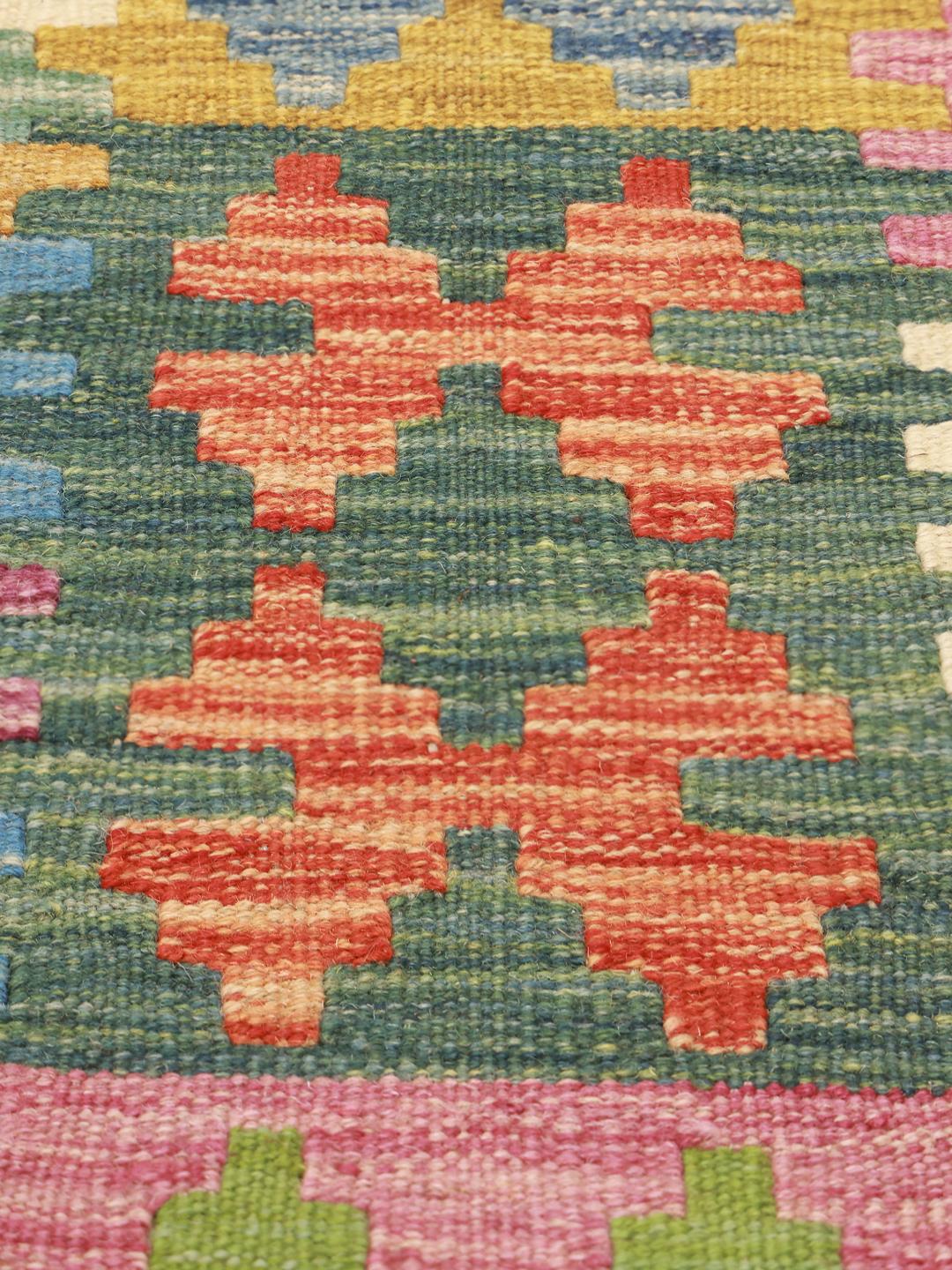
The diamond motif seen here is a classic element in Afghan weaving, often representing protection, fertility, or the natural world. These geometric shapes are typically arranged in repetitive sequences, creating a rhythmic and harmonious field. The use of varied, bold colours is a signature of this tradition, reflecting the vibrant natural dyes that have historically been gathered from local plants and minerals.
Owning an Afghan Kelim is an opportunity to connect with a centuries-old craft that prizes patience and precision. These rugs are highly valued by collectors not only for their beauty but for the stories woven into their threads. They represent a bridge between the past and the present, offering a timeless aesthetic that brings a sense of cultural depth and human connection to any modern home.