The history of the Afghan Kelim is deeply intertwined with the nomadic cultures of the Middle East, where weaving was a vital survival skill and a primary form of artistic expression. For centuries, these flat-woven rugs have been created by tribal communities, serving as versatile household items that were used as floor coverings, tent dividers, and storage bags.
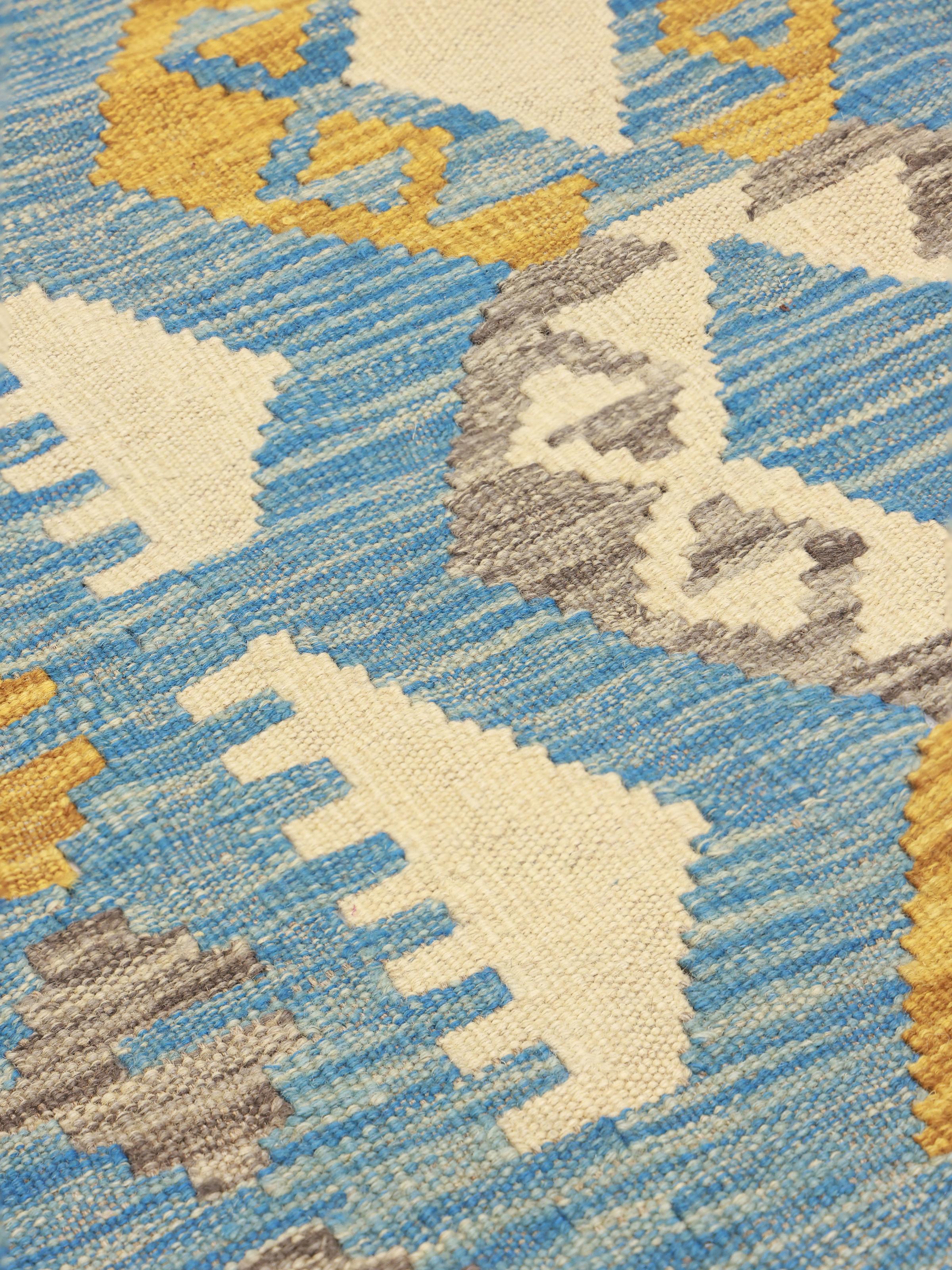
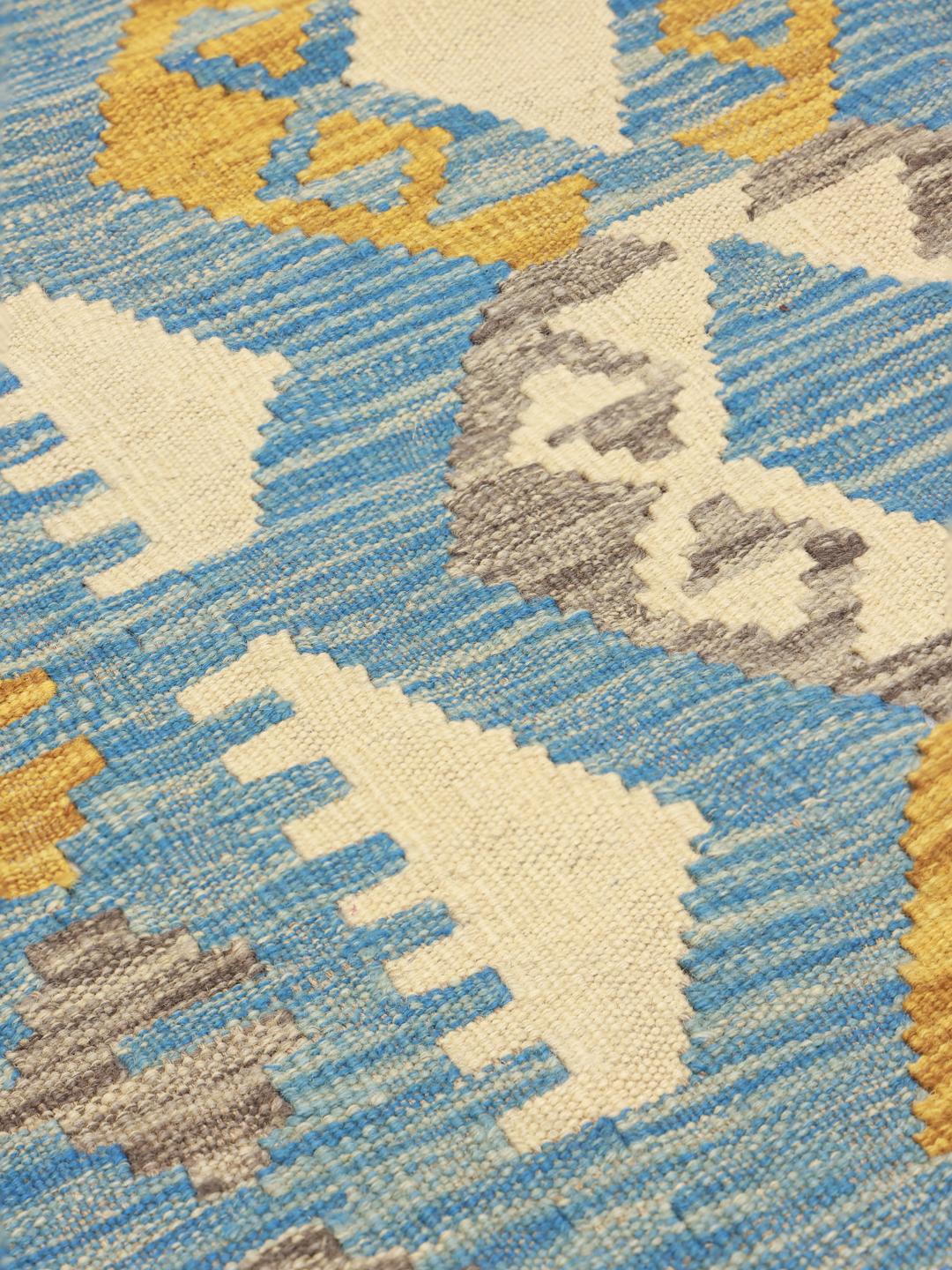
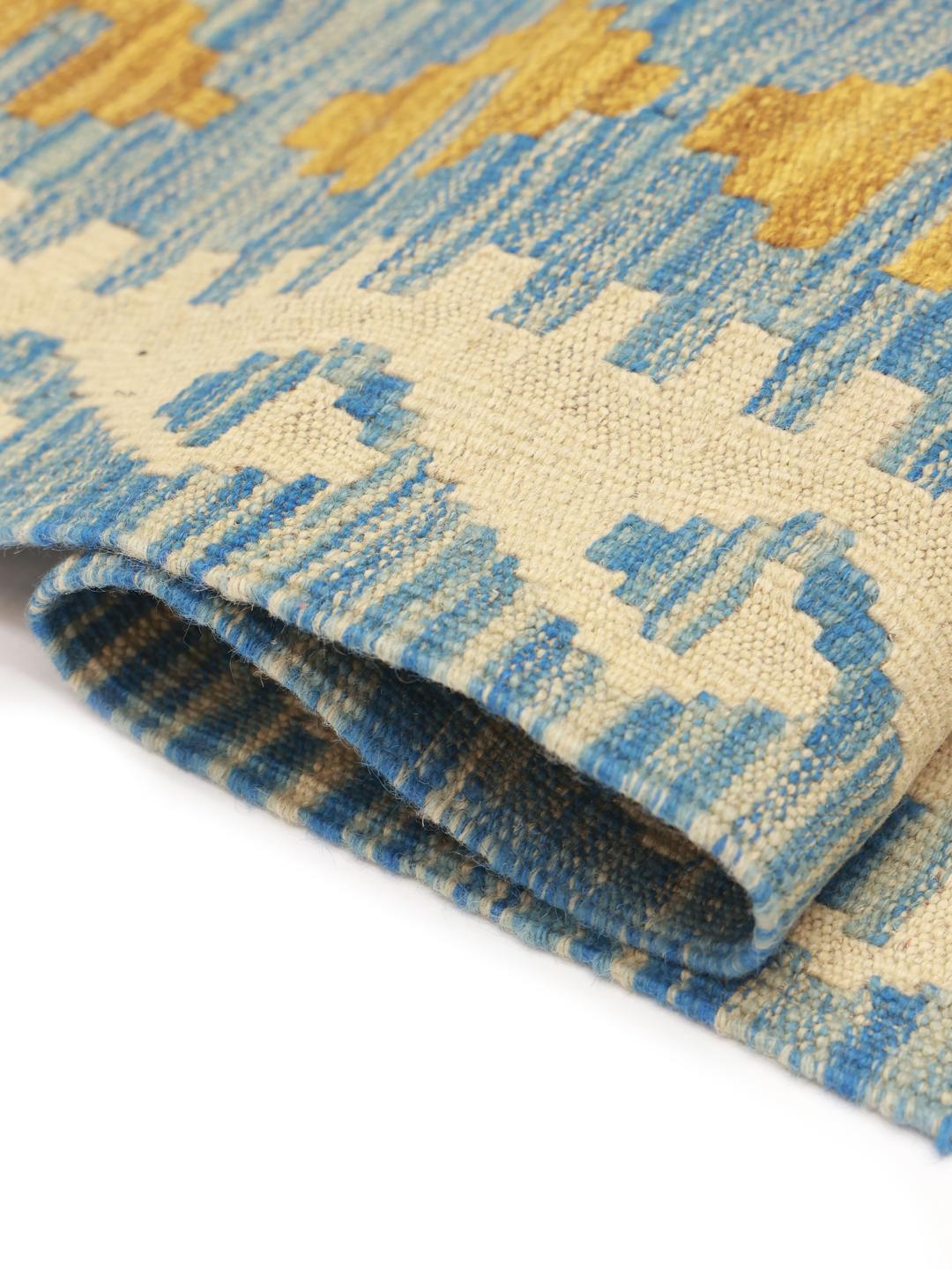
The term 'Kelim' refers to a specific tapestry-weave technique where the weft threads are passed through the warp to create a smooth, pileless surface. This method is technically demanding, as the weaver must manage both the structural integrity of the rug and the complex colour changes required to form the patterns, resulting in a lightweight but remarkably durable textile.
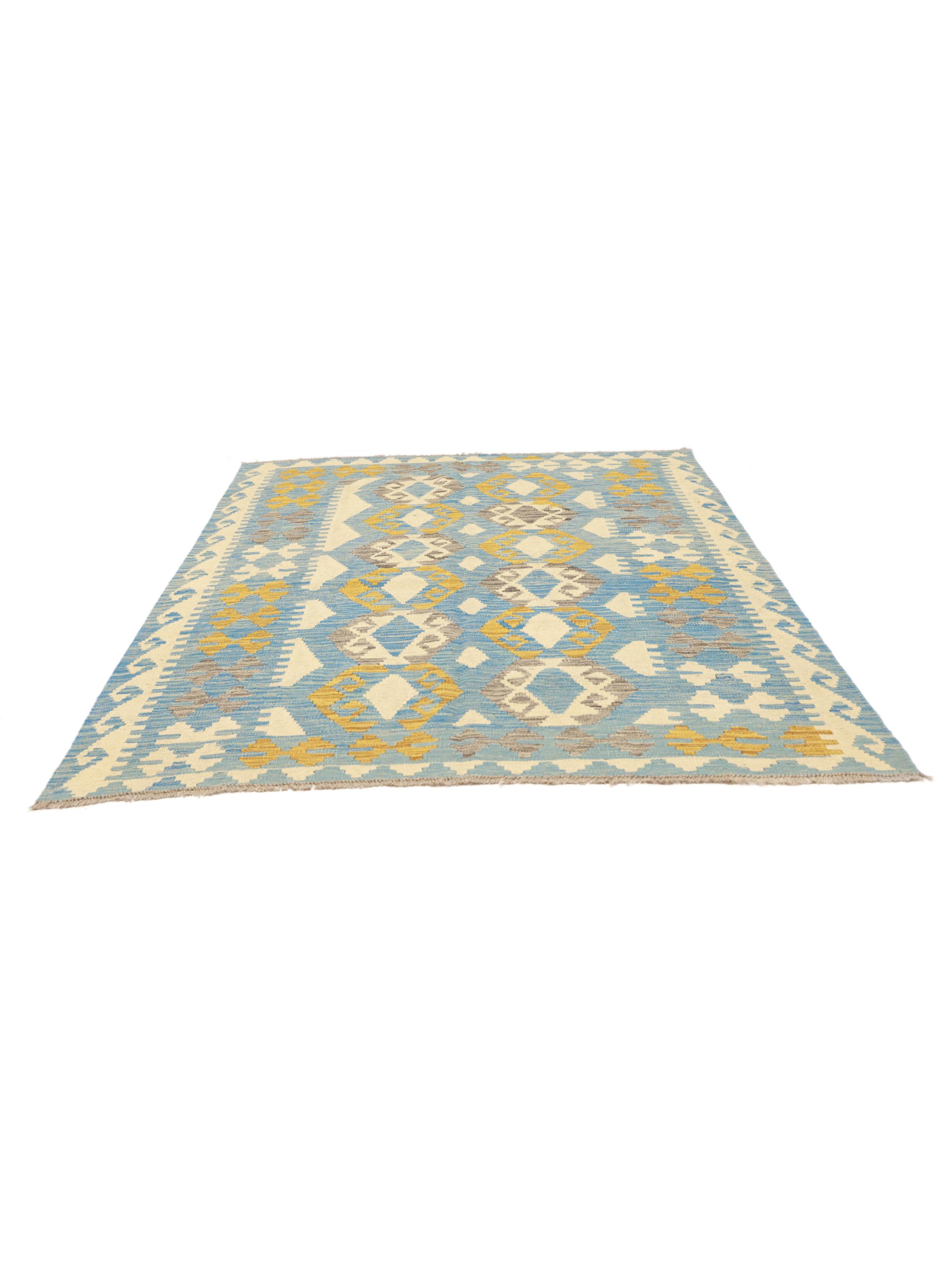
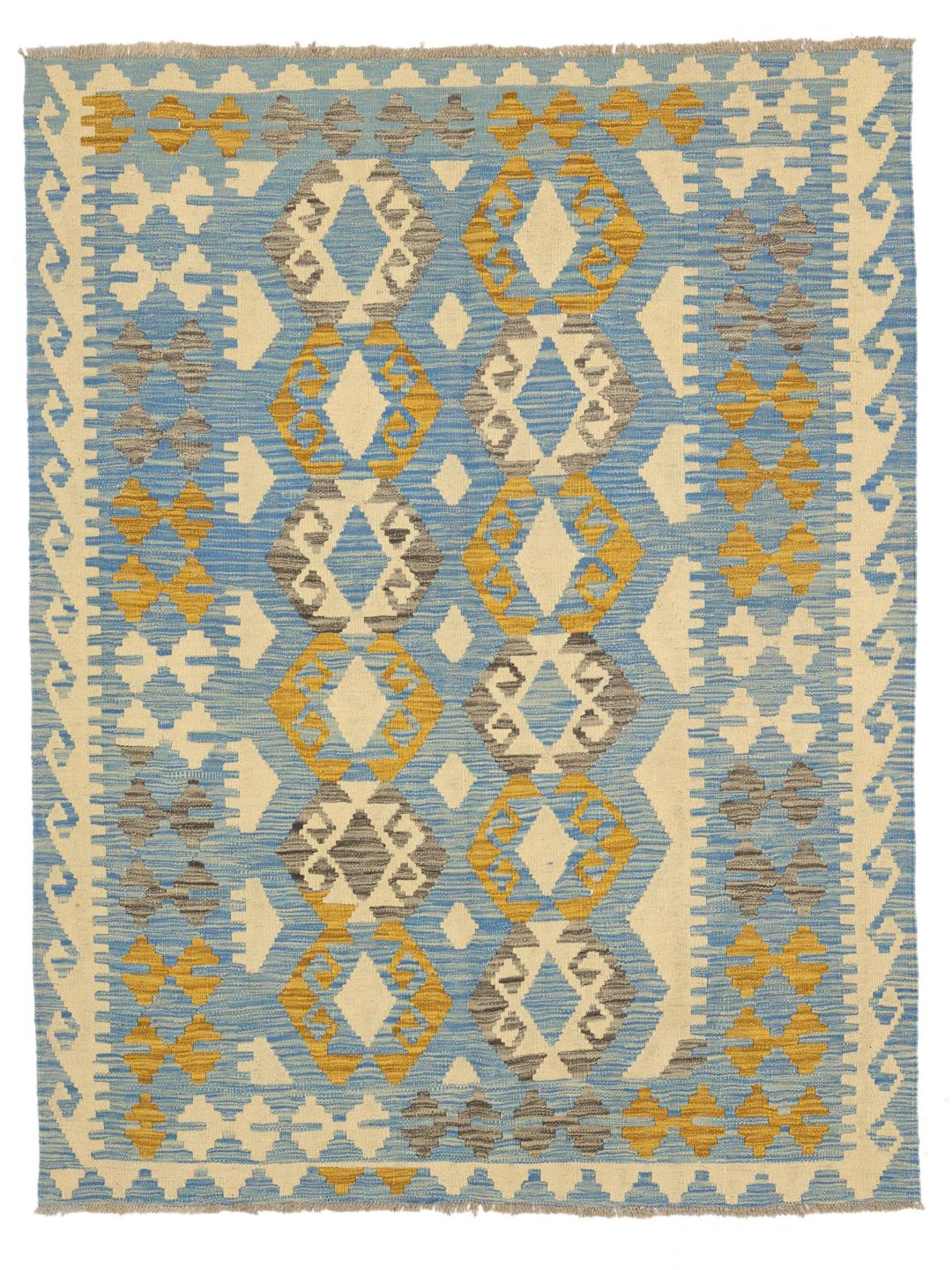
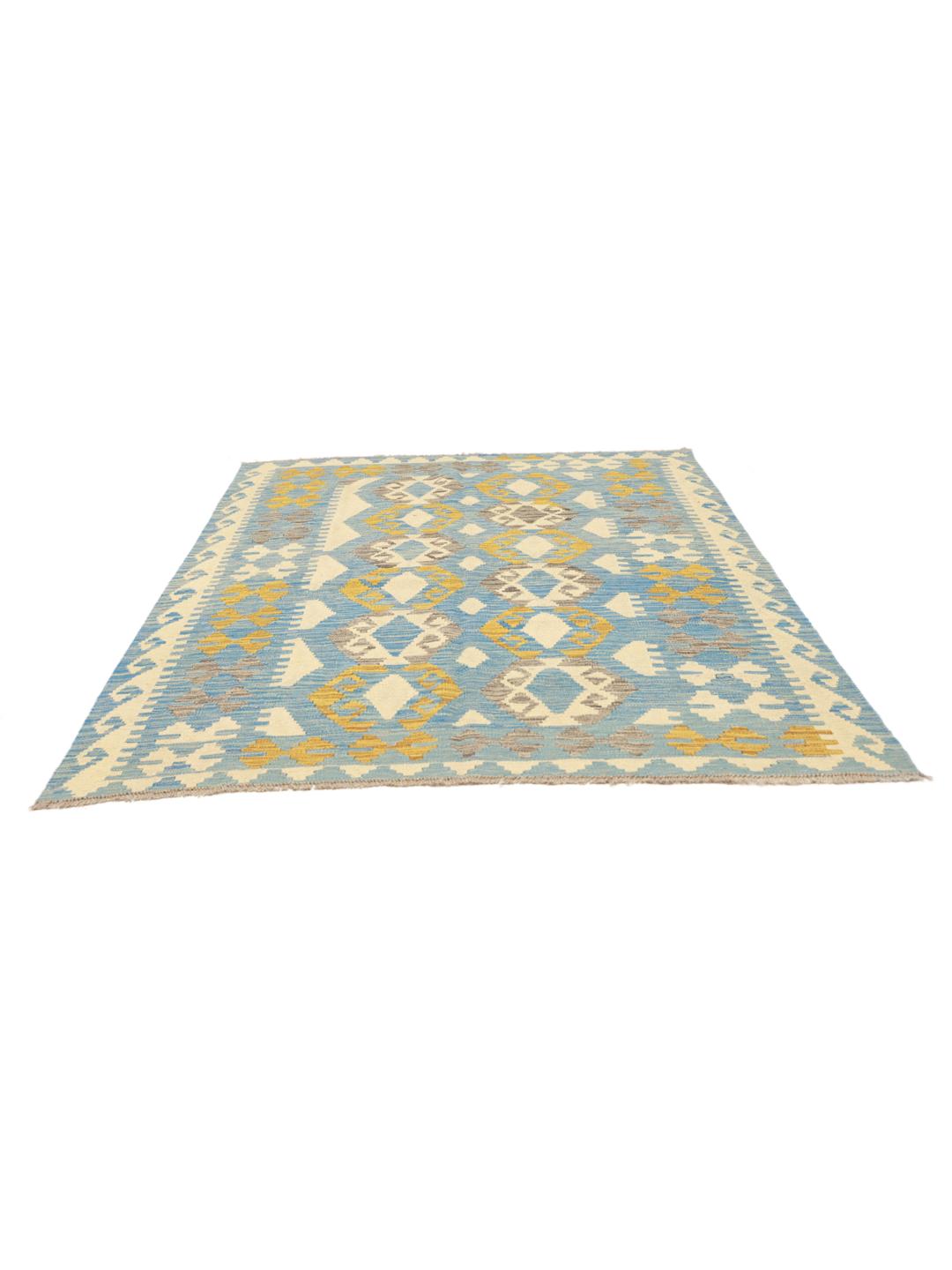
Signature design elements of these rugs include bold geometric motifs such as diamonds and stylized floral shapes, often arranged in rhythmic, repeating patterns. The colour palettes are traditionally derived from natural dyes found in the region, favouring earthy tones like deep blues, golds, and greys. These patterns are not merely decorative but often carry symbolic meaning, reflecting the weaver's environment and cultural heritage.
Today, these rugs are highly valued by collectors and design enthusiasts for their authenticity and the human story behind every thread. Owning an Afghan Kelim is an opportunity to preserve a piece of living history, as it represents a style of craft that has remained largely unchanged for generations, providing an unmatched sense of depth and cultural weight to any home.