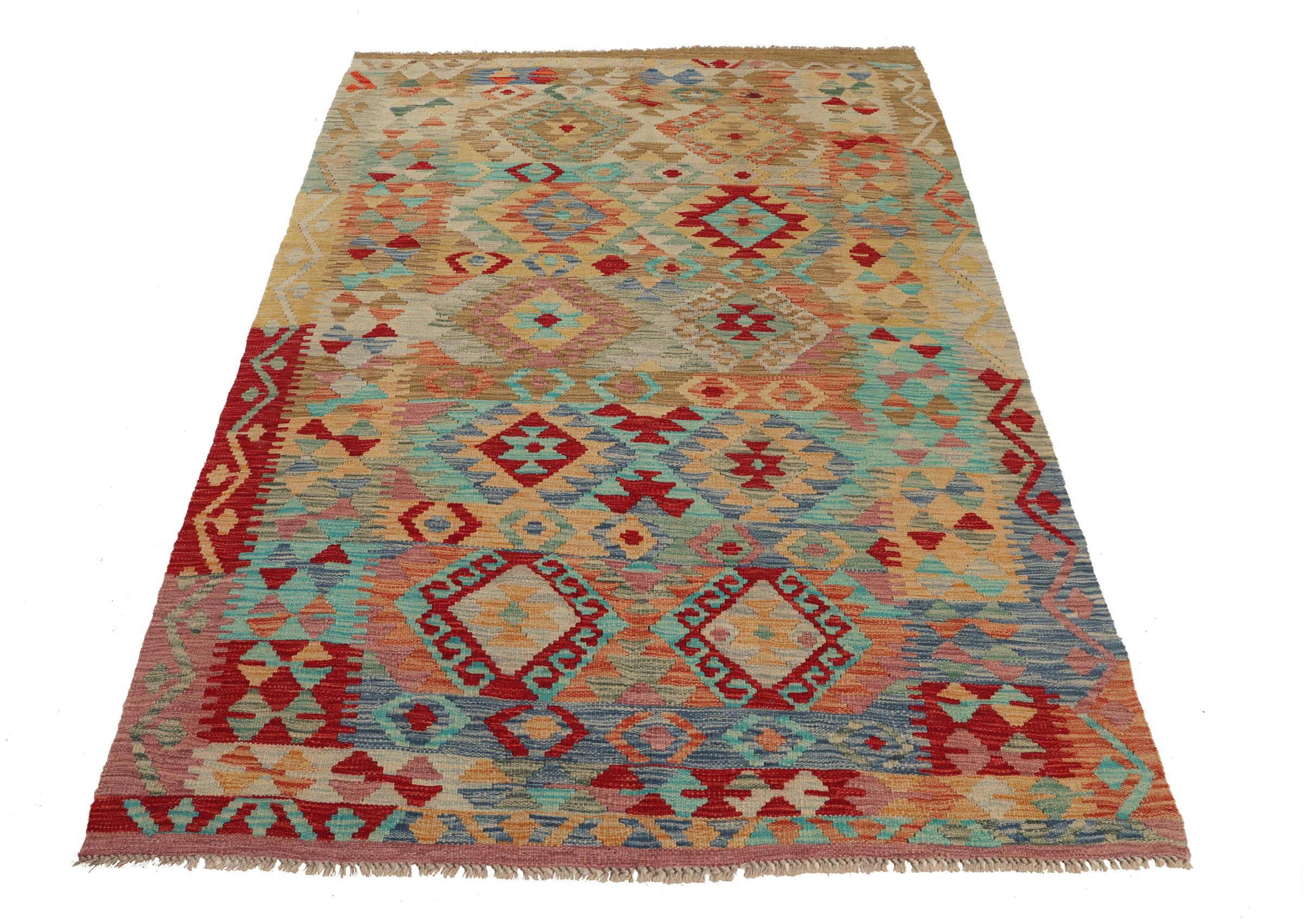
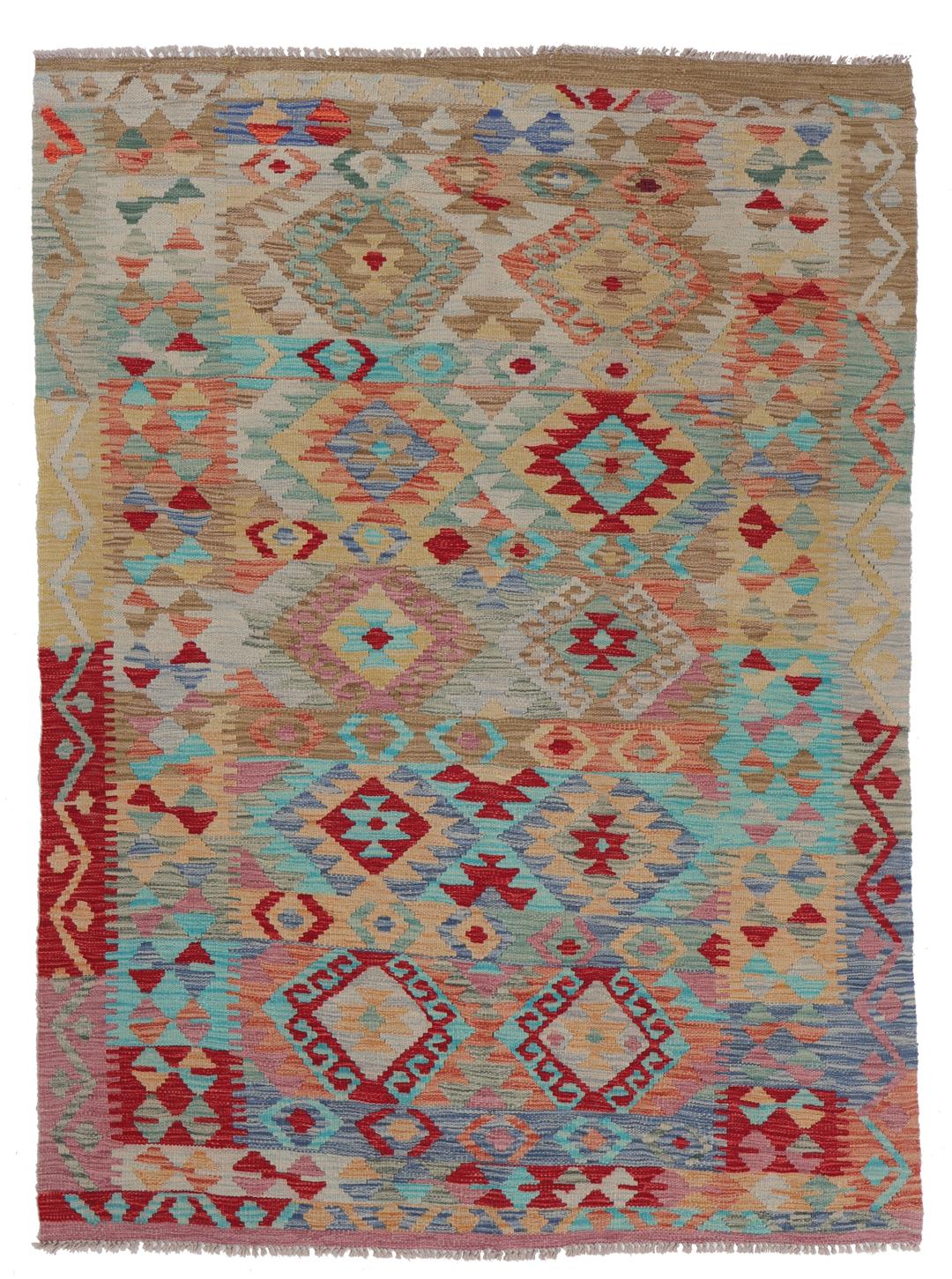
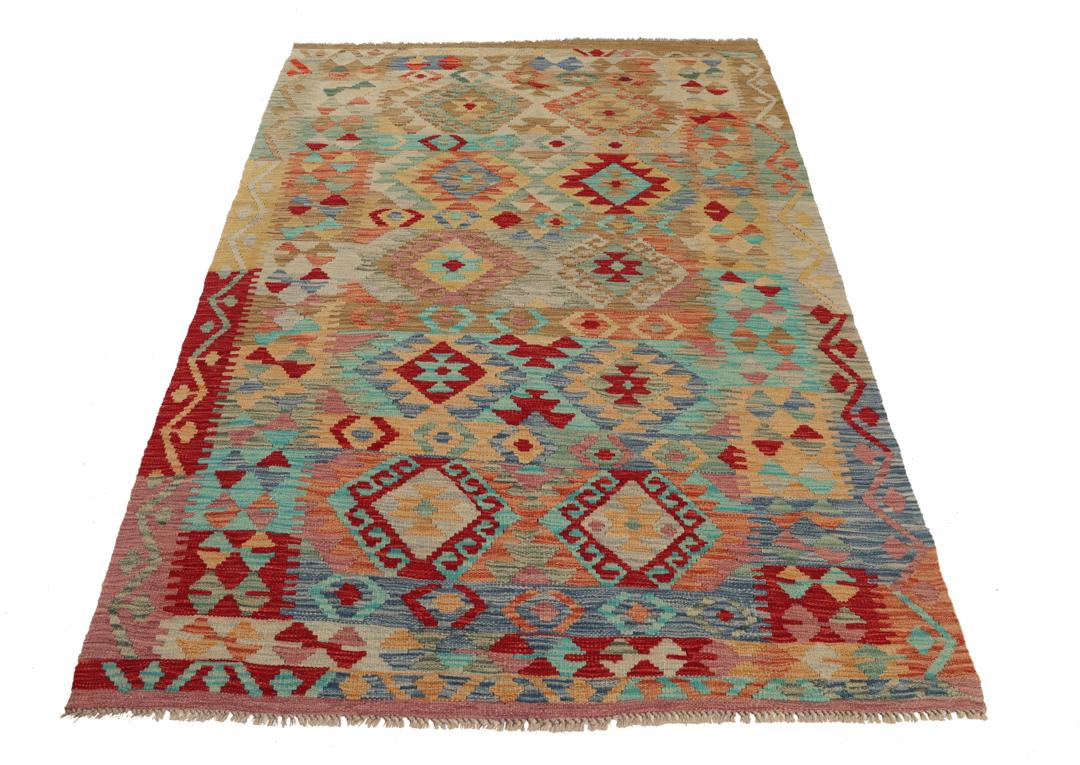
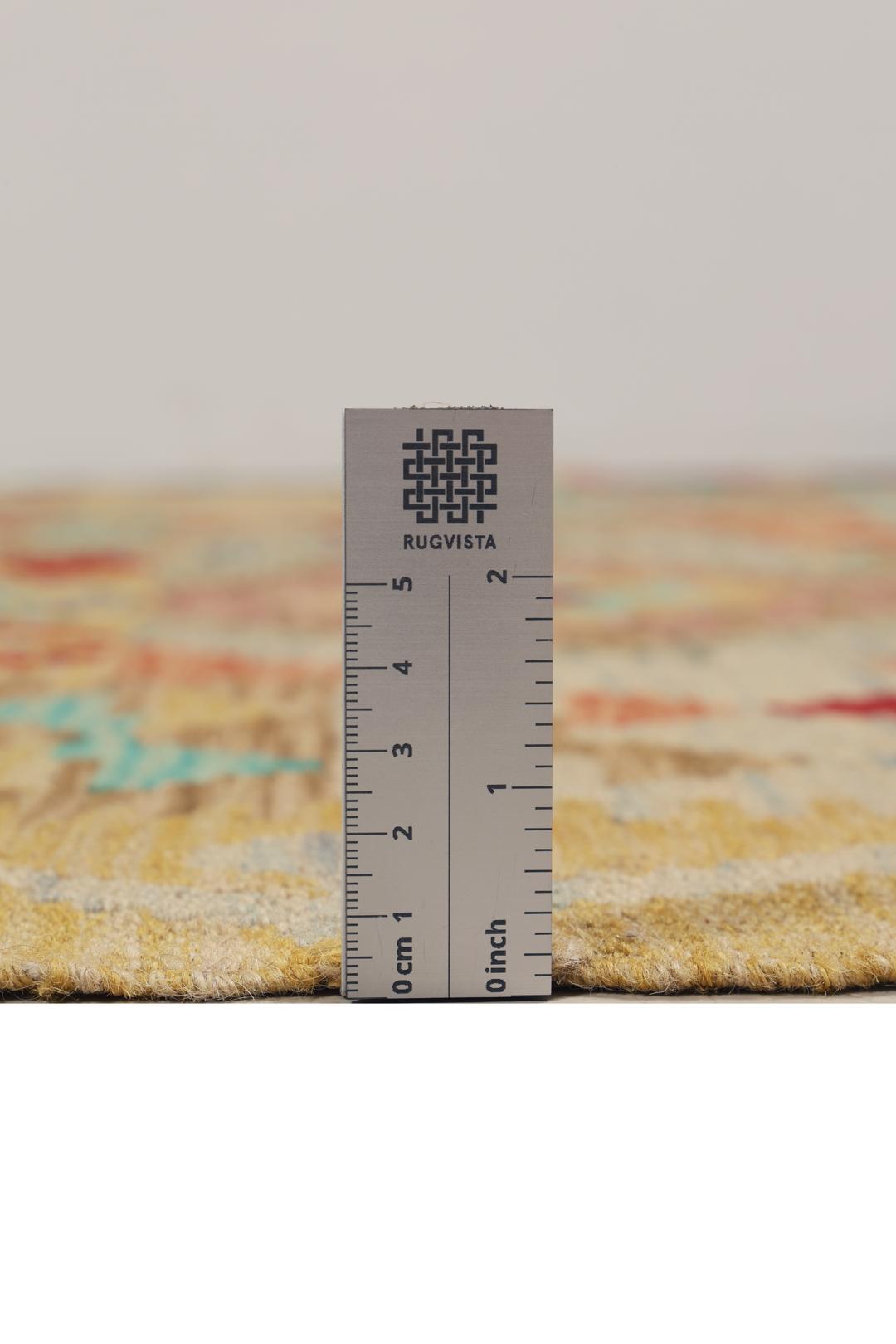
Kelim rugs have a storied history rooted in the nomadic and semi-nomadic cultures of the Middle East and Central Asia. Originally created by tribal weavers for practical purposes such as floor coverings, tent hangings, and saddlebags, these flat-woven textiles were designed to be both portable and highly durable, reflecting the needs of a mobile lifestyle.
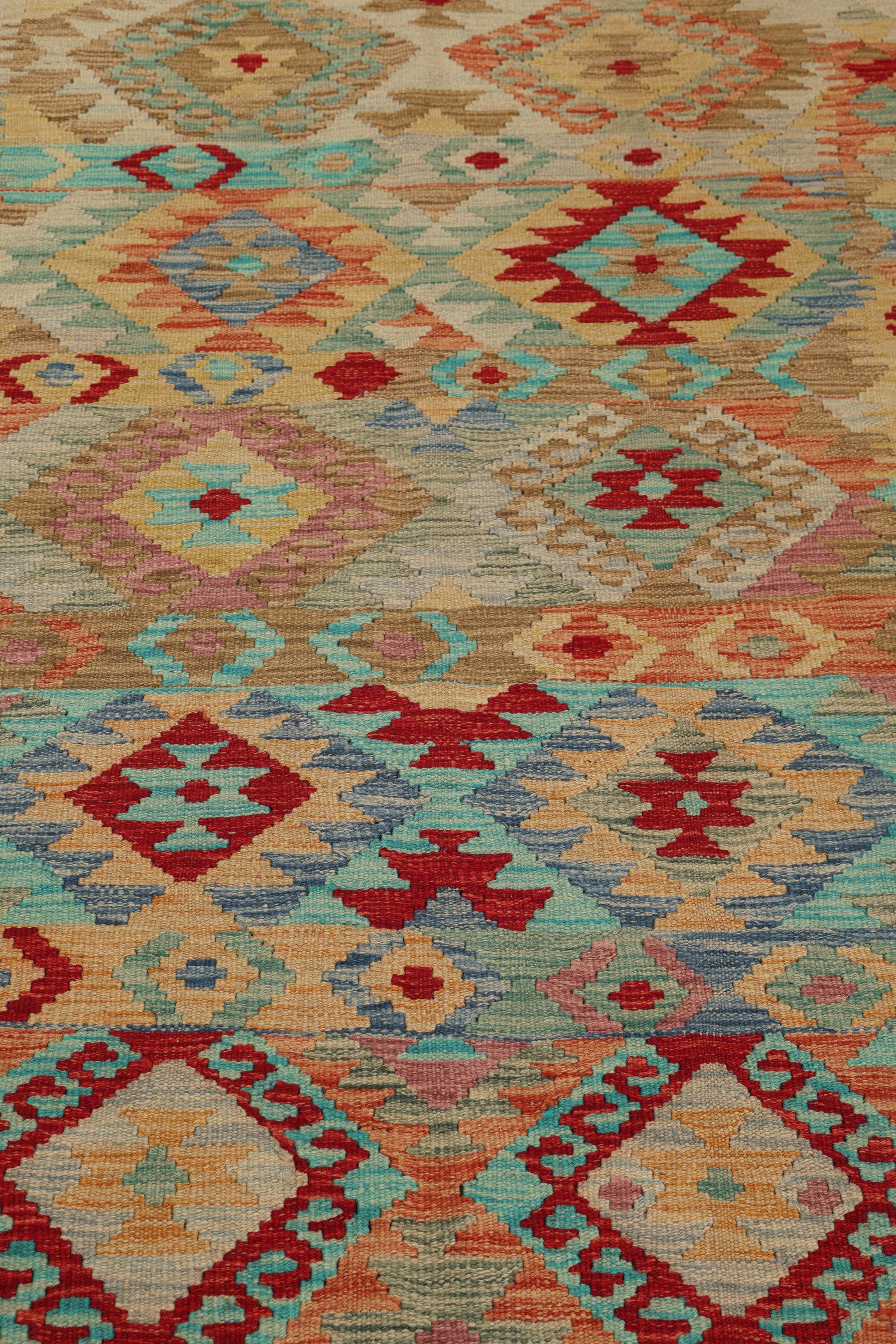
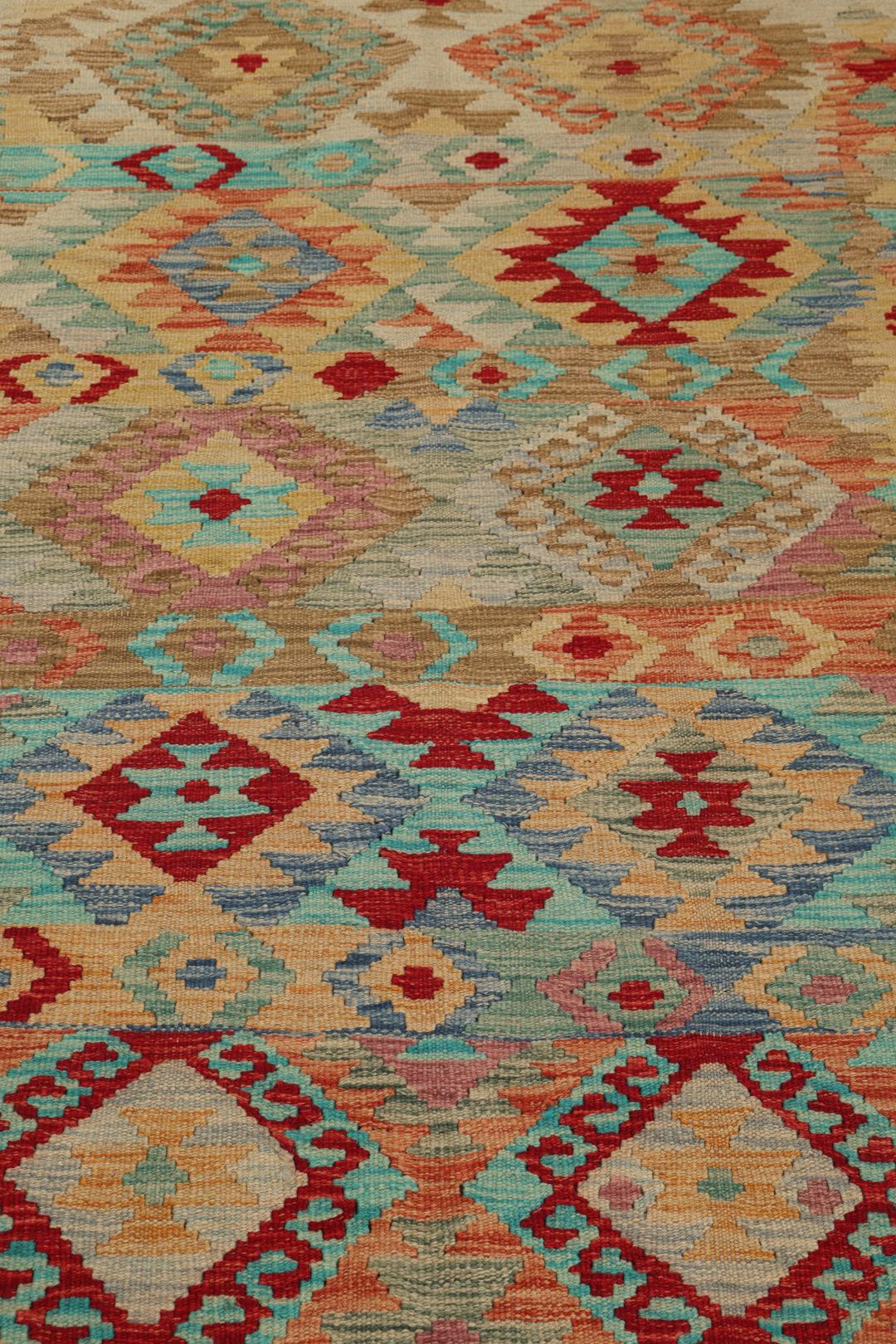
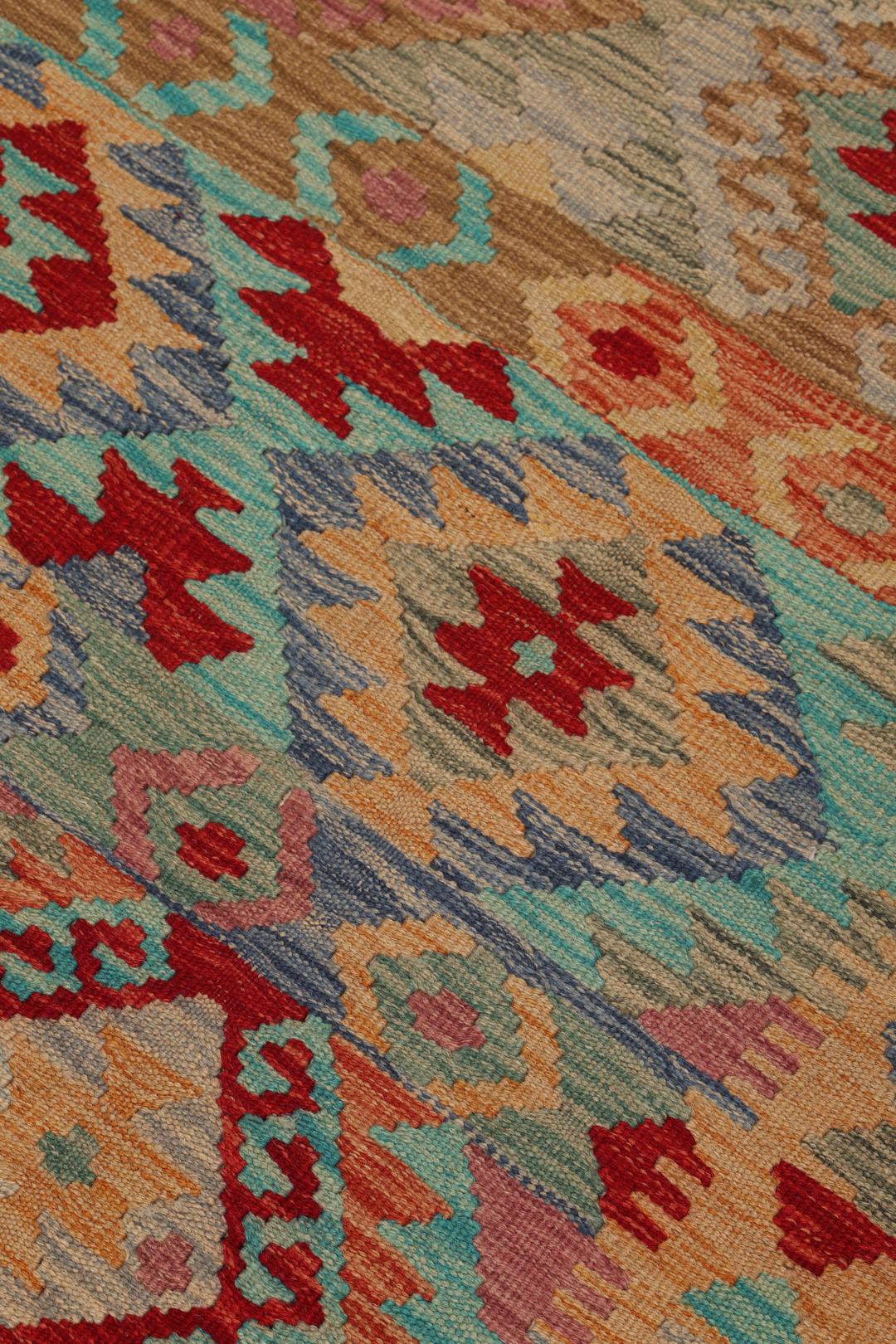
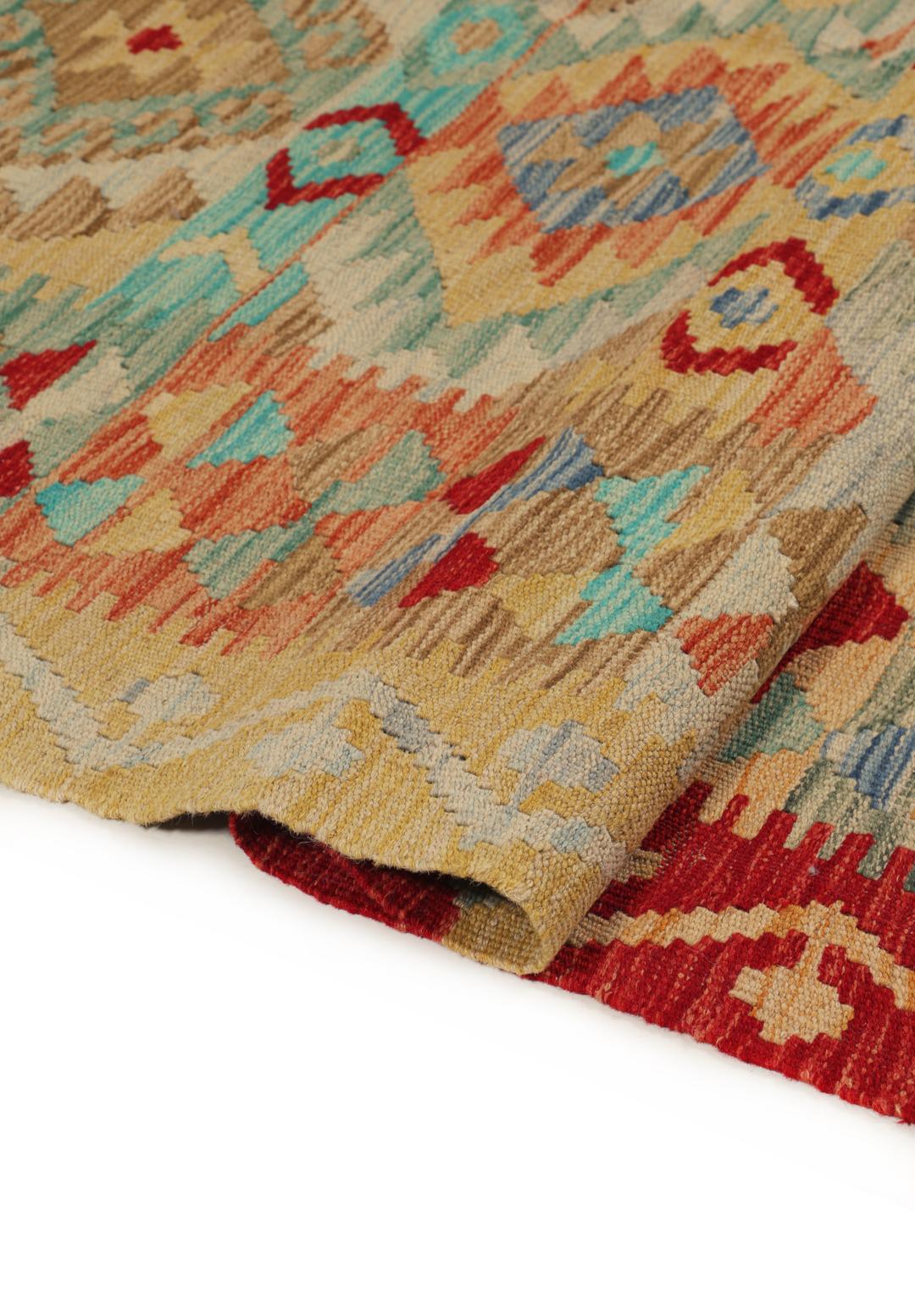
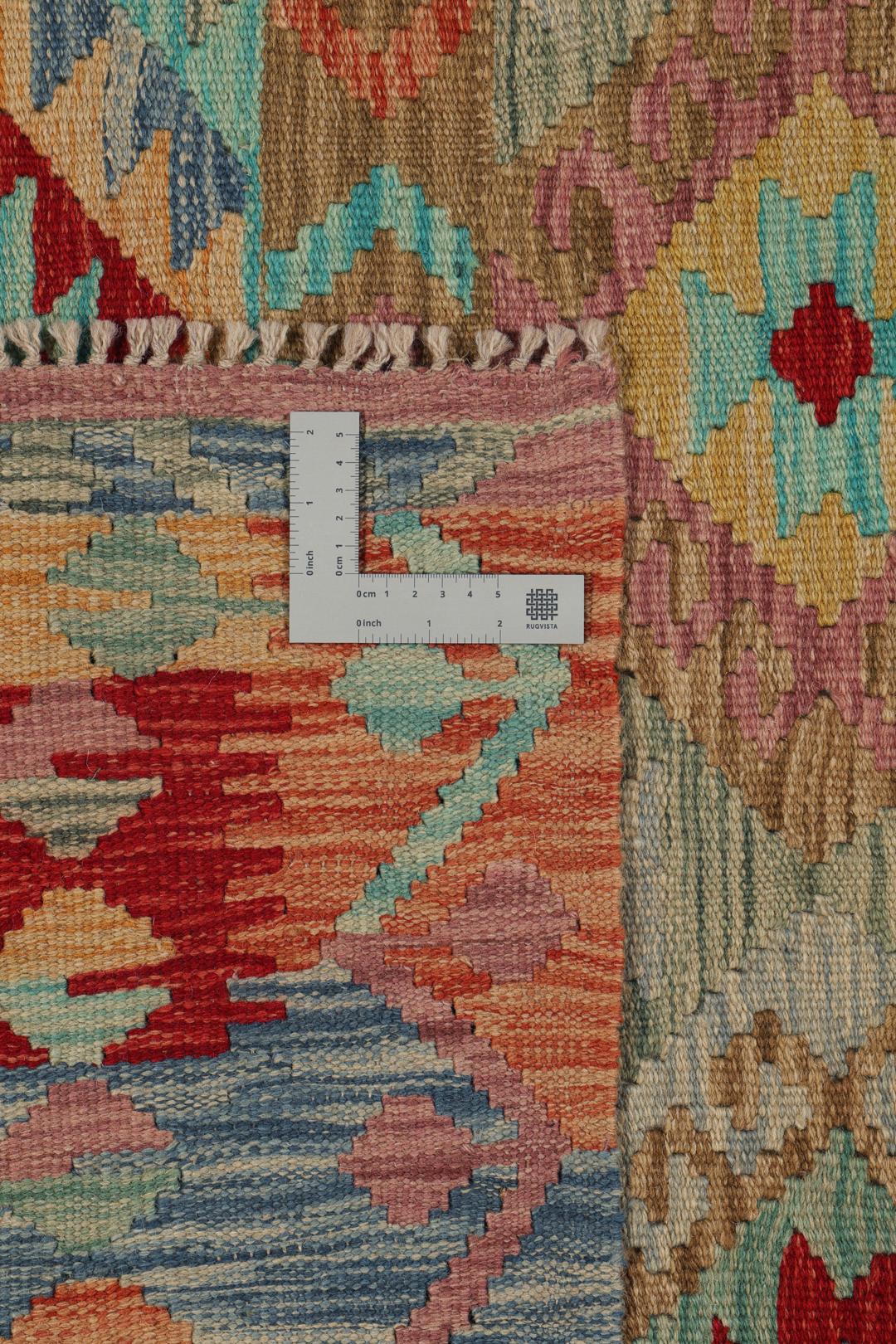
The term 'Kelim' refers to the specific flat-weaving technique used, which lacks a pile. By interlacing the warp and weft threads, the weaver creates a smooth, reversible surface that is lighter than traditional knotted rugs. This method allows for the distinct, sharp-edged geometric motifs that have become the hallmark of the style, as the design is essentially built into the very structure of the rug.
Signature design elements in Afghan Kelims often include bold diamonds, stepped medallions, and serrated borders. These patterns are not merely decorative but often carry symbolic meanings related to tribal identity, protection, and daily life. The use of natural dyes and the specific way colours are placed side-by-side create a rhythmic visual language that is both complex and deeply harmonious.
Today, these rugs are highly valued by collectors for their cultural weight and the skill required to produce them. Owning an Afghan Kelim is an opportunity to connect with a centuries-old tradition of textile art. Each piece serves as a link to the past, preserving the aesthetic choices and technical expertise of the weavers who created it, ensuring that this heritage continues to thrive in modern homes.