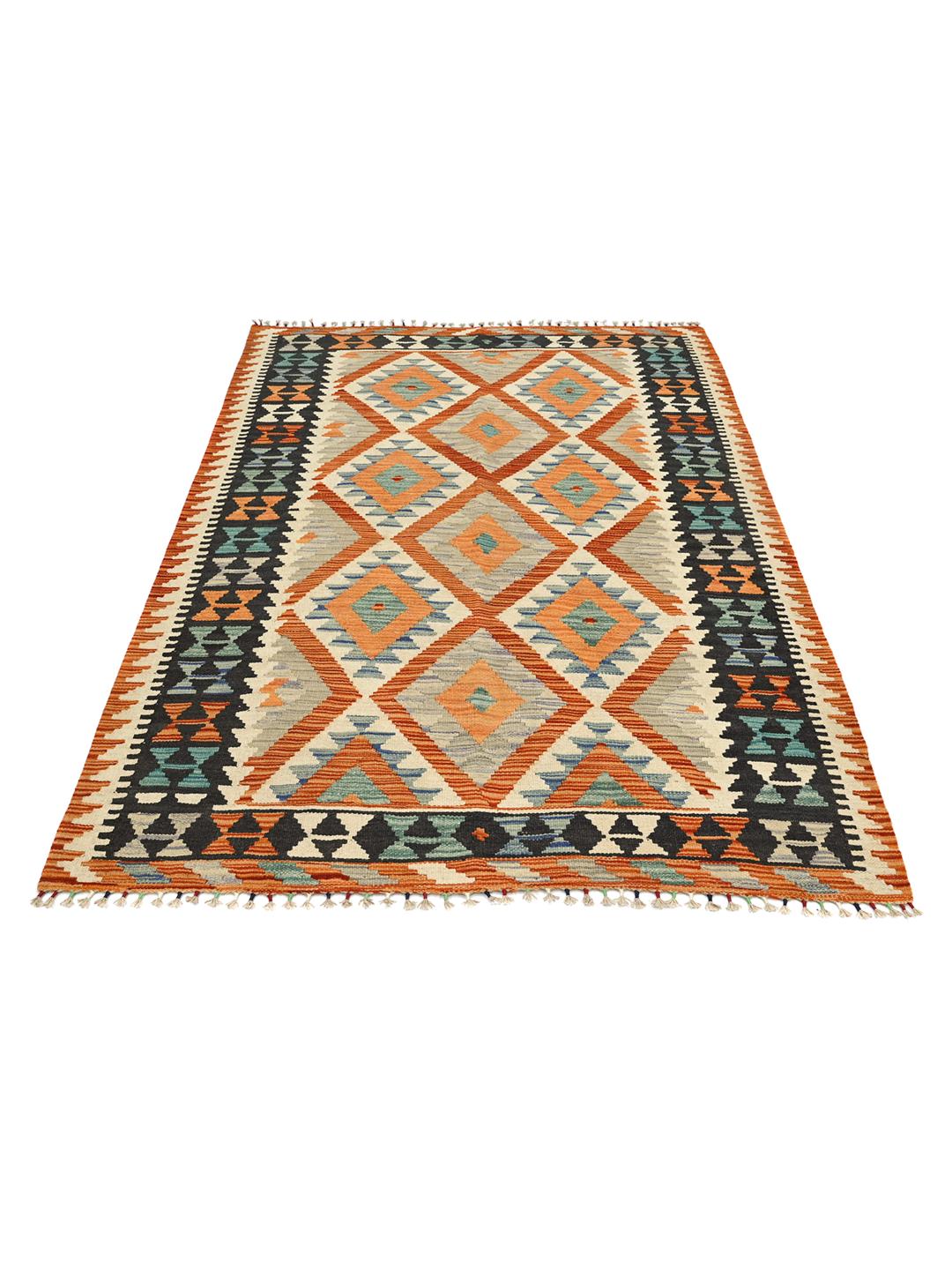
Kelim rugs originate from a rich heritage of nomadic weaving in the Middle East and Central Asia. These flat-woven textiles were historically created by tribal groups for practical use as floor coverings, wall hangings, and storage bags. The tradition of weaving in Afghanistan is deeply rooted in these nomadic customs, where designs were often passed down through generations, reflecting the identity and environment of the weaver.
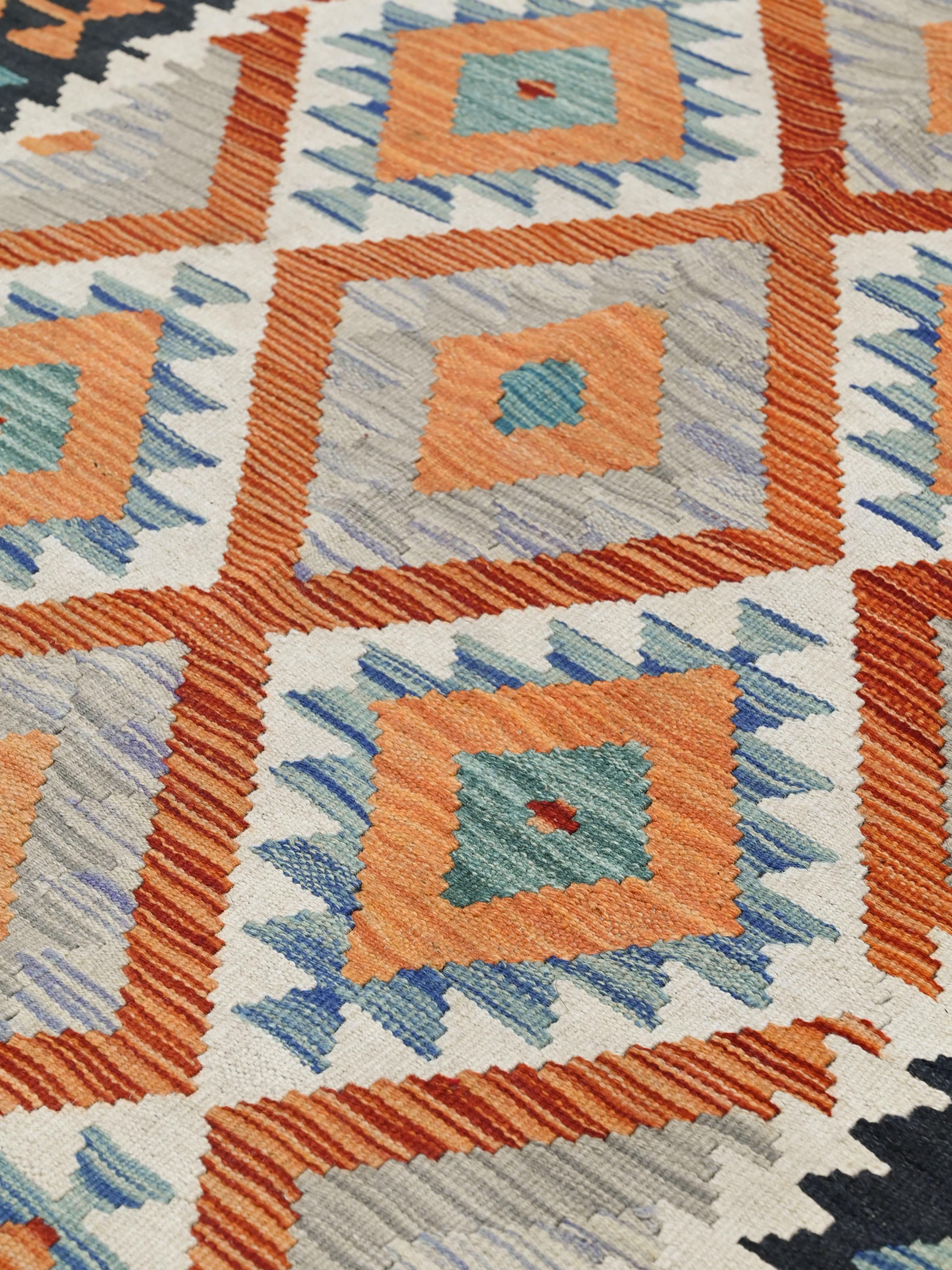
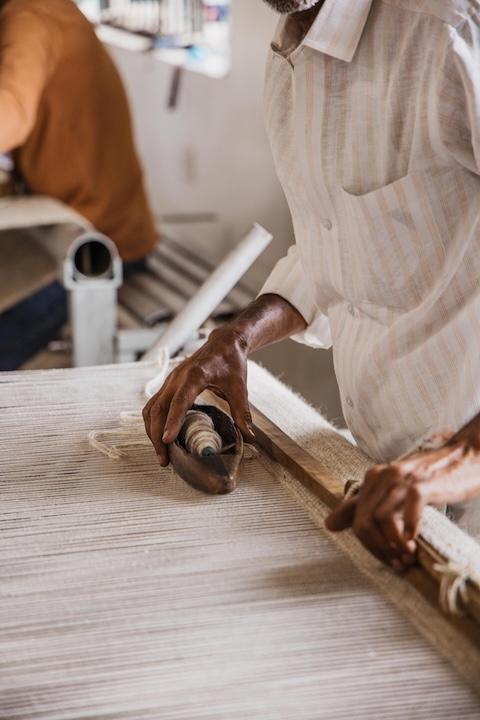
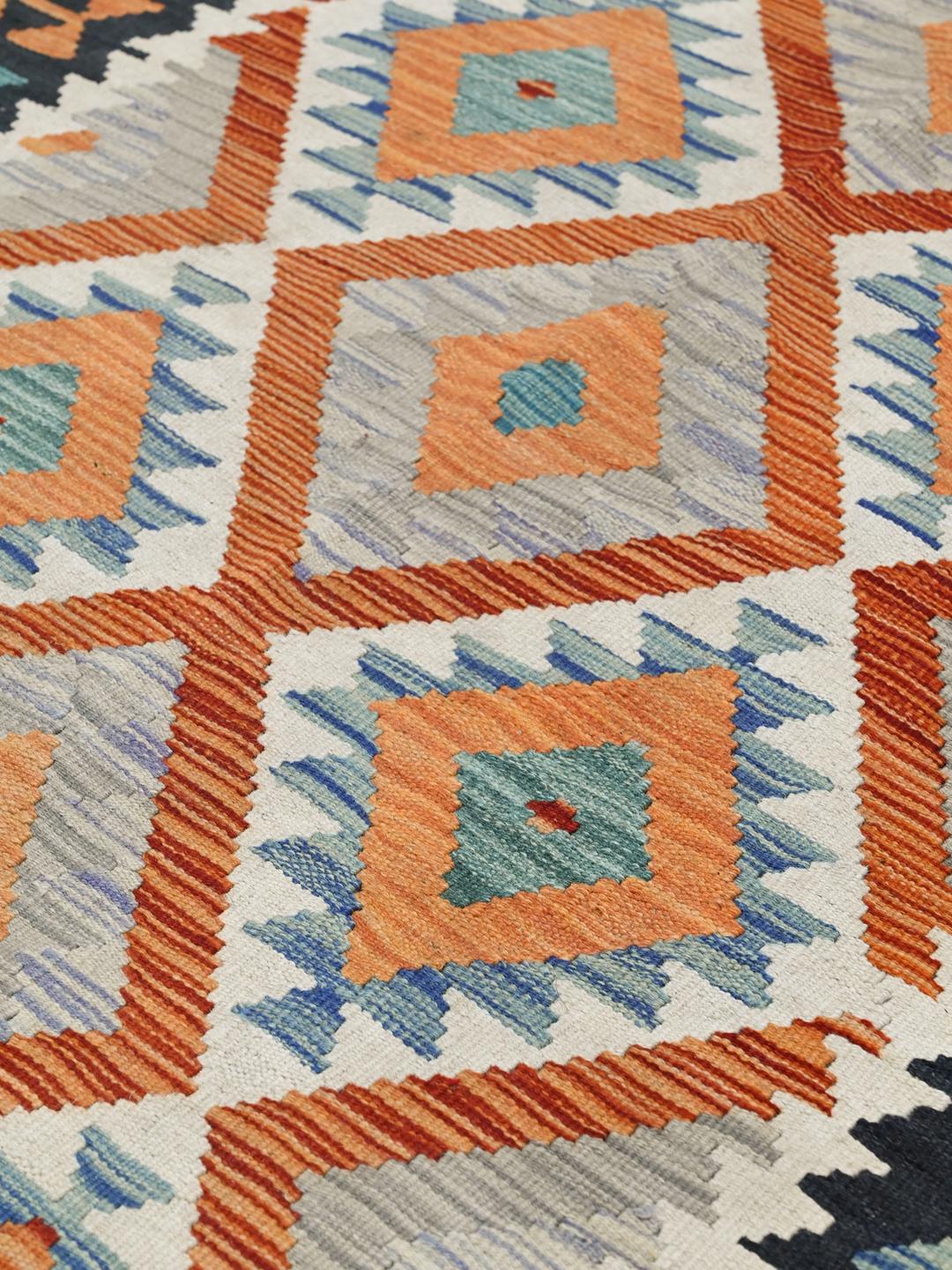
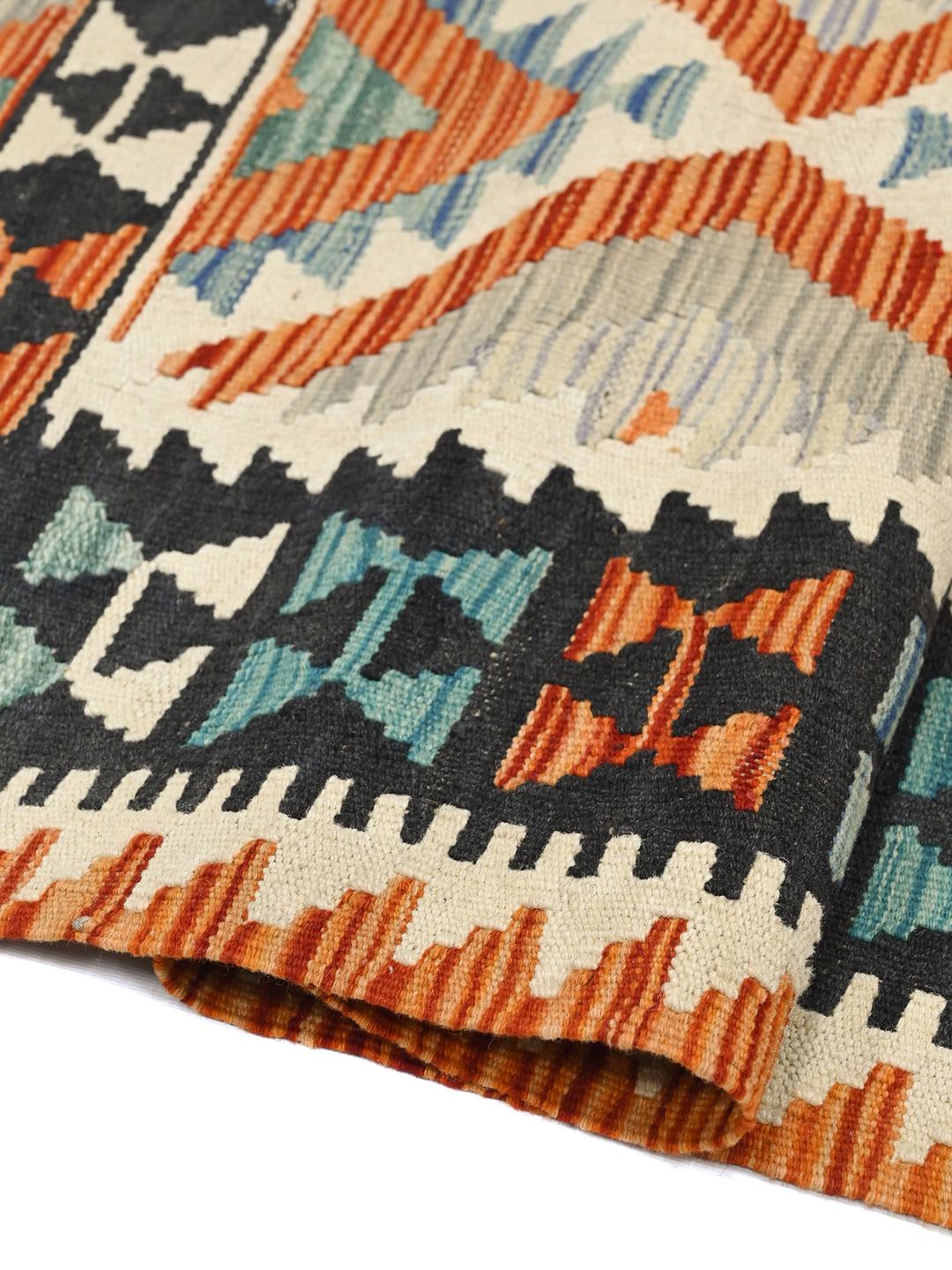
The term 'Kelim' refers to the specific flat-weaving technique used, where no knots are tied. Instead, the weft threads are passed back and forth through the warp threads, creating a smooth surface on both sides of the rug. This method requires immense skill to maintain consistent tension and precise pattern alignment, resulting in a lightweight yet exceptionally durable textile.
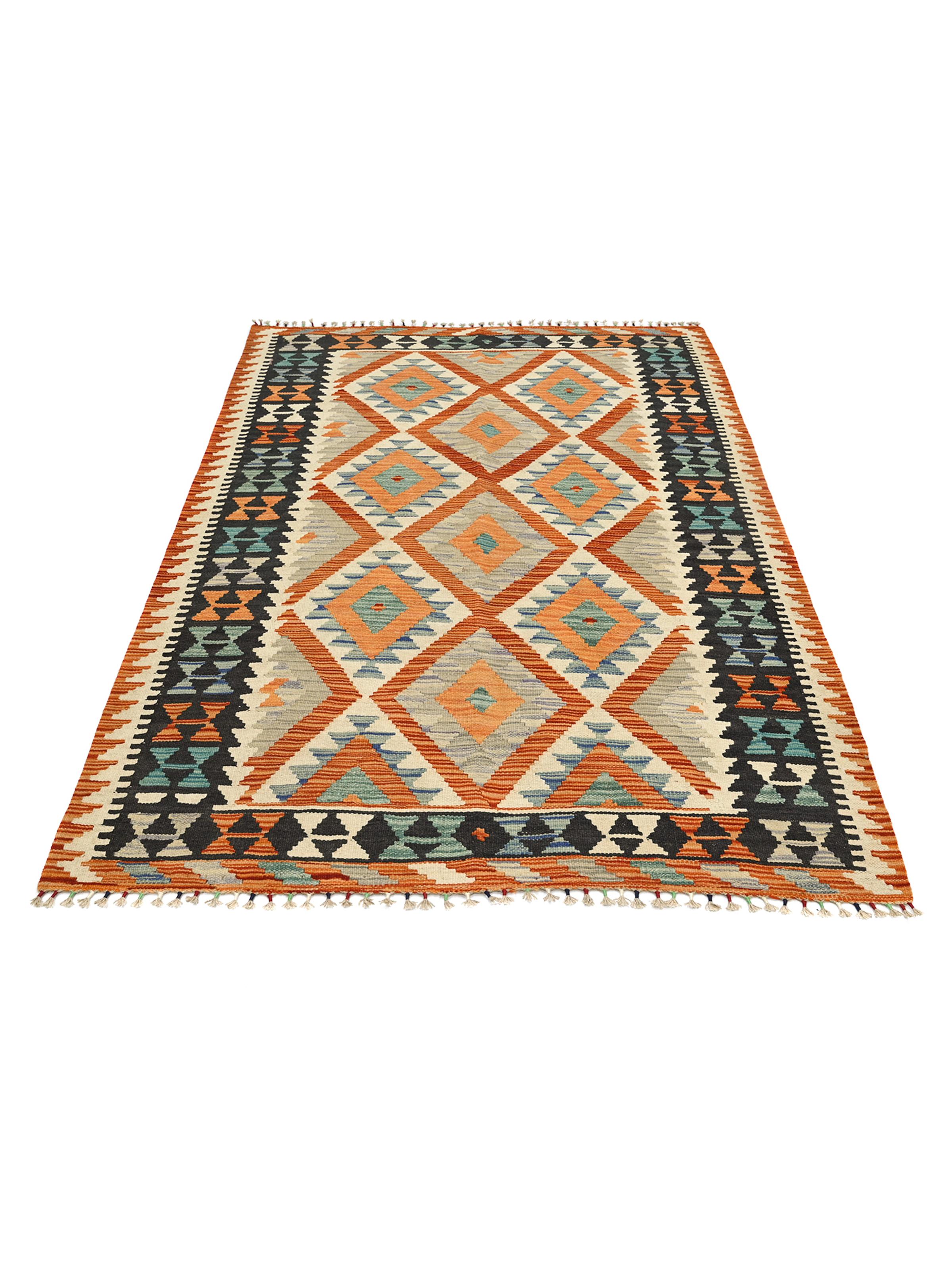
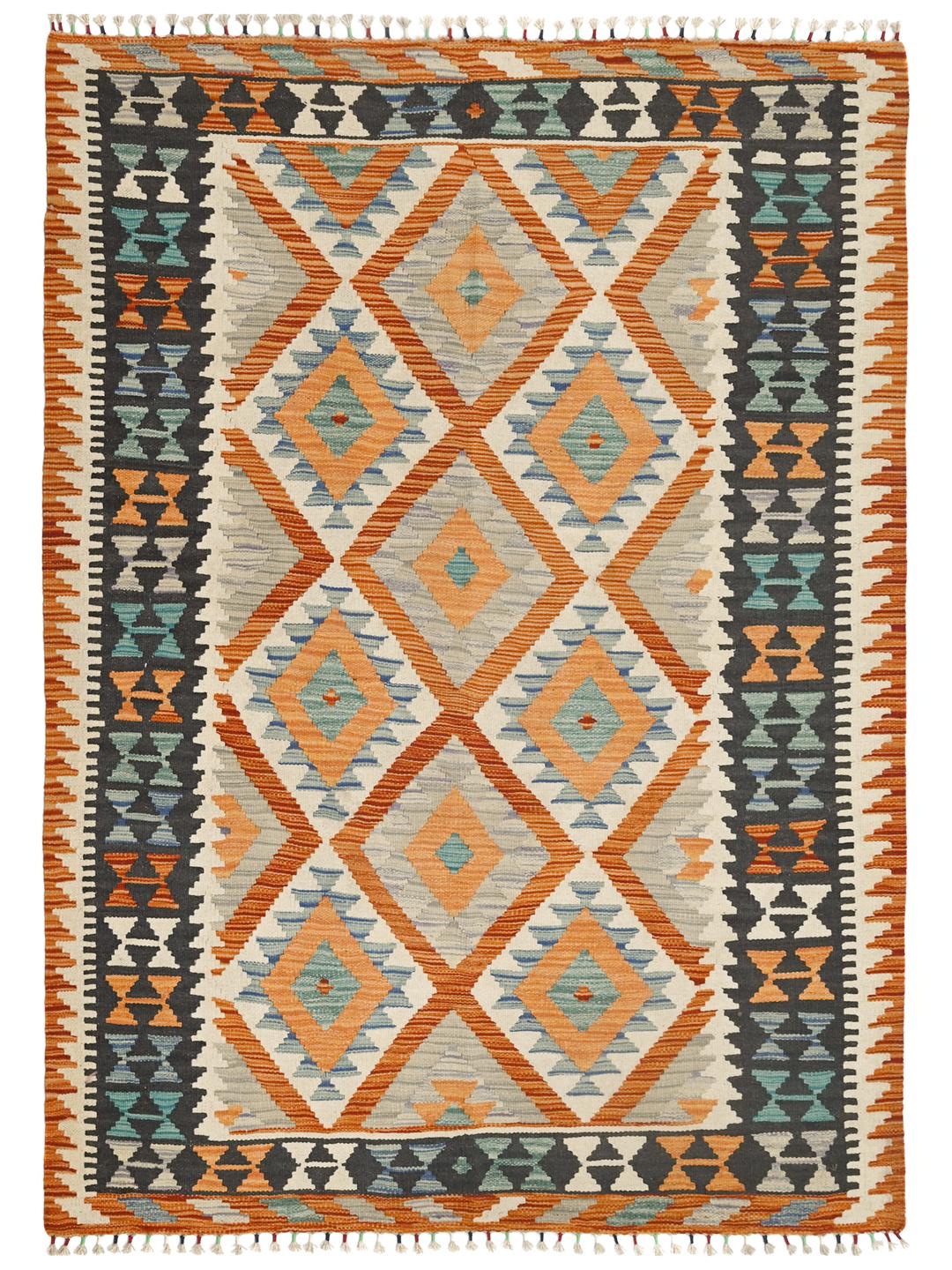
Signature design elements of Afghan Kelims often include bold geometric shapes, such as the prominent diamonds seen here, and a preference for natural, earthy dyes. The borders are frequently decorated with smaller, repeating motifs that frame the central field. These patterns are not just decorative but serve as a visual language, often incorporating symbolic elements that have been part of the regional design vocabulary for centuries.
Valued by collectors and interior enthusiasts alike, these rugs are celebrated for their authentic, unrefined beauty and the visible human touch in every thread. Owning a Kelim is an opportunity to preserve a piece of living history, as each rug embodies the cultural values, artistic vision, and refined technical skill of the artisans who crafted it.