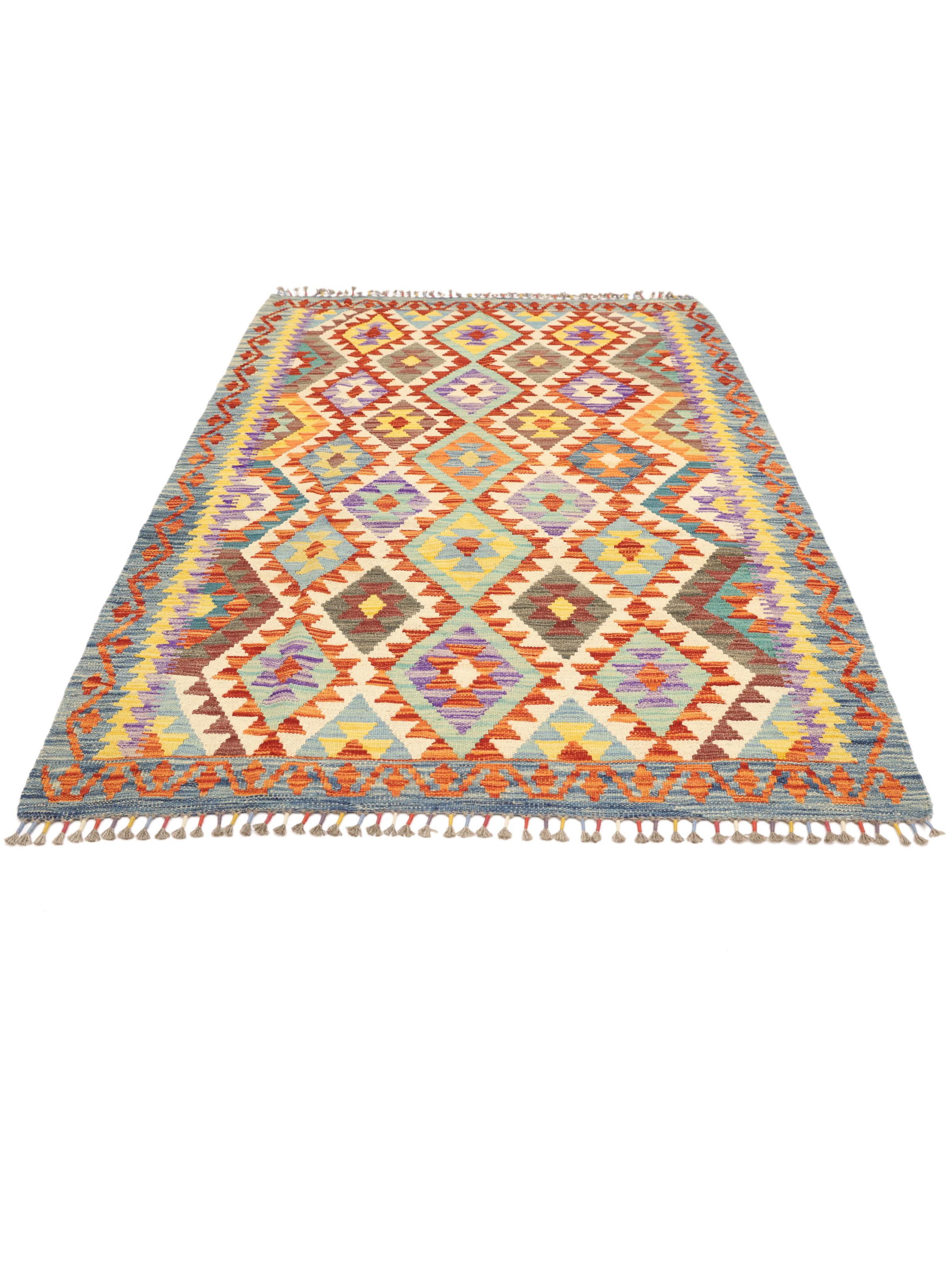
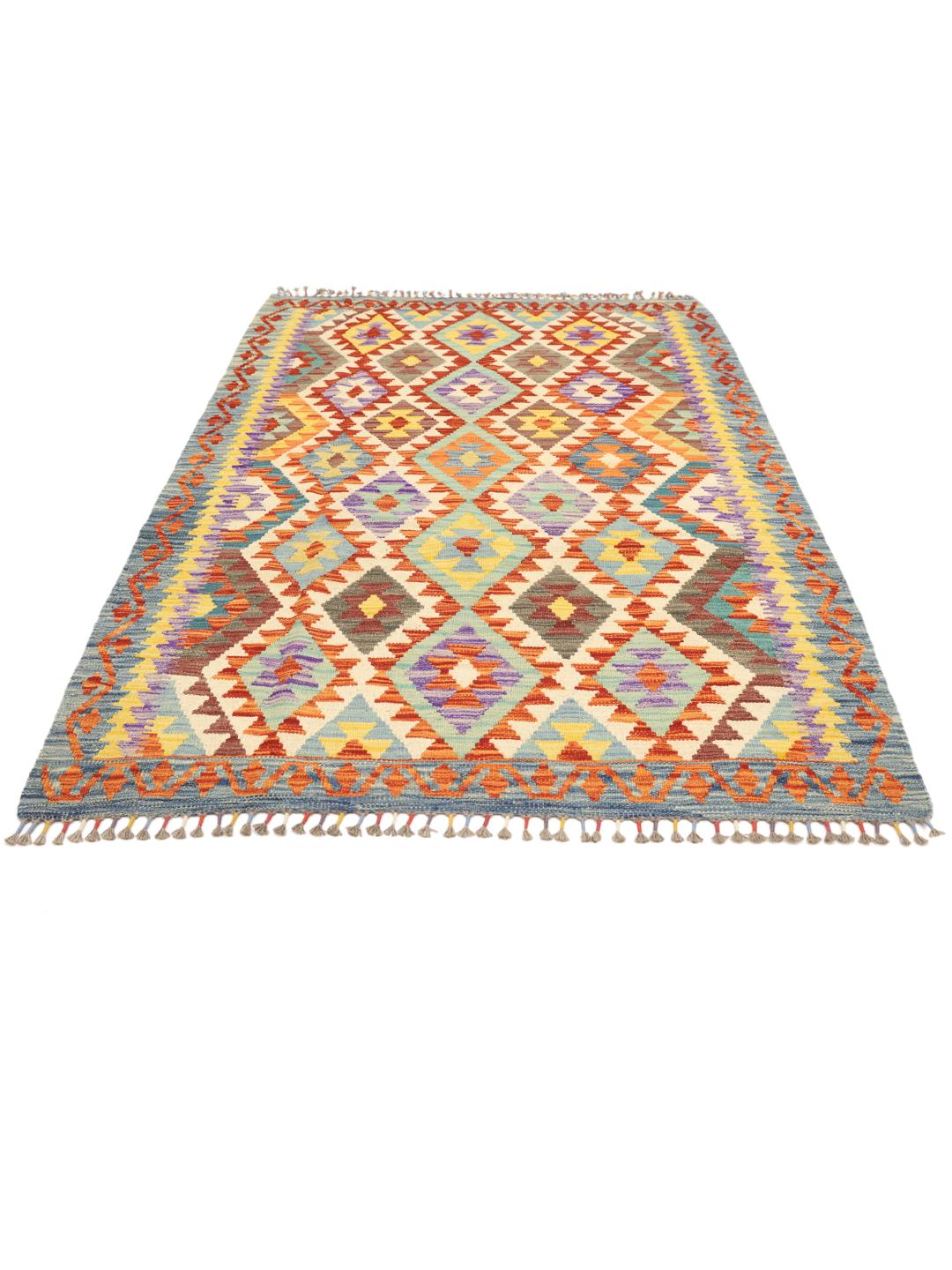
The Kelim tradition is deeply rooted in the nomadic cultures of the Middle East and Central Asia. These flat-woven rugs were historically designed to be versatile, lightweight, and durable, serving as essential floor coverings, tent dividers, or saddlebags for tribes that moved across the landscape. The Afghan Kelim, in particular, has evolved into a celebrated art form, known for its ability to convey complex narratives through simple, graphic geometry.
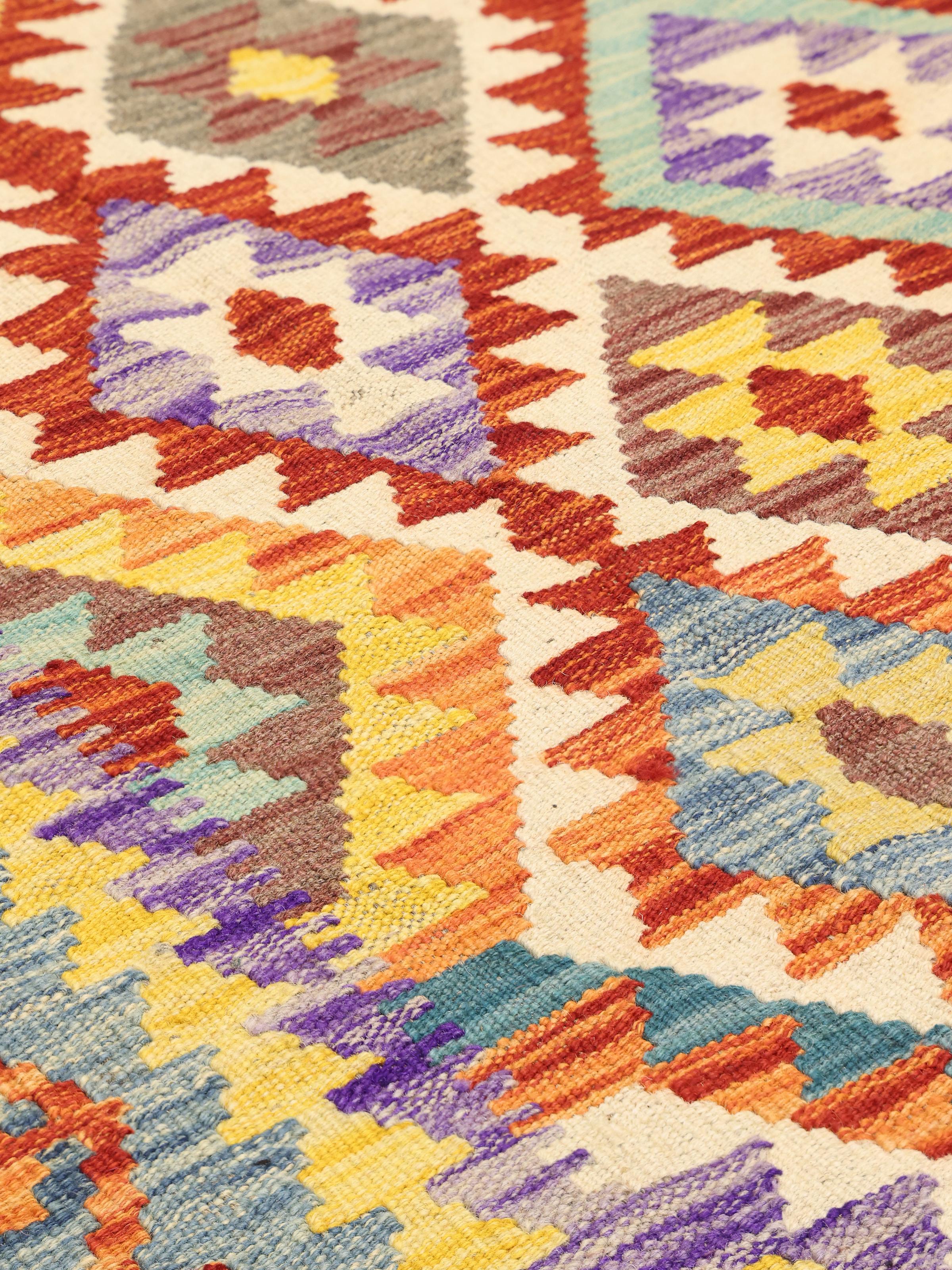
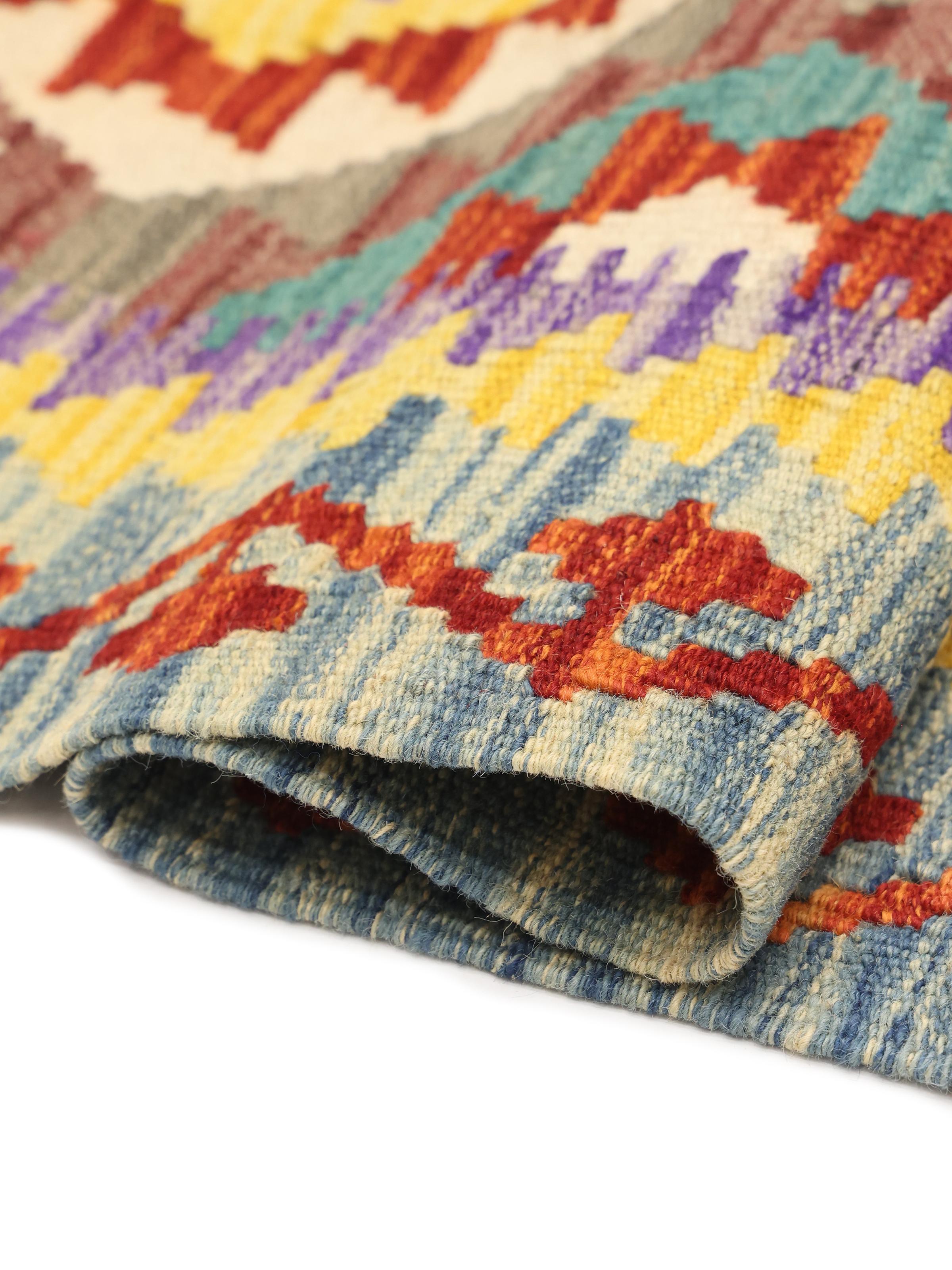
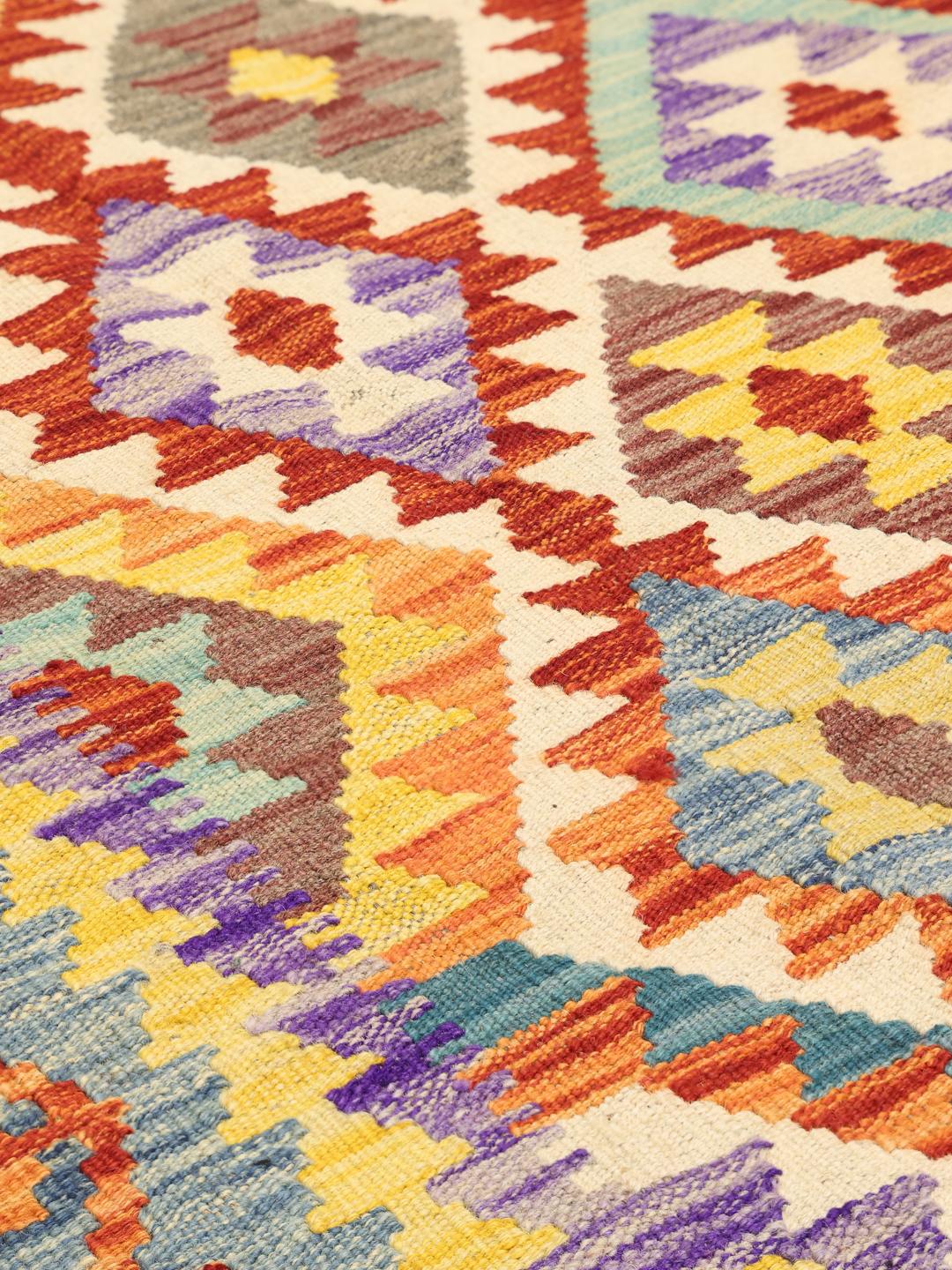
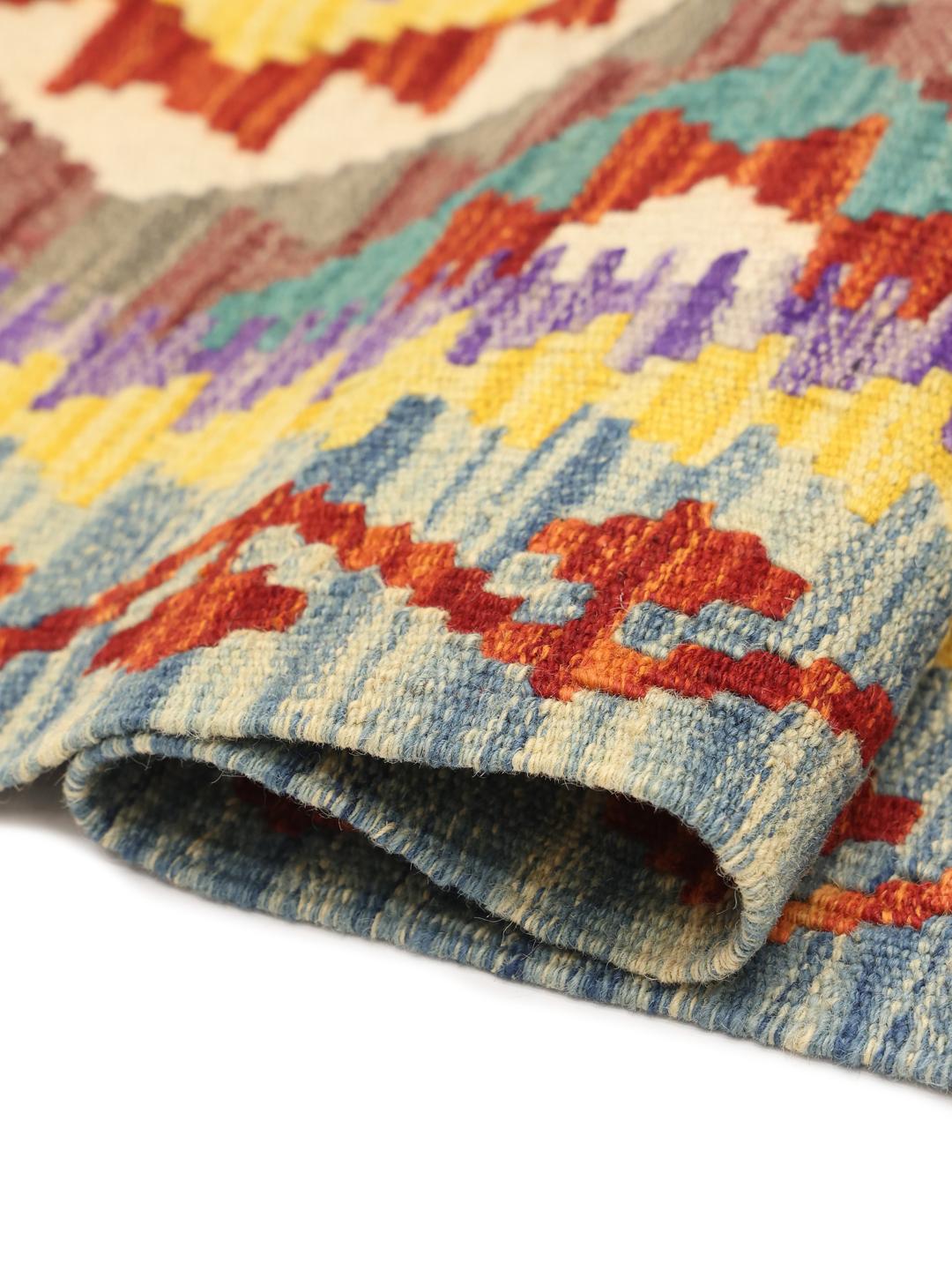
The term 'Kelim' refers specifically to the tapestry-weave technique where the weft threads are pulled tightly over the warp threads to create a completely flat surface. This lack of pile is what defines the category, resulting in a rug that is reversible and remarkably resilient. The skill involved in maintaining consistent tension throughout the weaving process is a hallmark of an experienced artisan, ensuring the rug lies flat and retains its shape over time.
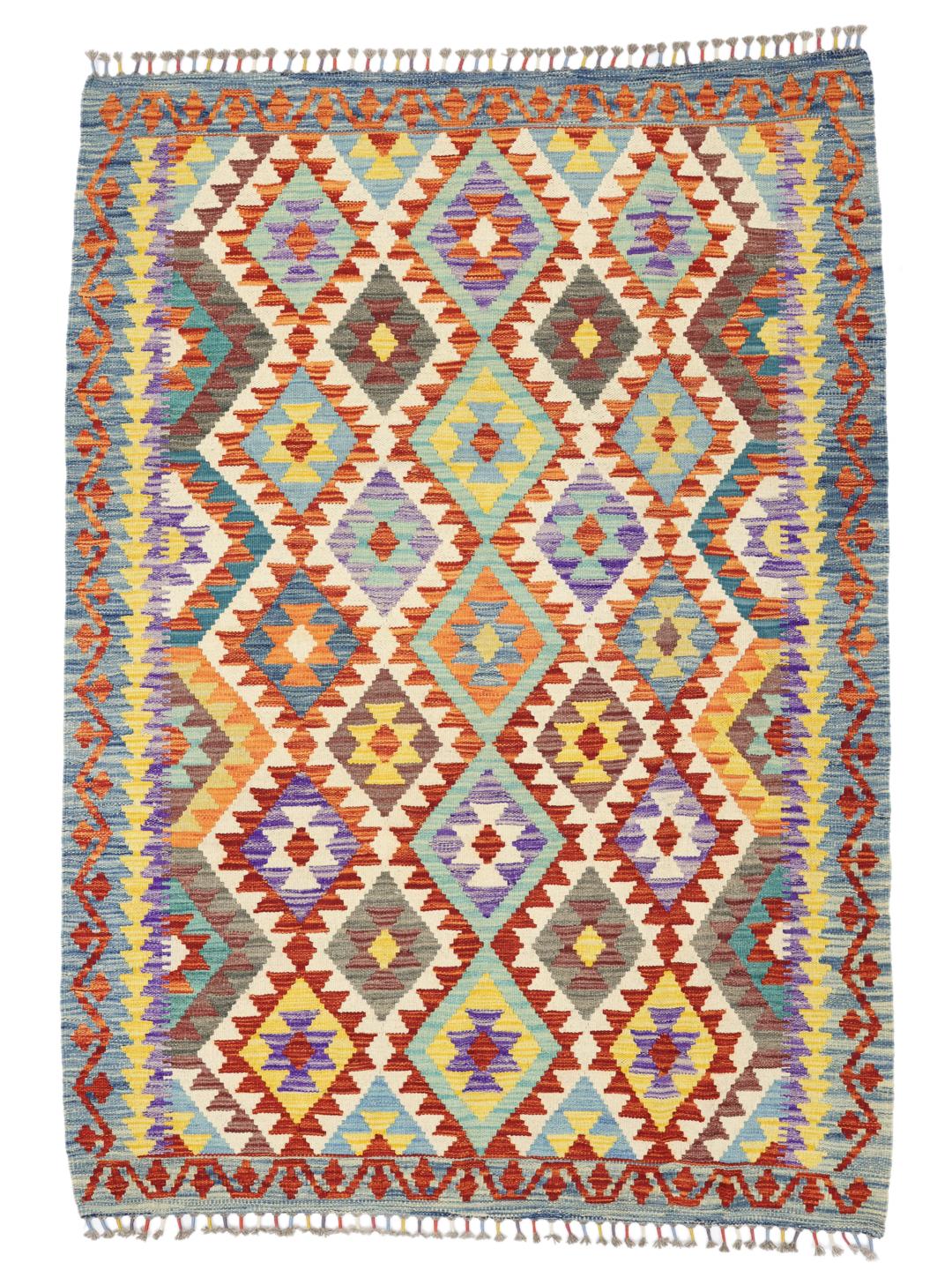
Signature design elements of the Afghan Kelim include repeating motifs, such as the diamond patterns seen here, which are often symbolic of protection or abundance. The colour traditions are equally significant, traditionally utilising natural dyes derived from plants, roots, and minerals, which impart a rich, earthy depth to the wool. The bold, contrasting colours in this piece are characteristic of the region's vibrant aesthetic, designed to stand out against the backdrop of a traditional home.
Today, these rugs are highly valued by collectors and interior enthusiasts for their authenticity and the human story they tell. Owning a Kelim is more than just a decor choice; it is an appreciation of a cultural legacy that has survived for centuries. Each piece acts as a testament to the weaver's skill, preserving a history of craftsmanship that remains relevant and beautiful in the contemporary home.