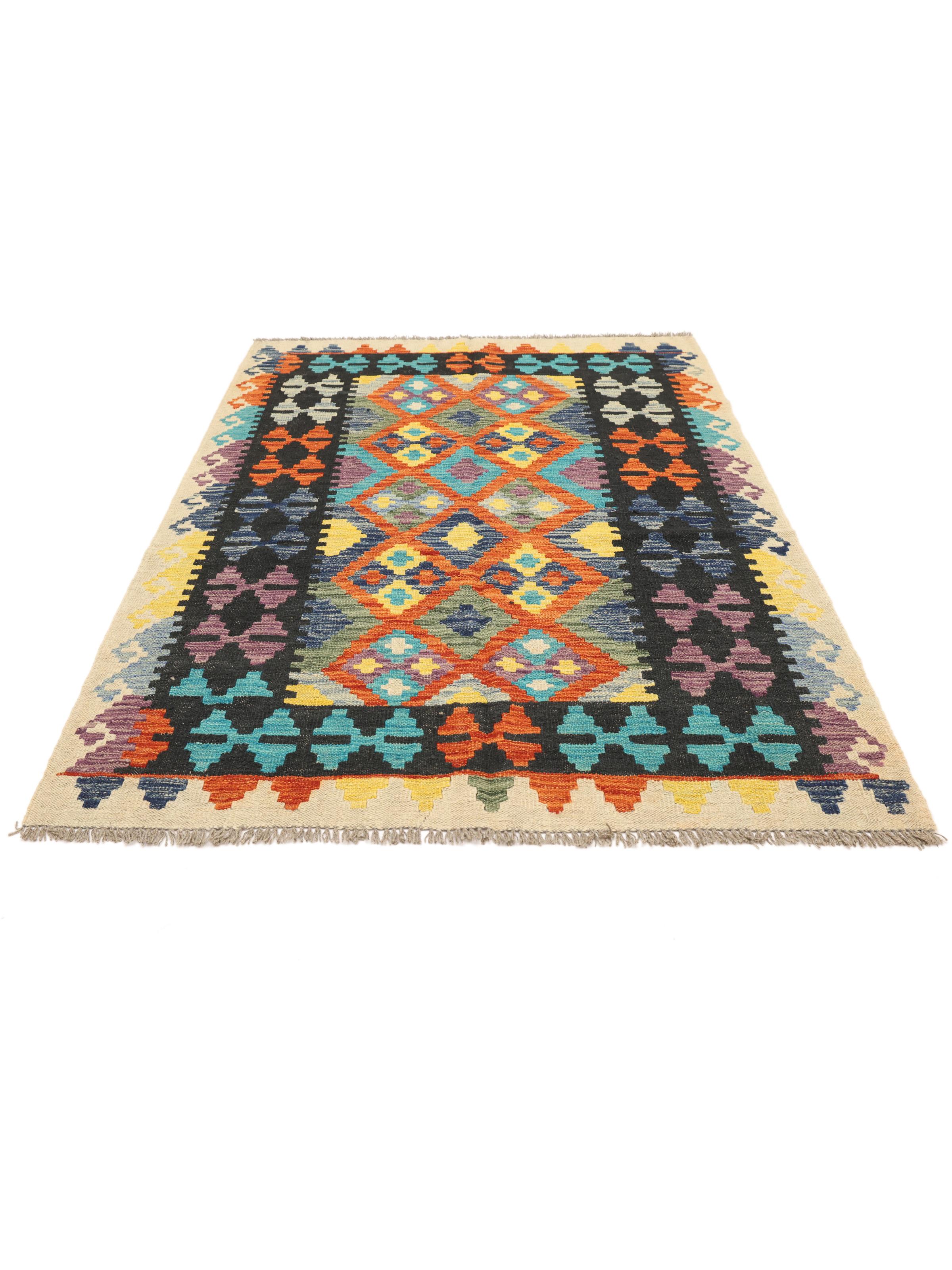
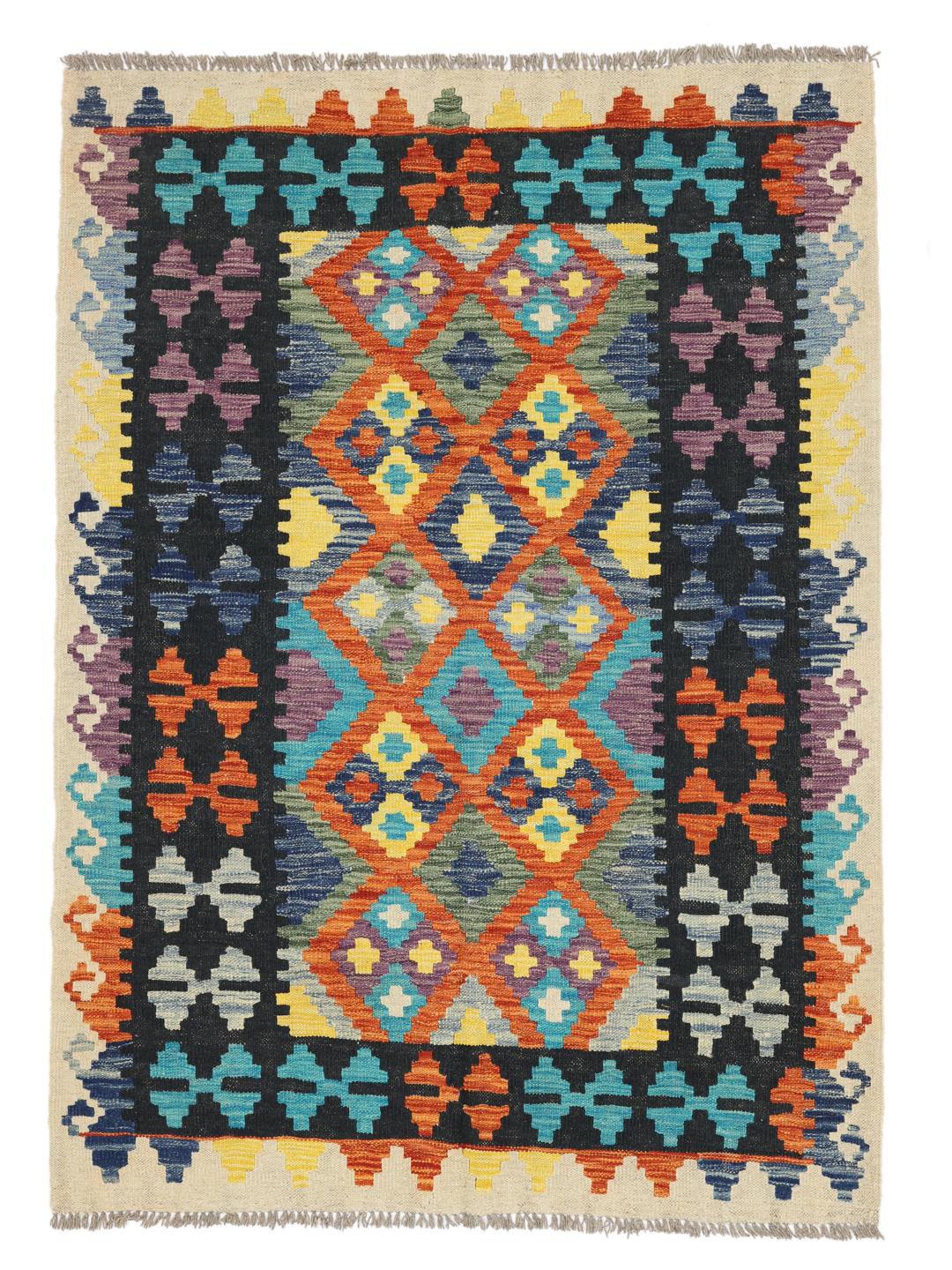
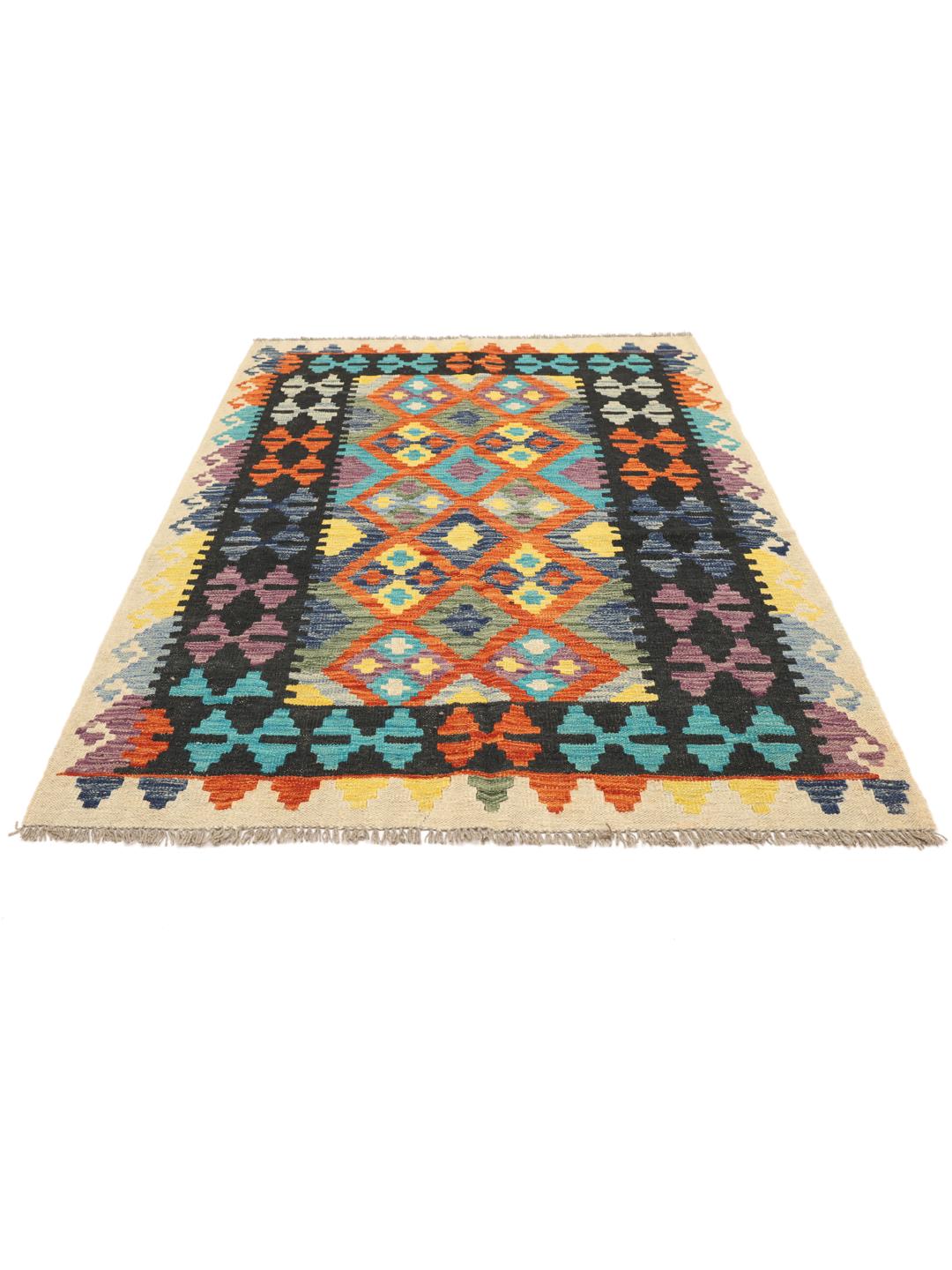
Kelim rugs have been a cornerstone of Middle Eastern textile traditions for centuries, serving as both utilitarian household items and expressions of cultural identity. These flat-woven rugs, which lack a pile, were traditionally crafted by nomadic and village communities across regions including Afghanistan. The practice evolved from the necessity of creating durable, portable floor coverings, storage sacks, and wall hangings that could withstand the rigours of life on the move.
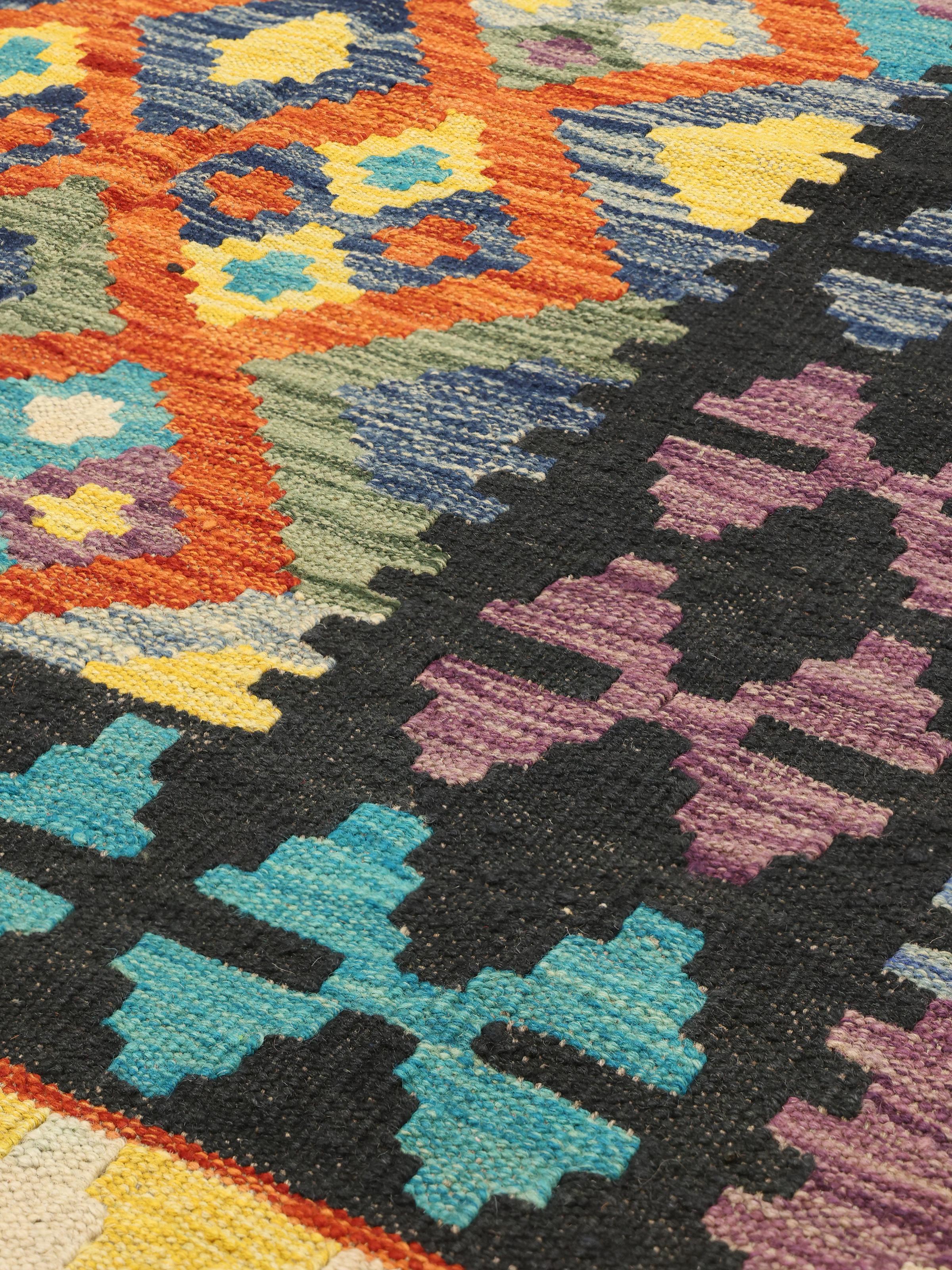
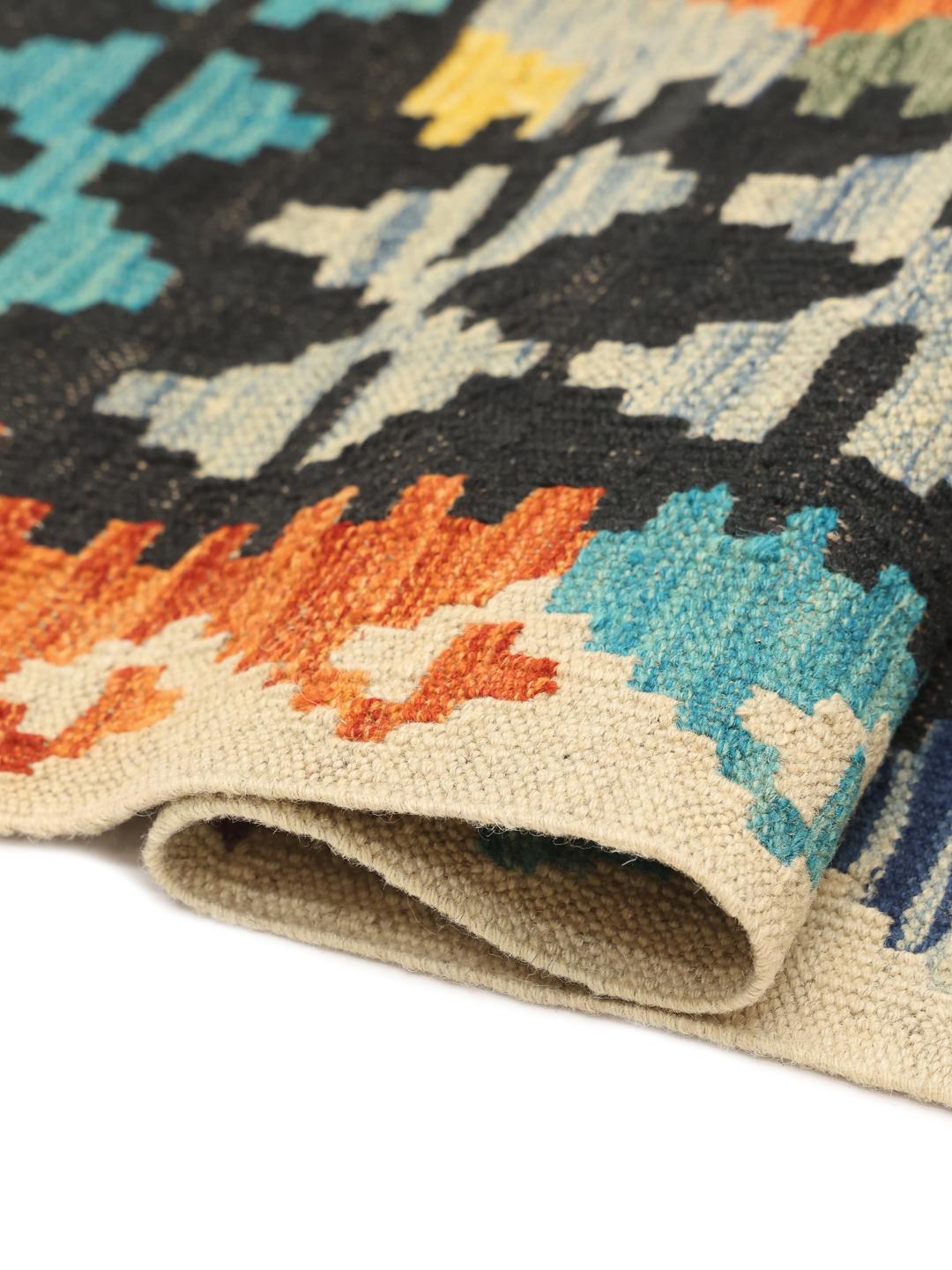
The term 'Kelim' refers specifically to the tapestry-weaving technique where the weft yarns are pulled tightly down to cover the warp yarns completely, creating a smooth surface on both sides of the rug. This method is highly prized for its ability to produce crisp, clean-edged geometric designs. The technical precision required to maintain tension across the entire width of the loom is a hallmark of a skilled weaver, and it is this mastery that gives these rugs their clean, sharp aesthetic.
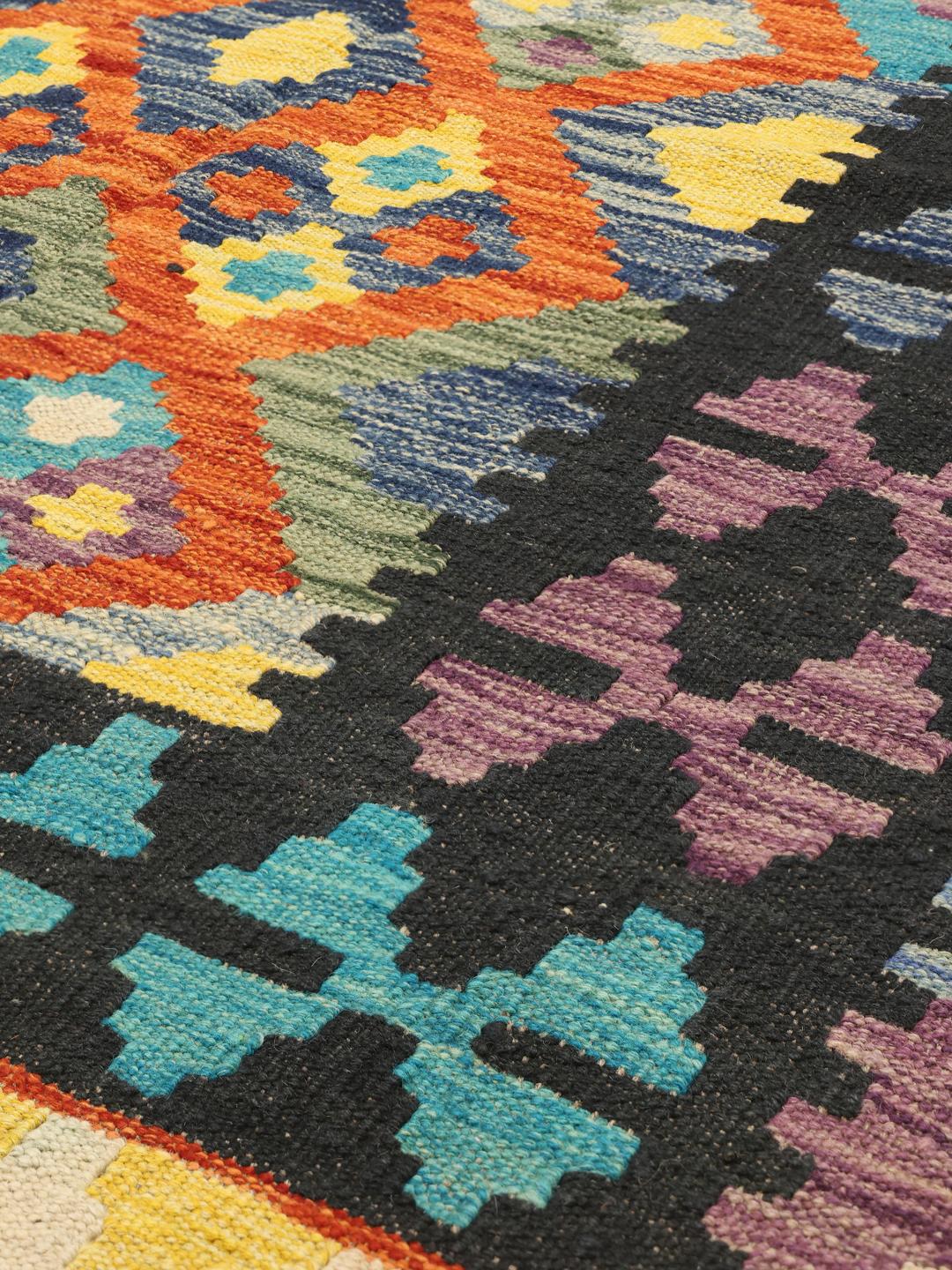
Visually, these rugs are defined by their reliance on geometric motifs, such as diamonds, triangles, and stylized floral elements, which are often arranged in repeating sequences. The colour palettes in Afghan Kelims are traditionally derived from natural dyes, resulting in rich, earthy tones that have softened and gained character over time. The inclusion of a strong, dark border is a classic design tradition intended to frame the central field and provide a sense of visual order.
Collecting a Kelim is an investment in a living tradition that spans generations. These pieces are valued for their authenticity and the human story they carry, as each weaver often incorporates personal or regional motifs into their work. To own an Afghan Kelim is to connect with a history of artistic expression where skill is passed down from one generation to the next, ensuring that this ancient craft continues to find a place in contemporary homes.